A single painting shocked Paris in 1863. Édouard Manet’s “Le Déjeuner sur l’herbe” displayed naked women alongside clothed men in a casual outdoor scene-breaking every academic rule of the time.
Born to a wealthy Parisian family, Manet rejected the idealized figures of traditional French painting for a revolutionary approach built on visual honesty.
Neither fully Realist nor Impressionist, this transitional painter carved his own path between established art movements while influencing generations that followed.
From the controversial “Olympia” to the enigmatic “Bar at the Folies-Bergère,” Manet’s bold compositions captured urban lifestyle and social commentary of the Second French Empire.
His friendship with Charles Baudelaire, Émile Zola, and Claude Monet positioned him at the center of avant-garde circles.
This exploration reveals how Manet’s flat painting style, tonal contrasts, and unidealized figures transformed 19th century art and established him as the father of modernism.
Major Works and Their Significance

Early Controversial Masterpieces
The Paris Salon erupted in scandal when Édouard Manet unveiled “Le Déjeuner sur l’herbe” in 1863.
Rejected by the Académie des Beaux-Arts, this painting found refuge at the Salon des Refusés.
Its jarring composition-two fully dressed men picnicking with a nude woman who gazes directly at viewers-violated every established convention of 19th century art.
“Olympia” proved even more provocative. The reclining nude wasn’t a mythological goddess but clearly a contemporary Parisian woman-perhaps a prostitute.
Victorine Meurent’s unflinching stare challenged viewers directly. Critics savaged Manet’s flat painting style and crude brush technique, calling it childish and offensive.
Émile Zola defended these works, recognizing their revolutionary importance. These paintings weren’t merely controversial; they marked the birth of modern art by rejecting academic idealization in favor of visual honesty.
Paris Urban Life Series
Manet captured Paris during Haussmann’s massive urban transformation. “The Railway” shows figures against iron and steam-symbols of modernization during the Second French Empire. The contrast between technology and humanity reveals Manet’s keen social commentary.
His café scenes documented the emerging urban lifestyle:
- Café concerts where classes mingled
- Bustling bars like the famous Folies-Bergère
- Leisure activities of the new bourgeoisie
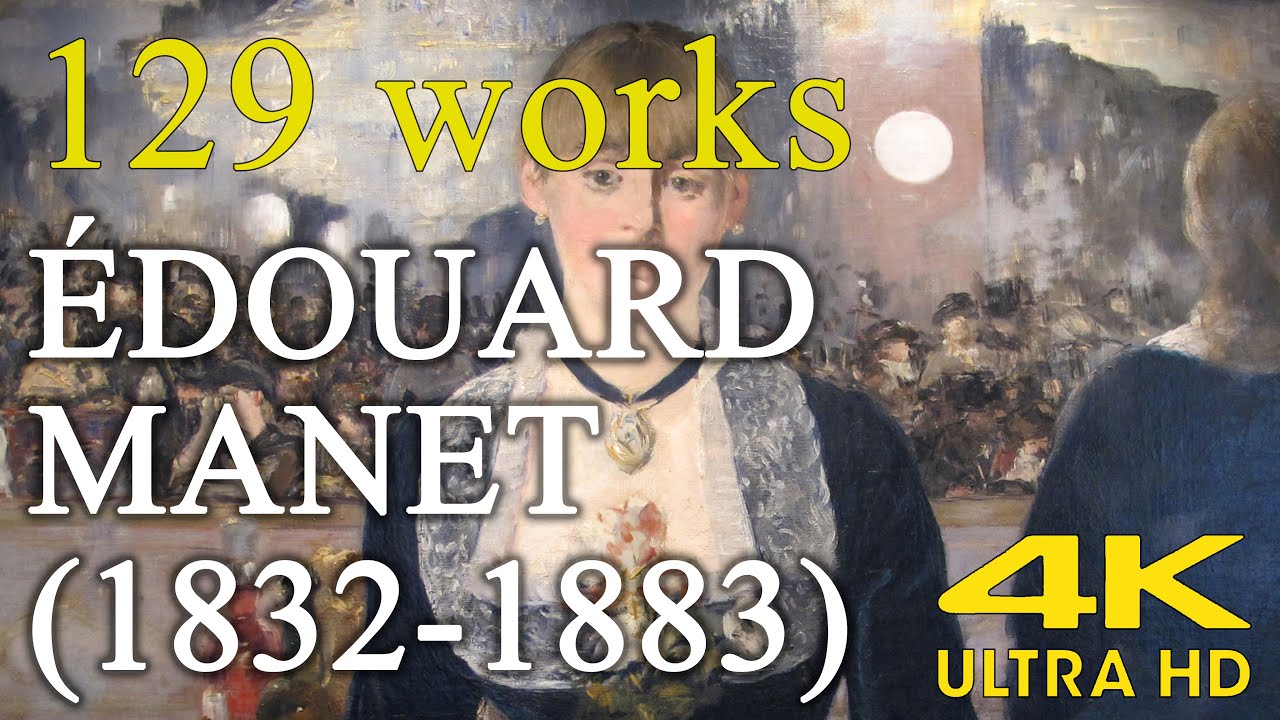
In “A Bar at the Folies-Bergère,” Manet employed complex mirroring to capture both a barmaid’s direct gaze and the distracted crowd reflected behind her.
This compositional technique creates unsettling spatial relationships that echo the psychological alienation of modern city life.
Portrait Works
Manet painted notable figures with psychological insight beyond conventional portraiture.
His portrait of Stéphane Mallarmé captures the poet’s introspective character through subtle facial expressions and positioning.
Unlike academic portraits, Manet’s reveal inner life through naturalism rather than idealization.
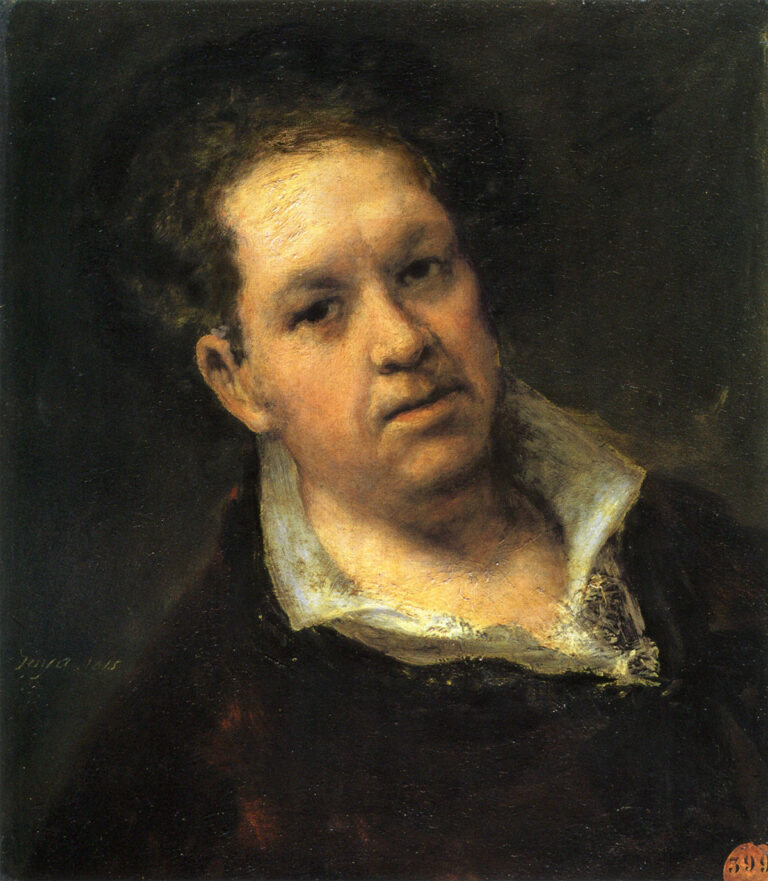
His self-portraits track his artistic evolution. Often dressed in black clothing style typical of his class, these works show his changing techniques and growing confidence in his avant-garde approach.
Late Period Works

When illness confined him, Manet created luminous garden paintings at Bellevue. These works show increased Impressionist influence while maintaining his distinctive style.
Despite severe health problems requiring amputation, his flower paintings display remarkable vitality.
His late still life paintings of fruits, flowers, and objects show his masterful brush technique even as his health declined.
“A Bar of Asparagus” exemplifies his late style-loose, confident, and focused on essential visual elements.
Technical Innovations in Painting
Brushwork and Application Techniques
Manet rejected academic painting’s smooth, invisible brushwork. His visible brushstrokes declare the painting as an object rather than an illusionistic window. This modernist approach influenced generations of painters.
He employed:
- Bold, direct application of paint
- Deliberate flattening of three-dimensional forms
- Elimination of transitional tones
Black clothing in his works wasn’t merely descriptive but functionally structural. Unlike contemporaries who avoided black, Manet used it as a compositional anchor and a legitimate color in its own right.
Composition and Subject Framing
Influenced by Japanese prints and early photography, Manet’s compositions feature asymmetrical arrangements and unusual cropping.
“The Balcony” places figures in an awkward, theatrical staging that emphasizes formal painting elements over naturalistic grouping.
His Seine river paintings show off-center framing that contradicts traditional landscape composition.
This approach emphasizes the urban lifestyle of modern Paris rather than romantic natural vistas.
Color Theory and Palette
Manet reduced his tonal range compared to academic painters. He eliminated gradual transitions between colors, creating starker contrasts that flatten pictorial space.
This approach derived partly from his study of Spanish influence, especially Velázquez inspiration visible in his early works.
Unlike pure Impressionists, Manet maintained strong outline and form while experimenting with light effects. He created a distinctive middle path between academic and avant-garde approaches:
- Stripping away unnecessary details
- Focusing on essential color relationships
- Using color for emotional and structural purposes
His strategic use of tonal contrasts created visual impact impossible with traditional techniques.
This innovation proved essential to modern portraiture and influenced art movements from Post-Impressionism through Abstract Expressionism.
Relationship with Impressionism
Manet as Catalyst vs. Participant
Édouard Manet inspired the Impressionist movement while never fully joining it. He served as mentor to younger painters at Café Guerbois, where the Batignolles group regularly gathered.
His bold rejection of academic conventions cleared the path for their experimentation.
Despite this influence, Manet refused to exhibit in the independent Impressionist exhibitions.
He remained committed to recognition from the official Paris Salon, believing institutional validation essential.
This stance separated him from Claude Monet and others who abandoned traditional exhibition systems entirely.
Key differences distinguished Manet’s work:
- Stronger emphasis on composition and line
- Maintenance of solid forms rather than dissolution
- Focus on urban subjects over rural landscapes
- Continued use of studio work alongside plein air painting
Connections with Impressionist Painters

Manet’s friendship with Edgar Degas and Berthe Morisot (who later married his brother Eugène Manet) created rich artistic exchanges.
These relationships crossed between personal and professional realms. Morisot appears in several Manet paintings, including “The Balcony,” revealing his gift for modern portraiture.
His relationship with Claude Monet proved particularly complex-their similar names created confusion, yet their approaches differed substantially.
Monet embraced pure optical effects while Manet retained interest in psychological and social dimensions of his subjects.
Late Career Movement Toward Impressionist Techniques
Health issues forced Manet to paint outdoors during stays at Bellevue. These garden scenes show a lighter palette and increased interest in natural light effects.
However, even these late works maintain his distinctive compositional strength and tonal contrasts.
While borrowing some plein air painting techniques, Manet never abandoned his commitment to strong formal structure.
This hybrid approach created a bridge between traditional painting values and the revolutionary optical focus of Impressionism.
Cultural and Social Commentary in Manet’s Art
Class Distinctions in 19th Century France
Manet’s work documents Parisian scenes across social strata during the Third Republic.
Born to a wealthy Parisian family, he moved comfortably between elite and working-class settings, capturing both with equal attention.
“Olympia” exposes class anxieties by depicting a nude courtesan with her Black servant.
The painting reveals uncomfortable truths about bourgeois patronage of prostitution. Its visual honesty strips away the mythological pretexts typically used to make female nudity acceptable.
Manet’s café scenes illustrate new social spaces where:
- Class boundaries temporarily dissolved
- Urban anonymity enabled new interactions
- Consumer culture created shared experiences
- Performance and spectatorship defined modern life
Gender and Sexuality
Female subjects in Manet’s works defy passive traditional roles. The direct gaze of Victorine Meurent in “Olympia” challenges viewers rather than submitting to their scrutiny. This reversal threatened established gender dynamics of the Second French Empire.
His paintings of feminine subjects show women actively participating in modern life-reading, drinking, attending concerts, and engaging with the city.
Even without overtly political statements, these portrayals of female agency destabilized conventional gender norms.
Émilie Ambre, an opera singer he painted, represents the emerging professional opportunities for women in arts and entertainment. These portraits validate women’s experiences beyond domestic roles.
Modern Life and Urban Transformation
Haussmann’s Paris underwent massive reconstruction during Manet’s career. His street scenes document this transformation, showing both architectural changes and evolving social patterns.
“The Railway” juxtaposes the new industrial infrastructure with human figures, capturing modernization’s impact.
His naturalism approach allows viewers to experience the sensory aspects of modernity:
- Steam and smoke of railways
- Crowds at the Tuileries Gardens
- Artificial lighting of cafés and theaters
- Noise and energy of urban spaces
Manet’s controversial art visualizes the disorientation of rapid social change. His fragmented compositions mirror the psychological experience of modernity-disconnected, accelerated, and constantly shifting.
This social commentary elevates his work beyond mere formal innovation to cultural documentation of a pivotal historical moment.
Artistic Influence and Legacy
Impact on Contemporary Artists
Édouard Manet’s technical innovations shocked his peers but inspired younger artists.
His bold compositions and rejection of academic rules provided immediate inspiration to the emerging avant-garde movement.
Claude Monet adapted Manet’s outdoor scenes approach while developing his distinctive Impressionist technique.
Edgar Degas absorbed Manet’s compositional innovations and interest in modern urban subjects.
Berthe Morisot adopted his loose brush technique for her own expressions of contemporary life.
Their connections through the Batignolles group created an influential circle that reshaped 19th century art.
Vincent van Gogh later wrote admiringly about Manet’s use of black as a color and his simplified forms.
These elements proved foundational for Post-Impressionist developments.
Long-term Influence on Modern Art
Manet’s work forms the crucial bridge between traditional painting and modernism. His influence extends through multiple art movements:
- The flatness of his paintings inspired early Expressionist composition
- His frank naturalism paved the way for Social Realism
- His rejection of idealization influenced Cubist deconstruction of form
- His focus on contemporary life inspired countless modern figurative painters
Pablo Picasso specifically referenced “Le Déjeuner sur l’herbe” in his own work, acknowledging Manet’s revolutionary role.
The painting’s continued relevance demonstrates how Manet’s innovations permanently altered art’s trajectory.
Critical Reassessment Over Time
Initially dismissed by the French Academy as crude and unfinished, Manet’s reputation steadily grew after his death.
By the early 20th century, critics recognized his pivotal role in modern art development.
The Musée d’Orsay now prominently features Manet’s work at the center of its modern collection.
Major retrospectives at the Metropolitan Museum of Art and other institutions have solidified his position in the Western canon.
Théodore Duret, one of his early defenders, wrote the first major study of his work.
Art historians now place Manet at the critical juncture between traditional and modern painting-a transitional painter whose innovations made possible the century of experimentation that followed.
Personal Life and Social Connections
Intellectual and Artistic Circles
Born to an affluent judge in 1832, Manet moved easily through Parisian high society. His studio became a gathering place for artists, writers, and intellectuals during the Second French Empire and Third Republic.
These connections positioned him at the center of cultural debates.
Charles Baudelaire provided early encouragement and theoretical ideas that influenced Manet’s approach to modern portraiture and urban subjects.
Their friendship exemplified the close relationship between visual arts and literature in 19th century Paris.
Manet’s Thursday evening gatherings included:
- Poets like Stéphane Mallarmé
- Critics including Émile Zola
- Fellow painters from the Batignolles group
- Musicians and performers from Parisian scenes
These social connections created rich intellectual exchanges that informed his artistic innovation.
Key Relationships and Their Influence
Manet married Suzanne Manet (née Leenhoff), a Dutch piano teacher, in 1863. Their relationship began unconventionally when she was employed as his music teacher.
Their marriage coincided with his most radical artistic period and most controversial art.
His models shaped his artistic development:
- Victorine Meurent appears in his most famous works, including “Olympia”
- Eva Gonzalès became his only formal student
- Berthe Morisot featured in numerous paintings before becoming his sister-in-law
His childhood friend Antonin Proust (no relation to the novelist) provided important connections to political and social circles throughout his career.
These relationships helped Manet navigate the complex social landscape of Franco-Prussian War era Paris.
Health Struggles and Final Years
Syphilis complications severely impacted Manet’s final decade. Partial paralysis limited his movements, transforming his approach to studio work.
Despite physical limitations, he continued producing remarkable still life paintings and portraits.
In 1880, he painted several striking watercolors showing his adaptation to physical constraints. His left foot was amputated due to gangrene in 1883, months before his death.
During this painful period, he continued creating, demonstrating extraordinary commitment to his artistic vision.
His final significant work, “A Bar at the Folies-Bergère,” encapsulates his career’s themes: complex spatial relationships, psychological insight, and documentation of modern urban experience.
Even while facing death, Manet continued pushing boundaries of visual honesty and formal innovation.
Émile Zola’s eulogy celebrated Manet as a painter whose importance would only grow with time-a prediction history has thoroughly validated.
Today, his works hang prominently in the Louvre Museum, Musée d’Orsay, and major international collections, confirming his essential place in art history.
FAQ on Édouard Manet
Why was Édouard Manet controversial?
Manet shocked the Paris Salon with unidealized figures and modern subjects. His paintings “Olympia” and “Le Déjeuner sur l’herbe” sparked outrage by depicting nude women gazing directly at viewers.
This visual honesty and rejection of academic standards threatened established art criticism and bourgeois life sensibilities during the Second French Empire.
How did Manet influence Impressionism?
Though never officially joining the Impressionists, Manet’s avant-garde approach inspired Claude Monet and the Batignolles group.
His flat painting style, bold compositions, and plein air painting techniques revolutionized modern art. At Café Guerbois gatherings, his ideas on capturing Parisian scenes and contemporary life shaped Impressionist philosophy.
What is Manet’s most famous painting?
“Le Déjeuner sur l’herbe” (Luncheon on the Grass) remains Manet’s most recognized work. Rejected by the Académie des Beaux-Arts, it found home at the Salon des Refusés in 1863.
The painting’s jarring juxtaposition of clothed men with a naked woman in a casual outdoor setting broke conventional artistic narratives of the 19th century.
Was Manet formally trained as an artist?
Yes. Despite his modernist approach, Manet received traditional training. After failing naval school, he studied under Thomas Couture for six years.
He later traveled to study Spanish influence, particularly Velázquez inspiration, at the Louvre Museum. This classical foundation ironically equipped him to challenge academic conventions.
Who were Manet’s models?
Victorine Meurent appeared in several of Manet’s most famous works, including “Olympia.” His wife Suzanne Manet, student Eva Gonzalès, and opera singer Émilie Ambre also modeled for him.
Manet frequently painted friends and family, including his brother Eugène Manet and sister-in-law Berthe Morisot.
How did Manet’s style differ from traditional painting?
Manet rejected gradual tonal transitions for stark tonal contrasts. His composition techniques featured:
- Flattened perspective
- Elimination of midtones
- Bold outlines
Unlike academic painters, he embraced Japonisme influence and applied visible brush technique rather than concealing brushstrokes.
Did Manet achieve success during his lifetime?
Success came late. Initially rejected by the Paris Salon, Manet faced harsh criticism for his controversial art. Friend and critic Émile Zola publicly defended him.
By the 1870s, wealthy Parisian collectors began purchasing his work. Official recognition finally came in 1881 when he received the French Legion of Honor.
What health issues did Manet suffer from?
Manet developed severe complications from syphilis, including partial paralysis and chronic pain. These conditions limited his studio work in later years.
His left foot was eventually amputated due to gangrene. He died at 51 in 1883, leaving behind unfinished works and watercolors from his final period.
How did Manet’s background influence his art?
Born to an affluent judge, Manet’s privileged upbringing allowed him artistic freedom without financial pressure. His access to Parisian high society enabled him to paint:
- Café scenes
- Street scenes
- Feminine subjects across social classes
Childhood friend Antonin Proust connected him to influential circles in the Third Republic.
Where can I see Manet’s works today?
The largest collection resides at Paris’s Musée d’Orsay. Significant works also hang in the Metropolitan Museum of Art, National Gallery (London), and Art Institute of Chicago.
“Bar at the Folies-Bergère” belongs to the Courtauld Gallery. Several private collections hold his still life paintings and portraits showing his naturalism approach.
Conclusion
Édouard Manet stands as the crucial bridge between traditional academic painting and the birth of modern art.
His revolutionary techniques-rejecting idealized figures for uncompromising visual honesty-redefined artistic expression during the Franco-Prussian War era.
The Batignolles group meetings at Café Guerbois, where Manet exchanged ideas with Stéphane Mallarmé and Edgar Degas, became the incubator for art’s future direction.
Beyond technique, Manet’s work provides historical documentation of Haussmann’s Paris and Seine river paintings that capture a transformative period in French culture. His contributions to art history include:
- Still life paintings displaying remarkable naturalism
- Portraits exploring the complexity of Parisian social classes
- “The Railway” and “Absinthe Drinker” revealing urban lifestyle
- Japonisme influence in composition and subject matter
Though initially rejected by Emperor Napoleon III’s art establishment, Manet’s artistic innovation eventually earned recognition from critics like Théodore Duret.
Today, his masterpieces in watercolors and oils demonstrate why this transitional painter remains essential to understanding art’s evolution toward modernism.