France produced more groundbreaking painters than any other country in Western art history. That’s not an opinion. Look at the walls of any major museum and count the French names.
From the Neoclassical canvases of Jacques-Louis David to the Impressionist breakthroughs of Claude Monet and the bold color experiments of Henri Matisse, famous French painters didn’t just participate in art movements. They started them.
This guide covers the most influential French artists across centuries, their signature techniques, their most recognized masterpieces, and the galleries where you can see their work today. Whether you’re studying French art history or just trying to figure out why Cezanne matters, you’ll find what you need here.
Famous French Painters
Claude Monet
Life and Background
Born in Paris on November 14, 1840, Claude Monet grew up in Le Havre on the Normandy coast. His father wanted him in the family grocery business. Monet had other plans.
He started drawing caricatures as a teenager and sold them for pocket money. Local landscape painter Eugene Boudin spotted his talent and introduced him to painting outdoors. That early exposure to open-air work changed everything for Monet.
He moved to Paris in 1862 and studied under Charles Gleyre, where he met Pierre-Auguste Renoir, Alfred Sisley, and Frederic Bazille. These friendships would shape the future of French art history.
Art Movement and Style
Claude Monet is the father of Impressionism. The term itself comes from his 1872 painting Impression, Sunrise, which a critic used mockingly to describe the whole group.
His approach was simple but radical at the time. Paint what the eye actually sees, not what the mind thinks it knows. Quick, broken brushstrokes. Color applied in dabs rather than smooth layers. Light as the true subject of every canvas.
Monet painted the same scenes repeatedly at different times of day. His haystacks series, Rouen Cathedral series, and water lilies all explore how shifting light transforms a single subject.
Most Famous Paintings
- Impression, Sunrise (1872) – the painting that gave Impressionism its name
- Water Lilies series (1896-1926) – over 250 oil paintings of his garden at Giverny
- Haystacks series (1890-1891) – studying light across seasons and hours
- Rouen Cathedral series (1892-1894) – the same facade in changing conditions
- Woman with a Parasol (1875) – a portrait of his wife Camille
Techniques and Methods
Monet worked almost exclusively in oil paint and preferred painting outdoors. He would set up multiple canvases and switch between them as the light changed throughout the day.
His brushwork was loose and visible. He rarely blended on the canvas, instead letting individual strokes of complementary colors mix optically when viewed from a distance. This gave his paintings that shimmering, alive quality.
Influence on Art History
Without Monet, there’s no Impressionist movement. At least not in the way we know it. His commitment to capturing natural light directly influenced Vincent van Gogh, Henri Matisse, and even later abstract painters like Mark Rothko.
His late water lily paintings, massive and nearly abstract, are often cited as a bridge between 19th-century painting and 20th-century abstraction.
Where to See Their Work
Musee de l’Orangerie in Paris houses the large-scale Water Lilies murals. The Musee d’Orsay holds many of his most recognized canvases. His home and garden in Giverny are open to visitors and remain one of France’s most popular cultural destinations.
Major collections also hang at the Metropolitan Museum of Art in New York and the National Gallery in London.
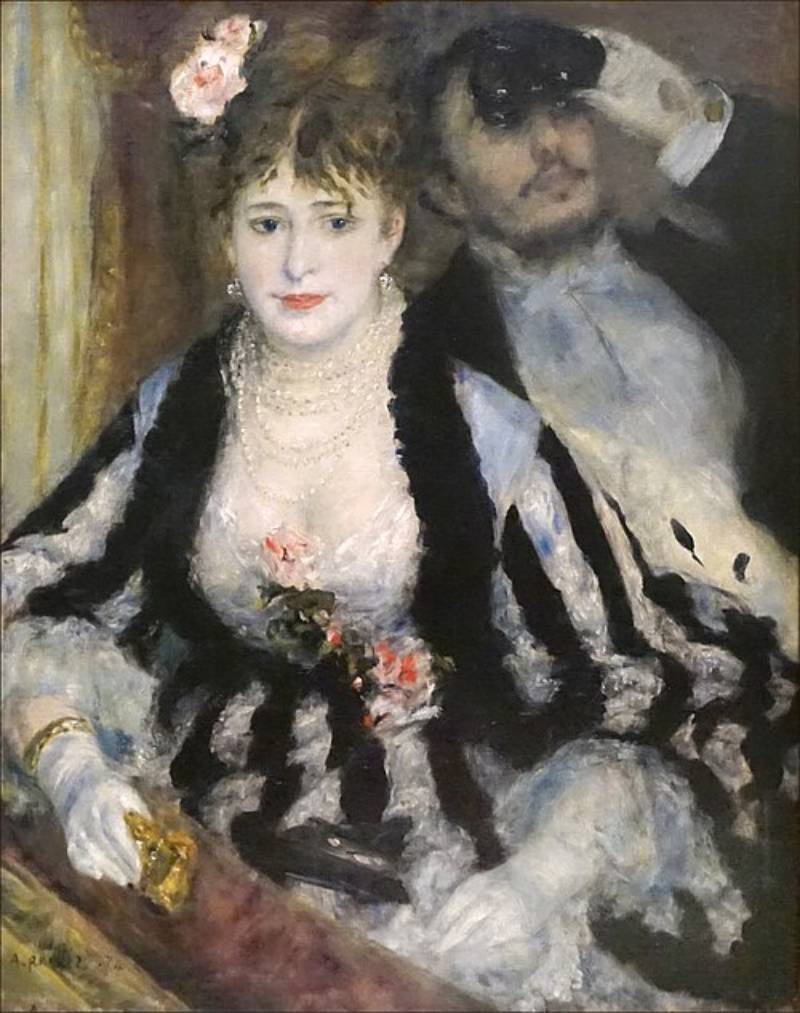
Pierre-Auguste Renoir
Life and Background
Born February 25, 1841, in Limoges, France. His family was working class. His father was a tailor.
They moved to Paris when Renoir was a small child, settling near the Louvre. At thirteen, he started working in a porcelain factory, painting decorative designs on plates. Turns out that steady hand for painting flowers on china translated well to fine art.
He entered the Ecole des Beaux-Arts in 1862 and studied under Charles Gleyre. That’s where he met Monet, Sisley, and Bazille. They’d go on to build an entirely new way of painting together.
Art Movement and Style
Renoir was one of the founding figures of Impressionism, but his focus was always people. Where Monet painted landscapes, Renoir painted Parisian social life, portraits, and the warmth of human connection.
His style changed noticeably over time. The feathery, light-drenched canvases of the 1870s gave way to a more structured, classical approach in the 1880s after a trip to Italy, where he studied Raphael and Roman sculpture.
By the end of his career, even with severe arthritis that curled his hands, he kept painting. He had brushes strapped to his wrists. That kind of dedication tells you something about the man.
Most Famous Paintings
- Bal du moulin de la Galette (1876) – a Sunday afternoon dance in Montmartre
- Luncheon of the Boating Party (1881) – friends gathered along the Seine
- Dance at Bougival (1883) – a couple in motion, full of warmth
- The Large Bathers (1887) – his most ambitious classical composition
- Young Girls at the Piano (1892) – a quiet domestic moment
Techniques and Methods
Renoir used broken brushstrokes and bold combinations of pure color to capture light and movement. His early technique was loose and spontaneous. Later, he adopted a more linear approach with sharper outlines.
He was deeply influenced by the Rococo masters like Boucher and Fragonard. You can see it in the soft, warm sensuality of his figures and the way his paintings seem to glow from within.
Influence on Art History
Renoir showed that Impressionism could go beyond landscapes and into everyday human experience. Pablo Picasso and Matisse both acknowledged him as a key influence, especially his late monumental nudes.
He lived long enough to see one of his paintings acquired by the Louvre in 1919. He died that December in Cagnes-sur-Mer.
Where to See Their Work
The Musee d’Orsay in Paris has many of his best-known canvases. The Barnes Foundation in Philadelphia holds the single largest Renoir collection, with 181 paintings. The National Gallery in London, the Metropolitan Museum of Art, and the Art Institute of Chicago also display significant works.
Paul Cezanne

Life and Background
Born January 19, 1839, in Aix-en-Provence. His father was a wealthy banker who wanted Paul to follow him into finance. Cezanne tried, briefly. It didn’t take.
He moved to Paris in 1861 and struggled at first. The Salon rejected his submissions repeatedly. He was awkward socially, and his early dark, thick-layered paintings confused most viewers.
Under the guidance of Camille Pissarro, he gradually lightened his palette and began working outdoors. But he never fully fit with the Impressionist crowd. He was always doing something slightly different.
Art Movement and Style
Cezanne sits between Impressionism and Cubism. He’s often called “the father of modern art” for good reason.
While the Impressionists chased fleeting light, Cezanne wanted structure. He broke subjects down into geometric forms. An apple became a sphere. A tree trunk became a cylinder. This idea of reducing nature to basic shapes and forms laid the groundwork for nearly everything that followed in the 20th century.
Most Famous Paintings
- The Large Bathers (1906) – his largest and most ambitious canvas
- Mont Sainte-Victoire series – dozens of paintings of the mountain near his home
- The Card Players (1890-1895) – one version sold for over $250 million in 2011
- Still Life with Apples (various) – he turned simple fruit into something monumental
- Boy in a Red Waistcoat (1889) – a striking portrait study
Techniques and Methods
Cezanne applied paint in small, repetitive brushstrokes, building up planes of color layer by layer. He worked slowly and obsessively, sometimes spending years on a single painting.
He deliberately flattened perspective and showed objects from slightly shifting viewpoints within the same canvas. This approach directly anticipated what Picasso and Georges Braque would later develop into Cubism.
Influence on Art History
Picasso and Matisse both called him “the father of us all.” His geometric simplifications and his way of flattening space opened the door to Cubism, Fauvism, and virtually every major modern art movement.
He spent his final years painting in near-isolation in Provence. Died in 1906 from pneumonia after collapsing during a painting session outdoors. Kept working right until the end.
Where to See Their Work
The Musee d’Orsay in Paris, the Barnes Foundation in Philadelphia, and the Metropolitan Museum of Art in New York all hold major collections. The Musee Granet in Aix-en-Provence, his hometown, also displays several works and hosts related exhibitions.
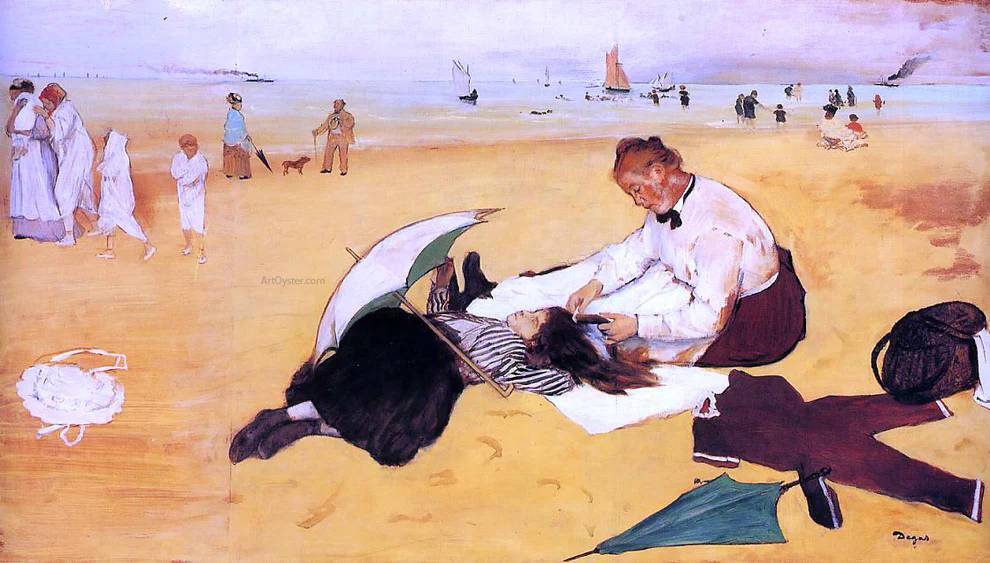
Edgar Degas
Life and Background
Born July 19, 1834, in Paris to a wealthy banking family. Unlike many of his peers, Degas never struggled financially. He studied at the Ecole des Beaux-Arts and traveled to Italy to study Renaissance masters firsthand.
He came from privilege, and it showed in his polished technique and classical training. But he was drawn to the modern Parisian art scene and eventually fell in with the Impressionist group.
Art Movement and Style
Degas exhibited with the Impressionists, but he never loved the label. He called himself a realist. He said, “No art is less spontaneous than mine.”
Where Monet and Renoir worked outdoors chasing light, Degas preferred the controlled environment of a studio. His subjects were ballet dancers, racehorses, laundresses, and cafe scenes. All observed with almost clinical precision but arranged with striking, unexpected compositions.
His framing often looks cropped, almost photographic. Figures get cut off at the edges. The focal point sits off-center. It was a deliberate break from traditional layout that still feels modern today.
Most Famous Paintings
- The Ballet Class (1874) – one of his most iconic dance scenes
- L’Absinthe (1876) – a bleak, honest look at Parisian cafe life
- The Star (L’Etoile) (1878) – a ballerina in the spotlight
- Blue Dancers (1897) – a late masterpiece in pastel
- The Tub (1886) – a private bathing scene, raw and unidealized
Techniques and Methods
Degas worked across multiple painting mediums. Oil, pastel, monotype, sculpture. He was also an accomplished draughtsman with an extraordinary command of line.
His pastel work is particularly famous. He layered pastels in ways that gave his ballet scenes an almost glowing quality, building texture and depth that you don’t usually see in the medium.
Influence on Art History
Degas proved that modern, everyday subjects could be just as worthy as mythological or historical ones. His unusual compositions influenced photography, printmaking, and generations of figure painters after him.
He’s also one of the few Impressionist-era artists equally celebrated for sculpture, particularly his Little Dancer of Fourteen Years.
Where to See Their Work
The Musee d’Orsay in Paris holds the largest collection. The Metropolitan Museum of Art, the National Gallery of Art in Washington, and the Art Institute of Chicago also have significant holdings.
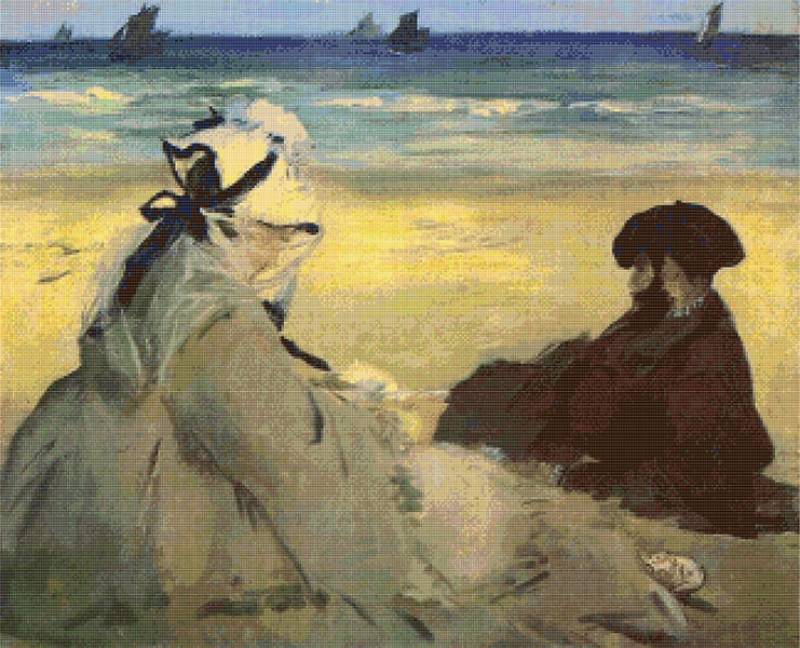
Edouard Manet
Life and Background
Born January 23, 1832, in Paris to an upper-class family. His father was a judge who wanted him to study law. Manet wanted to paint. After failing naval exams twice, his parents finally gave in.
He studied under Thomas Couture for six years and spent long hours copying old masters at the Louvre, especially Diego Velazquez, Titian, and Francisco Goya. He also traveled to Italy, Germany, and Holland to study painting firsthand.
Art Movement and Style
Manet is often called the bridge between Realism and Impressionism. He painted modern life with a directness that shocked audiences in the 1860s.
His flat brushwork, reduced tonal range, and refusal to soften his subjects made academic painters furious. But younger artists, including Monet and Degas, saw him as the leader of a new direction in art.
The tricky thing about Manet is that he never joined the Impressionists. He always preferred exhibiting at the official Salon. He wanted to challenge the system from inside it, not abandon it.
Most Famous Paintings
- Le Dejeuner sur l’herbe (1863) – a nude woman picnicking with dressed men, scandalous at the time
- Olympia (1863) – a reclining nude who stares directly at the viewer
- A Bar at the Folies-Bergere (1882) – his last major work, full of visual puzzles
- The Fifer (1866) – a young military musician, strikingly flat and bold
- Music in the Tuileries (1862) – one of the earliest paintings of modern Parisian social life
Techniques and Methods
Manet used bold contrasts between light and dark with minimal transitional tones. His brushwork was loose and visible, his backgrounds often simplified or flattened.
He drew heavily from Spanish painting traditions, especially Velazquez’s approach to direct observation and limited palette. His alla prima (wet-on-wet) technique gave his paintings an immediacy that set them apart.
Influence on Art History
Without Manet, Impressionism might not have happened. At least not when it did. His willingness to paint modern subjects without apology gave younger artists permission to do the same.
Art historian Beatrice Farwell described him as “universally regarded as the Father of Modernism.” He died in 1883 at age 51 from complications of syphilis. The French government had awarded him the Legion of Honor just two years earlier.
Where to See Their Work
The Musee d’Orsay in Paris houses both Olympia and Le Dejeuner sur l’herbe. The Courtauld Gallery in London holds A Bar at the Folies-Bergere. The Metropolitan Museum of Art and the National Gallery of Art in Washington also have significant collections.
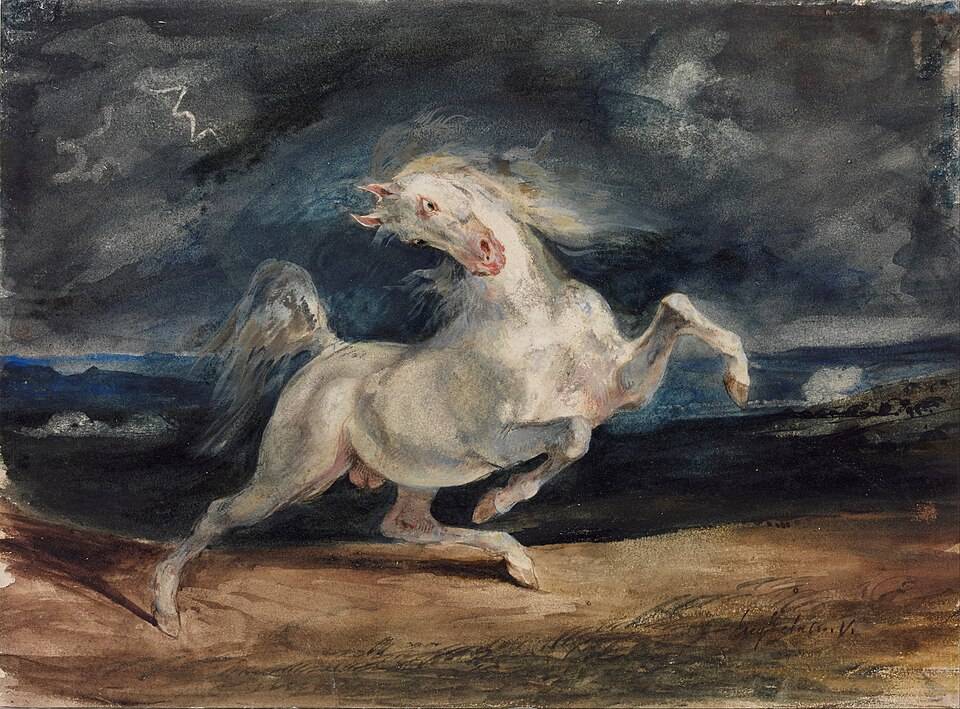
Eugene Delacroix
Life and Background
Born April 26, 1798, near Paris. His legal father was a diplomat, though some historians believe his biological father was the statesman Talleyrand. Either way, he grew up in cultured, politically connected circles.
Delacroix studied at the Ecole des Beaux-Arts and was deeply influenced by his friendship with Theodore Gericault, whose Raft of the Medusa made a lasting impression on him.
Art Movement and Style
Delacroix was the leading figure of French Romanticism. Where Neoclassical painters like Ingres valued precision and clean lines, Delacroix prioritized emotion, movement, and bold color.
He was passionate about color theory and explored how placing certain hues side by side could intensify their visual effect. His handling of value and hue directly influenced the generation that came after him.
Most Famous Paintings
- Liberty Leading the People (1830) – one of the most recognized paintings in French art
- The Death of Sardanapalus (1827) – a chaotic, violent Romantic masterpiece
- Women of Algiers (1834) – inspired by a visit to North Africa
- The Massacre at Chios (1824) – depicting the horrors of the Greek War of Independence
- Christ on the Sea of Galilee (1854) – dramatic religious painting
Techniques and Methods
Delacroix used quick, expressive brushstrokes and layered colors instead of mixing them on his palette. This technique of separating tones on the canvas would later inspire the Impressionists.
He was incredibly productive. Over 800 paintings, more than 1,500 pastels and watercolors, and thousands of drawings. A trip to Morocco in 1832 changed his color palette permanently, bringing in warmer, more vivid hues.
Influence on Art History
His approach to color influenced Monet, Renoir, Cezanne, and Seurat. Many of them painted direct homages to Delacroix’s work. He’s the reason French painting shifted from cool Neoclassicism toward the expressive, color-driven art of the modern era.
He died on August 13, 1863, in Paris. His studio is now a museum in the Saint-Germain-des-Pres neighborhood.
Where to See Their Work
Liberty Leading the People hangs in the Louvre. The Musee Delacroix in Paris, located in his former studio, houses drawings, prints, and personal objects. Major works also appear at the Metropolitan Museum of Art and the National Gallery in London.
Henri Matisse
Life and Background
Born December 31, 1869, in Le Cateau-Cambresis, northern France. He didn’t start painting until age 20 while recovering from appendicitis. His mother gave him a set of paints, and that was it. He later described the experience as discovering “a kind of paradise.”
He moved to Paris, studied at the Academie Julian, and eventually entered the studio of Symbolist painter Gustave Moreau.
Art Movement and Style
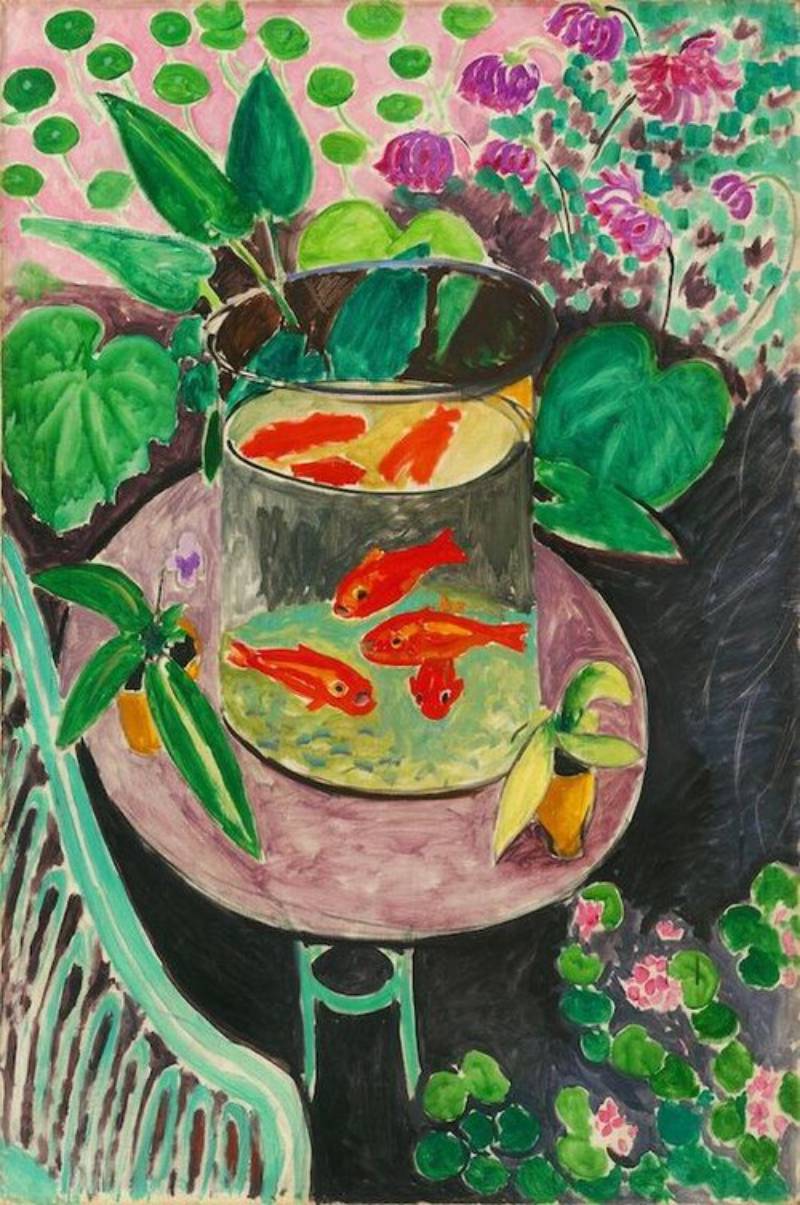
Matisse was the leader of Fauvism, a short-lived but explosive art movement named after a critic called the artists “fauves” (wild beasts) for their aggressive use of color.
His paintings are defined by flat areas of intense, sometimes clashing color. He simplified form and pushed decorative pattern into fine art territory. His lifelong rivalry and friendship with Picasso pushed both of them to keep innovating.
Most Famous Paintings
- The Dance (1910) – five figures swirling in a circle, pure energy
- Woman with a Hat (1905) – the painting that sparked the Fauvist label
- The Red Studio (1911) – an entire room rendered in saturated red
- Blue Nude II (1952) – a late-career paper cut-out masterpiece
- The Joy of Life (1906) – a large-scale pastoral with vivid, unnatural color
Techniques and Methods
Matisse worked across oil, sculpture, printmaking, and his famous paper cut-outs. In his later years, when illness limited his ability to paint, he cut shapes from painted paper and arranged them into compositions he called “painting with scissors.”
His approach to color harmony was instinctive rather than scientific. He trusted his eye over theory, which is part of what makes his palette feel so alive and unpredictable.
Influence on Art History
Alongside Picasso and Marcel Duchamp, Matisse is considered one of the three most influential artists of the 20th century. His paper cut-outs alone influenced an entire generation of designers and artists.
He died on November 3, 1954, in Nice. The Matisse Museum in Nice and the Chapel of the Rosary in Vence, which he designed entirely, are lasting testaments to his vision.
Where to See Their Work
The Museum of Modern Art in New York holds major works including The Red Studio and The Dance. The Hermitage in Saint Petersburg, the Musee Matisse in Nice, and the Barnes Foundation in Philadelphia all have important collections.
Paul Gauguin
Life and Background
Born June 7, 1848, in Paris. Spent part of his childhood in Peru. Worked as a stockbroker in his twenties. A successful one, actually.
Art was a weekend hobby until the Paris stock market crashed in 1882. Gauguin took it as a sign and became a full-time painter. His wife was not thrilled. They eventually separated, and she took their five children to Denmark.
Under the mentorship of Camille Pissarro, he entered the Impressionist circle and exhibited with the group in the early 1880s. But he quickly moved toward something more personal and symbolic.
Art Movement and Style
Gauguin is a central figure in Post-Impressionism. He rejected naturalistic color and linear perspective in favor of flat, bold areas of intense color and simplified forms.
His Synthetist style combined visible outlines, non-naturalistic color, and Symbolist subject matter. He wanted to paint the emotional and spiritual truth behind what he saw, not just its surface appearance.
He spent years in Tahiti and the Marquesas Islands, producing paintings inspired by Polynesian life, culture, and spirituality.
Most Famous Paintings
- Where Do We Come From? What Are We? Where Are We Going? (1897) – his philosophical masterpiece
- Vision After the Sermon (1888) – Breton women witnessing Jacob wrestling an angel
- When Will You Marry? (1892) – sold for nearly $300 million in 2015
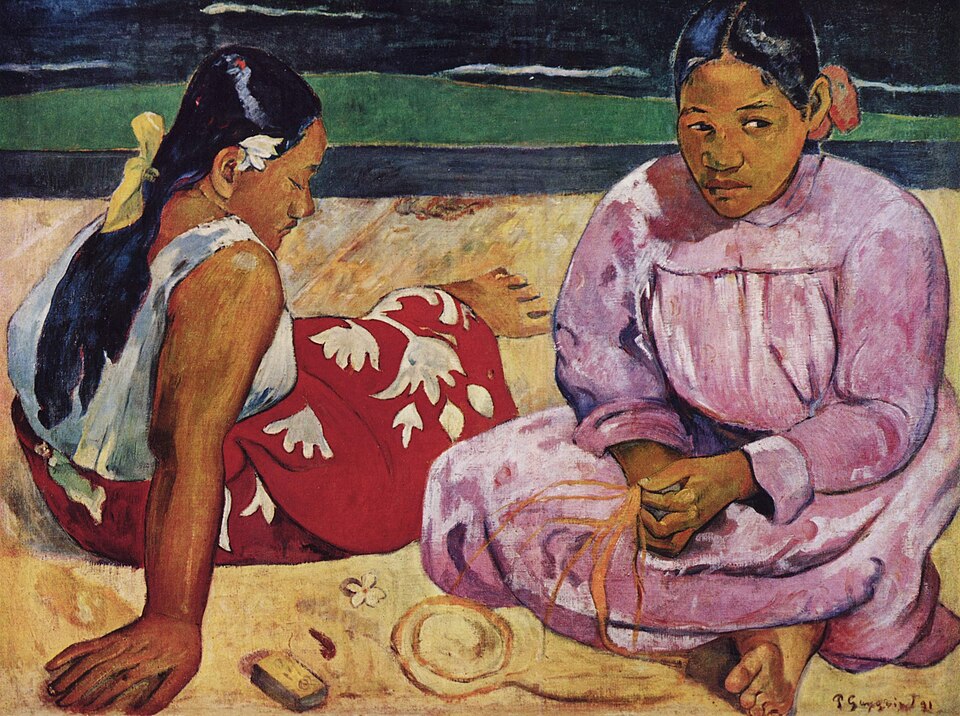
- Tahitian Women on the Beach (1891) – a serene depiction of island life
- The Yellow Christ (1889) – a simplified, folk-art-inspired crucifixion
Techniques and Methods
Gauguin applied flat planes of unmixed color separated by dark outlines. This technique, called cloisonnism, borrowed from stained glass and Japanese woodblock prints.
He experimented with woodcarving, ceramics, and printmaking alongside painting. His process of draining oil from paint to create a matte finish gave his canvases a distinctive, rough texture.
Influence on Art History
Gauguin’s bold color and flattened forms directly influenced the Fauvist movement, particularly Matisse and Andre Derain. His willingness to leave Europe entirely for subject matter also opened the door for artists seeking inspiration outside Western traditions.
He died in 1903 in the Marquesas Islands. His reputation grew enormously after death, thanks partly to dealer Ambroise Vollard.
Where to See Their Work
The Museum of Fine Arts in Boston holds Where Do We Come From? The Musee d’Orsay in Paris, the National Gallery in London, and the Courtauld Gallery all have significant Gauguin collections.
Camille Pissarro

Life and Background
Born July 10, 1830, on the island of St. Thomas in the Danish West Indies. His father was a merchant of Portuguese-Jewish descent. Pissarro moved to Paris as a young man and began studying art, drawing inspiration from Gustave Courbet and Camille Corot.
He’s the only artist who exhibited at all eight Paris Impressionist exhibitions, from 1874 to 1886. Art historian John Rewald called him “the dean of the Impressionist painters.”
Art Movement and Style
Pissarro worked across both Impressionism and Neo-Impressionism. In his fifties, he adopted Pointillism for a period, painting alongside Georges Seurat and Paul Signac.
His subjects were rural landscapes, village life, and the people who inhabited those spaces. He painted farmers, markets, and country roads with a quiet dignity that set him apart from the Parisian focus of many Impressionists.
Most Famous Paintings
- Boulevard Montmartre series (1897) – the same Paris street across different seasons and times of day
- The Harvest (1882) – figures working in golden fields
- Red Roofs (1877) – village buildings seen through bare winter trees
- Apple Harvest (1888) – country life rendered with Neo-Impressionist technique
- The Garden of Pontoise (1877) – lush greens and domestic calm
Techniques and Methods
Pissarro’s early work used the loose, broken brushstrokes typical of Impressionism. When he shifted to Pointillism, he applied tiny dots of pure color that blended optically when viewed from a distance.
He eventually returned to a freer technique, finding Pointillism too rigid for his temperament. His late landscape paintings and urban views combine the best of both approaches.
Influence on Art History
Pissarro mentored Cezanne, Gauguin, and van Gogh. Cezanne called him “a father for me.” His generosity as a teacher and his open-mindedness toward new ideas made him the glue that held the Impressionist group together.
He died on November 13, 1903, in Paris. Six of his seven children became painters.
Where to See Their Work
The Musee d’Orsay in Paris and the Metropolitan Museum of Art in New York hold major collections. The National Gallery in London and the Ashmolean Museum in Oxford also display important works.
Jacques-Louis David
Life and Background
Born August 30, 1748, in Paris. His father died when he was young, and he was raised by well-off uncles who supported his art education. He studied under Joseph-Marie Vien and eventually won the prestigious Prix de Rome, which funded a study trip to Italy.
In Rome, he studied ancient sculpture and the works of Caravaggio and Raphael. That experience shaped everything he painted afterward.
Art Movement and Style
David was the leading painter of French Neoclassicism. His paintings drew on ancient Greek and Roman subjects, emphasizing moral virtue, duty, and sacrifice.
His compositions are carefully balanced, his drawing precise, and his colors restrained compared to the Rococo painters who came before him. He stripped away decorative excess and focused on clarity, structure, and emotional directness.
He was also deeply political. During the French Revolution, he was a committed supporter who voted for the execution of Louis XVI. He later became Napoleon’s official court painter.
Most Famous Paintings
- The Death of Marat (1793) – a revolutionary martyr in his bathtub
- Oath of the Horatii (1784) – a call to patriotic duty, considered the manifesto of Neoclassicism
- The Coronation of Napoleon (1807) – a massive, politically charged historical painting
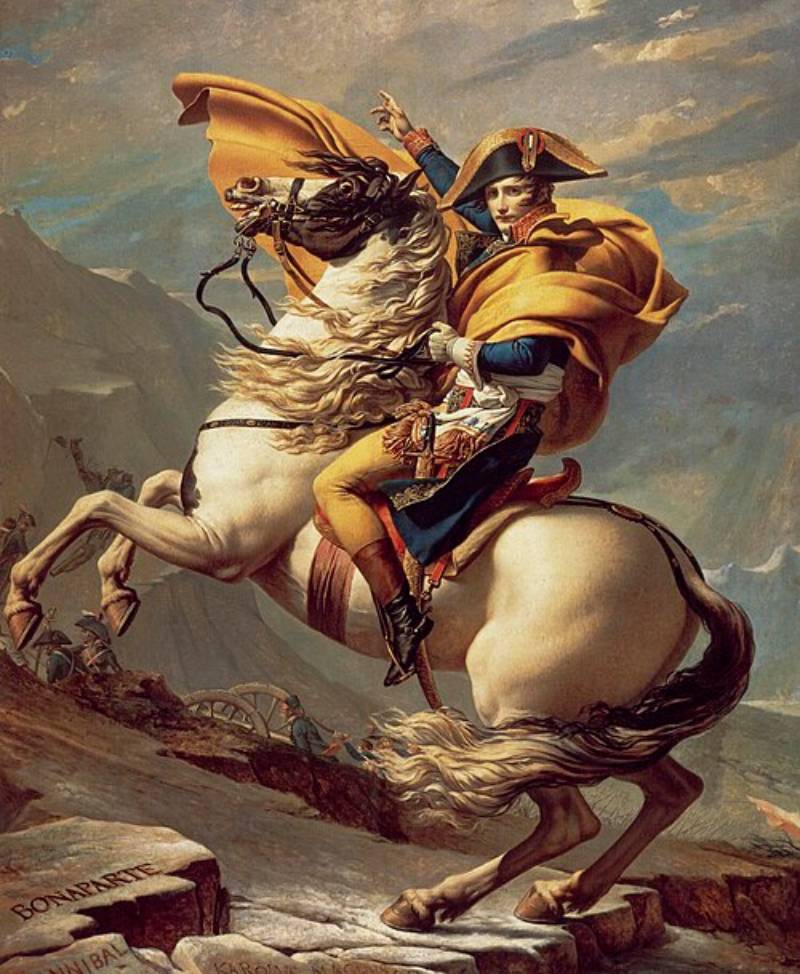
- Napoleon Crossing the Alps (1801) – an idealized portrait of military power
- The Death of Socrates (1787) – the philosopher choosing principle over survival
Techniques and Methods
David’s technique was meticulous. Clean lines, smooth surfaces, precise anatomical drawing. He used chiaroscuro to create dramatic lighting and arranged his figures like stage actors in carefully planned compositions.
He ran one of the most influential art studios in Paris. His students included Ingres, who would carry the Neoclassical torch into the next generation.
Influence on Art History
David essentially set the visual language for political painting. His approach to historical subjects influenced not just fine art but propaganda, public monuments, and national identity across Europe.
After Napoleon’s fall, David was exiled to Brussels, where he continued painting until his death in 1825. His legacy runs through every painter who ever used art to make a political statement.
Where to See Their Work
The Coronation of Napoleon and The Death of Marat are at the Louvre. The Metropolitan Museum of Art, the Musees Royaux des Beaux-Arts in Brussels, and the National Gallery of Art in Washington also hold key works.
FAQ on Famous French Painters
Who is the most famous French painter of all time?
Claude Monet is widely considered the most famous. He founded the Impressionist movement, and his Water Lilies series remains one of the most recognized bodies of work in Western art history.
What art movements did French painters create?
French artists launched Impressionism, Post-Impressionism, Fauvism, Neoclassicism, and Romanticism. They also played key roles in Cubism and Surrealism. Most major painting styles from the 18th through 20th centuries started in France.
Who were the main French Impressionist painters?
The core group included Monet, Pierre-Auguste Renoir, Edgar Degas, Camille Pissarro, and Edouard Manet. They exhibited together starting in 1874, though Manet never officially joined the independent shows.
What is the most famous French painting?
The Mona Lisa by Leonardo da Vinci hangs in the Louvre, but among works by French-born painters, Monet’s Impression, Sunrise and Delacroix’s Liberty Leading the People are the most widely recognized.
Where can I see famous French paintings in Paris?
The Musee d’Orsay holds the largest Impressionist collection. The Louvre covers older French masters. The Musee de l’Orangerie houses Monet’s Water Lilies murals. The Musee Marmottan Monet is also worth visiting.
What techniques did French painters use?
Techniques varied widely. Impressionists used loose brushwork and painted outdoors. Neoclassical painters favored precise drawing and smooth surfaces. Post-Impressionists experimented with color theory, geometric form, and Pointillism.
Why is France so important in art history?
France’s cultural institutions, royal patronage, and the Paris Salon system created a competitive environment for painters. The Ecole des Beaux-Arts trained generations of artists, and Paris attracted talent from across Europe for centuries.
Who is considered the father of modern art in France?
Paul Cezanne holds that title. His geometric simplifications and flattened perspective bridged Impressionism and Cubism. Picasso and Matisse both called him “the father of us all.”
Were there famous female French painters?
Yes. Berthe Morisot was a founding member of the Impressionist group. Rosa Bonheur gained international fame for her animal paintings. Both faced barriers but achieved recognition during their lifetimes.
What is the difference between Impressionism and Post-Impressionism?
Impressionism focused on capturing natural light and fleeting moments. Post-Impressionism kept the bright palette but added more structure, emotional depth, and symbolic content. Cezanne, Gauguin, and Seurat led the shift.
Conclusion
These famous French painters didn’t just make beautiful art. They rewrote the rules of visual expression across centuries, from the structured grandeur of Neoclassical canvases to the color-driven experiments of the Fauvist movement.
Each artist on this list pushed oil painting, composition, and brushwork in directions no one expected. Monet dissolved form into light. Cezanne rebuilt it with geometry. Degas turned ballet rehearsals into studies of human motion.
Their masterpieces still fill the Louvre, the Musee d’Orsay, and galleries worldwide. And their influence reaches into every corner of modern and contemporary art.
If one thing connects all of them, it’s this: they painted what they believed in, even when critics and the public pushed back. That’s what made French painting the center of the art world for over two hundred years.