You’ve probably stood in front of a Kandinsky painting wondering what you’re supposed to see. Or maybe you love the freedom in those swirling colors and shapes.
Understanding what is abstract art unlocks over a century of visual language that changed how we think about painting, sculpture, and artistic expression itself.
This guide breaks down abstract art from its explosive birth in the early 1900s through movements like Abstract Expressionism and Minimalism.
You’ll learn who created it, why geometric shapes and color field compositions matter, and how artists from Piet Mondrian to Jackson Pollock built entire careers on non-representational forms.
No art degree required.
What is Abstract Art?
Abstract art uses visual language through shape, form, color and line to create compositions with independence from visual references in the world. It’s painting or sculpture where recognizable objects take a backseat. Sometimes they disappear completely.
The non-representational approach means you won’t find realistic portraits or landscapes. Instead, artists work with pure abstraction, letting geometric shapes and color relationships carry the weight.
This artistic movement breaks from centuries of Western art tradition that prioritized reproducing visible reality. The logic of perspective? Gone.
Some abstract artworks pull away from reality gradually. Others have no source in external visual reality at all.
Think of it as visual language stripped down to basics. Color, spatial elements, forms and lines become the message rather than tools to describe something else.
The canvas composition itself matters more than what it might represent.
When Did Abstract Art Begin
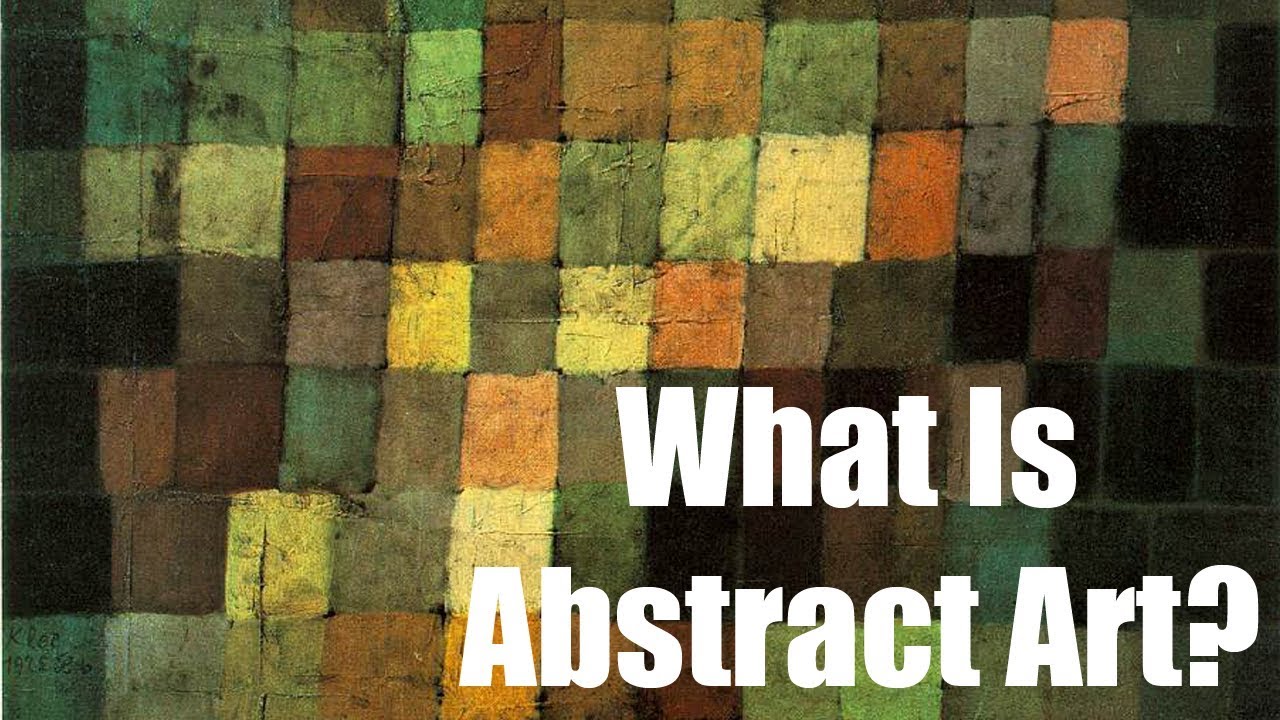
Abstract art emerged between 1910 and 1915, though the roots stretch back further into the 19th century.
Most art historians point to the early 20th century as the birth period. Technology was changing fast, philosophy was shifting, science was exploding with new ideas.
Artists felt the need to create something matching those fundamental changes.
Wassily Kandinsky traditionally gets credit for painting the first purely abstract pictures around 1910-1911. His works contained no recognizable objects, just pure visual expression.
But that narrative got complicated.
Hilma af Klint, a Swedish artist, created abstract paintings earlier. Her work from 1906 onward shows clear abstraction, years before Kandinsky’s famous pieces.
The debate continues among scholars.
Before true abstraction arrived, several movements paved the way. Impressionism started questioning realistic representation in the 1860s.
Post-Impressionism pushed further. Then came Fauvism with wild, expressive color around 1905.
Cubism, based on Cézanne’s idea that all depiction reduces to cube, sphere and cone, opened the door wide. The 1912 Salon de la Section d’Or in Paris showcased František Kupka’s “Amorpha, Fugue in Two Colors.”
Pure abstraction had arrived.
Cultural connections between major European cities became extremely active at the turn of the century. Artists shared ideas through exhibitions, manifestos, artist books.
Munich, Paris, Moscow, St. Petersburg. Ideas cross-fertilized rapidly.
The period from the Renaissance to the mid-19th century had been dominated by attempts to reproduce illusions of visible reality. By the late 1800s, many painters wanted out.
Who Created Abstract Art

Wassily Kandinsky gets the pioneer label most often. Russian-born, he moved through various European cities before settling in Germany.
His theoretical writings argued that art should be like music. Pure patterns of form and color, no need for recognizable subjects.
Kandinsky’s early abstract work around 1910-1911 broke new ground, though as mentioned, Hilma af Klint was working in abstraction earlier.
Klint’s spiritual approach differed from Kandinsky’s. She created abstract paintings as early as 1906, influenced by spiritualism and theosophy.
Her work stayed mostly private during her lifetime. The art world rediscovered her in recent decades.

Piet Mondrian developed geometric abstraction through the 1910s. Started painting trees, kept abstracting them until only horizontal and vertical lines remained.
His squares of primary color with black lines defined the De Stijl movement he co-founded in 1917.
Kazimir Malevich founded Suprematism in 1913. He believed in the supremacy of pure artistic feeling over visual reality.
His “Black Square” from 1915 became one of modern art’s most radical statements. Just a black square on white background.
Nothing else.
Robert Delaunay and Sonia Delaunay worked with Orphism, using vibrant color and circular forms. Paul Klee taught at the Bauhaus alongside Kandinsky, developing his own abstract vocabulary.
František Kupka exhibited abstract work as early as 1912. Vladimir Tatlin pushed into three-dimensional abstract sculpture.
The list goes on. Abstract art wasn’t one person’s invention but a wave that swept through early 20th century art.
What Are the Main Forms of Abstract Art
Abstract art split into multiple directions almost immediately. Different artists had different goals.
Geometric Abstraction
Hard edges, precise shapes, calculated compositions. Mondrian’s grids, Malevich’s squares, circles and triangles.
Lyrical Abstraction
Kandinsky represented this branch. Emotional expression through swirling color and organic forms, more intuitive than geometric approaches.
Suprematism

Malevich’s movement from 1913 sought pure pictorial sensibility. Basic geometric forms speaking for themselves without reference to the visible world.
De Stijl (Neo-Plasticism)
Founded 1917 in the Netherlands. Mondrian’s primary colors, horizontal and vertical lines only, perfect balance sought through asymmetry.
Constructivism
Russian movement using abstract geometric forms with industrial materials. Art serving social purposes, rejecting “art for art’s sake.”
Abstract Expressionism
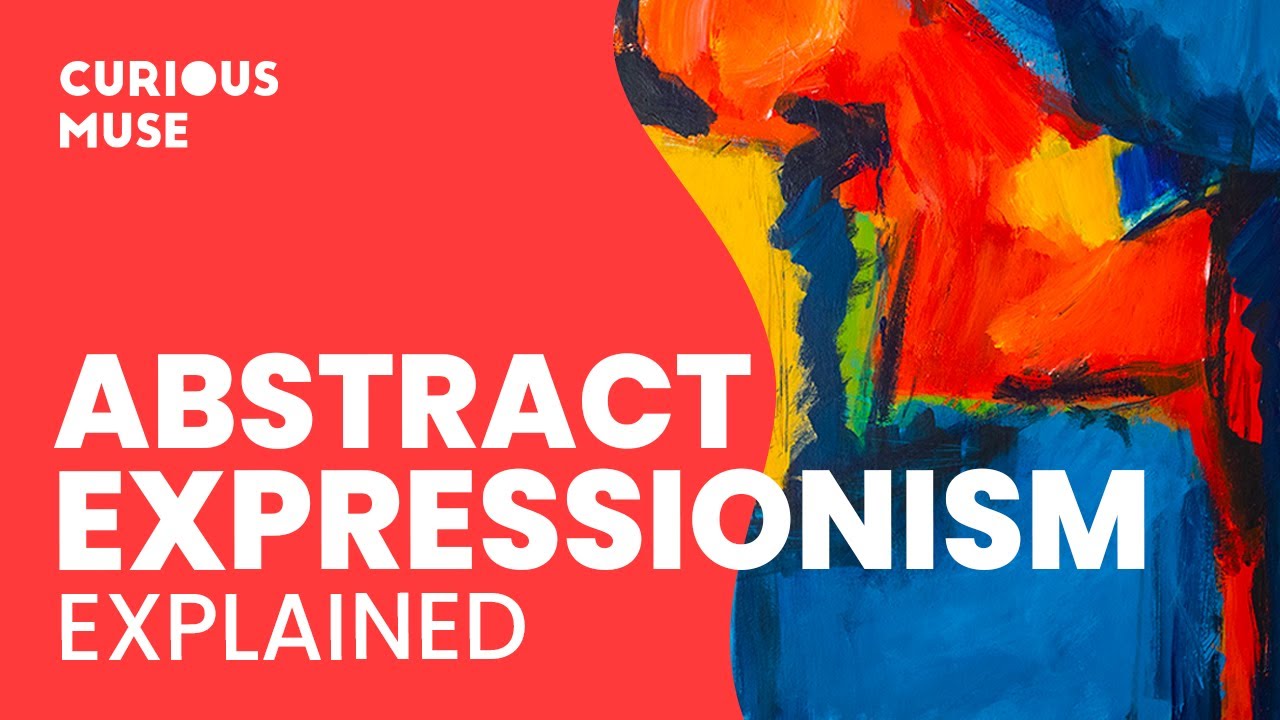
American movement from the 1940s-1950s. Two main branches: action painting (Pollock’s drip technique) and color field (Rothko’s luminous rectangles).
Minimalism
s movement stripping art to essential forms. Donald Judd’s boxes, Dan Flavin’s neon tubes, Agnes Martin’s subtle grids.
Op Art
Victor Vasarely pioneered this in the 1960s. Optical illusions through pattern and color, making flat surfaces appear to move or vibrate.
Orphism
Robert and Sonia Delaunay’s movement around 1912. Bright colors in circular, overlapping forms, influenced by Cubism but more lyrical.
Each branch developed its own vocabulary and philosophy. Some sought spiritual expression, others wanted pure visual experience.
The movements often overlapped and influenced each other.
How Do Artists Create Abstract Art
Methods vary wildly depending on the artist’s approach and the type of abstraction they’re after.
Intuitive Methods
Some artists work spontaneously. Jackson Pollock placed canvas on the floor, dripped and splattered paint using sticks and brushes, letting physical movement guide the composition.
Calculated Approaches
Mondrian spent years refining each composition. He’d sketch layouts, adjust proportions, repaint sections until achieving perfect balance between colored rectangles and black lines.
Gestural Techniques

Willem de Kooning used aggressive brushstrokes, leaving visible marks of the painting process. The physical act of painting became part of the artwork’s meaning.
Layering Methods
Mark Rothko applied thin layers of paint repeatedly. This created luminous surfaces where colors seemed to float and breathe.
Geometric Construction
Artists like Josef Albers used precise measurements and color theory. His “Homage to the Square” series explored how colors interact when placed in nested squares.
Collage and Cut-Outs
Henri Matisse in his later years cut shapes from painted paper. “The Snail” from 1953 arranges colored pieces suggesting a spiral form without depicting an actual snail.
Automatic Drawing
Influenced by Surrealism, some abstract artists used automatic techniques. Let the hand move without conscious control, tapping into subconscious creativity.
Reduction Process
Start with recognizable subjects, then simplify. Mondrian’s tree paintings gradually lost detail until only vertical and horizontal lines remained.
Materials matter too. Traditional oil on canvas works for many, but abstract artists also use acrylics for faster drying, industrial paints, found objects, neon lights.
Donald Judd fabricated metal boxes in factories. Dan Flavin arranged fluorescent light fixtures.
The creative process can be meditative and slow or wild and explosive. Depends entirely on what the artist wants to achieve.
What Materials Do Abstract Artists Use
Traditional and experimental materials both play roles in abstract art creation.
Canvas and Paper
Standard stretched canvas remains popular for painting. Some artists prefer paper for watercolor abstraction or drawing, while others use unstretched canvas tacked to walls or floors.
Paints and Pigments
Oil paint dominated early abstract art. Acrylics became standard after the 1950s due to faster drying times and vibrant colors.
Industrial Materials
Minimalists brought factory materials into galleries. Steel, aluminum, plexiglass, fluorescent tubes, concrete blocks.
Mixed Media
Collage elements, found objects, photographs, fabric. Artists combine whatever serves the composition.
Unconventional Tools
Pollock used sticks and hardened brushes for dripping. Some artists pour paint directly from cans, use squeegees, rags, or their hands instead of traditional brushes.
The painting techniques expanded alongside material choices. No rules about what counts as valid material for abstract composition.
Which Artists Defined Abstract Art History
Certain names show up repeatedly when tracing the art movement through decades.
Early Pioneers (1910s-1920s)
Kandinsky, Mondrian, Malevich created the foundation. Hilma af Klint worked in isolation, her importance recognized much later.
Bauhaus Era (1919-1933)
Paul Klee, Josef Albers, László Moholy-Nagy taught at the German school that united visual arts. Their influence spread globally after the Nazis forced closure in 1932.
Abstract Expressionists (1940s-1950s)
Jackson Pollock’s drip paintings shocked viewers. Mark Rothko created contemplative color fields, Willem de Kooning merged abstraction with aggressive gesture, Franz Kline worked in bold black and white.
Color Field Painters
Barnett Newman, Clyfford Still, Helen Frankenthaler explored large areas of flat color. Their work emphasized immediate visual impact over gestural marks.
Minimalists (1960s-1970s)
Donald Judd, Dan Flavin, Agnes Martin, Carl Andre stripped art to essential geometric forms. Less became more.
Op Art Movement
Victor Vasarely, Bridget Riley created optical illusions through precise patterns. Viewers’ eyes did the work, seeing movement in static paintings.
Each generation built on previous innovations while rejecting certain aspects. The conversation between artists across decades shaped what abstract art became.
What Role Did Bauhaus Play in Abstract Art
The Bauhaus school transformed abstract art from isolated experiments into systematic practice.
Walter Gropius founded the institution in Weimar, Germany in 1919. His philosophy united all visual and plastic arts from architecture and painting to weaving and stained glass.
The teaching program drew from Arts and Crafts movement ideas and German Werkbund principles.
Kandinsky and Klee taught there, bringing their abstract theories into structured curriculum. Josef Albers developed color theory exercises still used today.
Students learned that geometric shapes carried universal meaning. The circle, square and triangle became spatial elements underlying visible reality.
The school moved to Dessau in 1925. Expanded its influence across Europe.
Then came 1932. Nazi party gained control, branded the Bauhaus and its abstract art as degenerate.
The school closed.
But teachers and students scattered globally, particularly to the United States. They carried Bauhaus methods with them, spreading its approach to art education worldwide.
The 1937 “Entartete Kunst” (degenerate art) exhibition in Munich contained all types of avant-garde art the Nazis opposed. Many works came from Bauhaus circles.
How Did World War II Affect Abstract Art
The war relocated abstract art’s center from Paris to New York.
European artists fled Nazi persecution during the 1930s. Marcel Duchamp, Fernand Léger, Piet Mondrian, Max Ernst, André Breton, Jacques Lipchitz landed in New York.
They brought decades of modern art knowledge with them.
By the early 1940s, expressionism, cubism, abstraction, surrealism and dada were all represented in Manhattan. Young American artists absorbed everything.
The New York School emerged from this cross-pollination. Abstract Expressionism became the first specifically American movement to achieve international influence.
New York replaced Paris as the Western art world’s center. A role Paris had held for generations.
The shift happened fast. Within a decade, American abstract painters dominated global conversations about contemporary art.
Post-war prosperity gave American artists resources European artists lacked. Large studios, cheap materials, supportive galleries, wealthy collectors.
The Museum of Modern Art and Guggenheim Museum promoted abstract work aggressively. Critics like Clement Greenberg championed Abstract Expressionism as superior to European traditions.
Some saw this as genuine artistic revolution. Others viewed it as cultural imperialism wrapped in paint.
What Distinguishes Abstract Expressionism
Abstract Expressionism united diverse approaches under one label, though the artists often disagreed about goals and methods.
Historical Context
Emerged in 1940s New York after World War II. Replaced American social realism that had dominated during the Great Depression.
Two Main Approaches
Action painting emphasized physical gesture and spontaneous creation. Color field painting featured large areas of flat color creating contemplative experiences.
Key Characteristics
Large-scale canvases, emotional intensity, emphasis on the painting process itself. Many works showed influences from Surrealist automatic techniques.
Major Practitioners
Jackson Pollock dripped paint in rhythmic movements. Mark Rothko stacked luminous rectangles. Willem de Kooning slashed aggressive brushstrokes across canvas.
Critical Reception
Harold Rosenberg called the canvas “an arena in which to act.” Clement Greenberg promoted these painters as continuing modernism’s logical progression toward pure abstraction.
Cultural Impact
First American art movement achieving global dominance. Put New York at the center of the art world, a position it largely maintains.
The movement lost steam by the early 1960s. Pop Art and Minimalism rejected Abstract Expressionism’s emotional intensity and individualism.
But its influence spread through later movements. Neo-Expressionism in the 1980s revived gestural abstraction with new energy.
How Does Geometric Abstraction Work
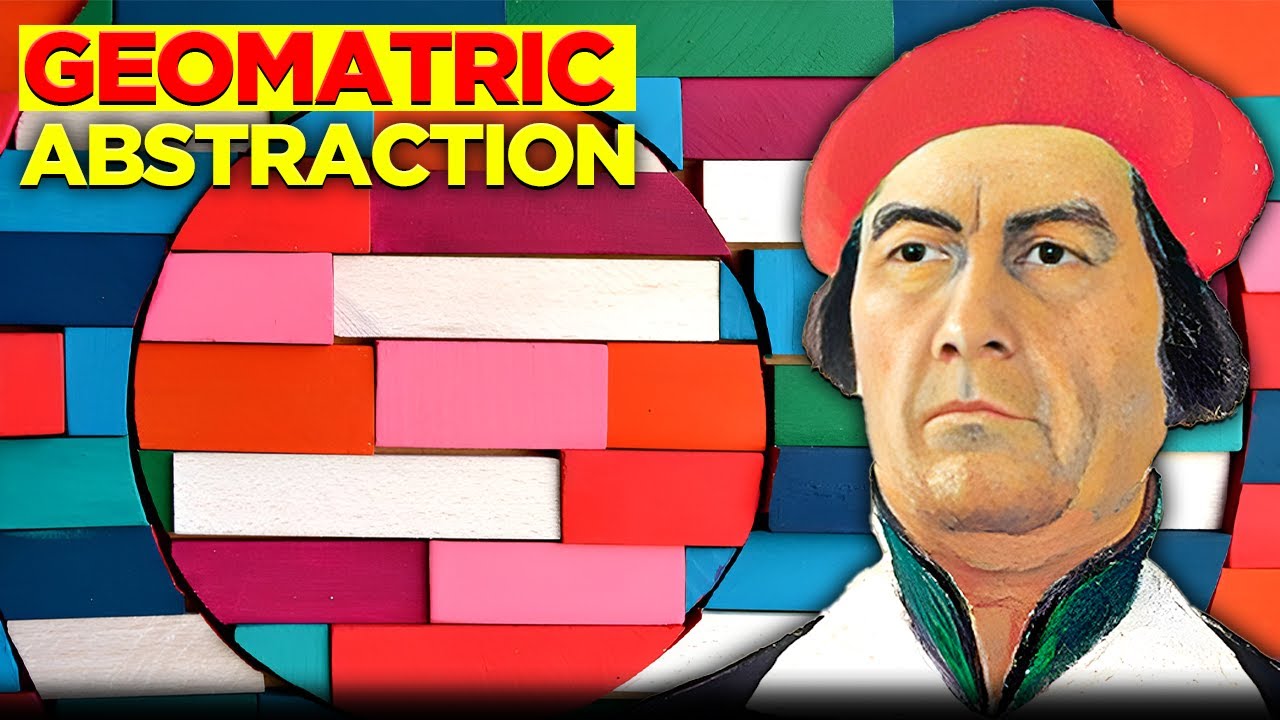
Geometric abstraction reduces visual language to basic shapes and calculated relationships.
Fundamental Forms
Circle, square, triangle serve as primary elements. These universal shapes carry meaning independent of any specific culture or time period.
Line Relationships
Horizontal and vertical lines create stability. Diagonals introduce dynamic tension, circles and curves add flow.
Color Application
Primary colors often dominate. Red, blue, yellow with black and white create maximum visual contrast without mixing.
Compositional Balance
Artists seek harmony through asymmetry. Unequal divisions that feel perfectly balanced when viewed as a whole.
Mathematical Precision
Some geometric abstractionists use mathematical ratios. Golden section, fibonacci sequences, systematic color progressions.
Piet Mondrian perfected this approach with his grid paintings. Each composition took months to refine.
Kazimir Malevich stripped it even further with Suprematism. His “White on White” from 1918 shows a white square on a white background.
Barely visible. Maximum reduction.
What Are the Characteristics of Lyrical Abstraction
Lyrical abstraction prioritizes emotional expression and intuitive creation over geometric precision.
Spontaneous Application
Artists work without rigid plans. Brushstrokes flow organically, responding to emotion and impulse rather than calculated design.
Organic Forms
Curved lines, flowing shapes, biomorphic elements replace hard geometric forms. Think clouds or water rather than architecture.
Color Relationships
Colors blend and interact emotionally. Kandinsky believed colors carried spiritual meanings and could evoke specific feelings in viewers.
Musical Analogies
Many lyrical abstractionists compared their work to music composition. Rhythms, harmonies, crescendos translated into visual terms.
Emotional Impact
The goal centers on feeling rather than intellectual understanding. Viewers should experience the work viscerally before analyzing it rationally.
Kandinsky wrote extensively about this in “Concerning the Spiritual in Art.” He argued abstract art could reach higher spiritual truths than representational work.
The approach contrasts sharply with geometric abstraction’s calculated methods. Both valid, completely different philosophies.
How Did Cubism Influence Abstract Art
Cubism broke objects into geometric fragments, paving the way for complete abstraction.
Pablo Picasso and Georges Braque developed the style between 1907 and 1914. They took Cézanne’s idea that all depiction reduces to cube, sphere and cone.
Then pushed it further.
Cubist paintings showed multiple viewpoints simultaneously. A face from front and side at once, a guitar deconstructed into overlapping planes.
This shattered Renaissance perspective’s single viewpoint. Reality became negotiable.
Many artists who later created pure abstraction passed through Cubist phases. Mondrian painted cubist-influenced work before his grid compositions.
Robert Delaunay developed Orphism from Cubist foundations, adding vibrant color and circular forms. František Kupka moved from Cubist analysis to complete abstraction.
The movement demonstrated that representing reality wasn’t art’s only option. Once that door opened, total abstraction became possible.
Fauvism contributed too, with its wild non-naturalistic color. But Cubism provided the structural breakthrough that made geometric abstraction logical.
What Is the Relationship Between Color and Abstract Art
Color in abstract art functions as primary content rather than descriptive tool.
Emotional Expression
Kandinsky assigned spiritual meanings to colors. Blue was spiritual and deep, yellow was earthy and aggressive, red carried warmth and vitality.
Color Field Approach
Rothko’s technique involved thin paint layers creating luminous surfaces. Colors appeared to glow from within, inviting contemplation.
Primary Color Systems
Mondrian restricted himself to red, blue, yellow plus black and white. This limitation created visual power through constraint.
Optical Effects
Op Art exploited how colors interact. Complementary colors vibrate when placed side by side, creating movement in static paintings.
Color Theory Applications
Josef Albers taught that color is relative. The same hue looks different depending on surrounding colors.
Psychological Impact
Abstract artists used color to trigger specific emotional states. Warm palettes create energy, cool palettes induce calm.
The Fauves, led by Henri Matisse, proved color could work independently from form. Their wild, expressive palettes influenced Kandinsky’s move into abstraction.
Without representational duties, color became the message itself.
Which Abstract Art Movements Emerged in the 1960s
The 1960s brought reactions against Abstract Expressionism’s emotional intensity.
Op Art
Victor Vasarely pioneered optical illusions through geometric patterns. Julio Le Parc, François Morellet and Bridget Riley created works that seemed to pulse and move.
Minimalism
Donald Judd, Dan Flavin, Robert Morris, Sol LeWitt reduced art to essential geometric structures. No emotion, no gesture, just presence.
Post-Painterly Abstraction
Helen Frankenthaler, Morris Louis, Kenneth Noland created stained canvases. Paint soaked into raw canvas rather than sitting on top, creating atmospheric effects.
Hard-Edge Painting

Ellsworth Kelly and Frank Stella used crisp boundaries between color areas. No blending, no gestural marks, just clean edges.
These movements shared certain traits. All rejected Abstract Expressionism’s painterly surfaces and emotional drama.
They preferred clarity over ambiguity, simplicity over complexity.
Minimalism went furthest, questioning what art even was. Judd’s metal boxes could be fabricated in factories. Flavin’s neon tubes came straight from hardware stores.
Was arranging industrial objects art? Minimalists said yes.
How Do Museums Present Abstract Art
Museum display of abstract work evolved alongside the art itself.
White Cube Galleries
Most museums show abstract art in neutral white spaces. Plain walls, controlled lighting, no distractions from the artworks themselves.
Scale Considerations
Abstract Expressionist paintings often span entire walls. Museums need high ceilings and large rooms to display them properly.
Educational Materials
Wall texts explain context, artist statements clarify intentions. Audio guides help viewers understand what they’re seeing.
Chronological vs. Thematic
Some museums organize by time period, showing abstract art’s evolution. Others group by theme or formal qualities, emphasizing visual relationships.
Interactive Elements
Modern museums add hands-on displays explaining abstract concepts. Color wheels, shape comparisons, technique demonstrations.
The Museum of Modern Art in New York holds massive abstract art collections. Same with the Guggenheim Museum, whose spiral architecture Frank Lloyd Wright designed specifically for viewing modern work.
Tate Modern in London dedicates entire floors to abstraction. The Pompidou Center in Paris does the same.
Public reception remains mixed. Some visitors love abstract work immediately, others struggle without recognizable subjects.
What Techniques Define Action Painting
Action painting makes the physical act of painting into the artwork’s subject.
Canvas Placement
Jackson Pollock laid canvas on the floor. This let him move around all sides, dripping and pouring paint from above.
Spontaneous Movement
No sketches, no planning. The artist’s body movements created the composition in real time.
Drip and Pour Methods
Pollock used sticks, hardened brushes, basting syringes. Paint fell in controlled chaos, creating intricate linear networks.
All-Over Composition
No focal point, no hierarchy. Every part of the canvas received equal attention, edge to edge.
Paint Viscosity
Artists adjusted paint thickness for different effects. Thin paint created delicate lines, thick paint made bold gestures.
Willem de Kooning’s approach differed. He kept canvas on the wall but attacked it with aggressive brushwork.
Franz Kline used house-painting brushes for bold black strokes on white canvas. Quick, decisive marks.
The technique connected to automatic drawing from Surrealism. Let the unconscious guide the hand, bypass rational control.
Harold Rosenberg called it making the canvas “an arena in which to act.” The painting became a record of the artist’s movements and decisions.
How Did Suprematism Change Abstract Art

Suprematism pushed abstraction to its logical extreme.
Kazimir Malevich founded the movement in Russia in 1913. He rejected representational art as obsolete.
His manifesto declared the supremacy of pure artistic feeling over visual reality. Basic geometric forms would express this feeling directly.
“Black Square” from 1915 shocked viewers. A black square centered on white background.
Nothing else appeared on the canvas. No depth, no illusion, no reference to anything outside itself.
Malevich called it “zero form.” The starting point for new art.
He continued with “Red Square” and compositions using circles and rectangles. His “White on White” series reduced color itself nearly to nothing.
Suprematist works influenced Constructivism and De Stijl. The idea that basic shapes carried inherent meaning spread through geometric abstraction.
The movement lasted roughly until 1925. Soviet authorities then demanded socialist realism.
But Suprematism’s radical reduction informed later Minimalism. Both movements questioned how little could constitute an artwork.
What Role Does Form Play in Abstract Composition
Form in abstract art operates independently from representational duties.
Geometric Forms
Squares, circles and triangles create stable, recognizable elements. Their clarity lets viewers focus on relationships between shapes.
Organic Forms

Biomorphic shapes suggest natural growth without depicting specific objects. Joan Miró and Jean Arp used these extensively.
Spatial Relationships
Forms overlap, touch, separate. These interactions create visual tension or harmony depending on arrangement.
Figure-Ground Dynamics
Deciding which shapes advance and which recede. Sometimes the distinction collapses, creating ambiguous space.
Scale Variations
Large forms dominate, small forms create accents. Size relationships affect the composition’s balance and rhythm.
Kandinsky wrote about form’s spiritual properties. Circles represented cosmic perfection, triangles suggested aggression, squares communicated stability.
Whether viewers consciously recognize these meanings remains debatable. But artists believed forms carried inherent expressive power.
How Did De Stijl Movement Develop
De Stijl emerged in the Netherlands during World War I.
Piet Mondrian and Theo van Doesburg founded the movement in 1917. They published a magazine called “De Stijl” (The Style) spreading their ideas.
The philosophy rejected individual expression in favor of universal harmony. Art should reflect cosmic order through geometric abstraction.
Visual vocabulary restricted to straight lines, right angles and primary colors. Nothing curved, nothing mixed, nothing decorative.
Mondrian’s grid paintings became the movement’s most recognizable works. Black lines divided canvas into rectangles, some filled with red, blue or yellow.
Others left white.
Perfect asymmetrical balance. Every element precisely placed.
Van Doesburg eventually introduced diagonal lines, which Mondrian rejected. The two split over this philosophical difference.
De Stijl influenced architecture and design beyond painting. Gerrit Rietveld applied its principles to furniture and buildings.
The movement dissolved in the 1930s but left lasting impact on modern design. Its clean geometric approach shaped everything from architecture to graphic design.
What Materials Did Minimalist Artists Use
Minimalists brought industrial materials into gallery spaces.
Fabricated Steel
Donald Judd designed metal boxes manufactured in factories. No artist’s hand visible, just precise industrial fabrication.
Fluorescent Lights
Dan Flavin arranged commercial light fixtures. Red, blue, green tubes created glowing installations in gallery corners.
Plywood and Plexiglass
Judd used these for colored box constructions. Clean, manufactured surfaces without painterly texture.
Firebricks
Carl Andre arranged bricks in geometric patterns on gallery floors. Viewers could walk around them, sometimes on them.
Concrete and Steel Plates
Richard Serra created massive steel sculptures. Their weight and scale dominated spaces, making viewers physically aware of their own bodies.
These material choices rejected traditional art materials deliberately. No bronze casting, no carved marble, no painted canvas.
Factory-made products instead. Art stripped of craft, reduced to arrangement and spatial presence.
Agnes Martin used traditional materials differently. Her pencil and acrylic grids on canvas achieved minimalist simplicity through delicate, hand-drawn lines.
How Do Abstract Artists Approach Composition
Compositional strategies vary between intuitive and systematic approaches.
Intuitive Balance
Some artists work by feel. They add and subtract elements until the composition feels right, trusting visual instinct over rules.
Mathematical Systems
Others use grids, ratios, sequences. Mondrian carefully calculated proportions, adjusting measurements until achieving perfect harmony.
All-Over Approach
Pollock’s drip paintings have no center. The eye travels across the entire surface without focal points.
Symmetry and Asymmetry
Perfect symmetry creates stability but can feel static. Asymmetrical balance generates visual interest while maintaining harmony.
Negative Space
Empty areas matter as much as filled ones. Where nothing appears affects how viewers read the whole composition.
Rhythm and Repetition
Repeated shapes create visual rhythm. Variations in size or spacing prevent monotony.
Kandinsky compared composition to music. Visual elements interact like instruments in an orchestra.
Rothko focused on color relationships within simple rectangular divisions. The composition itself was minimal, putting all emphasis on color interaction.
No single correct approach exists. Each artist develops personal compositional methods through experimentation and refinement.
FAQ on Abstract Art
Why Is Abstract Art Important
Abstract art freed painting from representing visible reality. It opened new ways to express emotion, explore color theory, and challenge what art could be.
Movements like Suprematism and De Stijl influenced modern design, architecture, and visual culture globally.
How Do You Understand Abstract Art
Focus on visual language elements rather than searching for hidden meanings. Notice how colors interact, shapes balance, and compositional rhythm affects your emotional response.
There’s no single correct interpretation.
What Makes Abstract Art Valuable
Historical significance, artist reputation, and cultural impact drive prices. Willem de Kooning’s “Interchange” sold for $300 million in 2015.
Provenance and exhibition history matter as much as the artwork itself.
Is Abstract Art Difficult to Create
Good abstract art requires deep understanding of composition, color relationships, and spatial elements. Jackson Pollock’s drip paintings look spontaneous but demanded precise control.
Technique and intention separate skilled work from random marks.
What’s the Difference Between Abstract and Modern Art
Modern art covers multiple movements from 1860s-1970s including Impressionism, Cubism, and Surrealism. Abstract art is one branch within modern art focusing specifically on non-representational forms.
Not all modern art is abstract.
Can Anyone Create Abstract Art
Anyone can make abstract paintings, but creating compelling work takes practice. Understanding geometric shapes, color field techniques, and compositional balance separates amateur experiments from meaningful artistic expression.
Study the masters first.
Why Do People Like Abstract Art
Abstract artworks offer direct visual and emotional experiences without narrative constraints. Some viewers appreciate the freedom, others connect with specific color relationships or gestural abstraction.
Personal taste varies widely.
What’s the Most Famous Abstract Painting
Kandinsky’s early abstractions and Mondrian’s grid compositions rank highly. Pollock’s drip paintings achieved mainstream recognition.
Kazimir Malevich’s “Black Square” from 1915 remains one of abstract art history’s most radical statements.
How Do You Critique Abstract Art
Evaluate compositional strength, color relationships, technical execution, and how successfully the artwork communicates its intentions. Consider historical context and the artist’s relationship to broader art movements.
Emotional impact matters too.
Does Abstract Art Have Meaning
Meaning exists but differs from representational art. Artists communicate through pure abstraction using visual elements rather than depicting recognizable subjects.
Mark Rothko intended his color field paintings to evoke transcendent emotional experiences.
Conclusion
Understanding what abstract art is means recognizing how artists from Kazimir Malevich to Mark Rothko rejected representational conventions.
They built entire careers on compositional balance, spatial elements, and pure abstraction.
The art movement that started with Bauhaus experiments and Suprematism evolved through Constructivism, Op Art, and beyond. Each wave pushed boundaries further.
Museums worldwide now dedicate entire wings to these avant-garde pioneers.
Whether you connect with Rothko’s color field meditations or Pollock’s gestural chaos, abstract art offers direct visual experiences unfiltered by narrative.
That freedom still resonates.
The creative process behind non-figurative art continues influencing contemporary art, graphic design, and visual culture decades after those first radical canvases shocked Paris and Moscow.