Birds have been showing up in paintings for thousands of years. From ancient cave walls to Dutch Golden Age masterpieces to modern wildlife art, artists keep coming back to these feathered subjects. There is a reason for that.
Famous bird paintings capture something that other animal artwork rarely does. Flight, color, fragility, and wildness, all in a single frame. Some of these works changed art history. Others changed how we understand the natural world.
This article covers the most recognized bird paintings ever created. You will find work by artists like Carel Fabritius, John James Audubon, Vincent van Gogh, and Albrecht Durer, spanning centuries of painting styles and mediums.
For each painting, we break down the technique, the symbolism behind the bird, and where you can see it today.
Famous Bird Paintings
The Goldfinch by Carel Fabritius (1654)

Why This Painting Matters
This is probably the most recognized bird painting ever made. A tiny oil painting on panel, just 33.5 by 22.8 cm. Small enough to hold in two hands.
It inspired Donna Tartt’s Pulitzer Prize-winning novel The Goldfinch in 2013. And a film adaptation in 2019. That kind of cultural reach is rare for any artwork, let alone one this small.
The Bird and Its Symbolism
The painting shows a European goldfinch (Carduelis carduelis) chained to its feeding box. These birds were popular pets in 17th-century Holland. People trained them to draw water from bowls using tiny buckets on chains.
The Dutch title, Het Puttertje, actually means “little water-drawer.” Goldfinches were linked to health and good fortune during this period. In earlier Christian art, they also represented the Passion of Christ because of the red markings on their heads.
Medium and Technique
Fabritius painted this with oil on panel. He used broad, loose brushstrokes for the bird’s body, then added finer details like the chain with more precision. A technique picked up from his teacher, Rembrandt van Rijn.
One specific trick stands out. He scratched through wet yellow paint with his brush handle to reveal the black layer underneath. This created the goldfinch’s wing feathers. The background imitates a white plastered wall, and the whole thing works as a trompe-l’oeil meant to fool the viewer’s eye.
Visual Description
A life-sized goldfinch perches on a semicircular wooden bar attached to a wall. Its leg is fastened by a thin chain. The bird turns its head slightly, showing black, yellow, and red plumage against a pale, slightly damaged background.
The contrast between the bright bird and the neutral wall is what makes it stick. No clutter. Nothing extra. Just the bird.
Where to See It Today
The Mauritshuis in The Hague, Netherlands. It sits alongside Johannes Vermeer‘s Girl with a Pearl Earring in one of the most impressive small museums in Europe.
Fun Fact or Backstory
Fabritius died at 32 in the Delft gunpowder explosion of October 1654, which destroyed a quarter of the city. This painting was made the same year he died. Only about twelve of his works survived. The Goldfinch itself may have been damaged in the blast, then lost for over 200 years before being rediscovered in 1859.
The Birds of America by John James Audubon (1827-1838)
Why This Painting Matters
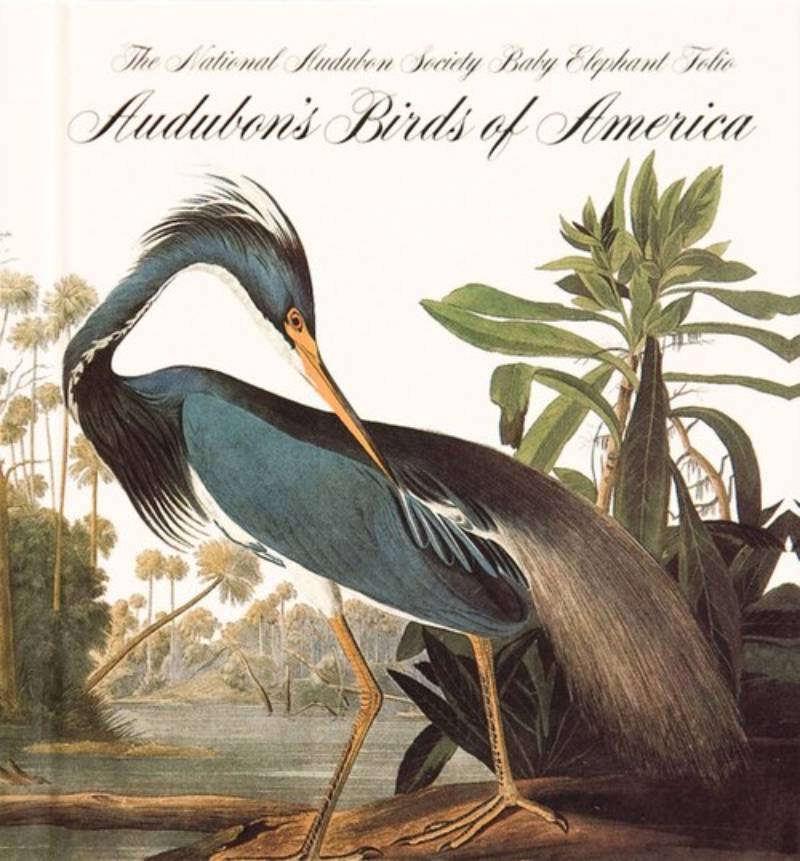
This is not a single painting. It is a collection of 435 hand-colored prints depicting birds of North America, all rendered at life size. Took me a while to wrap my head around the scale of this project when I first learned about it.
Audubon’s work changed ornithological illustration forever. Before him, most bird illustrations were stiff and lifeless. He painted birds in dynamic, natural poses within their actual habitats.
The Bird and Its Symbolism
The collection covers everything from the wild turkey to now-extinct species like the Carolina parakeet. Each plate carries scientific accuracy alongside real artistic skill. Audubon identified 25 new bird species through this work alone.
The birds here are not symbols. They are documents. Real records of North American avian life in the early 19th century. Some of the species he painted no longer exist.
Medium and Technique
Audubon worked primarily in watercolor with pastel and graphite. The final published prints used hand-colored aquatint engravings on sheets measuring roughly 99 by 66 cm.
He often worked from freshly killed specimens, wiring them into lifelike poses. Not glamorous, but it allowed him to capture details of feather texture and color that nobody had managed before.
Visual Description
Each plate is its own composition. The Roseate Spoonbill shows the pink bird wading through marshland. The American Flamingo stands tall in profile. The wild turkey scratches through autumn leaves. Every bird fills the page, because that was the point. Life size.
Where to See It Today
About 120 complete sets exist worldwide. You can find copies at the New York Historical Society, the Smithsonian Institution, Toronto Public Library, and Meisei University in Tokyo, among others.
Fun Fact or Backstory
A complete set of The Birds of America sold at Sotheby’s in 2010 for $11.5 million, making it one of the most expensive paintings in the world (well, printed works). Audubon funded the project through subscriptions, basically an 1830s version of crowdfunding. His patrons included King Charles X of France.
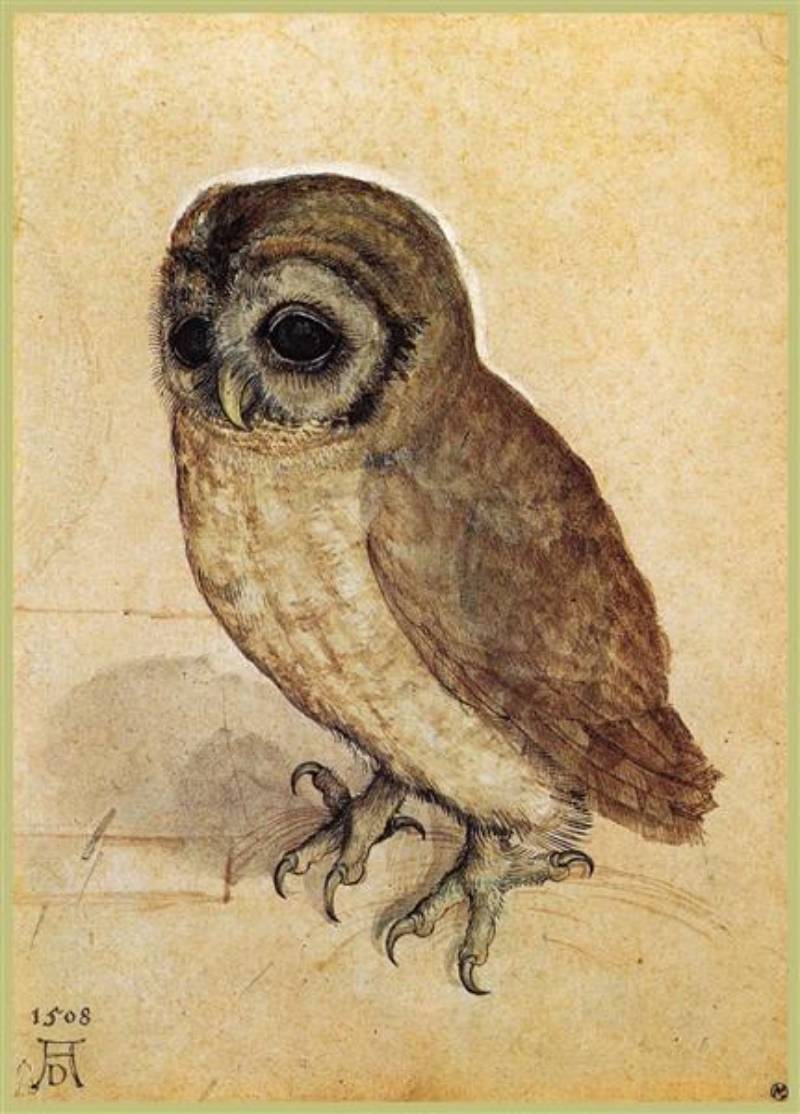
Little Owl by Albrecht Durer (1506)
Why This Painting Matters
Albrecht Durer was one of the earliest European artists to treat animal subjects as standalone artwork, not just background elements. This little watercolor helped change how artists approached wildlife painting entirely.
Most painters in the early 1500s depicted animals only within larger scenes. Durer dated and signed each animal study, treating them as finished works.
The Bird and Its Symbolism
Owls carried heavy symbolic weight in European folklore. They were associated with darkness, evil, even death. Durer ignored all of that.
His owl looks friendly. Curious, even. He painted the bird as a creature worth studying, not a symbol to fear. That approach was pretty radical for its time.
Medium and Technique
Watercolor and gouache on paper, with pen details added for the finer feather work and talons. Durer’s control of value and subtle tonal shifts gives the owl a convincing three-dimensional presence despite the flat white background.
The earthy brown and tan color palette stays subdued on purpose. Everything stays focused on the bird itself.
Visual Description
A small owl stands in full profile on two feet, head turned to face the viewer. Large round eyes dominate the face. The feathers are rendered in warm earth tones with careful attention to individual barbs and patterns. Plain background. Nothing else in the frame.
Where to See It Today
The Albertina Museum in Vienna, Austria. It sits among Durer’s other famous animal studies, including the iconic Young Hare.
Fun Fact or Backstory
Durer created this piece during his most productive period, after returning to Nuremberg from Venice. He was equally skilled in painting, engraving, printmaking, and even mathematics. The man wrote a book on human body proportions. One of the first of its kind.
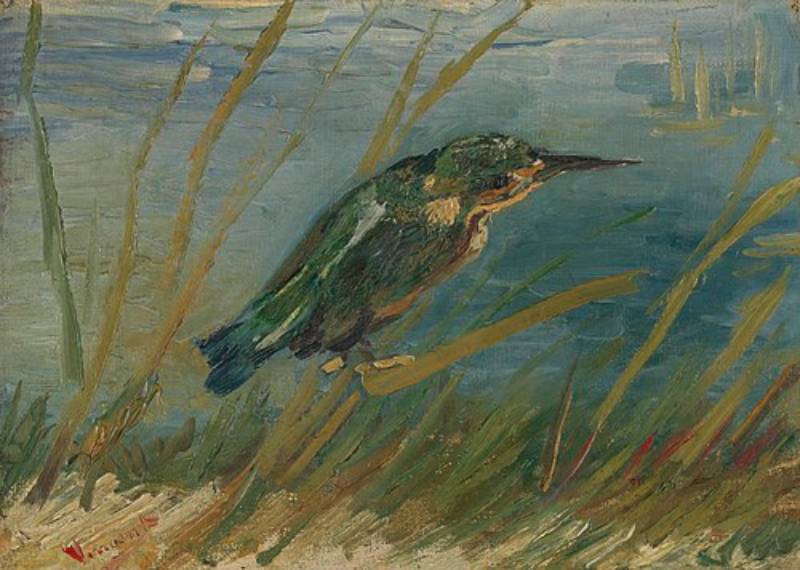
The Kingfisher by Vincent van Gogh (1886)
Why This Painting Matters
Most people think of sunflowers and starry nights when they hear Vincent van Gogh‘s name. But this lesser-known work shows a completely different side of his artistic range.
It is one of the few times van Gogh focused entirely on a single bird as his subject. And it is darker, moodier, and more detailed than most of his recognizable work.
The Bird and Its Symbolism
Kingfishers represent patience and precision in many cultures. The bird sits perched beside a marsh, watching. There is no overt symbolic agenda here. Van Gogh was simply drawn to the wildlife around his home during this period.
Medium and Technique
Oil on canvas. Van Gogh’s signature thick brushstrokes are present, but more restrained than in his later work. The dark blues, greens, and browns give the painting a somber mood that feels very different from his Post-Impressionist palette.
This piece belongs to a broader series of wildlife and plant studies he completed around this time. Think of it as van Gogh still figuring things out.
Visual Description
A kingfisher perches at the edge of marshy water. Deep blues and greens dominate. The bird’s plumage catches what little light exists in the scene. The brushwork is visible but controlled, and the overall tone is noticeably gloomy compared to his later paintings.
Where to See It Today
Van Gogh Museum in Amsterdam, Netherlands.
Fun Fact or Backstory
Van Gogh painted this during his early Paris period, when he was still heavily influenced by darker Dutch painting traditions. Within just two years, his palette would explode into the bright yellows and swirling blues everyone knows today.
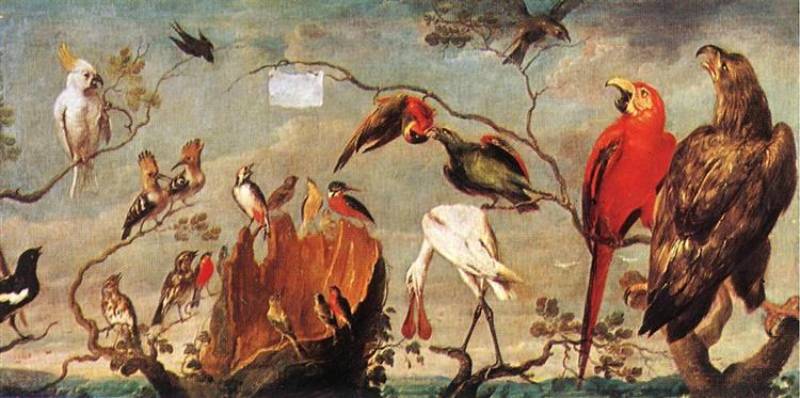
Concert of Birds by Frans Snyders (1640)
Why This Painting Matters
Frans Snyders was among the first painters to give birds and animals real importance in art, pulling them out of background roles. The “concert of birds” was a popular subject in Flemish painting, and Snyders did it better than anyone.
Multiple bird species gathered together, sometimes even with a musical score in the scene. These paintings were a whole genre unto themselves in 17th-century Flanders.
The Bird and Its Symbolism
The painting gathers dozens of different bird species in a single tree, all appearing to sing together. Symbolically, these works often referenced social harmony. Or, depending on who you ask, the chaos of trying to get different voices to agree on anything.
The sheer variety of species serves as a catalog of avian life in the Flemish region and beyond.
Medium and Technique
Oil on canvas. Snyders was a Baroque master who worked closely with Peter Paul Rubens. His feather rendering is remarkably precise. Each bird has distinct plumage, posture, and personality.
The composition is crowded by design. That was the whole point, filling the canvas with as much avian life as possible.
Visual Description
A massive tree filled with birds of every size and color. Parrots, owls, songbirds, and raptors crowd the branches. The painting pulses with motion and detail. Your eye jumps from one species to the next.
Where to See It Today
Versions of Snyders’ bird concerts can be found at the Museo del Prado in Madrid and the Musee du Louvre in Paris, among other institutions.
Fun Fact or Backstory
The concert of birds theme had roots in a real event. A Franciscan chapel in Brussels was famous for attracting flocks of birds, reportedly drawn by an image of the Virgin Mary. The 1600s Beeldenstorm (Iconoclastic Fury) destroyed that chapel, but the theme lived on through paintings like this one.
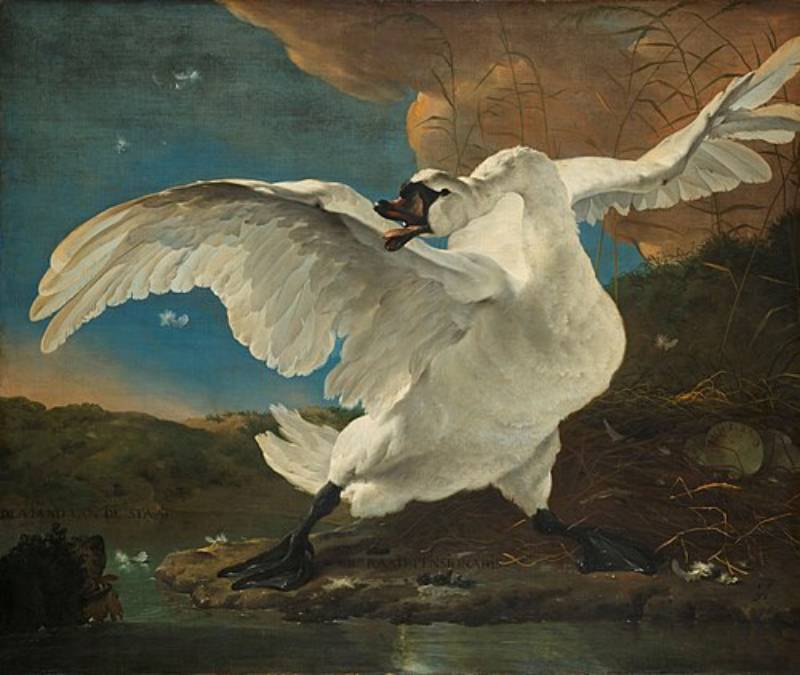
The Threatened Swan by Jan Asselijn (c. 1650)
Why This Painting Matters
This painting became the very first acquisition of the Nationale Kunstgalerij, the predecessor to the Rijksmuseum, in 1800. It was considered so important to Dutch national identity that authorities saved it from being exported to the Louvre.
It is a big painting. 144 by 171 cm. The swan is life-sized, and when you stand in front of it, the aggression feels real.
The Bird and Its Symbolism
The swan defends its nest against a dog swimming nearby. Simple wildlife scene on the surface. But inscriptions were added after Asselijn’s death, turning it into a political allegory.
“De Raad-Pensionaris” (The Grand Pensionary) was written between the swan’s legs. “Holland” appears on an egg. “De Viand van de Staat” (The Enemy of the State) floats above the dog. The swan became a stand-in for Dutch statesman Johan de Witt, who was assassinated in 1672.
Medium and Technique
Oil on canvas. Asselijn used a low horizon perspective that lets the swan dominate the entire scene. The bird towers over the background landscape and the attacking dog.
Scattered feathers around the swan add physical energy to the composition. You can almost feel the violent motion.
Visual Description
A massive white mute swan with wings spread wide, neck arched forward in pure aggression. Loose feathers drift through the air. A dog approaches from the lower left. The background shows open water and a muted evening sky.
Where to See It Today
The Rijksmuseum in Amsterdam, displayed in the Gallery of Honour.
Fun Fact or Backstory
The political inscriptions were likely added during the 1750s “Witten-Oorlog,” a pamphlet war between historians about the De Witt brothers’ assassination. Asselijn himself probably just painted a swan. The politics came later.
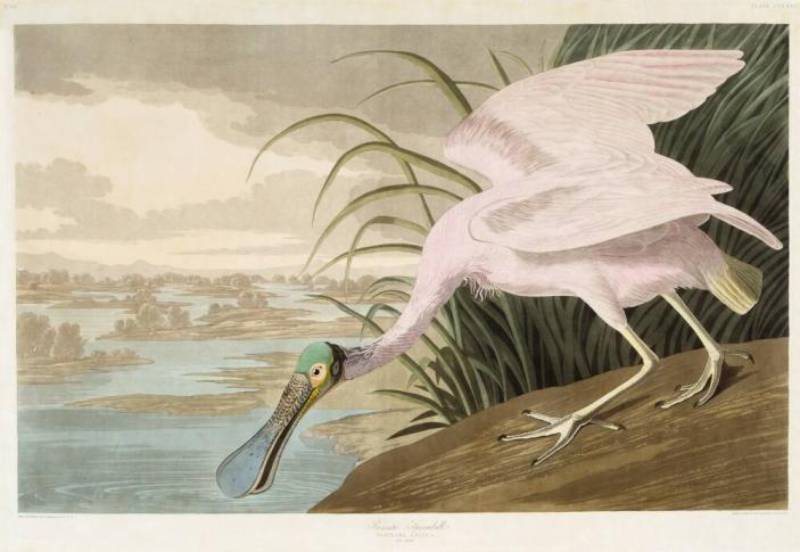
Roseate Spoonbill by John James Audubon (1830s)
Why This Painting Matters
This is Audubon’s single most recognizable plate from The Birds of America. While the full collection is the broader masterwork, this individual bird portrait gets singled out constantly by art critics and historians.
It perfectly captures Audubon’s approach to bird painting: scientific observation meets genuine artistic ambition.
The Bird and Its Symbolism
The Roseate Spoonbill is a wading bird native to the Americas, known for its vivid pink feathers and spatula-shaped bill. No hidden symbolism here. Audubon painted what he saw in the Florida Keys’ wetlands.
The bird represents the richness of North American wildlife that Audubon spent his life documenting.
Medium and Technique
Watercolor, pastel, and graphite on paper. Audubon painted the spoonbill at life size, which was his standard practice. The pink and salmon tones of the plumage are rendered with careful layering of washes.
There is a catch, though. Scientists have noted the posture seems unnatural. Audubon likely worked from a dead specimen and guessed at the living bird’s stance.
Visual Description
A large pink bird stands in a marshland setting, its distinctive spoon-shaped bill angled downward. The background includes wetland grasses and subtle atmospheric perspective fading into the distance. The feather detail on the wings is extraordinary.
Where to See It Today
Various institutions hold prints from The Birds of America. The New York Historical Society has one of the most complete sets.
Fun Fact or Backstory
Audubon completed this piece during a visit to the Florida Keys, where the local bird life blew his mind. He produced dozens of paintings from that single trip. Working from dead specimens was common practice in the 1830s, since photography did not exist yet.
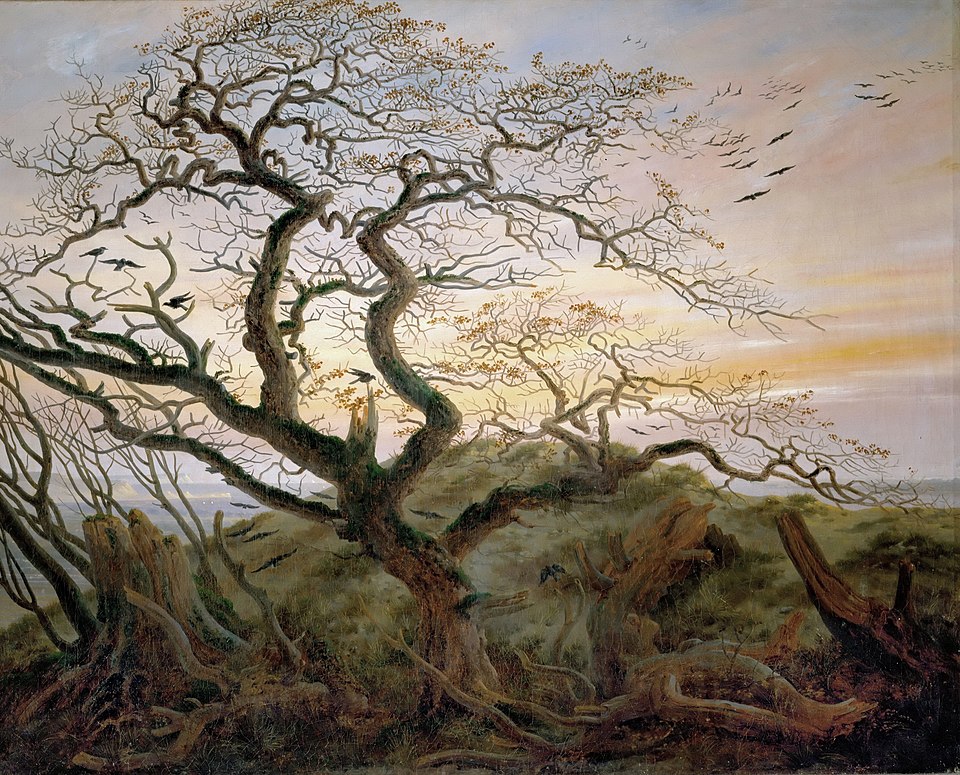
The Tree of Crows by Caspar David Friedrich (1822)
Why This Painting Matters
This is one of the defining works of German Romanticism. Friedrich used birds and landscape to communicate something deeply emotional, without a single human figure in the frame.
The Musee du Louvre acquired it in 1975 and has called it one of Friedrich’s most powerful compositions.
The Bird and Its Symbolism
Crows represented death and foreboding in European tradition. A flock descends toward a gnarled, nearly leafless oak tree. Two crows already perch on its branches. The birds are not decorative. They are the emotional weight of the painting.
The oak itself, rooted on what Friedrich labeled a prehistoric burial ground, carries its own heavy associations with mortality and endurance.
Medium and Technique
Oil on canvas, approximately 54 by 71 cm. Friedrich used a muted palette of browns, grays, and greens in the foreground, then opened up into warm sunset tones in the sky. That color contrast between despair below and hope above is what makes this painting hit so hard.
The tree is based on a drawing from 1809. Friedrich stretched and modified the branches to fill the picture plane.
Visual Description
A twisted, nearly bare oak dominates the center. Its branches spread across the sky like reaching arms. Crows circle and land. In the distance, the ocean and Cape Arkona’s chalk cliffs catch the last warm light. The foreground is dark, with hacked stumps of other trees visible.
Where to See It Today
Musee du Louvre, Paris, Room 863.
Fun Fact or Backstory
Friedrich’s landscapes always carried religious meaning for him. The orange sky represents divine light. The dying oak and descending crows represent death. Together, they form his personal vision of Christian hope: mortality on earth, redemption beyond.
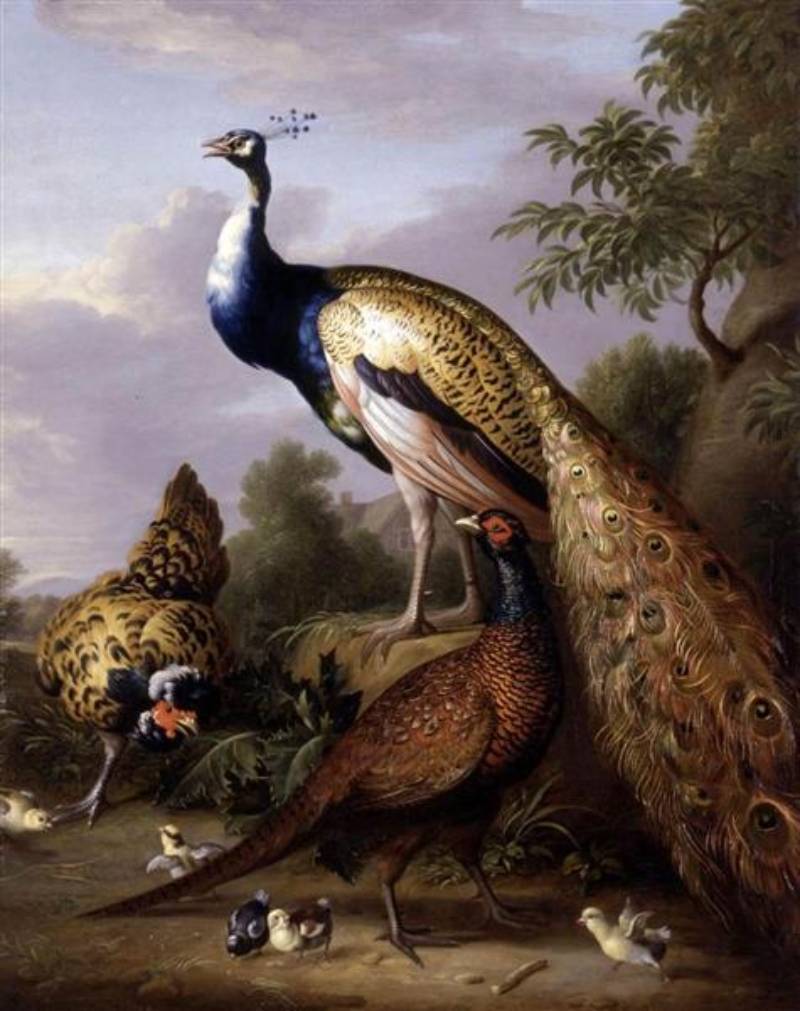
Peacock, Hen and Male Pheasant in a Landscape by Tobias Stranover (1756)
Why This Painting Matters
Stranover was one of the most skilled Baroque-era bird painters, though his name rarely comes up in mainstream art conversations. This painting showcases the level of anatomical accuracy and decorative beauty that bird art could achieve in the 18th century.
The Bird and Its Symbolism
Peacocks have carried wildly contradictory meanings throughout art history. Resurrection, vanity, good fortune, doom, immortality. In this painting, the peacock takes center stage with its full plumage on display.
The hen and pheasant add domestic contrast. Together, the three birds suggest abundance and natural beauty.
Medium and Technique
Oil on canvas. Stranover painted each bird with an obsessive level of feather detail that was characteristic of Baroque animal painting. The line work on individual feathers is sharp enough that ornithologists could identify the exact species.
Visual Description
A large peacock fans its tail feathers in the foreground. A hen and male pheasant stand nearby. Small offspring scamper on the ground below the adults. The birds occupy a lush, slightly idealized landscape setting with soft natural lighting.
Where to See It Today
Various European collections hold Stranover’s bird paintings. Check regional galleries in the UK and Central Europe for public display.
Fun Fact or Backstory
Stranover was born in Romania but spent much of his career in England. He occupied an interesting niche, highly respected during his lifetime for nature paintings, then largely forgotten after his death. Art historians have only recently started paying attention again.
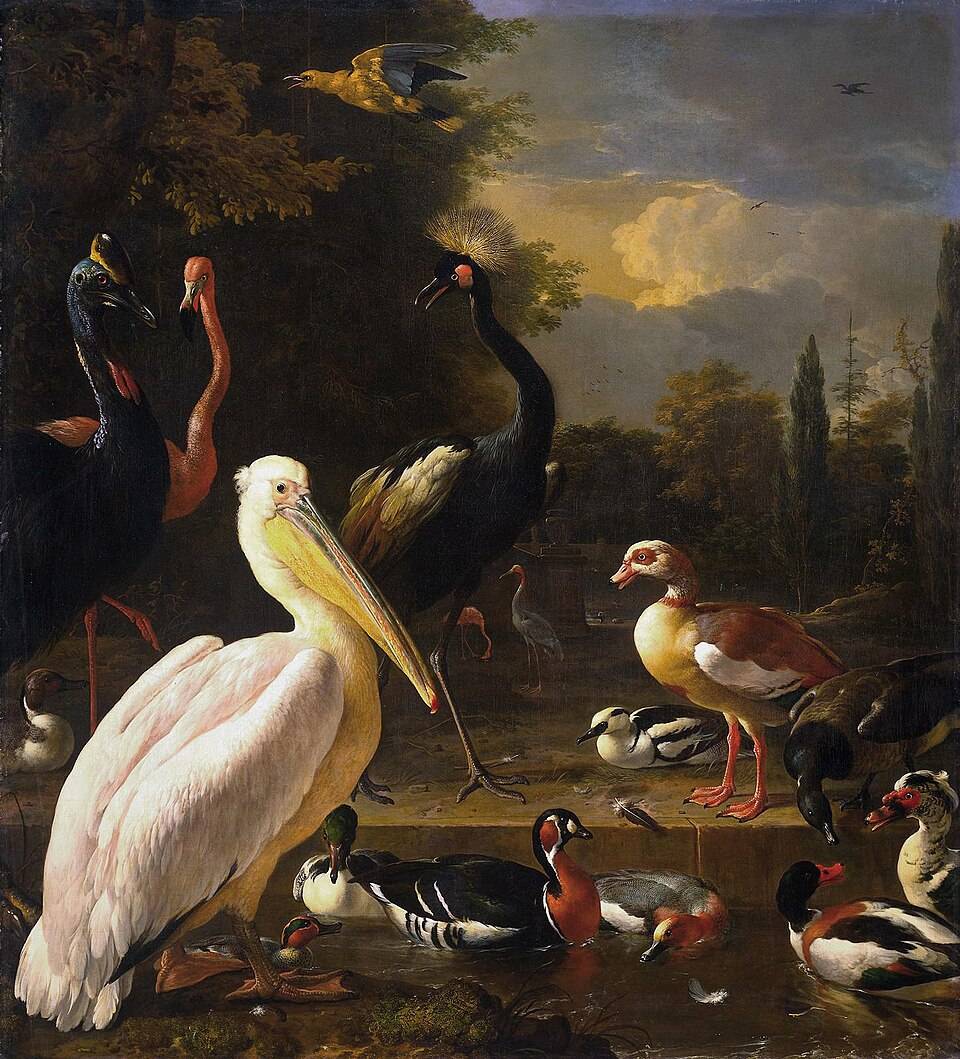
The Floating Feather by Melchior d’Hondecoeter (c. 1680)
Why This Painting Matters
Melchior d’Hondecoeter earned the nickname “the Raphael of birds” during the Dutch Golden Age. That alone tells you how seriously people took his work. He spent his entire career painting birds, and this piece is considered one of his finest.
It was originally titled A Pelican and Other Birds Near a Pool. The floating feather detail gave it its popular name later.
The Bird and Its Symbolism
A large white pelican dominates the foreground, surrounded by a mix of local and exotic bird species. D’Hondecoeter painted birds that could be found in Amsterdam alongside species from the other side of the world, like the southern cassowary from Australia.
In Dutch still life tradition, birds often carried vanitas associations, reminders that life is brief and beautiful things do not last.
Medium and Technique
Oil on canvas. D’Hondecoeter’s technique balanced scientific accuracy with a strong sense of visual hierarchy. The pelican draws the eye first, then your gaze moves outward to the supporting cast of birds.
A single downy feather floats on the water’s surface. That tiny detail gives the entire painting its name and much of its charm.
Visual Description
A pelican stands near a pool of water. Several other bird species surround it, from ducks to exotic tropical birds. A small white feather drifts on the water surface in the lower portion of the canvas. The background opens to a park-like landscape.
Where to See It Today
D’Hondecoeter’s works are held at the Rijksmuseum in Amsterdam and several other Dutch art collections.
Fun Fact or Backstory
D’Hondecoeter somehow knew exactly what an Australian southern cassowary looked like, despite living in the Netherlands his entire life. He likely worked from specimens brought back by Dutch traders. The VOC (Dutch East India Company) gave painters access to exotic animals that most Europeans had never seen.
FAQ on Famous Bird Paintings
What is the most famous bird painting in the world?
The Goldfinch by Carel Fabritius, painted in 1654, is widely considered the most famous bird painting ever created. It hangs at the Mauritshuis in The Hague. The painting inspired a Pulitzer Prize-winning novel and remains one of the most visited artworks in the Netherlands.
Who is the most famous bird painter in history?
John James Audubon holds that title. His collection The Birds of America (1827-1838) contains 435 hand-colored prints of North American bird species at life size. His work combined ornithological accuracy with genuine artistic skill, and the National Audubon Society still carries his name.
What do birds symbolize in paintings?
It depends on the species. Goldfinches represented health and good fortune in Dutch art. Crows and ravens signaled death or darkness. Peacocks carried meanings of vanity or resurrection. Doves stood for peace and the Holy Spirit in religious paintings.
What painting techniques are used to depict birds?
Artists have used nearly every painting medium for bird art. Audubon worked in watercolor and pastel. Fabritius used oil on panel. Durer preferred watercolor with gouache. The choice of medium affects feather detail, color accuracy, and overall texture.
Where can I see famous bird paintings in person?
Key locations include the Mauritshuis in The Hague, the Rijksmuseum in Amsterdam, the Musee du Louvre in Paris, and the Van Gogh Museum. The Metropolitan Museum of Art and the Smithsonian Institution in the US also hold significant bird artwork collections.
Why did so many Dutch Golden Age painters focus on birds?
The Dutch had access to exotic bird specimens through the VOC (Dutch East India Company). Wealthy patrons collected birds and wanted them documented. Artists like Melchior d’Hondecoeter and Frans Snyders built entire careers around avian subjects during this period of Dutch painting.
What is the difference between ornithological illustration and bird fine art?
Ornithological illustration prioritizes scientific accuracy. Every feather, proportion, and color marking must be correct for species identification. Bird fine art takes more creative freedom with composition, mood, and style. Many famous bird paintings, like Audubon’s work, actually sit somewhere in between.
Are there famous modern bird paintings?
Yes. Contemporary artists like Robert Bateman and Walton Ford continue the tradition. Ford’s large-scale watercolors mix naturalist detail with political commentary. Bird themes also appear across abstract and mixed-media work in museums like the Smithsonian American Art Museum.
How much are famous bird paintings worth?
A complete set of Audubon’s The Birds of America sold for $11.5 million at Sotheby’s in 2010. Individual plates can sell for thousands. Fabritius’s The Goldfinch is priceless as a national treasure. Wildlife art by contemporary bird artists typically ranges from hundreds to tens of thousands.
What birds appear most often in famous paintings?
Goldfinches, peacocks, swans, crows, and owls show up the most. Goldfinches appear frequently in Renaissance Madonna paintings. Peacocks dominated Baroque artwork. Crows and ravens became favorites of Romantic painters like Caspar David Friedrich.
Conclusion
These famous bird paintings prove that avian subjects have held a unique grip on artists for centuries. From Carel Fabritius’s quiet goldfinch to Audubon’s massive ornithological catalog, each work captures something different about how we see birds and the natural world.
The best bird artwork blends scientific observation with real artistic vision. That combination is what separates a field guide illustration from a masterpiece hanging in the Rijksmuseum or the Louvre.
Whether you are drawn to the realism of Dutch Golden Age wildlife art or the moody landscapes of Caspar David Friedrich, bird paintings offer something for every taste.
Look closer at these works. The feather detail, the shape of a wing mid-flight, the way light catches plumage. That level of care is what makes these paintings last.