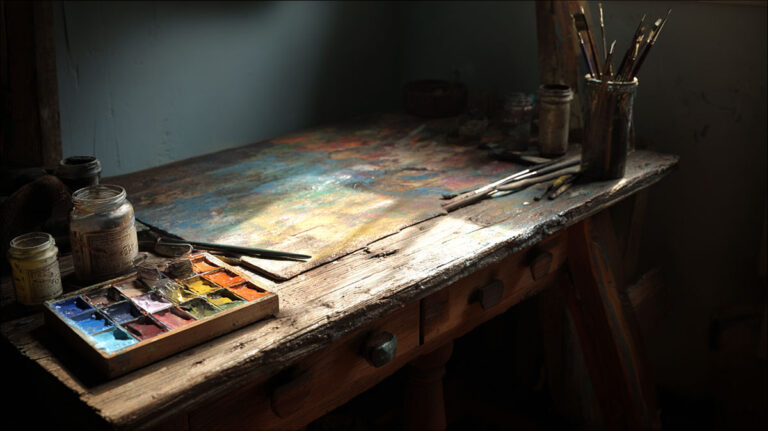
Staring at blank canvas while surrounded by countless tubes, pencils, and brushes can paralyze even the most eager beginner artist.
Choosing the best painting medium for beginners shouldn’t feel like solving a complex puzzle when you’re already nervous about making your first mark.
Every experienced painter started somewhere, fumbling through art supply stores and wondering whether watercolor painting flows better than acrylics. The overwhelming variety of painting supplies can derail creative momentum before it builds.
Medium selection directly impacts your learning curve, budget, and artistic confidence. Some mediums forgive mistakes easily while others demand precision from day one.
This guide evaluates eight beginner-friendly options through practical criteria: ease of use, cleanup requirements, cost considerations, and technique versatility.
You’ll discover which painting medium matches your workspace, budget, and artistic goals.
By the end, you’ll understand exactly which medium accelerates your artistic journey rather than frustrating it.
Best Painting Medium For Beginners
| Medium | Beginner Difficulty Level | Cost & Accessibility | Key Benefits for Beginners |
|---|---|---|---|
| 🎨 Acrylic Paint | Easy Fast-drying, water-based medium |
Moderate ($15-30) Widely available, basic set sufficient |
Forgiving mistakes, quick corrections, versatile techniques, no toxic fumes |
| 💧 Watercolor | Moderate-Hard Requires technique mastery |
Low-Moderate ($10-25) Minimal supplies needed |
Portable setup, luminous transparency effects, teaches color theory fundamentals |
| ✏️ Colored Pencils | Very Easy Familiar drawing tool |
Low ($8-20) No additional supplies required |
Precise control, no mess, gradual learning curve, detailed artwork capability |
| 🌈 Oil Pastels | Easy Direct application medium |
Low-Moderate ($12-25) No brushes or water needed |
Vibrant colors, blendable consistency, immediate results, tactile experience |
| ✏️ Graphite Pencils | Very Easy Most familiar medium |
Very Low ($3-10) Basic pencil set sufficient |
Foundation drawing skills, value understanding, erasable, universally accessible |
| 🖍️ Markers | Easy-Moderate Requires color planning |
Moderate-High ($20-50) Quality markers expensive |
Bold color saturation, graphic illustration style, consistent coverage |
| 🖌️ Gouache | Moderate-Hard Requires timing precision |
Moderate ($18-35) Similar to watercolor setup |
Opaque coverage, matte finish, reworkable when rewetted, illustration quality |
| 🌸 Soft Pastels | Moderate Requires blending technique |
Moderate ($15-30) Needs fixative, textured paper |
Rich pigmentation, atmospheric effects, painterly results, expressive mark-making |
Acrylic Painting
Acrylic paint is a fast-drying paint made of pigment suspended in acrylic polymer emulsion and consists of water-based materials that become water-resistant when dry. The binder is a combination of acrylic resin particles and water called a polymer emulsion, creating a flexible, transparent film once cured.
Composition and Properties
Thin films of color will dry in 10 to 20 minutes, whereas thicker films can take an hour or more. Professional grade acrylics maintain pigment load consistency while student grades offer working characteristics similar to artist acrylics but with lower pigment concentrations.
Acrylic medium offers opacity levels ranging from transparent washes to full coverage applications. Very thin films can feel dry within seconds, while thick films may take a full day or more to skin over.
Beginner-Friendly Attributes
The paints are water-based, so there’s no odor and you can easily clean your hands and painting tools using just soap and water. No turpentine or white spirit required for cleanup procedures.
Mistake correction becomes simple through layering techniques. There are no limitations on applying additional acrylic paint layers while previous work remains wet or completely dry.
Cost and Accessibility
Student grade acrylics provide affordable entry points at art supply stores. Starter sets containing primary colors plus black and white enable extensive color mixing basics. Professional grade paints cost more but offer superior permanence rating.
Budget considerations favor acrylics due to minimal equipment needs and quick drying properties.
Technique Applications
They’re also incredibly versatile since they adhere to virtually any surface. Blending capabilities require speed due to fast drying times, though slow drying mediums extend working periods.
Layering methods work exceptionally well. Texture creation possibilities include impasto techniques, glazing applications, and palette knife work.
Workspace Requirements
Minimal ventilation needs compared to oil painting mediums. Room temperature storage works fine. No special safety precautions beyond standard art practice.
Space requirements remain modest since cleanup uses only water and soap.
Comparison Context
Acrylics bridge watercolor transparency and oil paint versatility. Learning curve stays gentle for beginners while offering advanced technique potential. Skill development benefits include immediate feedback through quick drying and forgiving layering options.
Watercolor Painting

Watercolour paint, in broad strokes and without getting into complex chemical compositions, is made of pigments (which give it color), water (which gives it moisture), and an acrylic resin binder. Actually, traditional watercolors use gum arabic as the primary binder rather than acrylic resin.
Composition and Properties
Most watercolor paints will dry within 15-30 minutes after application if they are allowed to air-dry without any interference from humidity or wind. Paint consistency ranges from fluid washes to concentrated pigment applications.
Transparency levels create the medium’s signature luminous quality. Watercolor dries about a value lighter than wet application appearance.
Beginner-Friendly Attributes
With just a few colors, a brush, paper, and water, artists can paint almost anywhere. Application methods include wet-on-wet and wet-on-dry techniques.
Learning curve requires understanding water control and pigment concentration. It’s important to apply your watercolors to high-quality paper that doesn’t absorb the pigment.
Cost and Accessibility
Student grade watercolors provide excellent beginner options. Pan sets offer portability while tube colors provide stronger pigment loads. Starter sets with 24 colors eliminate extensive mixing requirements initially.
Art stores stock wide ranges from children’s grade to artist quality options.
Technique Applications
Transparent paints are the way to go for creating thin layers or washes that allow the underlying surface to remain visible. Color mixing happens both on palette and directly on paper through optical mixing.
Granulation effects, wet-in-wet bleeding, and controlled edge techniques expand creative possibilities.
Workspace Requirements
Minimal space requirements make watercolors ideal for small studios. Watercolor pans come in compact palettes that slip easily into a pocket or purse.
No ventilation concerns exist. Storage needs include protecting finished work from moisture exposure.
Comparison Context
Watercolors demand greater control than acrylics but reward patience with unique effects impossible in opaque mediums. Permanence varies by pigment quality. Skill development focuses on water control mastery and transparent layering techniques.
Colored Pencils

Most colored pencils are wax-based. The right amount of wax gives the pencil a smooth texture which helps the pigment flow across the surface. Oil-based and water-soluble varieties offer different working properties and effects.
Composition and Properties
Wax-based pencils are available in a wide range of consistencies: from the hard pencils made for students, to the soft varieties designed for professionals. Lightfastness ratings vary significantly between student and professional grades.
Opacity levels range from transparent applications to full coverage through burnishing techniques. No drying time concerns since pencils remain workable indefinitely.
Beginner-Friendly Attributes
They’re light and portable, so you can travel with them and draw on location. They’ll also last a long time; you don’t have to worry about them drying out. Mistake correction through layering or gentle removal with erasers.
Application methods include hatching, cross-hatching, and blending with tools or solvents.
Cost and Accessibility
I recommend starting off with a 24-pencil set and then buying additional pencils individually as you need them. Professional sets cost more but individual pencil purchases allow budget flexibility.
Wide availability in art stores and even general retailers for student grades.
Technique Applications
You can create blends so smooth that the end result looks like an oil painting. Burnishing techniques create solid color areas while layering builds rich color depth.
Colored pencils can also be combined with other media, such as graphite, markers, gel pens, watercolors, crayons, pastels, and gouache.
Workspace Requirements
Zero ventilation needs. Minimal workspace requirements since no wet mediums involved. Storage simply requires protecting pencil points and organizing colors.
No cleanup procedures necessary beyond sharpening pencils and removing eraser debris.
Comparison Context
Precision control exceeds most painting mediums. Learning curve stays gentle with immediate feedback. Skill development emphasizes patience and building techniques gradually rather than quick results.
Oil Pastels

As a beginner, you will make a lot of mistakes. Pastel colors are great for a newbie as it enables you to fix or cover up your mistakes. Oil pastels combine pigment with oil and wax binders, creating creamy, workable consistency.
Composition and Properties
Oil pastels never fully dry, remaining workable indefinitely. Consistency ranges from firm to very soft depending on brand formulation. Colors blend easily through overlapping and finger blending.
Opacity provides excellent coverage with rich, saturated results. Working time remains unlimited since pastels stay active.
Beginner-Friendly Attributes
What makes pastels great as a starter medium is how much you can blend the colors. Application requires no additional tools beyond the pastels themselves.
Mistake correction happens through scraping, blending over, or applying opaque colors on top. Unlike most other versatile mediums, pastels are hassle-free and you don’t need extra tools to use them.
Cost and Accessibility
Student grade sets provide good value for experimentation. Professional quality oil pastels cost more but offer superior pigment quality and blending characteristics.
Available in most art supply stores with starter sets ranging from 12 to 48 colors.
Technique Applications
Blending capabilities excel through finger work, blending stumps, or layering techniques. Impasto effects possible with heavy applications. Sgraffito techniques create texture by scratching through layers.
Works well on textured papers, canvas, or prepared boards.
Workspace Requirements
Some ventilation helpful due to oil content, though not critical. Work surface protection recommended since pastels transfer easily.
Storage requires careful handling to prevent smudging. Finished work needs fixative protection.
Comparison Context
Immediate results appeal to beginners wanting instant gratification. More forgiving than hard pastels while offering greater control than soft pastels. Skill development focuses on blending mastery and color relationships.
Graphite Pencils

Pencils are the first mode of writing we use and most of us are comfortable using them. When you want to learn to sketch, it is easier to start with graphite. Pure graphite mixed with clay creates pencils ranging from 9H (hardest) to 9B (softest).
Composition and Properties
Hardness grades determine mark characteristics. H pencils create light, precise lines while B pencils produce dark, rich strokes. HB offers middle-ground versatility.
No drying concerns since graphite remains workable through erasing and blending. Permanence depends on paper quality and fixative application.
Beginner-Friendly Attributes
It helps you understand and fully appreciate the aspects of light and shadow that you can create by shading with graphite pencils. Familiar handling from writing experience reduces intimidation factor.
Mistake correction through standard erasers. Blending possible with stumps, tissues, or fingers. Gradual learning curve with immediate feedback.
Cost and Accessibility
Extremely affordable with basic pencil sets under $10. Individual pencils cost pennies. Available everywhere from art stores to grocery stores.
No additional supplies needed beyond pencils, paper, and erasers initially.
Technique Applications
Value development through varied pressure and pencil grades. Cross-hatching, stippling, and blending create diverse textures. Realistic rendering possible with patient technique building.
Works on any paper surface, though tooth affects results significantly.
Workspace Requirements
Zero ventilation needs. Minimal space requirements. No cleanup beyond eraser debris.
Simple storage in pencil cases or holders. Sharpening only maintenance requirement.
Comparison Context
Foundation medium for understanding drawing fundamentals. Teaches value relationships essential for all other mediums. Skill development emphasizes observation and hand control rather than color theory.
Markers

Alcohol-based and water-based markers offer different working properties. Professional markers contain high pigment loads while student versions prioritize affordability over lightfastness.
Composition and Properties
Alcohol markers dry permanently and blend smoothly. Water-based versions remain workable longer but may reactivate with additional water. Saturation levels depend on tip pressure and paper absorption.
Drying time: seconds for alcohol-based, minutes for water-based versions.
Beginner-Friendly Attributes
No mixing required since colors come pre-formulated. Application methods include layering, blending with colorless blenders, and creating gradients through overlapping.
Learning curve stays moderate with immediate visual feedback. Paper choice significantly affects results.
Cost and Accessibility
Student markers provide budget-friendly options. Professional sets cost significantly more but offer superior color range and lightfastness. Sets range from basic 12-color to comprehensive 200+ color collections.
Widely available in art stores, office supply stores, and online retailers.
Technique Applications
Smooth gradients through alcohol blending. Layering creates rich color depth. Hard edges maintain crisp illustration style. Cell-shading techniques popular in manga and comic illustration.
Works best on smooth, non-absorbent papers designed for markers.
Workspace Requirements
Alcohol markers require adequate ventilation due to solvent content. Work surface protection recommended since markers bleed through most papers.
Storage requires horizontal position to prevent tip drying. Caps must stay secure to prevent evaporation.
Comparison Context
Faster results than colored pencils with smoother gradients. Less control than pencils but more predictable than paints. Skill development focuses on color selection and blending timing rather than mixing techniques.
Gouache

Gouache is a fast drying water soluble medium that is re-wettable when dry. Gouache paint is a mixture of natural or synthetic pigments, water and gum arabic, which essentially acts as a binding agent.
Composition and Properties
Gouache often dries to a different value than when it was applied. Lighter hues appear darker after drying and darker hues appear lighter. Opacity provides full coverage unlike transparent watercolors.
When comparing gouache to other types of paint, it dries very quickly – typically in a few minutes or less.
Beginner-Friendly Attributes
I find them to be beginner-friendly paints, though due to its opaqueness, this medium of painting can be difficult to work with. One problem many people face is not knowing or understanding how much paint they need.
I also like that with gouache, you can simply paint over something if you don’t like it.
Cost and Accessibility
For beginners, I would recommend purchasing the following – ivory black, permanent white, ultramarine, yellow ochre, and cadmium scarlett. Professional tubes cost more than student watercolors but less than quality oils.
Available in most art supply stores with both tube and pan formats available.
Technique Applications
Use gouache to create illustrative pieces of bright, block colours. Or layer the gouache with brush techniques to create texture and paintings that emulate the appearance of oil or acrylic.
Flat color applications excel due to opacity. Gouache works with water-based paints such as acrylic, ink, and watercolors.
Workspace Requirements
Only use watercolor or mixed media paper. Minimal ventilation needs since water-based. Keep your work away from water or spilled drinks! It will run like nobody’s business.
Standard watercolor workspace setup suffices with palette, water containers, and paper towels.
Comparison Context
Like watercolor, it dries quickly and can be re-worked and adjusted after drying. But like oil and acrylic, it is more opaque and produces strong and vivid color.
Greater control than watercolor due to opacity while maintaining water-based convenience. Skill development requires understanding consistency and timing.
Soft Pastels
I have been really facinated by soft pastel. I love the texture, and how forgiven the medium is. Pure pigment with minimal binder creates intense, powdery consistency that builds rich color layers.
Composition and Properties
Highest pigment concentration of traditional mediums creates vibrant saturation. Never fully dries, remaining workable indefinitely. Particle size affects texture from smooth to gritty depending on brand.
Lightfastness varies dramatically by pigment quality. Professional grades offer superior permanence ratings.
Beginner-Friendly Attributes
I love the texture, and how forgiven the medium is. Blending occurs naturally through overlapping colors. Mistake correction through blending, lifting with kneaded erasers, or overpainting.
Application methods include side strokes for broad areas and tip work for details.
Cost and Accessibility
Student sets provide good introduction though professional pastels offer superior handling. Half-stick sets balance variety with cost considerations.
Available in art stores with starter sets from 12 to 72+ colors. Individual pastel purchases allow color expansion.
Technique Applications
Atmospheric effects excel due to blending characteristics. Impressionistic techniques work naturally with medium properties. Underpainting with hard pastels builds foundation for soft pastel layers.
Requires textured paper with good tooth to hold pastel particles effectively.
Workspace Requirements
Substantial ventilation needed due to pastel dust. Work surface protection essential since pastels transfer easily. Dust mask recommended for extended sessions.
Storage requires careful organization to prevent breakage. Finished work needs fixative and protective framing.
FAQ on Best Painting Medium For Beginners
What is the easiest painting medium for complete beginners?
Acrylic painting tops the list for easiest paint to use. Water-based cleanup, quick drying times, and forgiving layering make mistakes easily correctable. No toxic fumes or expensive solvents required.
Should beginners start with watercolors or acrylics?
Acrylics offer more control for absolute beginners due to opacity and slower technique requirements. Watercolors demand immediate water control mastery. Start with acrylics, then explore watercolors once brush confidence develops.
How much should beginners spend on painting supplies?
Quality starter sets range $30-80 depending on medium choice. Student grade acrylic paint and basic brushes provide excellent learning value. Invest gradually as skills develop rather than buying expensive professional supplies initially.
What brushes work best for beginner painters?
Synthetic brushes handle multiple mediums effectively while staying budget-friendly. Round sizes 2, 6, and 12 plus one flat brush cover most beginner projects. Brushes for acrylic painting work well across several mediums.
Can beginners mix different painting mediums together?
Mixed media techniques work beautifully once basic skills develop. Colored pencils combine well with watercolors. Avoid oil-based mediums over water-based ones initially. Master one medium before experimenting with combinations.
What surface should beginners paint on?
Canvas boards provide affordable, stable surfaces for acrylic paint basics. Watercolor paper suits water-based mediums. Avoid expensive stretched canvases until technique confidence builds. Mixed media paper handles multiple medium types effectively.
How long do different painting mediums take to dry?
Drying times vary dramatically by medium. Acrylics: 30 minutes to 2 hours. Watercolors: 15-30 minutes. Oil pastels: never fully dry. Gouache: 2-5 minutes. Factor drying speed into project planning and workspace setup.
Do beginners need expensive painting easels?
Table easels or lap desks work perfectly for beginner painting projects. Expensive studio easels aren’t necessary initially. Focus budget on quality paints and brushes instead. Upgrade workspace equipment as skills and project ambitions grow.
Which colors should beginners buy first?
Primary colors (red, blue, yellow) plus black and white create extensive color mixing possibilities. Add burnt umber and raw sienna for earth tones. This basic palette teaches color theory fundamentals while staying budget-conscious.
What mistakes do painting beginners make most often?
Overworking paintings before layers dry properly. Using dirty water or brushes. Applying paint too thickly initially. Skipping basic drawing skills. Not practicing color mixing basics. Start simple, focus on fundamentals, and embrace the learning process.
Conclusion
Finding the best painting medium for beginners depends on your workspace, budget, and artistic goals rather than following rigid rules. Acrylic painting leads for versatility and forgiveness, while watercolors reward patient technique building.
Budget considerations favor colored pencils and graphite for immediate accessibility. Oil pastels offer rich blending without complex cleanup procedures.
Your artistic journey starts with experimentation. Try multiple beginner-friendly mediums before committing to expensive professional supplies.
Remember that even masters like Vincent van Gogh explored various painting techniques throughout their careers. Skill development comes through consistent practice rather than perfect medium selection.
Start creating today with whatever materials you can access. Color mixing, composition, and value understanding transfer between all mediums.
The best medium is simply the one that keeps you painting consistently and enjoying the creative process.