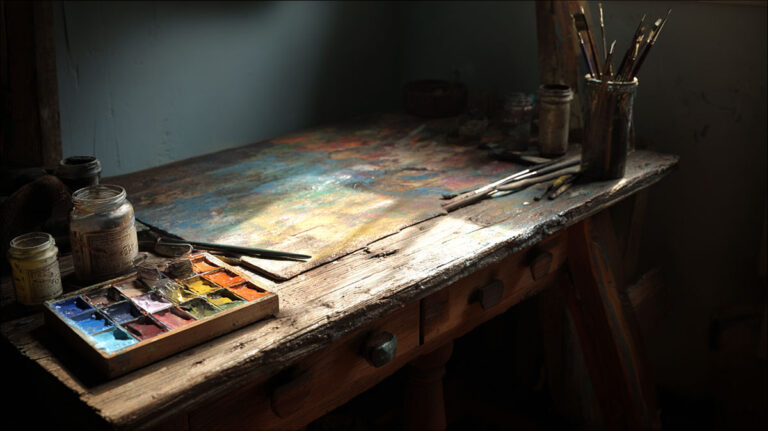
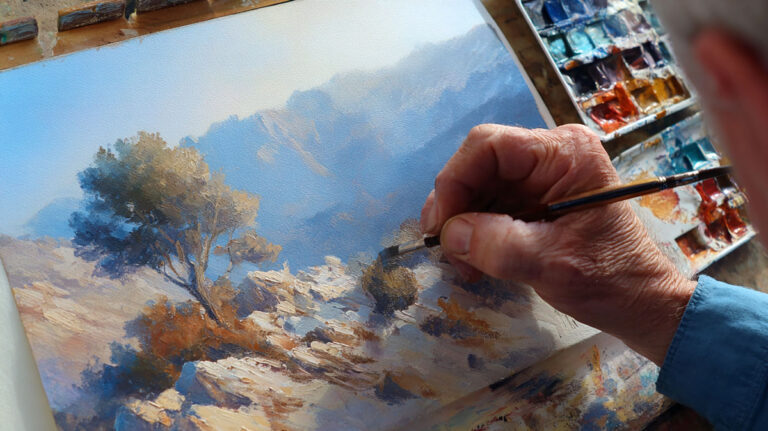
That blank canvas stares back at you like an unsolved puzzle. Learning how to start painting doesn’t require years of art school or expensive equipment.
Most beginners overthink the process and delay starting for months. You need basic supplies, fundamental techniques, and realistic expectations.
This guide covers everything from choosing your first painting mediums to creating finished artwork. You’ll discover which brushes actually matter, how color theory applies to real painting, and practical techniques that work.
By the end, you’ll understand acrylic painting basics, watercolor fundamentals, and essential brush techniques.
More importantly, you’ll have a clear roadmap for your artistic journey without the overwhelm most beginners experience.
Paint Types and What Beginners Should Know

Acrylic Paint Basics
Acrylic paint stands out as the most forgiving medium for beginners. The colors dry quickly, usually within 30 minutes to an hour.
This fast drying time means you can layer colors without waiting days. Unlike oil paints, acrylics clean up with just soap and water.
The paint consistency varies from tube to tube. Squeeze some onto your palette and notice how thick it feels. You can thin it with water, but don’t add too much or the paint loses its binding strength.
Why Acrylics Work Well for New Painters
Most art supply stores carry quality acrylic brands like Liquitex and Golden Artist Colors. These paints mix easily and hold their color well.
Acrylic painting offers incredible versatility. You can paint thick like oils or thin like watercolors.
Beginners appreciate how acrylics behave predictably. What you see wet is basically what you get when dry.
Understanding Drying Times and Working With Them
Fast drying can work against you sometimes. The paint on your palette might skin over before you finish mixing colors.
Keep a spray bottle nearby to mist your palette. This simple trick extends your working time by hours.
Some painters add a few drops of acrylic medium to slow the drying process. But honestly, most beginners do fine without any additives.
Watercolor Fundamentals

Watercolor painting demands a different mindset than acrylics. The paint flows and blooms in ways you can’t always control.
This unpredictability scares some beginners. But that same quality creates the magical, luminous effects watercolors are famous for.
How Watercolors Behave Differently
Water becomes your primary tool, not just a cleanup agent. Too little water and your paint sits on the surface like chalk.
Too much water and your colors run everywhere. Finding that sweet spot takes practice, not theory.
The paint reactivates with water even after drying. This means you can lift color from your painting or blend into previously painted areas.
Paper Requirements and Why They Matter
Regular printer paper buckles and tears with watercolor paint. You need paper specifically made for wet media.
Cold press watercolor paper has a textured surface that grabs the paint nicely. Hot press paper stays smoother but can feel slippery for beginners.
Weight matters more than you think. 140-pound paper works for light washes, but 300-pound paper handles heavy water applications without warping.
Oil Paint Considerations

Oil painting creates gorgeous, rich colors that blend beautifully. But these paints present challenges for absolute beginners.
The biggest issue? Drying time measured in days, not hours.
Why Oils Might Not Be Ideal for Absolute Beginners
Your painting stays wet for days or even weeks. This extended working time sounds great in theory.
In practice, it means you can’t easily transport wet paintings. Setting up a dedicated workspace becomes necessary, not optional.
Oil paints also require solvents for thinning and cleanup. These chemicals need proper ventilation and disposal.
Workspace Ventilation Needs
Turpentine and mineral spirits release fumes that cause headaches and respiratory issues. Your painting space needs good airflow.
Opening a window isn’t always enough. Many oil painters invest in exhaust fans or air filtration systems.
Some newer oil mediums claim to be solvent-free. These can reduce ventilation concerns but may not perform exactly like traditional oils.
Brushes and Tools That Actually Matter

Brush Types and Their Uses
Walk into any art store and the brush selection overwhelms most beginners. Hundreds of options line the shelves, but you only need a few key types.
Round brushes handle most detail work and line creation. Flat brushes excel at filling large areas and creating sharp edges.
Flat vs Round Brushes
Flat brushes hold more paint and cover more area with each stroke. They create clean, geometric shapes and smooth color fields.
Round brushes offer more versatility for beginners. The pointed tip handles fine details, while the belly holds enough paint for broader strokes.
A size 10 round brush and a 1-inch flat brush will handle 80% of your painting needs. Add a small liner brush for the finest details.
Size Numbering System Explained Simply
Brush sizes use numbers, but different manufacturers size differently. A size 8 from one brand might equal a size 10 from another.
The numbers generally go from 000 (tiny) up to 24 or higher (huge). Most beginners work comfortably with sizes 2 through 12.
Don’t get hung up on exact numbers. Buy a small, medium, and large brush in both round and flat shapes.
Other Painting Tools Worth Having

Palette Knives for Mixing and Texture
A palette knife costs under $10 but transforms your painting practice. Use it to mix colors thoroughly without wearing out brush bristles.
The knife also creates interesting textures you can’t achieve with brushes. Scraping, dragging, and dabbing with the knife adds visual interest to landscapes and abstracts.
Some painters use palette knives for entire paintings. The technique creates bold, impressionistic effects that hide beginner brush control issues.
Easels vs Flat Surface Painting
You don’t need an expensive easel to start painting. A kitchen table covered with plastic works fine for small canvases.
Types of painting easels range from simple tabletop models to heavy studio easels. Tabletop easels cost $20-50 and hold canvases up to 16×20 inches.
Working flat on a table feels more natural for many beginners. You can see your entire painting at once and gravity helps control paint flow.
Maintaining Your Tools
Proper Brush Cleaning Techniques
How to clean paintbrushes properly extends their life dramatically. Dried paint ruins brush points and makes bristles stiff.
For acrylics, rinse brushes in water immediately after use. Work the paint out gently with your fingers under running water.
Never let brushes sit bristles-down in water. The weight bends and damages the brush tip permanently.
When to Replace Worn-Out Brushes
A good brush lasts months or years with proper care. Replace brushes when the tip splays beyond repair or bristles start falling out regularly.
Cheap brushes from dollar stores rarely last more than a few painting sessions. Invest in mid-range brushes from art supply stores for better longevity.
Natural vs synthetic paintbrushes each have advantages. Synthetic brushes work great with acrylics and cost less than natural bristle brushes.
Color Theory Made Simple

Primary Colors and Basic Mixing
Primary colors form the foundation of all color mixing. Red, blue, and yellow cannot be created by mixing other colors.
But here’s what art teachers often skip: not all reds, blues, and yellows work the same way.
Understanding Red, Blue, and Yellow as Building Blocks
Your tube labeled “red” might actually lean toward orange or purple. This affects every color you mix from it.
Cadmium Red leans warm toward orange. Alizarin Crimson leans cool toward purple. Both are “red,” but they create different greens when mixed with yellow.
The same principle applies to blues and yellows. Ultramarine Blue tends warm, while Phthalo Blue runs cool.
Creating Secondary Colors Through Mixing
Secondary colors come from mixing two primaries together. Red plus yellow makes orange. Blue plus yellow creates green.
But the specific orange or green depends on which reds and yellows you chose. Warm colors mixed together stay vibrant.
Cool colors mixed with warm colors often turn muddy. This explains why beginners sometimes get disappointing results despite following mixing “rules.”
Color Relationships That Work

Complementary Colors and Visual Pop
Complementary colors sit opposite each other on the color wheel. Red and green. Blue and orange. Yellow and purple.
These pairs create strong visual contrast when placed next to each other. A small amount of red makes a green painting pop with energy.
But mix complementary colors together and you get brown or gray. Use this knowledge to tone down overly bright colors in your paintings.
Analogous Color Schemes for Harmony
Analogous color schemes use colors that sit next to each other on the color wheel. Blue, blue-green, and green work together harmoniously.
These color combinations feel peaceful and unified. Most successful landscape paintings use analogous schemes with one or two accent colors.
Monochromatic Approaches for Beginners
Monochromatic color schemes use variations of a single hue. Different tints, shades, and tones of blue, for example.
This approach eliminates color-mixing confusion for beginners. You focus on value and composition instead of complicated color relationships.
Many master painters used limited palettes. Pablo Picasso created powerful paintings during his Blue Period using mostly blues and blue-grays.
Common Color Mixing Problems
Making Muddy Colors and How to Avoid Them
Muddy colors happen when you mix too many pigments together. Each additional color dulls the mixture.
Stick to mixing two colors at a time. Want a purple-gray? Mix red and blue first, then add a tiny amount of yellow to gray it down.
Cheap paints often contain fillers that muddy your mixtures. Invest in student-grade paints from reputable manufacturers like Winsor & Newton.
Getting the Right Skin Tones
How to mix skin tones challenges even experienced painters. Human skin contains red, yellow, and blue undertones in varying proportions.
Start with a warm base: mix yellow ochre with a small amount of red. Add tiny amounts of white to lighten and blue to cool the temperature.
Every person’s skin tone differs. Mix colors on your palette first, then test on a separate piece of paper before applying to your painting.
Basic Techniques Every Beginner Should Try
Fundamental Brush Strokes

Loading Your Brush Properly
Dip your brush about halfway into the paint. Too much paint drips everywhere and wastes expensive materials.
Roll the brush gently against your palette edge to distribute paint evenly through the bristles. This prevents paint from clumping at the tip or ferrule.
Proper brush loading affects every stroke you make. Practice this basic step until it becomes automatic.
Controlling Pressure for Different Effects
Light pressure creates thin, delicate lines perfect for details. Heavy pressure produces bold, expressive marks with more paint coverage.
Vary your grip on the brush handle. Hold it closer to the ferrule for detailed control, farther back for loose, gestural strokes.
Most beginners grip too tightly and press too hard. Relax your hand and let the brush do the work.
Blending Wet Paint While Working
Work quickly while acrylic paint stays wet. You have about 10-15 minutes before the paint becomes too tacky to blend smoothly.
Overlap brush strokes while both colors remain wet. This creates seamless gradations without harsh lines.
Clean your brush between different colors, but don’t dry it completely. A slightly damp brush blends better than a bone-dry one.
Building Up Your Painting
Starting With Light Colors and Working Darker
Traditional painting wisdom says work from light to dark. Light colors can’t cover dark ones effectively, but dark paint easily covers light areas.
This approach helps prevent muddy colors and maintains the luminosity of your lighter tones. Claude Monet and other Impressionist painters followed this principle religiously.
Plan your lightest areas first. Leave white canvas showing through in spots where you want pure highlights.
Background to Foreground Approach
Paint distant elements first, then work toward the viewer. This layering approach feels natural and prevents overworking details that might get covered.
Background colors should generally be cooler and less detailed than foreground elements. This creates atmospheric perspective and depth.
Don’t worry about making backgrounds perfect. They’re meant to support your main subject, not compete with it.
When to Let Layers Dry
With acrylics, you can paint over completely dry layers without disturbing the underneath color. Wet-on-dry creates crisp edges and maintains color purity.
Wet-on-wet blending creates soft, flowing transitions. Both techniques have their place in successful paintings.
Test areas with your finger before adding new layers. Slightly tacky paint will mix with fresh applications and muddy your colors.
Creating Depth and Dimension

Using Overlapping Shapes
Objects in front partially hide objects behind them. This simple principle creates instant depth in any painting.
Place a tree branch across a distant mountain. Paint a foreground flower overlapping background foliage. These overlaps guide the viewer’s eye through your pictorial space.
Even simple still life arrangements benefit from overlapping elements. Stack some books, drape fabric over objects, or place items at different distances.
Color Changes to Suggest Distance
Warm colors advance toward the viewer. Cool colors recede into the background. Use this color temperature principle to create depth without complicated perspective systems.
Paint distant mountains in cool blues and purples. Make foreground elements warmer with reds, oranges, and yellows.
Color saturation also affects depth. Bright, intense colors come forward while muted, grayed colors fall back.
Light and Shadow Basics
Every object has a light side and a shadow side. This fundamental principle creates the illusion of three-dimensional form on flat canvas.
Establish your light source first. All shadows should be consistent with this single light direction.
Keep shadow colors warm, not just darker versions of the object color. Shadows contain reflected light from surrounding surfaces.
Your First Painting Project

Planning Your Approach
Making a Simple Sketch First
How to sketch before painting saves time and prevents major compositional problems. Use light pencil lines to establish basic shapes and proportions.
Don’t overwork your sketch. You’re mapping out major elements, not creating finished drawings.
Focus on big shapes rather than details. Squint at your subject to see the main light and dark patterns.
Choosing a Limited Color Palette
Beginners often use too many colors and create muddy paintings. Start with just three or four colors plus white.
A basic palette might include: ultramarine blue, cadmium yellow, cadmium red, and titanium white. These four colors can mix almost any hue you need.
Limited palettes force you to focus on value and composition instead of getting distracted by color mixing complexities.
Setting Realistic Expectations
Your first painting won’t look like Vincent van Gogh or Paul Cézanne. That’s completely normal and expected.
Focus on completing the painting rather than making it perfect. Finished is better than perfect when you’re learning basic skills.
Set a time limit of 2-3 hours maximum. Working too long often leads to overworked, muddy results.
Step-by-Step Process
Preparing Your Surface
How to prime a canvas properly affects how paint adheres and looks. Most pre-stretched canvases come pre-primed with gesso.
Check for any holes or thin spots in the priming. Apply additional gesso if needed and let it dry completely.
Tone your canvas with a thin wash of color if desired. A light gray or beige ground eliminates the intimidating white surface.
Blocking In Major Shapes and Colors
Start with the largest shapes and work toward smaller details. Paint the sky, then mountains, then trees, then final details.
Use flat brushes for large areas. Don’t worry about edges or details yet – you’re establishing the basic color and value structure.
Keep paint relatively thin at this stage. Thick paint applied early makes it difficult to add details and corrections later.
Knowing When to Stop
Most beginners overwork their paintings by adding too many details or continuing past the point of completion.
Step back frequently to evaluate your progress. View your painting from across the room to see how it reads as a whole.
When you start nitpicking tiny details, it’s probably time to stop. Leave some areas loose and suggestive rather than rendering everything tightly.
Learning From What You Create
Taking Photos to Track Progress
Document your painting at different stages. These progress photos help you understand your working process and identify successful passages.
Compare your finished painting to your initial sketch and reference material. Note what worked well and what you’d approach differently next time.
Store these photos digitally with notes about colors used, techniques tried, and lessons learned. This becomes valuable reference material for future paintings.
Identifying Areas for Improvement
Look for common beginner issues in your work: muddy colors, unclear focal points, inconsistent lighting, or poor balance.
Don’t get discouraged by problems. Every painter struggles with these same issues when learning.
Focus on one or two specific improvements for your next painting. Trying to fix everything at once leads to frustration and slow progress.
Building Skills Beyond Your First Painting
Practice Exercises That Actually Help
Color Mixing Practice Sheets
Create charts mixing different color combinations. This hands-on practice teaches you how your specific paints behave together.
Mix each primary color with every other primary in different proportions. Label each mixture for future reference.
Practice mixing flesh tones, sky colors, and foliage greens. These common color families appear in many paintings and challenge most beginners.
Brush Control Exercises

Paint parallel lines using different brush pressures and speeds. This develops your hand coordination and brush handling skills.
Practice making dots, curves, and geometric shapes with various brushes. Consistent mark-making requires muscle memory that only develops through repetition.
Try painting the same simple object (like an apple) using only lines, then only dots, then only flat color shapes. This expands your mark-making vocabulary.
Value Studies in Black and White
Value determines whether your painting reads clearly from a distance. Practice seeing and painting light-dark relationships without color distractions.
Use only black, white, and gray to paint simple subjects. Focus entirely on the light patterns rather than local colors.
Master painters like Rembrandt van Rijn understood that strong value structure matters more than accurate colors for creating convincing paintings.
Finding Your Style
Experimenting With Different Approaches
Try copying master paintings to understand how different artists solved similar problems. Leonardo da Vinci and Michelangelo learned by copying earlier masters.
Spend time studying painting styles from different periods. Renaissance precision appeals to some beginners while others gravitate toward Expressionist freedom.
Abstract painting offers another path for beginners intimidated by realistic representation. Artists like Wassily Kandinsky and Piet Mondrian focused on pure color and form relationships.
Looking at Art You Like and Analyzing Why
Visit museums, galleries, or browse art online regularly. Notice which paintings make you stop and look longer.
Analyze what attracts you: the colors, the brushwork, the subject matter, or the overall mood? Understanding your preferences helps guide your artistic development.
Don’t limit yourself to one style or period. Henri Matisse worked in multiple styles throughout his career, from Fauvism to paper cutouts.
Developing Personal Preferences Through Practice
Your natural preferences emerge through consistent painting practice. Some painters love detailed realism while others prefer loose, gestural approaches.
Pay attention to which techniques feel comfortable and which subjects excite you most. These inclinations point toward your developing artistic voice.
Don’t force yourself into styles that feel unnatural. Georgia O’Keeffe found her unique vision by focusing on subjects that genuinely interested her.
Resources for Continued Learning
Free Online Tutorials Worth Watching
YouTube offers thousands of painting tutorials covering every technique and subject. Look for instructors who explain their thinking process, not just demonstrate techniques.
Skillshare and similar platforms provide structured painting courses for beginners. The progression from basic to advanced topics helps build skills systematically.
Follow contemporary artists on social media to see their work-in-progress posts. These behind-the-scenes glimpses reveal how professional painters approach common problems.
Local Art Classes vs Online Instruction
Community colleges and art centers offer affordable painting classes with immediate feedback from instructors and fellow students.
Online learning provides flexibility and access to world-class instructors, but lacks the social aspect and immediate feedback of in-person classes.
Combine both approaches if possible. Online tutorials teach specific techniques while local classes provide community and accountability.
Art Books That Actually Teach Technique
Invest in books that show step-by-step processes rather than just finished paintings. Look for authors who teach at respected art schools or have extensive professional experience.
Classic instruction books by artists like Edgar Degas and Pierre-Auguste Renoir offer timeless principles that still apply today.
Modern books often include better color reproduction and clearer photography of techniques. Build a small library of books covering your favorite painting mediums.
Troubleshooting Common Beginner Problems

Technical Issues
Paint Drying Too Fast or Too Slow
Acrylic paint dries within minutes on hot, dry days. Your palette becomes unusable before you finish mixing colors.
Mist your palette with water every 15 minutes. Cover unused paint with damp paper towels between painting sessions.
Some beginners add too much water to slow drying time. This breaks down the paint binder and creates weak, chalky layers.
Colors Not Looking Right When Mixed
Muddy colors happen when you mix too many pigments together. Stick to two-color combinations whenever possible.
Your brush might be contaminated with previous colors. Rinse thoroughly between mixing different hues.
Cheap paints contain fillers that muddy mixtures. Invest in student-grade paints from brands like Golden Artist Colors or Liquitex for cleaner color mixing.
Brush Strokes Showing Too Much
Heavy brush marks can distract from your subject matter. Try using a larger brush with more paint loaded on it.
Blend brush strokes while the paint stays wet. Work in one direction, then lightly brush perpendicular to smooth the surface.
Sometimes visible brushwork adds energy to your painting. Vincent van Gogh and Paul Cézanne made expressive brushwork part of their style.
Paint Not Sticking or Covering Properly
Dirty or oily surfaces prevent paint adhesion. Clean your canvas with a damp cloth before painting.
Gesso provides tooth for paint to grip. Most pre-stretched canvases include gesso priming, but older canvases might need fresh coats.
Thin paint doesn’t cover well over dark colors. Build up coverage with multiple thin layers rather than one thick application.
Creative Blocks
Dealing With Blank Canvas Intimidation
That pristine white surface intimidates even experienced painters. Break the spell by making the first mark quickly, without overthinking.
Tone your canvas with a light wash of color. This neutral ground feels less intimidating than bright white.
Start with simple subjects like single pieces of fruit or basic geometric shapes. Complex subjects can wait until you develop confidence.
When Paintings Don’t Match Your Vision
Every painter faces this frustration. Your mental image rarely translates perfectly to canvas, especially early in your learning journey.
Lower your expectations for early paintings. Focus on learning one new skill per painting rather than creating masterpieces.
Abstract painting offers an alternative when realistic representation feels impossible. Artists like Jackson Pollock and Mark Rothko created powerful works without realistic subjects.
Comparing Yourself to Other Artists
Social media makes it easy to compare your beginner work to professional artists with decades of experience. This comparison kills motivation and enjoyment.
Focus on your own progress instead. Compare today’s painting to your first attempt, not to museum masterpieces.
Every master artist created terrible paintings when they started. Pablo Picasso didn’t emerge fully formed – he developed his revolutionary Cubist style through years of practice and experimentation.
Staying Motivated Through Frustrating Periods
Learning plateaus happen to everyone. Some days your paintings feel worse than previous attempts.
Take breaks when frustration builds. Sometimes stepping away for a week returns you to painting with fresh eyes and renewed enthusiasm.
Join local art groups or online communities for support and encouragement. Other beginners face identical struggles and can offer perspective on common problems.
Practical Concerns
Making Time for Painting Regularly
Consistent practice matters more than long, infrequent sessions. Thirty minutes twice a week beats a four-hour marathon once a month.
Set up your workspace so you can start painting quickly. Permanent setups reduce the friction that prevents regular practice.
Paint small studies rather than ambitious large paintings when time is limited. A 6×8 inch canvas takes much less time than a 16×20 inch surface.
Dealing With Mess and Cleanup
How to clean paint brushes properly prevents most mess problems. Rinse brushes immediately after use.
Cover your work surface with plastic sheeting or old newspapers. This protection allows you to focus on painting instead of worrying about spills.
Keep paper towels and a container of clean water within easy reach. Quick cleanup prevents paint from drying on brushes and palettes.
Storing Wet Paintings and Works in Progress
Wet acrylic paintings can be stored flat in shallow boxes or drawers. Make sure nothing touches the wet paint surface.
Oil paintings need weeks or months to dry completely. Set up a drying area where paintings won’t be disturbed or damaged.
Watercolor paintings dry quickly but can be damaged by humidity. Store finished watercolors in protective sleeves or portfolio cases.
What to Do With Finished Paintings
Your first paintings might not be frame-worthy, but keep them anyway. They document your learning journey and often look better after you gain experience.
Give small paintings to friends and family members. People appreciate handmade gifts, even if you consider them practice pieces.
Use unsuccessful paintings as practice surfaces for new techniques. Paint over old canvases rather than throwing them away – canvas gets expensive quickly.
Working Through Common Frustrations
When Everything Looks Flat
Creating depth challenges every beginner. Objects appear pasted onto the canvas rather than existing in believable space.
Study how light creates form on simple objects. Paint basic shapes like spheres and cubes to understand light and shadow relationships.
Linear perspective and atmospheric perspective provide systematic approaches to creating depth, but you can also rely on overlapping shapes and color temperature changes.
Losing Interest Halfway Through
Large paintings take many sessions to complete. Initial enthusiasm often fades as the work becomes more demanding.
Break complex paintings into smaller, manageable goals. Complete the sky today, the foreground tomorrow.
Switch between different paintings to maintain interest. Working on multiple pieces prevents boredom and provides comparison opportunities.
Feeling Overwhelmed by Technique
Art instruction often emphasizes complex techniques like chiaroscuro or sfumato that intimidate beginners.
Master basic skills first: loading a brush, mixing clean colors, and creating simple shapes. Advanced techniques build on these fundamentals.
Remember that Édouard Manet and J.M.W. Turner developed their distinctive styles gradually through years of practice and experimentation.
FAQ on How To Start Painting
What supplies do I need to start painting?
Start with basic acrylic paints in primary colors plus white and black. Get a few synthetic brushes in different sizes, canvas boards, and a palette.
You can begin with student-grade materials from art supply stores like Blick Art Materials or Michaels.
Which painting medium is best for beginners?
Acrylic painting works best for new painters. The paint dries quickly, cleans with water, and forgives mistakes easily.
Watercolor requires more skill control, while oil painting needs ventilation and longer drying times.
How much should I spend on painting supplies?
Budget $50-100 for basic supplies that will last several months. Student-grade paints cost less but still provide good learning experiences.
Avoid dollar store brushes – they fall apart quickly and frustrate beginners trying to develop proper brush techniques.
What should I paint first as a beginner?
Simple still life objects like fruit or basic geometric shapes work well. They don’t move and provide clear light-shadow relationships.
Avoid complex subjects like portraits or detailed landscapes until you master fundamental painting skills and color mixing.
How do I set up a painting workspace at home?
Find a spot with good natural light near a window. Cover surfaces with plastic or newspapers.
Keep cleaning water, paper towels, and brushes for acrylic painting within easy reach for efficient workflow.
How long does it take to learn painting basics?
Expect several months of regular practice to feel comfortable with basic painting techniques. Focus on one skill per painting session.
Consistent practice twice weekly beats marathon painting sessions. Most art instruction emphasizes patience over speed when developing artistic skills.
What are the most common beginner mistakes?
Using too many colors creates muddy mixtures. Working too small makes brush control difficult.
Beginners often overwork paintings and don’t know when to stop. Simple compositions succeed more than complex subjects initially.
How do I choose colors for my first painting?
Start with a limited color palette of three colors plus white. Primary colors red, blue, and yellow mix most other hues.
Complementary colors create vibrant contrasts, while analogous color schemes provide harmony for beginners.
Should I take classes or learn online?
Both approaches have benefits. Online tutorials offer flexibility and access to expert instruction from artists worldwide.
Local art classes provide immediate feedback and community support. Many beginners combine both art education methods successfully.
How do I know if my painting is finished?
Step back frequently and view your work from across the room. When you start nitpicking tiny details, it’s usually time to stop.
Finished paintings don’t require perfect rendering. Leave some areas loose and focus on overall composition and balance.
Conclusion
Learning how to start painting becomes manageable when you break it into simple steps. You don’t need expensive supplies or years of art education to create meaningful artwork.
Focus on mastering one technique at a time rather than trying to paint like Henri Matisse immediately. Regular painting practice matters more than long, infrequent sessions.
Your first paintings won’t match your vision, and that’s completely normal. Even master painters like Claude Monet and Paul Gauguin created countless studies before developing their distinctive styles.
Start with simple subjects and basic painting supplies today. Mix colors, experiment with brush techniques, and focus on enjoying the creative process rather than achieving perfection.
Your artistic journey begins with that first brushstroke.