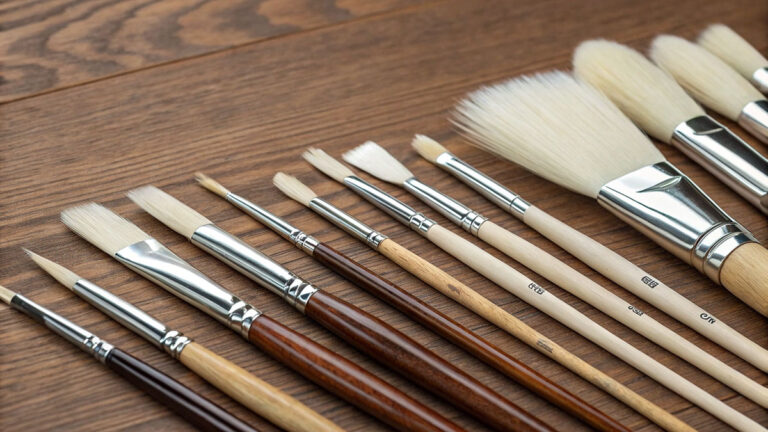
Wrong brushes ruin good paintings. Finding the best brushes for acrylic painting transforms your artistic results from amateur to professional quality overnight.
Acrylic paint destroys natural hair brushes while cheap synthetic bristles create streaky, uneven coverage.
Most artists waste money on unsuitable tools that fight against their creative vision rather than supporting it.
Professional painters know that synthetic bristles specifically designed for acrylic painting outperform expensive natural alternatives.
The right brush selection affects everything from color mixing to final texture quality.
This guide reveals which brushes deliver professional results across all skill levels and budgets.
You’ll discover the top synthetic materials, essential brush shapes, and specific brand recommendations that working artists actually use.
Key areas covered:
- Synthetic brush materials that excel with acrylics
- Essential brush shapes for different techniques
- Budget-friendly to premium brand recommendations
- Style-specific brush selection for abstract, realism, and landscape work
Types of Acrylic Brushes and Their Uses

Flat Brushes
Flat brushes dominate the acrylic painting world for good reason. Their wide, rectangular bristle arrangement makes them perfect for covering large areas quickly.
Coverage and Blending Applications
These workhorses excel at creating smooth washes and even color applications. When you need to fill backgrounds or block in major shapes, flat brushes deliver consistent results. The straight edge creates crisp lines that round brushes simply can’t match.
Size Ranges and Their Purposes
- Small flats (sizes 2-6): Detail work and tight spaces
- Medium flats (sizes 8-12): General painting and medium coverage
- Large flats (sizes 14-24): Background work and broad washes
Edge Work and Sharp Lines
The chisel edge of a flat brush creates razor-sharp lines when used sideways. This makes them essential for architectural elements and geometric patterns. Linear perspective work becomes much easier with a quality flat brush.
Round Brushes
Round brushes offer the most versatility in any artist’s toolkit. Their pointed tip and full belly make them adaptable to countless techniques.
Detail Work and Fine Lines
The precision tip handles everything from tiny highlights to delicate contour lines. Professional artists rely on small rounds for facial features and intricate details that define realistic work.
Color Mixing Capabilities
Round brushes hold more paint than flats, making them ideal for color theory experiments. The generous paint capacity allows for smooth gradations and blending on the canvas.
Versatility Across Painting Styles
Whether you’re working in abstract or realism, round brushes adapt to your needs. They handle both loose, expressive marks and controlled, detailed passages.
Filbert Brushes
Filbert brushes combine the best features of flats and rounds. Their oval shape creates unique stroke possibilities that other brushes can’t achieve.
Soft Edge Blending
The curved tip naturally creates soft, graduated edges. This makes filberts perfect for portrait work where harsh lines would look unnatural. Skin tone transitions become effortless.
Organic Shape Creation
Natural forms like leaves, petals, and clouds benefit from the filbert’s organic stroke pattern. The brush shape mimics the curves found in nature, making it easier to paint believable organic subjects.
Portrait and Landscape Applications
Portrait painters love filberts for modeling facial features and hair. Landscape artists use them for foliage, rocks, and cloud formations where soft edges enhance realism.
Fan Brushes
Fan brushes look unusual but serve specific purposes that no other brush can replicate. Their spread bristles create unique texture effects.
Texture Creation Techniques
- Dry brushing: Creates realistic grass and fur textures
- Stippling: Builds up complex surface patterns
- Dragging: Produces wood grain and fabric effects
Foliage and Cloud Effects
The separated bristles perfectly mimic the random patterns found in nature. Tree foliage becomes convincing with just a few fan brush strokes. Cloud formations gain realistic wispy edges.
Blending and Softening
Fan brushes excel at softening harsh edges between color transitions. The light touch required prevents overworking while maintaining smooth gradations.
Specialty Brushes
Beyond the basic shapes, specialized brushes solve specific painting challenges. Each serves a unique purpose in professional work.
Liner Brushes for Fine Details
Liner brushes feature extremely long, thin bristles perfect for continuous lines. Sign painters and detail artists depend on these for lettering and intricate linework. The paint capacity allows for uninterrupted strokes.
Wash Brushes for Large Areas
Wash brushes handle the biggest coverage jobs. Their wide, flat construction moves large amounts of paint efficiently. Background work and underpainting become quick tasks.
Palette Knives as Brush Alternatives
While not technically brushes, palette knives create effects impossible with traditional bristles. They excel at texture work and impasto techniques. The metal blade produces crisp edges and bold marks.
Best Synthetic Brush Materials for Acrylics

Nylon Bristles
Nylon bristles represent the gold standard for acrylic painting. Their chemical resistance and durability make them ideal for this demanding medium.
Durability and Longevity
Quality nylon brushes last years with proper care. The synthetic fibers resist the harsh effects of acrylic polymers that destroy natural hair. Investment in good nylon brushes pays off over time.
Paint Pickup and Release
Nylon’s smooth surface allows controlled paint flow. The bristles hold adequate amounts while releasing paint evenly across the canvas. This balance creates predictable results.
Cleaning Ease and Maintenance
Acrylic paint washes out of nylon bristles completely with soap and water. Unlike natural hair, nylon doesn’t absorb paint or cleaning solvents. Proper maintenance keeps brushes performing like new.
Polyester Blends
Polyester blends offer excellent performance at moderate prices. These mixed synthetic fibers combine multiple beneficial properties.
Spring and Shape Retention
The elastic memory of polyester fibers helps brushes snap back to their original shape. This spring action maintains brush performance over thousands of strokes. Shape retention directly affects painting precision.
Smooth Paint Application
Polyester’s uniform texture creates consistent paint flow. The synthetic construction eliminates the irregularities found in natural materials. Smooth applications become effortless.
Price Point Advantages
Polyester blends deliver professional performance without premium costs. Beginning artists can afford quality tools without major investment. The value proposition makes them popular choices.
Taklon Synthetic Hair
Taklon synthetic hair represents the premium end of synthetic brush materials. Its fine diameter and consistent properties rival the best natural alternatives.
Fine Detail Capabilities
Taklon’s ultra-fine fibers create precise points impossible with thicker materials. Detail work benefits from the material’s ability to hold sharp edges. Professional illustrators prefer Taklon for exacting work.
Smooth Finish Quality
The refined surface texture of Taklon produces silk-smooth paint application. Brush marks virtually disappear when using quality Taklon brushes. The finish rivals traditional sable brushes.
Professional-Grade Performance
Top artists choose Taklon when natural hair isn’t suitable. The consistent performance and longevity justify the higher cost. Professional results require professional tools.
Mixed Synthetic Blends
Mixed synthetic blends combine different artificial fibers to optimize performance characteristics. Manufacturers create custom formulations for specific applications.
Combining Material Benefits
Blend formulations might combine nylon’s durability with Taklon’s fineness. The result offers advantages of both materials while minimizing individual weaknesses. Custom blends solve specific painting challenges.
Specific Brand Formulations
- Princeton Select: Nylon and polyester for versatility
- Winsor & Newton Cotman: Mixed synthetics for student use
- Liquitex Freestyle: Polyester blend for heavy-body acrylics
Performance Trade-offs
Each blend sacrifices some properties to gain others. Understanding these trade-offs helps match brushes to specific techniques. No single material excels at everything.
The right synthetic material depends on your painting style, budget, and performance requirements. Quality synthetic brushes have revolutionized acrylic painting by providing tools specifically designed for this modern medium.
Top Brand Recommendations by Category

Budget-Friendly Options Under $20
Arteza delivers surprising quality at student prices. Their synthetic bristle sets include essential shapes without breaking the bank.
Arteza Acrylic Brush Sets
The 15-piece set covers all basic needs for under $15. Round, flat, and filbert brushes handle most painting projects. Quality stays consistent across the size range.
Royal & Langnickel Individual Brushes
Royal & Langnickel offers professional performance at budget prices. Their individual brushes let you build a custom collection gradually. The synthetic bristles hold up well to heavy use.
FolkArt Home Decor Brushes
FolkArt brushes excel at decorative painting and craft projects. The synthetic bristles work perfectly with heavy-body acrylics. Casual painters find these tools more than adequate.
Mid-Range Professional Brushes ($20-50)
This price range offers the sweet spot between performance and affordability. Professional artists often choose these brands for daily work.
Princeton Select Synthetic Series
Princeton Select brushes combine nylon and polyester for optimal performance. The spring and paint capacity rival much more expensive options. Art schools recommend these for student painters.
Key Features
- Mixed synthetic bristles for versatility
- Excellent shape retention
- Professional-grade ferrules
- Wide size selection
Winsor & Newton Cotman Brushes
Winsor & Newton’s reputation spans centuries. Their Cotman line brings that expertise to synthetic brush construction. The consistent quality makes them studio favorites.
Liquitex Freestyle Brushes
Liquitex Freestyle brushes match perfectly with Liquitex paints. The synthetic bristles handle heavy-body acrylics without splaying. Professional artists trust this combination.
Premium Artist Brushes ($50+)
Investment-grade brushes justify their cost through superior performance and longevity. Serious artists view these as essential tools.
Da Vinci Nova Synthetic Brushes
Da Vinci Nova represents the pinnacle of synthetic brush technology. Their Toray bristles rival natural sable for precision work. The German engineering shows in every detail.
Performance Benefits
- Toray synthetic fibers
- Perfect point retention
- Seamless ferrule construction
- Lifetime performance guarantee
Escoda Versatil Series
Spanish craftsmanship meets modern materials in the Versatil line. These brushes handle everything from fine detail to broad washes. Professional illustrators swear by their consistency.
Raphael Kaerell Synthetic Line
Raphael Kaerell brushes bring French artistry to synthetic construction. The ultra-fine bristles create silky-smooth paint application. Portrait painters appreciate their delicate touch.
Best Brush Sets for Beginners
Starting painters need comprehensive sets that cover all essential techniques. These recommendations provide maximum value and versatility.
Complete Starter Kit Recommendations
- Arteza 15-piece set: Best overall value
- Princeton Select starter pack: Professional quality introduction
- Royal & Langnickel variety set: Good middle ground option
Essential Brush Combinations
Every beginner needs these core brushes:
- Round brushes: sizes 2, 6, 10
- Flat brushes: sizes 4, 8, 12
- One filbert: size 6
- One liner: size 1
Value-for-Money Analysis
Arteza offers the most brushes per dollar but sacrifices some durability. Princeton Select costs more initially but lasts longer with proper care. Royal & Langnickel splits the difference between price and performance.
Specific Brush Recommendations by Painting Style

Abstract and Expressionist Painting
Abstract work demands tools that handle bold, gestural marks. Traditional brush rules don’t apply here.
Large Flat Brushes for Bold Strokes
Size 16-24 flats create the dramatic marks that define expressionism. The wide bristle spread covers canvas quickly. Look for brushes with excellent paint capacity.
Recommended Models
- Da Vinci Nova Series 123 (size 20)
- Princeton Select Series 3750 (size 24)
- Escoda Versatil Series 1548 (size 16)
Palette Knives for Texture
Metal palette knives create texture impossible with traditional brushes. The rigid blade moves thick paint in sculptural ways. Jackson Pollock often used knives alongside brushes.
Unconventional Application Tools
Abstract painters use anything that makes interesting marks:
- Sponges for organic textures
- Credit cards for scraping effects
- Fingers for direct application
- Rags for soft blending
Realistic and Detailed Work
Realism requires precision tools that respond to subtle pressure changes. Every brush choice affects the final result.
Small Round Brushes for Precision
Sizes 0-4 rounds handle the finest details in realistic work. Quality becomes critical at this scale. Cheap brushes lose their points quickly.
Top Choices for Detail Work
- Raphael Kaerell Series 3040 (sizes 0-2)
- Da Vinci Nova Series 1570 (sizes 1-4)
- Escoda Versatil Series 1540 (sizes 0-3)
Liner Brushes for Fine Details
Long-haired liners create continuous lines for hair, grass, and architectural details. The extended bristles hold more paint for uninterrupted strokes. Leonardo da Vinci would have loved these tools.
Blending Tools for Smooth Transitions
Soft synthetic blenders eliminate brush marks in realistic work. Fan brushes work well for subtle gradation effects. Dry brush techniques require different tools than wet blending.
Landscape Painting
Landscape work combines broad areas with intricate details. Brush selection must accommodate this range.
Fan Brushes for Natural Textures
Fan brushes excel at creating convincing foliage and grass textures. The separated bristles mimic natural randomness. Impressionism relies heavily on these effects.
Landscape-Specific Techniques
- Tree foliage: Light stippling motions
- Grass textures: Upward dragging strokes
- Cloud effects: Soft blending movements
- Rock surfaces: Dry brush applications
Flat Brushes for Sky Work
Large flats handle expansive sky areas efficiently. Atmospheric perspective requires smooth color transitions. The flat edge creates horizon lines perfectly.
Specialty Brushes for Specific Elements
- Rigger brushes: Tree branches and fine details
- Hake brushes: Large washes and backgrounds
- Sponge brushes: Rock and mountain textures
- Palette knives: Impasto cloud effects
Portrait Painting
Portrait work demands the highest brush quality. Skin tones reveal every flaw in brush performance.
Soft Filbert Brushes for Skin
Filbert brushes naturally follow facial contours. Their oval shape prevents harsh edges in skin modeling. Sizes 4-8 handle most facial areas.
Skin Rendering Techniques
- Cross-hatching with small filberts
- Circular blending motions
- Following facial form with brush direction
- Building up layers gradually
Small Detail Brushes for Features
Eyes, lips, and nostrils require extreme precision. Size 0-2 rounds with perfect points handle these critical areas. One poorly painted eye ruins an entire portrait.
Blending Tools for Smooth Transitions
Portrait painting lives in the subtle transitions between tone and color. Soft synthetic brushes eliminate visible brush marks. Fan brushes work well for final smoothing passes.
Essential Portrait Brush Kit
- Filberts: sizes 2, 4, 6, 8
- Rounds: sizes 0, 1, 2, 4
- Flats: sizes 2, 4, 6
- One fan brush: size 2
- One liner: size 0
The right brush makes the difference between amateur and professional results. Match your tools to your artistic goals for best outcomes.
Brush Care and Maintenance

Proper Cleaning Techniques
Immediate cleaning after each painting session prevents permanent damage. Acrylic paint hardens quickly once it dries in bristles.
Immediate Cleaning After Use
Never let acrylic paint dry in your brushes. The polymer bonds become impossible to remove once cured. Even a five-minute delay can cause problems.
Quick Cleaning Steps
- Rinse in lukewarm water immediately
- Gently squeeze bristles to remove paint
- Never pull or tug on individual bristles
- Work from ferrule to tip
Soap and Water Methods
Mild dish soap removes most acrylic paint effectively. Work the soap gently through bristles with your fingers. Avoid harsh scrubbing that damages bristle alignment.
Effective Soap Cleaning Process
- Use lukewarm water (never hot)
- Apply small amount of dish soap
- Gently massage from base to tip
- Rinse thoroughly until water runs clear
- Reshape while damp
Commercial Brush Cleaners
Stubborn paint requires specialized cleaners. Master’s Brush Cleaner and similar products dissolve dried acrylic safely. These products also condition bristles for longer life.
Storage and Protection
Proper storage prevents damage and maintains brush performance. Poor storage habits destroy even premium brushes quickly.
Brush Holder Options
Vertical storage keeps bristles straight and prevents bending. Brush containers with compartments organize different sizes efficiently. Avoid storing brushes tip-down in water.
Storage Solutions
- Bamboo brush rolls for portability
- Desktop organizers with individual slots
- Wall-mounted magnetic strips
- Traditional brush jars (bristles up only)
Shape Preservation Methods
Brush guards protect delicate tips during storage. These plastic sleeves maintain point integrity for detail brushes. Remove guards before painting to prevent damage.
Travel Storage Solutions
Traveling artists need protection without bulk. Brush rolls secure multiple brushes in compact packages. Hard cases protect expensive brushes from impact damage.
When to Replace Brushes
Even quality brushes eventually wear out. Recognizing replacement signs saves frustration and improves results.
Signs of Wear and Damage
Split bristles indicate structural breakdown. Hooks, curls, or permanent bends signal replacement time. Paint buildup near the ferrule also reduces performance.
Replacement Indicators
- Bristles won’t hold a point
- Ferrule loosening or paint seepage
- Permanent bristle splaying
- Visible bristle breakage
- Loss of spring or flexibility
Performance Degradation Indicators
Brushes lose performance gradually. Poor paint pickup or uneven application suggest declining quality. Trust your instincts when brushes feel different.
Cost-Benefit Replacement Timing
Replace expensive brushes when performance drops below 70%. Cheaper brushes warrant replacement sooner due to lower initial investment. Professional work demands consistently performing tools.
Extending Brush Life
Preventive care multiplies brush lifespan significantly. Simple habits protect your investment in quality tools.
Conditioning Treatments
Brush conditioners restore flexibility to aging bristles. Hair conditioner works surprisingly well for synthetic brushes. Apply monthly for best results.
Conditioning Process
- Clean brush thoroughly first
- Apply small amount of conditioner
- Work through bristles gently
- Leave for 2-3 minutes
- Rinse completely and reshape
Proper Handling Techniques
Never use brushes for mixing paint on palettes. Palette knives handle mixing duties without damaging bristles. Gentle pressure prevents premature wear.
Rotation Strategies for Heavy Use
Professional artists rotate multiple brushes of each size. This prevents overuse of favorites while maintaining consistent results. Quality brushes last years with proper rotation.
Common Mistakes and How to Avoid Them
Using Wrong Brush Types
Natural hair brushes suffer damage from acrylic polymers. Save expensive sable brushes for watercolor painting instead.
Natural Hair with Acrylics
Acrylic paint destroys natural bristles permanently. The synthetic polymers bond with organic fibers irreversibly. This expensive mistake happens frequently to beginners.
Why Natural Hair Fails
- Acrylic polymers penetrate hair shafts
- Cleaning becomes impossible
- Bristles become brittle and break
- Original spring disappears permanently
Wrong Sizes for Intended Work
Oversized brushes make detail work impossible. Tiny brushes struggle with large coverage areas. Match brush size to your specific task requirements.
Cheap Brush False Economies
Low-quality brushes shed bristles constantly. Loose bristles ruin paintings and frustrate artists. Invest in fewer quality brushes rather than many cheap ones.
Poor Maintenance Habits
Neglect destroys brushes faster than heavy use. Simple care prevents most brush failures.
Leaving Paint to Dry in Brushes
This mistake kills more brushes than anything else. Dried acrylic forms permanent bonds with bristles. Prevention costs nothing but saves hundreds in replacement costs.
Paint Drying Prevention
- Never leave brushes unattended with paint
- Use palette paper instead of staying wet palettes
- Set timer reminders during long sessions
- Keep water containers nearby always
Improper Cleaning Methods
Hot water damages synthetic bristles permanently. Harsh scrubbing destroys bristle alignment. Gentle techniques preserve brush performance longer.
Storage Mistakes That Damage Bristles
Storing brushes flat compresses bristles unnaturally. Tip-down storage in water causes permanent bends. Proper storage requires minimal effort but prevents major damage.
Overloading Brushes with Paint
Paint overload reduces control and wastes materials. Learning proper loading techniques improves both results and brush life.
Paint Pickup Techniques
Load brushes to about two-thirds capacity maximum. Excessive paint drips and creates messy applications. Practice finding the right amount for each brush size.
Proper Loading Method
- Dip brush into paint carefully
- Remove excess on palette edge
- Check paint distribution in bristles
- Apply with controlled pressure
- Reload as needed during work
Brush Capacity Limits
Each brush size has optimal paint capacity. Overloading causes paint to migrate into the ferrule, which damages brush construction permanently.
Application Efficiency Tips
Use appropriate pressure for each technique. Light pressure works for glazing and detail work. Heavier pressure suits texture creation and bold marks.
Pressure Guidelines
- Detail work: Barely touch canvas
- Blending: Light, feathery strokes
- Coverage: Moderate, even pressure
- Texture work: Varied pressure as needed
Understanding these common mistakes helps avoid expensive failures. Quality brushes reward proper care with years of reliable service.
Budget Planning and Shopping Tips

Building a Brush Collection Gradually
Smart collectors build quality sets over time rather than buying everything at once. This approach maximizes value while ensuring each purchase counts.
Priority Brush Purchases
Start with essential sizes that handle 80% of painting tasks. Round brushes in sizes 2, 6, and 10 cover most detail and medium work. Add flat brushes in sizes 4, 8, and 12 next.
First Purchase Priority List
- Round brush size 6 (most versatile)
- Flat brush size 8 (general coverage)
- Round brush size 2 (detail work)
- Flat brush size 12 (backgrounds)
- Filbert brush size 4 (blending)
Seasonal Sales and Discounts
Back-to-school sales in August offer significant savings on art supplies. Holiday clearances in January provide another opportunity. Professional artists stock up during these periods.
Best Shopping Seasons
- August: 20-40% off school supplies
- January: Post-holiday clearances
- Black Friday: Online art retailer deals
- End of fiscal year: Professional supplier discounts
Quality vs Quantity Decisions
Five quality brushes outperform twenty cheap ones. Invest in fewer, better tools that last years. Professional results require professional-grade equipment.
Where to Buy Quality Brushes
Different retailers serve different needs. Art supply stores offer expert advice while online retailers provide better prices.
Art Supply Store Benefits
Local stores let you handle brushes before buying. Knowledgeable staff can recommend specific brushes for your painting styles. Return policies tend to be more generous than online retailers.
Store Advantages
- Physical inspection before purchase
- Expert staff recommendations
- Immediate availability
- Personal relationship building
- Local workshop information
Online Retailer Comparisons
Amazon offers convenience but limited expertise. Blick Art Materials combines online pricing with professional knowledge. Jerry’s Artarama provides extensive selection with regular sales.
Top Online Sources
- Blick Art Materials: Professional focus
- Jerry’s Artarama: Wide selection, frequent sales
- Amazon: Convenience, fast shipping
- Dick Blick: Educational discounts available
- Cheap Joe’s: Specialty brushes and supplies
Professional Supplier Advantages
Professional suppliers stock premium brands unavailable elsewhere. Volume discounts benefit working artists. Quality control standards exceed general retailers.
Testing Before Committing
Trial purchases prevent expensive mistakes. Test individual brushes before investing in complete sets.
Single Brush Trials
Buy one brush from each brand you’re considering. Compare performance across different painting mediums and techniques. This approach costs more initially but saves money long-term.
Testing Protocol
- Buy identical sizes from different brands
- Use same paint type for fair comparison
- Test on identical surfaces
- Document performance differences
- Note cleaning ease and durability
Return Policies to Consider
Liberal return policies reduce purchase risk. Blick Art Materials accepts returns within 60 days. Amazon’s return window varies by seller but generally allows 30 days.
Return Policy Checklist
- Time limit for returns
- Condition requirements
- Restocking fees
- Return shipping costs
- Exchange vs refund options
Artist Community Recommendations
Online forums provide unbiased reviews from working artists. Reddit’s r/painting community shares honest experiences. Local art groups offer hands-on testing opportunities.
Smart Shopping Strategies
Strategic purchasing maximizes brush performance per dollar spent. Plan purchases around actual needs rather than perceived requirements.
Brand Mixing Benefits
Different brands excel at different tasks. Da Vinci rounds for detail work combined with Princeton flats for coverage creates optimal performance. Don’t limit yourself to single brands.
Effective Brand Combinations
- Detail brushes: Premium synthetic brands
- Coverage brushes: Mid-range workhorse brands
- Specialty brushes: Task-specific manufacturers
- Backup brushes: Budget options for heavy use
Educational Discounts
Student discounts reduce costs significantly. Teacher credentials often qualify for professional pricing. Many suppliers offer 10-15% education discounts year-round.
Bulk Purchase Timing
End-of-year clearances offer best bulk pricing. Professional artists often buy annual supplies during December sales. Storage space becomes the limiting factor.
Long-Term Investment Thinking
Quality brushes cost more initially but provide better value over time. Calculate cost per year rather than upfront price.
Cost Per Use Analysis
A $50 brush used 200 times costs $0.25 per session. A $5 brush lasting 20 sessions costs $0.25 per session. Quality brushes often cost less per use despite higher initial investment.
True Cost Calculation
- Purchase price ÷ estimated uses = cost per session
- Factor in replacement frequency
- Include time saved from better performance
- Consider result quality improvements
Professional vs Hobby Budgeting
Professional artists can justify premium brush costs as business expenses. Hobby painters should focus on versatile, durable options. Match spending to usage intensity.
Replacement Planning
Brush replacement is inevitable. Budget for replacements rather than buying reactive emergency brushes. Plan annual brush budgets based on usage patterns.
Annual Budget Guidelines
- Casual painters: $50-100 per year
- Regular hobbyists: $100-200 per year
- Semi-professional: $200-500 per year
- Professional artists: $500+ per year
Smart brush shopping requires patience and planning. Quality tools reward careful selection with years of reliable service.
FAQ on Best Brushes For Acrylic Painting
What makes synthetic brushes better for acrylic painting than natural hair?
Synthetic bristles resist acrylic polymers that permanently damage natural hair. Nylon and polyester fibers maintain their shape and flexibility after repeated cleaning. Natural hair becomes brittle and loses spring when exposed to acrylic paint’s chemical composition.
Which brush shapes are essential for acrylic painting?
Round brushes handle detail work and versatile applications. Flat brushes excel at coverage and sharp edges. Filbert brushes create soft blending effects. Fan brushes produce natural textures like foliage and clouds that other shapes can’t replicate effectively.
How do I choose the right brush size for my painting?
Match brush size to your intended coverage area. Small sizes (0-4) work for details and fine lines. Medium sizes (6-12) handle general painting tasks. Large sizes (14+) cover backgrounds quickly and create bold gestural marks in abstract work.
What’s the difference between flat and filbert brushes?
Flat brushes have straight edges that create sharp lines and even coverage. Filbert brushes feature rounded tips that naturally blend colors and soften edges. Filberts work better for organic shapes while flats excel at architectural elements.
How much should I spend on acrylic painting brushes?
Budget $50-100 for a quality starter set. Professional brushes cost $20-50 each but last years with proper care. Cheap brushes under $5 shed bristles and lose shape quickly, making them false economy purchases for serious painters.
Can I use watercolor brushes for acrylic painting?
Avoid using expensive natural hair brushes designed for watercolor painting with acrylics. The synthetic polymers will permanently damage sable or squirrel hair. Save watercolor brushes for water-based mediums only to preserve their investment value.
How do I clean acrylic paint from brushes properly?
Clean brushes immediately after use with lukewarm water and mild soap. Never let acrylic paint dry in bristles as it creates permanent damage. Work soap gently from ferrule to tip, rinse thoroughly, and reshape while damp.
Which brands make the best acrylic painting brushes?
Princeton Select, Winsor & Newton Cotman, and Liquitex Freestyle offer excellent mid-range options. Da Vinci Nova and Escoda Versatil provide premium performance. Arteza and Royal & Langnickel deliver good value for budget-conscious artists seeking quality tools.
How long do quality acrylic brushes typically last?
Quality synthetic brushes last 2-5 years with regular use and proper care. Professional artists using brushes daily may replace them annually. Brush lifespan depends on painting frequency, cleaning habits, and paint types used during studio sessions.
Should I buy brush sets or individual brushes?
Starter sets offer better value for beginners learning essential shapes and sizes. Experienced artists prefer individual brushes to build custom collections.
Sets often include sizes you won’t use, while individual purchases target specific technique requirements effectively.
Conclusion
Choosing the best brushes for acrylic painting transforms your artistic output from frustrating struggle to smooth creative flow. Quality synthetic bristles designed specifically for acrylic polymers deliver professional results regardless of skill level.
Investment in proper tools pays dividends through years of reliable performance.
Princeton Select, Da Vinci Nova, and Winsor & Newton offer proven synthetic materials that handle everything from detailed portraiture to bold expressionist techniques.
Start with essential shapes in versatile sizes. Round brushes for detail work, flats for coverage, and filberts for blending cover 90% of painting situations.
Build your collection gradually around actual needs rather than perceived requirements.
Proper maintenance extends brush life significantly. Clean immediately after use, store properly, and replace when performance degrades. Quality brushes reward careful treatment with consistent, professional-grade results.
Whether exploring impressionist landscapes or developing personal painting styles, the right brushes support your creative vision instead of fighting against it. Professional tools create professional possibilities.