

Your watercolor painting success depends heavily on one decision most artists overlook: cold press vs hot press watercolor paper. This choice affects everything from paint absorption to final color intensity.
Surface texture differences between these two paper types create completely different painting experiences. Cold press offers tooth and texture that grabs pigments, while hot press provides smooth control for precise detail work.
Professional artists and beginners alike struggle with this choice because both paper types excel in different situations. Arches watercolor paper, Fabriano Artistico, and other premium brands offer both options, but knowing which to choose requires understanding how each performs.
This guide breaks down manufacturing differences, performance properties, brand comparisons, and practical applications. You’ll learn which paper type matches your painting style, technique preferences, and budget considerations.
Paper selection affects every brushstroke you make. Get this foundation right and your paintings improve immediately.
Cold Press Watercolor Paper Deep Dive

Manufacturing Process Behind the Texture
Cold press paper gets its distinctive surface texture through room temperature pressing. The manufacturing process skips heat application entirely.
Paper mills use steel rollers at ambient temperatures. This gentle approach preserves the natural fiber patterns that create the characteristic tooth.
The pressing happens after initial sheet formation but before final drying. Timing matters here – too early and the fibers compress too much, too late and the texture becomes uneven.
Pressure Application Methods
Most manufacturers use hydraulic presses with controlled pressure settings. The goal is consistent texture without flattening the paper completely.
Arches watercolor paper uses traditional cylinder molds during their cold press process. This creates the subtle variations that make each sheet unique.
Some mills apply pressure in multiple stages. Light initial pressure sets the basic structure, followed by firmer compression for durability.
Surface Characteristics That Matter
Cold press surfaces show visible fiber structure. You can actually see individual cotton fibers when you look closely.
The tooth feels rough under your fingers. This roughness isn’t random – it follows the natural lay of the cotton fibers used in premium papers.
Paint absorption happens differently on cold press. The irregular surface creates tiny pockets where pigment settles.
Texture Patterns and Paper Grain
The grain direction affects how paint flows. Look for it by tearing a small corner – paper tears cleanly with the grain, raggedly against it.
Fabriano Artistico shows pronounced texture patterns that vary slightly between sheets. This variation actually helps create more interesting paint effects.
Professional artists often choose cold press specifically for these surface irregularities. They add character that smooth papers can’t match.
Absorbency Levels
Cold press absorbs water faster than hot press. The increased surface area from texture creates more contact points.
Cotton fiber content affects absorbency rates significantly. 100% cotton papers like Winsor & Newton professional grades absorb differently than wood pulp blends.
Student-grade options absorb paint differently due to sizing treatments. These affect how quickly water soaks into the paper.
Performance Properties in Action
Paint behaves uniquely on cold press surfaces. Wet-on-wet techniques create soft, flowing effects as pigments settle into texture valleys.
Color blending happens naturally as paint moves through the paper’s irregular surface. You get organic gradations without heavy brush work.
Paint Absorption and Flow
Watercolor painting on cold press requires different water management. The paper drinks up initial washes quickly.
Pigments settle unevenly across the textured surface. This creates granulation patterns that add visual interest to flat color areas.
Heavy pigment loads pool in texture valleys. Light washes catch on fiber peaks, creating natural variation in color intensity.
Blending and Bleeding Control
Wet-on-dry applications work well because the texture helps control paint spread. Sharp edges are harder to achieve but softer transitions come naturally.
Paint flow control requires understanding how water moves through the surface irregularities. Too much water and colors run together uncontrollably.
Professional artists use this bleeding to their advantage. Claude Monet style techniques work beautifully on textured surfaces.
Lifting and Correction Capabilities
Cold press forgives mistakes better than smooth papers. The texture disrupts even paint application, making corrections less obvious.
Lifting capabilities depend on paper quality and sizing. Better papers allow gentle lifting without damaging the surface.
Masking fluid works well on cold press because it doesn’t penetrate deeply into texture valleys. Removal is usually clean and damage-free.
Hot Press Watercolor Paper Deep Dive

Manufacturing Process for Smooth Results
Hot press manufacturing uses heated rollers during the pressing stage. Temperature and pressure combinations create the characteristic smooth finish.
Most mills heat rollers between 120-180°F. The heat softens paper fibers temporarily, allowing complete flattening.
Multiple passes through heated rollers ensure uniform smoothness. Each pass increases surface consistency while maintaining paper strength.
Heat Application During Pressing
The heating process happens after initial sheet formation. Paper moves through heated steel rollers under significant pressure.
Surface smoothing effects develop gradually through controlled temperature exposure. Too much heat damages fibers, too little leaves texture.
Hahnemühle fine art papers use precise temperature control throughout their hot press process. This consistency explains their premium reputation.
Pressure and Temperature Balance
Modern mills monitor both temperature and pressure continuously. Digital controls maintain optimal conditions for consistent results.
Higher temperatures require lower pressures to avoid fiber damage. The balance affects final surface quality significantly.
Some manufacturers use steam injection during pressing. This adds moisture that helps achieve ultra-smooth finishes.
Surface Characteristics
Hot press feels almost glass-smooth under your fingers. The surface reflects light evenly across the entire sheet.
Fiber visibility is minimal on quality hot press papers. You might see individual fibers with magnification, but they’re not obvious to the naked eye.
Paper grain still exists but it’s less pronounced. You can find it by examining how light reflects off the surface at different angles.
Smooth Finish Details
The smoothness isn’t perfectly uniform when examined closely. Quality hot press papers show subtle micro-textures that help with paint adhesion.
Color intensity variations are minimal on hot press because pigments don’t settle into surface valleys. What you see is what you get.
Professional grade watercolor paper in hot press shows remarkable surface consistency. Each sheet performs virtually identically.
Reduced Absorbency Patterns
Hot press absorbs water more slowly than cold press. The compressed surface reduces the number of absorption points.
Paint sits longer on the surface before soaking in. This extended working time allows for precise detail work and fine control.
Sizing treatment effects are more pronounced on hot press. The smooth surface allows sizing to create more uniform barriers to water penetration.
Performance Properties
Brush stroke definition is exceptional on hot press. Every mark stays exactly where you place it.
Fine details emerge clearly because paint doesn’t spread through surface irregularities. Botanical illustration artists often prefer hot press for this precision.
Paint Flow and Brush Control
Paint flow across hot press is predictable and controlled. Colors move smoothly without catching on surface texture.
Wet-on-wet methods create different effects than on cold press. Colors flow more evenly and edges stay sharper longer.
Mixed media applications work well because the smooth surface accepts various materials uniformly.
Detail Work Capabilities
Hot press excels for portrait painting where precision matters. Fine facial features and hair details render clearly.
Small brush work stays crisp because paint doesn’t feather into texture. Hyperrealism techniques benefit from this control.
Photorealism artists often choose hot press for its ability to hold fine details without surface interference.
Layering and Glazing Response
Transparency layers build beautifully on hot press. Each glaze applies evenly without texture disruption.
Multiple color harmony effects develop through clean layering. Colors mix optically rather than physically blending in surface valleys.
Gradation techniques work smoothly because there’s no texture to interrupt transitions.
Side-by-Side Comparison Analysis

Physical Differences You Can Feel
Surface texture contrast is immediately obvious when touching both papers. Cold press feels like fine sandpaper, hot press like smooth cardstock.
Weight variations exist between types but aren’t dramatic. Both come in standard weights from 140lb to 300lb.
Hold both papers up to light. Cold press shows irregular fiber patterns, hot press appears more uniform throughout.
Visual Appearance Distinctions
Color and appearance differ subtly between types. Cold press looks slightly more matte, hot press has subtle sheen.
Paper thickness feels similar, but cold press appears thicker due to its raised texture. Hot press looks denser and more compressed.
Kilimanjaro paper and other manufacturers show these differences consistently across their product lines.
Painting Technique Compatibility
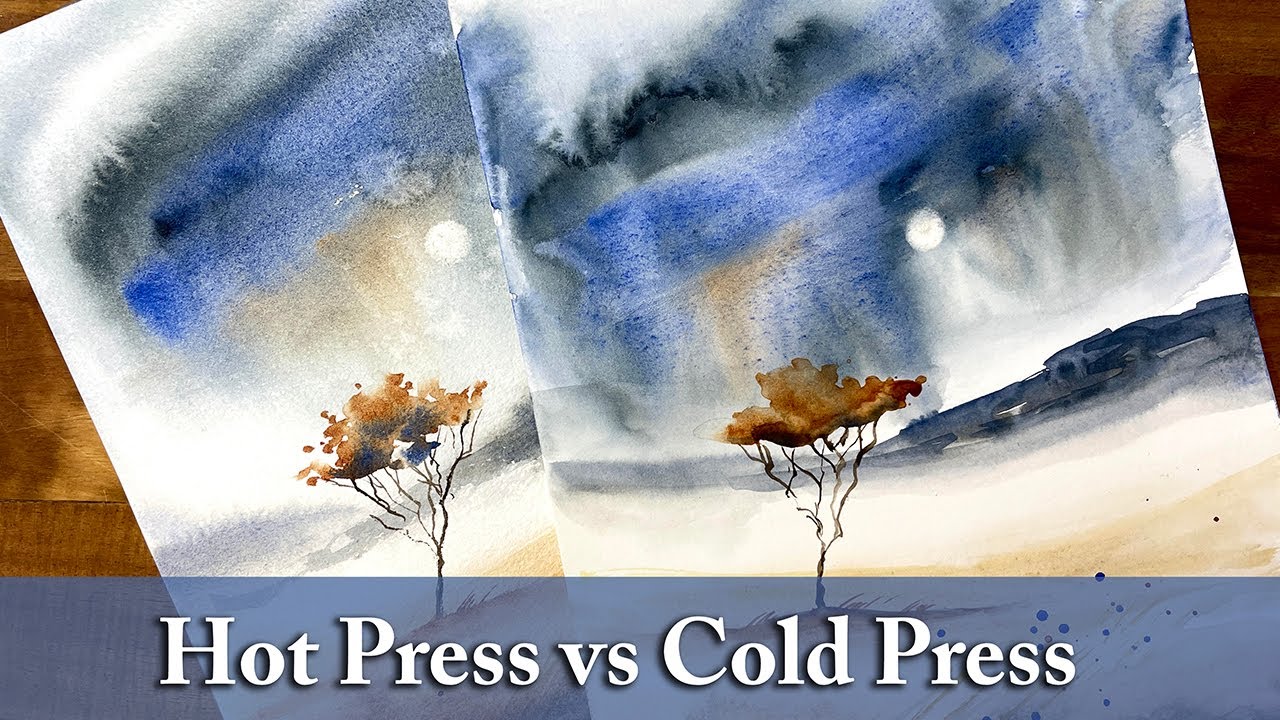
Wet-on-wet applications behave completely differently on each surface type. Cold press creates soft, organic bleeds while hot press maintains more controlled flows.
Wet-on-dry methods work well on both but produce different effects. Cold press softens edges naturally, hot press keeps them sharp.
Brush Technique Variations
Dry brush techniques catch beautifully on cold press texture. The raised fibers grab pigment and create natural broken color effects.
Hot press requires different dry brush approaches. You need less paint and more pressure to achieve similar broken color effects.
En plein air painting often favors cold press because outdoor conditions benefit from the paper’s forgiving nature.
Paint Behavior Differences
Pigment settling differences are dramatic between paper types. Cold press creates natural granulation, hot press keeps pigments suspended evenly.
Color intensity appears stronger on hot press because pigments don’t sink into surface valleys. Every particle contributes to the visual effect.
Staining properties vary significantly. Some pigments stain cold press more readily due to increased surface contact area.
Paint Interaction Patterns
Paint absorption rates differ by roughly 30% between paper types. Cold press drinks up initial washes faster than hot press.
Granulation effects only develop properly on textured surfaces. Hot press produces minimal granulation even with granulating pigments.
Bleeding behavior is more predictable on hot press. Colors spread in clean, controlled patterns rather than following texture irregularities.
Working Time Differences
Hot press gives you longer working time because paint stays wet on the surface longer. Cold press demands faster decisions as paint soaks in quickly.
Lifting windows close faster on cold press as paint penetrates texture valleys. Hot press allows corrections for extended periods.
Blending opportunities last longer on hot press but require different techniques than cold press blending.
Drying Characteristics
Cold press papers dry unevenly as water evaporates from texture peaks first. This creates interesting drying patterns that some artists exploit creatively.
Hot press dries more evenly across the surface. You get consistent drying times that are easier to predict and control.
Warping behavior differs between types. Cold press tends to buckle more dramatically but also flattens more completely when dry.
Choosing the Right Paper for Your Art

Beginner Considerations
Learning curve factors heavily influence paper choice for new artists. Cold press forgives mistakes better than hot press.
Starting artists benefit from paper weight around 140-200lb. Lighter papers buckle too easily, heavier ones cost more without clear benefits.
Student grade options from Canson watercolor blocks or Strathmore artist papers offer good practice surfaces. They’re affordable enough for frequent experimentation.
Mistake Correction Ease
Cold press allows easier lifting capabilities when corrections are needed. The textured surface disrupts paint flow, making fixes less obvious.
Wet techniques on cold press naturally create soft edges. Harsh mistakes blend into surrounding areas more forgivingly.
Hot press shows every brushstroke clearly. While this precision is valuable, it also makes errors more visible to inexperienced eyes.
Budget-Friendly Starting Options
Price point comparisons show significant differences between student and professional grades. Legion watercolor paper offers middle-ground quality at reasonable costs.
Block format benefits include built-in stretching that prevents warping. Beginners avoid the hassle of pre-stretching individual sheets.
Bee Paper Company produces decent student-grade options. Their cold press sheets work well for practicing basic watercolor painting techniques.
Advanced Artist Needs
Professional artists require archival paper standards for work intended to last. pH neutral papers with 100% cotton content meet museum standards.
Cotton fiber content makes the difference between temporary studies and permanent artwork. Wood pulp papers deteriorate over decades.
Style-Specific Requirements
Portrait painting demands smooth surfaces for fine detail work. Hot press papers excel at capturing subtle facial features and hair textures.
Landscape art requirements vary by approach. Impressionism techniques work beautifully on cold press texture, while detailed botanical work needs hot press precision.
Abstract artists often prefer cold press for its unpredictable paint interactions. The surface creates happy accidents that enhance experimental work.
Professional Presentation Standards
Gallery-worthy work requires fade resistance testing and proper archival qualities. Arches watercolor paper and Fabriano Artistico meet these professional standards.
Paper sizing affects how paint behaves during application and over time. Professional grades use pH neutral sizing that won’t yellow or become brittle.
Cotton content at 100% ensures longevity. Mixed fiber papers may contain lignin that causes deterioration over decades.
Subject Matter Matching
Botanical illustration artists almost universally choose hot press for its ability to hold fine details. Leaf veins and flower structures render clearly without texture interference.
Plein air painting often benefits from cold press durability. Outdoor conditions and quick work favor forgiving surfaces.
Landscape Painting Approaches
Wet-on-wet methods create atmospheric effects naturally on cold press. Claude Monet style techniques rely on the surface’s natural bleeding properties.
Mountain and sky paintings benefit from cold press granulation patterns. Pigments settle naturally to suggest rocky textures and cloud formations.
Detailed architectural landscapes work better on hot press. Building edges and structural elements need the precision that smooth surfaces provide.
Portrait Work Requirements
Photorealism demands hot press for its ability to hold precise detail without surface interference. Every brushstroke contributes to the final realistic effect.
Traditional portrait techniques balance both surface types. Some artists use hot press for facial features and cold press for backgrounds.
Color mixing happens differently on each surface. Hot press allows more controlled color blending, while cold press creates natural transitions.
Popular Brands and Product Lines
Cold Press Market Leaders
Arches watercolor paper dominates professional cold press markets. Their traditional manufacturing creates consistent texture across sheets.
Fabriano Artistico offers European-style cold press with pronounced texture. Italian paper mills have refined their process over centuries.
Winsor & Newton provides reliable cold press options at various price points. Their professional line competes directly with Arches quality.
Student-Grade Cold Press Options
Canson watercolor blocks deliver decent performance for practice work. The pre-stretched format eliminates warping concerns for beginners.
Strathmore artist papers bridge the gap between student and professional grades. Their 400 series offers surprising quality for the price.
Bee Paper Company focuses on educational markets with affordable cold press options. Art schools often stock these for student use.
Professional Quality Choices
Kilimanjaro paper represents premium cold press manufacturing. Their cotton content and texture consistency justify higher prices.
Moulin du Roy mills produce some of Europe’s finest watercolor papers. Traditional methods create surfaces that modern machines can’t replicate.
Hahnemühle fine art brings German precision to watercolor paper manufacturing. Their cold press maintains texture while ensuring uniform thickness.
Hot Press Alternatives
Hot press selection involves fewer major players than cold press markets. Arches again leads with their smooth, reliable surfaces.
Fabriano Artistico hot press offers European smoothness standards. The surface accepts fine detail work while maintaining good paint adhesion.
Manufacturer Variations in Smoothness
Winsor & Newton hot press feels slightly more textured than pure hot press. This micro-texture helps with paint adhesion while maintaining smoothness.
Legion watercolor paper hot press targets middle-market artists. Quality approaches professional standards without premium pricing.
Daniel Smith supplies distributes several hot press brands. Their house brand offers consistent quality across different weights.
Weight and Size Availability
Sheet size options vary significantly between manufacturers. Arches offers the widest range from small studies to mural-sized sheets.
Roll paper advantages include custom sizing and reduced per-square-foot costs. Professional studios often buy rolls for large-scale work.
Paper weight selection affects both price and performance. 300lb papers rarely need stretching, while 140lb papers require proper preparation.
Practical Usage Tips and Techniques
Preparation Methods That Matter
Paper stretching prevents warping during wet applications. Soak sheets briefly, then tape or staple to rigid boards while damp.
Taping requirements depend on paper weight and painting approach. Heavy papers (300lb+) rarely need stretching for moderate water use.
Lightweight papers (140lb) always need preparation unless you’re working very dry or using watercolor blocks with built-in stretching.
Proper Stretching Technique
- Soak paper in clean water for 2-4 minutes
- Remove excess water with clean sponge
- Place on rigid board (plywood or gator board)
- Tape edges with masking tape while paper is still damp
- Allow to dry flat before beginning painting
Mounting options include traditional brown tape or modern adhesive strips. Brown tape creates stronger bonds but requires water activation.
Some artists use staples instead of tape. Heavy-duty staplers work better than standard office versions for this application.
Surface Preparation Steps
Sizing treatment on some papers benefits from light sanding. Very smooth papers sometimes resist initial water application.
Test water absorption on paper edges before starting. Different papers require different water management approaches based on their absorbency.
Gesso application is rarely needed for watercolor papers. Most professional papers have proper sizing already applied during manufacturing.
Painting Strategies by Surface Type
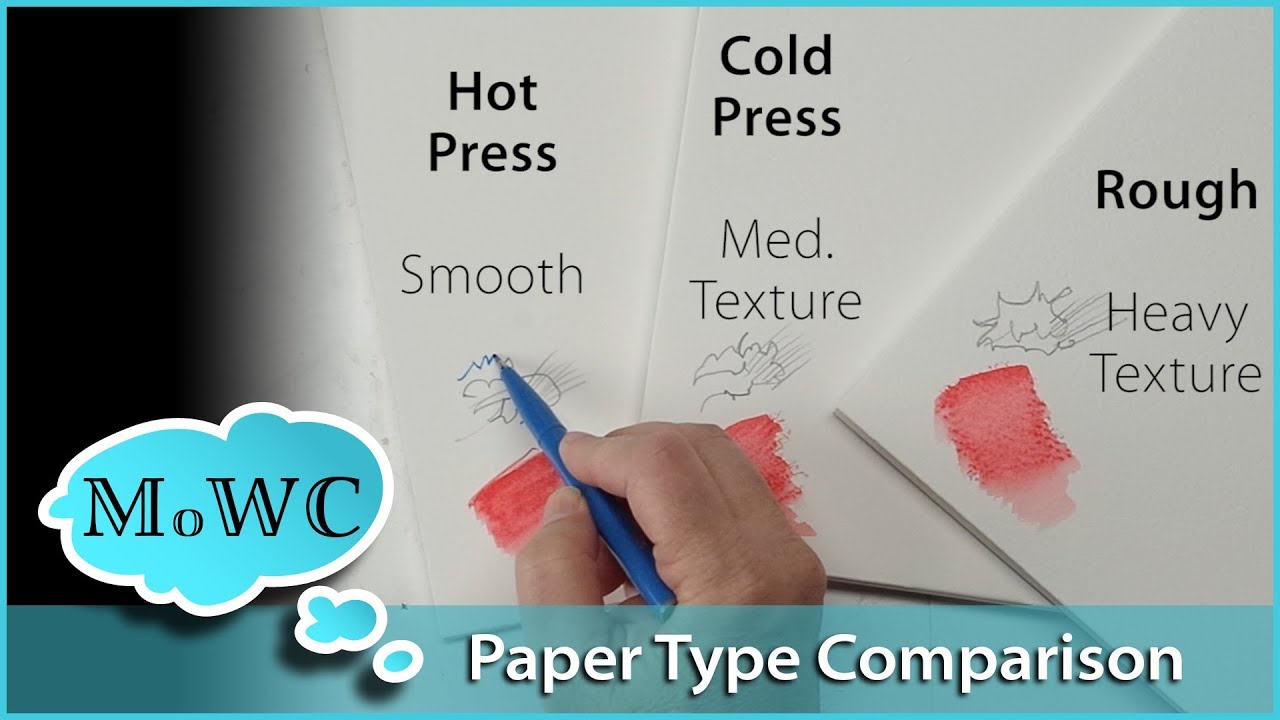
Brush selection varies dramatically between cold and hot press surfaces. Soft brushes work well on both, but cold press also accepts firm synthetic brushes effectively.
Water management techniques differ significantly. Cold press drinks water quickly, while hot press allows longer working times.
Cold Press Approach
Start with less water than you think you need. The textured surface absorbs initial applications quickly, concentrating pigments.
Dry brush techniques catch beautifully on cold press fiber peaks. Use minimal water for broken color effects that suggest textures naturally.
Build transparency layers carefully. Each application may absorb differently depending on underlying paint and paper saturation levels.
Hot Press Strategy
Use more water initially since the surface doesn’t absorb as quickly. This extended working time allows for better color blending control.
Detail work benefits from the surface’s precision. Small brushes maintain their points longer without texture interference.
Glazing techniques work exceptionally well. Each transparent layer applies evenly without disruption from surface irregularities.
Advanced Technique Applications
Mixed media applications work differently on each surface type. Cold press accepts drawing pencils and pastels well due to its tooth.
Hot press surfaces work better with ink applications and fine drawing instruments. The smooth surface doesn’t catch or drag drawing tools.
Masking and Resist Techniques
Masking fluid performs differently on textured versus smooth surfaces. Cold press may show slightly ragged edges when fluid is removed.
Hot press creates clean, sharp mask edges. This precision is valuable for architectural subjects or geometric designs.
Salt techniques work better on cold press surfaces. The texture provides nucleation sites for more dramatic salt effects.
Problem-Solving Methods
Lifting techniques depend heavily on paper type and timing. Cold press allows gentler lifting due to texture disruption of paint films.
Hot press requires more aggressive lifting since paint adheres more uniformly. Use clean, damp brushes rather than scrubbing actions.
Blotting methods work well on both surfaces but create different effects. Paper towels create softer lifts on cold press, sharper ones on hot press.
Troubleshooting Common Issues
Warping prevention starts with proper paper selection. Heavier papers warp less than lightweight options regardless of surface type.
Uneven paint application happens more often on cold press due to texture variations. Embrace these irregularities rather than fighting them.
Overworking appears differently on each surface. Cold press shows mud colors, hot press shows harsh edges and streaks.
Correcting Surface Problems
Paper buckling can be minimized by controlling water application. Work in sections rather than flooding entire surfaces at once.
Paint pooling in texture valleys can be controlled by using less water or working on slightly angled surfaces.
Edge control problems vary by surface type. Cold press creates soft edges naturally, hot press requires deliberate softening techniques.
Cost and Value Analysis
Price Point Differences
Manufacturing cost factors drive the price gap between cold and hot press papers. Hot press requires additional heat energy and processing steps.
Cold press costs less to produce but premium brands charge similar prices for both types. The pricing reflects market positioning more than actual production costs.
Student grade papers show the biggest price differences. Strathmore artist papers cold press costs about 15% less than their hot press equivalent.
Manufacturing Economics
Paper mills invest more in hot press equipment due to heating systems and temperature controls. These infrastructure costs get passed to consumers.
Cotton fiber content affects pricing more than pressing method. 100% cotton papers from Arches watercolor paper cost significantly more regardless of surface type.
Wood pulp papers stay cheaper across both pressing methods. Bee Paper Company maintains consistent pricing between cold and hot press in their student lines.
Market Positioning Strategies
Premium brands like Fabriano Artistico price both types equally. They’ve positioned hot press as specialty rather than premium.
Professional grade watercolor paper shows minimal price variation between surfaces. Winsor & Newton professional lines differ by less than 5% between types.
Hahnemühle fine art actually charges slightly more for cold press in some weights. Their reasoning relates to texture consistency challenges during manufacturing.
Format Cost Variations
Sheet vs block pricing creates different value propositions. Blocks include built-in stretching value but cost more per square inch.
Bulk purchasing options significantly reduce per-sheet costs. Professional artists buying full sheets save 30-40% over smaller formats.
Individual Sheet Economics
Single sheets offer flexibility but cost more per unit. Artist & Craftsman stores typically mark up individual sheets by 40% over bulk pricing.
Paper weight dramatically affects sheet pricing. 300lb papers cost nearly double 140lb sheets despite using only slightly more material.
Sheet size options create pricing tiers. Half-sheets and quarter-sheets cost proportionally more than full imperial sheets when calculated per square inch.
Block Format Value
Watercolor blocks eliminate paper stretching needs and associated materials. Factor in tape, board, and time costs when comparing prices.
Canson watercolor blocks 20-sheet pads offer convenient sizing for plein air painting. The convenience premium runs about 25% over loose sheets.
Spiral-bound blocks allow easy sheet removal after painting. Glue-bound blocks require careful cutting but hold sheets more securely during painting.
Professional Investment Considerations
Archival quality ratings justify higher costs for serious artwork. Museum-standard papers preserve paintings for centuries rather than decades.
Cotton canvas or linen canvas alternatives exist for watercolor techniques, though traditional paper remains preferred by most artists.
Quality Grade Comparisons
Professional vs student quality differences become obvious with experience. Better papers handle aggressive techniques without surface damage.
Kilimanjaro paper and other premium brands offer consistency that justifies costs for professional work. Every sheet performs identically.
Student papers show more variation between sheets. Quality control isn’t as tight, leading to occasional disappointments mid-painting.
Long-Term Value Assessment
Professional papers maintain their characteristics over decades. pH neutral properties prevent yellowing and brittleness that plague cheaper alternatives.
Fade resistance testing shows professional papers retain color intensity longer. Initial cost premiums pay off through artwork longevity.
Storage requirements are minimal for quality papers. Proper storage in dry conditions preserves unused sheets indefinitely.
Durability and Longevity Factors
Fiber structure differences affect paper aging. Cotton fibers last longer than wood pulp under various environmental conditions.
Cold press papers may show more wear over time due to exposed fiber peaks. Hot press surfaces resist handling damage better.
Surface Wear Patterns
Texture grain patterns on cold press can flatten with repeated handling. Display framing protects against this gradual smoothing.
Hot press surfaces maintain their characteristics longer. The compressed fibers resist wear from environmental factors and handling.
Paper thickness correlates with durability more than surface type. Heavier papers withstand more aggressive painting techniques regardless of pressing method.
Environmental Factors
Humidity affects different papers differently. Cotton fiber papers handle moisture changes better than mixed-content alternatives.
Sizing treatment effects degrade over decades in poor storage conditions. Quality papers use more stable sizing compounds.
Temperature fluctuations cause expansion and contraction. Better papers show less dimensional change during these cycles.
Budget Planning Strategies
Cost per painting calculations should include paper waste and mistakes. Cold press forgives errors better, potentially saving money for developing artists.
Project-specific budgeting helps artists choose appropriate paper grades. Experimental work doesn’t need premium papers, but exhibition pieces do.
Smart Purchasing Approaches
Buy paper weights appropriate to your techniques. Wet techniques require heavier papers, while controlled dry applications work fine on 140lb sheets.
Bulk purchasing makes sense for artists with consistent paper preferences. Storage in flat files preserves unused sheets indefinitely.
Mixed purchases allow technique experimentation without major investments. Try small quantities of different brands before committing to large orders.
Value Optimization Tips
Practice work doesn’t need premium papers. Save expensive sheets for final artworks and use student grades for skill development.
Paper scraps from larger sheets work well for color theory studies and technique practice.
Community art classes sometimes offer group purchasing discounts. Pool orders with other artists to access wholesale pricing.
Investment Payoff Analysis
Quality papers improve painting results immediately. Better absorbency control and surface consistency reduce frustration and wasted time.
Professional presentation benefits justify paper costs for artists selling work. Gallery-worthy papers support premium pricing for finished paintings.
Career Development Considerations
Beginners benefit more from quantity than quality initially. Student art programs typically stock adequate papers for learning fundamental techniques.
Intermediate artists should invest in better papers gradually. Quality improvements become more noticeable as skills develop.
Professional artists typically settle on 2-3 preferred papers. Consistency in materials supports consistent results in finished work.
Long-Term Cost Benefits
Quality papers reduce overall material waste through better performance and fewer failed paintings. Initial investment pays off through improved success rates.
Archival standards preserve artwork value over time. Paintings on quality papers maintain their appearance and market value longer.
Brand loyalty often develops naturally as artists find papers that match their techniques. Consistent results reduce experimentation costs over time.
FAQ on Cold Press Vs Hot Press Watercolor Paper
Which paper type is better for beginners?
Cold press works better for beginners because it forgives mistakes more easily. The textured surface disrupts harsh brushstrokes and allows easier color blending.
Student grade papers like Canson watercolor blocks in cold press offer affordable practice surfaces that hide technique imperfections naturally.
Does hot press paper work with wet-on-wet techniques?
Hot press handles wet-on-wet methods differently than cold press. Colors flow more predictably but create sharper edges that stay defined longer.
Paint flow control requires less water on hot press surfaces. The smooth texture allows extended working time for blending effects.
Which surface is better for detailed botanical illustration?
Hot press excels for botanical illustration because it holds fine details without texture interference. Leaf veins and flower structures render clearly on smooth surfaces.
Professional artists working in scientific illustration prefer hot press from brands like Arches watercolor paper for precision requirements.
Can I use the same brushes on both paper types?
Both surfaces work with standard watercolor brushes, but cold press also accepts firmer synthetic brushes effectively. Brush selection affects results differently on each surface.
Hot press requires gentler brush pressure to avoid surface damage, while cold press texture protects against aggressive brushwork.
Which paper type costs more?
Price differences between cold and hot press are minimal from premium brands. Manufacturing costs for hot press are slightly higher due to heating requirements.
Student grade papers show bigger price gaps, with cold press typically costing 10-15% less than hot press equivalents.
How do granulating pigments behave on each surface?
Granulation effects develop beautifully on cold press texture but remain minimal on hot press. The smooth surface keeps pigments suspended evenly.
Paint settling in texture valleys creates natural granulation patterns on cold press that many artists prefer for organic effects.
Which paper handles lifting and corrections better?
Cold press allows gentler lifting capabilities because texture disrupts paint films. Hot press requires more aggressive correction techniques but shows cleaner results.
Professional grade papers from Fabriano Artistico handle corrections well regardless of surface type when proper techniques are used.
Do I need to stretch both paper types?
Paper stretching requirements depend on weight rather than surface type. 300lb papers rarely need stretching regardless of texture.
140lb papers always benefit from stretching for wet techniques. Watercolor blocks eliminate this preparation step for both surface types.
Which surface works better for mixed media?
Cold press accepts drawing mediums like graphite and colored pencils better due to its tooth. Hot press works well with ink applications and fine drawing instruments.
Mixed media success depends more on specific material combinations than paper surface type alone.
How long do paintings last on each paper type?
Archival quality depends on cotton fiber content and pH neutral sizing rather than surface texture. Both cold and hot press papers from quality manufacturers last equally long.
Fade resistance relates to pigment quality and paper composition, not pressing method. Proper color theory knowledge matters more for longevity.
Conclusion
Understanding cold press vs hot press watercolor paper transforms your artistic results immediately. The surface choice affects every technique from wet-on-dry applications to precise detail work.
Paper manufacturing differences create distinct painting experiences that suit different artistic goals. Cold press texture supports atmospheric perspective effects naturally, while hot press precision serves photorealism and botanical studies perfectly.
Brand quality matters more than surface type for longevity. Professional grade papers from Legion watercolor paper, Hahnemühle fine art, and Daniel Smith supplies deliver consistent results regardless of pressing method.
Investment decisions should match your artistic development stage. Beginners benefit from cold press forgiveness, while advanced artists often prefer hot press control for exhibition work.
Paper selection becomes intuitive with experience. Most professional artists settle on preferred brands and surfaces that complement their personal painting techniques and subject matter preferences.
Your next painting starts with choosing the right foundation.


