Brazil produced some of the most daring painters of the 20th century. Most people outside Latin America have never heard of them.
From the modernist breakthrough of the 1922 Semana de Arte Moderna in Sao Paulo to the neo-concrete experiments of the 1960s, famous Brazilian painters reshaped how an entire continent thought about art. They mixed European techniques with indigenous culture, Afro-Brazilian traditions, and a fierce sense of national identity.
This article covers 10 painters who defined Brazilian art history. You will find their key works, the movements they belonged to, where their paintings hang today, and why their contributions still matter.
Whether you are drawn to Tarsila do Amaral’s tropical cubism, Candido Portinari’s social realism, or Beatriz Milhazes’ contemporary abstractions, there is something here worth your time.
Famous Brazilian Painters
Tarsila do Amaral (1886 – 1973)
Early Life and Artistic Training
Born in Capivari, Sao Paulo, to a wealthy family of coffee growers. Two years before the end of slavery in Brazil, actually.
She started painting lessons in 1916 under Pedro Alexandrino Borges in Sao Paulo. Then she left for Paris in 1920 and studied at the Academie Julian.
But Paris changed everything. She trained under cubist painters Andre Lhote, Fernand Leger, and Albert Gleizes between 1922 and 1923. Leger’s organic approach to form left the biggest mark on her work.
Signature Style and Techniques
Tarsila blended European modernist techniques with Brazilian subject matter. Simplified geometric forms, flattened pictorial space, and bold tropical color palettes became her trademark.
She worked primarily in oil painting. Her canvases reduced landscapes, buildings, and figures to their core outlines and basic shapes. Think of it as cubism filtered through the Brazilian countryside.
Her approach went through distinct phases. The Pau-Brasil phase (1924-1928) celebrated Brazilian landscapes and people. Then came the Antropofagia phase (1928-1930), which leaned more toward surrealist imagery with rounded, dreamlike figures. In the 1930s, she shifted to social realism after visiting the Soviet Union.
Most Famous Paintings
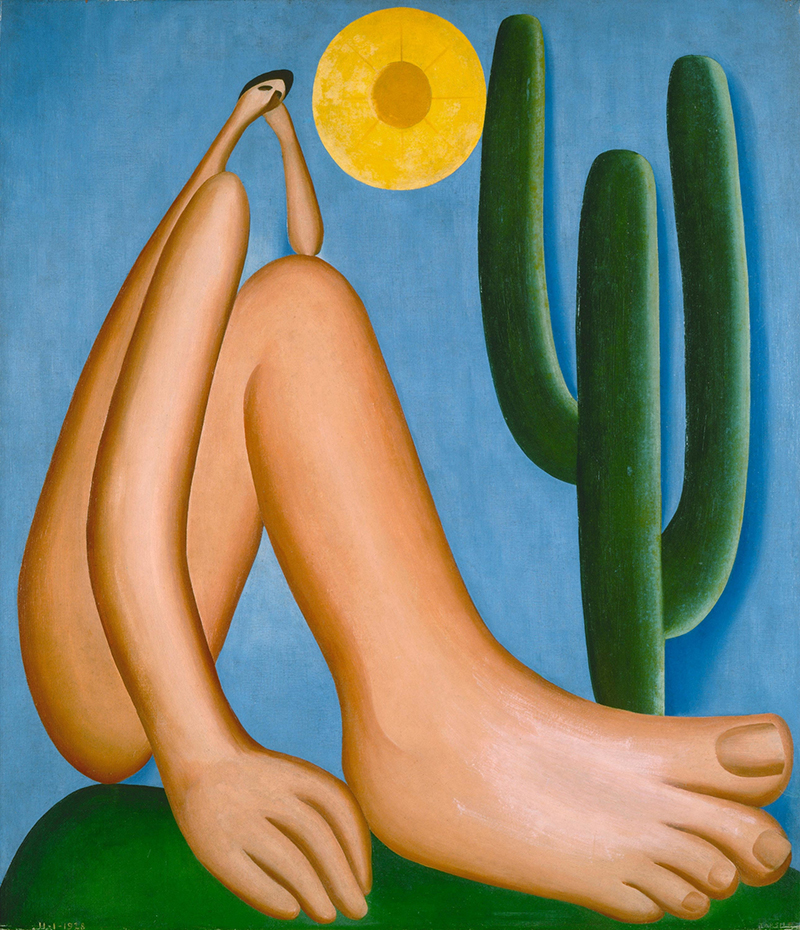
- Abaporu (1928) – Her most recognized work. A figure with oversized limbs seated next to a cactus. It sold for $1.4 million in 1995 and inspired the Manifesto Antropofago.
- A Negra (1923) – A stylized portrait of an Afro-Brazilian woman against a geometric background. Painted during her time in Paris.
- Antropofagia (1929) – Synthesized motifs into simplified volumetric shapes.
- A Lua (1928) – Acquired by MoMA for $20 million.
Art Movements and Influences
Tarsila was a core member of the Grupo dos Cinco (Group of Five), alongside Anita Malfatti, Oswald de Andrade, Mario de Andrade, and Menotti Del Picchia. Together they pushed Brazilian modernism forward after the Semana de Arte Moderna of 1922.
She co-founded the Antropofagia movement with her husband Oswald de Andrade. The idea was to “cannibalize” European art traditions and digest them into something uniquely Brazilian. It sounds wild. But it worked.
Cultural and Historical Impact
Tarsila is often called “the painter who best achieved Brazilian aspirations for nationalistic expression in a modern style.” She gave Latin American artists permission to look at their own culture for inspiration rather than copying Europe.
MoMA held a solo exhibition of her work in 2018. The MASP retrospective in 2019 drew over 402,000 visitors, becoming the museum’s most attended show ever.
Where to See Their Work
MALBA in Buenos Aires (houses Abaporu), MoMA in New York, MASP in Sao Paulo, and the Museu de Arte Contemporanea da Universidade de Sao Paulo.
Notable Quotes or Statements
“I feel myself ever more Brazilian. I want to be the painter of my country.”
Candido Portinari (1903 – 1962)
Early Life and Artistic Training
Born on a coffee plantation near Brodowski, Sao Paulo. His parents were Italian immigrants from Veneto. Growing up around dark soil and blue skies gave him the color palette he would use for the rest of his career.
At 15, his parents paid for a second-class train ticket to Rio de Janeiro so he could study art. He enrolled at the Escola Nacional de Belas Artes, supporting himself by painting portraits from photographs.
In 1928, he won a gold medal and a scholarship to study in Europe. He spent three years traveling through France, Spain, and Italy, mostly absorbing other artists’ work rather than painting.
Signature Style and Techniques
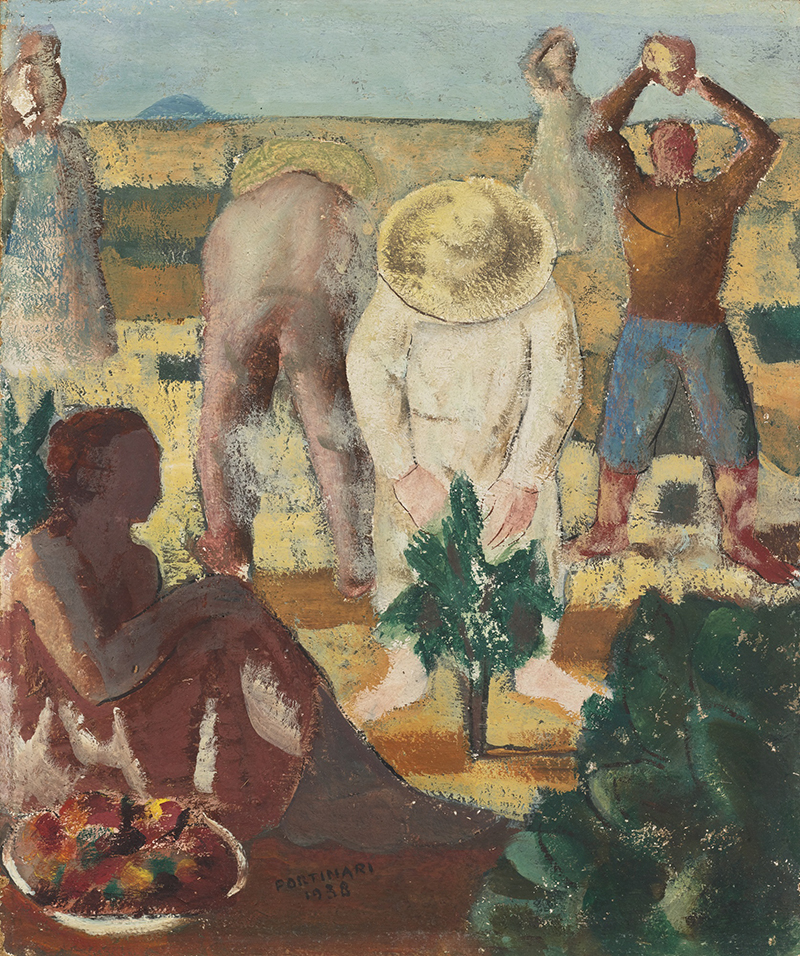
Portinari practiced a form of social realism with modernist sensibilities. His compositions feature muscular arms, expressive hands, and monumental figures that fill the canvas.
He favored browns, reds, and deep blues. Those were the colors of his hometown. His tonal values shifted between somber earth tones and moments of bright warmth.
He worked across multiple painting mediums, from small oil sketches to massive murals and frescoes. Over his lifetime he produced more than 5,000 works.
Most Famous Paintings
- Guerra e Paz (1952-1956) – Monumental panels donated to the United Nations headquarters. UN Secretary-General Dag Hammarskjold called it “the most important monumental work of art donated to the UN.”
- Cafe (1935) – Won second honorable mention at the Carnegie International Exhibition in Pittsburgh. It depicts coffee workers with dignity and strength.
- O Mestizo – A portrait showing a Brazilian worker as strong, competent, and noble.
- Tiradentes (1948) – A depiction of the Brazilian independence hero.
Art Movements and Influences
Portinari was central to Brazilian Modernism, but his style borrowed from several European traditions. Critics noted affinities with Picasso’s classical period, though Portinari’s focus always returned to Brazilian life.
He painted murals for the Ministry of Education in Rio alongside architect Oscar Niemeyer. He also created a mural behind the altar of the Church of Saint Francis of Assisi in Belo Horizonte, which the archbishop initially refused to consecrate because of its modern style. It took 16 years before that decision was reversed.
Cultural and Historical Impact
In 1939, MoMA acquired his painting O Morro, making it the first Brazilian and South American work in the museum’s permanent collection. His 1940 retrospective at MoMA cemented his international reputation.
Politically engaged, he joined the Brazilian Communist Party and ran for office. He was persecuted under the Dutra government and exiled to Uruguay between 1947 and 1948.
Lead poisoning from his paints ultimately damaged his health. He continued working until his last solo exhibition in 1961 and died in February 1962.
Where to See Their Work
United Nations headquarters in New York (Guerra e Paz), MASP in Sao Paulo, MoMA, Library of Congress in Washington D.C., and the Portinari House Museum in Brodowski.
Di Cavalcanti (1897 – 1976)
Early Life and Artistic Training
Emiliano Di Cavalcanti was born in Rio de Janeiro. He started out making political caricatures and illustrating books for writers like Manuel Bandeira and Mario de Andrade.
He studied in Paris, where he connected with European modernist ideas. But he always brought those ideas back to Brazil and filtered them through local culture.
Signature Style and Techniques
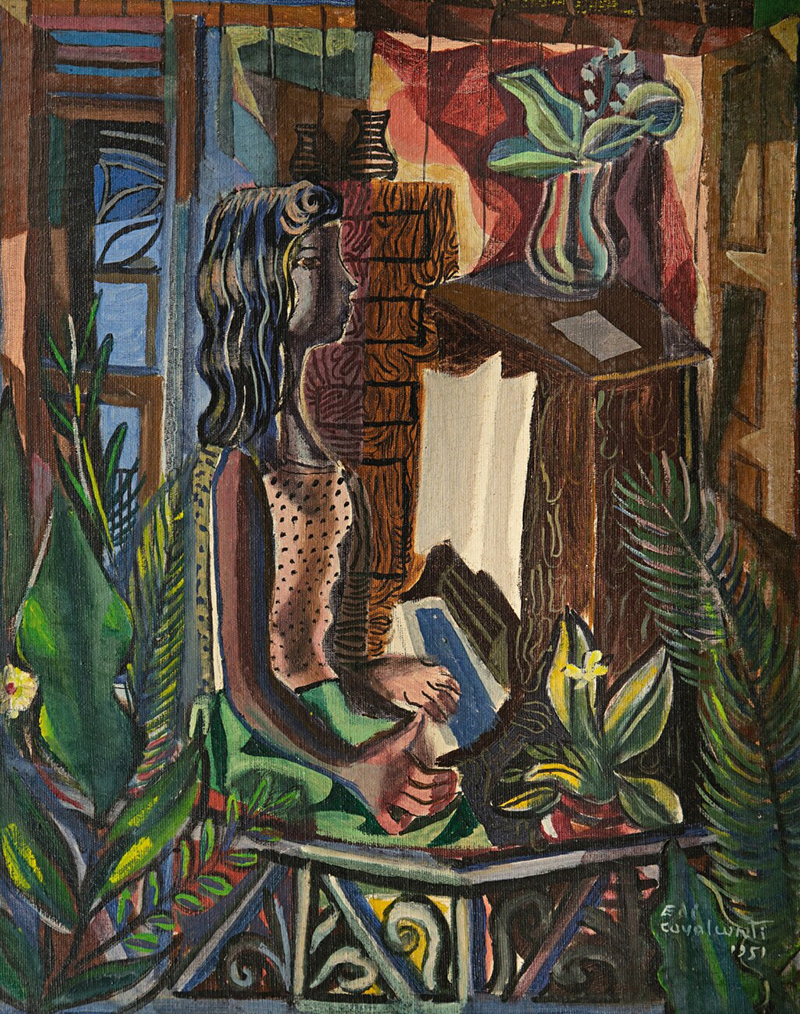
Bold lines, flowing curves, and rich tropical colors. His paintings show carnival scenes, samba dancers, popular neighborhoods, and everyday Brazilian life. The subjects are always warm, always full of motion.
He drew from expressionism and fauvism in his use of color. But there is something distinctly Brazilian about the sensuality and rhythm in his work. No one else painted Brazil quite like this.
Most Famous Paintings
- Cinco Mocas de Guaratingueta (1930) – Five women from the countryside, one of his most recognized canvases.
- Samba – Captures the energy of Brazilian popular music and dance.
- Mangue – Depicts life in Rio’s popular neighborhoods.
Art Movements and Influences
Di Cavalcanti designed the catalog cover for the 1922 Semana de Arte Moderna. That alone would have been enough to place him in Brazilian art history.
He was a Communist and was persecuted under the Getulio Vargas government. He ended up exiled in Europe, where his art gained wider attention. His murals and illustrations helped define what “Brazilian art” looked like to the rest of the world.
Where to See Their Work
MASP in Sao Paulo, the Museu Nacional de Belas Artes in Rio de Janeiro, and various public spaces in Brasilia.
Anita Malfatti (1889 – 1964)
Early Life and Artistic Training
Born in Sao Paulo to an Italian father and an American mother. She was born with atrophy in her right hand and arm, which forced her to learn painting with her left hand. Her mother, Betty Krug, taught her the basics of drawing and painting from a young age.
In 1910, she traveled to Berlin and studied at the Imperial Academy of Fine Arts, absorbing German expressionism from artists like Lovis Corinth. Then she went to New York in 1915, where she studied under Homer Boss.
Signature Style and Techniques
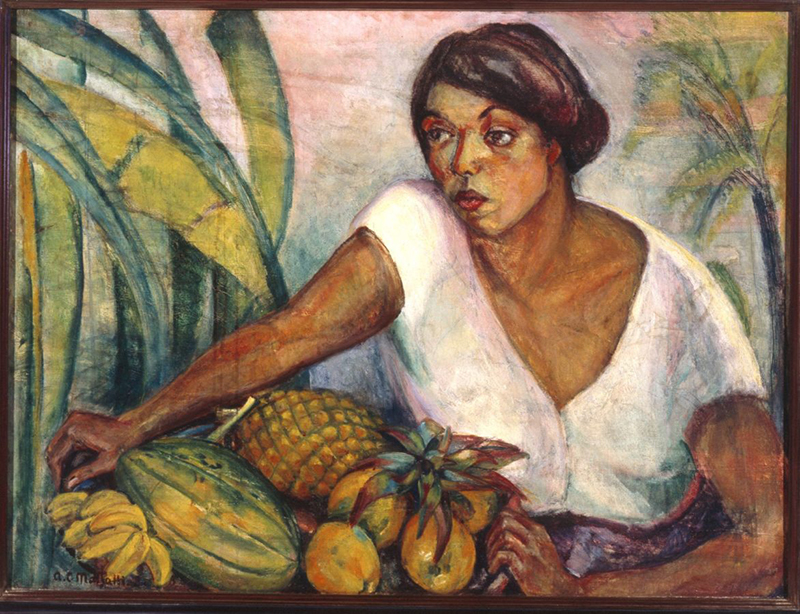
Strong colors, emotionally charged brushwork, and subjects drawn from ordinary Brazilian life. Her style broke completely with the academic painting traditions that dominated Brazil at the time.
Dynamic tension between figure and background. Free brushwork that prioritized feeling over precision. She used contrast aggressively, and her tonal choices were deliberately jarring for the era.
Most Famous Paintings
- A Boba (The Fool) (1915-1916) – Now in the Museu de Arte Contemporanea at USP.
- A Estudante Russa (The Russian Student) (1915) – Held at MASP.
- O Farol (The Lighthouse) – Painted during her time in Monhegan Island.
- O Homem Amarelo (The Yellow Man) (1915-1916) – One of her boldest expressionist works.
Art Movements and Influences
Her 1917 solo exhibition in Sao Paulo is considered the first modern art show in Brazil. It scandalized the public. Writer Monteiro Lobato published a scathing review titled “Paranoia or Mystification?” in the newspaper O Estado de S. Paulo. Several buyers returned their purchased paintings.
But that controversy was the spark. It led directly to the formation of the Grupo dos Cinco and the Semana de Arte Moderna in 1922. Malfatti brought modernism to Brazil before anyone else was ready for it.
Cultural and Historical Impact
Malfatti is celebrated as the artist who introduced modernism to Brazil. Mario de Andrade himself said he owed his “revelation of the new and the conviction of revolt” to her.
Critics note that she toned down her style after the 1917 backlash. Her later work moved closer to academic traditions. But her initial impact was enough to change the course of Brazilian art history.
Where to See Their Work
MASP, Museu de Arte Moderna de Sao Paulo, Museu de Arte Contemporanea da USP, and the Museu Nacional de Belas Artes in Rio.
Alfredo Volpi (1896 – 1988)
Early Life and Artistic Training
Born in Lucca, Italy. His family brought him to Sao Paulo before he turned two. He became a Brazilian citizen and lived there for the rest of his life.
Volpi was largely self-taught. He started painting in the 1920s, before the Semana de Arte Moderna had even happened. He joined the Grupo Santa Helena in the 1930s, working alongside Francisco Rebolo, Mario Zanini, and other artisan-painters.
Signature Style and Techniques
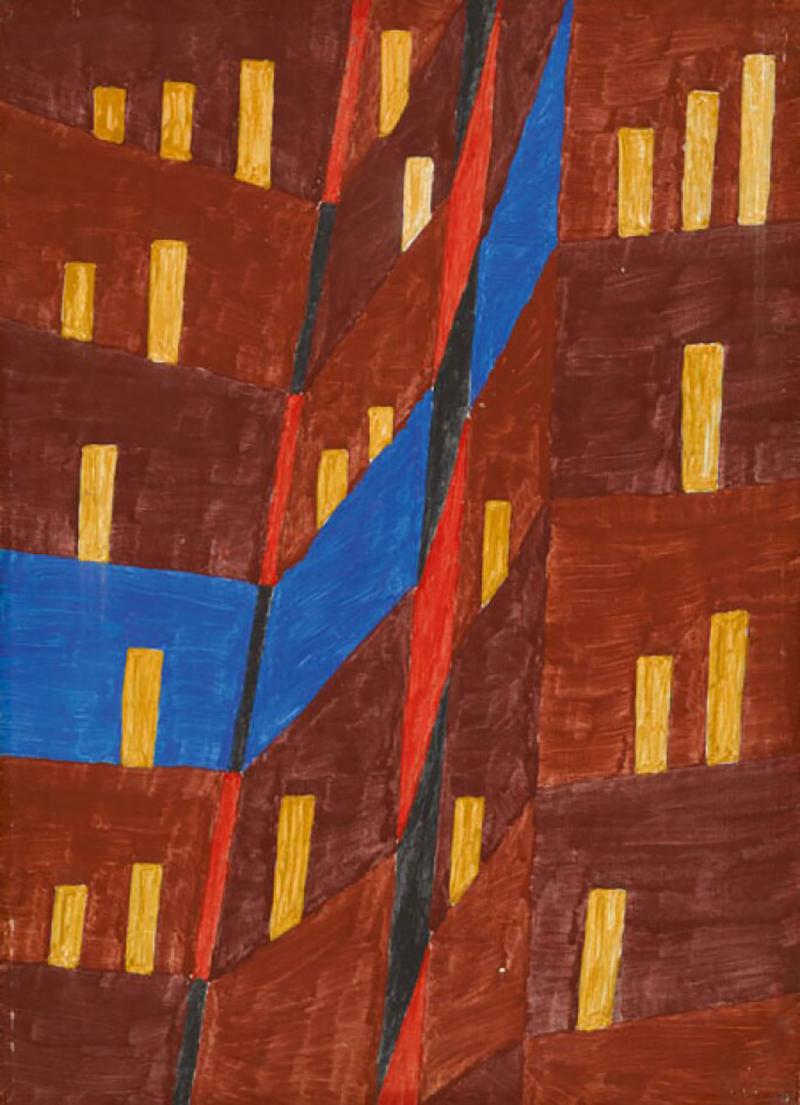
He started with figurative landscape paintings and gradually moved toward geometric abstraction. His iconic “facades” series from the 1940s onward featured stylized architectural fronts painted in intense, flat colors.
Those bandeirinhas (little flags) became his most recognized motif. Simple shapes, bold complementary colors, and a handcrafted quality that resisted anything mechanical. He mixed his own tempera paints and insisted on an artisanal approach.
Most Famous Paintings
- Bandeirinhas series – Geometric compositions of small colorful flags. Probably what most Brazilians think of when they hear his name.
- Fachadas (Facades) series – Simplified architectural fronts in flat, saturated hues.
- Composicao works – Pure geometric abstractions from his later period.
Art Movements and Influences
Volpi bridged Brazilian popular art and Concretism. He was associated with the modernist movement but kept his own path, drawing from folk art traditions rather than strictly following European formulas.
His work won the Best National Painter award at the second Sao Paulo Biennale in 1953.
Where to See Their Work
MASP, Pinacoteca do Estado de Sao Paulo, MoMA in New York, and private collections throughout Brazil.
Romero Britto (Born 1963)

Early Life and Artistic Training
Born in Recife, in northeastern Brazil. Grew up in poverty. As a kid, he painted on scraps of cardboard and newspaper. He did not understand art as a profession until his older brother brought home books about painters like Toulouse-Lautrec.
Largely self-taught. In 1983, he traveled to Europe and discovered the work of Henri Matisse and Picasso in Paris. In 1988, he moved to Miami, where he still lives and works.
Signature Style and Techniques
Britto combines elements of cubism, pop art, and graffiti. Bold patterns, intense colors, and playful imagery that communicates optimism. Love him or not, the style is instantly recognizable.
He works across multiple formats, from serigraphy and acrylic painting to large-scale public sculptures. His textural approach layers flat graphic elements with painterly touches.
Most Famous Paintings
- Best Buddies – His friendship-themed works have become iconic public installations.
- A New Day – Bright, fragmented imagery typical of his mature style.
- Absolut Britto (1989) – The Absolut Vodka campaign commission that launched his career internationally.
Art Movements and Influences
Often labeled “neo-pop cubism.” He openly names Picasso as his biggest influence. The fauvist color harmonies, the cubist fragmentation, the pop culture references from Andy Warhol and Keith Haring. All mixed together.
According to a 2023 documentary, Britto is “the most collected and licensed artist in history.” His designs have appeared on everything from BMW cars to Barbie dolls.
Cultural and Historical Impact
He designed the official poster for the 2010 FIFA World Cup. He has exhibited at the Louvre. His public sculptures stand in Hyde Park, JFK Airport, and the O2 Dome in Berlin.
He has supported over 250 charitable organizations. He was named Ambassador of Arts for the State of Florida in 2005.
Where to See Their Work
Britto’s gallery in Miami, public installations worldwide, and collections at the Guggenheim and other institutions.
Beatriz Milhazes (Born 1960)
Early Life and Artistic Training
Born in Rio de Janeiro. She studied social communication at the Faculdades Integradas Helio Alonso, then enrolled at the Escola de Artes Visuais do Parque Lage in 1980.
She taught painting at the same school from 1986 to 1996. Her studio near Rio’s Botanical Gardens has influenced the leaf-like patterns that appear throughout her work.
Signature Style and Techniques
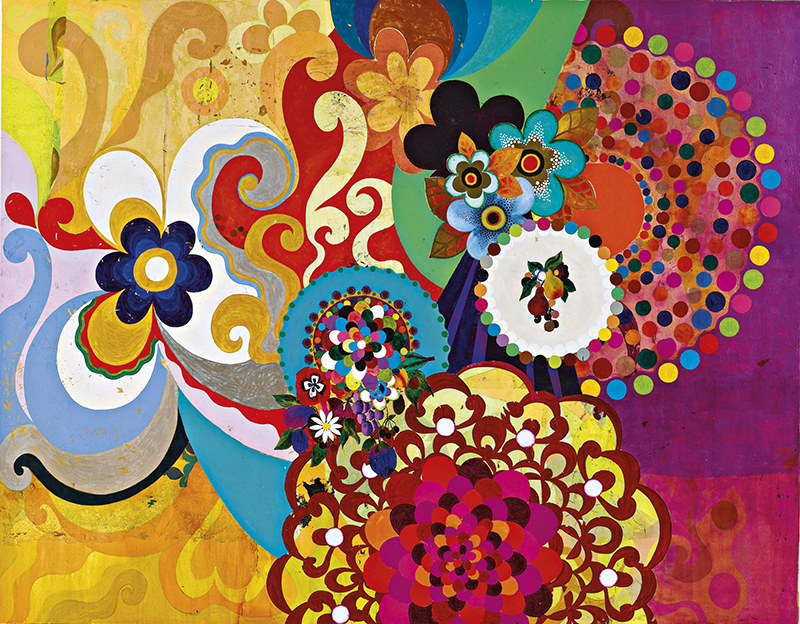
Milhazes layers geometric shapes, ornamental elements, and references to Brazilian culture into complex, dense compositions. Her work is abstract but packed with folk references, flowers, circles, and arabesques.
Her technique is unusual. She paints on plastic sheets, glues them to canvas, then peels them off like decals. Some of these plastic sheets have been reused for over ten years. The process is slow and deliberate. Each layer carries what she calls “a memory.”
She has been called “Brazil’s most successful contemporary painter.”
Most Famous Paintings
- Meu Limao (My Lemon) – Sold at auction in New York for $2.1 million in 2012.
- O Magico (The Magician) – Sold for over $1 million in 2008.
- Cacao (2004) – Layers floral shapes with chocolate bar wrappers.
Art Movements and Influences
Associated with the Pattern and Decoration movement. She draws from Sandro Botticelli, Tarsila do Amaral, Piet Mondrian, and landscape architect Roberto Burle Marx. She also cites Georgia O’Keeffe and Sonia Delaunay as influences.
She has participated in the Venice Biennale (2003, 2024), the Sao Paulo Biennale, and the Carnegie International.
Where to See Their Work
MoMA, the Guggenheim, the Metropolitan Museum of Art, Perez Art Museum Miami, Museo Reina Sofia, and Gloucester Road Tube station in London (the permanent installation Peace and Love).
Helio Oiticica (1937 – 1980)
Early Life and Artistic Training
Born in Rio de Janeiro. He studied painting under Ivan Serpa and became a member of Grupo Frente in the 1950s.
His early paintings used bright primary and secondary colors with geometric shapes, influenced by Mondrian, Paul Klee, and Kazimir Malevich. But he quickly moved beyond painting into something entirely different.
Signature Style and Techniques
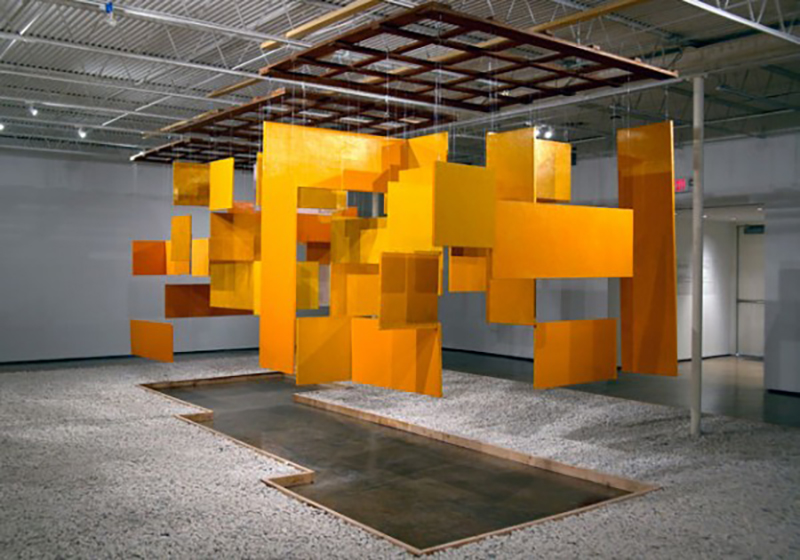
Oiticica did not stay a painter for long. He shifted to what he called “environmental art,” which included wearable capes (Parangoles), immersive walk-through installations (Penetrables), and participatory experiences.
His palette settled into warm oranges, yellows, reds, and browns. He wanted art to be something you lived inside, not something you looked at from a distance. The viewer became a “participant.”
Most Famous Paintings
- Metaesquemas series (1957-1958) – Geometric gouache paintings that pushed toward pure abstraction.
- Tropicalia (1967) – An immersive installation that gave the Tropicalia cultural movement its name.
- Parangoles – Wearable fabric capes meant to be activated through dance and movement.
Art Movements and Influences
Co-founded the Neo-Concrete Movement in 1959, alongside Lygia Clark, Lygia Pape, and others. They rejected the strict rationalism of Concrete art and pushed for art rooted in the body and the senses.
His work directly influenced the Tropicalia movement in Brazilian music and culture during the late 1960s.
Cultural and Historical Impact
Oiticica changed what Brazilian art could be. His participatory approach and rejection of art as a commodity influenced contemporary socially engaged artists worldwide, from Theaster Gates to Tania Bruguera.
He died at 42 in Rio de Janeiro.
Where to See Their Work
Tate Modern in London, MoMA, Inhotim Institute in Minas Gerais, and the Projeto Helio Oiticica in Rio de Janeiro.
Lygia Clark (1920 – 1988)
Early Life and Artistic Training
Born in Belo Horizonte, Minas Gerais. She studied under Roberto Burle Marx in Rio de Janeiro, then traveled to Paris in the 1950s where she worked with Fernand Leger and Arpad Szenes.
Signature Style and Techniques
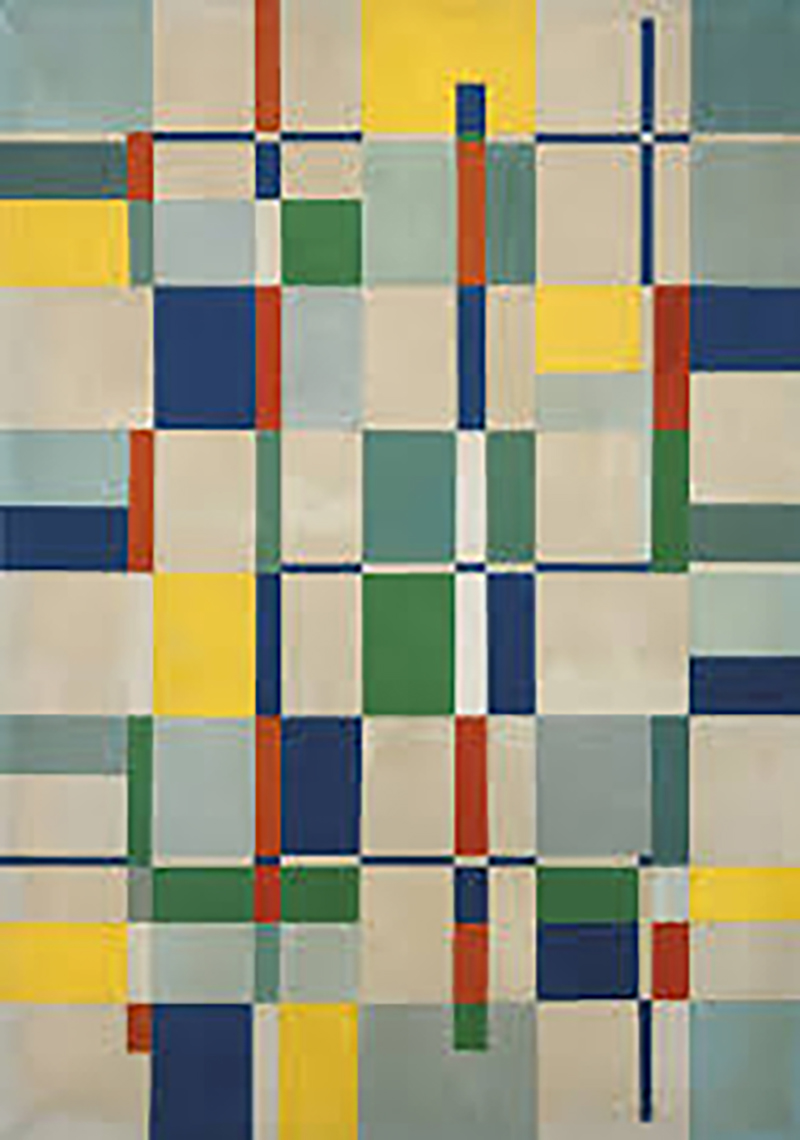
Clark started with monochromatic paintings in black, gray, and white. Then she abandoned traditional painting entirely.
Her “Bichos” (Critters) series from 1960-1963 consisted of hinged metal plates that could fold flat or be manipulated into three-dimensional forms. She called the exchange between viewer and artwork “a dialogue between two living organisms.”
Later, her “Relational Objects” invited participants to manipulate soft objects against their own bodies. Art became a sensory and therapeutic experience.
Most Famous Paintings
- Bichos (Critters) series (1960-1963) – Interactive hinged metal sculptures.
- Dialogo de Maos (Dialogue of Hands, 1966) – A collaboration with Helio Oiticica using a Mobius strip to bind two participants’ hands together.
- Pedra e Ar (Stone and Air, 1966) – A pebble balanced on an air-filled plastic bag.
Art Movements and Influences
Co-founded the Neo-Concrete Movement in 1959. She believed art should exist in real time and space, experienced through the body rather than just the eyes.
After the 1964 military coup in Brazil, a counterculture movement grew in response. Clark’s participatory art became a form of resistance, putting human experience at the center of everything.
Where to See Their Work
MoMA, Tate Modern, Inhotim Institute, and the Museu de Arte Moderna do Rio de Janeiro.
Early Life and Artistic Training
Born in Vilna, Lithuania (then part of the Russian Empire). He studied at the Imperial Academy of Fine Arts in Berlin and the Meisterschule in Dresden.
He first visited Brazil in 1913, holding an exhibition in Sao Paulo that is sometimes considered the first modern art show in the country. Though it passed mostly unnoticed at the time. He settled permanently in Brazil in 1923 and became a Brazilian citizen.
Signature Style and Techniques
Segall’s work sits at the intersection of expressionism and modernism. Dark, emotionally charged canvases dealing with immigration, war, suffering, and the human condition.
His Brazilian period brought warmer colors and local subjects, but the emotional intensity remained. He used distorted figures and compressed space to express psychological states.
Most Famous Paintings
- Bananal (Banana Plantation, 1927) – Workers in a tropical landscape, painted with expressionist distortion.
- Navio de Emigrantes (Emigrant Ship, 1939-1941) – A powerful depiction of displaced people at sea.
- Guerra (War, 1942) – His response to the horrors of World War II.
Art Movements and Influences
Segall was connected to German Expressionism before arriving in Brazil. His experience as a Jewish immigrant deeply shaped his subjects and perspective.
In Brazil, he became part of the modernist circle and helped bridge European and Brazilian artistic traditions.
Cultural and Historical Impact
The Lasar Segall Museum in Sao Paulo, housed in his former residence, preserves his legacy and hosts exhibitions of modern and contemporary art.
Where to See Their Work
Museu Lasar Segall in Sao Paulo, MASP, Pinacoteca do Estado, and the Museu Nacional de Belas Artes in Rio de Janeiro.
FAQ on Famous Brazilian Painters
Who is the most famous painter from Brazil?
Tarsila do Amaral is widely considered the most famous Brazilian painter. Her 1928 painting Abaporu became a symbol of the Antropofagia movement and helped define Latin American modernism. MoMA held a solo retrospective of her work in 2018.
What art movement started in Brazil?
The Brazilian Modernism movement launched during the Semana de Arte Moderna in Sao Paulo in 1922. Later, the Neo-Concrete Movement emerged in 1959, led by Lygia Clark and Helio Oiticica, pushing art toward participatory sensory experiences.
What is the most expensive Brazilian painting ever sold?
MoMA acquired Tarsila do Amaral’s A Lua (1928) for approximately $20 million. At auction, Beatriz Milhazes’ Meu Limao sold for $2.1 million in 2012, setting a record for a living Brazilian artist at the time.
Who brought modernism to Brazil?
Anita Malfatti is credited with introducing modernism to Brazil. Her 1917 expressionist exhibition in Sao Paulo shocked the public and sparked the controversy that led directly to the Semana de Arte Moderna five years later.
What painting mediums do Brazilian painters typically use?
Most famous Brazilian painters worked with oil on canvas. Candido Portinari also created murals and frescoes. Beatriz Milhazes uses a unique transfer technique with acrylic on plastic sheets. Romero Britto works across serigraphy, acrylic, and sculpture.
Who is Candido Portinari and why does he matter?
Portinari (1903-1962) was Brazil’s most internationally recognized painter during his lifetime. His Guerra e Paz panels hang at the United Nations headquarters. He produced over 5,000 works depicting Brazilian workers, landscapes, and social struggles.
What is the Antropofagia movement in Brazilian art?
Antropofagia, meaning “cannibalism,” was a cultural movement co-founded by Tarsila do Amaral and poet Oswald de Andrade in 1928. The idea was to “digest” European art influences and transform them into something uniquely Brazilian.
Are there famous contemporary Brazilian painters working today?
Yes. Beatriz Milhazes is among the most collected contemporary painters globally. Her work hangs at MoMA, the Guggenheim, and the Met. Romero Britto, based in Miami, is one of the most commercially licensed artists in history.
Where can I see Brazilian paintings in person?
The best collections are at MASP (Museu de Arte de Sao Paulo), the Museu Nacional de Belas Artes in Rio de Janeiro, and the Inhotim Institute in Minas Gerais. Outside Brazil, MoMA and Tate Modern hold significant works.
How did Brazilian painters influence global art?
Brazilian painters challenged Western art traditions by merging indigenous, Afro-Brazilian, and European elements into new visual languages. The Neo-Concrete Movement influenced participatory art worldwide, while Tarsila’s modernism reshaped Latin American cultural identity.
Conclusion
These famous Brazilian painters did more than create beautiful work. They built an entirely new visual language for a country still figuring out its own identity.
From Portinari’s murals at the United Nations to Milhazes’ layered abstractions hanging at the Guggenheim, Brazilian art holds its own against any tradition in the world.
What connects all ten artists is a refusal to simply copy what came from Europe. They took cubist geometry, expressionist emotion, and concrete formalism, then ran it through Sao Paulo streets, coffee plantations, and carnival parades.
The Sao Paulo Biennale, MASP, and Inhotim continue to showcase this legacy. If you have not explored Brazilian art history beyond the basics, start with any painter on this list.
You will not run out of things to discover.