Your five-year-old can solve problems you can’t. Give them a cardboard box, and they’ll build a spaceship, a castle, or a time machine.
Ask a teenager the same task? “I don’t know. Just tell me what you want.”
Something catastrophic happens between kindergarten and high school. Children lose 96% of their creative genius by age fifteen.
This isn’t speculation. NASA-commissioned research tracking 1,600 children revealed that 98% scored at creative genius levels at age five. By age fifteen, only 2% remained.
The culprit? Our education system systematically destroys creative thinking through standardized testing, curriculum narrowing, and risk-averse teaching methods.
This article examines why 98% of children are creative geniuses at age 5 but only 2% at age 15, what the research reveals about divergent thinking, and how we can stop this decline before it’s too late.
The Statistic That Should Terrify Every Parent
Ask an 18-year-old to draw something.
Most will refuse. “I can’t draw,” they’ll say, as if it’s a fact about themselves, like their eye color or height.
Now hand a crayon to a five-year-old and watch what happens. They’ll draw you a dinosaur riding a motorcycle. Or their teacher as a superhero. Or a cat that’s also a spaceship.
Something happens between five and eighteen. Something brutal.
In 1968, Dr. George Land and Dr. Beth Jarman were commissioned by NASA to develop a test measuring creative potential in engineers and scientists. The test measured divergent thinking, the ability to generate multiple solutions to open-ended problems. It worked brilliantly for NASA’s purposes.
Then Land got curious. Where does creativity come from?
He tested 1,600 children enrolled in Head Start programs, ages 3-5. The results shocked him: 98% scored at “creative genius” level on divergent thinking tasks.
Land made it a longitudinal study, retesting the same children as they aged. At age 10: only 30% scored at genius level. At age 15: just 12%.
When 200,000 adults took the same test, only 2% scored at the creative genius level (Land & Jarman, “Breakpoint and Beyond,” 1992).
Source: Land, G., & Jarman, B. (1992). Breakpoint and Beyond: Mastering the Future Today. HarperBusiness. | Original study conducted 1968-1978
Here’s the thing that should wake you up at 3 AM: this isn’t about losing talent. Kids don’t suddenly become less capable. Their brains don’t shrink. Their potential doesn’t evaporate.
Something is actively suppressing it.
What the Research Actually Measured (and Why It Matters)
Land’s test didn’t measure artistic ability. You didn’t need to know how to paint or sculpt.
It measured how your brain approaches problems when there’s no single right answer.
Divergent vs. Convergent Thinking
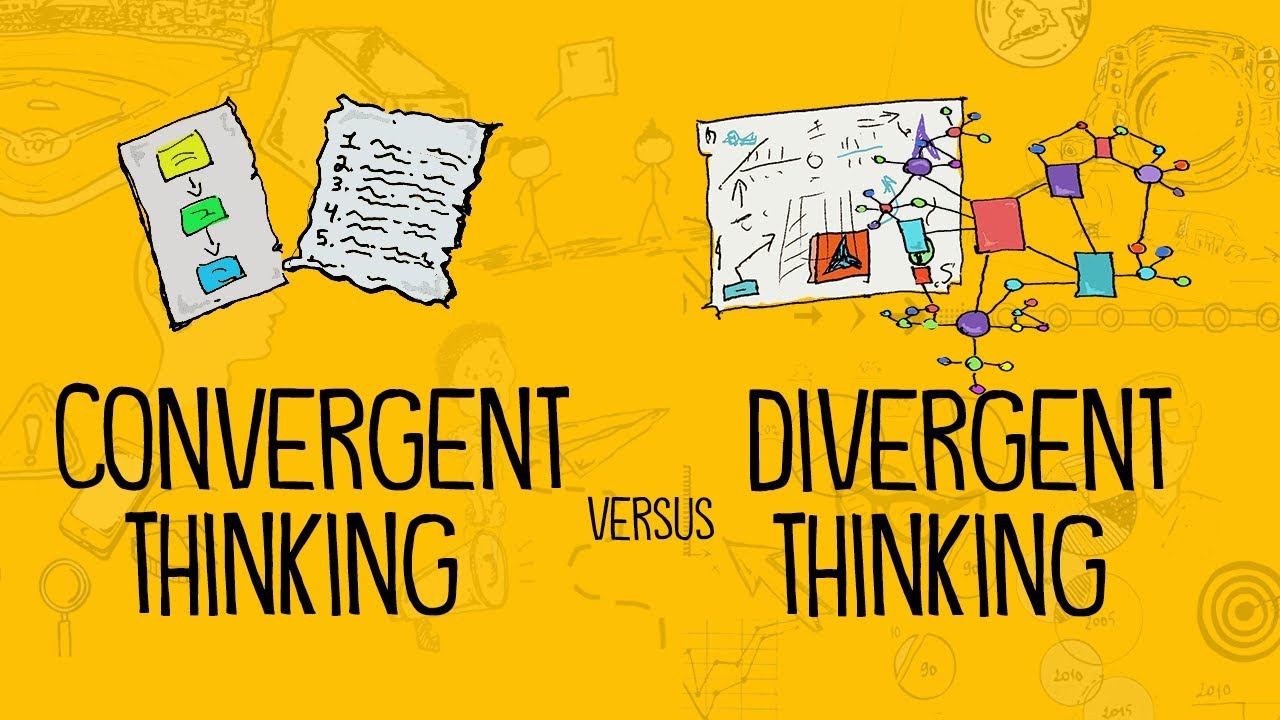
Your brain uses two distinct modes when tackling challenges.
Divergent thinking generates possibilities. It asks “what if?” and “why not?” Imagine 50 ways to use a brick. Picture how a cardboard box could become anything. This thinking thrives on the unconventional, the messy, the not-yet-proven.
Convergent thinking evaluates and refines. It judges, criticizes, selects the best option. “Which of these solutions actually works?” This is your brain’s editor, your fact-checker, your quality control.
Both matter. But here’s the problem: schools force kids to use both simultaneously, like driving with one foot on the gas and one on the brake (Land, TEDxTucson, 2011).
The result? Neither works properly.
Why “Creative Genius” Isn’t Just About Art
When Land talks about creative genius, he’s describing the capacity to see problems from multiple angles and generate novel solutions.
This shows up everywhere. The engineer who designs a bridge no one thought possible. The doctor who connects symptoms others missed. The teacher who reaches a struggling student through an approach no textbook mentioned.
Professor Kyung Hee Kim analyzed nearly 300,000 Torrance Tests of Creative Thinking spanning 1968 to 2008. Her findings? Creativity scores rose steadily until 1990, then began a consistent decline. The drop was most severe among kindergarten through third grade (Kim, “The Creativity Crisis,” Creativity Research Journal, 2011).
⚠️ Critical Finding
While IQ scores increased during this period, creativity scores significantly decreased starting in 1990, with the steepest decline among the youngest students (kindergarten through 3rd grade).
Source: Kim, K. H. (2011). The Creativity Crisis: The Decrease in Creative Thinking Scores on the Torrance Tests of Creative Thinking. Creativity Research Journal, 23(4), 285-295. | Total N = 272,599 participants across all periods
The Torrance test predicts creative achievement three times better than IQ tests. Kids who scored high became entrepreneurs, inventors, diplomats, authors, and innovators (Newsweek, 2010).
Creativity isn’t about drawing pretty pictures. It’s about solving the problems we haven’t encountered yet.
And we’re systematically destroying it in our children.
The System at Work: How Schools Systematically Kill Creativity
Land’s study measured what. Now let’s talk about how.
The decline in children’s creativity isn’t accidental. It’s baked into the system.
The Standardization Problem
No Child Left Behind (2002) and Race to the Top (2009) changed everything.
High-stakes testing became the metric. Schools that didn’t hit numbers lost funding. Teachers who didn’t raise scores lost jobs.
The message was clear: test scores matter. Everything else is negotiable.
Kim’s research shows creativity scores began declining in 1990, the exact period when standardized testing became dominant in American education. While IQ scores rose, creativity scores dropped. Kindergarteners showed the steepest decline (William & Mary, 2010).
Most Critical Finding
Elaboration declined most severely, more than 1 standard deviation, between 1984 and 2008. This means over 85% of children in 2008 scored lower on this measure than the average child in 1984. This represents the ability to take an idea and expand it creatively-the foundation of innovative thinking.
Source: Kim, K. H. (2011). The Creativity Crisis: The Decrease in Creative Thinking Scores on the Torrance Tests of Creative Thinking. Creativity Research Journal, 23(4), 285-295. | Additional data from Kim interviews (Britannica, 2010; William & Mary, 2010)
Students learn quickly: there’s a right answer, and everything else is wrong. Don’t explore. Don’t experiment. Don’t risk being incorrect.
The Curriculum Narrowing
Schools started cutting what couldn’t be tested.
Between 2014-2018, Oklahoma alone cut over 1,000 fine arts classes. Nearly 30% of public school students now attend schools with zero fine arts offerings (NPR, Oklahoma State Department of Education, 2018).
Nationally? Music and visual arts are offered in only 4% of elementary and secondary schools (U.S. Department of Education).
Math and reading dominate. Science gets squeezed. History becomes memorization. Arts disappear entirely.
Low-income schools suffered worst, reallocating time from “non-tested” subjects to test prep. The kids who need creative outlets most get them least.
The Wrong Answer Epidemic
Here’s what school teaches: mistakes are failures, not learning opportunities.
Get it wrong? You lose points. Do it differently? You’re off-task. Take a risk? You might hurt your GPA.
Land identified the core problem: schools force students to ideate and evaluate simultaneously. Your brain’s accelerator and brake fighting each other. Neurons competing instead of collaborating (Land, 2011).
Five-year-olds don’t have this problem yet. They’ll try anything. “What if we put wheels on a table?” Sure, why not?
By fifteen, that curiosity is dead. “Just tell me what’ll be on the test.”
The system doesn’t reward exploration. It punishes deviation from the expected path.
Why This Matters Beyond Art Class
“So kids can’t draw. Who cares?”
Everyone should care. Because this isn’t about art.
The Innovation Crisis
80% of people believe creativity is critical to economic growth. Nearly two-thirds say it’s valuable to society. Yet only 25% feel they’re living up to their creative potential (Adobe State of Create Study, 2012).
More damning: 52% globally (70% in the U.S.) believe education systems stifle creativity. We know the problem. We just keep doing it anyway.
IBM polled 1,500 CEOs. The No. 1 leadership competency for the future? Creativity. Not technical skills. Not experience. The ability to generate novel solutions (IBM CEO Study, 2010).
Our education system is producing workers trained for jobs that are disappearing. We’re teaching compliance when the economy demands innovation.
The Mental Health Connection
Creative expression isn’t a luxury. It’s an outlet.
Research from the American Public Health Association shows creative activities reduce anxiety, tension, and mood disturbances. They provide focus on overall well-being when other coping mechanisms fail.
When schools eliminate arts, cut recess, and demand students sit still for seven hours, they’re not just killing creativity. They’re removing emotional release valves kids desperately need.
Budget cuts hit art and music departments first. A lot of high schools cut graphic arts last year despite full enrollment (not low interest, budget priorities).
Key Pattern
Arts cuts aren’t equally distributed. They hit low-income and rural schools hardest. Wealthy districts often rescue programs through PTA fundraising, while disadvantaged schools lose arts entirely. Budget cuts that began during the 2008 recession were never restored, creating a permanent deficit that continues to deepen.
Sources: Harvard Ed Magazine (2010) | EdSource (2014, 2023) | NPR StateImpact Oklahoma (2019) | National Assembly of State Arts Agencies (NASAA, 2019) | Various state education departments (2010-2024)
Where do kids express themselves when school offers no outlet?
The “I Can’t Draw” Phenomenon Explained
Remember that 18-year-old who refused to draw?
They weren’t born that way. At five, they would have grabbed that crayon and created something without hesitation.
What changed?
Schools taught them they’re “not creative people.” They learned there’s a right way to draw, and their way isn’t it. They discovered their ideas get corrected, their techniques marked wrong, their interpretations questioned.
So they stopped trying.
This learned helplessness around creativity extends far beyond art class. “I’m not good at problem-solving.” “I’m not an ideas person.” “I just follow the instructions.”
These aren’t personality traits. They’re scars from an education system that values conformity over curiosity.
The Crisis in Numbers
We know creativity matters. 80% recognize it’s critical for economic growth, and 60% of CEOs call it the #1 leadership competency. Yet only 25% feel they’re reaching their creative potential, and 70% of Americans believe schools actively stifle creativity. The gap between what we value and what we cultivate has never been wider.
Sources: IBM Global CEO Study (2010) | Adobe State of Create Global Benchmark Study (2012) | Oklahoma State Department of Education (2014-2018) | NPR StateImpact Oklahoma (2018-2019) | U.S. Department of Education
The Real Culprit: It’s Not Teachers, It’s The System
Before we go further: this isn’t about teachers.
Teachers didn’t create this mess. Most entered education because they care about kids, about learning, about potential.
Then the system handed them impossible requirements.
Policy vs. Practice
Teachers face relentless pressure: raise test scores or face consequences. No time for creativity when standards demand coverage of 47 objectives by March.
One teacher described it: “I have 15 minutes for science. Fifteen minutes. For inquiry, for wonder, for hands-on exploration. What am I supposed to do with that?”
The curriculum isn’t designed by educators anymore. It’s designed by committees optimizing for metrics that have nothing to do with actual learning or creative development.
Teachers know this is broken. A survey of educators found that 62% in the U.S. believe the education system stifles creativity (Adobe, 2012). They see it happening. They just can’t stop it.
Structural Inequalities Disguised as Meritocracy
High-stakes testing claims to measure merit objectively.
It doesn’t. It measures which kids had access to test prep, which schools could afford resources, which families could supplement inadequate education.
Low scores often reflect structural inequalities starting in early childhood, not lack of effort (Kim, 2011). Yet testing treats all students as if they started from the same place.
The system blames kids for “not trying hard enough” when it never gave them equal opportunity to develop their creative potential in the first place.
The Hierarchy of Subjects
Walk into any school. Check which subjects get the most time, the best resources, the biggest budgets.
Math and science at the top. Humanities in the middle. Arts barely holding on at the bottom.
This hierarchy sends a message: analytical thinking matters, creative thinking doesn’t. STEM over everything else, as if innovation doesn’t require imagination.
Sir Ken Robinson put it clearly: “We’re educating people out of their creative capacities” (TED, 2006). We’re telling kids their natural genius is worthless unless it fits into neat, testable categories.
The system isn’t failing. It’s working exactly as designed: producing compliant workers who follow instructions and don’t question the process.
That design is obsolete. But changing it requires admitting we’ve been wrong for decades.
What Happens When We Get It Right
Key Finding
PBL students outperformed traditional learners across all demographics-including low-income students, diverse districts, and both AP course types studied (Environmental Science and U.S. Government). The effect size of 0.626 for creative thinking represents a moderate-to-large positive impact, placing it among the highest-impact educational interventions.
Sources: Saavedra et al. (2021). USC/Lucas Education Research AP Study | Zhang & Ma (2023). Meta-analysis of PBL Effects. Frontiers in Psychology, 14 | Gallup (2019). Creative Pedagogy Study | Krajcik et al. (2021). Elementary Science PBL Study
Not every school is killing creativity. Some are doing the opposite.
Project-Based Learning Successes
High Tech High in San Diego ditched traditional lectures. Students tackle real-world problems, creating actual products for actual audiences.
Nearly 50% of students in project-based AP classes passed their exams, outperforming traditional classrooms by 8 percentage points (USC, Edutopia, 2021). Low-income students saw identical gains. When teachers repeated the curriculum a second year, the gap widened to 10 percentage points.
New Technology High School in Napa uses similar methods. Meta-analysis of 66 studies involving 190 experiments found project-based learning had a 0.626 effect size on creative thinking skills, the highest impact among thinking skills measured (Frontiers in Psychology, 2023).
Students in PBL classrooms outperform traditional classrooms on state tests and AP exams while developing creativity, collaboration, and critical thinking (Lucas Education Research, 2021).
The approach works because students find the work authentic. “There were more connections to their real lives,” noted USC researcher Anna Saavedra.
STEAM Integration Impact
Arts aren’t just decoration. When integrated properly, they amplify learning.
Research on STEAM (Science, Technology, Engineering, Arts, Mathematics) shows enhanced creativity, improved problem-solving, increased engagement, and heightened interest in STEM subjects (Malaysian case study, 2024).
One study found students learning through STEAM-first approaches produced significantly higher science gains for both English-fluent and bilingual learners (International Journal of STEM Education, 2022).
Arts integration teaches students to approach problems from multiple angles, using color theory, composition, and creative expression alongside analytical thinking.
Students in well-designed STEAM classrooms approach difficult situations with confidence, take risks, and use multiple methods to find solutions (SEADAE, 2020).
Schools That Prioritize Creative Pedagogy
Gallup’s 2019 study found classrooms combining creative pedagogy with technology showed stronger outcomes in problem-solving and critical thinking. 81% of teachers believed this approach helped students connect learning to real world applications.
The pattern is clear: when schools protect time for creativity, provide tools for exploration, and allow students to pursue authentic questions, creativity survives.
The Science Behind the Decline
Your brain is fighting itself. That’s the problem.
How Brain Development Clashes with Education
Divergent thinking uses your imagination, generating possibilities without judgment. It’s your brain’s accelerator, creating new connections.
Convergent thinking evaluates, judges, criticizes. It’s your brake, selecting what works.
Land discovered schools force simultaneous use of both. “You cannot do both at the same time,” he explained. Competing neurons in your brain fight each other (TEDxTucson, 2011).
It’s like driving with both feet pressed down. Neither system works properly.
Five-year-olds haven’t learned this yet. They ideate freely, evaluate later. By age fifteen, the brake is always on.
The Unlearning Process
Kids aren’t born cautious. Schools teach them to be.
Between kindergarten and sixth grade, students learn: wrong answers have consequences. Being different is risky. Following instructions matters more than asking questions.
This isn’t abstract theory. Kim’s research tracking 272,599 students showed the decline starts at sixth grade and accelerates through high school (Creativity Research Journal, 2011).
The youngest kids showed the steepest drops. Why? They’ve had the least time to protect their natural creativity from institutional pressure.
Neural Capacity Remains
Here’s the good news: creative potential doesn’t disappear.
Land’s research found adults can return to 98% creative capacity if allowed to separate divergent and convergent thinking (Land & Jarman, 1992). The ability is dormant, not dead.
Your brain didn’t lose the skill. It learned to suppress it for survival in an environment that punishes creative risk-taking.
Give permission to ideate without immediate judgment, and the creative genius awakens.
What Can Actually Be Done
The Paradox
Countries that prioritize creativity and reduce testing (Finland, Singapore post-reform) achieve better academic outcomes than test-obsessed systems. Meanwhile, even high-performing Asian countries are actively trying to move away from their test-centric models, yet the U.S. continues moving toward them despite clear evidence of harm to creativity.
Sources: OECD PISA Reports (2018, 2022) | Math & Movement (2025) | EdWeek (2016) | NCEE Singapore Study (2023) | Comparative Education Studies (2021-2025)
Awareness isn’t enough. Here’s what actually works.
System-Level Changes
Reduce high-stakes testing dependency. Countries that prioritized creativity over test scores, like Finland, produce innovative thinkers without sacrificing academic achievement.
Protect and expand arts education. Research shows arts-integrated learning improves reading, writing, problem-solving, and visual thinking (American Institutes for Research, 2013).
Redefine achievement metrics. If creativity predicts success three times better than IQ (Torrance research), why do we only measure IQ-adjacent skills?
Teacher training in creative pedagogy. Educators need professional development in PBL, STEAM integration, and separating ideation from evaluation phases.
Policy changes require political will. But the data is clear: current approaches fail.
Classroom-Level Solutions
Teachers can act now, even within restrictive systems.
Separate ideation from evaluation. Give students time to brainstorm without criticism. Judge later, separately.
Reframe failure as iteration. “Wrong” answers become data points. Mistakes are required steps toward solutions, like how Pablo Picasso developed Cubism through experimentation.
Project-based approaches. Even small projects work. Let students tackle real problems, make actual products, present to authentic audiences.
Cross-disciplinary connections. Show how impressionism relates to physics of light. How music and mathematics intertwine. How color psychology affects persuasion.
Inquiry-driven learning. Start with student questions, not predetermined answers. Let curiosity lead.
These don’t require budget increases. Just permission to teach differently.
Parent and Individual Actions
Understand creativity is learnable. It’s not talent. It’s practice separating imagination from judgment.
Create space for exploration at home. Provide painting mediums, different types of paintbrushes, materials for building. No instructions. Just materials and time.
Protect unstructured time. Over-scheduling kills creativity. Boredom breeds invention.
Model creative thinking. When problems arise, brainstorm multiple solutions before picking one. Show the process.
Advocate for school policy changes. Attend board meetings. Question testing emphasis. Push for arts funding. Individual voices accumulate into movements.
Expose kids to diverse painting styles. Visit museums. Study how Vincent van Gogh, Claude Monet, and Frida Kahlo saw differently. Show that there’s no single right way.
You can’t fix the system alone. But you can protect one child’s creativity. Multiply that by millions of parents, and systems change.
Reclaiming What We’re Born With
Every adult reading this was once a creative genius.
At five, you would have grabbed crayons and drawn anything. Made up stories. Built impossible things from blocks. Seen dragons in clouds.
You didn’t lose that ability. Someone taught you it was wrong.
98% to 2% isn’t inevitable. It’s a choice we’re making through educational policy, budget priorities, and cultural values that prize compliance over curiosity.
The research is unambiguous: creativity matters more than ever. IBM’s 1,500 CEOs identified it as the top leadership competency. The World Economic Forum lists creativity as crucial for future workforce success. Every innovation, discovery, and breakthrough requires divergent thinking.
Yet we continue educating like it’s 1950. Testing like creativity doesn’t exist. Cutting arts like they’re optional luxuries.
Children are born with extraordinary creative capacity. The question isn’t whether they have it. The question is whether we’ll stop destroying it.
Land’s study wasn’t pessimistic. It was revealing. We now know what’s broken. We know what works instead: PBL that yielded 0.626 effect size gains. STEAM approaches producing higher science achievement. Creative pedagogy strengthening critical thinking.
The tools exist. The research proves it. The only question left: will we use them?
Stop teaching compliance. Start teaching creativity.
Stop asking “what’s the right answer?” Start asking “what are ten possible answers?”
Stop punishing mistakes. Start treating them as required steps toward mastery, like how Leonardo da Vinci filled notebooks with “failed” sketches before painting masterpieces.
Your child is a creative genius right now. The question is whether they’ll still be one at fifteen.
That’s not predetermined. That’s our choice.
What will you choose?
Conclusion
The decline from 98% to 2% isn’t biology. It’s policy.
Every five-year-old possesses creative genius. By fifteen, most have learned to suppress it. Schools didn’t mean to destroy creativity, but standardized testing, curriculum narrowing, and risk-averse environments did exactly that.
The research is clear: creativity predicts success better than IQ. Yet we keep optimizing for test scores.
Change requires action at every level. Policy makers must reduce testing dependency. Teachers need permission to separate ideation from evaluation. Parents can protect unstructured time and advocate loudly.
Your child’s creative potential hasn’t disappeared. It’s waiting for permission to emerge again.
The question isn’t whether we can fix this. It’s whether we will.