A ceramic artist won the Turner Prize wearing a dress. That artist was Grayson Perry, and he changed what contemporary British art could be.
Perry’s ceramic vases look like museum antiquities until you read the surfaces. Then you find sadomasochism scratched into glaze, consumer brands embedded in classical forms, and autobiographical trauma disguised as decoration.
He’s a Turner Prize-winning ceramicist who makes tapestries about class anxiety, presents BBC documentaries, and cross-dresses as his alter ego Claire. His work sits between craft tradition and social commentary, making pottery do what painting typically does.
This article examines Perry’s techniques, themes, and market position. You’ll understand how he builds his signature vases, what makes his tapestries resonate with collectors, and why his work commands six-figure prices at auction.
From his Essex origins to his knighthood, here’s how one British artist made ceramics matter again.
Identity Snapshot
Full Name: Sir Grayson Perry CBE RA
Lifespan: 1960 – present (born March 24, 1960)
Primary Roles: Ceramic artist, tapestry designer, printmaker, broadcaster, writer
Nationality: British (English)
Movements: Contemporary British art, contemporary ceramics
Primary Mediums: Earthenware ceramics, woven tapestries, printmaking, embroidery
Signature Traits: Hand-coiled vases with classical forms, bright glazes layered over photographic transfers, sgraffito incisions, autobiographical narratives embedded in decorative surfaces
Iconography: Claire (female alter ego), Alan Measles (childhood teddy bear), social commentary on class and gender, British cultural criticism
Geographic Anchors: Chelmsford (birthplace), Portsmouth (education), Matching Green (current studio), London (career base)
Mentors/Students: Portsmouth Polytechnic instructors, evening pottery course teachers
Key Institutions: British Museum, Tate, Victoria and Albert Museum, Royal Academy of Arts, National Portrait Gallery, Wallace Collection
Awards: Turner Prize (2003, first ceramicist to win), Royal Academician (2012), CBE (2013), Knight Bachelor (2023)
Market Position: Record auction price £632,750 for “I Want To Be An Artist” (1996), print market showing 454% growth 2015-2024
What Sets Perry Apart
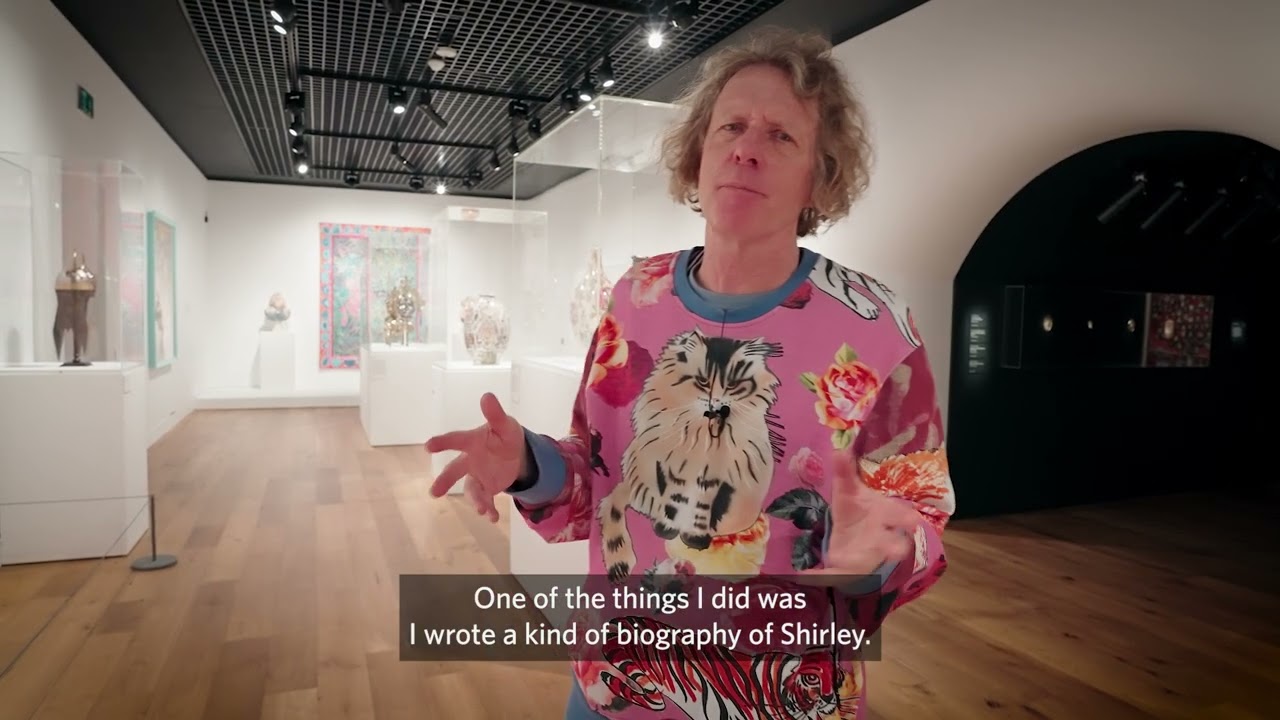
Perry operates in the gap between craft and contemporary art.
His ceramic vessels look like museum pieces from 500 BCE but carry narratives about sadomasochism, child neglect, consumer brands, and British class anxiety. That tension is the work.
While other ceramic artists stayed decorative, Perry used the medium’s “humility” as a Trojan horse for uncomfortable content. The classical urn format disarms viewers before they register the sgraffito text about violence or the photographic transfers of cage fighters.
His cross-dressing isn’t separate from the ceramics. Both challenge hierarchies (pottery versus painting, male versus female) that the art establishment takes for granted.
Origins & Formation
Early Life (1960-1978)
Born in Chelmsford, Essex to working-class parents. Turbulent childhood marked by stepfather’s presence and domestic instability.
Discovered cross-dressing as child, creating alter ego Claire as psychological refuge. Alan Measles, his teddy bear, became lifelong symbolic companion.
Formal Training
1978-1980: Braintree College of Further Education, Art Foundation Course
1980-1982: Portsmouth Polytechnic, BA Fine Art
Dabbled in ceramics during art school but initially focused on performance and film. After graduating, enrolled in evening pottery classes in London.
Within one year of pottery instruction, began producing signature vase forms.
First Recognition
1984: First solo exhibition at James Birch Gallery, London
Early work combined traditional coiling with provocative surface narratives. Small commercial success allowed full-time commitment to ceramics.
1985-1990s: Built reputation through gallery circuit while developing complex glazing techniques.
Movement & Context
Perry exists between categories rather than within them.
Contemporary Ceramics Position

While Hans Coper and Lucie Rie emphasized form purity, Perry prioritized narrative density. Jennifer Lee and Gabriele Koch worked in hand-building like Perry, but kept surfaces minimal.
Perry’s surfaces are maximal: photo transfers layered under slips, embossed reliefs, sgraffito marks scratching through colored grounds, gold lustre, text fragments.
YBA Adjacency
Rose alongside Young British Artists (late 1980s-1990s) including Damien Hirst and Tracey Emin.
Shared their willingness to shock and their autobiographical directness. Differed in medium choice: ceramics versus installation and conceptual work.
Where YBAs used shock tactics through scale and materials, Perry smuggled provocation into decorative objects.
Comparison to Contemporary Practitioners
Versus Edmund de Waal: De Waal works in porcelain with restrained palettes and minimal surfaces. Perry works in earthenware with chromatic intensity and narrative overload.
Versus Ai Weiwei: Both use traditional craft to deliver political content. Ai Weiwei smashes ancient pots; Perry preserves classical forms while corrupting their surfaces.
Versus Takashi Murakami: Both blur high/low art boundaries and embrace craft traditions. Murakami industrializes production; Perry maintains hand-building.
Materials, Techniques, and Process
Clay Body
Primary Material: Earthenware clay (red or buff)
Earthenware fires at lower temperatures (1000-1150C) than stoneware, allowing brighter glaze colors. The lower fire also preserves photographic transfers without burning them out.
Construction Method
Hand-coiling: Ancient building technique where clay ropes are stacked and smoothed.
Perry begins with paper templates sketched to scale, cutting profiles as guides. Coils approximately 1cm diameter, built from base upward over several sessions.
No wheel throwing. Coiling allows larger vessels and irregular forms that contain complex narratives.
Surface Treatments (Applied in Sequence)
1. Leather-hard stage: Sgraffito incisions scratched into surface
2. Bisque fire: First firing to harden clay body
3. Slip application: Colored liquid clay painted in sections
4. Underglaze painting: Ceramic pigments applied with brushes
5. Photographic transfers: Commercial decals of images pressed onto surface
6. Embossing: Relief elements molded and attached (sprigs)
7. Glaze application: Transparent or colored glaze coats surface
8. Glaze fire: Second firing melts glaze to glass (1000-1150C)
9. Lustre/gold leaf: Metallic finishes applied post-glaze (optional third fire)
Palette Characteristics
Dominant hues: Cobalt blues, chrome yellows, iron oxide reds
Temperature: Cool backgrounds (blues, whites) contrast warm accents (golds, reds)
Saturation: High chroma glazes over muted slip grounds
Value range: Full spectrum from near-white to near-black
Perry prefers transparent glazes that allow under-layers to remain visible. Creates archaeological depth where viewers see multiple image strata.
Studio Practice
Works in dedicated studio in Matching Green, Essex. Process-intensive: single vase requires 4-6 weeks from coil to final fire.
Plans compositions in sketchbooks before beginning construction. Often works on multiple pieces simultaneously at different drying stages.
References Greek pottery, folk ceramics, Delftware, Chinese export ware for form and decoration vocabulary.
Themes, Subjects, and Iconography
Autobiographical Core
Claire: Perry’s female alter ego appears throughout work, often in elaborate period dresses. Represents gender fluidity, psychological refuge, challenge to masculine norms.
Alan Measles: Childhood teddy bear functions as deity figure, protector, and symbol of lost innocence. Appears wearing military gear, religious vestments, or positioned as cult object.
Class and Taste
Central preoccupation across all mediums. British class system’s influence on aesthetic preferences, consumer choices, and social mobility.
“The Vanity of Small Differences” tapestry series (2012) maps class through possessions, aspirations, and taste markers. Working-class Essex upbringing versus art world sophistication creates productive friction.
Gender and Masculinity
Explores constructed nature of gender through cross-dressing practice and ceramic content. “All Man” documentary series (2016) investigated contemporary British masculinity.
Ceramics often depict masculine violence, sexual imagery, and gender performance. Medium choice itself questions gendered hierarchies (pottery coded feminine versus painting coded masculine).
British Cultural Identity
National character, prejudices, and social rituals examined with anthropological distance. Union Jacks, British brands, class signifiers appear frequently.
“Comfort Blanket” tapestry (2014) literalizes Britain as security object.
Compositional Patterns
Horror vacui: Surfaces filled edge-to-edge with imagery and text
Stratified narratives: Multiple story layers coexist in single composition
Text integration: Fragments of poetry, news headlines, personal commentary scratched or painted
Symbol clusters: Related images grouped (weapons, flowers, brands, maps)
Recurring Motifs
- Motorcycles (personal passion, working-class masculinity marker)
- Union Jack flags and British heraldry
- Weapons and military imagery
- Religious iconography (saints, crucifixions, annunciations)
- Consumer brands and logos
- Maps and cartographic elements
- Childhood toys and domestic objects
Notable Works
We’ve Found the Body of Your Child (2000)

Medium: Glazed earthenware
Size: 50cm height (approximate)
Location: Private collection
Visual Signature: Blue-painted narrative scenes inspired by Pieter Bruegel, references to Tom Waits song “Georgia Lee,” delicate floral borders contrasting with dark subject matter.
Significance: Addresses emotional child abuse and neglect through ambiguous narrative. Title’s bluntness offsets decorative Delftware aesthetic. No explicit sexual imagery despite reputation, rather psychological violence through implication.
I Want To Be An Artist (1996)

Medium: Glazed earthenware vase
Size: Classical urn form
Location: Private collection (sold Christie’s 2017 for £632,750, record price)
Visual Signature: Dual portrait vase showing Andy Warhol and Jean-Michel Basquiat on opposing sides. Warhol with photographic portraits embedded in chest cavity; Basquiat with gilded skeleton referencing his early death. Gold leaf accents, miniaturized symbol vocabulary from each artist’s work.
Significance: Homage to American art heroes. Elevates contemporary artists to classical deity status traditionally reserved for ancient gods. Most expensive Perry ceramic at auction.
The Rosetta Vase (2011)

Medium: Glazed earthenware
Size: Ovoid form, yellow ground
Location: British Museum (commissioned for “Tomb of the Unknown Craftsman”)
Visual Signature: Bright yellow background with blue painted designs. Incised decorations include British Museum as Tree of Life, cultural motifs from museum collections. Slip-trailed linear patterns, potter’s mark signature.
Significance: Created for self-curated British Museum exhibition. References Rosetta Stone’s translation function while translating personal obsessions through museum archaeology lens. Dialogue between ancient craft and contemporary commentary.
The Walthamstow Tapestry (2009)

Medium: Woven tapestry (computer-controlled loom)
Size: 15m x 3m
Location: Netherlands (museum collection)
Visual Signature: Horizontal scroll format showing seven stages of human life from birth to death. Hundreds of contemporary brand names and consumer terms surround central figures. Inspired by Indonesian batik patterns but depicting British consumer culture.
Significance: Epic scale for Perry. Brands as modern mythology. Walthamstow reference to his former studio location. Combines craft tradition (weaving, batik) with digital production methods.
The Vanity of Small Differences (2012)

Series of six tapestries, each 200cm x 400cm
Location: Arts Council Collection, British Council (touring)
Titles:
- The Adoration of the Cage Fighters
- The Annunciation of the Virgin Deal
- The Agony in the Car Park
- The Upper Class at Bay
- Expulsion from Number 8 Eden Close
- The Last Days of Tim Rakewell
Visual Signature: Inspired by William Hogarth’s “A Rake’s Progress” and early Renaissance religious painting. Each tapestry references specific artworks (Masaccio’s Expulsion, Grunewald’s Isenheim Altarpiece, Crivelli’s Annunciation).
Narrative: Follows Tim Rakewell from working-class birth through social mobility to famous death. Characters and objects from research trips to Sunderland, Tunbridge Wells, and Cotswolds.
Significance: Most comprehensive examination of British class system in Perry’s work. Made alongside Channel 4 documentary “All in the Best Possible Taste.” Renaissance religious composition meets 21st century social observation.
A House for Essex (2015)

Medium: Architectural project with FAT studio, includes tapestries, woodcuts, ceramics
Location: Wrabness, Essex (Living Architecture vacation rental)
Components: “The Essex House Tapestries: The Life of Julie Cope” series, including “A Perfect Match” (2015), “In Its Familiarity, Golden” (2015). Six Snapshots of Julie woodcut series.
Significance: Fictional character Julie Cope as shrine subject. Perry’s most expansive project across multiple mediums and architectural integration. Essex roots meet art world sophistication.
Exhibitions, Collections, and Provenance
Major Solo Exhibitions

2003: Turner Prize Exhibition, Tate Britain (winner)
2006: The Andy Warhol Museum, Pittsburgh
2007: 21st Century Museum of Contemporary Art, Kanazawa, Japan
2011-2012: “Tomb of the Unknown Craftsman,” British Museum (self-curated, 180,000 visitors)
2012: “The Vanity of Small Differences,” Victoria Miro Gallery, London
2014: “Who Are You?,” National Portrait Gallery, London
2015: “Provincial Punk,” Turner Contemporary, Margate
2017: “The Most Popular Art Exhibition Ever!,” Serpentine Gallery, London (touring to Arnolfini, Bristol)
2017-2018: “Making Himself Claire: Grayson Perry’s Dresses,” Walker Art Gallery, Liverpool
2020: “The Pre-Therapy Years,” Holburne Museum, Bath
2025: “Delusions of Grandeur,” Wallace Collection, London (largest contemporary exhibition in museum history)
Museum Collections (3+ works)
- British Museum: The Rosetta Vase, objects from “Tomb of Unknown Craftsman”
- Tate: Multiple ceramics and prints from various periods
- Victoria and Albert Museum: Ceramics, tapestries, textile works
- Arts Council Collection: Complete “Vanity of Small Differences” tapestry series
- British Council: Touring exhibition works
- Stedelijk Museum Amsterdam: Early ceramics from “Guerrilla Tactics”
Key Dealers and Galleries
Victoria Miro Gallery, London: Primary representation since 1990s
Paragon Press: Print editions and multiples
Serpentine Gallery: Exhibitions and collaborations
Catalogues Raisonnes
No comprehensive catalogue raisonne published. Major exhibition catalogues document specific bodies of work:
- “Tomb of the Unknown Craftsman” (British Museum, 2011)
- “The Vanity of Small Differences” (Hayward, 2013)
- “Grayson Perry” (Thames & Hudson, 2013, expanded edition)
Market & Reception
Auction Performance
Record Price: £632,750 for “I Want To Be An Artist” (1996), Christie’s London, October 2017
Tapestry Record: £226,800 for “Expulsion from Number 8 Eden Close” (2012), Christie’s London, June 2023
Print Market: 454% growth from 2015 to 2024
- 2015 turnover: £38,766
- 2024 turnover: £214,969
Top Print: “Map of an Englishman” (2004, edition 50), £120,000 at Sotheby’s June 2024
Average Print Price (2024): £18,505
Price Bands by Medium
Ceramics: £5,000-£200,000+ depending on size, period, complexity
- Early works (1980s-1990s): £30,000-£150,000
- Turner Prize era (2003-2010): £100,000-£400,000
- Recent works: £80,000-£250,000
Tapestries: £150,000-£250,000 (rare at auction, mostly institutional)
Prints: £100-£120,000
- Small editions (under 50): £8,000-£120,000
- Larger editions: £500-£5,000
Authentication and Condition
Signatures: Typically on base of ceramics, often with date and potter’s mark. Prints signed lower right or verso, numbered.
Condition Risks:
- Craquelure (fine glaze cracks) common in earthenware but acceptable
- Photo transfer fading if exposed to direct sunlight
- Lustre wear on high points from handling
- Firing flaws (small cracks, glaze bubbles) often present from making process, generally acceptable
Authentication Issues: Market relatively small with good provenance tracking through Victoria Miro Gallery. Forgery risk lower than for more valuable ceramic artists due to technical complexity.
Critical Reception
Turner Prize Win (2003): Controversial for two reasons:
- First ceramicist to win (medium hierarchy debate)
- Perry’s public transvestism (acceptance speech delivered as Claire)
Judges cited “uncompromising engagement with personal and social concerns.”
Media Presence: BBC Reith Lectures (2013), multiple Channel 4 documentary series expanded audience beyond art world.
Academic Recognition:
- Royal Academician (2012)
- Honorary degrees from multiple universities
- Chancellor of University of the Arts London (2015)
Influence & Legacy
Upstream Influences
Ceramic Traditions:
- Greek pottery (narrative frieze formats, black-figure/red-figure techniques)
- Chinese export ware (classical vase forms, decorative density)
- Delftware (blue-on-white palette, domestic subject matter)
- British folk pottery (earthenware bodies, slip decoration)
Visual Artists:
- William Hogarth (narrative seriality, social commentary, class observation)
- Andy Warhol (celebrity, repetition, high/low culture collapse)
- Jean-Michel Basquiat (text integration, raw energy, autobiography)
- Pieter Bruegel the Elder (dense compositions, allegorical narratives)
Ceramic Artists:
- Hans Coper (sculptural vase forms, surface texture)
- Bernard Leach (pottery’s intellectual legitimacy)
Art Movements:
- Pop Art (consumer culture critique, bright color)
- Dadaism (provocation, hierarchy disruption)
- Expressionism (psychological intensity, autobiographical directness)
Downstream Impact
Ceramics Field:
- Legitimized narrative and conceptual approaches in contemporary ceramics
- Demonstrated ceramics could win major contemporary art prizes
- Inspired younger ceramicists to address difficult content
Contemporary Art:
- Validated craft mediums within contemporary art discourse
- Showed television could amplify rather than dilute artist credibility
- Modeled public intellectualism for practicing artists
Cultural Discourse:
- Mainstreamed gender fluidity conversations before wider cultural shift
- Made class analysis accessible through visual culture
- Bridged craft tradition and contemporary theory
Cross-Domain Influence
Television: Changed documentary format for artist profiles (presenter as subject)
Publishing: “Playing to the Gallery” (2014) demystified art world for general readers
Fashion: Collaboration with Central Saint Martins students on Claire’s wardrobe
Architecture: “A House for Essex” demonstrated artist-architect collaboration model
How to Recognize a Perry at a Glance
Ceramic Vessels:
- Form: Classical urn or vase shapes with swelling bodies and narrow necks (Greek/Chinese pottery references)
- Surface Density: No blank space – complete coverage with imagery, text, and pattern
- Color Palette: Bright glazes (especially cobalt blue, chrome yellow, iron red) over earthenware body
- Layer Visibility: Sgraffito scratches revealing under-colors, photographic transfers embedded in glaze layers
- Iconography Cluster: Look for teddy bears (Alan Measles), motorcycles, British flags, religious imagery, consumer brands
- Text Integration: Words scratched, painted, or transferred into surface (poetry fragments, commentary, headlines)
- Coil Construction: Slight irregularity in vessel walls (not wheel-thrown perfection)
- Scale: Usually 30-80cm height (human-scale display objects)
- Base Marking: Signature, date, potter’s mark on bottom
- Gold Accents: Lustre or gold leaf highlights common in decorative passages
Tapestries:
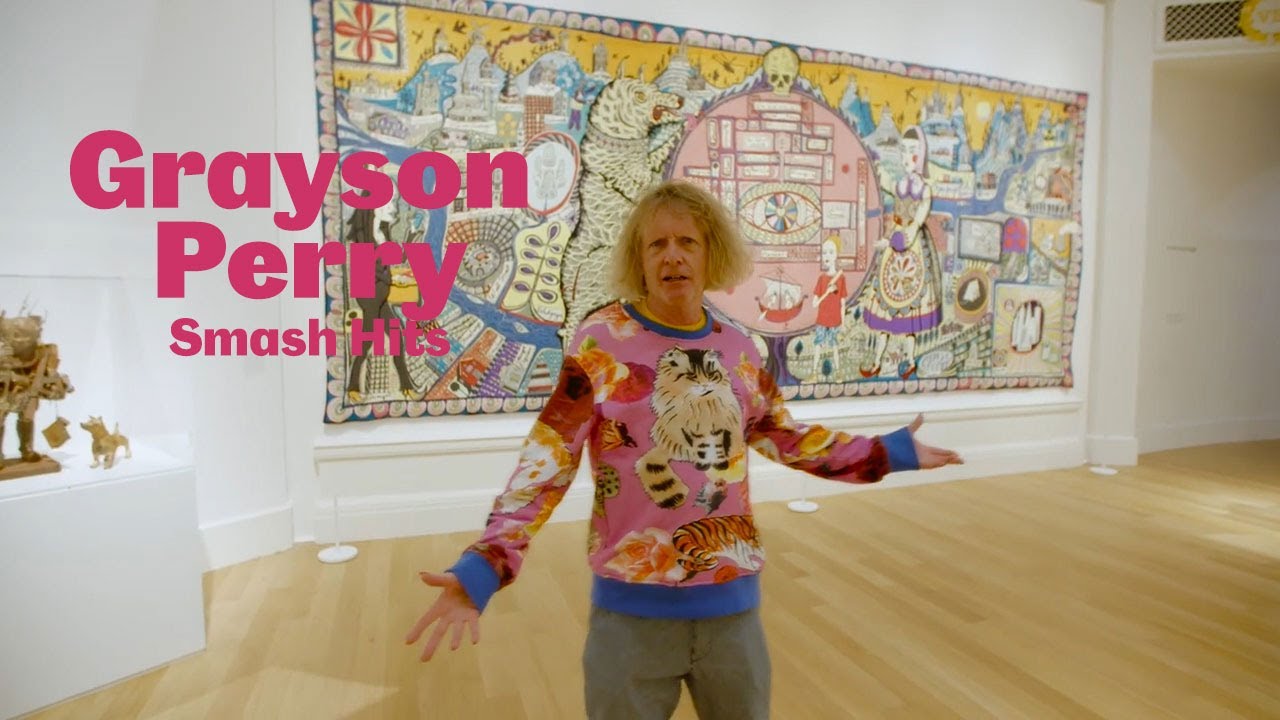
- Format: Large-scale (typically 2m x 4m or larger)
- Narrative Structure: Renaissance religious composition formats with contemporary British subjects
- Production: Digitally designed, machine-woven (not hand-woven)
- Color Saturation: Vibrant, full-spectrum palette
- Text Inclusions: Speech bubbles, captions, labels woven into image
- Reference Density: Multiple art historical quotations within single work
Prints:
- Subject Matter: Maps with symbolic geography, political commentary, autobiographical elements
- Technique: Primarily etching and screenprint
- Edition Sizes: Usually 50-200 (lower editions command premium)
- Signature Placement: Lower right corner or verso
Perry’s work announces itself through maximal decoration, conceptual weight carried by craft objects, and the collision of classical forms with contemporary British anxieties.
FAQ on Grayson Perry
What is Grayson Perry known for?
Perry is known for his ceramic vases and tapestries that combine classical forms with contemporary social commentary. He won the Turner Prize in 2003, becoming the first ceramicist to receive the award, and regularly appears on British television.
Who is Claire in Grayson Perry’s work?
Claire is Perry’s female alter ego, a cross-dressing persona he’s maintained since childhood. She appears throughout his artwork as a recurring character and represents Perry’s exploration of gender identity, masculinity, and psychological refuge from a difficult upbringing.
What techniques does Grayson Perry use?
Perry hand-builds vases using the ancient coiling technique, then applies layers of slip, underglaze, photographic transfers, sgraffito incisions, and bright glazes. His tapestries are digitally designed and machine-woven. Multiple firings create archaeological depth in his ceramic surfaces.
Where can I see Grayson Perry’s art?
Perry’s work is held in the British Museum, Tate, Victoria and Albert Museum, and Arts Council Collection. Recent exhibitions include “Delusions of Grandeur” at the Wallace Collection (2025) and retrospectives at Serpentine Gallery and British Museum.
What is The Vanity of Small Differences about?
This 2012 tapestry series explores British class systems through the story of Tim Rakewell’s social mobility. Inspired by Hogarth’s “A Rake’s Progress,” the six tapestries examine how taste, consumer choices, and aesthetic preferences reflect class backgrounds.
How much is Grayson Perry’s art worth?
Perry’s auction record is £632,750 for “I Want To Be An Artist” (1996). Ceramic vases typically sell for £30,000-£400,000, while prints range from £500-£120,000. His print market has grown 454% since 2015.
What is Alan Measles in Grayson Perry’s work?
Alan Measles is Perry’s childhood teddy bear who appears as a recurring deity figure in his ceramics and tapestries. The bear represents lost innocence, psychological protection, and serves as a cult object within Perry’s personal mythology and artistic narratives.
Did Grayson Perry go to art school?
Perry studied at Portsmouth Polytechnic (now University of Portsmouth), earning a BA in Fine Art in 1982. He took evening pottery classes after graduating, mastering ceramic techniques within one year before launching his professional career in 1984.
What awards has Grayson Perry won?
Perry won the Turner Prize in 2003, was elected Royal Academician in 2012, received a CBE in 2013, and was knighted in 2023. He delivered the BBC Reith Lectures in 2013 and was appointed Chancellor of University of the Arts London.
Why does Grayson Perry use pottery?
Perry chose pottery for its humility and accessibility. The medium’s association with craft and decoration allows him to smuggle difficult content about violence, class, and sexuality into attractive objects. Pottery’s “second-class” status compared to painting interests him conceptually.
Conclusion
Grayson Perry proved that ceramics could carry the weight of contemporary art. His hand-coiled vases and large-scale tapestries transformed decorative arts into vehicles for social commentary.
From his Chelmsford origins to his Royal Academy membership, Perry maintained an outsider perspective. That distance allowed him to dissect British class systems, gender politics, and cultural identity with precision.
His technical mastery matters. The layered glazes, photographic transfers, and sgraffito techniques create surfaces that reward close examination.
But technique serves narrative. Perry’s autobiographical content about Claire, Alan Measles, and working-class Essex upbringing resonates because vulnerability lives inside beautiful objects.
The market agrees. Record auction prices and institutional acquisitions confirm his significance in contemporary British art history.
Perry made pottery dangerous again.