Andre Brasilier is a French painter and printmaker born in 1929, celebrated for his lyrical compositions that blend expressionism with poetic abstraction. His work spans over seven decades. He remains one of France’s most recognized living artists.
Within 20th-century French art, Brasilier occupies a unique position. He emerged from the Ecole de Paris tradition yet developed a personal visual language that resists easy categorization. His career bridges post-war modernism and contemporary figurative painting.
Born October 29, 1929, in Saumur, France. Still active and living in Paris at age 95. Primary movement affiliation sits somewhere between lyrical abstraction and modern figurative art. Major works span from 1950 to present, with continued production into 2025.
Identity Snapshot
- Full Name: Andre Brasilier
- Lifespan: 1929 – present
- Primary Roles: Painter, Printmaker, Watercolorist, Ceramist
- Nationality: French
- Schools: Ecole des Beaux-Arts Paris, Ecole de Paris
- Movements: Lyrical Abstraction, Modern Figurative, Post-Impressionism influences
- Mediums: Oil on canvas, watercolor, lithography, gouache, ceramics
- Signature Traits: Soft pastel palette, cool blues and warm reds, flat compositional planes, broad brushwork, Japanese print influence
- Iconography: Horses, female figures (Chantal), musicians, Loire Valley landscapes, seascapes, floral arrangements
- Geographic Anchors: Saumur (birthplace), Paris (residence), Rome Villa Medici (1954-1957), Loupeigne
- Mentors: Maurice Brianchon (teacher), Jacques Brasilier (father, symbolist painter)
- Students/Patrons: Son Alexis Brasilier manages authentication
- Collections: Metropolitan Museum of Art (New York), State Hermitage Museum (St. Petersburg), Museum Haus Ludwig (Germany)
- Market Signals: Works regularly appear at Christie’s and Sotheby’s. Oil paintings range from mid-thousands to six figures depending on size and period.
What Sets Andre Brasilier Apart
Brasilier paints between worlds. Not quite abstract, not fully representational.
His horses don’t gallop so much as glide. They exist in cool morning mists and warm sunset washes where physical form becomes secondary to mood.
Unlike Henri Matisse, whose color fields demanded attention, Brasilier’s palette whispers. Unlike Bernard Buffet, his contemporary, who carved angular anxious figures, Brasilier offers serenity.
Japanese ukiyo-e prints taught him to push compositions to the picture’s edge. To crop unexpectedly. To make the viewer feel they’ve glimpsed a world that extends beyond the canvas.
His wife Chantal appears in paintings across six decades. Not portraits exactly. More like visual poems about presence and devotion.

Origins and Formation
Early Environment
Both parents were painters. His father Jacques Brasilier worked as a symbolist, influenced by the Nabis movement. His mother Alice Chaumont also painted.
Growing up in Saumur surrounded the young Brasilier with the Loire Valley’s rolling landscapes. Horses were everywhere. The famous Cadre Noir cavalry school operated nearby.
Academic Training
1949: Entered Ecole Nationale Superieure des Beaux-Arts in Paris at age 20.
Studied under Maurice Brianchon, who emphasized poetic interpretation over strict representation.
1952: Awarded the Prix Florence Blumenthal.
1953: Won the Premier Grand Prix de Rome at just 23 years old. This was massive. It meant everything.
Rome Years
1954-1957: Residency at Villa Medici in Rome.
Three years immersed in Old Master paintings. Studied the works that had inspired his father decades earlier.
Returned to Paris with deepened appreciation for classical composition and the emotional power of color.
First Stylistic Shifts
Back in Paris, he dove into Fauvism. Paul Gauguin‘s bold chromatic approach captivated him.
Blues and reds became his anchors. Not the saturated intensity of the original Fauves, but something softer. Cooler.
1959: First solo exhibition at Galerie Drouet in Paris. Theme was musical scenes. Critics noticed immediately.
Movement and Context
Position Within Art History
Brasilier exists in a strange categorical space. He’s called a lyrical abstractionist, yet his horses are clearly horses. He’s labeled figurative, yet his figures dissolve into colored atmospheres.
The Ecole de Paris claimed him. But he rejected that movement’s existential anxiety.
Post-war French painting was often dark, politically charged, full of angst. Brasilier went the other direction. Deliberately.
Comparative Analysis
Brasilier vs. Bernard Buffet: Both emerged from the same post-war Parisian scene. Buffet painted sharp-edged alienation in muted grays. Brasilier painted soft-edged harmony in gentle blues. Same generation, opposite sensibilities.
Brasilier vs. Marc Chagall: Both incorporated floating dreamlike figures. But Chagall’s fantasy carried Jewish mysticism and narrative complexity. Brasilier’s dream state feels more grounded in physical landscape, less symbolic.
Brasilier vs. Yves Brayer: Both painted Mediterranean and French landscapes with bright palettes. Brayer’s work feels more documentarian. Brasilier’s transcends specific place toward emotional essence.
The Japanese Connection
This matters more than most critics acknowledge.
Brasilier absorbed ukiyo-e compositional strategies: asymmetrical balance, unexpected cropping, flat color planes, emphasis on negative space.
His regular exhibitions in Tokyo through galleries like Nichido weren’t just commercial. Japan understood his visual language instinctively.
Materials, Techniques, and Process
Supports and Surfaces
Primary support: canvas, both stretched and on board.
Occasional work on linen for larger formats.
Canvas sizes range from intimate (27 x 41 cm) to monumental (130 x 162 cm).
Paint Application
Oil remains his primary medium. Applied in broad, confident strokes.
The brushwork taxonomy: neither thick impasto nor thin glazing. Something in between. Paint sits on the surface with visible brush marks but without heavy texture.
Wet-in-wet technique appears frequently in his skies and backgrounds, creating soft atmospheric transitions.
Edges stay soft. Even when defining figures, he avoids hard contour lines.
Palette Architecture
Cool temperature bias dominates. Blues appear in nearly every painting.
Signature hues: cerulean blue, soft coral, muted ochre, forest green, electric magenta accents.
Color harmony operates through analogous relationships punctuated by occasional warm contrast.
Value distribution tends toward middle range. Few extreme darks or bright highlights. This creates that dreamlike quality.
Studio Practice
Works from nature but not plein air. Observes subjects, then paints from internalized memory and emotion.
Underdrawing sometimes visible in pencil, particularly in mixed-media pieces combining graphite and oil.
Process emphasizes spontaneity within established compositional frameworks. “When I paint, I want to feel life in my movements,” he has stated.
Lithography
Significant body of print work. Collaborated with Mourlot Freres in Paris from the 1960s onward.
Editions typically range from 75 to 200 impressions. Some larger editions reached 2,000 for poster lithographs.
Lithographs on Arches and Japan paper. Signed in pencil, numbered according to standard practice.
Themes, Subjects, and Iconography
The Horse

Central to his entire oeuvre. He’s painted thousands of them. Brasilier described horses as “a superb creation, charged with symbolism, strength, dynamism and beauty.”
Horses appear cantering through seascapes, standing in winter woods, galloping along beaches.
They represent freedom, vitality, connection to nature. But never wild or threatening. His equestrian paintings feel gentle.
The Cadre Noir cavalry school from his Saumur childhood appears repeatedly as subject matter.
Chantal

His wife Chantal d’Hauterives became his primary muse after their marriage. Over 65 years of painting her.
She appears arranging flowers, seated in gardens, silhouetted against landscapes.
These aren’t conventional portraits. Her features often remain simplified, generalized. The focus is presence, not likeness.
Musicians and Music
“Everything is beautiful in music,” he said, “whether it is the discipline of the orchestra or the harmony of a quartet.”
Orchestras, pianists, string players recur throughout his work. His first 1959 exhibition centered entirely on musical themes.
Music translates visually into rhythm of brushstroke and color contrast.
Landscape
Loire Valley provided lifelong inspiration. Gentle hills, river reflections, soft morning light.
Seascapes appear frequently. The French Riviera, Brittany coasts.
Winter scenes with bare trees and snow-covered fields. These carry a particular quietude.
Compositional Patterns
Horizontal formats dominate landscape subjects. Vertical formats for single figures.
Horizon placement typically sits low or high, rarely centered. Japanese influence again.
Figures placed asymmetrically. Negative space treated as compositional element.
Notable Works
Le Cadre Noir (circa 1963)

Medium: Oil on canvas
Current Location: Various private collections; lithograph versions widely distributed
Visual Signature: Military riders on dark horses, French naval uniforms, characteristic flat color planes
Why It Matters: Directly references his Saumur heritage. The Cadre Noir cavalry school was practically his backyard. This subject became a recurring touchstone. Lithograph version published by Mourlot in 1964 reached wide audience.
Chevaux sur la plage (1964)

Medium: Oil on canvas, 97 x 130 cm
Current Location: Private collection (sold at Bonhams 2022)
Visual Signature: Horses on beach, cool blues dominating, dynamic movement captured through loose brushwork
Why It Matters: Exemplifies his beach horse series that became signature imagery. Demonstrates mature style in mid-career.
Les Amoureux du Mont Parnasse (circa 1952)

Medium: Oil on canvas, 45 x 73 cm
Current Location: Exhibited at State Hermitage Museum retrospective; now private collection
Visual Signature: Early romantic subject, Parisian scene, softer palette than later work
Why It Matters: Important early work showing formation of style before Rome residency fully matured his approach. Listed in catalogue raisonne Volume 1.
Chantal aux fleurs (circa 1961)

Medium: Oil on canvas, 100 x 81 cm
Current Location: Sold through Bonhams 2014
Visual Signature: Portrait of wife with flowers, intimate domestic scene, characteristic soft edges and cool palette
Why It Matters: Prime example of his Chantal series that spans decades. Shows integration of figure and floral motifs.
L’entrainement (The Training)

Medium: Oil on canvas, 130 x 162 cm
Current Location: Christie’s sale 2025
Visual Signature: Large format horse training scene, dynamic composition, monumental scale
Why It Matters: Recent market appearance demonstrates continued collector interest. Large format commands premium pricing.
Exhibitions, Collections, and Provenance
Major Retrospectives
1980: Chateau de Chenonceau. 100 paintings spanning 1950-1980. First major retrospective. This established his historical significance.
1988: Musee Picasso-Chateau Grimaldi, Antibes. Major French institutional recognition.
2005: State Hermitage Museum, St. Petersburg. He’s one of only two artists (the other being Pablo Picasso) honored with a living retrospective there. Think about that for a second.
2006: Espace des Arts, Paris.
2007: Traveling retrospective across five Japanese cities: Tokyo, Nagoya, Niigata, Sapporo, Fukuoka.
2007: Museum Haus Ludwig fur Kunstausstellungen, Saarlouis, Germany.
2022: Sotheby’s Hong Kong monumental retrospective exhibition.
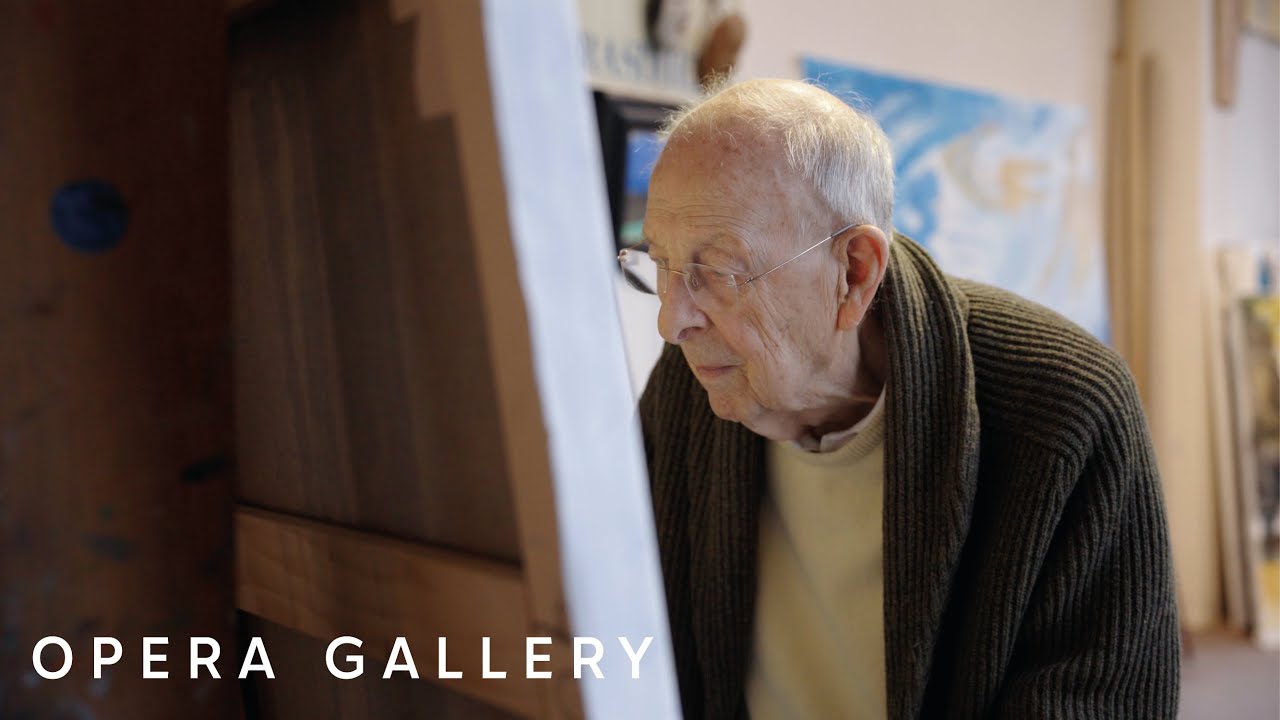
2025: Opera Gallery Paris, “Andre Brasilier, 60 ans de peinture.” Over 40 paintings from 1963 to 2025.
Museum Collections

Metropolitan Museum of Art, New York (permanent collection).
State Hermitage Museum, St. Petersburg (work gifted by artist after 2005 retrospective).
Museum Haus Ludwig, Germany.
Numerous French regional museums.
Gallery Representation
Opera Gallery (Paris, international locations): Current primary representation.
Nichido Gallery (Tokyo): Longstanding Japanese representation since 1969.
Historical representation included Galerie de Paris, Galerie Matignon, Hammer Gallery (New York).
Catalogue Raisonne
Volume 1: Paintings 1950-1981 by Xavier de Coulanges.
Lithography catalogue raisonne published 1992, Editions Callithos.
Volume covering 1982-2002 published 2003, Editions Acatos.
Authentication handled by son Alexis Brasilier.
Market and Reception
Auction Performance
Works appear regularly at major houses: Christie’s, Sotheby’s, Bonhams.
Oil paintings typically sell in the $10,000-$100,000 range depending on size, period, and subject.
Horse subjects command premium. Large formats (over 100 cm) fetch higher prices.
Lithographs more accessible: $500-$5,000 range for signed impressions.
Authentication
Alexis Brasilier provides certificates of authenticity for original works.
Signature typically appears lower right or lower center.
Works often signed, titled, and dated on reverse stretcher.
Market Position
Strong collector base in France, Japan, United States, Hong Kong, Korea.
Consistent auction presence indicates stable demand.
Living artist status means new works still enter market through galleries.
Influence and Legacy
Upstream Influences
Gauguin taught him color could carry emotional weight independent of descriptive function.
Matisse showed flat color planes could create spatial depth through relationship rather than modeling.
Pierre Bonnard’s intimate domestic scenes influenced his Chantal paintings.
Japanese woodblock prints (Hiroshige, Hokusai) provided compositional frameworks.
Downstream Impact
Difficult to trace direct stylistic descendants. His approach is so personal.
He influenced perception of what contemporary French painting could be: lyrical without being sentimental, figurative without being illustrative.
His success in Japan may have opened doors for other Western figurative painters in that market.
Cross-Domain Connections
Opera and theater: Created scenery and costumes for Opera Garnier de Monte Carlo.
Ceramics: Significant body of ceramic work produced with Sassi-Milici in Vallauris.
His approach to music as visual subject influenced how galleries program exhibitions around thematic content.
How to Recognize an Andre Brasilier at a Glance

- Cool palette bias: Blues dominate. Even warm subjects carry cool undertones.
- Soft edges everywhere: No hard contour lines. Forms dissolve into atmosphere.
- Horses in motion or repose: If there are horses and they look peaceful rather than dramatic, consider Brasilier.
- Low or high horizon: Rarely centered. Japanese compositional influence.
- Flat color areas: Paint applied broadly, not built up in layers.
- Female figure with simplified features: Often Chantal, shown in contemplative pose.
- Signature placement: Lower right or lower center, typically “Andre Brasilier” in script.
- Canvas sizes: Common formats include 46 x 55 cm, 73 x 60 cm, 100 x 81 cm, 130 x 162 cm.
- Dreamlike but grounded: Subjects are recognizable but atmosphere feels slightly otherworldly.
- Visible brushwork without heavy impasto: You see the strokes but paint layer stays relatively flat.
FAQ on Andre Brasilier
Who is Andre Brasilier?
Andre Brasilier is a French contemporary painter born in 1929 in Saumur, France. He studied at the Ecole des Beaux-Arts in Paris and won the prestigious Prix de Rome in 1953. His lyrical style blends abstraction with figurative elements.
Is Andre Brasilier still alive?
Yes. Brasilier is alive and still painting at age 95. He continues working from Paris. His 2025 exhibition at Opera Gallery Paris featured paintings completed as recently as that year.
What is Andre Brasilier best known for?
His equestrian paintings define his reputation. Horses appear throughout his work, galloping on beaches and cantering through winter landscapes. He also frequently paints his wife Chantal, musicians, and Loire Valley scenes.
What artistic style does Andre Brasilier use?
Brasilier works between lyrical abstraction and modern figurative art. His approach draws from Impressionism and post-war French painting traditions. Japanese prints heavily influenced his compositional choices and flat color planes.
How much are Andre Brasilier paintings worth?
Original oil paintings typically sell between $10,000 and $100,000 at auction. Large canvases featuring horses command premium prices. Signed lithographs are more accessible, ranging from $500 to $5,000 depending on edition size.
Where can I see Andre Brasilier artwork in museums?
The Metropolitan Museum of Art in New York holds his work in permanent collection. The State Hermitage Museum in St. Petersburg displayed a major retrospective in 2005. Museum Haus Ludwig in Germany also features his paintings.
Who is Chantal Brasilier?
Chantal Brasilier is the artist’s wife and primary muse. They married over 65 years ago. She appears in hundreds of his paintings, often shown arranging flowers or seated in contemplative poses within domestic settings.
What awards did Andre Brasilier win?
He won the Prix Florence Blumenthal in 1952 and the Premier Grand Prix de Rome in 1953. Additional honors include the Prix Charles-Morellet (1961) and Prix de Villeneuve-sur-Lot (1962). The Rome prize funded his Villa Medici residency.
Where can I buy Andre Brasilier artwork?
Opera Gallery represents him internationally with locations in Paris, London, and Hong Kong. Works appear regularly at Christie’s and Sotheby’s auctions. Secondary market dealers like M.S. Rau and 1stDibs offer authenticated pieces.
What materials does Andre Brasilier use?
He primarily works in oil on canvas using broad brushstrokes and soft edges. Watercolor and lithography form significant parts of his output. He also created ceramics in Vallauris and designed theatrical costumes for Opera Garnier de Monte Carlo.
Conclusion
Andre Brasilier stands as one of the last living masters of the Ecole de Paris tradition. At 95, he continues producing original oil paintings from his Paris studio.
His horse artwork and portraits of Chantal remain highly sought after by art collectors worldwide. The Hermitage Museum retrospective cemented his place among 20th-century French artists.
Whether through original canvas paintings or limited edition lithographs, his work offers accessible entry points into the contemporary art market.
Few painters achieve seven decades of consistent output. Brasilier did.