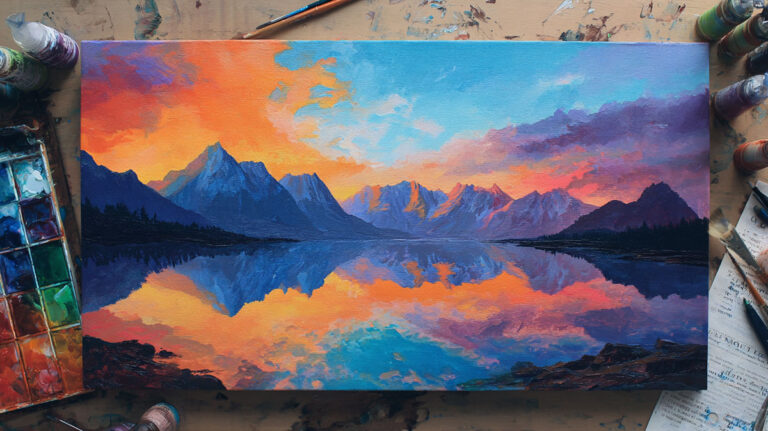
No brushes. No sketching. Just paint moving on its own.
Acrylic pouring techniques turn fluid paint into abstract art through controlled chaos, and the results can look genuinely stunning with the right setup.
The problem is that most beginners start without understanding paint consistency, medium ratios, or why their colors keep turning brown. That gap is what this guide covers.
You’ll learn how to mix paint for pouring, which supplies actually matter, how to create cells, and how to finish and seal a pour so it lasts.
Every technique covered here, from the dirty pour to the Dutch pour, is explained with the specific details that make the difference between a piece you’re proud of and one that crazes overnight.
What is Acrylic Pouring

Acrylic pouring is a fluid art technique where thinned acrylic paint is poured, tilted, or manipulated across a surface to create organic abstract patterns. No brushwork. No controlled strokes. The paint does most of the work.
It sits within the broader world of abstract art, but it has its own logic. Outcomes depend on paint density, viscosity, surface choice, and the technique used to move the paint around.
The global fine art materials market was estimated at $15 billion in 2025, with acrylic pouring listed as one of the key drivers of category growth, according to Market Report Analytics. That number reflects how far this technique has moved from niche hobby to mainstream studio practice.
Two things define a pour painting visually.
- Cells: circular or organic shapes that form when paints of different densities separate
- Lacing: fine webbing patterns that appear at the edges where colors meet
Neither can be fully controlled. That’s the point.
Acrylic pouring is connected to the larger history of abstract expressionism. Artists like Jackson Pollock laid early groundwork for paint-as-movement, and fluid acrylic work builds directly on that approach, though with very different materials and methods.
One thing beginners often get wrong: acrylic pouring is not just thinning regular paint with water and dumping it on a canvas. The consistency, medium choice, and surface prep all determine whether the result holds together or falls apart as it dries.
Acrylic Pouring Supplies

Getting the supplies right matters more here than in most painting forms. Wrong medium, wrong consistency, wrong surface, and the whole pour either crazes, stays muddy, or peels.
The artist grade acrylic paints market was estimated at $1.2 billion in 2023, projected to reach $2.3 billion by 2032 at a 7.2% CAGR, according to DataIntelo. Much of that growth ties directly to the rise of fluid acrylic techniques.
Paint
Fluid acrylics are the easiest starting point. Golden Fluid Acrylics pour without much adjustment. Heavy body paints like Liquitex Heavy Body need significant thinning and more medium to reach the right flow.
Craft acrylics (DecoArt, Apple Barrel) are popular with beginners because they’re cheap. They work fine, but the pigment load is lower, so colors can look washed out in the final piece. Your mileage will vary depending on brand.
Pouring Mediums
| Medium | Best For | Price Range | Notes |
|---|---|---|---|
| Floetrol | Beginners: High-volume practice and budget-friendly large pours. | $15–$20 / Gallon | Originally a paint conditioner; dries matte and is not considered archival long-term. |
| Liquitex Pouring Medium | Professional Quality: High-gloss, flexible finish for sellable work. | Mid-Range | Specifically formulated to prevent yellowing and maintain pigment intensity. |
| GAC 800 (Golden) | Crazing Prevention: Essential for thick “puddles” on non-rigid surfaces. | ~$130 / Gallon | The gold standard for keeping a flat, crack-free surface as the paint film shrinks. |
| DIY (PVA Glue + Water) | Cost Control: School projects or purely experimental work. | Very Low | Prone to yellowing and becoming brittle/peeling; avoid for high-value commissions. |
Floetrol is made for house painting. That’s why it’s cheap and easy to find at hardware stores. It works surprisingly well for fluid art, though it isn’t archival on its own, so UV exposure will eventually affect the piece without a protective topcoat.
Other Essentials
- Silicone oil (for cell formation, 100% silicone only)
- Mixing cups and stir sticks
- A leveled surface or palette knife for the canvas
- Gesso-primed canvas, wood panel, or ceramic tile
- Heat gun or small butane torch
- Gloves and a drop sheet. Always.
Surface choice affects the final look more than most beginners expect. A gessoed stretched canvas behaves differently from a wood panel or an uncoated tile. The role of gesso is worth understanding before you start, especially if you want the paint to stay put and not soak into the surface unevenly.
How to Mix Paint for Acrylic Pouring
This is where most beginners go wrong. The right consistency is everything. Too thick and the paint won’t flow. Too thin and it loses opacity, runs off the edges too fast, and the colors blend into a muddy mess.
The target is a honey-like consistency. When you drizzle a stir stick through the mix, the paint should fall off in a slow, even ribbon and blend back into the surface within a few seconds.
The Drizzle Test
Lift your stir stick about 6 inches above the cup and let paint drip off.
If it falls in clumps: too thick, add more medium or a few drops of water.
If it runs off instantly like water: too thin, add more paint.
If it ribbons off smoothly and holds its shape briefly before settling: you’re there.
Ratios by Medium and Paint Type
Ratios are starting points, not rules. Every paint brand has a different viscosity, so expect to adjust.
- Floetrol + craft acrylic: 1:1 ratio (equal parts)
- Floetrol + student acrylic: 1 part paint, 2 parts Floetrol
- Floetrol + heavy body acrylic: 1 part paint, 3-4 parts Floetrol
- Liquitex Basics + Floetrol: 1 part paint, 3 parts Floetrol
- Golden Fluid Acrylics + GAC 800: 10% paint maximum
Floetrol suggests a 1:2 ratio (Floetrol to paint) as a general baseline, but most experienced pourers run closer to 50/50 with thinner craft paints, adjusting by feel.
Adding Silicone Oil
Silicone goes in last, after the paint and medium are already mixed. Add it to the color cups only, not to white paint if you’re using it as a base.
A starting point: 2-4 drops per 2 oz of mixed paint. More silicone creates more cells but can also cause oily residue on the dried surface. Dish soap and a soft sponge will clean that up once everything is fully cured.
Do not over-stir after adding silicone. Gentle stirring keeps cells larger. Aggressive stirring breaks them into smaller fragments.
Acrylic Pouring Techniques
This is the part people come for. Each technique produces a distinct visual result, and the same paint mix can look completely different depending on which method you use.
Dirty Pour

All paint colors loaded into a single cup in layers, then poured together onto the canvas in one motion.
How the layers go in matters. Denser colors at the top of the cup end up toward the bottom of the pour. Lighter colors float up as the pour spreads. The order you layer them controls which colors dominate the final piece.
Tilt the canvas in slow circles after pouring to spread the paint and trigger cell formation. This is the most beginner-friendly technique. Low setup, fast results, hard to completely ruin.
Flip Cup
Paint is layered in a cup, the cup is placed face-down on the canvas, and then lifted quickly so the paint floods out from underneath.
Golden Artist Colors recommends placing a small pool of base paint on the canvas first before placing the cup. This helps the paint spread more evenly when the cup is lifted and prevents bare spots near the cup’s edge.
Key difference from dirty pour: the paint exits from the bottom of the stack upward, so the last color you loaded into the cup becomes the first one to touch the canvas.
Swipe Technique
One color (usually white or a light color) is poured in a line across the canvas, then a palette knife, piece of card, or plastic wrap is dragged across the surface, pulling that color over the other wet paints underneath.
The drag motion forces lighter and denser paints to collide and separate. This technique consistently produces strong cell formation, sometimes without any silicone at all. It’s one of the more reliable methods for getting defined, large cells.
Dutch Pour

Paint is poured onto the canvas, then air (from a hairdryer on low, a straw, or even your own breath) is used to move it across the surface. The airflow creates long, feathery shapes and can form petals or lace-like patterns depending on how the air is directed.
Using too much heat with a hairdryer can dry the paint too fast and kill the flow. Most people use short, controlled bursts from a few inches away, moving across the canvas rather than staying in one spot.
Tree Ring Pour

Paint is poured repeatedly from the same point in the center of the canvas, adding one color at a time in a slow, rhythmic sequence. The canvas is then tilted to spread the rings outward.
Results look like cross-sections of a tree trunk or topographic map rings. Color order is everything here. Alternating between light and dark values creates the most defined ring structure.
String Pull
A string (cotton or nylon) is coated in paint, laid across the canvas in any shape, then pulled off in one smooth motion. Each pull leaves a trail of cells and color streaks.
Lay the string in loops, coils, or straight lines depending on the effect you want. Multiple pulls in different directions using different colors build up a layered, complex composition fast. This is one of the techniques that looks more controlled than it actually is.
How to Create Cells in Acrylic Pouring
Cells are what most people are chasing when they start pouring. Some pours produce them naturally. Others need help.
Cells form because of density differences between paint colors. Lighter, less dense paints rise to the surface through heavier ones. When this separation happens while the paint is still wet and mobile, the lighter colors retain their shape before settling. That shape is the cell.
Which Paints Cell Naturally
Titanium white is the most reactive paint in most mixes. It cells aggressively due to its pigment density. If you’re not getting cells, adding titanium white to the mix almost always triggers them.
Other reliable cell-formers:
- Naples yellow
- Metallic paints (high pigment density)
- Any paint with heavy metal pigments
Hansa yellow and magenta are lighter pigments and tend to rise rather than sink. Knowing which colors are heavy and which are light helps you layer your cups more strategically.
Using Silicone Oil
Since acrylic paint is water-based, silicone oil refuses to mix with it. The oil forms small pockets inside the paint, and as those pockets rise through heavier paint layers, they carry lighter-colored paint to the surface. The result is the cell pattern.
Recommended starting point: 5-10 ml of silicone oil per 200 ml of mixed paint. Only add it to the color cups, not the white. Stir gently after adding.
A butane torch passed quickly over the wet pour surface activates cells that haven’t broken through yet. Hold the torch 6-8 inches above the surface and keep it moving. Staying in one spot too long causes dimpling, yellowing, or burn marks in the paint.
The Torching Debate
Some pourers skip silicone entirely and rely on torching alone. Others combine both.
Silicone only: larger, more defined cells, but risk of oily residue post-drying.
Torch only: smaller, more numerous cells, no residue, but less predictable.
Both together: most dramatic results, but harder to control cell size.
A note worth making: silicone can degrade the archival quality of a piece over time and may cause yellowing depending on the brand. Artists creating work for sale or long-term display often either skip silicone or seal carefully with a UV-protective varnish afterward.
Color Combinations for Acrylic Pouring
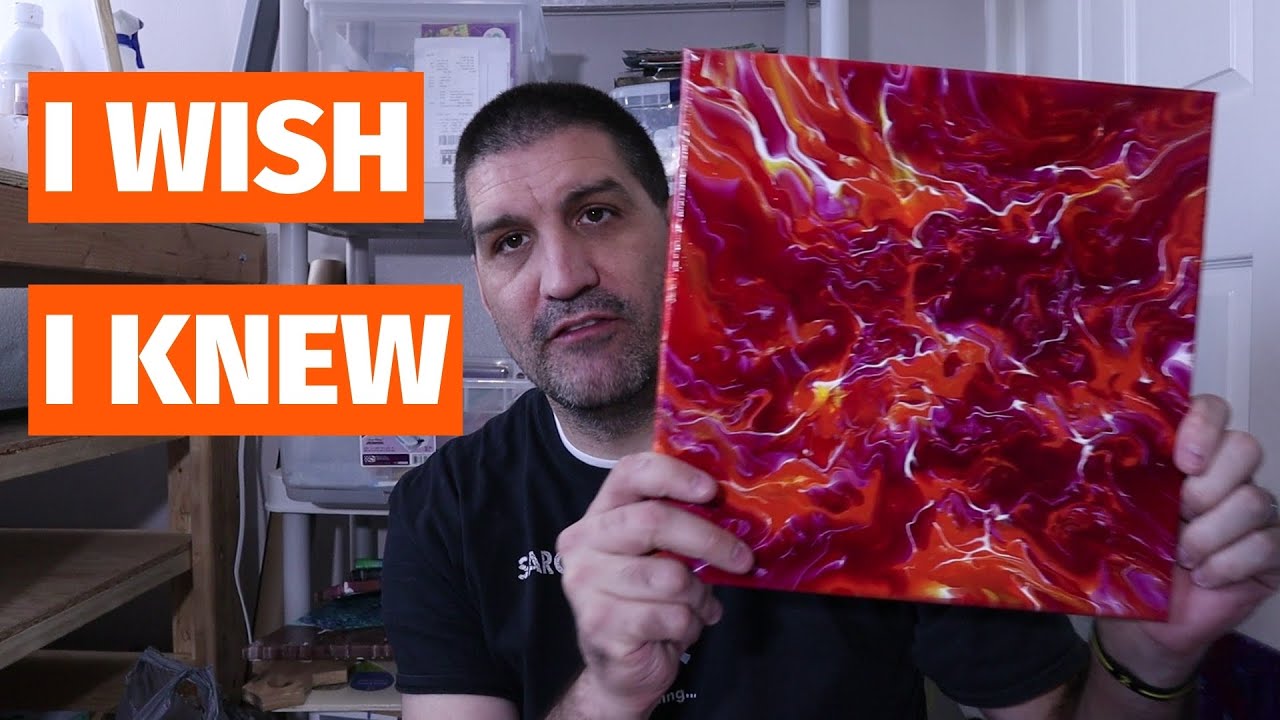
Color choice determines whether a finished pour looks intentional or muddy. The tricky part is that paints mix physically during the pour, not just visually. Two colors that look fine side by side on a palette can create brown or grey when they blend in the cup or on the canvas.
Colors That Muddy
Complementary colors mixed directly together neutralize each other. Red and green. Blue and orange. Purple and yellow. When these colors bleed into each other during a pour, the overlap turns brown.
The fix is to use white or a neutral color as a buffer between complements. Loading white between red and green in a dirty pour cup keeps them from touching directly as they spread.
Palettes That Work
A few combinations that hold up well without mudding:
- Ocean palette: navy, teal, aqua, white, gold
- Earthy palette: burnt sienna, ochre, cream, brown, black
- Monochromatic palette: one hue in 4-5 values, white and black as anchors
- Neon + black: high contrast, very forgiving since black acts as a strong separator
Analogous color schemes (colors sitting next to each other on the color wheel) are the safest choice for beginners. They flow together without muddying and produce clean transitions. A deeper look at how analogous color schemes work is useful if you want to build palettes more deliberately.
Metallics and Specialty Paints
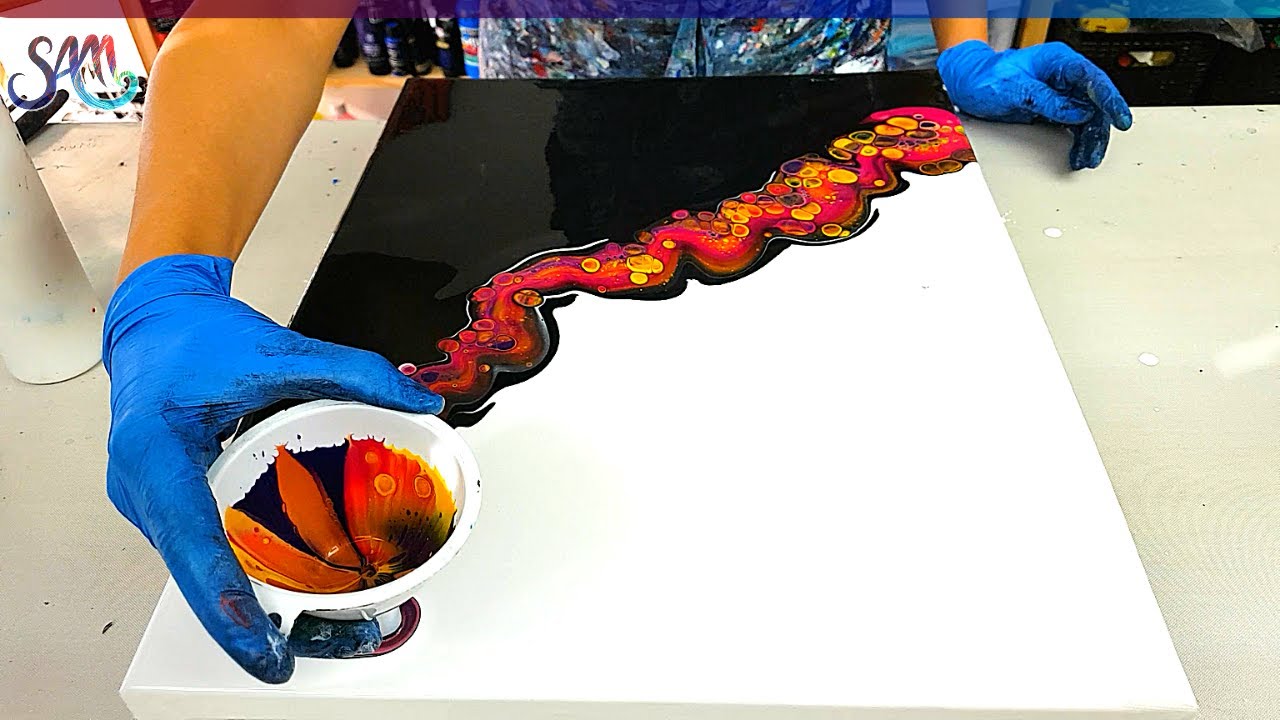
Metallic acrylics behave differently from standard colors. They’re heavier, so they sink faster and produce strong cell contrast when layered with lighter mattes.
Neon or fluorescent paints tend to be lighter and less pigmented. They work best as accent colors rather than as a dominant part of the mix. Using them as the majority color usually results in a washed-out appearance once dry.
One thing that catches people off guard: colors look much brighter wet than dry. Neons especially lose intensity as the acrylic medium dries from milky to clear. Swatch test your palette on a small piece before committing to a full canvas.
Acrylic Pouring on Different Surfaces
Surface choice is one of those variables beginners underestimate. The same exact paint mix will flow, adhere, and dry differently depending on what it’s sitting on.
The arts and crafts market is projected to grow at a 10% CAGR through 2029, with acrylic pouring specifically cited as a driver of demand for diverse surfaces and materials, according to Technavio (2024).
| Surface | Prep Required | Best For | Key Consideration |
|---|---|---|---|
| Stretched Canvas | Gesso Recommended: Seals the weave to prevent paint from “ghosting” or sinking in. | Beginner pours, large-scale wall decor, and lightweight displays. | The “Sag” Effect: Heavy paint puddles in the center; support the back with cardboard during drying. |
| Wood Panel | Sand + Gesso: Smooths the grain and prevents “acid migration” from the wood into the paint. | Large statement pieces and high-gloss “resin” looks with sharp, clean edges. | Weight: Large panels are heavy and rigid; they won’t sag, but shipping costs will be higher. |
| Ceramic Tile | Alcohol Wipe: Simply clean the glaze of oils; do not gesso glazed surfaces. | Coasters, small experimental pours, and functional home decor. | Adhesion: Paint can “peel” off the edges if not sealed with a high-quality resin or varnish. |
| Rock / Stone | Sand & Seal: Remove grit, then apply a base sealer to manage high porosity. | Garden decor, paperweights, and organic 3D art pieces. | Porosity: Natural stone “drinks” paint; a base coat is vital to keep colors vibrant. |
Canvas
Stretched canvas is the most forgiving starting surface. It’s light, widely available, and the slightly absorbent gessoed surface grips the paint well.
The one problem: budget canvas bundles from craft stores often sag in the middle. A sagging canvas causes paint to pool in the center and craze badly during drying. If the canvas deflects when you press gently at the center, it’ll likely give you crazing problems on larger pours.
Canvas boards are a cheaper, firmer alternative for practice work. No flex, no sag.
Wood Panels

Wood gives a hard, flat, non-flexing surface. The edges look clean and crisp, which makes finished pieces easier to frame or display without needing a gallery wrap.
Prep is more involved. Sand lightly to remove roughness, apply 2 coats of gesso, let it fully cure. Skipping this step means the wood absorbs paint unevenly and the pour looks patchy.
Weight is the real downside. Large wood panels get heavy fast, which makes tilting and manipulating the pour physically tiring. Most pourers keep wood panels to 12×16 inches or smaller for this reason.
Ceramic Tiles
Tiles are underrated. They’re cheap, flat, easy to find at hardware stores, and the non-porous surface creates very clean cell definition. Small 4×4 inch tiles work well as practice pieces or finished coasters.
Here’s the counter-intuitive part: do not gesso glazed ceramic tiles. Testing by acrylicpouring.com found that applying gesso to glossy tiles caused the paint to lift and pucker during the pour, because extended moisture softens the gesso off the slick surface underneath. Pour directly onto a clean, dry tile and the paint adheres fine.
Unglazed or unfinished tiles are the exception. Those benefit from a thin gesso coat since the porous surface absorbs paint unevenly without it.
Rocks and Other Surfaces
Fluid art on rocks and stones has a strong following, especially for decorative pieces and gifts.
- Clean surface with rubbing alcohol before pouring
- Sand very lightly if the surface is too smooth to hold paint
- Seal with multiple coats of varnish after drying, since stone is porous
Pouring on vinyl records, ceramic plates, and serving trays also works well. Each surface has its quirks, but the fundamentals stay the same: clean surface, level position, and seal well after.
How to Finish and Seal an Acrylic Pour
Sealing is not optional. An unsealed pour is vulnerable to UV fading, dust, scratching, and moisture. A well-sealed piece can last decades.
The drying process alone takes longer than most beginners expect. Surface drying happens within a day or two, but full curing of a thick pour takes 2 to 4 weeks depending on temperature and humidity, according to Owatrol.
Drying Conditions
Ideal environment: 65-75 degrees Fahrenheit, humidity below 50%, no direct airflow or sunlight.
Temperatures above 75°F cause the surface layer to dry faster than the paint underneath. That’s what creates crazing, those fine surface cracks that appear as the piece dries. Low humidity areas accelerate this problem significantly, according to Paint Pour Academy.
Keep the canvas level and covered lightly with a box or sheet to block dust while it dries. Moving it too soon leaves fingerprints or distorts the design.
Removing Silicone Residue
If silicone oil was used, clean the surface before sealing. Silicone creates a barrier that prevents varnish or resin from adhering properly, leaving spots where the finish won’t stick.
Two approaches that work:
- Sprinkle cornstarch over the surface, let sit 12 hours, wipe off with a damp cloth
- Dish soap on a soft sponge, gentle circular motion, then rinse and air dry
Do this only after the painting is fully cured, at minimum 2 weeks after pouring.
Sealing Options Compared
| Finish Type | Sheen | Ease of Use | Cost | Best For |
|---|---|---|---|---|
| Spray Varnish | Matte to Gloss | Very Easy: Quick, even coats without touching the paint surface. | Low | Beginners, delicate textures, or pieces prone to “smearing.” |
| Brush-on Varnish | Matte to Gloss | Easy: Requires a steady hand to avoid bubbles and brush marks. | Low–Mid | Large canvases and pieces where you want maximum thickness control. |
| Epoxy Resin | High Gloss | Moderate: Requires precise mixing (1:1) and a dust-free environment. | Higher | Professional “glass” finish, coasters, and high-end gallery work. |
Spray varnish is the easiest starting point. Hold the can 10-12 inches from the surface, work in thin overlapping passes, apply a minimum of 2 coats (4 is better for UV protection), according to Owatrol.
Resin finishes are a different level. Products like ArtResin and Envirotex Lite create a thick, glass-like surface that dramatically intensifies color depth. The tradeoff is cost, fumes, and working time. You typically have 30-40 minutes to spread resin before it begins to set, and air bubbles must be removed quickly with a torch pass. Worth learning if you’re making pieces for sale or display.
One thing that catches people: applying liquid varnish directly to an unsealed pour often causes crazing, even after weeks of drying. The fix is to spray 2-3 coats of spray varnish first, then apply liquid varnish on top. This is a widely reported issue in the acrylic pouring community, confirmed by multiple practitioners including those at loveacrylicpainting.com.
Acrylic Pouring Mistakes and How to Fix Them
Most pouring problems are fixable, or at least preventable the next time. The same few issues come up repeatedly, especially in the first 10-15 pours.
Paint Pour Academy’s community of fluid artists consistently identifies five core failure points that account for the vast majority of beginner problems.
Paint Too Thick or Too Thin
This is the most common issue. Thick paint clumps, refuses to spread, and dries with raised ridges. Thin paint runs off the canvas instantly, leaves bare spots, and colors blend into brown.
The fix: do the drizzle test before every pour. If the paint doesn’t ribbon off the stick, it’s not ready. Adjust with small amounts of medium (to thin) or more paint (to thicken). Resist the urge to add water alone. Water reduces pigment strength and makes paint more prone to crazing.
Colors Turning Muddy
Muddy colors are almost always a color choice or loading problem, not a technique problem.
Three causes:
- Mixing all three primary colors (red, yellow, blue together = grey-brown)
- Loading complementary colors directly next to each other in the cup without a neutral buffer
- Paint too thin, so colors lose their edges and bleed into each other
Using a non-white base color also mutes everything poured over it. A grey base with light colors on top produces a flat, dull result. White base is almost always the right call for vibrant fluid art.
Cells Not Forming or Disappearing
No cells at all: paint is too thin. This is the main culprit. Cells form and then collapse because the paint has no structure to hold them. Slightly thicker consistency keeps cells intact as the paint dries.
Cells form then vanish: same problem. Increase medium ratio slightly, reduce water.
Cells too small: too much stirring after adding silicone oil breaks large cells into many small ones. Add silicone, stir just 2-3 times gently, then pour immediately.
Crazing During Drying
Crazing (fine surface cracks) comes from two things: paint mixture too thin, or too much paint depth on the canvas, according to Paint Pour Academy.
Prevention checklist:
- Keep workspace between 65-75 degrees, no air drafts
- Don’t use too much paint on the canvas. More is not better.
- Use GAC 800 in the medium mix if crazing is a recurring problem. It’s specifically formulated to resist crazing.
- Let the pour dry away from direct sunlight or heating vents
Uneven Coverage and Bare Spots
Bare spots happen when there’s not enough paint on the canvas, or when the tilting motion is too fast and paint runs off the edge before covering the surface.
The fix is simple: keep mixed paint in reserve cups for each color. After the initial pour and tilt, fill bare spots directly from the reserve cups rather than trying to force existing paint back over them.
A base coat of white paint applied and dried before the pour also helps. It gives the poured colors a consistent foundation and prevents the canvas texture from showing through thin paint coverage. For more on how to blend acrylic paint cleanly without muddying, the principles apply directly to managing color in pours as well.
FAQ on Acrylic Pouring Techniques
What is acrylic pouring?
Acrylic pouring is a fluid art technique where thinned acrylic paint is poured onto a surface and manipulated to create abstract patterns. A pouring medium is mixed in to control flow and paint consistency. No brushwork required.
What pouring medium should beginners use?
Floetrol is the most beginner-friendly option. It’s cheap, easy to find at hardware stores, and works well with most craft and student acrylics. Liquitex Pouring Medium is a better choice if archival quality matters.
How do you get cells in acrylic pouring?
Cells form from density differences between paint colors. Adding 2-4 drops of silicone oil per color cup and passing a butane torch quickly over the wet pour surface brings them up reliably.
What consistency should acrylic pour paint be?
Aim for a warm honey consistency. The paint should ribbon slowly off a stir stick and settle back into itself within a few seconds. Too thin causes muddy colors. Too thick and it won’t spread.
Why do my colors turn muddy?
Usually a color choice problem. Mixing all three primary colors together produces grey-brown. Loading complementary colors directly next to each other without a white buffer also causes mudding. Check your cup layering order.
What surfaces can you pour on?
Stretched canvas, wood panels, ceramic tiles, and rocks all work. Glazed tiles need no gesso prep. Canvas boards work well for practice. Avoid saggy budget canvases as they cause crazing on larger pours.
What is a dirty pour technique?
A dirty pour loads all paint colors into one cup in layers, then pours them onto the canvas together in a single motion. It’s the most beginner-friendly acrylic pouring technique and consistently produces strong cell formation.
How do you prevent crazing in acrylic pours?
Keep your workspace between 65-75°F with no air drafts. Avoid over-thinning paint with water. Don’t leave too much paint depth on the canvas. GAC 800 added to your medium mix is specifically formulated to resist crazing.
How long before you can seal an acrylic pour?
Wait at least 2-4 weeks for a full cure before sealing. Surface drying happens faster, but sealing too early traps moisture and causes clouding. Remove any silicone oil residue with cornstarch before applying varnish or resin.
What is the difference between a flip cup and a dirty pour?
Both load colors into one cup. With a flip cup, the loaded cup is placed face-down on the canvas then lifted, reversing the color stack. A dirty pour is simply tipped directly onto the surface without flipping.
Conclusion
This conclusion is for an article presenting acrylic pouring techniques as one of the most accessible forms of fluid acrylic painting available to artists at any skill level.
Getting consistent results comes down to a few fundamentals: the right medium ratio, correct paint viscosity, and understanding how pigment density drives cell formation.
From the flip cup to the swipe technique, each method gives you a different set of outcomes. Surface choice, silicone oil, and a proper resin finish all shape the final piece significantly.
The variables feel overwhelming at first. They stop feeling that way after a few pours.
Keep notes on your ratios, your color combinations, and your drying conditions. That record becomes more useful than any single tip.