Andrea Kowch is an American painter born in 1986 who works primarily in acrylic on canvas. She belongs to the magical realism tradition, though her roots run deep into American Regionalism and the Northern Renaissance.
Her large-scale paintings feature solitary or clustered female figures set against the rural Midwestern landscape. Wind-swept fields, deteriorating barns, and symbolic animals populate her canvases. The imagery feels both familiar and unsettling.
Kowch emerged as a recognized voice in contemporary figurative painting during the early 2010s. SCOPE New York named her one of the top 100 emerging artists in the world in 2012. Her work now sits in museum collections across the United States, including the Muskegon Museum of Art, Grand Rapids Art Museum, and Fort Wayne Museum of Art.
Identity Snapshot
- Full Name: Andrea Kowch
- Born: 1986, Detroit, Michigan, USA
- Primary Role: Painter
- Nationality: American
- Movements: Magical Realism, American Realism, New Contemporary
- Medium: Acrylic on canvas
- Signature Traits: Precise brushwork, atmospheric rural scenes, muted earth tones with cool grays, large-scale compositions
- Recurring Motifs: Female figures, crows, foxes, horses, wind-blown grass, weathered farmhouses, wide horizons
- Geographic Anchors: Detroit (birthplace), rural Michigan (subject matter), Sag Harbor/Bridgehampton, NY (gallery representation)
- Education: College for Creative Studies, Detroit (BFA, 2009)
- Gallery Representation: RJD Gallery (NY), Dorothy Circus Gallery (London, Rome)
- Notable Collections: Muskegon Museum of Art, Grand Rapids Art Museum, R.W. Norton Art Gallery Museum, Fort Wayne Museum of Art
- Common Canvas Sizes: Large-scale (60×84 inches typical), with smaller works (8×8 to 36×36 inches)
What Sets Andrea Kowch Apart
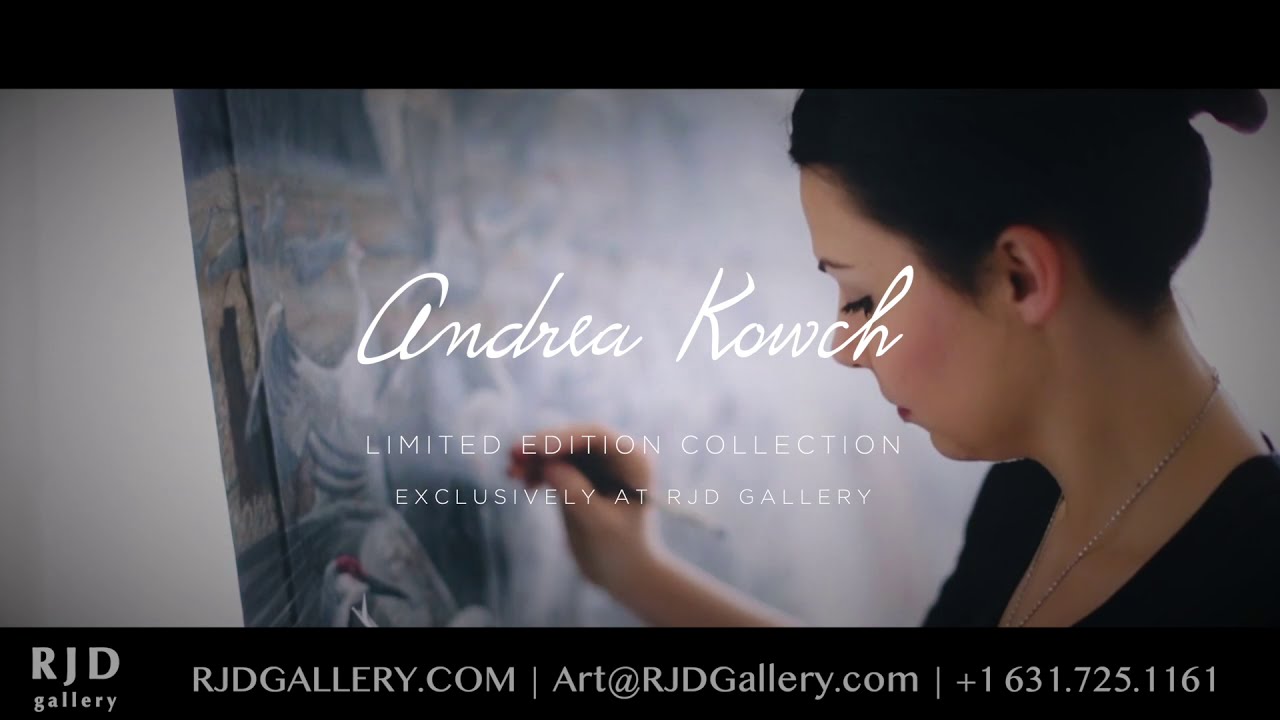
She paints rural America like nobody else working today.
The comparison to Andrew Wyeth comes up constantly, and sure, there are similarities. Both artists love the countryside. Both paint with technical precision. But Kowch’s palette runs warmer and more saturated than Wyeth’s muted grays and browns.
Her paintings contain narrative tension that hovers between fairy tale and psychological drama. You look at one of her canvases and something feels off. Not wrong exactly, just… charged.
The female figures in her work rarely make eye contact with each other or the viewer. They stand in fields surrounded by animals that seem to embody suppressed emotions. A crow lands on a shoulder. A fox watches from tall grass. Wind moves through everything.
Critics also compare her to Alfred Hitchcock. That makes sense. There is always a story lurking beneath the surface. You just never quite know what it is.
Where contemporary realism often focuses on urban environments and photographic detail, Kowch goes the opposite direction. Her allegiance is to the disappearing American heartland and to emotional truth over documentary accuracy.

Origins and Formation
Early Years in Detroit
Born in Detroit, Michigan in 1986. Grew up taking trips to the countryside with her family.
Those rural excursions shaped everything that followed. The worn barns, endless fields, and quiet isolation of Michigan’s agricultural regions became permanent fixtures in her visual vocabulary.
She started making detailed drawings as a child, often creating illustrations to accompany school writing assignments. By age 12, she had her first canvas and set of acrylic paints.
Self-Directed Study
Largely self-taught in her formative years. She spent summer breaks studying the Old Masters through art books, attempting to replicate their realistic techniques.
The Northern Renaissance painters caught her attention early. So did American masters. These dual influences remain visible in her mature work.
Breakthrough Recognition
Recognition came fast. At 17, in 2003, she won seven regional Gold Key awards and two national Gold Medal awards from the Scholastic Art and Writing Awards.
Those wins earned her representation at the Corcoran Gallery of Art in Washington, D.C. The following year, 2004, the Diane von Furstenberg Gallery in New York picked her up.
By 2005, she received a National ARTS in the Visual Arts Award from the National Foundation for Advancement in the Arts. This placed her in the top 2% of young American talent.
Formal Education
She attended the College for Creative Studies in Detroit on the Walter B. Ford II Scholarship. Double majored in Illustration and Art Education.
Graduated summa cum laude with a BFA in 2009. Received a Faculty Award from the college that same year.
Shortly after graduation, gallerist Richard Demato discovered her work in the art book Spectrum 16: The Best in Contemporary Fantastic Art. He offered her representation at RJD Gallery. That partnership continues today.
Movement and Context
Position Within Magical Realism

Kowch operates within the American Magical Realism tradition. Her paintings present realistic scenes infused with dreamlike, otherworldly qualities.
The approach differs from European surrealism. She does not paint melting clocks or impossible architecture. Everything in her work could technically exist. It just feels like it belongs to another time, another plane.
Comparison to Andrew Wyeth
The Wyeth comparison deserves closer examination.
Similarities: Both artists paint rural American landscapes with technical precision. Both favor solitary figures. Both capture the quiet melancholy of the countryside.
Differences: Kowch uses a warmer, more saturated palette. Her compositions tend toward greater symmetry. Where Wyeth worked in egg tempera and watercolor, she works exclusively in acrylic. Her figures appear more stylized, almost illustrative, while Wyeth pursued photographic naturalism.
Relationship to American Regionalism
She connects to the American Regionalist tradition through her commitment to Midwestern subject matter. Grant Wood and Thomas Hart Benton celebrated the American heartland in the 1930s. Kowch does something similar for the 21st century, though with a more psychological bent.
Contemporary Peers
Among living artists, she occupies a space alongside other narrative figurative painters who blend realistic technique with symbolic content.
Her work has been exhibited alongside contemporary realists at MOCA Jacksonville’s “Get Real: New American Painting” exhibition in 2014. She was one of eight artists selected to represent the current state of American realist painting.
Materials, Techniques, and Process
Primary Medium
Acrylic on canvas. Exclusively.
She started with acrylics at age 12 and never switched. The medium allows for precise detail work and the layered building of atmosphere that defines her style. Her choice of acrylic painting over oils gives her specific advantages in drying time and layering.
Support and Scale
Canvas remains her preferred support. Her signature works run large, often 60×84 inches or 60×72 inches. These dimensions allow for the expansive landscapes and life-sized figures that characterize her major paintings.
She also produces smaller pieces, sometimes as intimate as 8×8 inches. These tend to focus on single figures or tighter compositions.
Working Process
Her process begins with thinking, researching, and photographing. She describes it as “stream-of-consciousness.” Lists get jotted down. Drives through the countryside spark new ideas.
Once a concept solidifies, she creates rough thumbnail sketches. Then comes outfit assembly and photoshoots with models, usually friends.
The painting itself requires weeks or months of dedicated work. She describes throwing herself entirely into each piece, “reflecting, evaluating, honing, perfecting.”
Brushwork and Surface
Her brushwork is controlled and deliberate. The surfaces read as smooth from a distance but reveal careful layering up close.
She builds texture in the grass, fabric, and weathered wood surfaces. The faces and skin of her figures receive meticulous attention. Hair often appears windswept, requiring hundreds of individual strokes.
Palette Characteristics
Earth tones dominate. Muted yellows, soft grays, weathered browns. But she pushes warmer than Wyeth and allows occasional saturated accents.
The skies in her paintings often carry dramatic tonal shifts, moving from stormy grays to golden atmospheric light. She understands value relationships and uses them to create mood.
Themes, Subjects, and Iconography
The Female Figure
Women populate almost every painting. They appear alone or in groups, rarely interacting directly with each other.
Their expressions tend toward the contemplative or distant. They do not smile. They do not engage the viewer. Something internal occupies their attention.
The figures often wear period-appropriate clothing that suggests the early-to-mid 20th century. Aprons, simple dresses, practical garments. This creates temporal ambiguity.
The Midwestern Landscape
Rural Michigan provides the backdrop for nearly everything. Wide fields, low horizons, massive skies.
Deteriorating architecture appears frequently. Barns with flaking paint. Weathered farmhouses. Structures that speak to abandonment and the passage of time.
The landscape functions as more than setting. It becomes a reflection of psychological states, a symbolic extension of the figures within it.
Animal Symbolism
Animals recur constantly. Crows and ravens. Foxes. Horses. Rabbits. Moths. Quails.
These creatures serve as “vehicles for expressing the feelings and underlying tensions suppressed behind the human mask,” according to the artist. A crow on a shoulder suggests something different than a rabbit in a lap.
The animals bridge the domestic and the wild. They intrude on interior scenes and accompany figures through open fields.
Wind as Narrative Element
Wind moves through everything. Grass bends. Hair streams. Curtains billow. Fabric pulls.
This creates movement and tension within otherwise static compositions. Something unseen acts upon the visible world.
Compositional Patterns
Her compositions favor horizontal formats that emphasize the vastness of the landscape. Figures often occupy the center or lower third.
She uses asymmetrical balance skillfully. A figure on one side might be counterweighted by an animal or architectural element on the other.
Horizon lines tend to sit low, giving maximum presence to dramatic skies.
Notable Works
The Feast (2010)

- Medium: Acrylic on canvas
- Dimensions: 60 x 84 inches
- Collection: Richard J. Demato Collection
Three women gather around a table in an austere interior. Wind blows through open windows. A rooster sits beside their plates, reaching toward a loaf of bread.
The work exemplifies Kowch’s fusion of domestic scene and wild intrusion. The women do not acknowledge the bird or each other. Something ritualistic hangs in the air.
The Courtiers

- Medium: Acrylic on canvas
- Current Status: Limited edition prints available through RJD Gallery
One of her most recognized images. The artist has spoken about this work in video interviews.
The painting demonstrates her ability to create narrative tension through figure placement and environmental detail.
Light Keepers

- Medium: Acrylic on canvas
- Dimensions: 60 x 72 inches
Figures set against a vast landscape with dramatic lighting. The title suggests guardianship or protection of something intangible.
The Cape (2017)

- Medium: Acrylic on canvas
- Dimensions: 60 x 84 inches
A striking example of her large-scale work. The composition uses the signature elements: female figure, expansive landscape, wind-blown elements.
Sojourn

- Medium: Acrylic on canvas
- Collection: Grand Rapids Art Museum
One of her works held in a permanent museum collection. Acquired by the Grand Rapids Art Museum where it remains on rotation.
Through the Boughs

- Medium: Acrylic on canvas
- Collection: Muskegon Museum of Art
Part of the Muskegon Museum’s permanent holdings. The work demonstrates her ability to integrate figures with natural environments.
Steadfast (2019)

- Medium: Acrylic on canvas
- Print Edition: Edition of 10, 16 x 12 inches
Created during a personally significant period for the artist. She was expecting her first child. The work addresses themes of resilience and transition.
Exhibitions, Collections, and Provenance
Solo Exhibitions
Dream Fields (2013) at the Muskegon Museum of Art marked her first major museum solo show. Featured 12 paintings and 8 drawings. The exhibition established her position within the contemporary American realist tradition.
Into the Wind (2017) at RJD Gallery sold out before opening. Collectors purchased paintings before the compositions were fully conceived.
Midwestern Master Solo (2019) at Art Market Hamptons showcased original artwork alongside her print collection.
Mysterious Realms at the Museum of Art DeLand presented a comprehensive survey of her allegorical works.
Group Exhibitions
Get Real: New American Painting (2014) at MOCA Jacksonville. One of eight artists selected to represent contemporary American realist painting.
Big Stories (2023-2024) at The Bo Bartlett Center and later at The New York Academy of Art.
Michigan Made (2016) at Grand Rapids Art Museum.
Truthful Illusions: Realism in the Age of Abstraction (2025) at Fort Wayne Museum of Art.
Art Fairs
Art Basel Miami (2010), SCOPE NYC (2012), Los Angeles Art Show (2014), ArtHamptons, Art Southampton.
SCOPE New York named her one of the top 100 emerging artists in the world in 2012.
Permanent Collections
- Muskegon Museum of Art, Michigan
- Grand Rapids Art Museum, Michigan
- R.W. Norton Art Gallery Museum, Louisiana
- Fort Wayne Museum of Art, Indiana
- Northbrook Library, Illinois
Gallery Representation
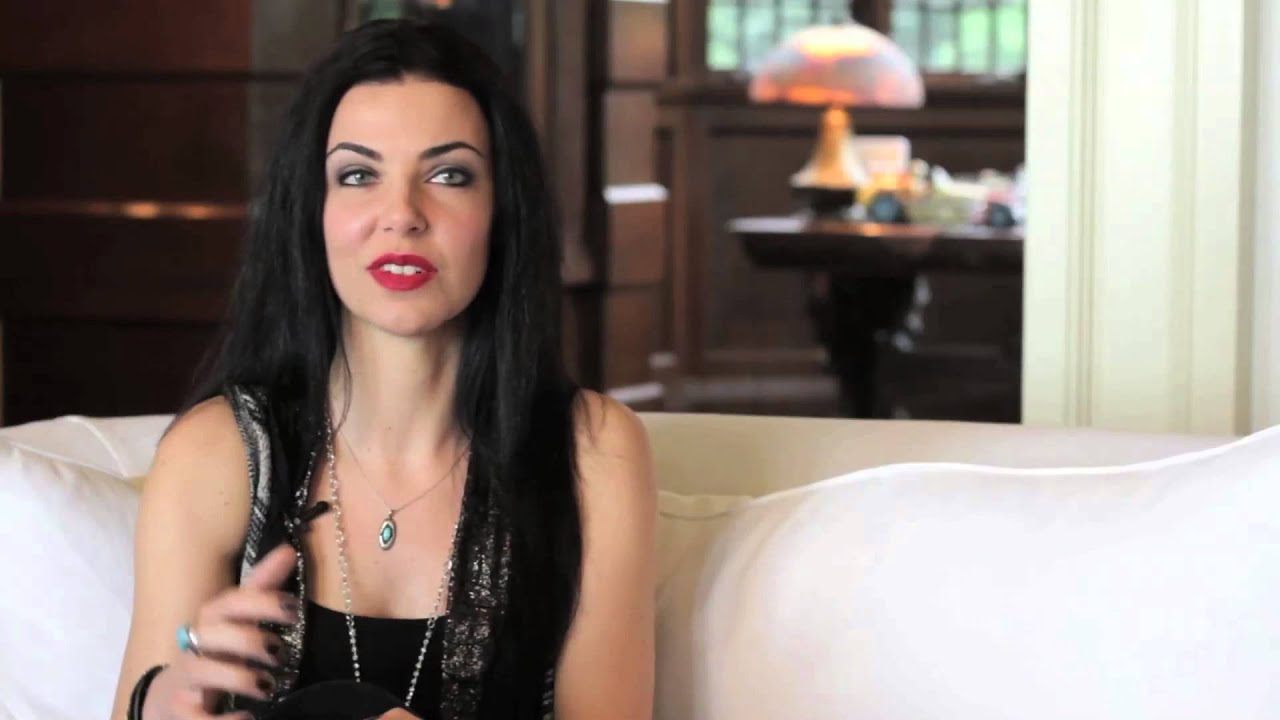
Exclusively represented by RJD Gallery in Sag Harbor and Bridgehampton, New York since 2009/2010. Also shows with Dorothy Circus Gallery in London and Rome.
Market and Reception
Collector Demand
Her shows routinely sell out before opening. For her 2017 exhibition “Into the Wind,” collectors purchased paintings before the compositions were fully developed.
According to her gallery, collectors now reserve works one to two years in advance. The waiting list reflects sustained demand.
Price Range
Original paintings are available exclusively through RJD Gallery. Pricing reflects her position as an established mid-career artist with museum representation.
Limited edition prints offer more accessible entry points. Editions typically run 10 prints per image. Several editions have sold down to one or two remaining.
Auction History
Limited auction presence. Most sales occur through gallery channels. MutualArt records show some secondary market activity, with one recorded sale of $1,050 through Leslie Hindman Auctioneers in 2020.
The scarcity of auction results reflects collector retention and the controlled distribution through her exclusive gallery.
Critical Reception
Featured on the covers of American Art Collector, The Artist’s Magazine, Direct Art, Spectrum, Revue, Hi-Fructose, and Southwest Art, among others.
2024 winner of the Beautiful Bizarre Art Prize Musonium Grand Prize Award.
Southwest Art named her one of “21 Under 31” rising stars in 2011.
Influence and Legacy
Upstream Influences
Andrew Wyeth: The most cited comparison. Both share commitment to rural American subjects and technical precision. Kowch herself names Wyeth as an influence.
Northern Renaissance Masters: The attention to detail, symbolic imagery, and atmospheric effects echo artists like Pieter Bruegel the Elder.
Georgia O’Keeffe: Kowch has mentioned O’Keeffe as an artist she would want to meet. Both women demonstrate deep connection to specific landscapes.
Winslow Homer: Critics note similarities in the treatment of solitary figures within expansive natural settings.
Edward Hopper: The psychological isolation of figures connects to Hopper’s tradition, though Kowch’s settings are rural rather than urban.
Downstream Impact
As a relatively young artist (born 1986), her long-term influence remains to be determined. However, she has already shaped the conversation around contemporary magical realism in American painting.
She serves as an adjunct professor at her alma mater, the College for Creative Studies, directly influencing the next generation of figurative painters.
Cross-Domain Connections
Her work has been compared to the films of Alfred Hitchcock for its underlying narrative tension and sense of lurking mystery.
The theatrical quality of her compositions suggests connections to stage design and cinematic framing.
How to Recognize an Andrea Kowch at a Glance

- Female figures with contemplative, distant expressions who rarely make eye contact
- Rural Midwestern landscapes featuring wide horizons and dramatic skies
- Wind effects visible in grass, hair, and fabric
- Animals (crows, ravens, foxes, horses, rabbits) appearing as symbolic presences
- Weathered architecture including barns with peeling paint and worn farmhouses
- Large canvas sizes with horizontal orientation (60×84 or 60×72 inches common)
- Earth-toned palette with muted yellows, soft grays, warm browns
- Period clothing suggesting early-to-mid 20th century
- Precise, controlled brushwork with smooth surfaces and meticulous detail
- Low horizon lines giving prominence to expansive skies
- Signature placement: Typically lower right corner, small and integrated into the composition
Conclusion
Andrea Kowch has carved out a distinct place within narrative figurative painting. Her atmospheric rural compositions speak to something timeless about the American experience.
The work keeps drawing collectors and museum acquisitions alike. That says something.
She proves that representational fine art still has power in the contemporary gallery scene. Her allegorical paintings offer emotional depth without sacrificing technical skill.
For anyone interested in women figurative realist painters working today, her career offers a compelling case study. The Midwestern landscape has found its voice through her brush.