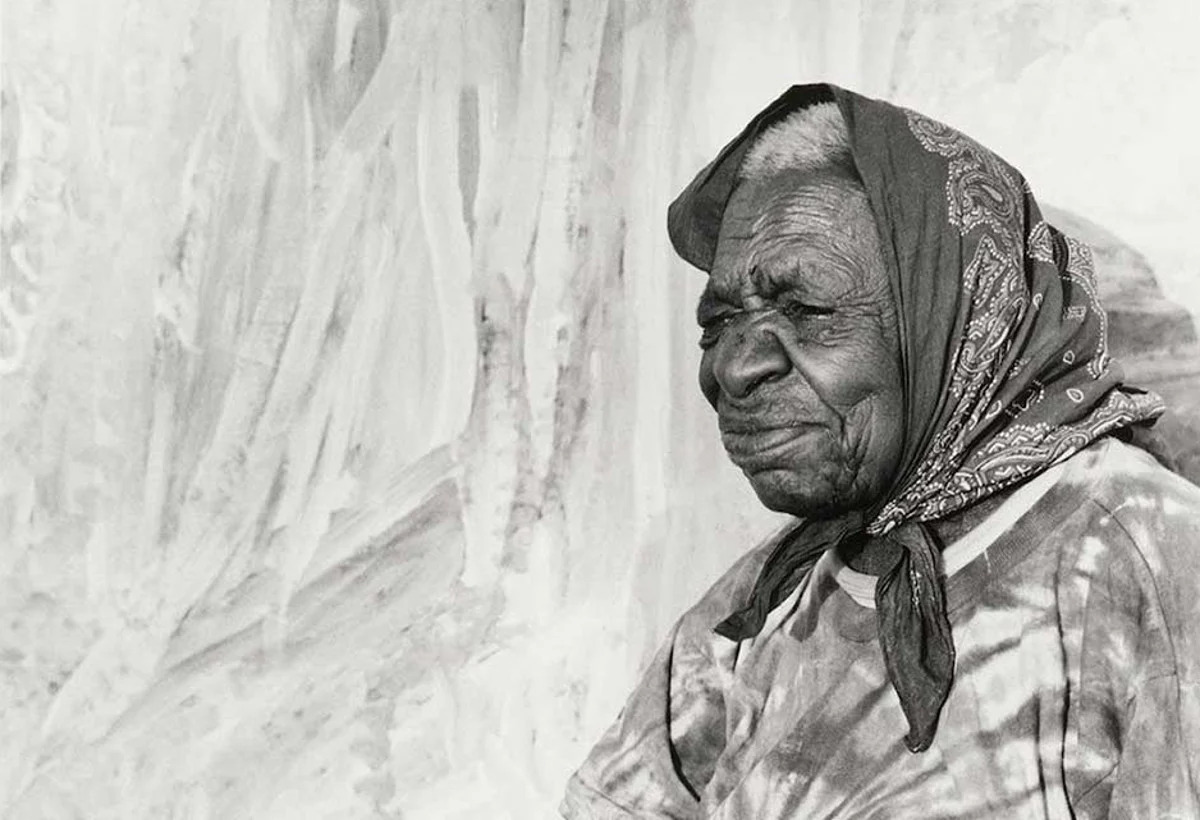

Emily Kame Kngwarreye stands as one of Australia’s most significant contemporary artists. She was an Indigenous Australian painter from the Anmatyerre people who only began working with acrylic painting in her late seventies.
Her eight-year career produced over 3,000 paintings. That’s roughly one painting per day.
Born around 1910 at Alhalkere in the Utopia Homelands of the Northern Territory, she died on September 2, 1996. Her work reshaped how the world perceives Aboriginal art and desert painting traditions.
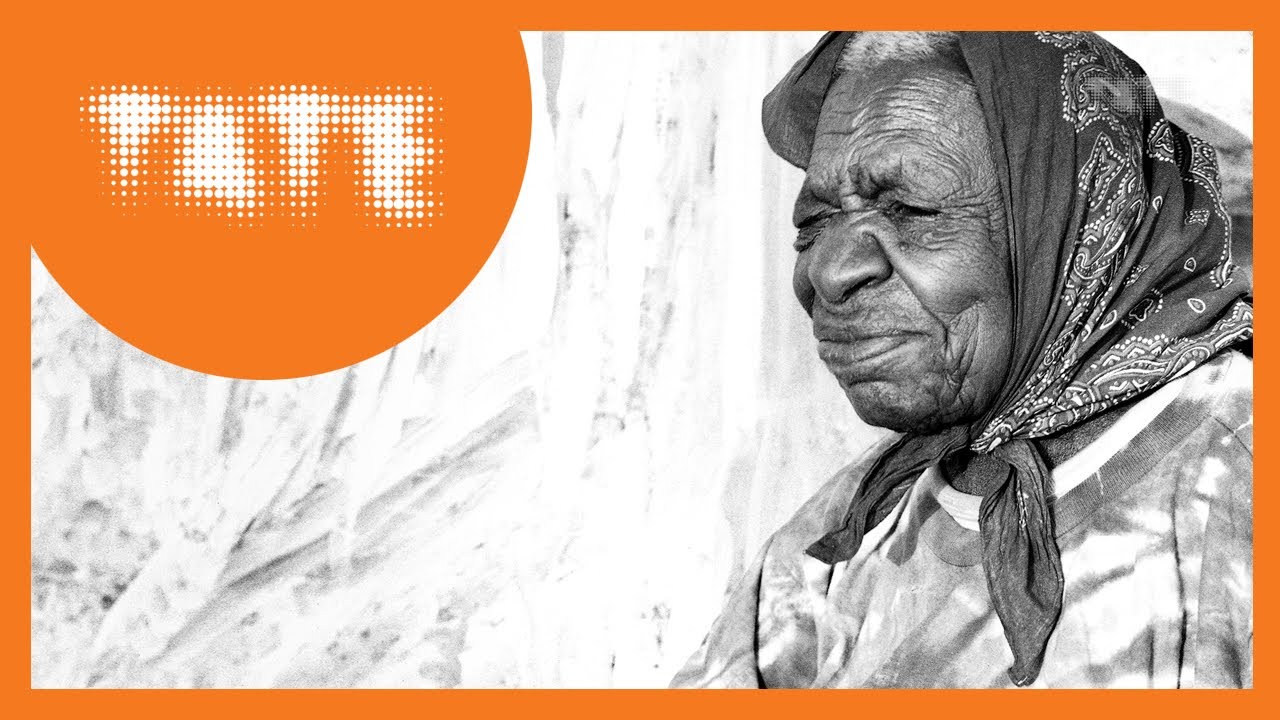
The late blooming painter became the highest-paid female artist in Australian history. Her posthumous recognition continues through major retrospectives at institutions like the Tate Modern in 2025.
Identity Snapshot
- Name: Emily Kame Kngwarreye (also spelled Emily Kam Kngwarray)
- Also known as: “Emily” or “Boss Woman”
- Lifespan: c. 1910-1996
- Primary roles: Painter, Batik Artist, Ceremonial Leader
- Nationality: Indigenous Australian, Anmatyerre people
- Movement: Western Desert Art Movement, Contemporary Indigenous Art
- Mediums: Synthetic polymer (acrylic) on linen and canvas, batik on silk and cotton
- Signature traits: Layered dots, gestural brushwork, “dump dump” technique, aerial perspective
- Iconography: Yam Dreaming (Kame), Emu Dreaming, Awelye ceremonial designs, bush medicine plants
- Geographic anchors: Alhalkere, Utopia Station, Northern Territory (250km northeast of Alice Springs)
- Mentors: Utopia Women’s Batik Group; Jacob Jones (adopted father, important Law man)
- Key family artists: Barbara Weir (niece), Gloria Petyarre, Kathleen Petyarre, Ada Bird Petyarre
- Collections: National Gallery of Australia, Tate Modern, National Gallery of Victoria, Art Gallery of NSW, Vatican Museums, Queensland Art Gallery
- Market signals: Earth’s Creation sold for $2.1 million AUD (2017); first Aboriginal artwork to break $1 million at auction (2007)
What Sets Emily Kame Kngwarreye Apart
She knew nothing of Jackson Pollock, Willem de Kooning, or Mark Rothko. Yet critics constantly draw comparisons to these Abstract Expressionists.
The resemblance is purely visual. Her paintings came from ceremonial body paint traditions and Dreaming stories passed down through generations of Anmatyerre women.
She painted fast. Fearlessly. Often completing massive canvases without stepping back to assess them.
Her approach to color shifted with the seasons. Summer works burst with bright energy anticipating rain. Winter paintings carried deeper, more subdued tones.
Unlike Western artists who develop a single recognizable style, she moved through multiple phases in just eight years. Dotted fields gave way to parallel lines, which evolved into sweeping gestural strokes.

Origins and Formation
Early Life on Country
Emily was born at Alhalkere, a site named after a pierced rock formation. Her father’s Country. She first saw white people around age nine.
She worked as a stock hand on cattle stations. This was unusual for Aboriginal women at the time, typically assigned domestic duties.
Ceremonial Training
Long before touching a paintbrush, she mastered ceremonial body painting. The Awelye designs painted on women’s bodies during ritual became her visual vocabulary.
She held the title of “Boss Woman” for the Alatyeye (pencil yam) and Kame (yam seed) Dreamings. Her middle name, Kame, means yam seed.
Batik Period (1977-1987)
The Utopia Women’s Batik Group introduced her to Western art materials. She learned batik techniques alongside other community women.
Her silk batiks gained attention in exhibitions across Australia. The fluid designs on black fabric translated naturally to canvas later.
Canvas Breakthrough (1988)
CAAMA (Central Australian Aboriginal Media Association) brought acrylic paints to Utopia in 1988. Her first canvas work, “Emu Woman,” attracted immediate attention.
The transition was swift. Within months, galleries across Sydney, Melbourne, and Brisbane wanted her work.
Movement and Context
Position Within Aboriginal Art
The Western Desert Art Movement began at Papunya Tula in 1971. Men dominated this early phase of contemporary Indigenous art.
Emily changed that. She became the first female painter to achieve major recognition from this movement.
Her success opened doors for other Utopia women artists. Gloria Petyarre, Kathleen Petyarre, and Ada Bird Petyarre followed her path.
Comparative Positioning
Against Clifford Possum Tjapaltjarri: Both painted Dreamings from aerial perspectives. Tjapaltjarri used tighter geometric patterns and more structured compositions. Emily favored looser, more gestural approaches with less rigid spatial organization.
Against Dorothy Napangardi: Both employed dot techniques. Napangardi created precise, grid-like patterns in restrained black and white palettes. Emily worked with explosive color harmonies and organic, flowing arrangements.
Against Western abstract art: Her work resembles Color Field painting or Expressionism visually. But her process came from ceremonial practice, not art school theory. No influence from European painting styles whatsoever.
Materials, Techniques, and Process
Supports and Surfaces
She painted primarily on unstretched linen laid flat on the ground. Canvas rolls cut to size. Sometimes paper.
Working horizontally connected her to traditional sand drawing and body painting practices. She sat within the painting itself.
Paint Application
Synthetic polymer (acrylic) paint. Applied with brushes, sticks, and fingertips.
Her “dump dump” technique used large brushes laden with paint, pushed into the canvas so bristles parted and colors mixed directly on the surface.
Brushwork Evolution
- Early period (1988-1991): Fine dots partially obscuring symbolic elements
- Densely dotted phase (1992): Layered dots creating optical shimmer effects
- High colorist phase (1993-1994): Large brushes, blending techniques, looser composition
- Linear phase (1995-1996): Bold parallel stripes derived from Awelye body designs
- Final works (1996): Broad milky strokes in jewel tones
Palette Characteristics
Early works used traditional ochre tones. Red, yellow, black, white.
By 1990, she expanded to greys, purples, browns. Her high colorist phase brought tropical blues, vivid greens, and saturated yellows.
The “green time” paintings celebrate the desert after rain. Earth tones dominated her final yam series.
Themes, Subjects, and Iconography
Primary Dreaming Stories

When asked what she painted, her answer stayed consistent: “Whole lot, that’s whole lot.”
She listed: Awelye (women’s Dreaming), Arlatyeye (pencil yam), Arkerrthe (mountain devil lizard), Ntange (grass seed), Tingu (Dreamtime pup), Ankerre (emu), Intekwe (emu food plant), Atnwerle (green bean), Kame (yam seed).
Yam Symbolism
The pencil yam (anwerlarr) formed her central motif. Its tracking lines through desert sand. Its yellow flowers. Its edible seeds underground.
This wasn’t decoration. The yam represented her totemic identity, her ceremonial responsibility, her connection to Country.
Compositional Approaches
Aerial perspective dominated. Looking down at Country from above, like the ancestral spirits who created the land.
No horizon lines. No Western linear perspective. The pictorial space wrapped around the viewer.
Her compositions reject single focal points. Energy spreads across the entire surface with equal intensity.
Notable Works
Earth’s Creation (1994)
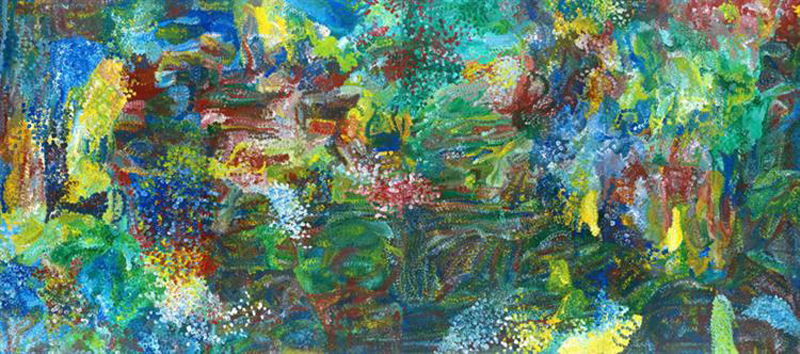
Dimensions: 275 x 632 cm (four panels) Medium: Synthetic polymer on linen mounted on canvas Location: Mbantua Gallery, Alice Springs
Visual signature: Swirling blues, greens, yellows representing the “green time” after desert rains. “Dump dump” technique creating layered texture.
Why it matters: Set auction records in 2007 ($1.056 million AUD) and 2017 ($2.1 million AUD). Highest price ever for a female Australian artist. Featured at the 2015 Venice Biennale.
Big Yam Dreaming (1995)
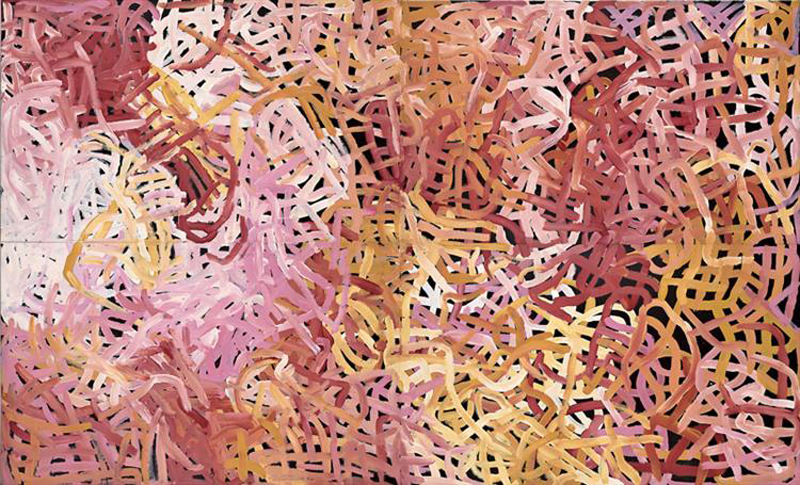
Dimensions: 291.1 x 801.8 cm Medium: Synthetic polymer on canvas Location: National Gallery of Victoria
Visual signature: Eight meters of tangled white skeins depicting yam roots. Painted in a single day with witnesses present.
Why it matters: Considered her greatest graphic statement. Permanently displayed at Federation Square.
The Alhalkere Suite (1993)

Dimensions: 22 panels, each 90 x 120 cm Medium: Synthetic polymer on canvas Location: National Gallery of Australia
Visual signature: Installation depicting Country after flooding and regeneration. Expressionist-style brushwork.
Why it matters: Created for the Joan and Peter Clemenger Contemporary Art Award. Demonstrates her capacity for large-scale installation thinking.
Emu Woman (1988-89)
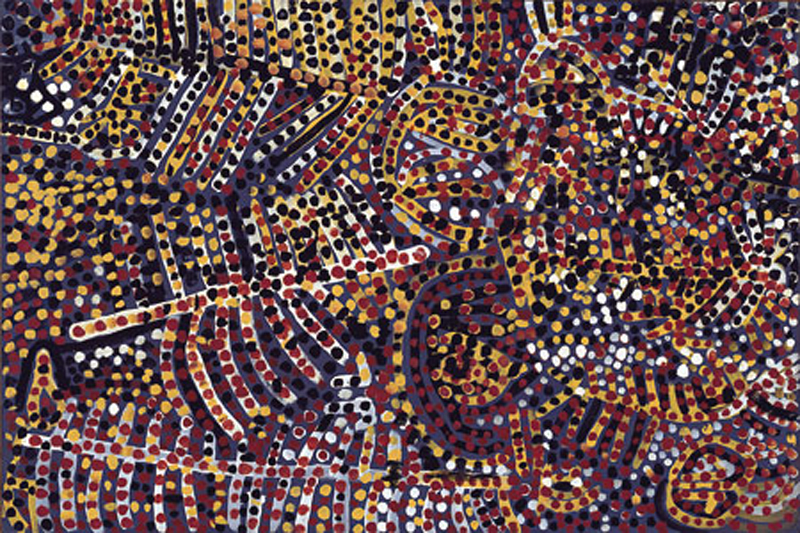
Dimensions: 92 x 61 cm Medium: Synthetic polymer on canvas Location: The Holmes a Court Collection
Visual signature: Her first canvas work. Densely dotted field with visible linear tracings.
Why it matters: The painting that launched her career. Acquired by Robert Holmes a Court collection.
Exhibitions, Collections, and Provenance
Major Retrospectives

- 1998: “Emily Kame Kngwarreye: Alhalkere – Paintings from Utopia” – Queensland Art Gallery, AGNSW, NGV (first nationally touring Aboriginal retrospective)
- 2008: “Utopia: The Genius of Emily Kame Kngwarreye” – National Museum of Art Osaka, National Art Center Tokyo, National Museum of Australia
- 2023-24: National Gallery of Australia retrospective, curated by Kelli Cole and Hetti Perkins
- 2025: Tate Modern, London (first major European solo exhibition)
Key Institutional Holdings
Australia: National Gallery of Australia, National Gallery of Victoria, Art Gallery of NSW, Queensland Art Gallery, Museum of Contemporary Art Australia, Araluen Arts Centre
International: Tate Modern (London), Vatican Museums, Kluge-Ruhe Aboriginal Art Collection (University of Virginia), Lowe Art Museum (University of Miami), National Museum of Women in the Arts (Washington D.C.)
Venice Biennale Representation
1997: Represented Australia posthumously alongside Yvonne Koolmatrie and Judy Watson in “Fluent” exhibition.
2015: Work featured prominently at the 56th Biennale di Venezia.
Key Dealers and Provenance
Delmore Gallery (Don and Janet Holt) commissioned over 1,500 works from 1989. These Delmore-provenance pieces tend to perform strongest at auction.
Other significant dealers: Utopia Art Sydney, Aboriginal Gallery of Dreamings (Melbourne), DACOU (Dreaming Art Centre of Utopia), D’Lan Contemporary.
Market and Reception
Auction Records
- 2007: Earth’s Creation I – $1,056,000 AUD (first Aboriginal artwork to break $1 million)
- 2017: Earth’s Creation I – $2.1 million AUD (record for female Australian artist)
- 2019: Summer Celebration (1991) – $596,000 USD at Sotheby’s New York
Price Bands
Major works from the high colorist period command the highest prices. Large-scale canvases with strong Delmore Gallery provenance fetch premium results.
Smaller works and studies regularly sell at auction for $20,000-100,000 AUD.
Authentication Concerns
Her prolific output and market success attracted forgers. The Northern Territory News reported an organized “school” of painters creating works in her style during the 1990s.
Provenance documentation and catalogue raisonne research remain critical for authentication. Works with direct gallery chain-of-custody command market confidence.
Influence and Legacy
Upstream Influences
Papunya Tula and the broader Western Desert Art Movement provided the context for contemporary Aboriginal painting on canvas.
Geoffrey Bardon’s work with Papunya artists in the 1970s established the visual vocabulary of dot painting that Emily transformed.
Downstream Impact
Her nieces became significant artists: Gloria Petyarre, Kathleen Petyarre, Ada Bird Petyarre, Violet Petyarre, Nancy Petyarre.
Barbara Weir, her adopted daughter, developed her own acclaimed practice.
The “dump dump” technique spread through Utopia. Artists like Polly Ngale and Freddy Purla adopted and adapted her methods.
Cross-Cultural Recognition
Robert Hughes (Time magazine critic) called Aboriginal art “the last great art movement of the 20th century.” Emily stood at its center.
Her work bridged Indigenous cultural tradition and international contemporary art markets. Collectors began viewing Aboriginal art as fine art rather than ethnographic artifact.
Comparisons to Claude Monet‘s late water lily paintings and Henri Matisse‘s cut-outs place her within global art historical conversations, though she worked in complete isolation from these traditions.
How to Recognize an Emily Kame Kngwarreye at a Glance

- Aerial perspective: View from above, no horizon line, all-over composition
- Dotted fields: Overlapping, varied-size dots creating optical shimmer (especially early works)
- Yam tracking lines: Sinuous linear elements underlying or overlaying dot patterns
- Earth-tone palette: Ochres, reds, blacks in early work; expanded to blues, greens, purples later
- “Dump dump” marks: Thick paint pushed into canvas with splayed bristles (mid-career)
- Bold parallel stripes: Awelye-derived linear compositions (late period)
- Large scale: Many works exceed 2 meters in at least one dimension
- Unstretched linen: Worked flat on ground, often painted from multiple angles
- Signature placement: Often inscribed on reverse with documentation by gallery representatives
- Seasonal indicators: Bright, energetic colors suggest summer; subdued tones indicate winter subjects
Her style evolved rapidly across distinct phases. A single recognition checklist can’t cover everything. Look for the underlying Awelye body paint logic and the yam root tracking that connected all her periods.
FAQ on Emily Kame Kngwarreye
Who was Emily Kame Kngwarreye?
Emily Kame Kngwarreye was an Indigenous Australian painter from the Anmatyerre people. She lived in the Utopia community, Northern Territory.
Born around 1910, she became one of Australia’s most significant contemporary artists. Her career spanned just eight years before her death in 1996.
Why did Emily Kame Kngwarreye start painting so late in life?
She began painting on canvas in her late seventies after decades of ceremonial practice. The Utopia Women’s Batik Group introduced her to Western art materials in 1977.
Canvas painting came later in 1988 when CAAMA brought acrylic paints to Utopia Station.
What is Emily Kame Kngwarreye famous for?
Her Dreaming stories translated into bold visual language. Works like Earth’s Creation and Big Yam Dreaming established her international reputation.
She produced over 3,000 paintings depicting her ancestral Country, Alhalkere, and Yam Dreaming ceremonies.
What techniques did Emily Kame Kngwarreye use?
She developed multiple approaches including layered dot painting and her signature “dump dump” method. This involved pushing paint-laden brushes into canvas.
Her techniques drew from Awelye ceremonial body painting traditions rather than Western painting mediums or formal training.
How much are Emily Kame Kngwarreye paintings worth?
Her auction record stands at $2.1 million AUD for Earth’s Creation in 2017. This made her Australia’s highest-paid female artist.
Smaller works typically sell between $20,000 and $100,000 AUD depending on period and provenance documentation.
What does “Kame” mean in her name?
Kame means yam seed in the Anmatyerre language. It references her totemic connection to the pencil yam plant.
The yam’s yellow flowers, seeds, and underground roots became her primary artistic subject throughout her career.
Where can I see Emily Kame Kngwarreye’s art?
Major holdings exist at the National Gallery of Australia, National Gallery of Victoria, and Queensland Art Gallery. International collections include Tate Modern and Vatican Museums.
The 2025 Tate Modern retrospective marks her first large-scale European exhibition.
How did Emily Kame Kngwarreye influence other artists?
She opened doors for Aboriginal women artists in the Western Desert art movement. Her nieces Gloria Petyarre, Kathleen Petyarre, and Ada Bird Petyarre followed her path.
Artists like Yayoi Kusama share her interest in repetition and dotted fields.
Why is Emily Kame Kngwarreye compared to Abstract Expressionists?
Her gestural brushwork and composition resemble works by Western abstract painters. Critics note visual similarities to Color Field painting.
But she never saw their work. Her visual language came entirely from ceremonial traditions and desert landscape.
What is the “dump dump” painting technique?
Emily developed this method in her high colorist phase around 1993. She loaded large brushes with paint and pushed them onto canvas.
The bristles parted on impact, mixing colors directly on the surface. This created rich pattern and visual rhythm.
Conclusion
Emily Kame Kngwarreye reshaped contemporary Indigenous art in ways few artists ever achieve. Her eight-year career produced a body of work that continues commanding museum retrospectives and auction records decades after her death.
She painted the whole lot. Yam Dreaming. Emu stories. Awelye ceremonies. The desert landscape of Alhalkere.
Her artistic legacy extends beyond the Northern Territory. From the National Gallery of Australia to the 2025 Tate Modern exhibition, her Anmatyerre cultural traditions now speak to global audiences.
The late career painter became an Australian national treasure.