Anna Weyant is a Canadian figurative painter known for her technically refined oil paintings of young women and still lifes. She works primarily with oil on canvas and panel, creating scenes that blend influence from Dutch Golden Age masters with contemporary popular culture references.
Her work occupies a distinctive position within contemporary realism. She sits at the intersection of classical technique and modern irony.
Born in 1995, Weyant represents a new generation of painters who embrace traditional methods while addressing current themes. She’s based in New York City and remains one of the youngest artists represented by a major blue chip gallery.
Identity Snapshot
- Full Name: Anna Weyant
- Lifespan: 1995 – present
- Primary Role: Painter
- Nationality: Canadian
- Movement: Contemporary Figurative Realism
- Mediums: Oil on canvas, oil on panel, oil on linen, graphite on paper
- Signature Traits: Muted palette (deep greens, dusty pinks, blacks), tight controlled brushwork, dramatic chiaroscuro
- Iconography: Young female figures, domestic interiors, wilting flowers, unsettling still life arrangements
- Geographic Anchors: Calgary (birthplace), New York City (current residence and studio)
- Education: Rhode Island School of Design (BFA 2017), China Academy of Art, Hangzhou
- Gallery Representation: Gagosian Gallery (since May 2022), formerly Blum & Poe
- Collections: Los Angeles County Museum of Art, private collections worldwide
- Market Signals: Auction record $1.62 million (Falling Woman, Sotheby’s 2022)
What Sets Anna Weyant Apart
Weyant’s work stands out through what she calls “low-stakes trauma.” Her figures endure everyday awkwardness rather than grand tragedy.
The technical execution recalls seventeenth-century Dutch masters. But the content is decidedly contemporary, almost absurd at times.
She avoids the “distraction of color” by limiting her palette to muted earth tones. This creates psychological weight without visual noise.
Her still lifes include objects that feel wrong somehow. A loaf of bread looks like a stabbed head. Fish on a plate resemble sharks. Flowers wilt beside revolvers tied with gold ribbon.
The paintings walk a line between charm and menace. Viewers often laugh before feeling unsettled.

Origins and Formation
Early Training
Weyant grew up in Calgary, Alberta before relocating to the United States for art school. She earned her Bachelor of Fine Arts in painting from Rhode Island School of Design in 2017.
During her second year at RISD, she saw an exhibition at Brown University called “SHE: Picturing Women at the Turn of the Twenty-First Century.” That show, featuring George Condo and Cindy Sherman among others, changed everything for her.
She also studied at the China Academy of Art in Hangzhou. This additional training added depth to her technical foundation.
First Stylistic Inflections
Her early work drew heavily from other artists she admired. She describes trying to emulate them as feeling like “Goldilocks trying to get comfortable in someone else’s house.”
The muted palette emerged early. Subdued greens, dusty pinks, and deep blacks became her visual language.
Pivotal Moves
After graduation, Weyant moved to New York City. She worked as a studio assistant while developing her own practice.
Her brother Austin Weyant, an actor, joined her in Manhattan. The city became her permanent base.
First Exhibitions
Weyant’s breakthrough came in 2019 when her work was discovered on Instagram. Her debut solo show “Welcome to the Dollhouse” at 56 Henry in New York sold out completely.
Collectors responded immediately to her dreamlike, slightly disturbing paintings of young women. The art world took notice.
Movement and Context
Position Within Contemporary Figurative Painting

Weyant operates within contemporary figurative realism but resists easy categorization. She’s neither pure traditionalist nor ironic appropriator.
Her work responds to the renewed interest in craft-based painting that emerged in the 2010s. But she adds psychological complexity that sets her apart from market-ready prettiness.
Comparative Analysis
Versus John Currin: Both reference Old Masters and employ technical virtuosity. Currin’s figures tend toward exaggeration and grotesque sexuality. Weyant’s characters feel more vulnerable, caught in moments of quiet awkwardness rather than overt provocation.
Versus Edward Hopper: Weyant shares Hopper’s interest in isolated figures and psychological tension. Her interiors carry similar loneliness. But where Hopper’s color runs warm with afternoon light, Weyant’s palette stays cooler, more muted.
Versus Balthus: Both painters explore youth and domestic space with unsettling undertones. Weyant’s approach feels less predatory, more sympathetic to her subjects’ predicaments.
Materials, Techniques, and Process
Supports and Grounds
Weyant works primarily on canvas and panel. Her standard canvas sizes include 48 x 36 inches, though she varies dimensions based on subject.
She also uses linen for certain pieces. The choice of support affects the final surface quality and paint absorption.
Working Method
Unlike many contemporary painters, Weyant doesn’t maintain a traditional studio space. She paints from her living room in her Upper West Side apartment.
For still lifes, she sets up actual arrangements and paints from observation. This follows Dutch traditions of working directly from life setups.
When uncertain about a painting, she puts it in her closet. “It’s almost like a time-out until the painting learns to behave itself,” she has said.
Brushwork and Technique
Her brushwork is tight and controlled, particularly in earlier works. The precision allows for luminous effects in rendering skin and fabric.
She employs dramatic chiaroscuro to create mood. Light sources within the paintings feel theatrical, almost cinematic.
The value structure of her work carries significant weight. Dark backgrounds push figures forward while maintaining atmospheric depth.
Palette Archetype
Weyant deliberately restricts her color choices. Deep greens, dusty pinks, muted yellows, and blacks dominate.
She describes this limitation as avoiding “the distraction of color.” The restraint creates cohesion across her body of work while focusing attention on form and narrative.
Themes, Subjects, and Iconography
Recurring Motifs
Young women appear throughout Weyant’s work. They’re often caught in moments of self-consciousness, awkwardness, or quiet distress.
Domestic interiors frame these figures. Curtains, polished wood furniture, carpets. The spaces feel simultaneously familiar and claustrophobic.
Still lifes include deliberately unsettling elements. Flowers wilt. Food appears threatening. Objects adopt “an uncanny, portentous air.”
Compositional Approaches
Weyant frequently uses doubling. Two figures with similar features appear together, raising questions about identity and reflection.
Her compositions often reference dollhouse-like settings. Early works depicted miniature inhabitants in scaled interiors.
Windows and mirrors recur. Figures peer through curtains or catch their reflections, adding layers of concealment and exposure.
Thematic Concerns
Femininity and its social construction run through the work. Weyant examines “the coded rituals of femininity” and how popular culture shapes female identity.
She’s interested in what she calls “devious, semi-sympathetic characters.” Her subjects misbehave within structured environments.
Humor coexists with unease. “If there’s humor in my work,” Weyant has said, “it probably goes hand in hand with some sort of weird misery.”
Notable Works
Falling Woman (2020)

- Medium: Oil on linen
- Size: 48 x 36 inches (121.9 x 91.4 cm)
- Current Location: Private collection
- Visual Signature: Inverted female figure, muted tones, gravity-affected anatomy
- Why It Matters: Set auction record of $1.62 million at Sotheby’s in May 2022. The title plays on “fallen woman.” Weyant cited an Edward Gorey illustration as inspiration. Featured on the cover of Jen Beagin’s novel “Big Swiss” (2023).
Two Eileens (2022)

- Medium: Oil on canvas
- Size: 152.7 x 122.2 cm
- Current Location: Private collection
- Visual Signature: Doubled figure, slight pose variations, biblical reference
- Why It Matters: Featured on the cover of Gagosian Quarterly (Winter 2022). The subject is Weyant’s friend Eileen Kelly. Explores identity through doubling, suggesting different aspects of the same persona.
Loose Screw (2020)

- Medium: Oil on canvas
- Size: 48 x 36 inches (121.9 x 91.4 cm)
- Current Location: Private collection
- Visual Signature: Smiling woman in profile, mysteriously bandaged hand, wine glass
- Why It Matters: Title work of her sold-out 2021 exhibition at Blum & Poe, Los Angeles. The bandaged hand hints at narrative without revealing it.
Buffet II (2021)

- Medium: Oil on canvas
- Size: 48 x 60 1/4 inches (121.9 x 153 cm)
- Visual Signature: Still life arrangement, sepia tones, anthropomorphic objects
- Why It Matters: Sold at Phillips for $735,000 in May 2022. Demonstrates her ability to infuse still life tradition with dark humor. Objects suggest violence beneath domestic normalcy.
Lily (2021)

- Medium: Oil on canvas
- Visual Signature: Flower paired with revolver bound in gold ribbon
- Why It Matters: Exemplifies her approach to unsettling juxtaposition. Beautiful and threatening objects share the same space without explanation.
Exhibitions, Collections, and Provenance
Solo Exhibitions
- 2025: Anna Weyant, Museo Nacional Thyssen-Bornemisza, Madrid (first institutional solo)
- 2024: Who’s Afraid Of The Big Bad Wolves?, Gagosian, London
- 2023: The Guitar Man, Gagosian, Paris
- 2022: Baby, It Ain’t Over Till It’s Over, Gagosian, New York
- 2022: Splinter, Blum & Poe, Tokyo
- 2021: Loose Screw, Blum & Poe, Los Angeles
- 2021: Anna Weyant: Drawings, Winter Street Gallery, Edgartown, MA
- 2019: Welcome to the Dollhouse, 56 Henry, New York
Notable Group Exhibitions
- 2025: Copistes, Centre Pompidou-Metz, Metz, France
- 2024: Gallery Met Banners, Metropolitan Opera, Lincoln Center, New York
- 2024: Breasts, ACP Palazzo Franchetti, Venice
- 2023: Friends & Lovers, Flag Art Foundation, New York
- 2022: Women of Now, Green Family Art Foundation, Dallas
Museum Holdings
Los Angeles County Museum of Art holds work by Weyant. Her paintings also appear in significant private collections globally.
Gallery Representation
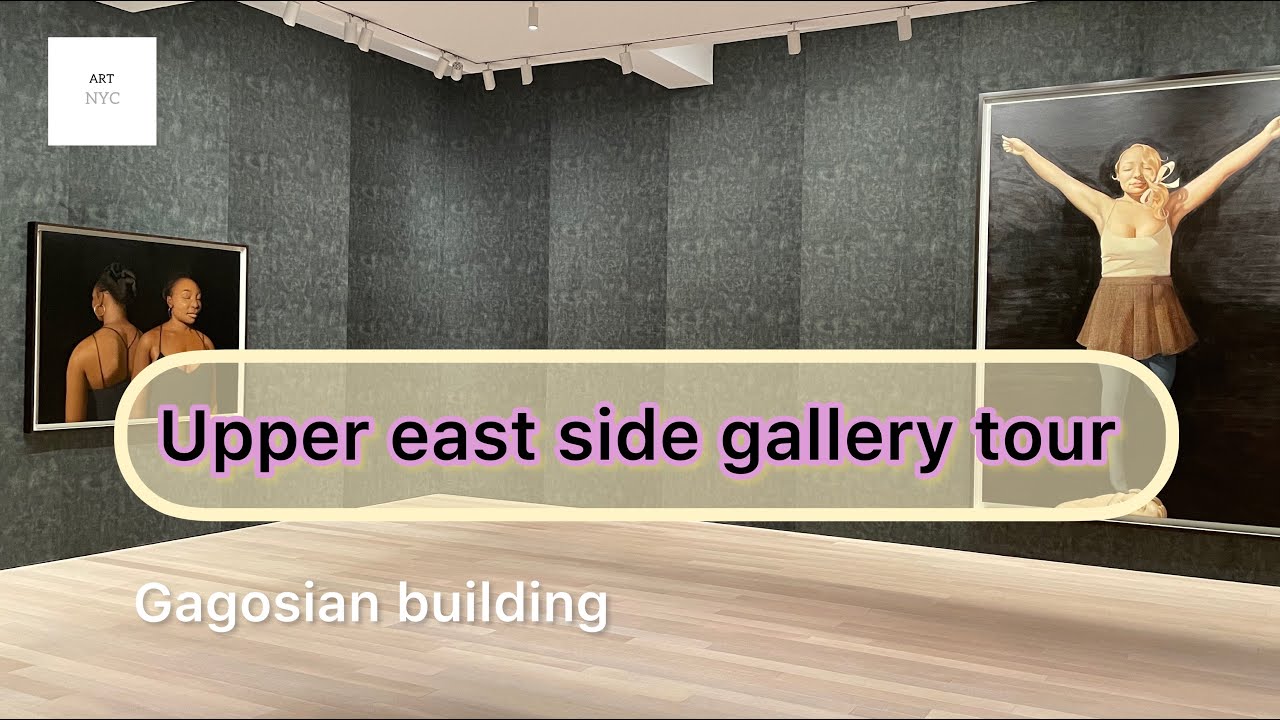
Gagosian Gallery announced representation in May 2022, making Weyant one of its youngest artists. She was previously represented by Blum & Poe.
Market and Reception
Auction Performance
Weyant’s auction record stands at $1.62 million for “Falling Woman” (2020), achieved at Sotheby’s New York in May 2022. The painting had been estimated at $150,000-$200,000.
The same week, “Summertime” (2020) sold at Christie’s for $1.5 million, several times above its $300,000 high estimate.
“Buffet II” (2021) achieved $735,000 at Phillips, 495% above the estimated high.
Her work has been offered at auction multiple times since 2021, with prices ranging from under $1,000 for prints to over $1.6 million for major paintings.
Critical Reception
Reviews have been mixed. Rae Niwa in Flaunt praised her “meticulous approach to color and line” and noted “spaciousness and lightness in the work.”
Alex Greenberger at ARTnews was less impressed, calling her 2022 Gagosian debut “an overly safe dud” and “just another market-ready figurative painting show.”
Coverage in GQ, Vogue, and The New Yorker has emphasized her technical skill while noting the controversy surrounding her rapid ascent.
Market Context
Weyant emerged during a period of intense collector interest in young figurative painters. Her work appealed to buyers seeking technically accomplished painting with contemporary sensibility.
The secondary market activity has been described as somewhat disconnected from Weyant herself. “The secondary market, it’s out of my hands,” she has said. “I’m not involved physically or emotionally.”
Influence and Legacy
Upstream Influences
Dutch Golden Age painters form her primary art historical foundation. She specifically cites Frans Hals, Judith Leyster, and Gerrit van Honthorst.
Peter Paul Rubens and Rembrandt also inform her approach to value and form.
Twentieth-century figures include Balthus, whose unsettling domestic scenes parallel her interests, and Rene Magritte, whose surrealist sensibility appears in her representational choices.
Contemporary influences include John Currin, Lisa Yuskavage, Ellen Berkenblit, Jennifer Packer, and Ella Kruglyanskaya.
Non-art influences range from Edward Gorey illustrations to Todd Solondz films to Sofia Coppola’s cinematography.
Downstream Impact
As a young artist who achieved rapid market success, Weyant represents a model (or cautionary tale, depending on perspective) for emerging painters.
Her embrace of classical technique while addressing contemporary themes has encouraged other young artists to work in traditional modes without abandoning relevance.
Cross-Domain Connections
Weyant’s work has crossed into fashion and publishing. She painted Kaia Gerber for Vogue’s December 2024 cover.
“Falling Woman” appeared on the cover of Jen Beagin’s novel “Big Swiss” (2023).
She collaborated with The Hundreds on a bandana edition in 2020.
In 2025, she was appointed to the 2026 Met Gala host committee.
How to Recognize an Anna Weyant at a Glance

- Palette: Restricted to muted greens, dusty pinks, pale yellows, and deep blacks. Limited color variety creates cohesion.
- Subject Matter: Young women in domestic settings, or still lifes with unsettling elements. No landscapes or abstractions.
- Lighting: Dramatic chiaroscuro with theatrical light sources. Dark backgrounds push figures forward.
- Brushwork: Tight, controlled, precise. Smooth surfaces rather than visible impasto.
- Mood: Tragicomic tension. Humor mixed with unease. Something feels slightly wrong.
- Canvas Size: Often 48 x 36 inches for figures. Smaller formats for drawings and studies.
- Signature Placement: Typically signed and dated on the reverse.
- Figure Types: Young women with expressive faces, often captured in awkward poses or expressions. Self-conscious body language.
- Still Life Objects: Flowers (often wilting), fruit, food items that seem threatening, unexpected pairings (lilies with revolvers).
- Historical Echo: Clear debt to Dutch Golden Age painting visible in composition and technique, but with modern ironic distance.
FAQ on Anna Weyant
Who is Anna Weyant?
Anna Weyant is a Canadian figurative painter born in Calgary in 1995. She creates oil paintings of young women and still lifes using classical techniques with contemporary themes. She currently lives and works in New York City.
What is Anna Weyant known for?
Weyant is known for her technically refined paintings that blend Dutch Golden Age influence with dark humor. Her work features muted palettes, psychological tension, and tragicomic narratives about femininity and domestic life.
Where did Anna Weyant study art?
Weyant earned her Bachelor of Fine Arts from Rhode Island School of Design in 2017. She also studied at the China Academy of Art in Hangzhou. Both programs strengthened her foundation in oil painting technique.
Which gallery represents Anna Weyant?
Gagosian Gallery has represented Weyant since May 2022, making her one of its youngest artists. She was previously with Blum & Poe. Her solo exhibitions have appeared in New York, London, Paris, and Tokyo.
What style does Anna Weyant paint in?
Weyant works in contemporary figurative realism influenced by seventeenth-century Dutch masters. Her painting style features tight brushwork, dramatic lighting, and a restricted palette of greens, pinks, and blacks.
How much do Anna Weyant paintings sell for?
Her auction record is $1.62 million for “Falling Woman” at Sotheby’s in 2022. Prices range widely based on size and medium. Major oil on canvas works command six to seven figures at auction.
What artists influenced Anna Weyant?
Dutch masters like Frans Hals, Johannes Vermeer, and Judith Leyster inform her technique. Contemporary influences include John Currin and Lisa Yuskavage. She also cites Balthus and filmmakers like Sofia Coppola.
What themes does Anna Weyant explore in her work?
Weyant explores femininity, vulnerability, and what she calls “low-stakes trauma.” Her paintings examine social conventions, coded rituals of female identity, and the tension between charm and unease in domestic scenes.
Where can you see Anna Weyant artwork?
The Los Angeles County Museum of Art holds her work. Gagosian galleries show her paintings regularly. Her 2025 solo exhibition at Museo Nacional Thyssen-Bornemisza in Madrid was her first major museum show.
Why did Anna Weyant become famous so quickly?
Her 2019 Instagram discovery led to a sold-out debut show. Gagosian representation and record auction results followed. Technical skill combined with art world connections accelerated her rise, though this trajectory sparked debate among critics.
Conclusion
Anna Weyant has carved out a singular position in the contemporary art market. Her paintings merge Old Master precision with unsettling modern narratives.
Whether you find her work captivating or calculated, the technical skill is undeniable.
Young female figures caught in quiet distress. Still lifes that feel somehow threatening. These visual elements have resonated with collectors worldwide and pushed her auction results into seven figures.
At just under thirty years old, her career trajectory continues to spark both admiration and debate. What comes next remains worth watching.