A child’s face stares back with adult rage.
Yoshitomo Nara creates paintings that bypass language and pierce straight through to something raw. Born in rural northern Japan in 1959, he turned childhood isolation into a visual vocabulary recognized worldwide.
His big-headed children with piercing eyes don’t ask for sympathy.
They demand you look back.
This guide covers Nara’s journey from a latchkey kid listening to American military radio in Aomori to becoming the most expensive Japanese artist at auction. You’ll understand his techniques, from early rough-textured canvases to the pearlescent surfaces of his mature work.
We’ll examine his famous pieces like Knife Behind Back, explore his punk rock influences, and show you how to recognize his work instantly.
Whether you’re a collector tracking contemporary Japanese art or someone who felt something looking at one of those defiant little faces, you’ll leave knowing why Nara’s work hits so hard.
Identity Snapshot
Born: December 5, 1959, Hirosaki, Aomori Prefecture, Japan
Japanese: 奈良 美智 (Nara Yoshitomo)
Primary roles: Painter, sculptor, printmaker, installation artist, photographer
Lives and works: Nasushiobara, Tochigi Prefecture, Japan
Nationality: Japanese
Movements: Neo Pop, Japanese contemporary art, post-Superflat
Education:
- BFA, Aichi Prefectural University of Fine Arts and Music (1985)
- MFA, Aichi Prefectural University of Fine Arts and Music (1987)
- Kunstakademie Düsseldorf, Germany (1988-1993)
- Meisterschüler under A.R. Penck (1993)
Mediums: Acrylic on canvas, acrylic on wood panel, acrylic on paper, drawing (pencil, colored pencil, marker), bronze sculpture, FRP (fiber-reinforced plastic), ceramic, installation
Signature traits: Big-headed children with piercing eyes, flat application with subtle layering, wide-eyed stares, defiant expressions, minimalist backgrounds, pearlescent surfaces in later work
Iconography: Solitary children, small knives and weapons, puppies and dogs, text fragments, punk imagery, cigarettes
Geographic anchors: Hirosaki (birthplace), Cologne (1994-2000), Tokyo (2000-2011), Nasushiobara (2011-present), Düsseldorf (studies)
Key mentors: A.R. Penck (Kunstakademie Düsseldorf)
Collections: Museum of Modern Art (MoMA), Los Angeles County Museum of Art (LACMA), Yokohama Museum of Art, Aomori Museum of Art, Asia Society, Museum of Fine Arts Boston, Tate Modern
Market signals: Record auction: Knife Behind Back (2000) sold for $24.9 million USD (HK$195.7 million) at Sotheby’s Hong Kong, October 2019. Common formats: 150 x 140 cm paintings, 234 x 208 cm large-scale canvases, 45 x 38 cm wood panels, drawings on used envelopes and paper scraps
What Sets Nara Apart

a
Nara distills childhood rage and solitude into wide-eyed confrontations that bypass language. His figures stare back with adult emotions packed into cartoon bodies.
Unlike Takashi Murakami‘s slick Superflat graphics, Nara’s work preserves painterly texture and hand-drawn immediacy. He rejects digital polish.
The knife behind the back matters more than the knife in view. What’s hidden carries more menace.
His surfaces appear simple until you stand close. Then you see layers built up, sanded down, rebuilt.
Punk rock plays constantly in his studio, bleeding into every brushstroke.
Origins & Formation
Early Years (1959-1979)
Born into a working-class family during Japan’s postwar economic boom. Both parents worked long hours.
Youngest of three boys but raised essentially as an only child due to age gaps. Spent most childhood hours alone with pets, television, imagination.
Watched American and Japanese cartoons: Astro Boy, Gigantor, Speed Racer. Read picture books obsessively.
Listened to American military radio station Far East Network broadcasting from Honshu. Couldn’t understand English lyrics but absorbed the emotional frequencies.
At age nine, discovered Western folk and rock music through radio. Began collecting album covers, which became his first art education.
Introverted and sensitive. Struggled to fit in with other children.
Too empathetic to join boys smashing anthills. Turned inward instead.
Art Education (1979-1993)
1979-1981: Briefly attended Musashino Art University before transferring.
1981-1985: Aichi Prefectural University of Fine Arts and Music, BFA. During high school, took nude sketching class and recognized drawing as natural outlet.
1985-1987: Continued at Aichi for MFA. Began developing early painting vocabulary.
1988: Moved to Germany, enrolled at Kunstakademie Düsseldorf. The relocation proved transformative.
1988-1993: Studied under various instructors at Düsseldorf. Absorbed German Expressionist traditions while maintaining Japanese sensibilities.
1993: Completed Meisterschüler (master class) under A.R. Penck. This mentorship shaped his approach to raw, direct expression.
1994: Settled in Cologne after graduation. Built first serious studio practice.
Germany Period (1988-2000)
Living abroad intensified feelings of isolation and alienation. These emotions became creative fuel.
Distance from Japan allowed him to see his own culture clearly. He synthesized East and West through loneliness.
First solo exhibitions in Europe during mid-1990s. Work began appearing at galleries in Germany, Netherlands, Tokyo.
Developed mature style between 1994-1998. Big-headed children emerged as primary motif.
Works like Pony Tail (1995) and Haze Days (1998) established his visual language.
2000: Returned to Japan after twelve years abroad. Set up studio in Tokyo warehouse.
Movement & Context
Neo Pop & Post-Superflat
Nara emerged during Japan’s 1990s Pop art movement but maintained distinct position.
While Murakami’s Superflat flattened high and low culture into seamless graphics, Nara preserved painterly depth. His surfaces show the artist’s hand.
Murakami embraced commercial production and factory-style studios. Nara works alone, no assistants, maintaining full control over every mark.
Comparative Analysis
Versus Takashi Murakami:
- Murakami: digital precision, hard edges, commercial aesthetics, large studio teams
- Nara: visible brushwork, soft edges transitioning to refined layers, solitary practice
Versus KAWS:
- KAWS: cartoon appropriation, bold outlines, street art vocabulary, XX eyes
- Nara: original characters, subtle contours, fine art introspection, piercing stares
Versus Yayoi Kusama:
- Kusama: obsessive pattern, psychedelic density, infinity rooms, polka dots
- Nara: singular figures, sparse grounds, intimate scale (until later large works), emotional directness
Influences & Divergences
Shares pop art accessibility but rejects its ironic distance. His work feels urgent, personal, vulnerable.
Connects to punk’s DIY ethos and anti-establishment stance. Music (Ramones, Sex Pistols, Nirvana) provided emotional templates.
References Japanese children’s book illustrations (doga) that communicate with adults through layered meaning. The cute facade hides complexity.
Draws from kawaii culture but corrupts it with kowai (scary) undertones.
Materials, Techniques, and Process
Supports
Canvas: Cotton canvas, occasionally linen. Prefers cotton for its tooth and absorbency.
Wood panels: Frequently uses wood panels, especially for smaller works and site-specific pieces. Wood provides solid, stable surface.
Found materials: Cardboard boxes, used envelopes, notepaper scraps, torn paper edges.
Paper: Various weights for drawings, from thin notepaper to heavyweight sheets.
Grounds & Preparation
Uses gesso primer on canvas and panels. Application varies by period.
Early work shows rougher preparation. Later surfaces become increasingly refined through multiple gesso layers.
Primary Medium
Acrylic paint: Dominant medium since early career. Prefers acrylics for quick drying, allowing rapid layering.
Works wet-on-wet for certain passages, but primarily builds through sequential dry layers.
Drawing Materials
Graphite pencil: Light touch, delicate lines.
Colored pencils: For adding color to sketches.
Sakura Solid Marker: Since 2022, uses industrial paint sticks. Creates richly opaque coverage and broader lines. Allows different gestural quality compared to pencil.
Painting Technique Evolution
Early Period (1984-1999):
- Rougher surfaces, visible texture
- More aggressive brushwork
- Canvas appears fought-with rather than caressed
- Direct application, less refinement
- Weapons prominently displayed
Middle Period (2000-2010):
- Surfaces become smoother
- Subtle gradation emerges
- Full-body portraits on large canvases
- Pearlescent, luminous backgrounds develop
- Thin washes built up in layers
- Sanding between layers creates glow-from-within effect
- Weapons disappear from canvases (remain in drawings)
Recent Period (2011-Present):
- Ultra-refined surfaces
- Extreme subtlety in value transitions
- Spiritual, meditative quality
- Increased emphasis on ceramics and bronze after 2011 earthquake
- Process becomes more contemplative
Brushwork Taxonomy
Layering: Applies thin acrylic washes repeatedly. Each layer dries before next application.
Erasure: Paints over, sands down, repaints. Only most sincere elements survive.
Flat application: Appears simple from distance but reveals complexity up close.
Scumbling: Occasional dry-brush effects in backgrounds.
Outlining: Confident contour lines define figures. Later work shows more refined edge control.
Palette
Early work: Brighter, more saturated colors. Primary reds, blues, yellows appear frequently.
Mature work: Muted, pastel ranges. Cream, beige, soft pinks, pale blues, gentle greens.
Temperature bias: Often cool grounds with warm flesh tones. Creates tension.
Signature colors: Naples yellow variants, rose madder, cerulean blue, burnt sienna, titanium white.
Studio Practice
Process: Works alone, no assistants. Maintains complete control over every decision.
Music: Constantly plays music while working. Primarily punk rock, folk, indie rock.
Schedule: Irregular. Works through night when inspired, sleeps when exhausted.
Materials: Uses familiar, humble materials. Torn notepaper. Used envelopes. Found cardboard.
Speed: Drawings happen quickly, capturing immediate emotion. Paintings develop slowly through layering.
Installation: Insists on personally overseeing exhibition installations. Needs to physically sense space.
Sculptural Practice
FRP (fiber-reinforced plastic): Creates prototypes and finished works. Allows for smooth surfaces and bold forms.
Bronze: Casts large-scale sculptures. Miss Forest series stands over 16 feet tall.
Ceramic: Produces vases and figural sculptures. Embraced ceramics heavily after 2011 earthquake.
Wood: Constructs installation houses and architectural elements.
Surface treatment: Leaves tactile marks visible. Fingerprints pressed into clay. Uneven surfaces reflect handwork.
Themes, Subjects, and Iconography
Core Motifs
Big-headed children: Recurring protagonists across entire body of work. Disproportionately large heads, small bodies. Wide foreheads, enormous eyes.
Solitary figures: Almost always alone. No companions, minimal context.
Piercing stares: Eyes communicate directly with viewer. Window to soul becomes confrontation.
Defiant expressions: Frowns, pouts, angry glares. Rarely smiling. When they smile, it’s unsettling.
Weapons (early period): Small knives, saws, chainsaws, pistols, clubs. Always undersized, toy-like.
Absence (later period): From 2000 forward, weapons mostly disappear from paintings. Title suggests presence. Threat becomes psychological.
Dogs: Appear as sculptures and paintings. Both cute and vaguely menacing. Your Dog series.
Text fragments: Song lyrics, single words, phrases. Often in English. “NO WAR,” “Fuck You,” peace symbols.
Punk imagery: Guitars, studded collars, cigarettes, defiant gestures.
Compositional Schemes
Centered figure: Subject placed dead center against undefined ground. Classical composition stripped to essence.
Shallow pictorial space: Minimal depth cues. Figures float in ambiguous zones.
Minimal backgrounds: Early work shows solid color fields. Later work develops subtle atmospheric effects.
Negative space importance: Empty areas carry as much weight as figure. Isolation becomes palpable.
Frontal address: Figures face viewer directly. No averted gazes. Direct confrontation.
Symbol Sets
Small weapons = vulnerability: Not instruments of power but symbols of inadequacy in hostile world.
Closed eyes = introspection: When eyes close, figure turns inward. Meditative states.
Flowers and plants: Occasionally appear post-2011. Symbols of fragility, growth, renewal.
Empty sheets of paper: Held by figures. Represent potential, blankness, possibility.
Cigarettes: Teenage rebellion, adult vices adopted by children.
Matching stars, circles: Repetitive graphic elements suggesting cosmic connections.
Psychological Undertones
Childhood anger: Children allowed to express rage adults suppress.
Loneliness as strength: Isolation becomes power. Self-sufficiency as survival.
Innocence corrupted: Sweetness contains darkness. The cute reveals the frightening.
Resistance to authority: Punk’s anti-establishment posture channeled through juvenile defiance.
Vulnerability as weapon: Seeming weakness conceals potency. David versus Goliath dynamics.
Socio-Historical Context
Postwar Japan: Grew up during rapid modernization and Western cultural influx.
Latchkey child generation: Working parents left children to self-regulate. Created independent but lonely personalities.
Western pop culture flood: Comics, Disney, Warner Bros, rock music saturated Japan during childhood.
Punk movement: Discovered as teenager. Provided vocabulary for rebellion and authenticity.
3/11 Disaster (2011): Great East Japan Earthquake and Fukushima nuclear disaster profoundly shifted practice toward meditation and healing.
Notable Works
Knife Behind Back (2000)

Medium: Acrylic on canvas
Size: 234 x 208 cm (92 x 82 inches)
Current location: Private collection
Visual signature: Young girl in red dress with Peter Pan collar. Arms behind back. One fist clenched. Fierce frown. Luminous pearlescent background with subtle pink and cream tones. Refined surface showing multiple layers.
Why it matters: Watershed work from year of return to Japan. Title declares weapon’s presence; image amplifies threat through concealment. Absence becomes more menacing than display. Set artist’s auction record at $24.9 million USD (2019). Ranks among largestcanvases Nara created. Epitomizes transition from explicit violence to psychological tension.
Related works: The Girl with the Knife in Her Hand (1991), Missing in Action (2000), The Little Judge (2001)
Sleepless Night (Sitting) (1997)

Medium: Acrylic on canvas
Size: 119.7 x 109.5 cm (47 1/8 x 43 1/8 inches)
Current location: Private collection
Visual signature: Figure seated, knees drawn up. Tired, haunted expression. Muted background. Early example of psychological depth over explicit aggression.
Why it matters: Demonstrates mature style emerging during Germany period. Title references insomnia and isolation. Captures solitary late-night emotional states.
Related works: Sleepless Night (Cat) (1999)
Missing in Action (2000)

Medium: Acrylic on canvas
Size: 180 x 144.9 cm (70 7/8 x 57 1/16 inches)
Current location: Private collection (sold Phillips Hong Kong, 2021)
Visual signature: Full-body portrait. Child in simple dress. Direct stare. Cream and beige atmospheric ground.
Why it matters: Created same watershed year as Knife Behind Back. Fetched $15.9 million USD at auction (2021), second-highest price for Nara. Military terminology in title adds layers of meaning about absence, loss, disappearance.
Related works: The Little Ambassador (2000), Come on (2001)
Miss Forest (Various versions)

Medium: Bronze with urethane paint (LACMA version), FRP (other versions)
Size: 500.4 cm tall (16’5″) LACMA version
Locations: Los Angeles County Museum of Art (white bronze), Aomori Museum of Art (FRP), other public sites in Japan
Visual signature: Enormous head rising into evergreen tree form. Closed eyes with visible fingerprint pressed into eyelid. Serene expression. White or natural bronze finish.
Why it matters: Monumentalizes Nara’s vocabulary. References northern Japan forests of childhood. Created after 2011 earthquake, embodies healing and rootedness. LACMA version graces Wilshire Boulevard as public sculpture.
Related works: Your Dog series, Miss Forest / Thinker (2016)
Not Everything But / Green House (2009)
Medium: Mixed media installation
Size: 6.7 meters tall (23 feet)
Current location: Private collection (sold Poly Auction Hong Kong, 2019)
Visual signature: Towering playhouse with exaggerated cone roof. Fairy tale architecture. Interior contains painting of wide-eyed figure surrounded by stuffed animals.
Why it matters: Demonstrates installation practice. Sold for $5.12 million USD, setting record for Nara installation. Combines multiple disciplines: architecture, painting, sculpture. Invites viewers inside child’s imaginative space.
Related works: Time of My Life (2001), My Drawing Room (2008)
In the Milky Lake / Thinking One (2011)

Medium: Acrylic on canvas
Size: Over 2 meters height
Visual signature: Figure partially submerged in milky liquid. Eyes closed, tongue extended. Playful yet meditative. Minimal palette of cream, white, flesh tones.
Why it matters: Post-earthquake work showing shift toward introspection and calm. Title references artist’s “little reservoir” of imagination. Allegorical representation of creative source.
Related works: Agent Orange (In The Milky Lake) (2009)
Exhibitions, Collections, and Provenance
Major Solo Exhibitions
2001: I Don’t Mind, If You Forget Me, Yokohama Museum of Art. Toured to Hiroshima, Ashiya, Asahikawa, Aomori. First major Japanese retrospective. Included installation Time of My Life (drawing room built from plywood).
2003-2005: Yoshitomo Nara: Nothing Ever Happens, toured United States. San Jose Museum of Art, Contemporary Art Museum St. Louis, Institute of Contemporary Art Philadelphia, Contemporary Museum Honolulu.
2007: Yoshitomo Nara + graf: Torre de Málaga, Centro de Arte Contemporáneo de Málaga, Spain. Site-specific tower built from industrial waste materials. Painted 1.2.3.4, Change the History (2007) on-site.
2010: Yoshitomo Nara: Nobody’s Fool, Asia Society, New York. First major New York exhibition.
2017: For Better or Worse: Works 1987-2017, Toyota Municipal Museum of Art.
2020-2022: International retrospective organized by LACMA. Over 100 major works plus 700 drawings and 350 vinyl records from personal collection. Traveled to Yuz Museum Shanghai (2022-2023), Guggenheim Bilbao (2024), Museum Frieder Burda (2024-2025), Hayward Gallery London (2025).
2025: I Don’t Want to Grow Up, Orange County Museum of Art (May-December).
Museum Collections (with depth)
Museum of Modern Art (MoMA), New York
Los Angeles County Museum of Art (LACMA): Acquired Miss Forest (LACMA Version) 2020.
Yokohama Museum of Art: Multiple works across mediums.
Aomori Museum of Art: Hometown museum features Aomori-Ken (Aomori Dog) permanent installation.
Asia Society, New York
Tate Modern, London
Museum of Fine Arts, Boston: Your Dog sculpture.
San Francisco Museum of Modern Art
Guggenheim Bilbao
Gallery Representation
Pace Gallery: Primary representation internationally.
Blum & Poe: Los Angeles, New York, Tokyo. Long-term relationship dating to 1990s.
Tomio Koyama Gallery: Tokyo. Crucial early supporter.
SCAI The Bathhouse: Tokyo. Early career exhibitions.
Provenance Patterns
Works frequently appear from:
- Japanese private collections
- European collectors (especially Germany)
- American West Coast collectors
- Asian collectors (Hong Kong, Taiwan, Singapore) increasingly active post-2015
Estate sales rare given artist still active and productive.
Catalogue Raisonné
Two-volume catalogue raisonné completed 2011, documenting paintings, sculptures, editions, photographs. Yoshitomo Nara: The Complete Works, published Tokyo 2011.
Updated documentation continues through artist’s official website yoshitomonara.org managed by Yoshitomo Nara Foundation.
Market & Reception
Auction Records
Overall record: Knife Behind Back (2000), $24.9 million USD (HK$195.7 million), Sotheby’s Hong Kong, October 2019. Quintupled previous record.
Second-highest: Missing in Action (2000), $15.9 million USD (HK$123.7 million), Phillips Hong Kong, June 2021.
Third-highest: Hothouse Doll (1995), $13.3 million USD (HK$103 million), Phillips-Poly collaborative sale, December 2020.
Installation record: Not Everything But / Green House (2009), $5.12 million USD (HK$40.12 million), Poly Auction Hong Kong, October 2019.
Price Bands by Period
Early works (1984-1993): $100,000-$500,000 USD
Germany period (1994-1999): $500,000-$5 million USD
Post-return mature works (2000-2010): $1 million-$25 million USD
Post-earthquake works (2011-present): $1 million-$15 million USD
Drawings on paper: $10,000-$200,000 USD depending on size and period
Editions/prints: $2,000-$50,000 USD
Ceramics: $50,000-$500,000 USD
Bronze sculptures: $500,000-$5 million USD
Market Momentum
Between 2013-2018: 235% surge in lots sold at auction.
Between 2018-present: 54% continued rise.
Four of five top auction results achieved 2018-2019.
Became most expensive living Japanese artist in 2019, surpassing Yayoi Kusama’s previous record.
Hong Kong emerged as primary auction market for Nara works.
Authentication
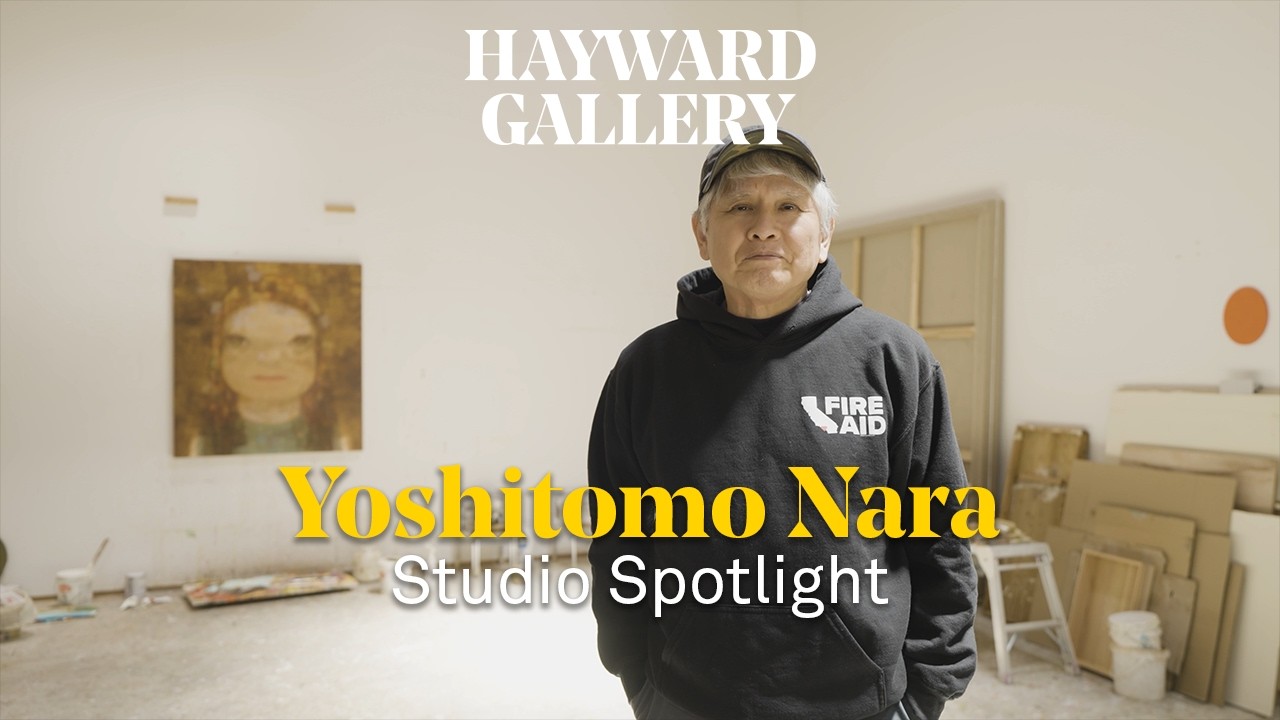
Signature typically appears verso (back of canvas) or on edge. Signs in Roman letters “Yoshitomo Nara” plus date.
Some works include Japanese signature 奈良美智.
Foundation maintains comprehensive database through official website.
Provenance documentation critical given rising market and forgery risk.
Condition Patterns
Acrylic on canvas generally stable. Less prone to craquelure than oil paintings.
Wood panels susceptible to warping if stored improperly.
Drawings on found materials (envelopes, notepaper) inherently fragile. Edges often show natural wear.
Ceramics fragile, prone to chips.
FRP sculptures durable but surface paint may show wear.
Bronze works most stable long-term.
Influence & Legacy
Upstream Influences
Punk rock musicians: Ramones, Sex Pistols, Nirvana, R.E.M., Sonic Youth. Provided emotional templates and DIY ethos.
Folk singers: Joni Mitchell, Bob Dylan, Donovan, Karen Dalton. Discovered through album covers as child.
Japanese children’s book illustrators: Doga tradition of layered meaning in seemingly simple images.
German Expressionism: Absorbed during Düsseldorf years. Emotional directness, anti-academic stance.
Buddhist sculpture: 12th-century Japanese Buddhist heads. Serene expressions, spiritual presence.
Italian early Renaissance: Mentioned LACMA director Michael Govan. Likely references figures like Giotto.
Balthus: “Unique mixture of tranquility, classic stylization, and fantasy” noted by critic Midori Matsui.
Mark Rothko: Later work’s spiritual abstraction and contemplative power. Nara welcomes comparison.
Western pop culture: Disney, Warner Bros, American comics consumed during postwar childhood.
Downstream Influence
Contemporary Asian artists: Provided template for synthesizing East-West influences without losing authenticity.
Character-based artists: Demonstrated that cartoon-like figures can carry serious emotional weight.
Installation artists: Collaborative projects with graf collective showed interdisciplinary possibilities.
Neo Pop movement: Alongside Murakami, defined parameters of Japanese contemporary art’s global reception.
Collectors and teens alike: Rare crossover appeal. Fine art collectors and punk kids both claim him.
Cross-Domain Echoes
Album cover art: Created covers for Shonen Knife, R.E.M., Bloodthirsty Butchers. Music-art synthesis.
Fashion collaborations: His imagery appears on clothing, accessories. Blurs high/low boundaries.
Public art: Large-scale sculptures change urban landscapes. Your Dog installations across Japan.
Social media: Active on Instagram and Twitter. Connects directly with global audience. Maintains authentic voice.
Product design: Despite fine art status, allows merchandise. Questions about art/commerce boundaries.
Critical Reception
Roberta Smith (New York Times): Described work as bridging “high, low and kitsch; East and West; grown-up, adolescent and infantile.”
Midori Matsui: Praised “paradoxical strength of ‘minor art'” and kitsch imagery’s emotional power.
Marilyn Ivy (anthropologist): Observed “cathartic encounter with childhood” and “shared realization of vulnerabilities of young subjecthood in commodity culture.”
Comparisons: Placed alongside Keith Haring for crossover accessibility, Jeff Koons for high-low synthesis.
Market recognition: 2019 record sale cemented status as most important living Japanese artist in commercial terms.
How to Recognize a Nara at a Glance
Diagnostic checklist:
- Big head, small body proportions. Head often takes up 60-70% of figure height.
- Enormous, widely-spaced eyes. Penetrating stare directly at viewer. Sometimes slightly asymmetrical.
- Solitary figure. Almost never multiple subjects. One child, one dog, one head.
- Minimal background. Flat color field or subtly gradated atmosphere. No detailed settings.
- Centered composition. Subject placed at canvas center. Classical balance stripped to essence.
- Muted, pastel palette (mature work). Cream, beige, soft pink, pale blue. Occasional brights in early work.
- Visible yet refined brushwork. Up close, see layers and texture. From distance, appears flat.
- Signature placement. Usually verso or on canvas edge. “Yoshitomo Nara” plus date.
- Canvas sizes: Common formats include 150 x 140 cm, 180 x 145 cm, 234 x 208 cm. Wood panels often 45 x 38 cm or 40 x 32 cm.
- Subject matter vocabulary: Children (70%), dogs (15%), heads alone (10%), occasional cats and flowers (5%).
- Emotional register: Defiance, anger, melancholy, introspection. Rarely joy or excitement.
- Text integration (occasional): English phrases, song lyrics, single words. Handwritten appearance.
- Medium indicators: Acrylic’s matte finish on canvas or panel. For sculpture: smooth FRP or textured bronze.
- Period tells:
- Pre-2000: rougher surfaces, brighter colors, visible weapons
- 2000-2010: refined pearlescent grounds, weapons disappear
- Post-2011: ultra-smooth surfaces, meditative quality, increased sculpture
- Scale expectations: Paintings range 40 cm to 234 cm. Sculptures from 40 cm figurines to 5-meter outdoor installations.
FAQ on Yoshitomo Nara
Who is Yoshitomo Nara?
Yoshitomo Nara is a Japanese contemporary artist born December 5, 1959, in Hirosaki, Aomori Prefecture. He’s known for paintings and sculptures featuring big-headed children with defiant expressions.
His work spans acrylic painting, drawing, bronze sculpture, ceramics, and installations. He became the most expensive Japanese artist at auction in 2019.
What is Yoshitomo Nara’s art style?
Nara works in a Neo Pop style that synthesizes Japanese kawaii culture with punk rock aesthetics. His painting style features flat composition with subtle layering, muted pastel palettes, and solitary figures against minimalist backgrounds.
Unlike Takashi Murakami‘s slick Superflat graphics, Nara preserves painterly texture and hand-drawn immediacy in his contemporary Japanese art.
Why are Yoshitomo Nara’s children angry?
The children reflect Nara’s isolated childhood as a latchkey kid in rural northern Japan. Their defiant expressions channel feelings of loneliness, vulnerability, and resistance to authority.
Nara sees them as powerless rather than aggressive. Small weapons symbolize inadequacy against bigger threats, not actual violence.
What is Yoshitomo Nara’s most expensive painting?
Knife Behind Back (2000) sold for $24.9 million USD at Sotheby’s Hong Kong in October 2019. The 234 x 208 cm acrylic on canvas depicts a girl in a red dress with arms concealed.
This auction record made Nara the most expensive Japanese artist, surpassing Yayoi Kusama‘s previous record.
Where can I see Yoshitomo Nara’s artwork?
Major museum collections include MoMA New York, LACMA Los Angeles, Yokohama Museum of Art, and Aomori Museum of Art. LACMA’s 26-foot Miss Forest bronze sculpture stands on Wilshire Boulevard.
His work appears at Pace Gallery and Blum & Poe internationally. Retrospective exhibitions recently toured Guggenheim Bilbao and Hayward Gallery London.
What materials does Yoshitomo Nara use?
Nara primarily works with acrylic paint on canvas and wood panels. He builds surfaces through multiple thin layers, sometimes sanding between applications.
For drawings, he uses pencil, colored pencils, and Sakura Solid Markers on paper or found materials like used envelopes. Sculptures utilize FRP, bronze, and ceramic.
How did punk rock influence Yoshitomo Nara?
Punk music discovered during his teenage years provided emotional templates and DIY ethos. He plays loud punk rock constantly while working, citing bands like Nirvana, Ramones, and Sex Pistols.
The defiant spirit and anti-establishment stance of punk culture permeates his artwork’s rebellious imagery and raw emotional directness.
What happened to Nara’s art after the 2011 earthquake?
The Great East Japan Earthquake and Fukushima disaster profoundly shifted Nara’s practice toward meditation and healing. His work became more contemplative and spiritual, with increased focus on ceramics and bronze sculptures.
Later paintings feature ultra-refined surfaces with serene expressions, evoking Buddhist philosophy and introspection rather than anger.
How can I identify a Yoshitomo Nara painting?
Look for solitary figures with disproportionately large heads and enormous, widely-spaced eyes staring directly at viewers. The centered composition features minimal backgrounds in muted pastels.
Mature works show refined, pearlescent surfaces despite appearing flat from distance. Common canvas sizes include 150 x 140 cm and 234 x 208 cm.
What is the meaning behind Nara’s knife imagery?
Early works displayed small knives, saws, and weapons held by children. Nara explains these toy-sized weapons represent vulnerability, not aggression.
From 2000 onward, weapons mostly disappeared from paintings but remained in titles. The concealed threat in Knife Behind Back proves more menacing than visible violence.
Conclusion
Yoshitomo Nara transformed childhood isolation into a universal visual language that transcends cultural boundaries. His journey from rural Aomori to international retrospectives at LACMA and Guggenheim Bilbao proves that authentic emotional expression resonates globally.
The wide-eyed children remain constant while his technique evolved from rough early canvases to luminous pearlescent surfaces.
His auction record of $24.9 million confirms market recognition, but the real power lies in how those defiant stares connect with viewers across generations. Whether working in acrylic on canvas, bronze sculpture, or drawings on used envelopes, Nara maintains uncompromising authenticity.
His work proves that simplicity can carry profound psychological depth.
The big-headed girls aren’t going anywhere. They’ll keep staring back, demanding you confront what you see in their eyes.