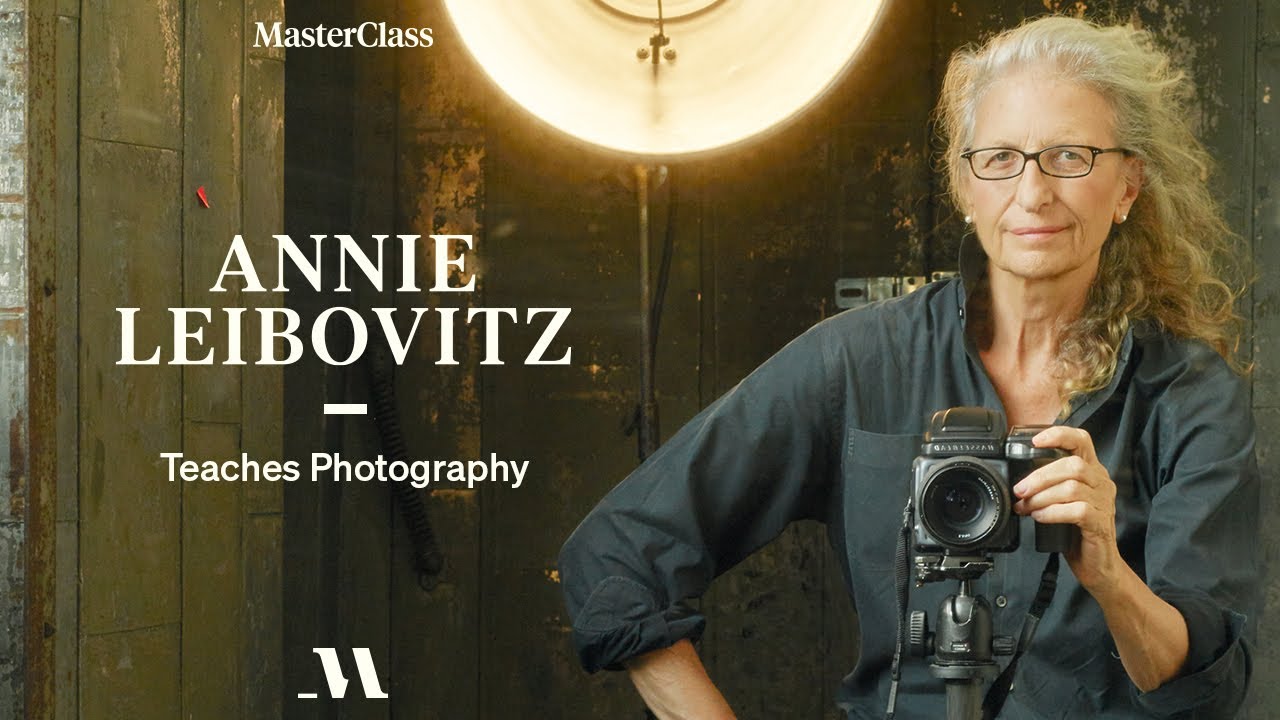
Annie Leibovitz is an American portrait photographer whose celebrity portraits and editorial photography have shaped the visual language of modern magazines for over five decades. Her work with Rolling Stone and Vanity Fair produced some of the most recognizable images of cultural icons from musicians to politicians to athletes.
Born in 1949, Leibovitz originally studied painting before shifting to photography. She became Rolling Stone’s chief photographer at just 23 years old. Her intimate approach to celebrity portraits and dramatic use of studio lighting made her the go-to photographer for magazine covers and high-profile advertising campaigns.
The Library of Congress named her a Living Legend. She was the first woman to have a feature exhibition at the National Portrait Gallery in Washington, D.C.
Identity Snapshot
- Full Name: Anna-Lou Leibovitz
- Lifespan: Born October 2, 1949 (Waterbury, Connecticut)
- Primary Roles: Portrait photographer, editorial photographer, commercial photographer
- Nationality: American
- Movements: Contemporary portraiture, conceptual photography
- Mediums: Color photography, black and white photography, Polaroid, digital, large format
- Signature Traits: Bold color palettes, dramatic lighting, staged settings, intimate collaboration with subjects
- Iconography/Motifs: Celebrity culture, intimate poses, painted canvas backdrops, narrative staging
- Geographic Anchors: San Francisco (training), New York City (career)
- Mentors/Influences: Richard Avedon, Henri Cartier-Bresson, Robert Frank
- Key Publications: Rolling Stone, Vanity Fair, Vogue
- Collections: MoMA, Art Institute of Chicago, Los Angeles County Museum of Art, Smithsonian American Art Museum, National Portrait Gallery
- Auction Record: $93,750 (Keith Haring portrait, Sotheby’s, 2016)
What Sets Annie Leibovitz Apart
Leibovitz treats every photo session as a collaboration. She spends hours, sometimes days, observing her subjects before lifting the camera.
Her approach blends photojournalism’s rawness with fine art’s careful staging. The results feel both spontaneous and meticulously planned.
Her lighting technique draws from classical painting traditions, particularly the dramatic illumination found in Rembrandt van Rijn’s portraits. She uses soft, directional light that wraps around faces and creates sculptural depth.
Where other celebrity photographers capture glamour, Leibovitz captures personality. She finds the unexpected angle, the revealing gesture.
Her color photography uses bold, saturated hues that jump off magazine covers. But she works equally well in black and white, choosing based on what serves each subject.
Origins and Formation
Early Life
Leibovitz grew up in a military family. Her father was an Air Force lieutenant colonel, her mother a modern dance instructor.
The family moved constantly. Leibovitz took her first photographs in the Philippines while her father was stationed there during the Vietnam War.
San Francisco Art Institute (1967-1971)
She enrolled intending to become a painter and art teacher. A night photography class changed everything.
She bought her first camera in the summer of 1968. By the time she graduated with her BFA in 1971, her photographs had already landed her a job at Rolling Stone.
The Israel Experience
In 1969, Leibovitz lived on Kibbutz Amir in Israel for several months. She worked on an archaeological team uncovering remains of King Solomon’s Temple.
Photographs from this trip appeared on Rolling Stone’s cover. It was her first major publication.
First Breakthrough
Her first commercial assignment came in 1970, while still a student. Rolling Stone sent her to photograph John Lennon.
That relationship would define her career and produce one of the most famous photographs in rock history.
Movement and Context
Position in Photography History

Leibovitz bridges the gap between editorial photography and fine art portraiture. She pushed magazine photography toward more conceptual, elaborately staged work.
Her career parallels the rise of celebrity culture in America. She became both documenter and architect of that phenomenon.
Comparative Analysis
Leibovitz vs. Richard Avedon: Both master portrait photographers with magazine backgrounds. Avedon preferred stark white backgrounds and isolated subjects. Leibovitz favors environmental settings and elaborate staging. Avedon’s work feels clinical and revealing. Leibovitz’s feels theatrical and intimate.
Leibovitz vs. Helmut Newton: Both worked extensively in fashion and celebrity. Newton’s images carry overt sexuality and provocation. Leibovitz’s provocation comes through conceptual choices and unexpected vulnerability.
Leibovitz vs. Irving Penn: Penn’s studio work shows extreme precision and geometric composition. Leibovitz allows more chaos into her frames, embracing the unexpected moment even within staged scenarios.
Art Historical Connections
Her painterly lighting connects to Old Master traditions. The way she uses chiaroscuro to model faces recalls Johannes Vermeer and Baroque portraiture.
Her conceptual staging shares DNA with Andy Warhol’s celebrity fixation and his blurring of commercial and fine art boundaries.
Materials, Techniques, and Process
Camera Systems
Leibovitz has used various camera formats throughout her career. She’s worked with Mamiya RZ67 and Hasselblad medium format cameras for their image quality and resolution.
For more mobile work, she uses 35mm Canon and Nikon bodies. Digital cameras now allow her to shoot in lower light while maintaining the natural ambiance of settings.
Lens Preferences
She favors prime lenses. The 50mm, 85mm, and 105mm focal lengths appear frequently in her work.
These lengths create shallow depth of field while maintaining natural proportions. No distortion, just crisp detail on the subject.
Lighting Philosophy
Leibovitz studies natural light obsessively. It’s where she started, and it’s what she still studies when arriving at any shoot location.
She uses ambient light as a foundation, then adds a small key light in the direction the natural light is already coming from. Adding too many lights takes away what natural light offers.
She mixes strobe with ambient light on overcast days. She prefers working in early morning with soft light rather than waiting for golden hour.
Her famous “one light” approach uses a large softbox (often a 60-inch Photek Softlighter) positioned close to subjects. The closer the light source, the softer and larger it appears.
Studio Practice
Leibovitz keeps her equipment kit small for flexibility. She adapts to moments rather than forcing moments to fit pre-planned setups.
For Vanity Fair-style shoots, she uses painted canvas backdrops from Oliphant Studios. These provide depth and texture without competing with subjects.
She often employs negative fill with black foam boards to deepen shadows and add mood. Simple tools used precisely.
Color Approach
Her color theory leans toward bold, saturated hues with controlled contrast. Magazine covers demand visual punch, and her colors deliver it.
She also works extensively in black and white, choosing based on subject and concept rather than default preference.
Themes, Subjects, and Iconography
Recurring Themes
Intimacy in celebrity: Leibovitz finds the private person inside public figures. Her subjects appear vulnerable, playful, or contemplative rather than guarded.
Collaboration as method: She views photo sessions as creative partnerships. Subjects contribute ideas that shape final images.
Narrative staging: Her images tell stories. Environments, props, and poses build meaning beyond simple documentation.
Subject Categories
Musicians dominated her Rolling Stone years. Rock stars, mostly, but also country, jazz, and folk artists.
At Vanity Fair and Vogue, her pool expanded to actors, directors, writers, athletes, politicians, and business figures. Anyone who shapes culture.
Personal work includes family photographs and documentary projects like Pilgrimage, which focused on places and objects associated with historical figures.
Compositional Approaches
Leibovitz frequently uses environmental portraits where setting reveals character. Subjects appear in their homes, workspaces, or locations meaningful to them.
She also creates elaborate staged scenarios with costumes and sets, particularly for commercial projects like the Disney Dream Portraits.
Her focal point placement often breaks conventional rules. Subjects may appear off-center or in unexpected spatial relationships with their environments.
Notable Works
John Lennon and Yoko Ono (1980)

Details: December 8, 1980, Polaroid and photograph, shot at The Dakota, New York
Location: National Portrait Gallery, London
Visual Signature: Intimate black and white image showing naked Lennon curled in fetal position around fully clothed Ono
Significance: Taken five hours before Lennon’s murder, became the Rolling Stone cover and was voted best magazine cover of the past 40 years by the American Society of Magazine Editors in 2005. Leibovitz called it “the photograph of my life.”
Auction Record: $13,000 at Phillips (April 2019)
More Demi Moore (1991)

Details: August 1991, Vanity Fair cover
Visual Signature: Seven-months pregnant Moore photographed nude, hands covering breasts, direct eye contact
Significance: One of the most discussed magazine covers in history. Editors originally wanted a tightly cropped face shot. Leibovitz suggested Moore disrobe. The result redefined how pregnancy could be portrayed in mainstream media.
Leibovitz herself remains skeptical of its quality: “If it were a great portrait, she wouldn’t be covering her breasts.”
Whoopi Goldberg in Milk Bath (1984)

Details: 1984, Vanity Fair
Visual Signature: Goldberg submerged in a bathtub filled with milk, only her face and arms visible
Significance: Inspired by Goldberg’s set piece about trying to bleach her skin with Clorox. The image’s political implications were deliberate; the exuberant pose was accidental (Goldberg slipped while getting in).
Keith Haring Portrait (1986)

Details: 1986, platinum print (printed 1995)
Size: 19 x 23.25 inches (48.3 x 59.1 cm)
Significance: Set Leibovitz’s auction record at $93,750 at Sotheby’s New York in 2016
Queen Elizabeth II (2007)

Details: 2007, Vanity Fair commission
Significance: Three official portraits showing a more intimate, human side of the British monarch. A departure from typical royal photography.
Disney Dream Portraits (2007-2014)

Details: Series of celebrity portraits as Disney characters for Disney Parks’ “Year of a Million Dreams” campaign
Featured Subjects: Taylor Swift as Rapunzel, Jessica Chastain as Merida, Queen Latifah as Ursula, Scarlett Johansson as Cinderella, David Beckham as Prince Phillip, Johnny Depp as Captain Jack Sparrow
Significance: Showcases Leibovitz’s ability to create elaborate conceptual portraits with detailed staging and digital compositing
Exhibitions, Collections, and Provenance Highlights
Major Exhibitions
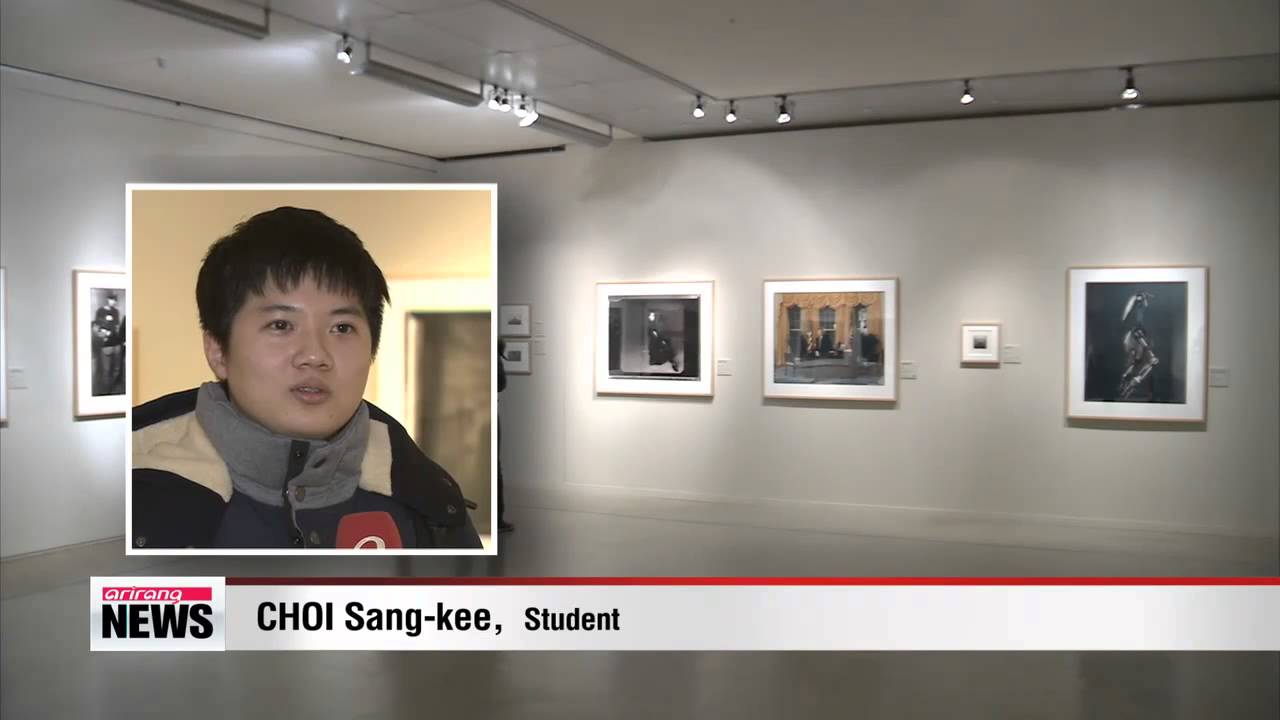
1983: First 60-print solo show toured Europe and the United States
1991: National Portrait Gallery, Washington, D.C. First woman and second living photographer to exhibit there
2007: Brooklyn Museum retrospective, “Annie Leibovitz: A Photographer’s Life, 1990-2005”
2010: Fotografiska Stockholm inaugural exhibition
2012: Smithsonian American Art Museum, “Pilgrimage” (museum acquired 64 works)
2016-2017: “WOMEN: New Portraits” toured 10 cities worldwide
2023-2024: Crystal Bridges Museum of American Art, “Annie Leibovitz at Work,” over 300 images spanning 50+ years
Permanent Collections
- Museum of Modern Art, New York
- Art Institute of Chicago
- Los Angeles County Museum of Art
- National Portrait Gallery, Washington, D.C.
- National Portrait Gallery, London
- Smithsonian American Art Museum
- Hermitage, Saint Petersburg
Gallery Representation
Hauser and Wirth represents Leibovitz globally.
Market and Reception
Auction Performance
Record Sale: $93,750 for Keith Haring, New York City, sold at Sotheby’s New York in 2016
Average Price (2024): Photographs averaged $2,687 over the past 12 months
Typical Range: Prints typically sell between $1,500 and $18,000 on the secondary market
Edition Information
Limited edition prints are typically signed and numbered. The 2014-2022 Taschen book edition was printed in 10,000 copies plus 300 artist proofs, each signed on colophon.
Awards and Honors
- 1983: Photographer of the Year, American Society of Magazine Photographers
- 1987: Clio Award for American Express campaign
- 2006: Commandeur de l’Ordre des Arts et des Lettres (France)
- 2009: International Center of Photography Lifetime Achievement Award
- 2009: First Creative Excellence Award, American Society of Magazine Editors
- 2009: Centenary Medal, Royal Photographic Society
- 2012: Los Angeles Museum of Contemporary Art Award to Distinguished Women in the Arts
- 2012: Wexner Prize
- 2013: Prince of Asturias Award for Communication and Humanities
- 2015: San Francisco Museum of Modern Art Contemporary Vision Award (inaugural recipient)
- 2018: Lifetime Achievement Award, National Museum of Women in the Arts
- Living Legend designation from the Library of Congress
Influence and Legacy
Upstream Influences
Richard Avedon: Leibovitz studied his approach to celebrity portraiture and his ability to balance commercial work with personal projects.
Henri Cartier-Bresson: His decisive moment philosophy and sculptural approach to composition influenced her early development.
Robert Frank: His highly personal, emotional photographic reportage gave her permission to inject herself into documentary work.
Downstream Impact
Leibovitz essentially invented modern celebrity portrait photography. Her staged, conceptual approach became the template for magazine covers worldwide.
She proved photographers could maintain artistic vision while working commercially. The career path she carved became the aspiration for generations of editorial photographers.
Her influence extends to contemporary portrait photographers like Gregory Crewdson, whose elaborate staged scenes owe a debt to her pioneering work.
Cross-Domain Influence
Her painterly approach to photography influenced how film directors light actors. The cinematic quality of her images created a visual vocabulary adopted across entertainment.
Fashion photography absorbed her narrative staging techniques. Advertising campaigns now routinely employ the conceptual portraiture she pioneered.
How to Recognize an Annie Leibovitz at a Glance

- Soft, directional lighting that wraps around faces with sculptural quality
- Bold color saturation on magazine work, or carefully controlled black and white
- Environmental staging where setting reveals character
- Subjects appear relaxed despite elaborate setups
- Painted canvas backdrops (Oliphant-style) in studio work
- Shallow depth of field from medium telephoto primes (85mm, 105mm range)
- Collaborative poses that feel discovered rather than directed
- Unexpected vulnerability in famous subjects
- Narrative elements through props, costumes, or environmental details
- High production value with meticulous attention to every frame element
FAQ on Annie Leibovitz
Who is Annie Leibovitz?
Annie Leibovitz is an American portrait photographer born October 2, 1949. She served as chief photographer for Rolling Stone magazine and later Vanity Fair. The Library of Congress named her a Living Legend for her contributions to photography.
What is Annie Leibovitz best known for?
Leibovitz is known for her celebrity portraits featuring bold colors, dramatic lighting, and intimate staging. Her iconic photographs include John Lennon and Yoko Ono’s final portrait and the pregnant Demi Moore Vanity Fair cover.
What camera does Annie Leibovitz use?
Leibovitz uses various cameras depending on the assignment. She’s worked with Mamiya RZ67 and Hasselblad medium format systems. For mobility, she uses 35mm Canon and Nikon bodies. Her equipment kit stays small for flexibility.
How much does an Annie Leibovitz photograph cost?
Leibovitz prints typically sell between $1,500 and $18,000 on the secondary market. Her auction record is $93,750 for a Keith Haring portrait sold at Sotheby’s in 2016. Average prices hover around $2,687.
What is Annie Leibovitz’s most famous photograph?
Her most famous image shows John Lennon naked, curled around fully clothed Yoko Ono. Shot December 8, 1980, just hours before Lennon’s murder. The American Society of Magazine Editors voted it best magazine cover in 40 years.
Where did Annie Leibovitz study photography?
Leibovitz studied at the San Francisco Art Institute from 1967 to 1971. She originally enrolled to become a painter. A night photography class changed her direction. She earned her BFA while already shooting for Rolling Stone.
What magazines has Annie Leibovitz worked for?
Leibovitz began at Rolling Stone in 1970, becoming chief photographer in 1973. She joined Vanity Fair in 1983. Since 1998, she’s contributed regularly to Vogue. Her editorial photography shaped how magazines present celebrity culture.
What is Annie Leibovitz’s photography style?
Her style combines photojournalism with fine art staging. She uses soft directional lighting influenced by classical painting. Leibovitz collaborates closely with subjects, creating intimate portraits that reveal personality rather than just capturing glamour.
Is Annie Leibovitz still working?
Yes. Leibovitz remains active at 75. Recent projects include the 2016 Pirelli calendar, IKEA portrait series (2023), and her Crystal Bridges Museum retrospective (2023-2024). She continues contributing to Vanity Fair and Vogue regularly.
What awards has Annie Leibovitz received?
Major honors include the International Center of Photography Lifetime Achievement Award and France’s Commandeur de l’Ordre des Arts et des Lettres. She received the Prince of Asturias Award and was the first woman exhibited at the National Portrait Gallery.
Conclusion
Annie Leibovitz transformed how we see cultural icons. Her visual storytelling through intimate portraits gave faces to five decades of American life.
From rock musicians to royalty, her photography exhibitions continue touring worldwide. The work stands in major museum collections alongside paintings and sculptures.
Her photography books document an era. Each iconic photograph captures something beyond surface glamour.
Few photographers achieve this level of recognition. Fewer still maintain creative relevance across generations. Leibovitz did both while pushing contemporary photography toward fine art status.