At the intersection of art and industry, Constructivism emerged from the revolutionary fervor of early 20th century Russia.
These pioneering artists rejected traditional aesthetics in favor of geometric abstraction and industrial materials that celebrated the machine age.
Constructivism artists broke radically from the past, embracing utilitarian design principles focused on social purpose.
Their spatial constructions and non-objective compositions transformed how we understand form and function.
The movement’s influence extended far beyond Soviet borders, reshaping modernist architecture, typography, and graphic design worldwide.
Artists like Vladimir Tatlin, Alexander Rodchenko, and Liubov Popova created works that merged technical drawing with revolutionary symbolism.
This article explores the visionaries who championed “art into production” through:
- Their distinctive geometric forms and kinetic sculptures
- Revolutionary propaganda techniques and photomontage
- Connections to Suprematism and the Bauhaus movement
- Lasting impact on avant-garde design and architecture
Discover how these revolutionary creators transformed abstract theories into tangible works that still influence our visual world today.
Constructivism Artists
Vladimir Tatlin (1885–1953)

Nationality: Russian
Art Movement(s): Constructivism, Russian Avant-garde
Mediums: Sculpture, relief, architecture, design
Artistic Signature
Tatlin pioneered three-dimensional constructions using industrial materials like metal, glass, and wood. His work featured precise mathematical composition with dynamic diagonal lines and floating planes that challenged traditional space and balance.
Recurring Themes & Motifs
His work explored the relationship between materials and form, celebrating machine aesthetics and industrial production while rejecting decorative elements in favor of utilitarian design serving revolutionary purposes.
Influences & Training
Initially trained as an icon painter, Tatlin later studied at the Moscow School of Painting. His 1914 Paris visit to Picasso’s studio and exposure to cubism catalyzed his shift toward constructed reliefs.
Notable Works
- Corner Counter-Relief (1915) – Iron, copper, wood, wires
- Monument to the Third International (1919-20) – Architectural model (unrealized)
- Letatlin Flying Machine (1929-32) – Wood, metal, fabric
Role in Art History
Tatlin established the foundations of Constructivism through his “culture of materials” concept. His Monument to the Third International became an iconic symbol of revolutionary aspirations in art and architecture.
Alexander Rodchenko (1891–1956)

Nationality: Russian
Art Movement(s): Constructivism, Productivism
Mediums: Photography, graphic design, painting, sculpture
Artistic Signature
Rodchenko employed sharp diagonals, bold geometric forms, and experimental photographic perspectives. His work featured strong color contrast using primarily black, white, and red with dynamic asymmetrical balance.
Recurring Themes & Motifs
His photographs and designs celebrated modern life, industry, and Soviet ideology, featuring machinery, architecture, and everyday workers often shot from unusual angles to create new visual narratives.
Influences & Training
Studied at the Kazan School of Art and Stroganov School of Applied Arts. His transition from painting to design was influenced by Tatlin’s reliefs and suprematism before developing his utilitarian approach.
Notable Works
- Non-Objective Painting No. 80 (1918) – Oil on canvas
- Spatial Constructions series (1918-1921) – Wood, metal
- Steps (1929) – Gelatin silver print
- Books poster for Lengiz Publishing House (1924) – Lithograph
Role in Art History
Rodchenko helped transform abstract art into practical design, pioneering modern graphic design, photomontage, and revolutionary advertising techniques that influenced global visual culture.
Naum Gabo (1890–1977)

Nationality: Russian-American
Art Movement(s): Constructivism
Mediums: Sculpture, kinetic art
Artistic Signature
Gabo created transparent, weightless structures using plastic, metal, and nylon filaments. His work featured curved planes, precise mathematical relationships, and an extraordinary sense of rhythm created through string tensions.
Recurring Themes & Motifs
His sculptures explored spatial relationships, movement, and time. Gabo consistently worked with the intersection of art, science, and engineering to create forms that seemed to defy gravity.
Influences & Training
Originally studied medicine and natural sciences in Munich before turning to engineering. Influenced by scientific thinking and his brother Antoine Pevsner, he developed a more spiritual interpretation of Constructivism.
Notable Works
- Linear Construction No. 1 (1942-43) – Perspex with nylon monofilament
- Kinetic Construction (Standing Wave) (1919-20) – Metal rod and electric motor
- Translucent Variation on Spheric Theme (1937) – Celluloid and wood
Role in Art History
Gabo expanded Constructivism beyond Russia, bringing its principles to Western Europe and America. His 1920 “Realistic Manifesto” established kinetic art, influencing generations of sculptors exploring movement and transparency.
Antoine Pevsner (1886–1962)
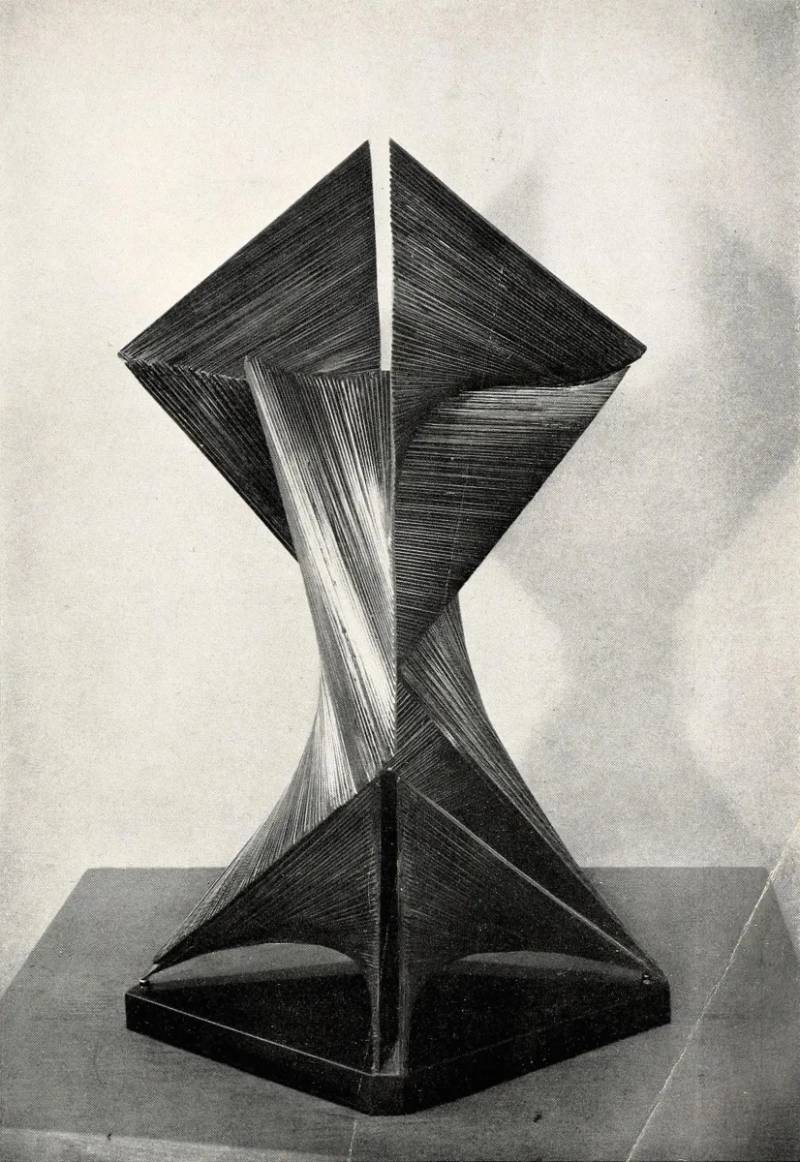
Nationality: Russian-French
Art Movement(s): Constructivism
Mediums: Sculpture, painting
Artistic Signature
Pevsner created intricate bronze and copper sculptures with mathematically precise surfaces and elegant curved forms. His work featured polished surfaces that played with light reflection and complex internal space.
Recurring Themes & Motifs
His sculptures explored dynamic tension, celestial themes, and mathematical concepts, often evoking cosmic forces or natural growth patterns while maintaining geometric precision.
Influences & Training
After studying painting at the Imperial Academy of Arts in St. Petersburg, he was influenced by his brother Naum Gabo and their shared interest in science, mathematics, and engineering principles.
Notable Works
- Developable Surface (1938) – Bronze
- Projective Column (1925) – Brass and bronze
- Torso (1924-26) – Brass, bronze, and steel
Role in Art History
Pevsner helped bring Constructivist principles to Western Europe, particularly France. His sophisticated mathematical approach to sculpture influenced abstract art’s development outside Russia through the Abstraction-Création group.
Liubov Popova (1889–1924)

Nationality: Russian
Art Movement(s): Constructivism, Suprematism, Cubo-Futurism
Mediums: Painting, textile design, theater design
Artistic Signature
Popova created dynamic compositions with overlapping geometric planes, bold diagonals, and architectural structures. Her work featured strong rhythmic organization and sophisticated use of texture.
Recurring Themes & Motifs
Her work explored spatial dynamics, architectural structures, and machine aesthetics, translating these concepts across mediums from painting to textile design with a focus on movement and energy.
Influences & Training
Studied with Cubist painters in Paris and traveled extensively in Italy studying Renaissance art. Her style evolved through Cubo-Futurism and Suprematism before embracing Constructivism.
Notable Works
- Painterly Architectonic series (1916-1918) – Oil on canvas
- Space-Force Construction (1921) – Oil on plywood
- Textile designs for the First State Textile Factory (1923-1924)
Role in Art History
Popova pioneered the integration of avant-garde principles into everyday design. Her innovative textile and theater work demonstrated how revolutionary aesthetics could transform industrial production and daily life.
Varvara Stepanova (1894–1958)
Nationality: Russian
Art Movement(s): Constructivism, Productivism
Mediums: Textile design, graphic design, fashion design, painting
Artistic Signature
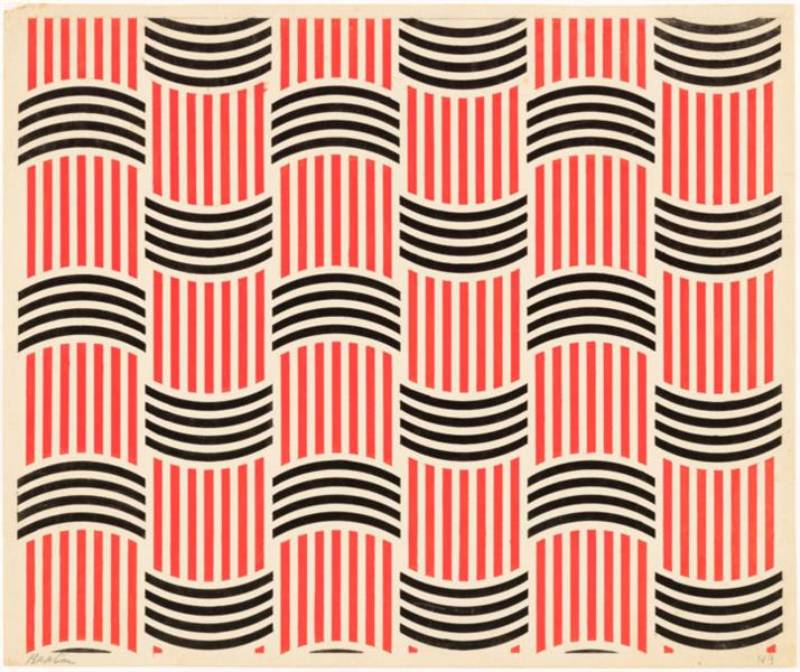
Stepanova developed geometric patterns with bold stripes, zigzags, and circular forms for textiles and clothing. Her graphical work featured strong typographic elements with innovative layouts and repetition.
Recurring Themes & Motifs
Her designs celebrated movement, sports, and modern Soviet life. Stepanova consistently focused on practical applications of art, creating functional clothing and textiles for mass production.
Influences & Training
Educated at Kazan Art School and Stroganov Institute of Applied Arts, she worked closely with her husband Alexander Rodchenko, collaborating on numerous design projects and publications.
Notable Works
- Figure in Sport Clothing designs (1923)
- Textile Designs for the First State Textile Factory (1924)
- Graphics for LEF journal (1923-1925)
Role in Art History
Stepanova helped transform Constructivism from theoretical concept to practical application in everyday life through her revolutionary textile designs, sports clothing, and graphic work for Soviet publications.
El Lissitzky (1890–1941)

Nationality: Russian
Art Movement(s): Constructivism, Suprematism
Mediums: Graphic design, typography, architecture, exhibition design, photography
Artistic Signature
Lissitzky created dynamic compositions using geometric forms, bold typography, and innovative photomontage. His work featured strong diagonals, floating elements, and revolutionary use of negative space.
Recurring Themes & Motifs
His work explored spatial dynamics, mathematical concepts, and revolutionary politics. The intersection of text and image recurs throughout his graphics, often integrating symbols of modernity and progress.
Influences & Training
Studied architectural engineering in Darmstadt, Germany. After meeting Kazimir Malevich in 1919, Lissitzky developed his distinctive Proun series blending architectural concepts with Suprematist forms.
Notable Works
- Proun series (1919-1927)
- Beat the Whites with the Red Wedge (1919) – Propaganda poster
- Exhibition designs for the Soviet Pavilion, Cologne (1928)
- USSR: Russische Ausstellung catalog (1929)
Role in Art History
Lissitzky bridged Russian and German avant-garde movements, bringing Constructivist principles to Western Europe. His innovative exhibition, book, and graphic designs revolutionized visual communication globally.
Gustav Klutsis (1895–1938)

Nationality: Latvian (worked in Soviet Russia)
Art Movement(s): Constructivism, Photomontage
Mediums: Graphic design, photomontage, propaganda
Artistic Signature
Klutsis pioneered dynamic photomontages combining photography with bold graphic elements. His work featured dramatic scale contrasts, diagonal compositions, and powerful color combinations to create striking propaganda.
Recurring Themes & Motifs
His work celebrated Soviet ideology, industrial progress, and working-class heroes. Recurring images included workers, leaders, machinery, and masses of people organized into symbolic formations.
Influences & Training
Studied at the Riga School of Art and later at VKhUTEMAS in Moscow under Malevich and Lissitzky, combining their geometric abstraction with his own pioneering approach to photomontage.
Notable Works
- The Electrification of the Entire Country (1920) – Photomontage poster
- The Old World and the World Being Built Anew (1920) – Photomontage
- Let’s Fulfill the Plan of the Great Works (1930) – Photomontage poster
Role in Art History
Klutsis revolutionized political poster design through photomontage techniques. His innovative visual propaganda methods influenced generations of graphic designers and established new paradigms for mass communication.
Konstantin Melnikov (1890–1974)

Nationality: Russian
Art Movement(s): Constructivism, Soviet Modern
Mediums: Architecture
Artistic Signature
Melnikov created bold cylindrical forms, dramatic geometric volumes, and innovative structural solutions. His buildings featured hexagonal windows, exposed construction elements, and ingenious natural lighting systems.
Recurring Themes & Motifs
His architecture explored cylindrical forms, industrial aesthetics, and economic construction methods. Melnikov consistently emphasized the relationship between interior and exterior spaces through dramatic openings and lighting.
Influences & Training
Trained at the Moscow School of Painting, Sculpture and Architecture, developing a unique architectural language that combined engineering principles with artistic expression and Constructivist ideals.
Notable Works
- Rusakov Workers’ Club (1927-1929) – Moscow
- Soviet Pavilion at the Paris International Exhibition (1925)
- Melnikov House (1927-1929) – Moscow
- Kauchuk Factory Club (1927-1929) – Moscow
Role in Art History
Melnikov created some of Constructivism’s most innovative architectural works, demonstrating how revolutionary aesthetics could transform built environments with economical means during the early Soviet period.
Aleksei Gan (1889–1942)

Nationality: Russian
Art Movement(s): Constructivism
Mediums: Typography, graphic design, theory
Artistic Signature
Gan developed bold typographic designs with strong geometric organization and innovative layouts. His work embodied harmony between form and ideological content with an emphasis on clarity and revolutionary purpose.
Recurring Themes & Motifs
His work explored the relationship between art and industry, communist ideology, and utilitarian aesthetics. Gan consistently advocated for abandoning “art for art’s sake” in favor of production-oriented creative practices.
Influences & Training
Self-taught in design and typography, Gan was deeply influenced by Marxist theory and worked closely with Rodchenko and Stepanova in developing Constructivism’s theoretical foundations.
Notable Works
- Constructivism manifesto book (1922) – Typography and design
- Sovremennaia arkhitektura (Contemporary Architecture) journal designs (1926-1930)
- Kino-Fot journal designs (1922-1923)
Role in Art History
Gan provided the theoretical foundation for Constructivism through his 1922 book “Constructivism,” establishing the movement’s core principles and advocating for art’s transformation into industrial production.
Karl Ioganson (1890–1929)

Nationality: Latvian (worked in Soviet Russia)
Art Movement(s): Constructivism
Mediums: Sculpture, construction
Artistic Signature
Ioganson created tensile structures using minimal materials under tension. His work featured cable-suspended elements, precise mathematical relationships, and an extraordinary emphasis on structural forces rather than mass.
Recurring Themes & Motifs
His constructions explored engineering principles, tensegrity structures, and economy of means. Ioganson consistently investigated how forces could be balanced to create stable yet visually dynamic forms.
Influences & Training
Trained as an engineer before joining artistic circles in Moscow, his background in construction and engineering shaped his unique approach to Constructivist sculpture and structural experimentation.
Notable Works
- Spatial Construction series (1920-1921)
- Cold Structures (1921) – Wood and wire
- Self-Stressed Framework (1921) – Wood and wire
Role in Art History
Ioganson pioneered tensegrity principles decades before Buckminster Fuller and Kenneth Snelson, creating revolutionary structural systems that influenced architecture, engineering, and spatial construction methods.
Aleksander Vesnin (1883–1959)

Nationality: Russian
Art Movement(s): Constructivism, Rationalism
Mediums: Architecture, theater design, painting
Artistic Signature
Vesnin created architectural designs with bold geometric masses, exposed structural elements, and dynamic diagonal compositions. His work featured innovative spatial organization emphasizing movement and functional clarity.
Recurring Themes & Motifs
His designs explored industrial aesthetics, transportation infrastructure, and social spaces. Vesnin consistently emphasized the intersection of engineering and social purpose in revolutionary architecture.
Influences & Training
Educated at the Imperial Academy of Arts in St. Petersburg and the Civil Engineering Institute, he combined engineering precision with avant-garde aesthetics alongside his brothers Leonid and Viktor.
Notable Works
- Leningradskaya Pravda Building competition entry (1924)
- Palace of Labor competition entry (1923)
- Palace of Culture for the Proletarsky District, Moscow (1931-1937)
- Set designs for “The Man Who Was Thursday” (1923)
Role in Art History
As a leader of Constructivist architecture and founding member of OSA (Society of Contemporary Architects), Vesnin helped establish architectural Constructivism through built works, competitions, and influential publications.
Georgii and Vladimir Stenberg (1900–1933 and 1899–1982)

Nationality: Russian (Swedish descent)
Art Movement(s): Constructivism
Mediums: Graphic design, poster art, exhibition design, stage design
Artistic Signature
The Stenberg brothers created dynamic film posters with bold diagonal compositions, dramatic perspective, and innovative use of typography. Their work featured vibrant color contrasts and cinematic drama.
Recurring Themes & Motifs
Their designs celebrated cinema, modernity, and urban culture. The Stenbergs consistently explored movement, speed, and technological progress through fractured compositions and dramatic viewpoints.
Influences & Training
Trained at SVOMAS and VKhUTEMAS in Moscow, they combined engineering interests with artistic innovation, influenced by Constructivist principles, cinema, and contemporary European design movements.
Notable Works
- The Man with the Movie Camera film poster (1929)
- Battleship Potemkin film poster (1925)
- Exhibition designs for the International Exhibition of Decorative Arts, Paris (1925)
- Set designs for Alexander Tairov’s Chamber Theater
Role in Art History
The Stenberg brothers revolutionized film poster design, creating a new visual language that captured cinematic essence through static graphic means, influencing commercial design worldwide.
Ilya Chashnik (1902–1929)

Nationality: Russian (Belarusian-born)
Art Movement(s): Suprematism, Constructivism
Mediums: Painting, graphic design, ceramics
Artistic Signature
Chashnik created geometric compositions with floating forms, cosmic spatial relationships, and architectural qualities. His work featured precise geometric arrangements with a distinctive use of black, red, and white.
Recurring Themes & Motifs
His designs explored cosmic symbolism, architectural structures, and three-dimensional space. Chashnik consistently investigated the relationship between flat surface and implied depth through geometric arrangements.
Influences & Training
Studied under Malevich at the Vitebsk Art School and later at GINKhUK in Petrograd, adapting Suprematist principles to practical design applications for architecture and industrial production.
Notable Works
- Suprematist Composition (1923) – Watercolor on paper
- Cosmic Red: Rectangle and Circle (1923) – Watercolor and ink on paper
- Porcelain designs for the State Porcelain Factory (1923)
Role in Art History
Despite his short life, Chashnik helped transform Suprematism into practical design applications, bridging pure geometric abstraction with Constructivist principles of production art.
Katarzyna Kobro (1898–1951)

Nationality: Polish (worked in Russia and Poland)
Art Movement(s): Constructivism, Unism
Mediums: Sculpture
Artistic Signature
Kobro created open spatial sculptures with precise mathematical proportions based on the golden ratio. Her work featured painted geometric planes defining space rather than mass, with perfect balance and unity.
Recurring Themes & Motifs
Her sculptures explored spatial relationships, mathematical harmony, and the integration of space and form. Kobro consistently investigated rhythm, division of space, and the relationship between sculpture and architecture.
Influences & Training
Studied at the Moscow School of Painting, Sculpture and Architecture. Influenced by Russian Constructivism and her husband Władysław Strzemiński’s Unism theory, she developed a unique spatial approach to sculpture.
Notable Works
- Spatial Composition series (1925-1933)
- Suspended Construction 1 (1921-1922)
- Spatial Rhythm (1925) – Painted steel
Role in Art History
Kobro pioneered open sculptural forms that treated space as an active element rather than empty background. Her theoretical writings and innovative works influenced the development of modern sculpture throughout Eastern Europe.
FAQ on Constructivism Artists
Who were the main Constructivism artists?
The key figures included Vladimir Tatlin (pioneer with his Monument to the Third International), Alexander Rodchenko (master of photomontage), Naum Gabo, Antoine Pevsner, Liubov Popova, Varvara Stepanova, El Lissitzky, Gustav Klutsis, and the Stenberg brothers.
Their work spanned sculpture, graphic design, architecture, and industrial production.
When and where did Constructivism originate?
Constructivism emerged in Russia around 1913-1915, gaining momentum after the 1917 Revolution.
The movement formally coalesced with Tatlin’s counter-reliefs and the 1920 publication of Naum Gabo’s “Realistic Manifesto.” Moscow became its center, with the Vkhutemas school serving as an educational hub for the avant-garde movement.
What materials did Constructivism artists typically use?
They embraced industrial materials that reflected the machine aesthetic-glass, steel, wire, wood, and plastic.
Artists like Tatlin pioneered spatial constructions using these non-traditional art materials to celebrate faktura (material properties). Their compositions emphasized the physical qualities and industrial origins of each medium.
How did Constructivism differ from Suprematism?
While both movements embraced abstract geometric forms, Suprematism (led by Malevich) pursued pure artistic expression through simple geometric forms.
Constructivism rejected “art for art’s sake” in favor of art with social purpose, emphasizing utility, production, and real-world application in service of revolutionary Soviet society.
What were the core principles of Constructivist art?
Constructivists championed “art into production” with utilitarian design serving social needs. They valued technical drawing, mathematical precision, and industrial production.
Their work featured geometric abstraction, dynamic space and balance, asymmetrical balance, and revolutionary symbolism-all rejecting decorative arts in favor of functional design.
How did Constructivism influence graphic design?
El Lissitzky and Rodchenko revolutionized graphic design through bold typography, photomontage, and geometric composition.
Their propaganda posters, magazine layouts, and advertising featured dynamic diagonals, stark color contrast, and innovative use of photography. These principles fundamentally transformed modern visual communication globally.
What caused the decline of the Constructivist movement?
By the late 1920s, Stalin’s rise brought socialist realism policies that condemned abstract art as bourgeois formalism.
Many artists were forced to abandon experimental work, while others emigrated.
The 1932 decree “On the Reconstruction of Literary and Art Organizations” effectively ended state support for avant-garde movements, including Constructivism.
How did Constructivism influence Western art movements?
Constructivism profoundly impacted the Bauhaus school, De Stijl, and International Style architecture.
Artists like Gabo and Pevsner brought Constructivist principles to Western Europe, while El Lissitzky shared ideas at international exhibitions. The movement’s focus on industrial materials and geometric abstraction reshaped modernist design globally.
What role did women play in the Constructivist movement?
Women were crucial Constructivist innovators. Liubov Popova created dynamic painterly architectonics and revolutionary textile designs.
Varvara Stepanova pioneered functional clothing and sports uniforms. Both taught at Vkhutemas and contributed to industrial design theory, challenging gender boundaries in the early Soviet avant-garde.
How does Constructivism continue to influence contemporary design?
Constructivism’s visual vocabulary-geometric forms, dynamic diagonals, bold typography, and photomontage techniques-remains fundamental to modern design.
Its harmony of form and function influences architecture, graphic design, and industrial production.
Contemporary designers continue drawing inspiration from Constructivism’s revolutionary approach to visual communication.
Conclusion
Constructivism artists transformed how we understand the relationship between art and society.
Through their radical experimentation with non-objective art, these Soviet avant-garde creators rejected decorative traditions and embraced industrial materials that reflected the machine aesthetic of the new revolutionary era.
The movement’s legacy extends far beyond Russia’s borders. Their innovations in:
- Spatial relationships and kinetic sculptures
- Modernist architecture and typography
- Technical drawing approaches to design
- Revolutionary symbolism in visual communication
From Tatlin’s Tower to Rodchenko’s photography, these visionaries embodied the Productivist ideal of merging artistic vision with practical function.
The Vkhutemas school fostered this new generation of designers who brought mathematical principles to formal experimentation.
Though brief, Constructivism’s impact resonates throughout modern design. Its emphasis on unity of form and purpose continues inspiring creators who seek to transcend purely aesthetic concerns.
The revolutionary spirit of these artists permanently altered our visual vocabulary, proving that art can indeed become an instrument of social transformation.