A mustachioed tycoon with a top hat sprints across city walls clutching bags of cash. Alec Monopoly turned a board game mascot into capitalism’s most visible critic.
Born Alec Andon in 1986, this New York-bred street artist built a career painting what most people only whisper about: money, greed, and who really runs the show. His work hangs in celebrity collections from Snoop Dogg to Miley Cyrus while simultaneously critiquing the exact wealth those collectors represent.
Understanding Monopoly means understanding how contemporary art wrestles with its own contradictions.
This profile examines his techniques, major works, market performance, and why a guy who paints luxury Birkin bags can still claim to challenge the system. You’ll see how he separates from artists like Banksy and Andy Warhol, and whether his $50,000 paintings actually say anything about inequality or just profit from it.
Identity Snapshot
Full Name: Alec Andon
Professional Name: Alec Monopoly
Born: February 24, 1986
Age: 38 years
Origin: New York City, United States
Current Base: Los Angeles, California (Benedict Canyon area)
Nationality: American (Armenian descent)
Primary Roles: Street artist, contemporary painter, DJ, mixed-media artist
Art Movement: Pop art, urban art, contemporary street art
Signature Character: Rich Uncle Pennybags (Mr. Monopoly)
Primary Mediums: Spray paint, acrylic on canvas, stencils, epoxies, varnishes, newspapers, resin, collage, gold leaf
Signature Traits: Bold graphic style, vibrant neon palette, drip effects, layered mixed-media approach, glossy resin finish
Recurring Motifs: Mr. Monopoly character, money bags, dollar signs, luxury brand logos, celebrity portraits, Scrooge McDuck, Richie Rich, Patrick Bateman
Notable Collaborations: TAG Heuer, Jacob & Co., Philipp Plein, CoverGirl, Vitamin Water, W Hotel, Paramount Pictures (INSURGE logo), Forever 21
Major Collections: Private celebrity collections (Miley Cyrus, Snoop Dogg, Seth Rogen, Adrien Brody, Iggy Azalea, Robin Thicke)
Gallery Representation: Eden Fine Art Gallery (multiple international locations)
Price Range: $20,000-$51,250 (auction results)
Record Sale: “Mr. Monopoly” (30 x 40 inches), $51,250 (Heritage Auctions, July 2020)
Estimated Net Worth: $12-15 million
What Sets The Artist Apart
Alec Monopoly weaponizes childhood nostalgia against capitalism itself.
His work occupies a strange commercial-critical space. He critiques wealth while painting $600,000 watches. He targets financial excess while collectors pay five figures for his canvases. That tension isn’t a flaw. It’s the point.
Unlike Banksy‘s shadowy activism, Monopoly operates in full view.
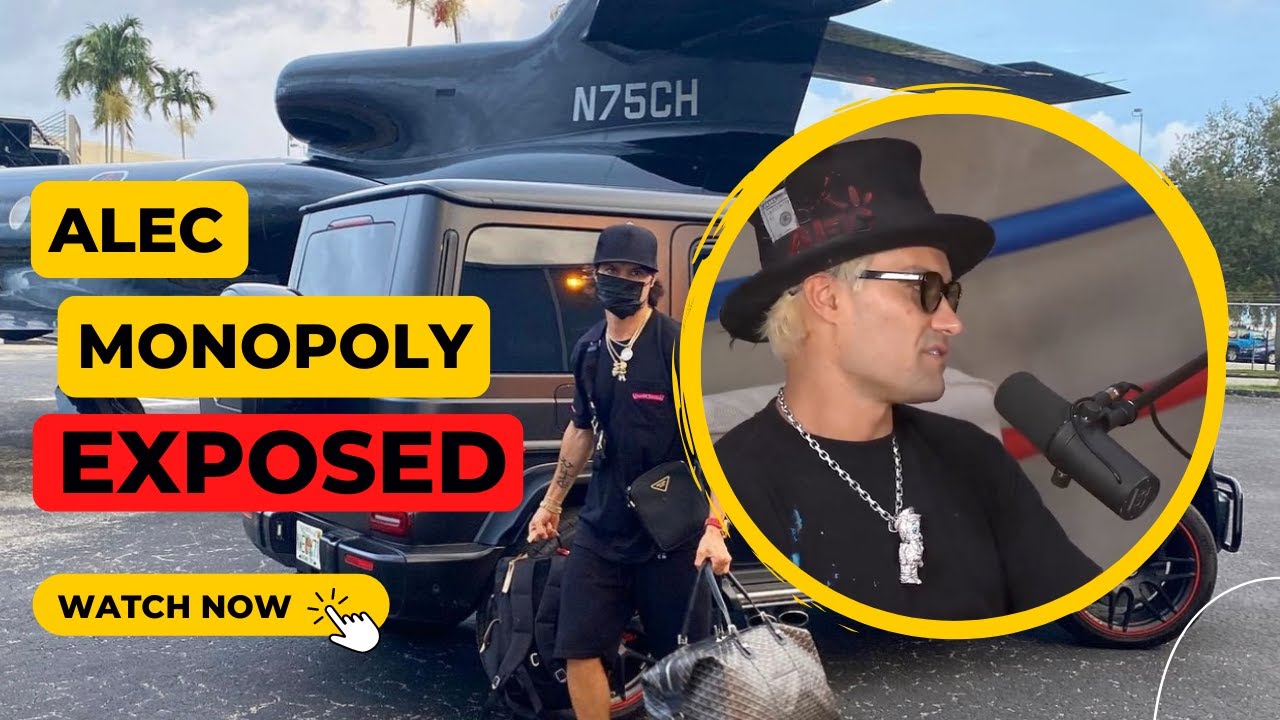
He parties with celebrities. Posts Lamborghinis on Instagram. Paints live at red-carpet events. His anonymity lasted until 2019 when he accidentally revealed his face at DJ Khaled’s son’s birthday party. Now he just wears the top hat.
The technique separates him too. Where traditional pop art used clean silkscreen, Monopoly works wet. Spray paint drips over newspaper collage. Resin seals the chaos. Gold leaf catches light. Each piece looks hastily vandalized and meticulously finished at once.
He took the Monopoly Man and made it protest the system it represented. Bernie Madoff inspired the whole thing. Wall Street collapse. Bank bailouts. A mustachioed tycoon suddenly felt sinister. Monopoly saw the connection and ran with it for nearly two decades.
Origins & Formation
New York Beginnings
Born into an affluent family in 1986. His mother was an artist. Father worked in banking. The contradiction shows up in everything he makes.
Started creating graffiti around New York City as a teenager. Abandoned formal art education early. Said traditional classes felt restrictive.
Los Angeles Migration (2006)
Moved west at 20. LA offered better canvases than NYC. More billboards. More abandoned buildings. Less enforcement. The city’s sprawl became his gallery.
Began developing the Mr. Monopoly character seriously around 2008-2009. The financial crisis hit. Suddenly the mascot felt urgent.
Early Recognition
First solo gallery show happened in November 2010 in New York City. Three months later, exhibited at the Mondrian Hotel during Art Basel Miami Beach in December 2010.
His street pieces gained traction on social media. Collectors started noticing. Celebrities bought in. The underground went mainstream fast.
Identity Strategy
Wore masks, bandanas, covered his face with his hand. Said he feared arrest for illegal graffiti work. The mystery helped. Built mystique until the 2019 accidental reveal. Now the mask is optional, but the persona stays.
Movement & Context
Pop Art Lineage

Monopoly credits Andy Warhol as foundational. That’s obvious in the commercial imagery and brand appropriation. But where Warhol observed consumer culture neutrally, Monopoly takes sides.
He also names Salvador Dali as an influence. The surrealist connection shows in absurdist juxtapositions. Mr. Monopoly as DJ. Scrooge McDuck with Supreme logos.
Street Art Comparisons

Versus Banksy: Both critique capitalism. But Banksy stays hidden and avoids monetization. Monopoly reveals himself and collaborates with luxury brands. Banksy uses stencils for political commentary. Monopoly uses them for stylized characters.
Versus Keith Haring: Both use bold line work and accessible imagery. Haring prioritized public art. Monopoly shifted to gallery sales. Haring’s activism was direct. Monopoly’s is satirical.
Versus Jean-Michel Basquiat: Both started as graffiti artists who entered fine art markets. Basquiat’s work was rawer, more textured, more cryptic. Monopoly keeps his imagery immediately readable. Basquiat resisted commodification. Monopoly embraces it ironically.
Contemporary Position
Monopoly exists between street art purists and commercial pop artists. Too commercial for underground credibility. Too subversive for pure decoration. That middle ground is where his market lives.
His willingness to work with corporations confuses critics. Is painting a Birkin bag art or advertising? With Monopoly, it’s intentionally both.
Materials, Techniques, and Process
Canvas & Supports
Works primarily on stretched canvas (cotton and linen). Sizes range from 12 x 16 inches to 72 x 48 inches. Also paints on wood panels, newspapers, sheet music, luxury handbags, skateboard decks, and vinyl sculptures.
Surface Preparation
Applies gesso or leaves raw canvas for texture variation. Sometimes works directly on newsprint, then mounts to canvas later.
Paint Application
Spray paint forms the base. Applied in front of fans to create dusted, dispersed effects. Multiple thin coats build color saturation.
Acrylic paint adds detail. Brushwork and palette knife techniques create thick, visible strokes. Drips are intentional, controlled chaos.
Stencil Work
Uses hand-cut stencils for recurring characters. Mr. Monopoly appears across hundreds of pieces with consistent proportions. Stencils allow rapid reproduction while maintaining recognizability.
Collage Elements
Integrates vintage newspaper clippings, sheet music, financial documents. Often features Wall Street Journal articles about market crashes, foreclosures, corporate scandals. The text becomes part of the critique.
Finishing Layers
Resin coating is signature. Poured over finished pieces for glossy, protective surface. Creates depth. Makes spray paint look wet. The shine references luxury objects.
Gold leaf accents highlight money symbols, frames, character details. Literal precious metal commenting on metaphorical wealth.
Color Palette
High-intensity neon dominance: Electric blues, hot pinks, lime greens, bright yellows.
Complementary color pairings: Orange against blue. Purple against yellow. Maximum visual impact.
Contrast strategy: Bright characters against neutral newspaper backgrounds. Black outlines separate forms sharply.
Temperature bias: Cool backgrounds (greys, blues) with warm accents (reds, oranges) create push-pull tension.
Working Method
Monopoly often paints live at events. Performs the process publicly. Works quickly. The street art origin shows in speed and spontaneity.
No visible underdrawing. Stencils replace preliminary sketches. The approach is additive: spray, stencil, paint, collage, seal.
Themes, Subjects, and Iconography
Core Critique
Capitalism’s absurdity drives everything. The Monopoly board game promised fun competition. Real monopolies crush competition. That irony fuels the work.
Mr. Monopoly Character

Rich Uncle Pennybags appears in countless scenarios. Running with money bags. Arrested in handcuffs. Counting cash. Playing DJ. The character shifts from game mascot to capitalism’s avatar.
Originally inspired by Bernie Madoff’s ponzi scheme. The 2008 financial crisis context still resonates.
Celebrity & Pop Culture
Portraits of Bob Dylan, Jack Nicholson, Goldie Hawn rendered in graffiti style. Patrick Bateman from American Psycho. All chosen for their relationship to wealth, fame, or consumerism.
Cartoon Characters
Scrooge McDuck: Disney’s embodiment of hoarding wealth.
Richie Rich: The poor little rich boy. Innocence corrupted by money.
Both characters already existed as wealth critiques. Monopoly amplifies them.
Luxury Brand Integration
Supreme, Chanel, Louis Vuitton logos appear frequently. Not endorsements. Commentaries. The brands become part of the pop culture landscape he documents.
Compositional Patterns
Centered figures: Mr. Monopoly dominates most compositions. Eye-level placement.
Layered backgrounds: Newspaper text creates visual noise. Information overload references media saturation.
Repetition of symbols: Dollar signs, money bags, top hats appear across multiple works. Brand consistency.
Balance strategy: Asymmetrical balance with heavy character weight on one side, text/pattern on the other.
Notable Works
“Mr. Monopoly” (2020)

Medium: Acrylic, spray paint, collage, gold leaf, resin on canvas
Dimensions: 72 x 48 inches
Location: Sold through Heritage Auctions
Price: $51,250 (July 2020, artist’s record)
Visual Signature: Large-scale Mr. Monopoly figure in tuxedo, dripping spray paint effects, gold leaf accents, resin finish creates glossy surface
Significance: Established auction record. Demonstrated market demand for larger canvases. Pure distillation of artist’s signature style without additional characters or complex narrative.
“Campbell’s Soup” (c. 2013)

Medium: Acrylic, spray paint, collage on canvas with resin
Dimensions: 48 x 36 inches
Location: Private collection
Sold: Heritage Auctions, $52,500 (2022)
Visual Signature: Direct reference to Andy Warhol‘s iconic soup cans, Mr. Monopoly replaces Campbell’s branding
Significance: Explicit pop art homage. Comments on art market commodification while participating in it. Meta-critique of commercial art becoming commodity.
“Gold Bull” (2015)

Medium: Acrylic, spray paint, collage, resin on canvas
Dimensions: 30 x 40 inches
Price: $50,000 (Heritage Auctions, July 2020)
Visual Signature: Bull market symbolism, gold tones dominate, financial imagery
Significance: References Wall Street’s charging bull sculpture. Comments on market speculation and wealth accumulation.
“Wall Street Crucifix” (Date not specified)

Medium: Acrylic, spray paint, collage, resin on canvas
Price: $45,000 (Heritage Auctions, 2020)
Visual Signature: Religious iconography merged with financial symbols
Significance: Religion of money theme. Wall Street as new cathedral. Strongest symbolic critique in artist’s catalog.
Hermès Birkin Bag Series (2015-ongoing)

Medium: Spray paint, acrylic on authentic Hermès Birkin bags
Process: Base coat with fan-dispersed spray. Hours of drying between layers. Detailed character work over leather.
Significance: Most literal intersection of art and luxury. Each bag valued at $100,000+ before customization. One-of-a-kind pieces. Created for Khloe Kardashian and other celebrity clients.
Commentary: Painting on objects that symbolize extreme wealth. The ultimate capitalist canvas.
“Richie Rich” Series (Various dates)
Medium: Mixed media on canvas
Recurring Elements: Harvey Comics character in various scenarios with money symbols
Significance: Childhood nostalgia weaponized. Rich kid imagery commenting on inherited wealth.
“Scrooge Money Mesmerized” Series (Various dates)
Medium: Spray paint, acrylic, collage, resin
Recurring Elements: Scrooge McDuck surrounded by currency
Significance: Disney character divorced from family-friendly context. Greed made explicit.
Exhibitions, Collections, and Provenance Highlights
Major Solo Exhibitions
First Solo Show (November 2010) New York City. Career launching moment. Transition from street to gallery.
Art Basel Miami Beach (December 2010) Mondrian Hotel exhibition. First major art fair presence.
Yacht Party (2013) Art Basel Miami Beach, Samsung sponsorship. Combined exhibition with luxury lifestyle event.
“Money is Snow Object” (Date not specified) Hotel Barriere Les Neiges, Courchevel. Live painting performance. Included painted snowboard. Alpine luxury context.
“Breaking The Bank On Bond Street” (May 31, 2018) Eden Fine Art Gallery, New Bond Street, London. Focus on celebrity and wealth themes.
“The Icon Series” (Date not specified) Eden Fine Art SoHo. Birthday celebration combined with exhibition. Featured Robert De Niro portraits from film roles.
“Bullet Time Photography” (Date not specified) Eden Gallery. Dynamic photography alongside street art. Multimedia approach.
“Monopoly I$land” (July 27, 2019) Eden Fine Art Gallery Mykonos, Nammos Village. Island resort setting. Exclusive collector audience.
“$PF Monopoly” (Date not specified) Eden Fine Art Gallery Mykonos. Mediterranean party atmosphere. Live painting on floating sculpture.
London Art Week (April 25-27, dates vary) Eden Gallery London. Annual recurring presence. Contemporary art in traditional art week context.
Monops Gallery (Ongoing) Miami, Florida. Dedicated gallery exclusively for artist’s work. Permanent collection access.
Gallery Representation

Eden Fine Art Gallery serves as primary representative with locations in:
- New York (SoHo)
- Miami
- London (New Bond Street)
- Mykonos
- Dubai
International reach established. Luxury market positioning.
Notable Collectors
Celebrities: Miley Cyrus, Snoop Dogg, Seth Rogen, Adrien Brody, Iggy Azalea, Robin Thicke, Philipp Plein
Collection Pattern: Private celebrity holdings. Limited institutional presence. Work appeals to entertainment industry wealth.
Provenance Documentation
Works include artist signatures on recto. Many signed and dated on verso. Certificates of authenticity issued directly by artist. Hand-signed and numbered for limited editions.
Market & Reception
Auction Records
Peak Price: “Campbell’s Soup” at $52,500 (Heritage Auctions, 2022)
Typical Range: $20,000-$51,250 for original paintings
Print Market: $15-$500 depending on size and edition status
Sculptures: $1,986 average (cast vinyl limited editions)
Price Factors
Size matters. 72 x 48 inch canvases command highest prices. Works under 24 x 24 inches sell for significantly less.
Medium affects value. Mixed media with gold leaf and resin finish highest. Pure spray paint lower. Hand-finished elements increase worth.
Character recognition. Mr. Monopoly pieces outsell other subjects. Celebrity portraits perform well but secondary.
Provenance impact. Celebrity-owned pieces command premium when resold.
Edition Structure
Limited edition prints: typically 150-250 copies. Artist proofs: 25 copies. Hand-finished variations within editions increase individual value.
Sculptures: editions of 250-400. Cast vinyl with painted details. Lower price point ($1,000-$5,000) creates accessible entry.
Authentication Concerns
Artist’s signature varied over career. Early street works lack documentation. Gallery-represented pieces since 2010 have clear provenance.
Forgery risk lower than other street artists due to resin technique complexity and specific material combinations.
Market Position
Monopoly occupies commercial contemporary space. Not blue-chip auction houses regularly. Heritage Auctions primary venue. Private sales through galleries exceed public auction volume.
Work appeals to newer collectors, entertainment industry buyers, younger demographic. Traditional fine art institutions less engaged.
Critics divided. Some see sophisticated pop culture commentary. Others view as decorative commercial product. That division doesn’t affect market demand.
Recent Market Activity
Sales increased 2020-2024. Pandemic wealth accumulation created new collector class. Social media presence drives awareness. Instagram followers exceed 1 million.
Condition Patterns
Resin coating protects surface. Prevents typical acrylic paint degradation. UV damage minimal with proper display.
Newspaper collage elements can yellow over time. Archival concerns about long-term paper stability.
Spray paint layer stable when sealed. Unsealed street works face significant environmental damage.
Influence & Legacy
Upstream Influences
Salvador Dali: Cited directly by artist. Surrealist absurdity in pop imagery. Self-promotion strategies. Public persona construction.
Andy Warhol: Commercial imagery appropriation. Brand collaboration. Gallery system navigation. Celebrity proximity.
Keith Haring: Accessible visual language. Public art democratization. Bold line work. Social commentary.
Jean-Michel Basquiat: Graffiti to gallery trajectory. Crown imagery parallels in Monopoly’s top hat. Cultural commentary through symbol systems.
Banksy: Anonymous street artist model. Anti-establishment positioning. Stencil technique. Though Monopoly abandoned anonymity earlier.
Downstream Impact
Commercial Street Art Acceptance: Monopoly proved luxury brand collaborations compatible with street art credibility. TAG Heuer partnership (2016) as brand ambassador opened doors for other artists.
Art-Fashion Crossover: Painted Birkin bags established high fashion as legitimate canvas. Influenced artists working with luxury goods.
Social Media Art Marketing: Built following through Instagram lifestyle content. Cars, parties, live painting events. Model adopted by younger artists.
Celebrity Collector Culture: Made contemporary street art desirable for entertainment industry wealth. Different collector base than traditional fine art.
Cross-Domain Echoes
Fashion Design: His aesthetic influenced streetwear brands. Bold graphics, money symbols, cartoon appropriation became design trends.
Music Videos: Neon spray paint aesthetic appears in hip-hop visuals. Artist’s DJ work connects music and visual art directly.
Event Design: Live painting performances at luxury events became standard. Art Basel parties adopted format.
Critical Reception
Supporters argue: Democratizes art through accessible imagery. Comments meaningfully on wealth inequality. Successfully navigates commercial/critical tension.
Detractors claim: Shallow pop culture appropriation without depth. Commercial success undermines anti-capitalist message. Derivative pop art without innovation.
Both perspectives acknowledge cultural impact regardless of artistic merit debate.
How to Recognize Monopoly’s Work at a Glance
The Mr. Monopoly character with top hat, mustache, monocle appears in 80%+ of works
Glossy resin surface reflects light distinctly, unlike matte spray paint
Drip effects controlled but visible, spray paint runs down canvas intentionally
Newspaper collage layers visible beneath paint, often financial news sections
Neon color palette dominated by electric blue, hot pink, bright yellow, lime green
Gold leaf accents on money symbols, character details, decorative elements
Stenciled consistency in character proportions across multiple works
Signature placement typically lower left or right corner, “ALEC” in caps
Canvas sizes favor 30 x 40, 36 x 48, 48 x 60 inch formats
Mixed media approach combines spray, acrylic, collage, resin in single piece
High contrast edges sharp distinction between character and background
Pop culture references obvious and immediate, no obscure symbolism
Brand logos appear frequently, Supreme, Chanel, luxury labels
Money imagery dollar signs, currency, money bags as recurring motifs
Urban aesthetic maintains street art rawness despite gallery finish
FAQ on Alec Monopoly
Who is Alec Monopoly?
Alec Monopoly is the professional name of Alec Andon, an American street artist and DJ born February 24, 1986, in New York City. He’s known for using the Monopoly board game character Rich Uncle Pennybags in contemporary pop art that critiques capitalism and wealth.
What is Alec Monopoly’s real name?
His real name is Alec Andon. He kept his identity hidden for years by wearing masks and covering his face, but accidentally revealed himself in 2019 at DJ Khaled’s son’s birthday party.
Why does Alec Monopoly use the Monopoly Man?
Bernie Madoff’s ponzi scheme and the 2008 financial crisis inspired his use of the character. The Monopoly Man represents capitalist greed and corporate excess. It transformed a childhood game mascot into a symbol of wealth inequality.
How much is Alec Monopoly art worth?
Original paintings typically sell for $20,000 to $52,500 at auction. His record sale was “Campbell’s Soup” at $52,500 through Heritage Auctions in 2022. Prints range from $15 to $500 depending on size and edition.
What techniques does Alec Monopoly use?
He combines spray paint, acrylic, stencils, newspaper collage, gold leaf, and resin coating on canvas. The glossy resin finish is his signature element. He works quickly, often painting live at exhibitions and events.
Where does Alec Monopoly live?
He lives in Benedict Canyon, Los Angeles, in the Beverly Hills area. He moved from New York City to Los Angeles in 2006 because LA offered more billboards and abandoned buildings for street art with less legal enforcement.
Who collects Alec Monopoly art?
Celebrity collectors include Miley Cyrus, Snoop Dogg, Seth Rogen, Adrien Brody, Iggy Azalea, and Robin Thicke. Philipp Plein owns multiple pieces. His work appeals to entertainment industry wealth and younger contemporary art collectors rather than traditional institutions.
What brands has Alec Monopoly worked with?
He’s collaborated with TAG Heuer as brand ambassador, Jacob & Co. on $600,000 watches, Philipp Plein, CoverGirl, Vitamin Water, W Hotel, and Paramount Pictures. He painted the INSURGE logo and created live murals for Justin Bieber’s film premiere.
Is Alec Monopoly like Banksy?
Both are street artists who critique capitalism, but Monopoly reveals his identity and embraces commercial collaborations. Banksy stays anonymous and avoids monetization. Monopoly works in bright pop art style while Banksy uses political stencils.
Where can I see Alec Monopoly’s work?
Eden Fine Art Gallery represents him with locations in New York, Miami, London, Mykonos, and Dubai. The Monops Gallery in Miami exclusively shows his work. His pieces appear at Art Basel events and through Heritage Auctions for sales.
Conclusion
Alec Monopoly operates in the strange space where critique becomes commodity. His spray-painted characters challenge wealth while selling to the wealthy. That contradiction isn’t weakness-it’s the whole point.
His influence on contemporary street art can’t be ignored. He proved luxury brand collaborations don’t automatically destroy underground credibility.
The acrylic paintings with resin finishes created a recognizable aesthetic that younger artists copy. His celebrity collector base changed who buys urban art.
Whether his work holds lasting artistic merit remains debatable. But his market performance and cultural visibility are facts. The Monopoly Man became shorthand for discussing capitalism in visual terms.
His gallery shows continue drawing crowds. Eden Fine Art exhibitions sell consistently. The limited edition prints make his imagery accessible beyond five-figure originals.
Monopoly transformed a board game icon into contemporary social commentary. That transformation matters regardless of where critics land on authenticity debates.