

Your brush choice makes or breaks your acrylic painting results. The best brush shapes for acrylics depend on your painting style, subject matter, and desired effects, but understanding each shape’s capabilities transforms your artistic process.
Many painters struggle with streaky coverage, poor blending, or inadequate detail control. These problems often stem from using the wrong brush shape rather than technique issues.
This guide covers essential brush shapes for acrylic work, from versatile flats and rounds to specialty tools like fan brushes and palette knives.
You’ll learn which brushes excel at specific techniques, how to match brush shapes to painting styles, and practical tips for building a complete acrylic brush collection.
Whether you’re starting your first painting mediums exploration or refining your brush selection, understanding these tools improves your painting immediately.
Flat Brushes for Acrylics

Standard Flat Brush Applications
Flat brushes are the workhorses of acrylic painting. Their rectangular ferrule and straight-cut bristles create predictable strokes that work well with heavy body acrylics.
These brushes excel at large area coverage. You can paint backgrounds faster than with any other brush shape.
Bold Geometric Work
Flat brushes make clean, decisive marks. The sharp edges produce straight lines perfect for architectural subjects or abstract geometric pieces.
Princeton Artist Brush Co. and Da Vinci Brush Company both manufacture quality synthetic flats. Their bristles hold paint well without losing their shape.
Color Blocking Techniques
When working on abstract pieces, flats deliver consistent paint coverage. Load the brush fully, then apply even pressure across the canvas.
The rectangular shape naturally creates uniform blocks of color. This makes them ideal for hard-edge painting styles.
Size Variations and Their Uses

Small Flats (Sizes 2-6)
These detail-oriented brushes handle precision work. Use them for windows in cityscapes or small pattern elements.
Escoda Brushes makes excellent small flats with synthetic sable fibers. They maintain sharp edges even after multiple cleaning sessions.
Medium Flats (Sizes 8-12)
Most painters reach for medium flats constantly. They balance coverage with control, making them perfect for general painting tasks.
Golden Artist Colors recommends these sizes for their heavy body acrylics. The paint consistency matches the brush’s capacity perfectly.
Large Flats (Sizes 14+)
Background washes become effortless with large flats. They hold substantial amounts of paint, reducing the need for frequent reloading.
Winsor & Newton manufactures robust large flats that survive aggressive paint application. Their synthetic bristles resist splaying under pressure.
Flat Brush Techniques

Loading and Control Methods
Proper paint loading makes the difference between smooth coverage and streaky results. Dip the brush into your paint, then scrape one side against the palette edge.
This creates a sharp paint edge on one side of the brush. Use this loaded edge for crisp lines and clean color transitions.
Blending with Flat Edges
The flat edge works surprisingly well for blending. Hold the brush perpendicular to your canvas and drag gently between colors.
Work quickly with acrylics since they dry fast. Mist your palette occasionally to keep paint workable longer.
Dry Brushing for Texture
Load your flat brush lightly, then dab it on paper towel. This removes excess paint while leaving enough for textural marks.
Drag the brush across rough canvas surfaces. The bristles catch on the texture, creating broken color effects perfect for weathered surfaces or tree bark.
Round Brushes for Versatile Acrylic Work

Round Brush Fundamentals
Round brushes offer unmatched versatility in acrylic painting. Their pointed tips and full bellies handle everything from fine details to broad washes.
Quality matters more with rounds than other brush shapes. A good point separates professional tools from student alternatives.
Point Quality and Shape Retention
Synthetic sable performs better than natural bristles with acrylics. The paint’s quick-drying nature can damage natural fibers over time.
Taklon synthetic fibers maintain their points longest. Look for brushes with these bristles when investing in quality rounds.
Belly Capacity
The brush belly holds paint reserves. Larger bellies mean fewer trips to your palette, keeping your painting rhythm uninterrupted.
Liquitex recommends matching brush size to paint consistency. Fluid acrylics work well with smaller bellies, while heavy body paints need more capacity.
Detail Work with Small Rounds

Fine Line Creation (Sizes 0-4)
Small rounds excel at precise linework. Thin the paint slightly with water for smoother flow from the brush tip.
Hold the brush near the ferrule for maximum control. Your hand becomes steadier when gripped closer to the working end.
Dot Work and Stippling
Touch the brush tip straight down onto your canvas for perfect dots. Vary pressure to create different dot sizes without changing brushes.
This technique works beautifully for pointillism studies or textural elements like flowers or foliage.
Small Area Color Application
Rounds navigate tight spaces better than any other brush shape. Use them around detailed elements where larger brushes can’t reach.
The pointed tip gets into corners while the belly provides enough paint for complete coverage.
Medium to Large Round Applications

General Painting (Sizes 6-12)
These versatile sizes handle most painting situations. They’re particularly useful for organic shapes and natural subjects.
Amsterdam Acrylic paints pair well with medium rounds. The paint consistency allows smooth application without dragging or skipping.
Blending and Color Transitions
Rounds create softer edges than flats. Use circular motions to blend colors gradually, working while the paint remains wet.
The rounded ferrule prevents hard lines that sometimes occur with flat brushes. This makes them ideal for impressionistic techniques.
Organic Shape Creation
Natural forms like clouds, trees, and figures benefit from round brush characteristics. The varied stroke width creates more naturalistic edges.
Load the brush fully, then vary pressure as you paint. Light pressure uses just the tip, while heavier pressure engages the full belly.
Consistent Coverage Techniques
Maintain steady pressure for uniform paint application. Practice controlling the amount of paint on your brush to avoid overloading.
Student grade brushes often struggle with consistent coverage. Professional quality rounds from established manufacturers perform more reliably.
Professional brush sets typically include both synthetic and natural options. Synthetic works better for acrylics due to the medium’s properties and cleaning requirements.
Filbert Brushes for Soft Edges

Understanding the Filbert Shape
Filbert brushes combine the best features of flats and rounds. The oval-shaped tip creates softer edges than traditional flat brushes while maintaining better control than rounds.
Their construction uses a flattened ferrule that tapers to a rounded point. This unique shape makes them perfect for blending work and natural subjects.
How Filberts Differ from Other Shapes
Unlike flat brushes, filberts don’t create harsh lines. The rounded edges naturally feather paint application, making transitions smoother.
Compared to round brushes, filberts offer more surface contact with your canvas. This increased contact improves paint coverage while maintaining edge softness.
Best Paint Consistency for Filberts
Heavy body acrylics work exceptionally well with filbert brushes. The thicker consistency allows for better control during blending techniques.
Thin your paint slightly with water or medium for smoothest application. Too much thinning reduces the paint’s body and makes blending harder.
Blending Techniques with Filberts

Soft Edge Creation
Load your filbert with clean paint, then work between two colors while both remain wet. Use light pressure and curved motions.
The oval tip naturally creates graduated transitions. Work quickly since acrylics dry faster than oils.
Color Gradation Methods
Start with your darkest value and gradually add lighter tones. Clean your brush between applications to avoid muddy colors.
Winsor & Newton synthetic filberts maintain their shape well during extended blending sessions. Their bristles resist splaying under repeated use.
Portrait Work Applications
Filberts excel at facial features and skin tones. The soft edges create realistic flesh rendering without harsh transitions.
Use medium-sized filberts (sizes 6-10) for most facial work. Smaller sizes handle detail areas around eyes and lips.
Creative Applications
Petal and Leaf Painting

Natural subjects benefit from filbert characteristics. Single brush strokes can create entire flower petals with proper loading and pressure variation.
Load one side of the brush with lighter paint, the other with darker. This creates natural shading in a single stroke.
Cloud Formation Techniques

Atmospheric effects become easier with filberts. Their soft edges naturally suggest cloud formations and sky transitions.
Work wet-into-wet for realistic cloud blending. Mist your canvas lightly to extend working time with fast-drying acrylics.
Hair and Fur Texture Creation
Filberts create convincing hair textures through varied pressure application. Light touches suggest individual strands while heavier pressure creates broader masses.
Da Vinci Brush Company makes excellent long-handled filberts perfect for this detailed work. The extended handles provide better control for fine textures.
Specialty Brush Shapes for Specific Techniques
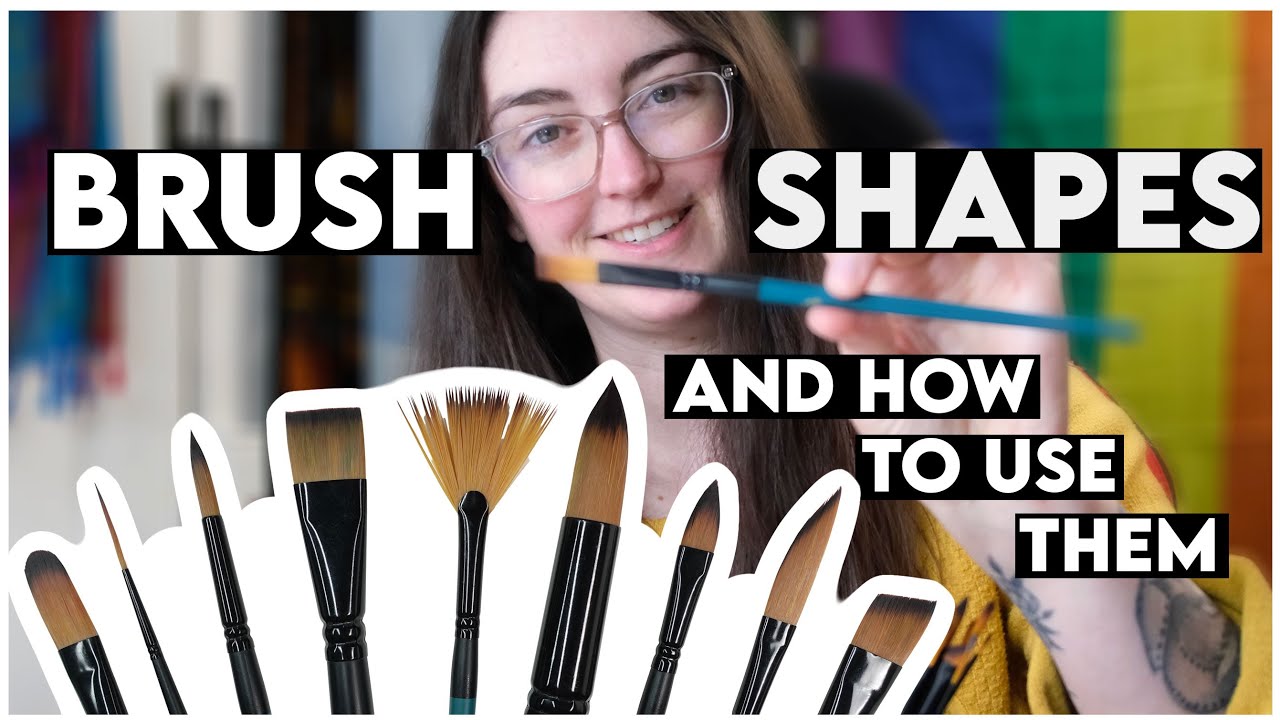
Angular Brushes
Angled Flat Construction and Uses
Angular brushes feature diagonally cut bristles that create unique stroke capabilities. The angled edge reaches into corners while the longer side covers broader areas.
These brushes work particularly well for architectural subjects and geometric abstract work.
Corner Work and Tight Spaces
The pointed corner of angular brushes navigates spaces where regular flats can’t reach. Use them for window frames, building edges, and detailed geometric elements.
Princeton Artist Brush Co. manufactures quality angular brushes with synthetic bristles that maintain their angled edge through multiple uses.
Geometric Pattern Creation
Angular brushes naturally create interesting geometric marks. Vary your stroke direction to produce complex patterns and textures.
The diagonal cut allows for quick directional changes without repositioning your hand grip.
Fan Brushes
Texture Creation Capabilities
Fan brushes spread paint in distinctive patterns impossible with other brush shapes. Their splayed bristles create instant texture effects.
Use them sparingly as accent tools rather than primary painting brushes. Their specialty nature makes them perfect for specific textural needs.
Foliage and Grass Painting
Load the fan brush lightly and dab vertically for grass effects. Vary pressure to create different grass heights and densities.
Tree foliage becomes convincing through gentle dabbing motions. Work from dark to light values for realistic depth.
Dry Brush Texture Effects
Remove excess paint from fan brushes before application. The nearly dry bristles create broken color perfect for weathered surfaces.
This technique works especially well for wood grain, fabric textures, and aged metal surfaces.
Liner and Script Brushes
Extra-Long Bristle Construction
Liner brushes feature exceptionally long bristles that hold substantial paint while maintaining fine points. This construction enables long, continuous lines.
Their length requires different handling techniques than standard brushes. Support your hand and move from the shoulder for steadiest control.
Consistent Line Weight Creation
Proper loading keeps line width uniform throughout long strokes. Fill the bristles completely but avoid overloading that causes drips.
Practice on paper before applying lines to your final painting. Muscle memory develops with repetition.
Detail Line Applications
Use liners for ship rigging, tree branches, and architectural details. Their precision surpasses any other brush type for linear elements.
Escoda Brushes produces excellent synthetic liners that maintain points longer than natural bristle alternatives.
Palette Knives as Brush Alternatives

Paint Application Techniques
Palette knives apply paint differently than brushes, creating unique textural possibilities. Use the flat blade for smooth application or the edge for linear marks.
Mix colors directly on canvas with knife techniques. This approach suits expressionistic painting styles perfectly.
Texture Building Methods
Build paint thickness through multiple knife applications. Layer colors for complex surface textures impossible with brush techniques.
The knife edge scrapes through wet paint to reveal underlying colors. This sgraffito technique adds visual interest to painted surfaces.
Color Mixing on Canvas
Blend colors directly on your painting surface rather than pre-mixing on the palette. This creates more vibrant color interactions.
Work quickly while paint remains workable. Acrylic’s fast drying time limits blending windows compared to oil painting techniques.
Clean-up and Scraping Uses
Palette knives remove unwanted paint areas cleanly. Scrape back to canvas or underlying layers for corrections.
This subtractive approach complements additive brush techniques, giving you more problem-solving options during painting sessions.
Brush Selection by Painting Style

Realistic and Photorealistic Painting
Detail Brush Requirements
Photorealism demands precision tools. Small rounds (sizes 0-4) handle fine details like eyelashes and fabric textures.
Synthetic sable brushes maintain points longer than natural alternatives. This consistency proves crucial for extended detail sessions.
Blending Brush Combinations
Smooth transitions require multiple brush sizes working together. Use large flats for base coverage, medium rounds for general blending, and small rounds for final refinements.
Kolinsky sable alternatives work well with heavy body acrylics. The synthetic fibers resist paint buildup better than natural bristles.
Size Progression for Smooth Transitions
Start with size 12 flats for backgrounds, progress to size 8 rounds for mid-level work, then finish with size 2 rounds for details.
This systematic approach prevents overworking areas and maintains paint freshness throughout your session.
Recommended Brush Sets
Professional sets from Winsor & Newton include essential sizes for realistic work:
- Flat brushes: sizes 6, 10, 14
- Round brushes: sizes 2, 6, 10
- Detail rounds: sizes 0, 1
- Filbert brushes: sizes 4, 8
Impressionistic Techniques
Broken Color Application Brushes
Impressionism relies on visible brush strokes and color mixing on canvas rather than palette. Flat brushes excel at this broken color approach.
Load brushes with pure color and apply with confident strokes. Avoid overblending to maintain the style’s characteristic freshness.
Quick Stroke Capabilities
Short-handled brushes provide better control for rapid mark-making. The reduced length allows for more responsive brush movement.
Practice quick, decisive strokes on practice canvas before tackling your final painting. Muscle memory develops through repetition.
Paint Loading for Thick Application
Heavy body acrylics suit impressionistic techniques perfectly. Load brushes generously to create textural paint application.
Princeton Artist Brush Co. flat brushes handle thick paint loading without losing their shape integrity.
Brush Combinations for Plein Air Work
Outdoor painting requires portable, versatile brush selections:
- Large flat (size 12) for sky and background areas
- Medium flat (size 8) for general shapes
- Small round (size 4) for details and corrections
- Filbert (size 6) for soft edge work
Abstract and Expressionist Approaches

Large Brush Selections
Abstract and expressionist work benefits from bold brush choices. Sizes 16+ create dramatic gestural marks impossible with smaller tools.
Da Vinci Brush Company manufactures extra-large flats that maintain structural integrity under aggressive use.
Unusual Application Tools
Experiment beyond traditional brushes. Palette knives, sponges, and even fingers create unique textural effects.
These alternative tools expand your expressive vocabulary and add spontaneity to planned compositions.
Paint Manipulation Techniques
Work paint while wet to create flowing, organic effects. Large brushes move substantial amounts of material quickly.
Fluid acrylics respond well to manipulation techniques, creating watercolor-like effects with better permanence.
Decorative and Craft Painting
Pattern-Specific Brush Shapes
Decorative work requires specialized brushes for specific pattern elements. Angular brushes create clean geometric shapes while liners handle intricate scrollwork.
Escoda Brushes produces craft-specific brush sets designed for pattern work and decorative applications.
Stencil-Compatible Options
Use dense, short-bristled brushes for stencil work. Foam brushes prevent paint bleeding under stencil edges.
Dab rather than stroke when working with stencils. This prevents paint from seeping underneath and maintains crisp pattern edges.
Multi-Loading Techniques
Load different colors on opposite sides of flat brushes for gradient effects in single strokes. This technique speeds up decorative painting considerably.
Practice color loading on paper before applying to your project surface.
Building Your Acrylic Brush Collection

Starter Sets vs. Individual Purchases
Beginner-Friendly Combinations
Starter sets provide immediate painting capability at reasonable cost. Look for sets including basic shapes: flats, rounds, and one filbert.
Golden Artist Colors recommends synthetic brush sets for acrylic beginners. Natural bristles require more maintenance knowledge.
Quality vs. Quantity Considerations
Buy fewer, better brushes rather than many cheap ones. Quality brushes last longer and perform more consistently.
Student grade brushes work for learning basic techniques but limit advanced skill development.
Budget Allocation Strategies
Invest 60% of your brush budget in three essential sizes:
- One large flat (size 12)
- One medium round (size 8)
- One small detail round (size 2)
Add specialty brushes gradually as your skills develop and style preferences emerge.
Essential Brushes for Every Kit

Must-Have Shapes and Sizes
Every acrylic painter needs these core brushes:
- Flat brush (size 10) – General coverage and geometric work
- Round brush (size 6) – Versatile painting and blending
- Detail round (size 2) – Fine work and corrections
- Filbert (size 8) – Soft edges and natural subjects
Versatile Brush Combinations
This four-brush combination handles 90% of acrylic painting situations. Add specialty brushes based on your preferred subjects and techniques.
Synthetic sable performs best with acrylics across all brush shapes. Natural bristles deteriorate faster with acrylic’s alkaline nature.
Backup Brush Importance
Keep backup brushes for essential sizes. Damaged or lost brushes shouldn’t stop painting sessions.
Store backups separately from primary brushes to prevent simultaneous damage from accidents.
Advanced Collection Expansion
Specialty Brushes Worth Investing
Once basics are covered, add these specialty tools:
- Fan brush for texture effects
- Liner brush for detailed line work
- Angular brush for geometric precision
- Large flat (size 16+) for backgrounds
Professional Quality Upgrades
Replace student brushes with professional versions as budget allows. Start with your most-used sizes first.
Liquitex professional brush lines offer significant performance improvements over student alternatives.
Technique-Specific Additions
Match brush additions to your developing style preferences. Portrait artists need more detail rounds while landscape painters benefit from additional texture brushes.
Storage and Organization

Brush Roll and Case Options
Brush rolls protect bristles during transport and storage. Look for ones with individual slots for each brush.
Canvas rolls work better than plastic cases for long-term storage. They allow air circulation and prevent moisture buildup.
Studio Storage Solutions
Vertical storage keeps brush tips protected and easily accessible. Mason jars or brush holders work well for daily use.
Never store brushes tip-down in water. This destroys brush points and loosens ferrules permanently.
Travel Organization Systems
Compact travel sets should include:
- Small flat (size 6)
- Medium round (size 4)
- Detail round (size 1)
- Small palette knife
This minimal kit handles most location painting needs while fitting in small travel cases.
Troubleshooting Common Brush Problems

Paint Application Issues
Streaky Coverage Solutions
Streaky paint application ruins smooth color areas. This happens when brush loading is uneven or paint consistency varies across your palette.
Load brushes completely and maintain consistent pressure. Work quickly before acrylics start setting up.
Uneven Paint Distribution
Check your paint consistency first. Heavy body acrylics need proper thinning for smooth application, while fluid acrylics may require thickening with gel medium.
Golden Artist Colors medium extends working time and improves paint flow. Add small amounts until you achieve desired consistency.
Brush Loading Problems
Insufficient paint loading creates patchy coverage. Fill the brush belly completely, then work excess off the palette edge.
Too much paint causes drips and uncontrolled application. Find the balance through practice on scrap canvas.
Brush Marks and Texture Problems
Visible Bristle Tracks
Harsh brush marks distract from intended composition. Switch to softer synthetic brushes or add flow improver to your paint.
Work in multiple thin layers rather than single thick applications. This reduces visible brush texture.
Hard Edges Where Soft Needed
Use filbert brushes for softer transitions. Their rounded edges naturally feather paint application compared to flat brushes.
Blend while paint remains wet. Acrylics dry quickly, limiting your working window for smooth transitions.
Color Mixing Difficulties
Muddy Color Results
Muddy colors result from mixing too many pigments or using dirty brushes. Clean brushes between color changes to maintain purity.
Limit mixtures to three colors maximum. More colors create gray, lifeless results that lack vibrancy.
Paint Flow Inconsistencies
Inconsistent paint flow indicates brush problems or paint issues. Check bristle condition and paint age before continuing.
Old paint develops skin and clumps that interfere with smooth application. Replace problematic paint rather than fighting it.
Brush Performance Problems
Lost Points and Splayed Bristles
Point Deterioration Causes
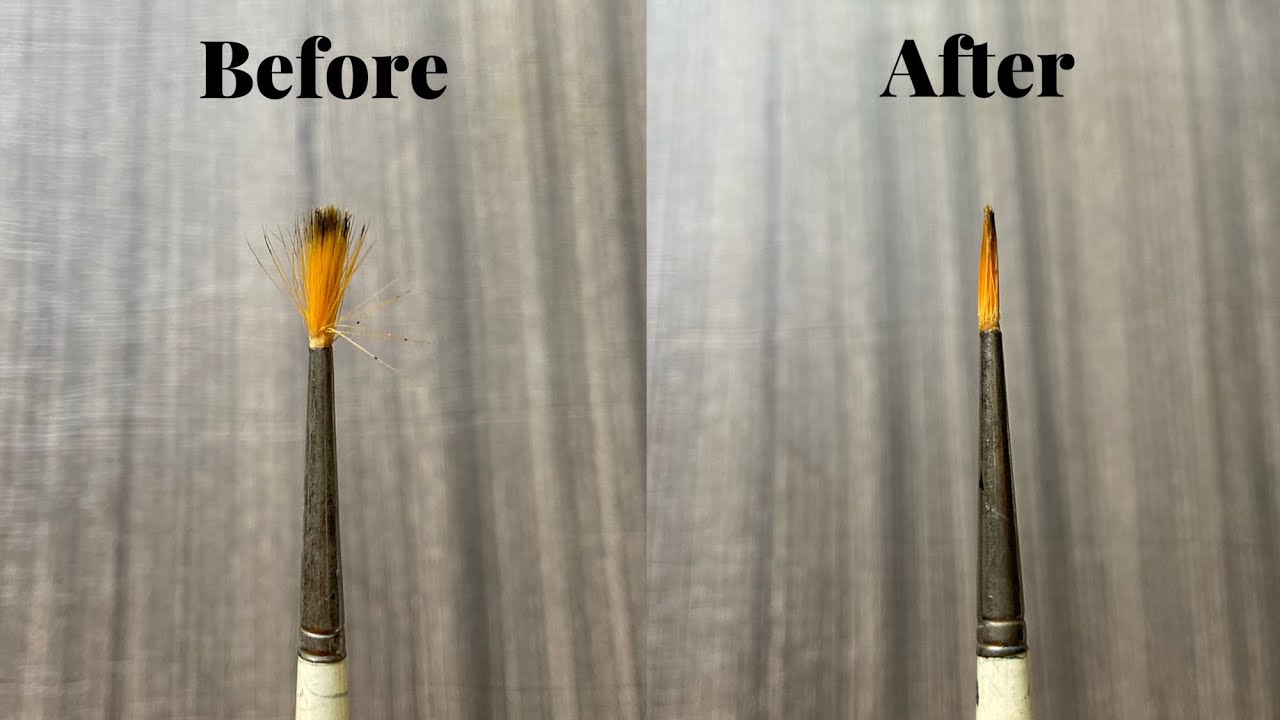
Brush points deteriorate from improper cleaning, paint buildup in ferrules, or low-quality construction. Synthetic brushes typically outlast natural bristles with acrylics.
Princeton Artist Brush Co. synthetic rounds maintain points longer than most alternatives. Their construction resists point loss under normal use.
Bristle Splaying Solutions
Splayed bristles often indicate paint dried in the ferrule. Clean brushes immediately after use to prevent this damage.
Reshape wet bristles with your fingers, then store points up. Never store brushes tip-down in water containers.
Paint Buildup in Ferrules
Prevention Techniques
Paint in ferrules destroys brush performance permanently. Clean thoroughly after each session, working soap into the ferrule area.
Winsor & Newton brush soap removes stubborn acrylic buildup better than regular detergents. Use warm water and work gently.
Cleaning Deep Buildup
For dried paint in ferrules, soak brushes in warm soapy water for 30 minutes. Work soap into ferrule with gentle circular motions.
Severe buildup may require brush restorer products. These solvents soften dried acrylic for removal.
Stiff Brush Revival Techniques
Gentle Restoration Methods
Stiff brushes often return to usability with proper treatment. Soak in warm water with brush soap for several hours.
Work softened paint out gradually. Aggressive scrubbing damages bristles permanently, so patience pays off.
When Restoration Fails
Some brush damage proves irreversible. Ferrule separation, bent bristles, or lost points indicate replacement time.
Keep damaged brushes for texture work or paint mixing. They still serve useful purposes beyond fine painting.
Technique-Specific Solutions
Blending Difficulties

Working Time Extension
Blending challenges often stem from paint drying too quickly. Mist your palette and canvas lightly to extend working time.
Liquitex slow-dri medium significantly extends acrylic working time. Add small amounts to maintain paint body while slowing drying.
Brush Selection for Blending
Wrong brush choices make blending harder. Filberts work better than flats for smooth transitions, while synthetic bristles perform better than natural ones.
Large brushes cover more area before paint sets. Use the biggest brush possible for your blending area.
Detail Work Challenges
Brush Control Issues
Poor brush control affects fine detail work. Support your painting hand with your non-painting hand for steadier control.
Practice basic strokes daily on practice paper. Muscle memory improves with consistent repetition.
Paint Consistency for Details
Detail work requires proper paint consistency. Too thick creates control problems, while too thin lacks opacity.
Thin paint slightly with water for liner work. Maintain body for solid coverage while improving flow.
Large Area Coverage Problems
Maintaining Wet Edges
Wet edge maintenance prevents lap marks in large areas. Work systematically from one side to the other without stopping.
Plan your approach before starting. Once you begin a large area, complete it without breaks.
Brush Size Selection
Use the largest brush your control allows. Small brushes create texture problems in large, smooth areas.
Size 14+ flats handle most background areas efficiently. Switch to smaller brushes only for detail areas.
Color Contamination Prevention
Brush Cleaning Between Colors
Color contamination mudds mixtures and ruins pure colors. Clean brushes thoroughly between different color families.
Keep multiple water containers – one for initial rinse, another for final cleaning. This prevents cross-contamination.
Dedicated Brush Systems
Assign specific brushes to color families. Use separate brushes for warm and cool colors to maintain color purity.
This system requires more brushes but produces cleaner color mixing and reduces cleaning time during painting sessions.
FAQ on Best Brush Shapes For Acrylics
What brush shapes work best for acrylic painting beginners?
Start with flat brushes (sizes 6-12), round brushes (sizes 4-8), and one filbert brush (size 6). These three shapes handle 90% of acrylic painting situations. Synthetic bristles work better than natural ones with fast-drying acrylics. Princeton Artist Brush Co. and Da Vinci Brush Company offer quality starter options.
Should I use synthetic or natural bristles for acrylics?
Synthetic bristles perform better with acrylics. Natural bristles deteriorate faster due to acrylic paint’s alkaline nature and quick-drying properties. Synthetic sable and Taklon fibers maintain their shape longer, clean easier, and resist paint buildup. Save natural bristles for oil painting instead.
What’s the difference between flat and round brushes?
Flat brushes create sharp edges, cover large areas quickly, and work well for geometric shapes. Round brushes offer versatility with pointed tips for details and full bellies for broader strokes. Flats excel at backgrounds while rounds handle both detail work and general painting tasks.
When should I use filbert brushes instead of flats or rounds?
Use filbert brushes when you need soft edges without harsh lines. Their oval shape naturally creates feathered transitions perfect for portrait work, natural subjects, and blending techniques. They combine flat brush coverage with round brush softness, making them ideal for organic forms and atmospheric effects.
What size brushes do I need for different painting scales?
For small canvases (8×10″), use sizes 2-8. Medium canvases (16×20″) need sizes 4-12. Large works (24×36″+) require sizes 8-16+. Always use the largest brush your control allows. Small brushes on large areas create unwanted texture and slow progress significantly.
How do I choose brushes for detail work versus broad coverage?
Detail work requires small rounds (sizes 0-4) and liner brushes for precision. Broad coverage needs large flats (sizes 12+) and wash brushes. Match brush size to your task – tiny brushes struggle with large areas while large brushes can’t access tight spaces effectively.
What specialty brushes should I add after the basics?
Add fan brushes for texture effects, angular brushes for geometric precision, and liner brushes for fine details. Palette knives serve as brush alternatives for thick paint application. These specialty tools expand your technique options but aren’t essential for basic acrylic painting success.
How do brush shapes affect different painting styles?
Realism requires precise rounds and small detail brushes. Impressionism benefits from flat brushes for broken color effects. Abstract work uses large flats and palette knives for gestural marks. Match brush shapes to your artistic goals and preferred techniques.
Can I use the same brushes for heavy body and fluid acrylics?
Yes, but adjust your technique. Heavy body acrylics work well with all brush shapes but may need slight thinning for smooth application. Fluid acrylics flow better from brushes but offer less texture potential. The same brush shapes work for both consistencies with minor loading adjustments.
How do I know when to replace my acrylic brushes?
Replace brushes when they lose their points, develop splayed bristles, or accumulate paint in ferrules. Synthetic brushes typically last longer than natural ones with proper care. Keep damaged brushes for texture work rather than discarding them completely. Quality brushes justify replacement costs through better performance.
Conclusion
Mastering the best brush shapes for acrylics transforms your painting from frustrating struggles to confident artistic expression. Each brush shape serves specific purposes, from flat brushes creating bold geometric marks to round brushes handling versatile detail work.
Your brush collection should match your painting style and subjects. Synthetic bristles outperform natural alternatives with acrylic mediums, while proper brush maintenance extends tool life significantly.
Start with essential shapes: flats for coverage, rounds for versatility, and filberts for blending. Add specialty brushes like fan brushes and palette knives as your skills develop and style preferences emerge.
Quality matters more than quantity. Three excellent brushes serve you better than twenty poor ones. Invest in reputable brands like Winsor & Newton, Princeton Artist Brush Co., and Da Vinci Brush Company for reliable performance.
Remember that brush technique develops through practice. The right tools support your artistic vision, but consistent painting sessions build the skills that bring your creative ideas to life successfully.


