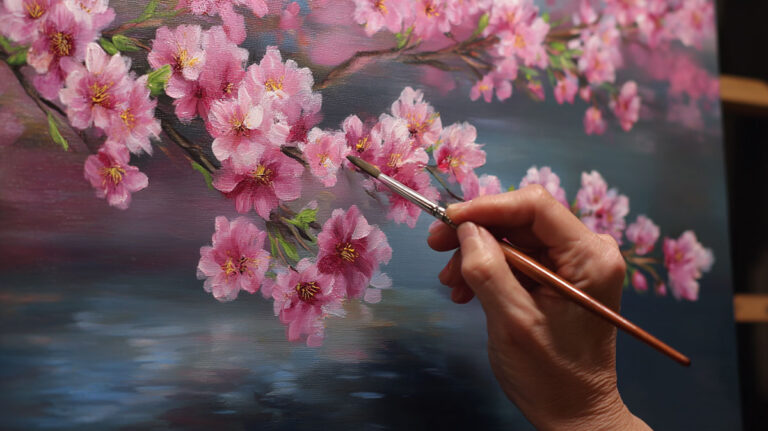
Dramatic skies can transform ordinary paintings into breathtaking masterpieces that stop viewers in their tracks.
Learning how to paint clouds in oil opens up endless possibilities for creating atmospheric effects that capture nature’s most spectacular moments.
Whether you’re painting storm fronts, golden hour lighting, or peaceful cumulus formations, mastering cloud techniques separates amateur work from professional results.
Oil painting offers unique advantages for sky work. The extended working time allows for seamless blending and atmospheric perspective effects impossible with faster-drying mediums.
This guide covers everything from pigment selection and canvas preparation to advanced glazing techniques and common mistake fixes.
You’ll discover how to mix convincing cloud colors, create dramatic lighting effects, and paint different weather conditions with confidence.
By the end, you’ll understand brush techniques for soft cloud edges, color temperature principles for atmospheric depth, and professional methods for building luminous, three-dimensional cloud formations that bring your landscapes to life.
Oil Paint Properties for Cloud Work

Pigment Selection for Sky Painting
Titanium white forms the backbone of cloud painting. This pigment offers exceptional covering power and mixes cleanly with other colors.
Its opacity creates the dense, solid areas that define sunlit cloud masses. Never substitute zinc white – it lacks the strength needed for dramatic sky effects.
Ultramarine blue provides the cool temperature essential for atmospheric work. This pigment shifts beautifully from warm to cool as you add varying amounts.
Essential Colors for Cloud Formation
Burnt sienna warms up shadow areas without creating mud. Mix it sparingly with ultramarine for rich, convincing cloud shadows.
Payne’s gray handles storm clouds better than mixing your own gray. The pre-mixed pigment maintains consistency across your painting surface.
Raw umber adds subtle earth tones to distant clouds. It helps create the atmospheric haze that sells depth in your sky composition.
Paint Consistency Control
Thick paint builds cloud texture through impasto technique. Load your brush heavily for the brightest cloud highlights.
Medium consistency works best for mid-tone areas. The paint should hold brush marks but blend smoothly at edges.
Thin paint creates atmospheric effects through glazing. Add painting medium to achieve translucent layers that suggest moisture in the air.
Mixing Properties and Behavior
Oil paint stays workable for hours – use this to your advantage. Blend cloud edges while the paint remains wet.
Some pigments dry faster than others. Burnt sienna accelerates drying time, while titanium white slows it down.
Color temperature shifts as paint dries. Cool colors often appear slightly warmer once dry, affecting your final sky appearance.
Canvas Preparation and Underpainting

Canvas Selection and Priming
Medium-texture canvas works best for cloud painting. Fine linen creates smooth gradations, while coarse cotton adds natural texture.
Gesso provides the proper tooth for oil paint adhesion. Apply two thin coats rather than one thick application.
Canvas preparation affects your final result more than most painters realize. A properly primed surface accepts paint evenly and prevents absorption issues.
Ground Color Impact
Toned canvas eliminates the stark white that fights against your color judgments. A warm gray or cool blue tone supports cloud painting.
The ground color shows through thin paint areas. Choose your tone based on the overall mood you want to achieve.
Mid-tone grounds help establish value relationships quickly. You can work lighter and darker from this middle starting point.
Sky Composition Planning
Plan your cloud placement before touching brush to canvas. Sketch the major cloud masses lightly with charcoal.
Asymmetrical balance creates more dynamic sky compositions than centered cloud arrangements. Follow the rule of thirds for cloud placement.
Consider the light source direction early in your planning. This decision affects every subsequent brushstroke and color choice.
Underpainting Strategies
Start with a monochromatic value study. Use burnt umber to establish your light and shadow patterns first.
Block in major shapes without worrying about details. Focus on getting the overall cloud structure and sky gradation correct.
Work from dark to light in your underpainting phase. This approach builds luminosity as you add lighter values on top.
Color Temperature Mapping
Map warm and cool areas in your initial layer. Warm light typically creates cool shadows, and vice versa.
Atmospheric perspective requires cooler colors for distant clouds. Plan these temperature shifts in your underpainting stage.
Distance affects both color and value intensity. Closer clouds show more contrast than those near the horizon line.
Brush Techniques for Cloud Formation

Soft Edge Creation Methods
Dry brush blending creates the softest cloud edges. Use a clean, dry brush to gently merge colors while wet.
Feathering motions work perpendicular to the cloud edge. Light, quick strokes break up hard lines naturally.
Stippling adds subtle texture variation within cloud masses. Dab the brush vertically against the canvas surface.
Building Cloud Volume
Cross-hatching with a small brush builds form within shadow areas. Vary your stroke direction to avoid obvious patterns.
Load your brush with thick paint for the brightest highlights. These impasto areas catch light and create convincing three-dimensional form.
Work wet-into-wet for seamless gradations. Add new paint while the previous layer remains workable.
Hard Edge Definition
Sharp cloud boundaries require confident brushwork. Mix your color completely before applying decisive strokes.
Sunlit edges need the highest contrast in your painting. Use pure titanium white mixed with just a touch of warm color.
Storm fronts demand bold, defined edges. Don’t soften every transition – some edges should remain crisp and dramatic.
Brush Selection and Care
Flat brushes handle broad sky areas efficiently. Use different sizes to vary your stroke width naturally.
Round brushes excel at cloud details and small texture work. Keep several sizes available during your painting session.
Fan brushes create unique texture effects but use them sparingly. Too much fan brush work looks artificial and overworked.
Advanced Brushwork Patterns
Vary your stroke direction to suggest cloud movement. Horizontal strokes imply calm conditions, while diagonal strokes suggest wind.
Broken color technique allows underlying layers to show through. This creates optical mixing that suggests atmospheric effects.
Scumbling light colors over darker areas mimics how light filters through cloud layers. Use a dry brush for this technique.
Cleaning Between Color Changes
Clean brushes thoroughly between different color temperatures. Even small amounts of warm paint will muddy cool mixtures.
Separate brushes for warm and cool colors prevent accidental color contamination. This simple step maintains color clarity throughout your painting session.
Wipe excess paint frequently to maintain brush responsiveness. A loaded brush loses its ability to make precise marks.
Light and Shadow in Dramatic Clouds

Direct Sunlight Effects
Rim lighting creates the most dramatic cloud effects. Position your strongest lights along cloud edges facing the sun.
Core shadows form the darkest areas within cloud masses. These shadows anchor your clouds and prevent them from floating in space.
Cast shadows from upper clouds fall onto lower cloud layers. This overlap sells the three-dimensional quality of your sky composition.
Reflected Light Integration
Clouds reflect light from the landscape below. Subtle warm tones in shadow areas suggest this bounce light effect.
Atmospheric scattering affects light color temperature throughout the sky. Morning and evening light shifts toward warmer temperatures.
Distance changes how reflected light appears. Closer clouds show more obvious color influence from surrounding elements.
God Ray Painting Methods
Paint god rays with glazing technique over your established cloud structure. Thin paint creates the translucent quality needed.
Rays should converge toward a single point – your light source. This perspective effect makes the lighting believable.
Vary the intensity and width of individual rays. Some barely visible, others bold and dramatic.
Creating Depth Through Light
Overlapping cloud layers need different lighting treatments. Front clouds show higher contrast than background elements.
Value gradation from light to dark creates convincing volume. Avoid flat, even lighting across cloud surfaces.
Light source consistency matters more than perfect realism. Every highlight and shadow should relate to your chosen sun position.
Atmospheric Lighting Conditions
Diffused light through clouds creates soft, even illumination across your sky. Storm conditions often produce this effect.
Color temperature shifts happen gradually across the sky. Cool blues transition to warm oranges near the horizon during golden hour.
Backlighting turns clouds into silhouettes with brilliant edges. This dramatic effect works especially well for sunset scenes.
Building Volume and Form
Model clouds like solid forms using traditional light and shadow principles. They’re not flat shapes – they have real depth.
Halftones bridge the gap between lights and shadows. These middle values prevent harsh, unrealistic contrasts.
Lost and found edges add realism to your cloud painting. Not every edge should be equally defined.
Color Mixing for Realistic Cloud Effects
Basic Cloud Color Formulas
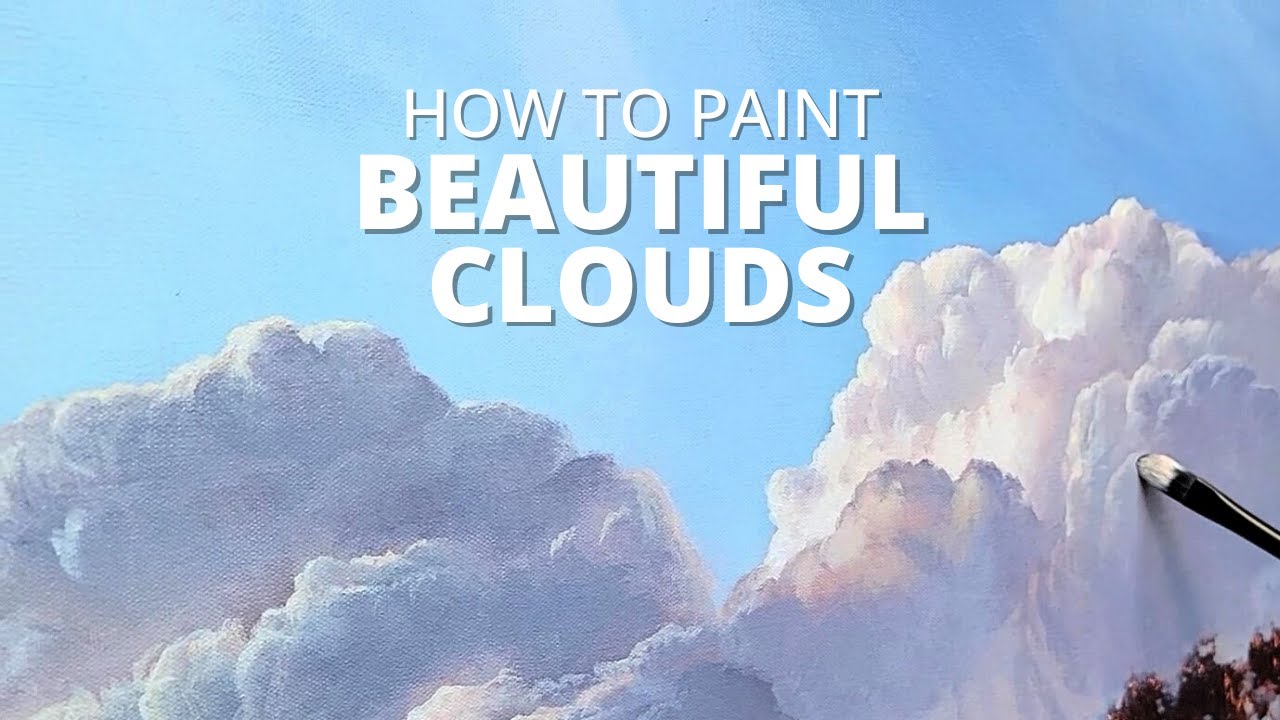
Sunlit clouds require titanium white with tiny amounts of warm color. Cadmium yellow pale or raw sienna work perfectly.
Shadow mixtures combine ultramarine blue with burnt sienna. This combination creates rich, convincing cool shadows.
Storm clouds need Payne’s gray mixed with raw umber. Add touches of dioxazine purple for the most threatening effects.
Sunset and Sunrise Formulas
Dramatic evening skies demand bold color choices. Mix cadmium orange with titanium white for glowing cloud highlights.
Complementary colors create vibrant sky effects. Orange clouds against blue sky produce maximum visual impact.
Gradually shift from warm to cool as you move away from the sun. This color temperature transition sells the atmospheric effect.
Atmospheric Perspective Application
Distance reduces color intensity significantly. Far clouds appear grayer and less saturated than foreground elements.
Contrast reduction happens with distance too. Background clouds show less difference between lights and shadows.
Cool colors advance in atmospheric perspective. Add subtle blue-gray tones to distant cloud formations.
Warm to Cool Transitions
Temperature shifts create convincing depth in sky painting. Warm foreground clouds transition to cooler background areas.
Edge softening increases with distance. Sharp, defined edges belong in the foreground only.
Optical mixing through broken color suggests atmospheric haze. Let underlying cool tones show through warm cloud areas.
Color Harmony Strategies
Limited palettes force color harmony naturally. Restrict yourself to four or five pigments maximum for sky work.
Analogous color schemes work beautifully for sunset skies. Stay within one section of the color wheel for unity.
Accent colors should be used sparingly. One small area of intense color can energize an entire sky composition.
Advanced Mixing Techniques
Optical mixing creates more luminous effects than direct color blending. Place pure colors side by side rather than mixing on the palette.
Temperature dominance creates mood effectively. Warm-dominant skies feel energetic, while cool-dominant skies appear calm.
Neutrals mixed from complementary colors look more natural than pre-mixed grays.
Painting Different Weather Conditions

Clear Sky with Puffy Clouds
High contrast defines fair weather conditions. Sharp edges and bright highlights characterize cumulus formations.
Blue sky gradients transition from darker overhead to lighter near the horizon. This atmospheric perspective effect appears in every clear sky.
Cloud shadows cast onto the landscape below add realism to your scene. Don’t forget these important shadow shapes.
Developing Cumulus Structures
Fair weather clouds show defined top and bottom surfaces. The tops catch sunlight while bottoms remain in shadow.
Volume modeling requires careful attention to light direction. Each cloud should relate to your established light source.
Vary cloud sizes and heights for natural-looking arrangements. Avoid uniform spacing or identical shapes.
Blue Sky Gradient Methods
Start with ultramarine blue at the top of your canvas. Gradually add titanium white as you work toward the horizon.
Smooth blending prevents streaky, amateur-looking skies. Work wet-into-wet for seamless color transitions.
The horizon area should appear almost white in clear conditions. This effect results from atmospheric haze and light scattering.
Overcast and Stormy Skies
Low contrast characterizes overcast conditions. Moody color selections replace bright highlights and deep shadows.
Heavy cloud mass painting requires bold, confident brushwork. Don’t overwork these dramatic areas.
Storm fronts show sharp definition between light and dark cloud masses. These edges should remain crisp and threatening.
Rain Effect Suggestions
Diagonal brush strokes suggest falling rain without literal representation. Keep these effects subtle and atmospheric.
Wet conditions reduce overall contrast and saturation. Colors appear more muted under overcast skies.
Distance obscures details during storms. Use this effect to simplify background elements naturally.
Storm Cloud Development
Cumulonimbus formations tower into the upper atmosphere. Paint these vertical masses with bold, confident strokes.
Dark bases and bright tops characterize storm development. This contrast creates the most dramatic sky effects.
Lightning can be suggested through sharp value contrasts. Avoid literal lightning bolt shapes – suggest rather than illustrate.
Sunset and Sunrise Conditions
Warm color dominance transforms ordinary skies into spectacular displays. Golden hour lighting affects every element in your painting.
Silhouette effects work beautifully during dramatic lighting conditions. Let cloud shapes read as dark masses against brilliant skies.
Gradual color transitions prevent harsh, unrealistic sunset effects. Blend colors smoothly across your sky area.
Backlighting Techniques
Position clouds between your viewpoint and the sun for dramatic backlighting. This setup creates rim lighting effects naturally.
Silhouetted cloud masses should show minimal internal detail. Focus on interesting shapes rather than surface modeling.
Color intensity peaks around the light source. Use your most saturated colors in this critical area.
Seasonal Sky Variations
Winter skies appear cooler and more neutral than summer conditions. Adjust your color temperature accordingly.
Humidity affects atmospheric clarity significantly. Dry conditions produce sharper contrasts and clearer details.
Time of day changes throughout seasons. Winter sunsets happen earlier with different color characteristics than summer evenings.
Advanced Techniques and Finishing
Glazing for Atmospheric Effects

Transparent layers build color depth impossible to achieve in single applications. Mix your paint with medium to achieve glass-like transparency.
Apply glazes over completely dry underpainting. Wet layers will lift and muddy your carefully planned color structure.
Build luminosity through multiple thin applications. Each glaze intensifies the color while maintaining transparency.
Color Depth Building
Layer warm glazes over cool underpainting for rich shadow effects. This creates optical depth that mimics real atmospheric conditions.
Successive glazing builds complex color relationships. Three thin layers outperform one thick application every time.
Allow each glaze to dry completely before adding the next. Rushing this process destroys the subtle effects you’re building.
Final Unity Creation
Unify your sky through selective glazing across the entire surface. A thin wash of warm or cool tone ties everything together.
Luminosity improvements happen through careful glaze placement. Target specific areas that need extra glow or depth.
Final glazes should be barely visible individually but create significant cumulative impact across the painting.
Texture Enhancement Methods
Scumbling adds broken color effects that suggest atmospheric moisture. Use a dry brush with minimal paint.
Drag light colors across darker dried paint. This technique mimics how light catches on cloud surfaces naturally.
Vary your scumbling pressure for different effects. Light pressure creates subtle texture, while heavier pressure produces more obvious marks.
Impasto Highlights
Reserve thick paint application for your brightest cloud areas. These impasto sections catch actual light on the painting surface.
Build highlights gradually rather than applying thick paint immediately. Start with medium consistency, then add thickness in final passes.
Palette knife application creates different texture than brush impasto. Experiment with both tools for varied surface quality.
Dry Brush Detailing
Final details require dry brush technique. Remove excess paint from your brush before adding subtle texture variations.
Wispy cloud edges need the lightest touch. Barely graze the canvas surface with an almost-dry brush.
Work quickly with dry brush technique. Too much pressure or slow movement creates unwanted hard edges.
Final Adjustments and Corrections
Value relationship checks should happen throughout your painting process. Step back frequently to assess overall light patterns.
Squint at your painting to see simplified value structure. This reveals problems invisible during close-up work.
Color temperature balance affects the entire sky mood. Make final adjustments to warm and cool relationships as needed.
Edge Quality Refinement
Not every edge should receive equal treatment. Lost and found edges create natural-looking cloud formations.
Soften edges that appear too harsh in your final painting. Use a clean, dry brush to blend problematic transitions.
Sharp edges belong only where clouds meet bright sky or dramatic light source. Everything else should show some degree of softness.
Composition Strengthening
Directional movement should flow throughout your sky composition. Clouds shouldn’t appear static or randomly placed.
Adjust cloud shapes in final stages to improve overall design. Small changes can dramatically improve visual flow.
Check your focal point strength. The most dramatic area should dominate without overwhelming other elements.
Common Mistakes and Solutions
Technical Issues
Overworking wet paint destroys the fresh quality essential for convincing clouds. Stop before you think you’re finished.
Muddy color mixing results from poor brush hygiene. Clean brushes between color changes, especially when switching temperatures.
Hard edge problems plague beginning cloud painters. Use dry brush blending to soften harsh transitions immediately.
Paint Application Errors
Applying paint too thinly in highlight areas wastes your effort. Load the brush properly for convincing light effects.
Uniform paint thickness creates boring, lifeless clouds. Vary your application from thick impasto to thin glazes.
Working too fast prevents proper color mixing. Take time to achieve clean, clear color relationships.
Compositional Problems
Centered cloud placement creates static, uninteresting compositions. Use asymmetrical arrangements for dynamic effects.
Uniform cloud sizing destroys natural appearance. Real skies show tremendous variety in cloud scale and proportion.
Lack of directional movement makes skies feel lifeless. Establish wind direction through cloud shape and placement.
Visual Flow Issues
Poor visual hierarchy confuses the viewer’s eye. Create clear primary and secondary areas of interest.
Scattered focus prevents dramatic impact. Concentrate your strongest contrast in one key area.
Missing connection between sky and landscape elements weakens the overall painting. Include reflected sky colors in other areas.
Color and Light Issues
Inconsistent light sources destroy believability instantly. Commit to one sun position and stick with it throughout.
Temperature confusion happens when warm and cool areas lack clear logic. Establish your color temperature pattern early.
Oversaturated colors look artificial in atmospheric work. Nature’s sky colors are more subtle than you think.
Common Color Problems
Flat lighting effects result from avoiding strong value relationships. Push your darks darker and lights lighter.
Local color thinking prevents atmospheric effects. Clouds aren’t white – they reflect surrounding light and atmosphere.
Using too many different colors creates chaos. Limit your painting palette for harmonious results.
Fixing Major Issues
Paint Removal Techniques
Scrape wet paint with palette knife to correct major errors. Work quickly before the paint begins to set.
Solvent removal works for small corrections in wet paint. Use turpentine sparingly on a clean brush.
Sanding dried paint allows complete correction but requires careful surface preparation afterward.
Recovery Strategies
Overworked areas can be salvaged through selective glazing. Let the problematic area dry completely first.
Add fresh paint over problem areas rather than continuing to blend. Sometimes starting over in one section saves the entire painting.
Simplify complex areas that aren’t working. Minimalism often succeeds where overwork fails.
Prevention Methods
Plan your painting thoroughly before starting. Quick thumbnail sketches prevent major compositional disasters.
Mix enough paint for each area before beginning. Running out of mixed color mid-section creates obvious color shifts.
Work larger to smaller, general to specific. This traditional approach prevents getting lost in premature details.
FAQ on How To Paint Clouds In Oil
What colors do I need to paint realistic clouds?
Titanium white forms your base, with ultramarine blue for sky areas. Add burnt sienna for warm shadows and Payne’s gray for storm effects.
Raw umber helps with atmospheric haze. This limited palette prevents muddy color mixing while covering all cloud painting scenarios.
How do I make cloud edges look soft and natural?
Use dry brush blending while paint remains wet. Feather perpendicular to the cloud edge with light, quick strokes.
Clean brushes prevent color contamination. Work wet-into-wet for seamless atmospheric transitions between cloud and sky areas.
What brush types work best for cloud painting?
Flat brushes handle broad sky areas efficiently. Round brushes excel at detail work and cloud texture variations.
Fan brushes create unique effects but use sparingly. Keep multiple sizes available for varied stroke width during painting sessions.
How do I create dramatic storm cloud effects?
Build high contrast between light and dark cloud masses. Use Payne’s gray mixed with raw umber for threatening storm colors.
Sharp edges define storm fronts. Don’t soften every transition – some boundaries should remain crisp and dramatic for impact.
What’s the best canvas preparation for sky painting?
Medium-texture canvas works well for cloud work. Apply two thin gesso coats rather than one thick layer.
Toned grounds eliminate stark white that fights color judgments. Choose warm gray or cool blue based on desired mood.
How do I paint convincing cumulus clouds?
Model clouds like solid forms using traditional light and shadow principles. Define top and bottom surfaces clearly.
Vary cloud sizes and heights for natural arrangements. Avoid uniform spacing or identical shapes throughout your sky composition.
What’s the secret to atmospheric perspective in skies?
Distance reduces both color intensity and contrast significantly. Far clouds appear grayer than foreground cloud formations.
Cool colors advance in atmospheric effects. Add subtle blue-gray tones to background elements for convincing depth illusion.
How do I fix overworked cloud areas?
Let problematic areas dry completely, then apply selective glazing to restore luminosity and atmospheric quality.
Sometimes adding fresh paint over problem sections works better than continued blending. Simplify rather than add complexity.
What’s the biggest mistake beginners make?
Overworking wet paint destroys the fresh quality clouds need. Stop before you think the area is completely finished.
Poor brush hygiene creates muddy colors. Clean brushes between temperature changes – warm and cool paint don’t mix cleanly.
How long should I wait between painting layers?
Oil paint stays workable for hours – use this advantage for blending. Glazing requires completely dry underpainting to prevent lifting.
Thick impasto areas take days to dry properly. Plan your painting sequence to avoid disrupting wet paint layers.
Conclusion
Mastering how to paint clouds in oil transforms your landscape paintings from ordinary to extraordinary. These techniques open up endless possibilities for creating dramatic skies that capture nature’s most spectacular moments.
The extended working time of oil painting allows for the seamless blending and atmospheric effects that make convincing cloud formations possible. Wet-on-wet blending creates those soft, natural edges that separate amateur work from professional results.
Color temperature control remains your most powerful tool for atmospheric depth. Warm light sources create cool shadows, while distance shifts colors toward neutral grays.
Practice these brushwork techniques regularly. Scumbling, glazing, and impasto application each serve specific purposes in cloud development.
Remember that patience beats speed every time. Allow layers to dry properly between applications, and resist the urge to overwork wet paint areas.
Start with simple cumulus studies before attempting complex storm formations. Build your skills gradually through consistent practice and careful observation of real sky conditions.