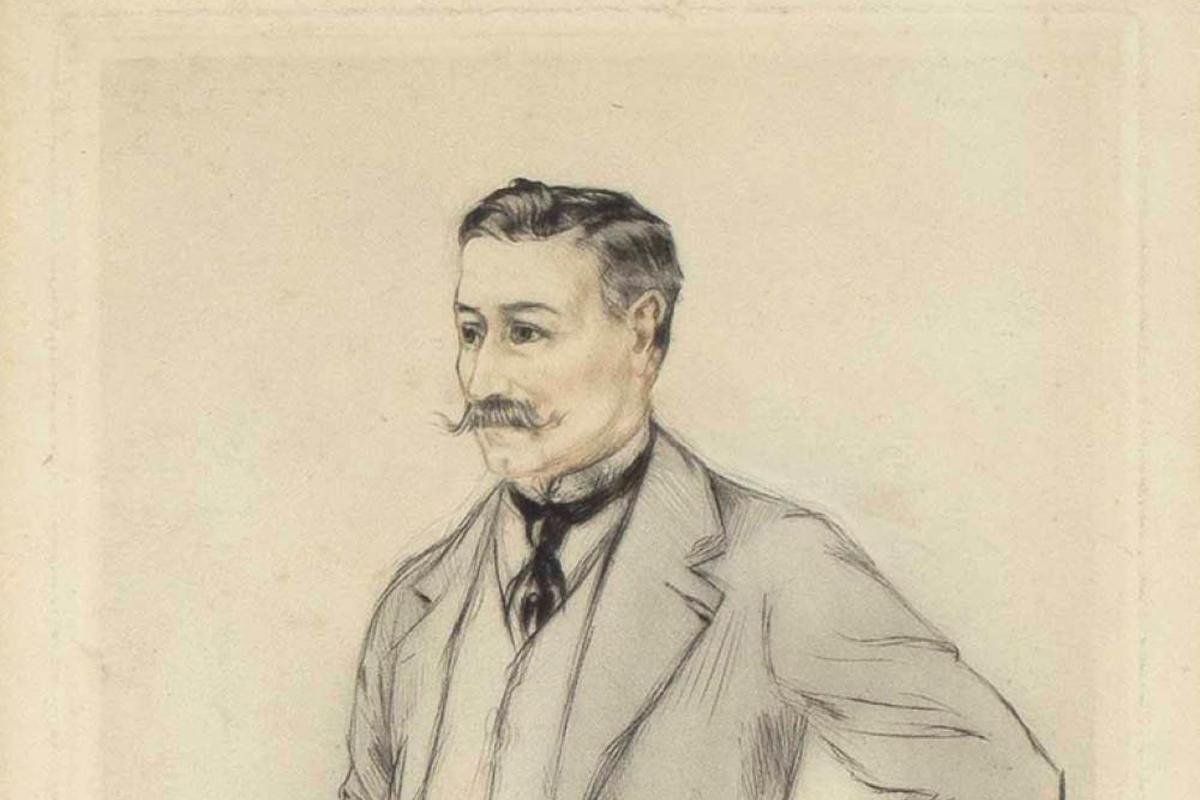

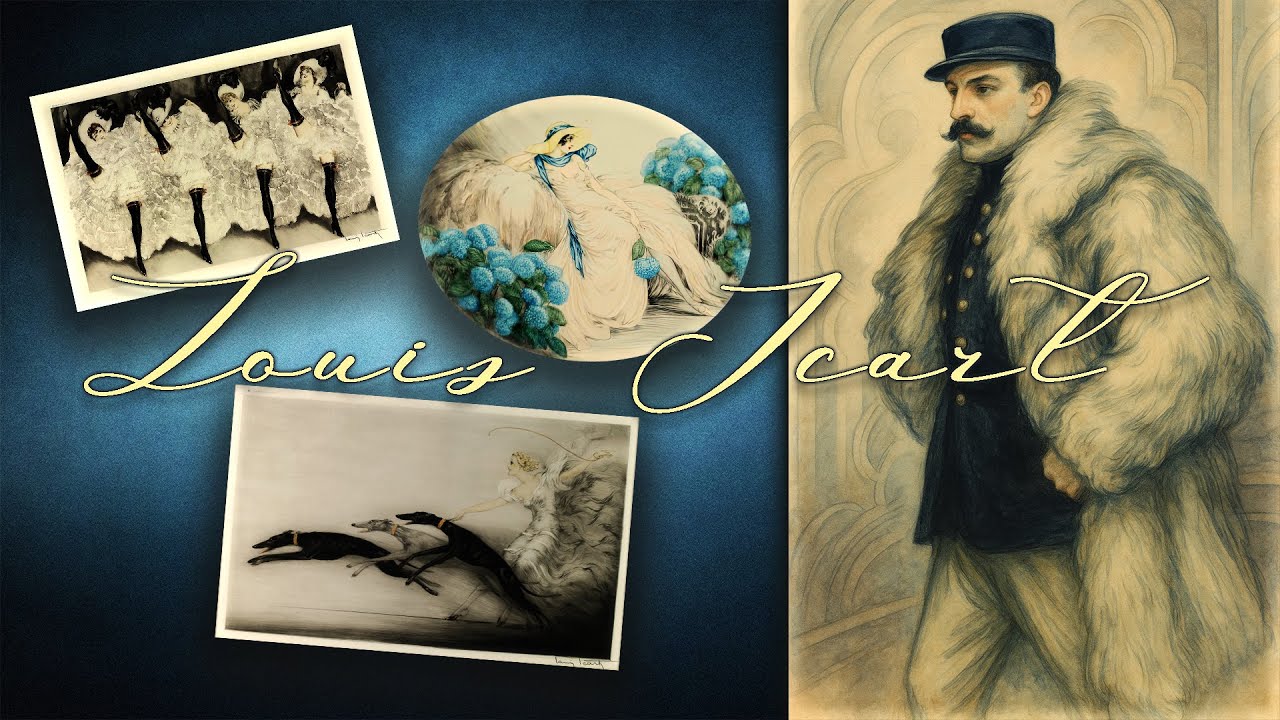
Louis Icart was a French painter, printmaker, and illustrator who became the visual voice of the Art Deco era through his hand-colored etchings of glamorous Parisian women. His work bridged the gap between Art Nouveau elegance and the sleek modernity of the 1920s.
Born in Toulouse in 1888, he moved to Paris in 1907 and quickly established himself within the fashion illustration world. His copper plate etchings combined aquatint and drypoint techniques with hand coloring, creating a distinctive style that captured the sensuality and sophistication of interwar Paris.
Icart produced over 500 etchings during his career, along with oil paintings, watercolors, and book illustrations. He died in 1950 at his Montmartre home, leaving behind a body of work that continues to define Art Deco printmaking in collectors’ minds.
Identity Snapshot
Full Name: Louis Justin Laurent Icart
Also Known As: “Helli” (family nickname from his L.I. initials), “The Parisian Dreamer” (American nickname)
Lifespan: December 9, 1888 – December 20, 1950
Primary Roles: Painter, Printmaker, Illustrator, Fashion Designer
Nationality/Schools: French, Ecole de Paris
Movements: Art Deco, with influences from Rococo and Impressionism
Mediums: Etching (drypoint, aquatint), oil on canvas, watercolor, gouache, pencil, pastel
Signature Traits: Soft-focus edges, windblown hair motif, delicate hand coloring, sensual female figures, warm brown and gold palette in early works shifting to brighter tones
Iconography/Motifs: Elegant women, greyhounds and borzois, cats, pillows, theatrical costumes, Parisian nightlife, boudoir scenes
Geographic Anchors: Toulouse (birthplace), Paris (Montmartre studio), New York City (exhibitions)
Mentors/Influences: Edgar Degas, Claude Monet, Jean-Antoine Watteau, Francois Boucher, Jean-Honore Fragonard, Gustave Moreau
Key Relationships: Fanny Volmers (wife and primary model), Manuel Robbe (contemporary printmaker)
Collections: Metropolitan Museum of Art, Smithsonian American Art Museum, private collections worldwide
Market Signals: Auction record of $32,500 (Au Pesage, Heritage Auctions, 2014). Typical etching prices range from $1,000 to $15,000 depending on condition, subject, and rarity. Oil paintings command significantly higher prices.
What Sets Louis Icart Apart
Icart occupied a strange position in early 20th-century art. He wasn’t interested in the avant-garde movements happening around him.
While Picasso was dismantling form with Cubism just blocks away, Icart looked backward to the 18th-century French masters. He borrowed the soft, sensual atmosphere of Watteau and Fragonard and updated it for Jazz Age tastes.
His women weren’t classical nudes posed on clouds. They were modern Parisiennes with bobbed hair, high heels, and knowing smiles.
The technical process matters here. Each original etching started on a copper plate using drypoint tools and acid. The plate was then hand-inked, passed through a press with paper, and often run through multiple times for different colors.
After that, his studio added hand coloring with watercolor. This created a layered, luminous quality that photographic reproductions can’t capture.
His compositions relied heavily on movement. Windblown hair. Swirling fabric. Dogs mid-stride. Even when his subjects lounged on pillows, there was kinetic energy in the drapery.
That sense of captured motion made his work feel alive in ways his more static contemporaries couldn’t match.

Origins and Formation
Early Years in Toulouse (1888-1907)
Born into a modest family on rue Traversiere-de-la-balance, Icart grew up in a city with a strong artistic heritage. Toulouse had produced Henri de Toulouse-Lautrec.
His father, Jean Icart, worked in banking and expected Louis to follow. The young Icart enrolled at l’Ecole Superieure de Commerce de Toulouse to study business.
But he discovered Victor Hugo’s plays. That theatrical obsession sparked his love of drama and visual storytelling.
Paris Arrival (1907)
An aunt recognized his drawing talent during a visit and brought him to Paris. He arrived at the tail end of La Belle Epoque, just as Cubism was erupting onto the scene.
He took work producing erotic postcards for tourists. Frivolous stuff, but it taught him speed and commercial appeal.
First Professional Work (1907-1914)
Magazine illustration came next. La Critique Theatrale hired him for cover designs.
Fashion houses noticed his elegant female figures. His “L.I.” initials on women’s clothing designs became recognized in the industry.
In 1913, he exhibited at the Salon des Humoristes. The reviews were decent. More importantly, he learned copperplate engraving around this time.
Fanny Volmers (1914)
He met an 18-year-old blonde named Fanny Volmers at the Paquin fashion house. She became his wife, his model, and his muse for the rest of his life.
Nearly every woman in his major etchings has her features. That consistency created a recognizable “Icart woman” type.
Movement and Context
Position Within Art Deco
Art Deco emerged from the 1925 Paris Exposition des Arts Decoratifs. Icart’s etchings had already been developing the visual language that would define the movement.
He combined Rococo softness with modern subject matter. His women wore current fashions. They drove cars. They smoked cigarettes.
But he painted them with the atmospheric delicacy of 18th-century court painters.
Comparative Analysis
Versus Erte: Both worked in fashion illustration and Art Deco aesthetics. Erte favored hard geometric edges, flat color planes, and theatrical stylization. Icart used soft-focus transitions, tonal gradations, and naturalistic anatomy. Erte’s women are mannequins. Icart’s women breathe.
Versus Matisse: Working in the same period, Matisse pushed toward radical simplification and Fauvist color. Icart stayed conservative, maintaining academic drawing skills and traditional composition. Matisse wanted to disturb. Icart wanted to please.
Versus Toulouse-Lautrec: Both depicted Parisian nightlife and women of questionable virtue. Toulouse-Lautrec used flat lithographic color and unflinching observation of his subjects’ humanity. Icart idealized everything. His courtesans are always beautiful, always luminous, never weary.
Rejection of Modernism
Icart actively avoided identification with contemporary movements. Surrealism, Expressionism, abstract art – none of it interested him.
He looked to the past for technical inspiration and to the present only for subject matter.
Materials, Techniques, and Process
Supports and Papers
Icart used high-quality wove papers, primarily from BFK Rives and Arches. The texture of these papers held ink well and aged gracefully.
Authentic etchings show this paper quality under magnification. The open “weave” differs from glossy reproduction papers.
Etching Techniques
Drypoint: The artist scratches directly into the copper plate with a sharp tool. This creates a burr that holds ink and produces soft, velvety lines. Icart used this extensively for hair and fabric textures.
Aquatint: A tonal technique using acid-resistant resin particles on the plate. When etched, it produces grainy, wash-like areas. Icart combined this with drypoint to achieve gradation effects.
Sugaring: A variant technique adding granular texture. Some sources mention Icart used this for specific surface effects.
Printing Process
Each impression began with hand-inking the copper plate. Paper was laid on top, and both passed through a press under tremendous pressure.
The pressure created a “plate impression,” a dented border visible around the image. This is a key authentication marker.
For color works, the plate was re-inked with different colors and run through again. Registration pinholes aligned the paper for each pass.
Hand Coloring
Most Icart etchings received hand coloring after printing. This was often done by studio assistants rather than Icart himself.
The color variations between impressions resulted from this process. Two “identical” etchings might have completely different dress colors or backgrounds.
Palette Characteristics
Early works (pre-1920s) favored warm browns, golds, and deep reds. As his career progressed, his palette brightened considerably.
His understanding of value distribution was sophisticated. Light areas drew the eye to faces and flesh while darker surroundings created atmospheric depth.
Edition Practices
Due to high demand, Icart often produced two editions: one European, one American. Edition sizes typically ranged from 300 to 500 impressions.
Numbering practices varied. Some etchings are numbered, some aren’t. The numbering has never significantly affected value.
Themes, Subjects, and Iconography
The Icart Woman
His central subject was always the modern Parisian woman. Not the demure Victorian type. These women had agency. They lounged, flirted, smoked, played with pets, and dressed (or undressed) as they pleased.
The facial type remained consistent: heart-shaped face, large eyes, small mouth, pointed chin. Almost always modeled on Fanny.
Boudoir Scenes
Critics credit Icart with creating the “boudoir art” genre. These intimate bedroom scenes showed women in states of undress or provocative repose.
The eroticism was always playful, never explicit. A glimpse of thigh. An artfully draped sheet. The suggestion of something just happened or about to happen.
Animals as Compositional Elements
Dogs appeared constantly. Greyhounds and borzois complemented his elegant women with their own sleek lines. Cats added a note of sensuality and independence.
These weren’t portrait commissions. The animals served compositional purposes, adding movement and visual interest.
Compositional Approaches
Icart favored diagonal compositions that created energy. His focal points typically centered on the face or an area of exposed skin.
He understood directional lines. Hair blew in one direction. Fabric draped in another. Dogs ran across the picture plane. Everything guided the eye through the image.
Theatrical and Literary Subjects
His early love of theater never left. He illustrated editions of literary classics and created theatrical costume designs.
Book illustration projects included “La Nuit et le Moment” by Crebillon and works by Colette.
Wartime and Later Subjects
World War I interrupted his luxurious Parisian life. He served as a fighter pilot, sketching constantly to cope with the anguish.
After France fell in World War II, he created “L’Exode,” a serious series documenting the horrors of German occupation. A significant departure from glamorous women on pillows.
Notable Works
Speed (Vitesse), 1933
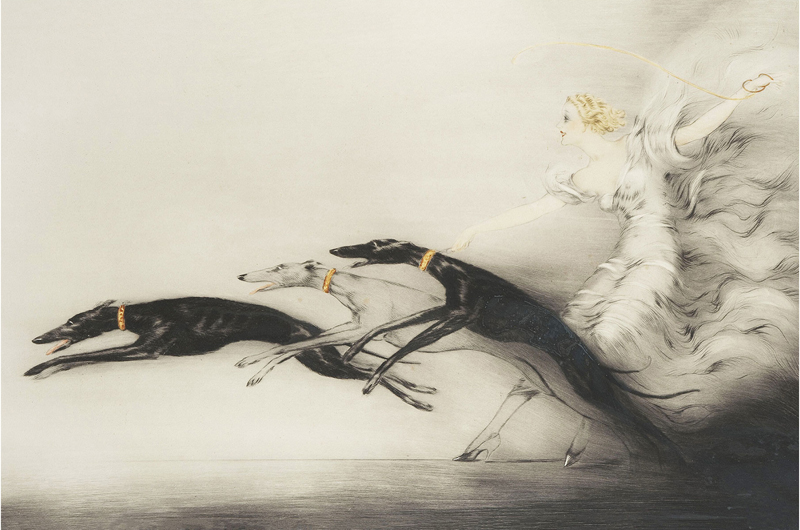
Medium: Etching, drypoint, aquatint with hand coloring on wove paper
Size: Approximately 17″ x 26.5″
Location: Various private collections; frequently appears at auction
Visual Signature: Dynamic diagonal composition showing a woman with three greyhounds mid-chase. Windblown hair and fabric create tremendous kinetic energy. Soft flesh tones contrast with the sharp contours of the dogs.
Why It Matters: Considered among his most iconic images. Captures the Art Deco fascination with speed and modernity while maintaining his characteristic sensuality. A one-of-a-kind color variation exists, given to his daughter Reine.
Laziness (Paresse), 1925
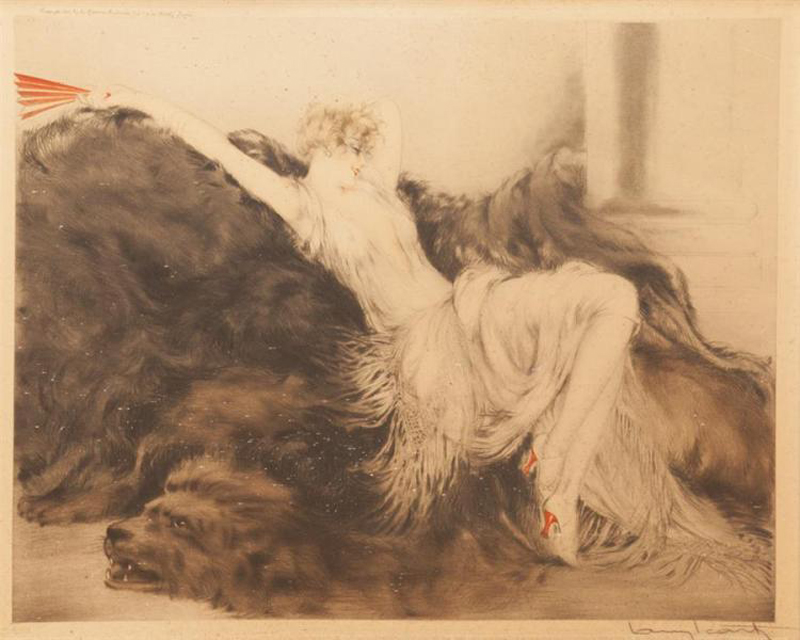
Medium: Etching and aquatint with hand coloring
Location: Multiple collections; exhibited at RoGallery, Long Island
Visual Signature: Lounging female figure embodying luxurious indolence. Soft edges throughout. Warm color palette typical of his mid-1920s work.
Why It Matters: Commercially phenomenal upon release. Helped establish the “Icart woman” as a cultural icon of the Jazz Age.
Spilled Milk (Lait Renverse), 1925
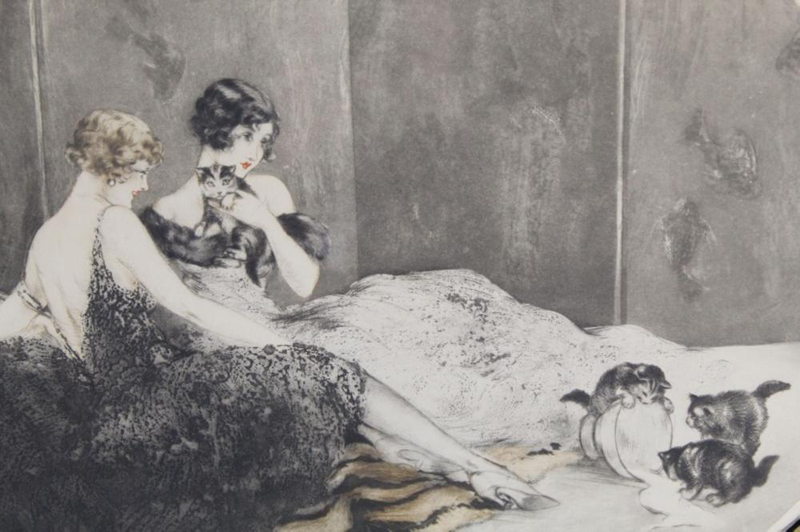
Medium: Etching and aquatint
Visual Signature: Playful domestic scene with characteristic Icart humor. Light palette, soft modeling.
Why It Matters: Alongside Laziness, one of his breakthrough commercial images from 1925. Demonstrated his ability to combine eroticism with humor.
Madame Butterfly, 1927
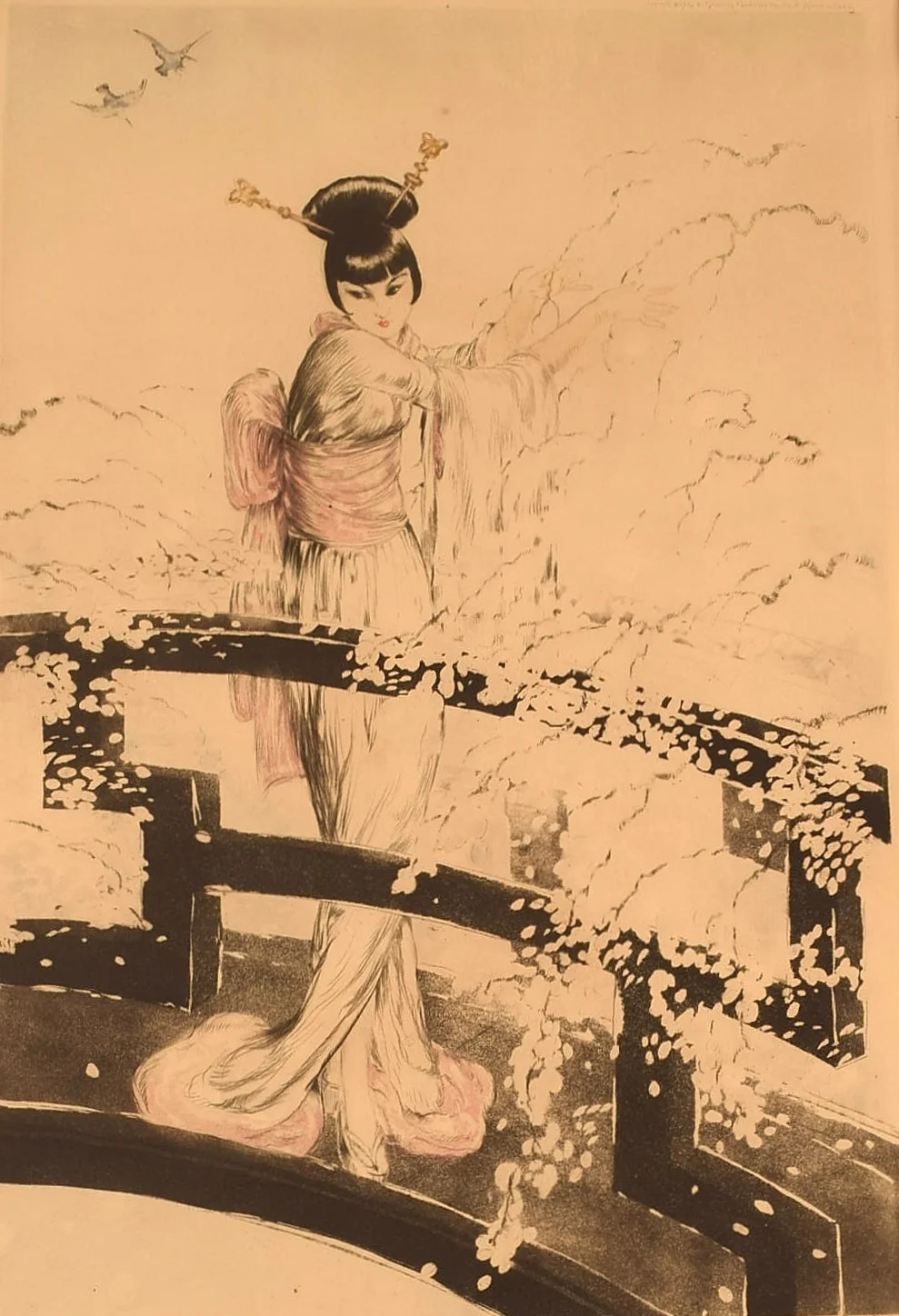
Medium: Etching on paper
Size: Approximately 51 cm visible dimensions
Visual Signature: Theatrical subject matter with Japanese-influenced elements. Shows his interest in opera and costume design.
La Dame aux Camelias, 1927
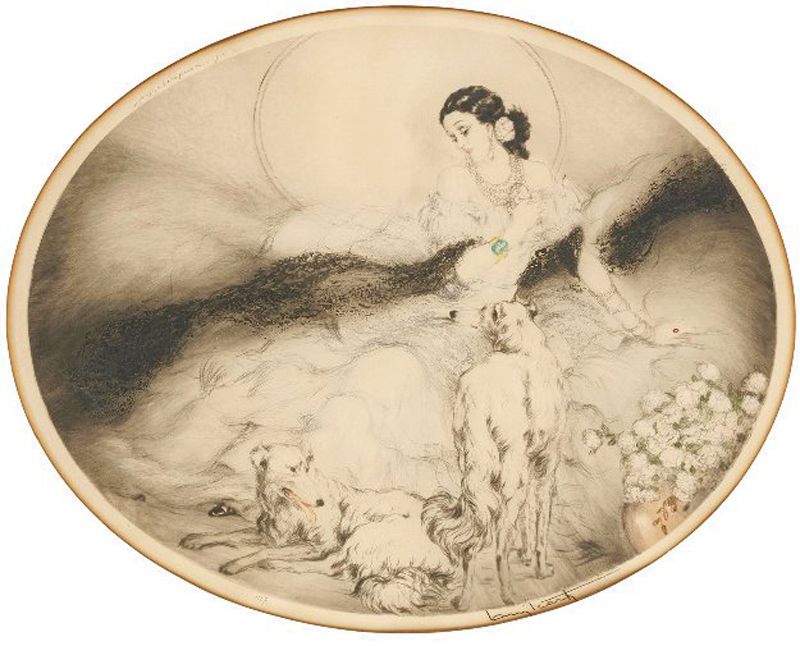
Medium: Aquatint etching
Size: Image approximately 16.5″ x 20.5″
Visual Signature: Literary subject from the famous Dumas novel. Romantic atmosphere with carefully rendered floral elements.
Coursing II, 1929
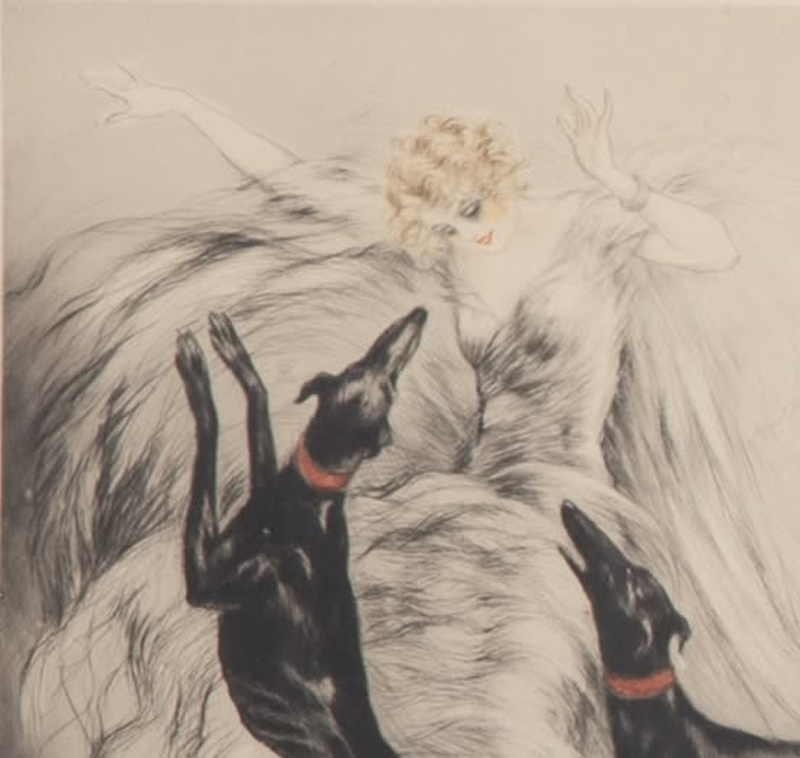
Medium: Etching, drypoint, aquatint with hand coloring
Size: Approximately 17″ x 26.5″
Visual Signature: Similar dynamic energy to Speed. Dogs and elegant women in motion across the picture plane.
L’Exode Series, 1940s
Medium: Various
Location: Some works rediscovered in a Paris art academy attic in the 1970s
Visual Signature: Dark, serious departure from his typical subjects. Documents the German occupation of France.
Why It Matters: Reveals a dimension of Icart rarely discussed. When circumstances demanded, he could address serious subjects with emotional weight.
Exhibitions, Collections, and Provenance
Key Exhibition History
1913: Salon des Humoristes, Paris. First significant exhibition.
1920: Galerie Simonson, Paris. Mixed reviews for paintings.
1922: First American exhibition at Belmaison Gallery in John Wanamaker’s department store, New York. Later moved to Wanamakers Philadelphia. Fifty oil paintings shown to mixed reviews.
1932: Metropolitan Galleries, New York. “Les Visions Blanches” collection. Received little attention because Icart didn’t accompany the exhibition personally.
Museum Holdings
Works appear in the Metropolitan Museum of Art and Smithsonian American Art Museum collections, though Icart is primarily represented in private collections.
His commercial success meant wide distribution. Works exist in collections across Europe, America, and Asia.
Provenance Patterns

During his lifetime, major dealers distributed his work through galleries and department stores. The Estampe Moderne in Paris published many editions.
American distribution often went through the Louis Icart Society, which used the distinctive windmill blindstamp starting mid-1926.
Catalogues Raisonnes
“Louis Icart: The Complete Etchings” by William R. Holland, Clifford P. Catania, and Nathan D. Isen (Schiffer Publishing, 2002) remains the standard reference. Works are identified by their Schiffer catalogue numbers.
“Louis Icart Erotica” (Schiffer, 1998) covers his more explicit works separately.
Market and Reception
Auction Performance
Auction record stands at $32,500 for “Au Pesage,” sold at Heritage Auctions, Dallas in 2014. This was an oil painting, not an etching.
Original etchings typically sell between $1,000 and $15,000 depending on subject, condition, and rarity. Some popular images like Speed and Coursing II command premiums.
Oil paintings sell significantly higher than etchings when they appear. The 2015 Heritage auction saw oils realize $12,500 to $16,250.
Market Trends
The market peaked in the late 1980s when Japanese collectors spent heavily on Icart. Prices have softened since then for etchings.
Oil paintings have held value better due to their relative scarcity compared to the widely distributed etchings.
Authentication Concerns
Blindstamp: The Louis Icart Society introduced a raised windmill seal in mid-1926, typically found in the lower left corner below the image. Most (not all) authentic etchings from this period forward have it.
Signatures: Authentic etchings are hand-signed in pencil, usually lower right. Printed signatures indicate reproductions.
Plate Impression: Real etchings show a “dent” in the paper around the image edge from the copper plate pressing into it under pressure. Reproductions lack this.
Paper Quality: Authentic works used high-quality wove papers (BFK Rives, Arches) with visible texture under magnification. Modern reproductions use smoother, glossier papers.
Known Fakes: Forgeries exist for popular images including “Dollar,” “Gust of Wind,” and “Louise.” Some use correct Arches paper but post-1980 watermarks (ARCHES infinity symbol) that didn’t exist in Icart’s lifetime.
Condition Factors
Paper degradation is common given age. Foxing (brown spots from fungal growth), yellowing, tears, and fading affect value significantly.
Conservation and restoration are common in the market. Reputable dealers disclose such work.
Influence and Legacy
Upstream Influences
18th-Century French Masters: Jean-Antoine Watteau, Francois Boucher, and Jean-Honore Fragonard provided his aesthetic foundation. The soft atmospheric effects, sensual female figures, and decorative richness all trace back to Rococo painting.
Impressionists: Degas and Monet influenced his drawing style and approach to light.
Symbolists: Gustave Moreau and Odilon Redon affected his rare watercolors.
Downstream Impact
Fashion Illustration: His elegant, elongated female figures influenced fashion illustration throughout the 20th century.
Art Deco Printmaking: He essentially defined what Art Deco etchings look like. Later printmakers working in the style operated in his shadow.
Pin-Up Art: The trajectory from Icart’s sensual women to mid-century pin-up illustration is direct. Patrick Nagel‘s 1980s work shows Icart’s long-term influence on idealized female portraiture.
“Boudoir Art” Genre: Critics credit him with establishing this category. The genre essentially died with him in 1950.
Cross-Domain Echoes
Film: The visual aesthetic of 1920s-1930s Hollywood glamour photography parallels Icart’s idealized femininity.
Interior Design: His etchings became synonymous with Art Deco interior decoration and remain popular in period-style rooms.
Contemporary Art Market: Artists like James Jean and other illustrators working with idealized female figures continue traditions Icart helped establish.
How to Recognize a Louis Icart at a Glance
- The Face: Heart-shaped with large eyes, small mouth, pointed chin. Almost always resembles his wife Fanny.
- Windblown Hair: Even indoor scenes often feature hair with movement, a signature stylistic choice.
- Soft-Focus Edges: Backgrounds and secondary elements dissolve into atmospheric blur while focal areas remain sharper.
- Elongated Proportions: Women have idealized, slightly elongated figures consistent with 1920s fashion illustration conventions.
- Signature Animals: Greyhounds, borzois, cats appear repeatedly as compositional elements.
- Diagonal Compositions: Strong diagonal movement through the picture plane, often created by fabric draping or animal poses.
- Hand-Colored Washes: Soft, transparent color over etched lines, not flat printed color.
- Pencil Signature: Lower right corner, hand-signed “Louis Icart” in pencil.
- Windmill Blindstamp: Raised seal in lower left margin on works from mid-1926 onward (though not universal).
- Typical Sizes: Standard etching sizes around 17″ x 20-26″ for major works, smaller for bookplates and illustrations.
- Paper Quality: Heavy wove paper with visible texture (Rives, Arches), not smooth or glossy.
- Plate Impression: Visible “dent” around image edge from copper plate under pressure.
FAQ on The Louis Icart
How do I tell if my Louis Icart etching is authentic?
Check for a plate impression around the image edge. Look for a hand-signed pencil signature, usually lower right. Authentic works from mid-1926 onward often have a windmill blindstamp in the lower left margin.
The paper should be high-quality wove stock, not glossy.
What is Louis Icart best known for?
His Art Deco etchings of glamorous Parisian women. He combined aquatint and drypoint techniques with hand coloring to create sensual boudoir scenes. His work defined the visual style of 1920s Paris and Jazz Age elegance.
How much are Louis Icart prints worth?
Original signed etchings typically sell between $1,000 and $15,000 at auction. Condition matters enormously. Popular images like Speed and Coursing II command higher prices.
His oil paintings sell significantly higher when available.
What is the Louis Icart blindstamp?
A raised windmill seal created by the Louis Icart Society in mid-1926. It appears embossed in the lower left corner below the image. Most etchings produced after this date have it, though some authentic works don’t.
Who was Fanny Icart?
Born Fanny Volmers, she met Icart in 1914 while working at the Paquin fashion house. She became his wife and primary model. Nearly every woman in his major etchings bears her likeness.
What techniques did Louis Icart use?
He worked primarily in drypoint and aquatint on copper plates. Each print passed through an etching press multiple times. Studio assistants then added hand coloring with watercolor, creating the soft luminous quality collectors prize.
Where can I sell a Louis Icart etching?
Major auction houses like Christie’s, Sotheby’s, and Heritage Auctions handle Icart works regularly. Specialist dealers in Art Deco prints also purchase directly. Get authentication first. Condition reports affect offers significantly.
Which Louis Icart etchings are most valuable?
Speed, Coursing II, and rare early patriotic works from World War I command premiums. Condition drives value more than subject. Mint examples of common images can outperform damaged rare ones at auction.
Are Louis Icart prints a good investment?
The market peaked in the late 1980s during Japanese buying interest. Prices have softened since. Buy because you love the work, not for speculation. Oil paintings have held value better than etchings.
How should I care for a Louis Icart etching?
Keep away from direct sunlight. Use acid-free matting and UV-protective glass. Control humidity to prevent foxing. Never attempt cleaning yourself. Professional print conservation is worth the cost for valuable pieces.
Conclusion
Louis Icart remains the defining figure of Art Deco printmaking. His vintage etchings captured interwar Paris with a sensuality and technical skill that few contemporaries matched.
Collectors still chase his signed original prints at auction houses worldwide. The boudoir scenes and elegant women he created haven’t lost their appeal.
Authentication matters. Look for the windmill blindstamp, pencil signatures, and proper provenance documentation before buying.
Whether you’re drawn to his limited edition etchings for investment or simply love the romantic illustrations of 1920s glamour, Icart’s work delivers. His figurative art transcends its era.