
When truth eclipsed romanticism in the 19th century, realism artists emerged as revolutionary forces in the art world.
They rejected idealization and fantasy, instead capturing the raw essence of everyday life with unflinching honesty.
These masters of objective observation transformed humble subjects-workers, peasants, and ordinary scenes-into powerful statements about society and human existence.
Artists like Gustave Courbet, Jean-François Millet, and Rosa Bonheur elevated rural scenes and working-class life with dignity and social awareness.
Unlike the emotional exuberance of romanticism, realism embraced:
- Visual truth through direct observation and factual representation
- Contemporary life depicted through precise rendering and accurate detail
- Social conditions examined through unidealized portraits of ordinary people
This exploration of realist painters reveals how their representational art techniques and commitment to naturalistic painting continue to influence modern approaches to composition and subject matter across various painting styles.
Realism Artists
Gustave Courbet (1819-1877)

Nationality: French
Art Movement(s): Realism
Mediums: Oil painting, lithography
Artistic Signature
Courbet’s work features thick, textured brushstrokes and a somber palette dominated by earths and blacks. His compositions often show dramatic asymmetrical balance and emphasize materiality through physical paint handling.
Recurring Themes & Motifs
His paintings typically depict unidealized peasants, laborers, and rural landscapes. Courbet challenged convention by elevating ordinary subjects and working-class life to the grandeur previously reserved for historical themes.
Influences & Training
Though briefly attending art school in Paris, Courbet was largely self-taught, studying Old Masters in the Louvre. His independent spirit rejected Academic traditions while embracing natural observation and social critique.
Notable Works
- The Stone Breakers (1849) – Oil on canvas (destroyed in WWII)
- A Burial at Ornans (1849-1850) – Musée d’Orsay, Paris
- The Artist’s Studio (1855) – Musée d’Orsay, Paris
- The Origin of the World (1866) – Musée d’Orsay, Paris
Role in Art History
As the leading figure of the Realism movement, Courbet revolutionized art by rejecting idealization and focusing on contemporary subjects. His commitment to observable truth prepared the ground for later movements including Impressionism.
Jean-François Millet (1814-1875)

Nationality: French
Art Movement(s): Realism, Barbizon School
Mediums: Oil on canvas, pastel, charcoal drawings
Artistic Signature
Millet’s work features simplified forms with earthy palettes that capture rural light. His figures possess monumental solidity and dignity, often silhouetted against vast skies using principles of scale to create dramatic impact.
Recurring Themes & Motifs
Millet focused almost exclusively on peasant life and rural labor, presenting agricultural workers with dignity and reverence. His scenes of sowing, harvesting, and domestic chores elevate humble activities to spiritual significance.
Influences & Training
Initially trained with portrait painters, Millet studied at the École des Beaux-Arts in Paris. The rural poverty of his own upbringing and time with the Barbizon group shaped his lifelong commitment to agricultural subjects.
Notable Works
- The Gleaners (1857) – Musée d’Orsay, Paris
- The Angelus (1857-1859) – Musée d’Orsay, Paris
- Man with a Hoe (1860-1862) – Getty Museum, Los Angeles
Role in Art History
Millet humanized agricultural labor and rural life during rapid industrialization. His work influenced later artists including Van Gogh and contributed to social consciousness in art while maintaining poetic sensibility.
Honoré Daumier (1808-1879)

Nationality: French
Art Movement(s): Realism
Mediums: Lithography, watercolor painting, oil painting, sculpture
Artistic Signature
Daumier used fluid, energetic line work with minimal detail to capture essential character. His compositions employ dramatic contrast between light and dark to create psychological intensity and emotional impact.
Recurring Themes & Motifs
His work satirized politics, justice systems, and social class divides. Daumier portrayed everyday Parisians, lawyers, politicians, and the bourgeoisie with keen observation and often biting commentary.
Influences & Training
With minimal formal training, Daumier worked as a lithographer for satirical journals. His artistic development came through practical experience and observation of contemporary urban life during tumultuous political times.
Notable Works
- The Third-Class Carriage (c. 1862-1864) – Metropolitan Museum of Art, New York
- Don Quixote series (1866-1868) – Various collections
- Rue Transnonain (1834) – Lithograph
Role in Art History
Daumier created both commercial prints and fine art, expertly blending journalism with artistic expression. His unflinching social critique established political commentary as a valid artistic pursuit and influenced modern caricature.
Édouard Manet (1832-1883)

Nationality: French
Art Movement(s): Realism, Early Impressionism
Mediums: Oil on canvas
Artistic Signature
Manet’s style features flat planes of color with minimal modeling, strong outlines, and abrupt transitions between light and shadow. His brushwork balances precision with spontaneity, often leaving visible strokes that maintain the painting’s surface integrity.
Recurring Themes & Motifs
He painted contemporary urban life, cafe scenes, and portraits, frequently challenging conventional morality and traditional subject matter. His work merged everyday subjects with references to classical painting traditions.
Influences & Training
Trained under Thomas Couture, Manet extensively studied Old Masters, particularly Spanish painters like Diego Velázquez. His work bridges Academic traditions with modernist tendencies that would later flourish in Impressionism.
Notable Works
- Olympia (1863) – Musée d’Orsay, Paris
- Le Déjeuner sur l’herbe (1863) – Musée d’Orsay, Paris
- A Bar at the Folies-Bergère (1882) – Courtauld Gallery, London
Role in Art History
Though aligned with Realism, Manet’s innovative approach to traditional subjects makes him a pivotal transitional figure. His flat handling of paint, contemporary subject matter, and challenges to convention paved the way for modern art.
Thomas Eakins (1844-1916)

Nationality: American
Art Movement(s): Realism
Mediums: Oil painting, photography, sculpture, watercolor
Artistic Signature
Eakins created precisely rendered forms using careful perspective and anatomical accuracy. His paintings show disciplined observation with a subdued palette, dramatic lighting, and photographic spatial relationships.
Recurring Themes & Motifs
His work focused on sporting events, medical procedures, musicians, and the human body. Eakins emphasized scientific accuracy and unvarnished truth, often exploring the relationship between intellectual and physical activity.
Influences & Training
Trained at the Pennsylvania Academy of Fine Arts and École des Beaux-Arts in Paris under Jean-Léon Gérôme. Eakins studied anatomy and merged scientific precision with artistic sensibility throughout his career.
Notable Works
- The Gross Clinic (1875) – Philadelphia Museum of Art
- The Swimming Hole (1884-85) – Amon Carter Museum, Fort Worth
- The Concert Singer (1890-92) – Philadelphia Museum of Art
Role in Art History
Eakins brought unflinching realism to American art during the Gilded Age. His commitment to anatomical truth and psychological insight challenged Victorian sensibilities while establishing a distinctly American realist tradition.
Winslow Homer (1836-1910)

Nationality: American
Art Movement(s): Realism, Naturalism
Mediums: Oil painting, watercolor, printmaking
Artistic Signature
Homer’s work features bold composition with dramatic simplification of forms. His mature paintings display vigorous brushwork, powerful use of light, and masterful handling of atmospheric effects, particularly ocean waves.
Recurring Themes & Motifs
His subjects include Civil War scenes, rural New England life, Caribbean landscapes, and powerful seascapes. Homer frequently depicted human struggles against natural forces, isolation, and the raw power of the sea.
Influences & Training
Largely self-taught, Homer began as a commercial illustrator. His direct observation techniques developed during his time as a Civil War correspondent and were refined through independent study and travel.
Notable Works
- Snap the Whip (1872) – Metropolitan Museum of Art, New York
- The Gulf Stream (1899) – Metropolitan Museum of Art, New York
- Right and Left (1909) – National Gallery of Art, Washington DC
Role in Art History
Homer established a distinctive American idiom in painting that celebrated natural forces and rugged individualism. His technical mastery of watercolor revolutionized the medium in America, while his later seascapes rank among American art’s most powerful works.
Ilya Repin (1844-1930)

Nationality: Russian
Art Movement(s): Realism, Peredvizhniki (The Wanderers)
Mediums: Oil painting, drawing
Artistic Signature
Repin’s work displays psychological intensity through expressive faces and dramatic figure groupings. His technical mastery includes rich textures, dynamic rhythms of light and shadow, and sophisticated handling of complex multi-figure compositions.
Recurring Themes & Motifs
His paintings often depict pivotal moments in Russian history, social injustice, and folk traditions. Repin portrayed both rural peasants and the intelligentsia with equal insight, capturing Russia’s social complexity.
Influences & Training
Trained at the Imperial Academy of Arts in St. Petersburg and abroad in Paris. Repin’s progressive political views and connection to the Peredvizhniki movement shaped his subject choices and democratic approach.
Notable Works
- Barge Haulers on the Volga (1870-1873) – State Russian Museum, St. Petersburg
- Ivan the Terrible and His Son Ivan (1885) – Tretyakov Gallery, Moscow
- Reply of the Zaporozhian Cossacks (1880-1891) – State Russian Museum, St. Petersburg
Role in Art History
As Russia’s foremost Realist, Repin combined technical brilliance with social consciousness. His work created a national visual language that balanced Western techniques with distinctly Russian themes and emotional intensity.
Edward Hopper (1882-1967)

Nationality: American
Art Movement(s): Realism, American Scene Painting
Mediums: Oil painting, watercolor, printmaking
Artistic Signature
Hopper’s distinctive style features stark light effects, simplified architectural forms, and carefully constructed space and balance. His compositions use geometric precision, dramatic cropping, and theatrical lighting to create psychological tension.
Recurring Themes & Motifs
His work explores urban isolation, modern alienation, and the American landscape. Hopper painted solitary figures, empty diners, offices, and stark landscapes that suggest narrative tension and emotional distance.
Influences & Training
Studied with Robert Henri at the New York School of Art, later traveling to Paris where he admired the work of Edgar Degas and the Impressionists while developing his distinctive vision of American modernity.
Notable Works
- Nighthawks (1942) – Art Institute of Chicago
- House by the Railroad (1925) – Museum of Modern Art, New York
- Gas (1940) – Museum of Modern Art, New York
Role in Art History
Hopper captured the psychological complexity of modern American life. His cinematic compositions influenced photography and film while his vision of alienation in everyday settings continues to resonate in contemporary art.
Andrew Wyeth (1917-2009)

Nationality: American
Art Movement(s): Realism, Regionalism
Mediums: Egg tempera, watercolor
Artistic Signature
Wyeth created meticulously detailed surfaces with muted, almost bleached palettes dominated by browns, grays, and whites. His compositions employ stark contrasts, unexpected viewpoints, and precise textures that reveal emotional states through environmental details.
Recurring Themes & Motifs
His paintings focus on rural Pennsylvania and Maine landscapes, interiors, and portraits of neighbors. Wyeth explored themes of isolation, mortality, memory, and the weathered beauty of ordinary places and people.
Influences & Training
Trained by his father, illustrator N.C. Wyeth. Andrew developed a personal vision that rejected abstraction in favor of heightened realism infused with symbolic and emotional content beyond pure representation.
Notable Works
- Christina’s World (1948) – Museum of Modern Art, New York
- Winter 1946 (1946) – North Carolina Museum of Art
- Helga Pictures series (1971-1985) – Various collections
Role in Art History
Working against prevailing abstract trends, Wyeth maintained a distinctive American realism. His psychological landscapes reveal the extraordinary within ordinary moments while exploring complex emotions through precise observation.
Rosa Bonheur (1822-1899)
Nationality: French
Art Movement(s): Realism
Mediums: Oil painting, watercolor, drawing, sculpture
Artistic Signature
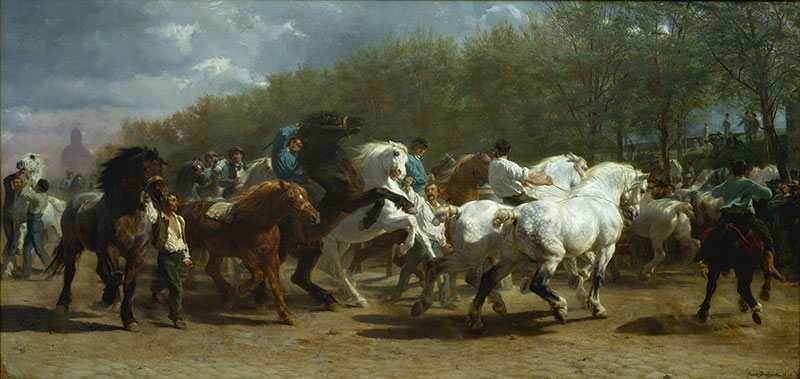
Bonheur’s work features anatomically precise animals rendered with meticulous attention to musculature, fur, and movement. Her compositions employ strong diagonals, natural light, and carefully balanced groups showing mastery of color harmony.
Recurring Themes & Motifs
She specialized in animal subjects, particularly horses and cattle, often in rural settings. Bonheur painted working animals with nobility and dignity, celebrating their strength and relationship to the land.
Influences & Training
Initially trained by her father, painter Raymond Bonheur. Rosa studied animal anatomy through field observation and dissection, regularly visiting slaughterhouses, farms, and horse fairs to document animal forms directly.
Notable Works
- The Horse Fair (1852-55) – Metropolitan Museum of Art, New York
- Plowing in the Nivernais (1849) – Musée d’Orsay, Paris
- Lions at Home (1881) – Dahesh Museum of Art
Role in Art History
As the most famous female artist of her time, Bonheur broke gender barriers while achieving international acclaim. Her detailed animal studies redefined the genre of animal painting through scientific observation combined with emotional sensitivity.
William Harnett (1848-1892)
Nationality: Irish-American
Art Movement(s): Realism, Trompe l’oeil
Mediums: Oil painting
Artistic Signature
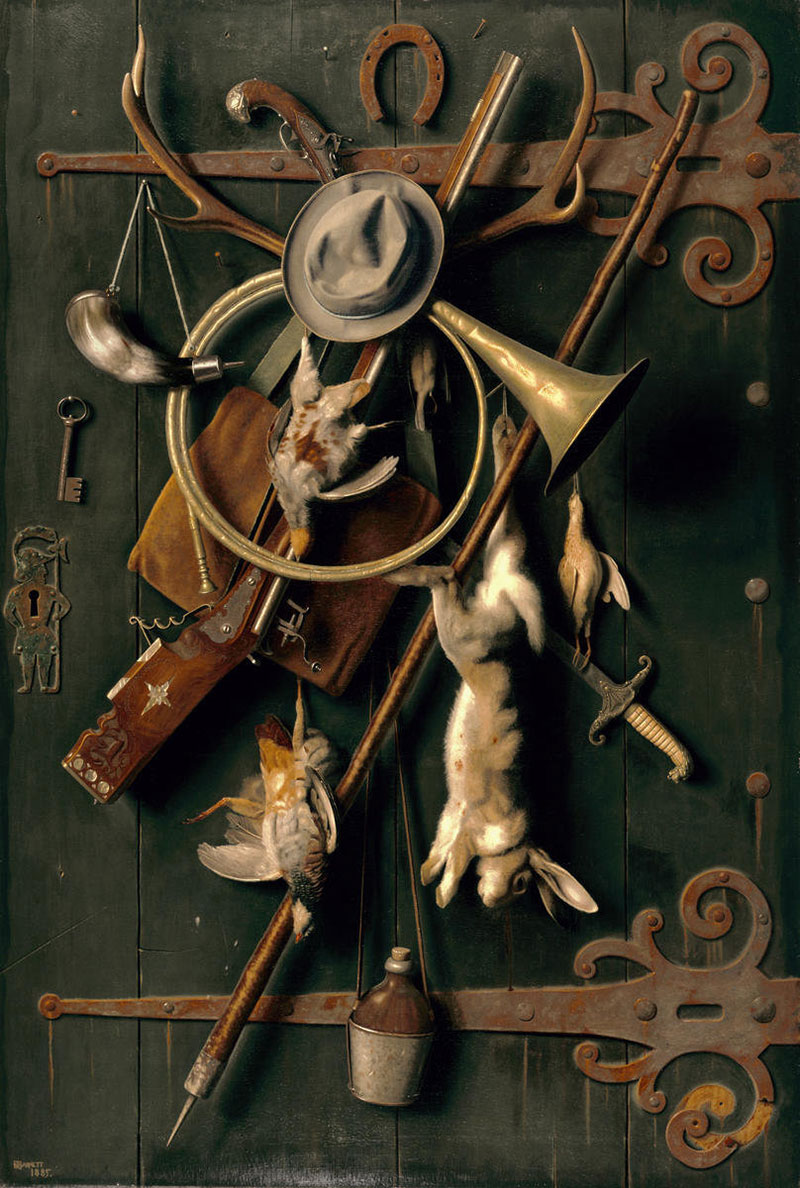
Harnett specialized in hyper-realistic still life paintings with extraordinary attention to texture, light reflections, and surface details. His compositions feature precise arrangement of everyday objects that appear three-dimensional through masterful emphasis of shadow and highlight.
Recurring Themes & Motifs
His paintings typically depict hunting equipment, musical instruments, books, and everyday objects arranged on wooden surfaces. Harnett often included worn items with signs of use, suggesting human presence through absence.
Influences & Training
Trained at the Pennsylvania Academy of Fine Arts and National Academy of Design. European travel exposed him to Dutch still life traditions, which he transformed into a uniquely American approach to trompe l’oeil painting.
Notable Works
- After the Hunt (1885) – Fine Arts Museums of San Francisco
- The Old Violin (1886) – National Gallery of Art, Washington DC
- Job Lot Cheap (1878) – Fine Arts Museums of San Francisco
Role in Art History
Harnett perfected American trompe l’oeil painting to an unprecedented degree. His illusionistic techniques challenged the boundaries between representation and reality, influencing generations of still life artists.
Jules Breton (1827-1906)
Nationality: French
Art Movement(s): Realism, Naturalism
Mediums: Oil painting
Artistic Signature
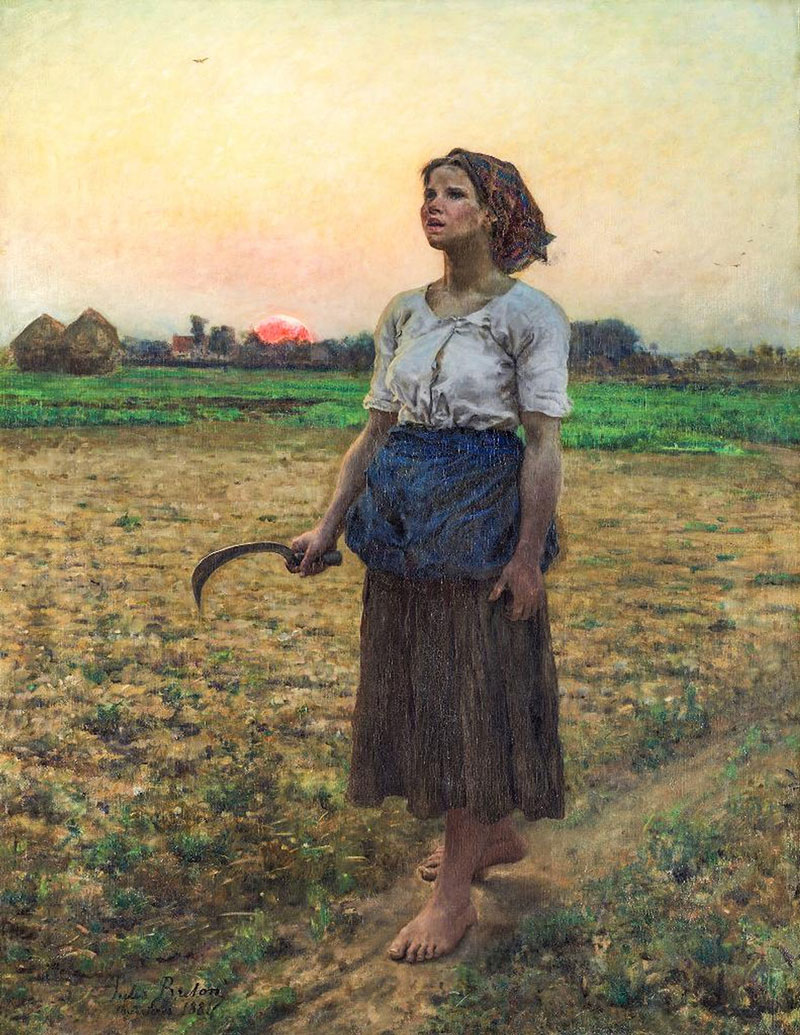
Breton combined academic precision with atmospheric light effects. His figures display classical proportions and idealized beauty while maintaining realistic contexts. His work balances careful drawing with sensitive handling of dusk and twilight atmospheres.
Recurring Themes & Motifs
His paintings focus on rural peasant life, particularly women working in fields or engaging in village rituals. Breton depicted agricultural labor with dignity and poetic sentiment, often at day’s end when harmony between humans and nature seems most evident.
Influences & Training
Studied at the École des Beaux-Arts in Paris under historical painter Michel-Martin Drolling. Breton combined academic training with direct observation of rural life in his native Courrières in northern France.
Notable Works
- The Song of the Lark (1884) – Art Institute of Chicago
- The End of the Working Day (1886-87) – Brooklyn Museum
- The Communicants (1884) – Metropolitan Museum of Art, New York
Role in Art History
Breton created a poetic version of rural realism that was widely accessible. His work bridges academic traditions and modern rural observation, making peasant life sympathetic to urban audiences while maintaining artistic sophistication.
Eastman Johnson (1824-1906)
Nationality: American
Art Movement(s): Realism, Genre Painting
Mediums: Oil painting, charcoal drawing
Artistic Signature
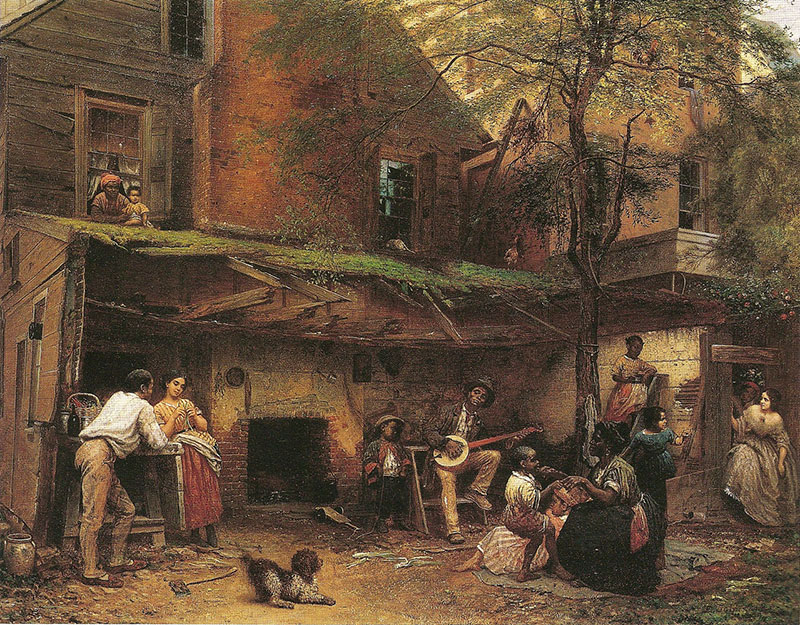
Johnson created richly detailed interior scenes with warm, amber-toned light and carefully observed domestic objects. His figures display natural poses and psychological insight, often captured in moments of quiet activity or reflection.
Recurring Themes & Motifs
His paintings document American domestic life, rural traditions, and the complexities of post-Civil War society. Johnson portrayed childhood experiences, African American life, and New England communities with nuanced understanding.
Influences & Training
Studied in Düsseldorf and at The Hague, absorbing Dutch genre traditions. Johnson brought European technical skills to American subjects, developing a distinctive national genre style grounded in everyday observation.
Notable Works
- Negro Life at the South (1859) – New-York Historical Society
- The Cranberry Harvest, Island of Nantucket (1880) – Timken Museum of Art, San Diego
- A Ride for Liberty – The Fugitive Slaves (c. 1862) – Brooklyn Museum
Role in Art History
Johnson helped establish an American genre tradition distinct from European models. His sensitive portrayals of African Americans and honest depictions of rural life created a visual record of nineteenth-century American experience.
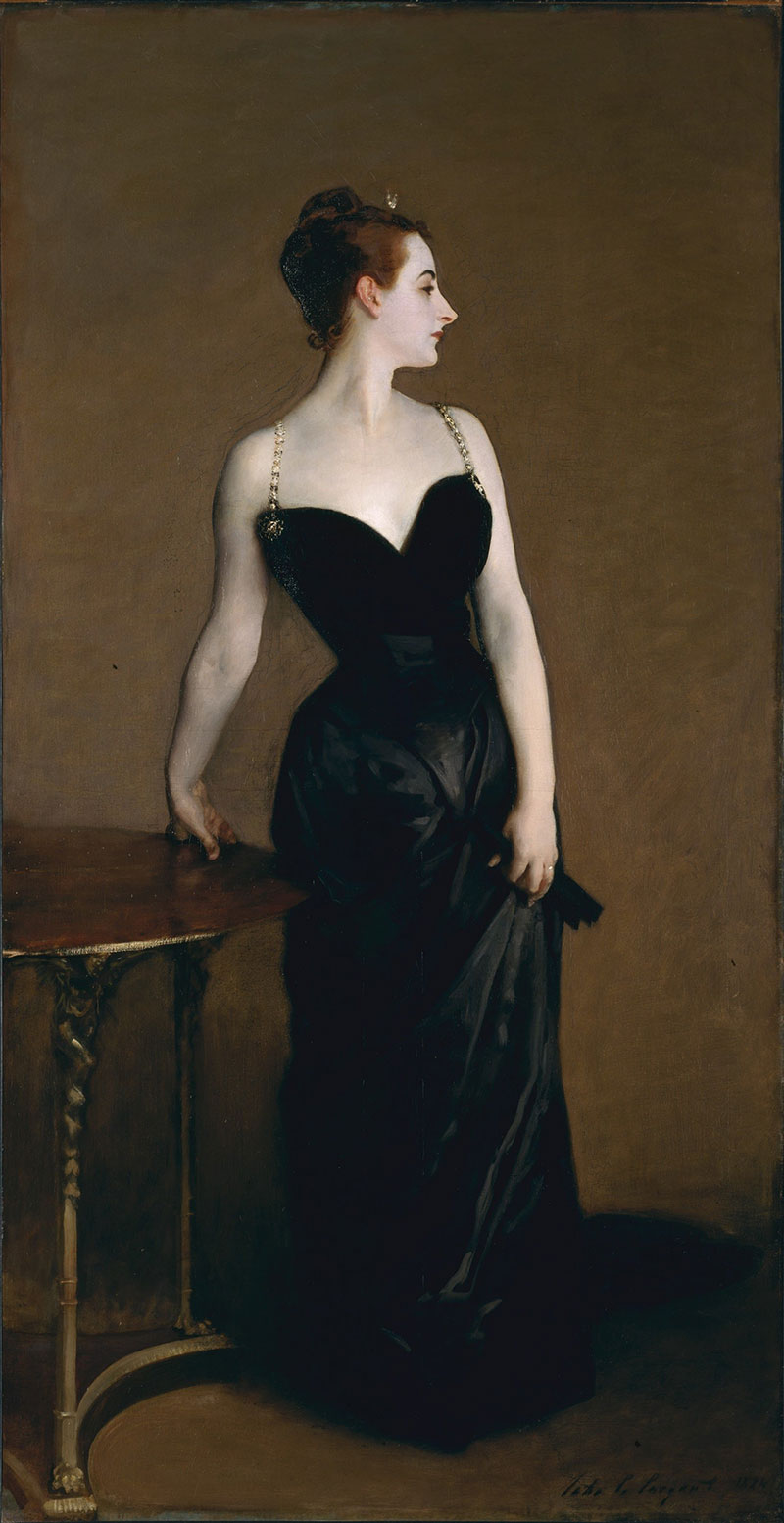
John Singer Sargent (1856-1925)
Nationality: American (born in Italy)
Art Movement(s): Realism, Impressionism
Mediums: Oil painting, watercolor, charcoal drawings
Artistic Signature
Sargent combined virtuosic brushwork with sophisticated composition and dramatic lighting. His portraits feature bold, fluid strokes that resolve into precise details at focal points, creating an impression of spontaneity despite careful planning.
Recurring Themes & Motifs
His work primarily consists of society portraits, though he also painted landscapes, architectural studies, and war scenes. Sargent captured psychological insight within formal settings, often revealing character through subtle poses and expressions.
Influences & Training
Studied with Carolus-Duran in Paris and was influenced by Velázquez and Frans Hals. Sargent blended academic training with impressionist techniques to create his distinctive approach to portraiture and light.
Notable Works
- Portrait of Madame X (1884) – Metropolitan Museum of Art, New York
- The Daughters of Edward Darley Boit (1882) – Museum of Fine Arts, Boston
- Carnation, Lily, Lily, Rose (1885-86) – Tate Britain, London
Role in Art History
As the preeminent portrait painter of his era, Sargent bridged 19th-century techniques with modern sensibilities. His technical brilliance and psychological insight established new possibilities within traditional portraiture.
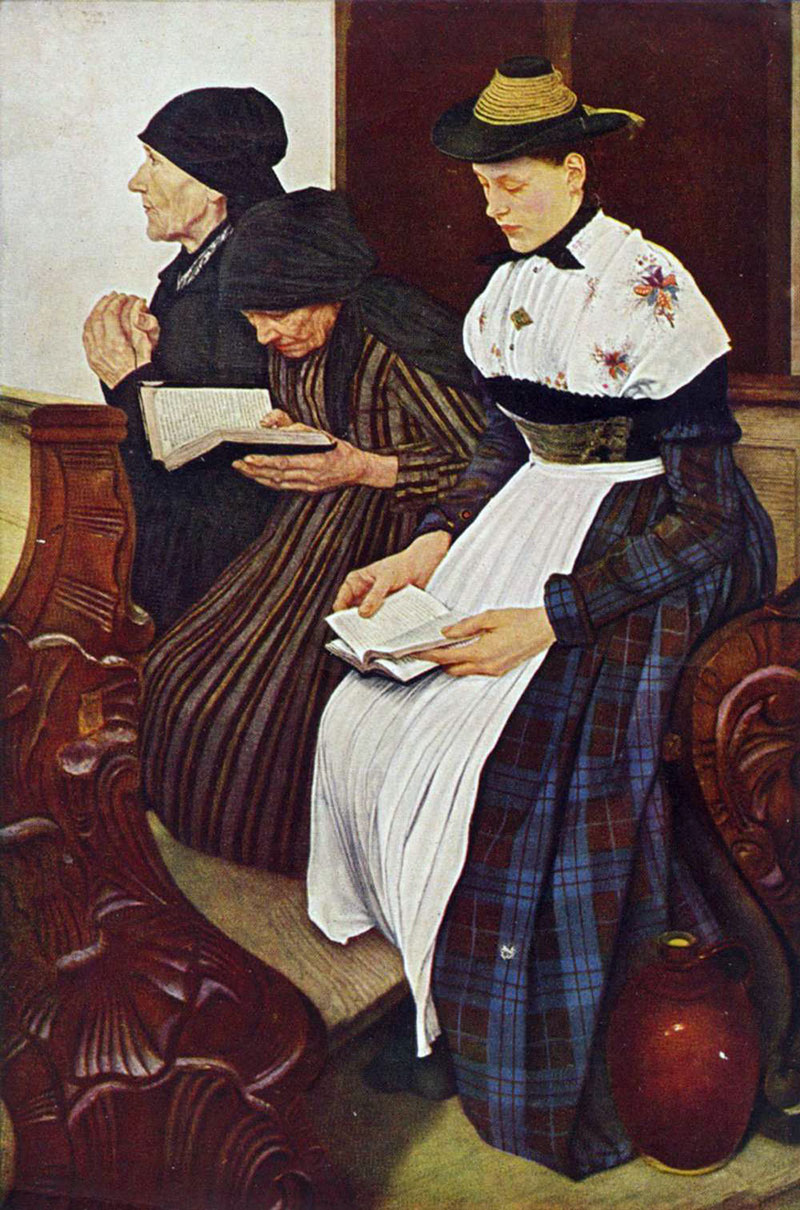
Wilhelm Leibl (1844-1900)
Nationality: German
Art Movement(s): Realism
Mediums: Oil painting, drawing
Artistic Signature
Leibl painted with extraordinary attention to surface texture and detail, often using tiny brushstrokes to build forms. His compositions feature stark simplicity, psychological directness, and an almost photographic precision combined with expressive painting mediums application.
Recurring Themes & Motifs
His work centers on rural Bavarian peasants and village life, portrayed without sentimentality or narrative elements. Leibl focused on character studies and environmental authenticity rather than dramatic situations or social commentary.
Influences & Training
Trained at the Munich Academy and influenced by Gustave Courbet‘s direct approach. Leibl’s admiration for Dutch masters, particularly Rembrandt van Rijn, informed his understanding of light and psychological depth.
Notable Works
- Three Women in Church (1878-81) – Kunsthalle Hamburg
- In the Kitchen (1898) – National Gallery, Berlin
- The Village Politicians (1877) – Neue Pinakothek, Munich
Role in Art History
Leibl established a distinctly German approach to realism focused on technical excellence rather than narrative or social agenda. His meticulous observation and uncompromising truthfulness influenced generations of Central European artists.
FAQ on Realism Artists
Who were the most influential realism artists?
The most influential realism artists include Gustave Courbet, Jean-François Millet, Honoré Daumier, and Édouard Manet.
American painters like Thomas Eakins and Winslow Homer established realism in the US, while Ilya Repin dominated Russian realistic painting.
Their unidealized portraits and mundane subjects revolutionized art through objective observation and visual truth.
What defines realism in art?
Realism focuses on depicting subjects with objective accuracy, avoiding idealization and romanticism.
It employs faithful reproduction of observable reality, often featuring working-class subjects, rural scenes, and everyday life.
Artists used detailed observation to create factual representations, embracing contemporary social conditions through precise rendering and photorealism techniques.
When did the realism art movement begin?
The realism movement emerged in France around 1840-1850, reaching its peak between 1850 and 1880. It developed as a reaction against romanticism and neoclassicism.
Gustave Courbet’s 1849 painting “The Stone Breakers” is often considered a pivotal work that established realism’s focus on contemporary life and ordinary people rather than mythological or historical subjects.
What techniques did realism artists use?
Realism artists employed meticulous observation, careful composition, and naturalistic lighting. They often used:
- Oil painting for rich detail and texture
- Somber earth-tone palettes with selective color contrast
- Perspective and anatomical accuracy
- Visible brushwork that maintained paint’s materiality
- Direct observation rather than working from imagination
How did realism differ from impressionism?
While both movements focused on contemporary life, realism prioritized accuracy and social content over impressionism’s emphasis on light effects and visual perception.
Realists used precise detail, defined outlines, and earthy palettes to capture objective truth, often with political undertones.
Impressionism sought to capture fleeting moments with loose brushwork, brighter colors, and atmospheric qualities.
What subjects did realism artists typically paint?
Realism artists depicted:
- Working-class laborers and peasants
- Rural landscapes and agricultural scenes
- Urban environments and city life
- Ordinary domestic scenes
- Contemporary social issues and conditions
- Unidealized portraits showing true character
- Natural landscapes without romantic embellishment
Their anti-romanticism approach elevated mundane subjects previously considered unworthy of serious artistic attention.
What social and political factors influenced realism artists?
Realism emerged during industrialization, urbanization, and rising social consciousness.
The 1848 revolutions, growing labor movements, and journalism’s evolution affected artists’ social criticism.
Scientific advances, photography’s invention, and changing class structures pushed painters toward literal interpretation and away from academic traditions, creating art accessible to wider audiences.
How did female realism artists contribute to the movement?
Female realism artists like Rosa Bonheur challenged convention through both subject matter and their professional status.
Bonheur specialized in animal painting with anatomical precision, while others like Emily Mary Osborn and Elizabeth Thompson depicted realistic social scenes.
These women broke gender barriers, worked in traditionally male domains, and brought unique perspectives to representational art.
What is the legacy of realism in modern art?
Realism’s legacy extends through movements like social realism, American Regionalism, and contemporary figurative painting.
Its honest portrayal techniques influenced documentary photography and photojournalism.
Modern realist approaches continue in hyperrealism and various contemporary painting styles that maintain commitment to observable truth and social awareness.
How did realism influence later art movements?
Realism directly influenced:
- Impressionism through its focus on contemporary subjects
- Expressionism by establishing authenticity as an artistic value
- Documentary photography’s approach to social subjects
- Social and Socialist Realism in the 20th century
- Regional American painting during the Depression era
- Contemporary figurative and narrative painting
Its commitment to truth-telling remains fundamental to socially engaged art.
Conclusion
Realism artists transformed artistic expression through their unwavering commitment to authentic representation and societal truth.
Their literal interpretation of everyday scenes revealed beauty in ordinary moments, giving voice to previously overlooked subjects through faithful reproduction and detailed observation.
The movement’s impact extends far beyond its historical period. Through accurate depiction and anti-romanticism approaches, these painters established:
- A foundational visual language that shaped modern documentary practices
- Technical innovations in unity and variety that remain relevant today
- Enduring standards for artistic integrity and social consciousness
From Courbet’s revolutionary canvases to Eakins’ anatomical precision, these masters elevated truthful portrayal to new heights.
Their representational techniques continue inspiring contemporary figurative artists working in various painting mediums.
By championing observable reality over idealization, realism created an artistic legacy that celebrates authenticity, challenges convention, and finds profound meaning in life’s unvarnished moments.