The brush you pick up matters more than the paint you squeeze out.
Understanding watercolour brush types is the first real step toward controlling what happens on paper. Shape, hair material, and size all change how pigment flows, how washes behave, and how much precision you can actually achieve.
This guide covers every major brush type used in watercolour painting, from kolinsky sable rounds to mop brushes, flat wash brushes, riggers, and fan brushes.
By the end, you will know which brush suits each technique, what brush hair types do differently, and how to build a practical kit without overbuying.
What Are Watercolour Brushes
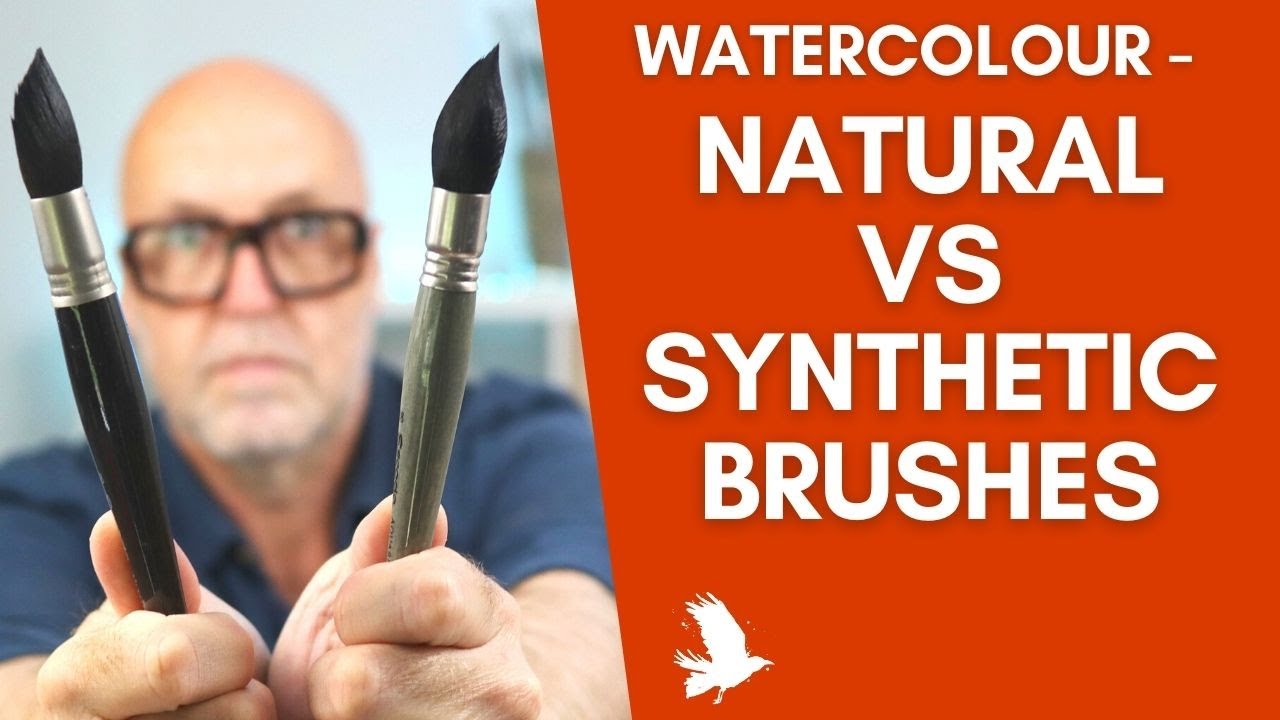
Watercolour brushes are soft-haired tools built to hold water-based pigment and release it in a controlled way onto paper. Unlike brushes made for oil or acrylic, they prioritise absorbency and point quality over stiffness.
Four properties define how a watercolour brush performs: belly capacity (how much water it holds), snap (how quickly it returns to shape after a stroke), point quality (how fine the tip gets when wet), and absorbency (how readily it picks up and releases pigment).
These properties matter more in watercolour painting than in other painting mediums, because watercolour is transparent and unforgiving. A brush that bleeds, drags, or loses its point mid-stroke shows immediately.
Brush choice also shifts depending on painting style. Loose, expressive work needs different tools than tight botanical illustration or architectural rendering.
| Property | What It Affects | Most Important For |
|---|---|---|
| Belly Capacity | Flow Duration: The amount of water-to-pigment the brush holds in its center “reservoir.” | Large sky washes, building consistent background layers, and sustained wet-on-wet work. |
| Snap | Resilience: How quickly the bristles spring back to their original shape after a stroke. | Detail work, varying line weights in a single motion, and precise “cut-in” edges. |
| Point Quality | Precision: The ability of the bristles to converge into a needle-sharp tip when wet. | Botanical studies, high-resolution product details, and fine-line illustration. |
| Absorbency | Consistency: The “thirst” of the fibers, which determines how evenly the paint is released. | Smooth glazing layers, preventing “puddling” in washes, and uniform color application. |
The global watercolour market was valued at USD 3.14 billion in 2024 and is projected to reach USD 5.56 billion by 2035, according to Market Research Future. That growth reflects how many people have picked up watercolour painting as a serious practice, not just a casual hobby.
Brush Hair Types and What They Do
Hair material is the single biggest factor in how a brush performs. It determines water retention, snap, point longevity, and overall feel under the hand.
There are three main categories: natural hair, synthetic fibre, and mixed blends. Each makes different trade-offs.
Natural Hair Brushes

Kolinsky sable is the top standard in watercolour. The hair comes from the tail of the Siberian kolinsky weasel, and the microscopic interlocking scales on each strand improve colour retention and spring significantly. Fine Art Tutorials notes that kolinsky brushes hold a sharp point over years of use, which no synthetic fully replicates yet.
A single size 10 kolinsky sable from Winsor and Newton Series 7 or Raphael 8404 can cost $40-$80. Worth it for many professionals. Probably overkill for someone painting every few weekends.
Squirrel hair works differently. It has very little snap but exceptional water capacity, which makes it the go-to choice for mop brushes and large wash brushes. Artists working on loose, atmospheric pieces often reach for squirrel mops over anything else for wet backgrounds.
Synthetic Fibre Brushes
Synthetic brushes have improved a lot in the last decade. The Da Vinci Casaneo and Princeton Neptune are good examples of synthetics that now genuinely compete with mid-range natural hair brushes for everyday use.
Paul Rubens Shop data suggests synthetic squirrel blends deliver roughly 90% of the performance of natural kolinsky at around 20% of the price. That ratio makes synthetics hard to ignore, especially for students or artists who paint regularly and go through brushes faster.
The one area where synthetics still fall short is snap recovery. They tend to be springier, which works well for controlled stroke work but can feel stiff during soft wet-on-wet blending.
Mixed and Blend Brushes
Mixed hair brushes combine synthetic filaments with natural hair, usually to reduce cost while keeping some of the performance characteristics of natural fibres. Results vary considerably between brands.
Escoda Versatil is a well-regarded example. It uses a proprietary synthetic that mimics kolinsky closely enough that many artists find it difficult to tell apart in daily use.
| Hair Type | Snap | Water Retention | Best Use Case |
|---|---|---|---|
| Kolinsky Sable | Excellent: Springs back instantly to a needle-sharp point. | High: The microscopic scales on the hair hold a large “reservoir” of pigment. | High-precision detail, botanical studies, and professional-grade final renders. |
| Squirrel | Low: Very soft and “floppy”; does not spring back to a point easily. | Very High: Can hold a massive volume of water, acting like a sponge. | Large atmospheric washes, “mop” work, and soft, edge-free background blending. |
| Synthetic | Good: High resilience and “stiffness” compared to natural hair. | Moderate: Water tends to sit on the surface rather than inside the fibers. | Graphic illustration, lifting pigment, and using “masking fluid” or caustic cleaners. |
| Mixed Blend | Moderate: A balance between the softness of natural and the snap of synthetic. | Moderate-High: Engineered to mimic sable at a more accessible price point. | Versatile everyday painting, building mid-ground textures, and general commercial work. |
Round Brushes

Round brushes are the most-used shape in watercolour. Most painters own more rounds than any other type.
The structure is simple: a tapered belly that holds a good volume of paint, narrowing to a fine point at the tip. Size range runs from 000 (very fine) through to size 24 and beyond for specialist mop-style rounds.
Pointed Round vs. Blunt Round
Pointed rounds are the standard choice. The tip comes to a sharp point when wet, which lets you shift between fine lines and broader strokes in a single loaded brush. A size 8 pointed round handles a surprising amount of work, from broad washes to detail, if the quality is there.
This versatility is why many experienced artists recommend starting with just two or three rounds before buying anything else.
Blunt rounds (sometimes called mop rounds) have a rounder, fuller tip without a sharp point. Less useful for controlled detail. Very useful for loose, expressive marks where you want the edge of the stroke to soften and spread slightly.
Artists working in impressionism or expressionism styles tend to reach for blunt rounds more often than those working in tight realism.
Size Selection for Round Brushes
Brush sizing is not standardised across manufacturers. A size 8 from Winsor and Newton Series 7 is noticeably larger than a size 8 from some other brands. Compare belly width and hair length directly, not just the number on the handle.
- Sizes 000-2: Fine detail, botanical illustration, small-scale work
- Sizes 4-8: General painting, mid-scale washes, portraits
- Sizes 10-14: Large backgrounds, expressive wet-on-wet passages
- Size 16+: Full-sheet washes, broad landscape work
The brushes segment of the global painting tool market generated USD 3.1 billion in revenue in 2023, according to Global Market Insights. Round brushes account for the largest share of that within watercolour specifically.
Flat and Wash Brushes

Flat brushes have a squared or rectangular hair bundle rather than a tapered point. They produce a different kind of mark entirely.
Key difference from rounds: flat brushes load paint across a wide edge, which means they cover more surface area per stroke but lose the fine-line capability of a round.
Where flat brushes genuinely outperform rounds:
- Geometric shapes and hard-edged architectural detail
- Consistent-width strokes across a surface
- Cutting in clean edges along masked or reserved areas
- Applying broad, even colour fields in a single pass
Architects and urban sketchers who work in realism tend to rely on flat brushes more than painters working loosely.
Hake Brushes
The hake is a wide, flat brush with soft goat hair, originating from Japan. It is not really a precision tool. The goat hair is very soft with almost no snap, which means control is limited.
What it does well: laying enormous washes quickly, softening backgrounds, and wet-on-wet flooding of large areas of paper. For en plein air painting, a small hake in the kit saves significant time when covering sky areas.
Size matters a lot with hakes. A 2-inch hake is genuinely useful. A 4-inch one is mostly a novelty for regular paper sizes unless you are working very large.
One-Stroke vs. Traditional Flat
Traditional flat: uniform width, firm edge, consistent stroke with pressure.
One-stroke brush: slightly longer hair, built to carry a full stroke from loaded tip to dry finish in one movement. Used in sign painting and lettering as much as watercolour.
Mop Brushes
A mop brush has a large, rounded head with a very high water capacity. Usually squirrel hair or a synthetic equivalent. Not a detail tool at all.
The primary purpose is laying large, even washes without running dry mid-stroke. Painters who work on full or half sheets regularly call mop brushes indispensable for that task.
How it differs from a large round: a large round still has snap and a definite point. A mop has almost no snap and a soft, blunt tip. The mop is not trying to make a precise mark. It is carrying as much diluted pigment as possible and releasing it smoothly over a wide area.
Silver Brush Black Velvet and Escoda Ultimo are two well-regarded mop options. Both use synthetic squirrel blends that hold water well without the ethical concerns around natural squirrel hair harvesting.
Size range for mops tends to use different labelling than standard brushes. Common sizes are 1/2 inch, 3/4 inch, and 1 inch for round mops, plus larger oval mop shapes for very wide coverage.
One honest limitation worth noting: mop brushes are genuinely limited in scope. They belong in a supporting role, not as a primary brush. For loose, atmospheric work like watercolour painting with soft backgrounds, they are difficult to replace. For anything requiring precision, reach for a round.
Liner, Rigger, and Detail Brushes
These are the thin ones. Very long, very fine, built for a completely different kind of mark.
Rigger Brushes
The rigger (also called a liner) has an unusually long, thin hair body. The name comes from maritime painting: these brushes were originally used to paint ship rigging in fine, continuous lines without reloading constantly.
That long hair body is the point. A loaded rigger holds enough paint to run a continuous thin stroke for several inches before running dry. Trying to paint rigging, grass stems, or calligraphic script with a small round is frustrating by comparison.
Common uses for rigger brushes:
- Ship and architectural line work
- Botanical stems and fine branch detail
- Lettering on painted surfaces
- Hair and fur detail in portraiture
Script and Spotter Brushes
Script brushes are similar to riggers but slightly shorter. The distinction is subtle enough that many manufacturers use the names interchangeably.
Spotter brushes are short and very fine. Tiny belly, minimal hair length, sharp point. They are used for micro-detail work: restoring fine edges, adding small texture marks, or working at a very small scale.
Botanical illustrators often keep both a rigger and a spotter in regular use. The rigger handles stems and fine continuous lines. The spotter handles individual petal textures and very small corrections.
Artists painting in the tradition of detailed realism or hyperrealism rely on liner and spotter brushes more than on any other type. The work simply cannot be done with a round at that level of precision.
Fan Brushes and Texture Brushes
Fan brushes are the most misused brush in watercolour. Most beginners buy one thinking it will be useful constantly. It won’t.
The spread bristles of a fan brush are built for one job: quick, light strokes that mimic natural texture. Foliage, grass, fur, wave foam. Outside that, reach for something else.
What Fan Brushes Actually Do Well
Dry brushing with a fan is where these brushes genuinely shine. Load the brush lightly, blot excess moisture on a cloth, then drag it across textured cold-press or rough paper.
The bristles catch the raised surface and skip the valleys, leaving broken, dappled marks that are very hard to fake with any other brush shape.
- Foliage and tree canopy texture
- Grass and meadow detail
- Fur and animal coat texture
- Rough stone or bark surfaces
According to Watercolor Affair, flat brushes are preferred by most artists for dry brushing, but fan brushes produce distinct organic effects that flats cannot replicate in foliage and hair work.
Stiff vs. Soft Fan Brushes
Stiff fan brushes (synthetic or hog hair) produce harder, more separated marks. Better for bark, rock, coarse textures.
Soft fan brushes (synthetic sable or natural hair) produce lighter, more blended marks. Better for grass tips, light foliage, and subtle texture overlays.
One honest limitation worth stating: fan brushes rarely make it into a regular painting session. They sit in the kit as occasional texture tools. If budget is tight, buy a good round and a flat before touching a fan brush.
Brush Sizes and Numbering Systems

Brush sizing in watercolour has no universal standard. The same number from two different manufacturers can produce brushes with noticeably different belly widths and hair lengths.
Watercolor Affair notes this is one of the most confusing aspects of buying brushes, with sizing systems ranging from 000 to 24 and beyond, plus non-numerical labels on some mop and hake styles.
| Size Range | Typical Use | Paper Scale |
|---|---|---|
| 000 to 2 | Micro-Detail: Surgical-fine lines, highlights in eyes, and intricate botanical veins. | Small-scale illustrations, postcards, and quarter-sheets (approx. 11″ x 15″). |
| 4 to 8 | The “Workhorse”: Creating controlled shapes, building mid-ground forms, and painting figures. | Half-sheets (approx. 15″ x 22″) and standard sketchbook work. |
| 10 to 14 | Structural Wash: Laying down architectural base layers and medium-scale backgrounds. | Full-sheets (approx. 22″ x 30″) and professional-scale watercolor boards. |
| 16+ | Massive Coverage: Broad, sweeping sky areas and “wetting down” large surfaces. | Very large format, mural-scale watercolor, or custom oversize commissions. |
Comparing Sizes Across Brands
Never buy a brush based on the number alone. Check the actual hair length and belly width before purchasing, especially online.
A Winsor and Newton Series 7 size 7 is considerably larger in the belly than many other brands at the same number. Da Vinci Maestro runs slightly smaller. Raphael 8404 tends to run true to what most artists expect from published size comparisons.
Practical rule: if you are buying from a new brand, compare physical dimensions against a brush you already own, not just the number printed on the handle.
Starter Size Recommendations
Most experienced watercolourists agree on a minimal starting kit.
- One large round (size 10 or 12) for washes and general work
- One medium round (size 6 or 8) for mid-detail and controlled strokes
- One small round (size 2 or 4) for detail work
Fuumuui’s 2024 brush guide states a simple starter kit of three brushes outperforms a cheap variety pack every time. Quality over quantity. That holds up in practice.
How to Choose the Right Brush for Your Technique
Brush selection follows painting style, not the other way around. Most buying mistakes happen when people buy a full set before they know how they actually paint.
Creative Bloq notes that artist McKernan developed technique preferences using student-grade brushes first, only investing in Kolinsky sable rounds once a clear preference was established. That approach makes a lot of sense.
Matching Brush Type to Painting Style
Loose and expressive work (think wet-on-wet backgrounds, broad wet-on-wet technique, atmospheric washes):
- Large mop brush for backgrounds
- Size 10-12 round with good belly capacity
- Squirrel or soft synthetic hair preferred
Tight and controlled work (botanical illustration, portrait detail, architectural rendering):
- Kolinsky sable rounds in sizes 2-8
- Liner or rigger for fine continuous lines
- Spotter for very small scale correction
Budget vs. Performance Trade-offs
Synthetic brushes have closed the gap significantly on natural hair in the last few years.
Where synthetics are genuinely fine: student work, regular painting sessions where brushes wear faster, mixed-media applications involving masking fluid or lifting.
Where natural hair still wins: large flowing washes, long painting sessions requiring consistent pigment flow, and any work where point retention matters over weeks and months of use.
Paul Rubens Shop data puts synthetic squirrel blends at roughly 90% of kolinsky performance at 20% of the cost. That ratio is hard to argue with for most working artists.
Technique-to-Brush Quick Reference
| Technique | Best Brush Type | Key Property Needed |
|---|---|---|
| Flat Wash | Large Round or Mop | High Belly Capacity: Must hold enough liquid to finish the entire area without “starving” mid-stroke. |
| Wet-on-Wet | Soft Mop or Squirrel Round | Soft Release: Needs low “snap” to lay color onto wet paper without disturbing the fibers or underlying layers. |
| Glazing Layers | Flat or Medium Round | No-Drag Flow: Requires a smooth, consistent release of pigment to avoid “scrubbing” the previous dry layer. |
| Fine Detail | Small Kolinsky Round | Sharp Point & Snap: The bristles must converge to a needle-tip and spring back instantly for surgical precision. |
| Dry Brush Texture | Fan or Stiff Flat | Minimal Retention: Needs to hold very little water so the bristles “skip” over the paper’s peaks for a gritty look. |
Artists working in abstract styles often find that older, slightly splayed brushes create marks impossible to reproduce with a perfect brush. Worth keeping worn brushes around rather than replacing them immediately.
Caring for Watercolour Brushes

Brush care is where a lot of painters cut corners. A kolinsky sable round that costs $60 lasts years with proper care. The same brush stored wet or left dirty lasts months.
Winsor and Newton’s care guidelines confirm that pigment buildup at the ferrule base is the primary cause of bristle splaying and point loss. It happens gradually and the brush feels fine until suddenly it doesn’t hold a point at all.
Cleaning During a Painting Session
Rinse between colours in clean water, not the same jar you’ve been using for two hours.
Never leave brushes resting bristle-down in a water jar. The bristles warp and the ferrule glue softens over time. Lay brushes flat on a cloth between uses or rest them across the rim of your water container.
Emily Wassell Art notes that ferrule damage from standing brushes in water is one of the most common causes of permanent brush damage. Completely preventable.
Post-Session Deep Cleaning
Rinse thoroughly under running water after every session. Once a week for regular painters, perform a deeper clean with brush soap.
- Masters Brush Cleaner is the most recommended option across multiple sources
- Mild glycerin soap works as a substitute
- Avoid dish soap on natural hair brushes as it strips conditioning oils
Swirl soapy bristles in your palm rather than scrubbing on a rough surface. Repeat until water runs clear.
Reshaping and Storage
Reshape while damp. Use fingers to press the tip back to a point or clean edge immediately after rinsing. Do not wait until the brush is dry.
Dry flat or hang bristle-down. Never stand brushes upright with bristles facing up while wet as water seeps into the ferrule and loosens the adhesive.
For storing paintbrushes long-term, a brush roll or ventilated case keeps tips protected. If storing natural hair brushes for an extended period, a sealed box with a cedar moth repellent prevents damage from insects that genuinely do target natural fibres.
The cleaning process for watercolour brushes is less intensive than for oil or acrylic. That said, skipping it consistently shortens brush life more than almost any other factor.
Signs a brush needs replacing: permanent splaying that reshaping cannot fix, hairs pulling loose from the ferrule, or a point that no longer forms even when wet and reshaped. Before that point, most brush issues are recoverable with consistent cleaning and careful storage.
FAQ on Watercolour Brush Types
What are the main watercolour brush types?
The core types are round, flat, mop, liner, rigger, fan, and hake brushes. Each handles a different job. Rounds are the most versatile. Mops cover large washes. Liners handle fine continuous lines. Most painters work with three to five types regularly.
What is the best brush for watercolour beginners?
A round brush in size 8 or 10 is the standard starting point. It handles detail work, washes, and stroke variation in one tool. Add a flat and a small round once you know how you paint.
What is the difference between natural and synthetic watercolour brushes?
Natural hair, especially kolinsky sable, holds more water, snaps back faster, and keeps a sharper point longer. Synthetic brushes are springier, more affordable, and improving yearly. For everyday use, a good synthetic does the job reliably.
What does brush snap mean in watercolour?
Snap is how quickly the bristles return to their original shape after a stroke. High snap means better control and precise marks. Kolinsky sable has excellent snap. Squirrel hair has almost none, which makes it better suited for soft wash work.
What size watercolour brush should I use?
Size depends on paper scale and subject. Sizes 2 to 4 suit fine detail. Sizes 6 to 10 handle general painting. Sizes 12 and above cover large flat wash areas. Brush sizing is not standardised, so compare physical dimensions across brands.
When should I use a mop brush?
Use a mop brush for large background washes, wet-on-wet flooding, and any area where you need to carry a lot of diluted pigment without reloading. It is not a detail tool. Silver Brush Black Velvet is a well-regarded option.
What is a rigger brush used for in watercolour?
A rigger brush has long, thin hair built to hold enough paint for extended fine strokes without reloading. It suits ship rigging, botanical stems, fine branch work, and lettering. Script brushes are similar but slightly shorter in the hair body.
Are fan brushes useful for watercolour painting?
Fan brushes are useful for specific texture effects, including foliage, grass, fur, and dry brush work on rough paper. They are not general-purpose tools. Most painters reach for a fan brush occasionally rather than regularly.
How do I care for watercolour brushes?
Rinse after every session, clean weekly with brush soap, and reshape bristles while damp. Never stand wet brushes upright in a jar. Dry flat or bristle-down. Store completely dry in a brush roll or ventilated case.
What is the difference between a flat brush and a wash brush in watercolour?
Flat brushes have a squared edge and suit geometric marks, hard edges, and controlled strokes. Wash brushes are wider and built purely for covering large areas quickly. A hake brush is the widest wash option, using soft goat hair for broad, even coverage.
Conclusion
This conclusion is for an article presenting watercolour brush types as a practical foundation, not an overwhelming catalogue of options.
Brush hair material, shape, and size each play a distinct role in how pigment flows and how much control you have over a wash or a fine line.
A kolinsky sable round handles most situations. A mop covers large backgrounds. A rigger draws what no round can sustain. Fan brushes stay in reserve for texture work.
Build your kit around how you actually paint. Three well-chosen brushes beat a full set of average ones every time.
Proper brush selection for watercolour and consistent care will extend the life of any brush significantly, whether natural or synthetic.