No brush produces a foliage mass, a rocky surface, or a cloud edge quite like a sponge does.
The sponge texture technique in watercolor painting uses the porous, irregular surface of a natural or synthetic sponge to apply or lift paint, creating organic marks that brushwork simply cannot replicate.
It sounds basic. In practice, it changes what’s possible in a landscape or abstract background considerably.
This article covers how the technique works, which sponges to use, how paper and paint consistency affect your results, what subjects it suits best, and the mistakes most painters make early on.
What Is Sponge Texture Technique in Watercolor Painting

The sponge texture technique is a watercolor painting method where a sponge, either natural or synthetic, is used to apply or lift paint on paper, producing irregular, organic patterns that brushes simply cannot replicate.
The porous surface of the sponge picks up and releases paint unevenly, which is exactly the point. That unpredictability is what gives sponge work its character.
It sits within a broader group of painting techniques focused on texture and mark-making. Used well, it adds depth to foliage, atmospheric texture to skies, and organic variation to backgrounds where flat washes would fall flat.
Two core applications exist. The first is additive sponging, where you load the sponge with pigment and press or dab it onto the paper surface. The second is subtractive sponging, where a damp clean sponge lifts wet or semi-dry paint to pull back highlights or soften edges.
Both approaches reward practice. The results vary depending on paint consistency, paper moisture level, sponge type, and how much pressure you apply.
The global watercolor paints market was valued at around $1.4 billion in 2023 and is growing at roughly 4.7% annually (DataIntelo), driven largely by hobbyists and students exploring techniques like this one.
Types of Sponges Used in Watercolor

Sponge choice changes the result more than most beginners expect. This is one of those things you figure out after ruining a few paintings.
Natural Sea Sponges
Best for organic, unpredictable texture. Natural sea sponges come from marine invertebrates, specifically Spongia officinalis, and their pore structure is completely irregular. No two areas of the sponge look the same when pressed onto paper.
- Produces varied, random marks across a single press
- Ideal for foliage, moss, lichen, and ground texture
- Sold in sizes from small pharmacy sponges to large Caribbean sea sponges
Most experienced watercolorists prefer natural sponges for landscape work specifically because of that built-in randomness. Changing the angle with each press helps avoid a repeated “stamped” look.
Synthetic Sponges
More uniform, more control. Kitchen sponges or cosmetic wedges leave a noticeably different mark than natural ones. The pores are manufactured to be consistent, so the texture repeats.
That predictability can actually work in your favor for certain effects. Soft stippled backgrounds. Subtle cloud texture. Areas where you want some variation but not too much chaos.
Torn edges on a synthetic sponge give more irregular results than the factory-cut flat face. Worth trying before buying a sea sponge if you’re just starting out.
Silk Sponges and Specialty Types
Silk sponges (like those from Loxley) have a finer, denser texture and are highly absorbent. They spread water and paint evenly, making them useful for wetting paper before stretching it, or for soft uniform washes where broad sponge texture isn’t wanted.
| Sponge Type | Texture Result | Best Used For |
|---|---|---|
| Natural Sea Sponge | Hyper-Organic: Features a complex, non-repeating structure that creates naturally “broken” marks. | Foliage, moss-covered stones, distant forests, and rugged rock faces. |
| Synthetic Kitchen Sponge | Geometric/Grid: When used for stippling, it creates a repetitive “cell” pattern that feels more structured. | Large background washes, softening “hard” edges, and creating industrial or man-made textures. |
| Cosmetic Wedge | Velvet/Diffuse: The extremely fine pore structure allows for the softest possible application of pigment. | Smooth sky gradients, “bokeh” background effects, and subtle skin tone transitions. |
| Silk/Wool Sponge | High Capacity: Designed for “loading” water rather than creating texture; creates a very fine, even “mist.” | Wetting large sheets of paper, applying broad base washes, and “lifting” large areas of color without streaks. |
Keeping a few types on hand is worth it. I tend to reach for the natural sea sponge for landscape work and a cosmetic wedge when I need something a bit more controlled.
How the Sponge Texture Technique Works
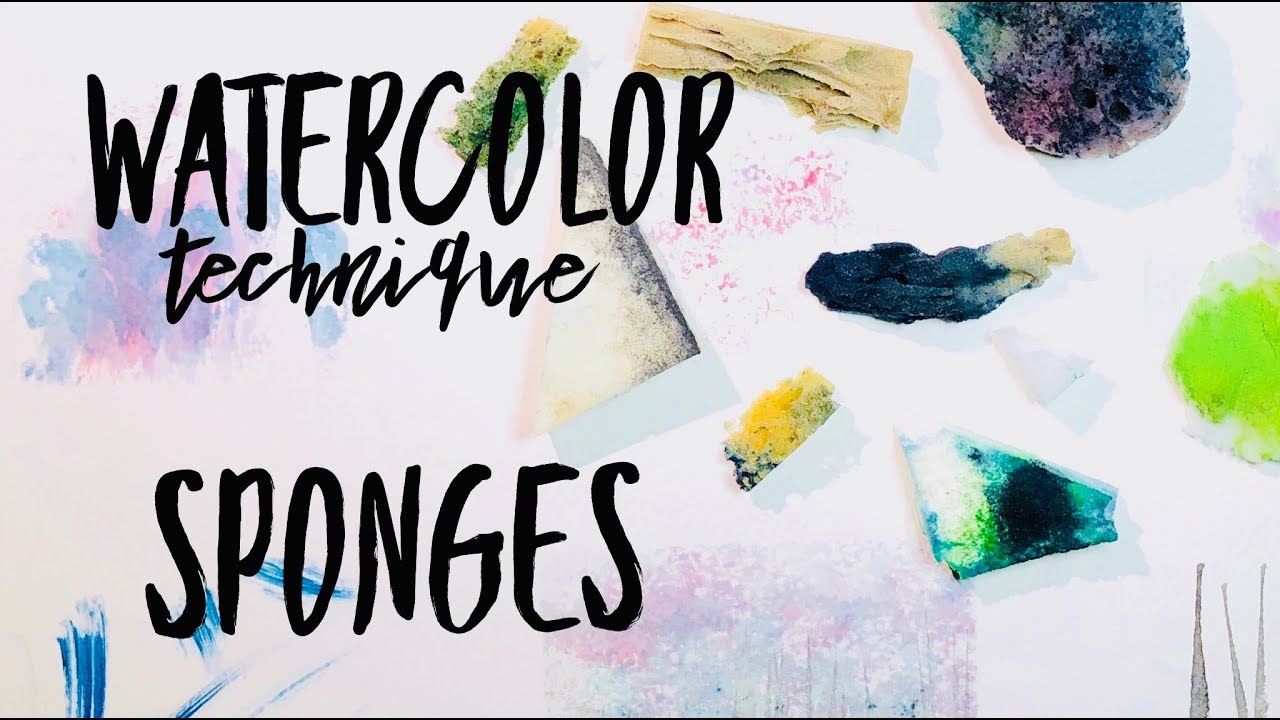
The process splits into two directions depending on what you need from a given area of the painting.
Additive Sponging

Load the sponge with paint. Press it onto the paper. Lift straight up without dragging.
Dragging smears the mark and loses the texture. A clean lift is what gives you that defined, porous impression.
- Dampen the sponge first, then squeeze out excess water before loading with pigment
- Test each pass on scrap paper before committing to the main piece
- Rotate and vary the angle with every press to avoid a mechanical, stamped pattern
- Apply multiple passes with progressively darker values to build depth
Artists like Bob Ross popularized the idea that happy accidents produce the best texture. Sponge work is essentially that principle in practice.
Subtractive Sponging (Lifting)
This one takes patience. Timing is everything.
Use a clean, slightly damp sponge to press and lift paint from a wet or semi-dry wash. The sponge absorbs the pigment back up, leaving a lighter area behind.
On wet paper, the lifted area blends softly into the surrounding wash. On dry paper, the edges stay sharper and more defined. Both have uses depending on whether you’re trying to pull out soft cloud highlights or crisp rock faces.
If the paint has fully dried, lifting requires more aggressive dampening and risks damaging the paper surface, especially on lighter-weight sheets.
Wet-on-Wet vs. Wet-on-Dry
Sponge application on wet paper spreads the pigment outward. Edges bleed. The marks dissolve into the wash, producing that soft, atmospheric quality that works well for distant trees or hazy backgrounds.
On dry paper, the sponge marks stay exactly where you put them. Edges are defined. The pattern reads as texture rather than wash.
Most sponge texture work in landscapes uses a mix. Wet-on-wet for soft background layers, wet-on-dry for the detail passes on top.
Paint and Water Consistency for Sponge Work
Get this wrong and the technique falls apart. Too much water and the paint floods into a flat wash with no texture. Too little and the sponge drags and tears at the paper surface.
Thick paint (low water ratio) creates bold, defined marks. The sponge pattern reads clearly. Good for foreground rocks, dark foliage masses, and any texture that needs to read at a distance.
Thin, watery mixes produce soft impressions that blur slightly as they dry. Useful for background textures where you want variation without hard edges competing with focal areas.
| Consistency | Visual Result | Best Application |
|---|---|---|
| Thick (Cream-like) | High-Definition: Heavy pigment-to-water ratio that stays exactly where the sponge hits the paper. | Foreground detail, sharp highlights on craggy rocks, and “pop” foliage. |
| Medium (Milk-like) | Balanced Texture: A versatile flow that allows for some “bleeding” while maintaining the sponge’s pore structure. | Mid-ground trees, undergrowth, and building out the “mass” of a bush. |
| Thin (Watery/Tea) | Soft & Atmospheric: The pigment “runs” slightly into the paper grain, blurring the sponge marks. | Distant forests, misty horizons, and base layers for “bokeh” backgrounds. |
The safest habit is to test every new mix on scrap paper before it touches your painting. What looks right on the palette rarely matches what the sponge actually delivers.
Pigment granulation adds another variable. Granulating pigments like ultramarine blue or burnt sienna settle into the paper’s texture as they dry, which amplifies the sponge pattern in interesting ways. Non-granulating pigments produce cleaner, more uniform marks.
Understanding how color behaves in watercolor and how value shifts as paint dries will help you predict the final result more consistently.
Paper Types and Their Effect on Sponge Texture
Paper is not a passive surface in watercolor. It actively shapes the result.
Cold Press
Cold press (CP) paper has a medium tooth. The surface has slight bumps and valleys that grip pigment and hold sponge marks well. This is the paper most watercolorists reach for by default, and for sponge texture work, it’s usually the right call.
The texture valleys catch pigment as it dries, which enhances the organic quality of sponge marks. Paint also absorbs quickly on cold press, which shortens your working window but produces cleaner, more defined impressions.
Brands like Arches, Fabriano Artistico, and Canson Montval all behave somewhat differently even within cold press. Arches tends to allow more lifting and reworking. Canson Montval is a good student-grade option that holds sponge texture reasonably well.
Hot Press
Hot press (HP) paper is smooth. Very little tooth. Paint sits on the surface longer before absorbing, which gives more working time but changes the sponge result significantly.
Sponge marks on hot press tend to spread slightly as the paint moves on the slick surface. You get cleaner edges but less of that natural porous impression. Useful for certain abstract or decorative applications, but not ideal for landscapes where organic texture is the goal.
Interestingly, hot press allows more aggressive lifting than cold press, according to Etchr Lab. If subtractive sponging is your primary use, hot press actually gives more control over what comes back up.
Paper Weight
140 lb (300 gsm) is the standard recommendation for any technique involving significant water. Lighter sheets (90 lb / 190 gsm) buckle badly when wet, which distorts sponge marks and makes consistent pressure impossible.
Heavier sheets at 300 lb (640 gsm) barely buckle at all and handle multiple wet sponge passes without protest. Worth the cost if you’re doing serious work.
For more detail on choosing between paper surfaces, the cold press vs. hot press comparison covers the key differences across techniques.
What You Can Paint With Sponge Texture

The technique is more flexible than it first appears. Most people use it for foliage and stop there. That’s leaving a lot on the table.
Landscapes and Nature
This is where sponge texture earns its reputation. Trees, ground cover, rocks, and atmospheric backgrounds all benefit.
- Foliage masses – multiple overlapping sponge passes in greens and yellows, varying pressure for light and shadow
- Rocky surfaces – dry sponge with thick paint on dry paper, followed by shadow glazes with a brush
- Moss and lichen – small sea sponge with muted greens and grays over dried washes
- Ground texture – earth tones applied loosely to suggest organic variation underfoot
Landscape painters like J.M.W. Turner worked extensively with atmospheric effects and texture in watercolor. While Turner used tools beyond sponges, his approach to building organic, layered surfaces influenced how later watercolorists thought about non-brush mark-making.
Clouds and Sky
A lightly dampened sponge on a wet sky wash lifts soft cloud shapes. The result reads as natural because sponge texture mimics the irregular, non-uniform edge of actual clouds better than any brushwork can.
Wet-on-wet is the right approach here. The lifted areas soften as the surrounding wash dries around them.
Water Surfaces and Foam
Ocean foam, moving water, and broken light on a river surface all respond well to sponge dabbing. A natural sponge with a pale, diluted mix pressed lightly onto a dried blue-gray wash can suggest sea foam convincingly in a few passes.
Combining this with the wet-on-wet technique in the base layers and sponge texture in the final passes produces water that feels genuinely alive. If you want to go further into painting water specifically, there’s a full guide on how to paint water in watercolor.
Abstract Backgrounds and Decorative Work
Sponge texture on abstract work gives surfaces that sense of depth and variation that flat washes never have. It works particularly well as an underpainting layer, adding organic complexity that later brushwork sits on top of.
Layering sponge passes in different values and letting each dry fully before the next creates a richness that reads as considered rather than accidental. This connects to how layering in watercolor builds depth over time.
Combining Sponge Technique With Other Watercolor Methods

Sponge work rarely stands alone in a finished painting. It earns its keep as part of a larger process, used strategically at specific stages rather than applied everywhere and hoped for the best.
Over-sponging is a real problem. Too much sponge texture across an entire composition competes with focal areas and reads as fussy rather than rich.
Sponge as Underpainting
Use it first, refine with brushes after. Applying sponge texture in the early layers creates an organic complexity that brushwork alone can’t easily produce. Later passes with a round or flat brush add definition, edges, and detail on top of that textured base.
- Lay loose sponge washes for foliage masses in pale greens and yellows
- Let dry fully before any brush detail
- Add shadows and structure with a brush, letting the sponge texture show through
This is how most experienced watercolorists actually use sponges. Not as a final effect, but as a foundation. The layered result feels genuinely complex without looking labored.
Sponge With Masking Fluid
Applying masking fluid before sponging opens up some interesting possibilities. Mask out tree trunks, light branches, or highlighted areas, let the mask dry fully, then sponge paint freely over the whole section. Remove the mask once dry.
One caution: never apply masking fluid to damp paper. It bonds to the surface and will not peel cleanly. The paper has to be fully dry before masking goes down.
Watson Watercolor artist Deb Watson uses this approach specifically for Queen Anne’s Lace flowers, masking the white shapes with a sponge before painting the surrounding background freely. The technique produces results that would take hours with a brush in a fraction of the time.
For more on this approach, the guide on how to use masking fluid covers the full process, including removal timing and paper compatibility.
Glazing Over Sponge Texture
This one takes patience, but the results are worth it.
Once a sponge-textured layer dries completely, a transparent watercolor glaze applied over the top shifts the color without losing the texture beneath. The glaze tints the entire area while the sponge pattern still reads through it.
Practical use: sponge a bright green foliage mass, let dry, then glaze over with a warm yellow to push it toward autumn. Or glaze cooler blues over a rock texture to deepen shadows. The glazing technique and sponge work are genuinely complementary.
When NOT to Combine
Restraint matters here. A few situations where sponge texture works against you:
- Portraits and figures, where organic texture reads as skin damage rather than depth
- Focal areas already carrying fine brush detail, where sponge texture competes and confuses
- Heavily textured backgrounds behind subjects, which flatten the sense of depth rather than supporting it
The general rule: sponge texture belongs in secondary and background areas. Let it support the focal point rather than compete with it.
Common Mistakes and How to Fix Them
Most sponge technique problems trace back to the same handful of errors. I’ve seen students hit all of them in a single session.
| Mistake | What Happens | Fix |
|---|---|---|
| Sponge Too Wet | The Flood: Excess water causes the pigment to pool, filling the “white gaps” and erasing the porous texture. | The Squeeze: Submerge the sponge, then wring it out in a towel until it is only damp to the touch before loading paint. |
| Same Angle Every Press | The “Wallpaper” Effect: The eye quickly recognizes the repeated shape, making the painting look like a mechanical stamp. | The Rotation: Twirl the sponge 45–90 degrees in your fingers between every single “dapple” to randomize the pattern. |
| Applied Too Early | The Dissolve: On paper that is too wet, the sponge marks bleed outward, turning crisp texture into a blurry, flat wash. | The Sheen Test: Wait for the “Mirror Shine” to turn into a “Satin Glow” (damp-not-wet) before applying sponge texture. |
| Too Many Passes | The Mud: Over-working a single spot lifts previous layers and physically mixes colors on the page until they lose vibrancy. | The Rule of Three: Dab an area no more than 2–3 times. If it needs more depth, let it dry completely before adding a new layer. |
The Flooding Problem
This is the most common issue by far. A sponge holding too much water delivers more liquid than pigment.
The fix is simple: squeeze the sponge thoroughly after wetting, then again after loading paint. It should feel damp, not dripping. Test each pass on scrap paper to check consistency before touching the painting.
Artist and instructor Deb Watson at Watson Watercolor specifically advises testing color strength and sponge behavior on scrap first every single time, not just when starting out. That habit never becomes unnecessary.
The Repetitive Pattern Problem
Using the same sponge face at the same angle creates a recognizable, repeated stamp. It reads as artificial quickly, which defeats the whole purpose of organic texture.
Three habits that prevent this:
- Rotate the sponge roughly 45 degrees between every press
- Vary the pressure, lighter at the edges of a foliage mass, heavier toward the center
- Switch between different sections of the sponge surface throughout
Overworking and Muddy Color
Layering too many colors in too many passes produces mud. Watercolor pigments are transparent. Stack too many and they lose clarity regardless of the technique used.
Painter Inese Pole at Inese’s Art Studio found that limiting palette to two or three compatible colors per sponge session kept mixes clean. Testing color combinations for muddy interactions before applying to the main painting is worth the 30 seconds it takes.
The principles of mixing watercolors apply just as much to sponge work as to brush technique. Warm and cool combinations that produce neutrals in a wash will produce the same muddy result through a sponge.
Fixing Overworked Areas
Three options, in order of how aggressive they are:
- Light glaze over: a unifying transparent wash in a compatible color can pull a muddy area together
- Lifting while damp: a clean barely-damp sponge lifts back some of the overworked layer if caught early
- Accept it and adjust: sometimes the damaged area becomes a darker, richer section of the composition rather than the highlight it was meant to be
Watercolor is genuinely unforgiving once paint has fully dried and the paper surface has been disturbed. The London Art College puts it plainly: every time you go over a dried area aggressively, you disturb the paper surface, and the result is blotchy, dull patches that no amount of additional paint will recover.
Cleaning, Storing, and Maintaining Your Sponges
A natural sea sponge is not cheap. Treating it as a disposable supply is a fast way to spend unnecessarily.
With proper care, a natural sea sponge can last several months to a few years, according to ARgENTUM’s sponge care guidelines. Most artists who go through them quickly are just not rinsing thoroughly enough.
Cleaning After Each Session
Rinse immediately after use. Watercolor paint left in a sponge’s pores as it dries clogs the structure and degrades the texture over time. The pore pattern that makes the sponge useful is exactly what gets destroyed by dried pigment.
- Rinse under lukewarm running water, squeezing repeatedly until water runs clear
- Avoid hot water on natural sea sponges, it breaks down the fiber structure
- For stubborn pigment stains, work a small amount of artist soap into the sponge, rinse thoroughly
- Never use bleach, it weakens and deteriorates the natural fibers
Synthetic sponges are more forgiving with water temperature but still need immediate rinsing. Dried acrylic or watercolor in a synthetic sponge is essentially permanent.
Drying and Storage
Air dry completely before storing. A sponge stored while damp in a closed container invites mildew growth inside the pores, which produces a persistent unpleasant smell that does not fully clean out.
Flat storage is best. Storing sponges compressed under other supplies distorts the shape over time and changes the mark it makes. A loose, open tray or mesh bag keeps them from deforming between sessions.
Keep separate sponges for different color families if possible. A sponge that has absorbed a lot of dark staining pigment (like Payne’s Grey or Burnt Umber) will tint lighter colors on subsequent uses even after rinsing. Not always a problem, but worth knowing. Keeping a dedicated palette area for testing sponge color before it hits the paper catches this early.
When to Replace
A sponge that leaves fragments on the paper surface is telling you something.
Fraying edges, a change in surface texture from springy to crumbly, and pore patterns that have collapsed are all signs the sponge has reached the end of its useful life. Using a deteriorating sponge risks depositing small fiber pieces into wet paint, which dry into the surface of the painting and cannot be removed cleanly.
The watercolor painting materials you choose affect results in ways that go beyond paint and paper. A fresh sponge in good condition consistently outperforms a worn-out one regardless of technique. Worth replacing when the signs show rather than pushing it through another session.
FAQ on What Is Sponge Texture Technique In Watercolor Painting
What is the sponge texture technique in watercolor painting?
It is a method of applying or lifting watercolor paint using a sponge to create irregular, organic patterns. The porous sponge surface leaves marks that brushes cannot replicate, making it ideal for foliage, rocks, and textured backgrounds.
What type of sponge works best for watercolor texture?
Natural sea sponges produce the most organic, unpredictable marks and suit landscape work well. Synthetic sponges give more uniform results. Cosmetic wedges work for softer, blended texture. Most artists keep two or three types on hand.
Can beginners use the sponge texture technique?
Yes. It is one of the more forgiving watercolor techniques for beginners because it does not require precise brushwork. The main skill to develop is controlling paint consistency and sponge moisture before applying to the main piece.
What is the difference between additive and subtractive sponging?
Additive sponging means loading the sponge with pigment and pressing it onto paper. Subtractive sponging uses a clean damp sponge to lift wet paint and pull back highlights. Both approaches serve different purposes in the same painting.
Does paper type affect sponge texture results?
Significantly. Cold press watercolor paper holds sponge marks well due to its tooth. Hot press paper is smoother, so marks spread and lose definition. Most sponge texture work suits cold press at 140 lb (300 gsm) or heavier.
How wet should the sponge be before applying paint?
Damp, not dripping. A sponge holding too much water delivers more liquid than pigment, flooding the surface and destroying texture definition. Squeeze it thoroughly after wetting, then again after loading with paint. Always test on scrap paper first.
What subjects suit the sponge texture technique best?
Foliage masses, trees, rocks, moss, clouds, and ocean foam all respond well. It also works for abstract backgrounds where organic variation is the goal. Avoid using it on portrait work or detailed focal areas where precise edges matter.
Can you combine sponge texture with masking fluid?
Yes, and it produces strong results. Apply masking fluid to areas you want to protect, let it dry fully, then sponge freely over the section. Remove the mask once the paint dries to reveal clean, sharp preserved edges beneath the texture.
How do you fix an overworked sponge area in watercolor?
Three options: apply a unifying transparent watercolor glaze over the muddy area, lift paint with a barely damp clean sponge while still wet, or adjust the composition so the darker area reads as shadow rather than a mistake.
How do you clean and store a natural sea sponge after painting?
Rinse immediately under lukewarm water, squeezing repeatedly until the water runs clear. Avoid hot water, which degrades the fibers. Air dry completely before storage. Store flat and uncompressed. A well-maintained sea sponge can last several months to a few years.
Conclusion
This conclusion is for an article presenting what is sponge texture technique in watercolor painting, a method that adds genuine organic depth to foliage, rocks, clouds, and abstract backgrounds without demanding technical precision.
Sponge choice, paint consistency, paper surface, and timing all shape the final result. Get those four variables working together and the technique delivers results that feel natural rather than forced.
Start with a natural sea sponge on cold press paper. Test every pass on scrap before committing. Build additive sponge layers first, then refine with brushwork on top.
Combined with lifting, salt texture, or dry brush, sponge texture becomes part of a broader approach to mark-making that keeps watercolor painting interesting well past the beginner stage.