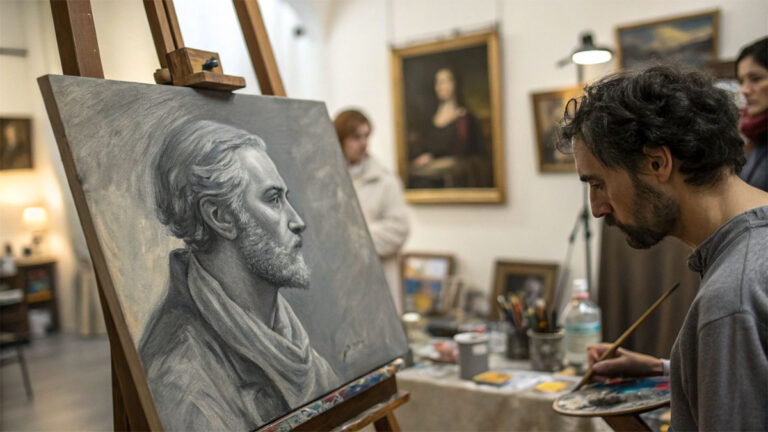
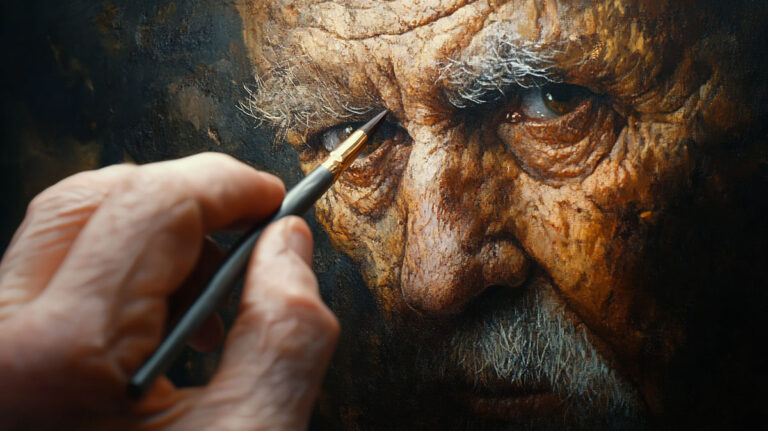
Run your eyes across a Van Gogh and you can almost feel the paint pulling away from the surface.
That physical presence is not accidental. It comes from the impasto technique, a method of applying paint so thickly that brushstroke and palette knife marks stay permanently visible, giving the finished work a three-dimensional, almost sculptural quality.
Artists have used this thick paint application for over five centuries, from the Venetian Renaissance masters through the Abstract Expressionists. Yet most painters who try it run into the same problems: cracking, muddy color, collapsed texture.
This guide covers what impasto is, how it works mechanically, which materials to use, and how to preserve the result long-term.
What Is the Impasto Technique

Impasto is a painting technique where paint is applied to a surface in thick layers, usually heavy enough that brushstroke or palette knife marks stay clearly visible on the finished work.
The paint sits above the canvas rather than soaking into it. That raised surface gives the work a three-dimensional, almost sculptural quality on a two-dimensional support.
The word itself is Italian. It comes from impastare, meaning “to knead” or “to paste.” The first recorded use of the term in English dates to 1784, though the practice is centuries older. The root noun is pasta, meaning “paste,” which accurately describes the thick, buttery consistency the technique requires.
How light interacts with an impasto surface is part of what makes the technique distinct. Raised ridges and peaks catch light differently depending on the angle, creating natural shadows and highlights that flat, blended paint simply cannot produce. The result affects value and luminosity in ways that shift as the viewer moves around the piece.
Impasto is most commonly associated with oil paint, which has the right viscosity and slow drying time to hold its shape. Acrylic paint works too, though it tends to lose some volume as it dries. Watercolor and tempera are not suitable without thickening agents because they lack the body needed to form raised, continuous paint films.
How Impasto Paint Application Works

The mechanics are straightforward: apply thick, undiluted paint directly to the surface and let the tool marks stay. But getting consistent, stable results takes more thought than that first sentence suggests.
Tool Choice and What It Does

Palette knife: Spreads paint in flat, raised slabs with sharp, clean edges. Creates peaks and troughs that brushes cannot. Most impasto artists reach for a knife first.
Stiff bristle brush: Hog hair or synthetic bristle. Softer texture than a knife, but still leaves visible directional marks. Good for areas that need energy without hard edges.
Fingers and unconventional tools: Documented in Vincent van Gogh’s practice and in later 20th-century painters like Frank Auerbach, who pushed paint directly with his hands and palette tools interchangeably.
Paint Consistency and Viscosity
Impasto needs a heavy, buttery consistency. Thin paint will not hold raised marks after drying.
For oil paint, working straight from the tube is often enough. High-quality brands like Old Holland and Williamsburg have enough body without additives. For acrylics, the situation is different. Standard fluid acrylics level out flat as they dry, so artists typically switch to heavy body formulations or mix in an impasto medium or modeling paste to build the viscosity needed to retain peaks.
A note on cheap paint: low pigment concentration means thinner consistency and higher oil content, which increases the risk of cracking in thick applications. Worth spending more here.
Layering vs. Alla Prima
Two main approaches exist, and they produce different results.
Alla prima (wet-on-wet) means building the full surface in one session. Learn more about alla prima as an oil painting method. It demands fast decisions and confident strokes. Mistakes are harder to fix but the energy reads directly in the marks.
Layered impasto means building up paint in stages, letting lower layers partially cure before adding more. This creates genuine depth, especially when combined with transparent glazes over dried texture. The fat-over-lean principle applies: each successive layer should contain more oil than the one beneath it, or cracking becomes likely as the painting ages.
| Approach | Working time | Best for | Main risk |
|---|---|---|---|
| Alla prima | Single session | Expressive, gestural work | Muddy color from overworking |
| Layered impasto | Days to weeks | Complex texture and depth | Cracking if fat-over-lean is ignored |
| Impasto over glaze | Variable | Luminous highlights on dark grounds | Top layer drying faster than base |
Light reflects off raised impasto peaks with genuine physical variation. No amount of tonal painting with flat brushwork fully replicates that effect. That’s the real reason artists keep coming back to it.
Materials Used in Impasto Painting
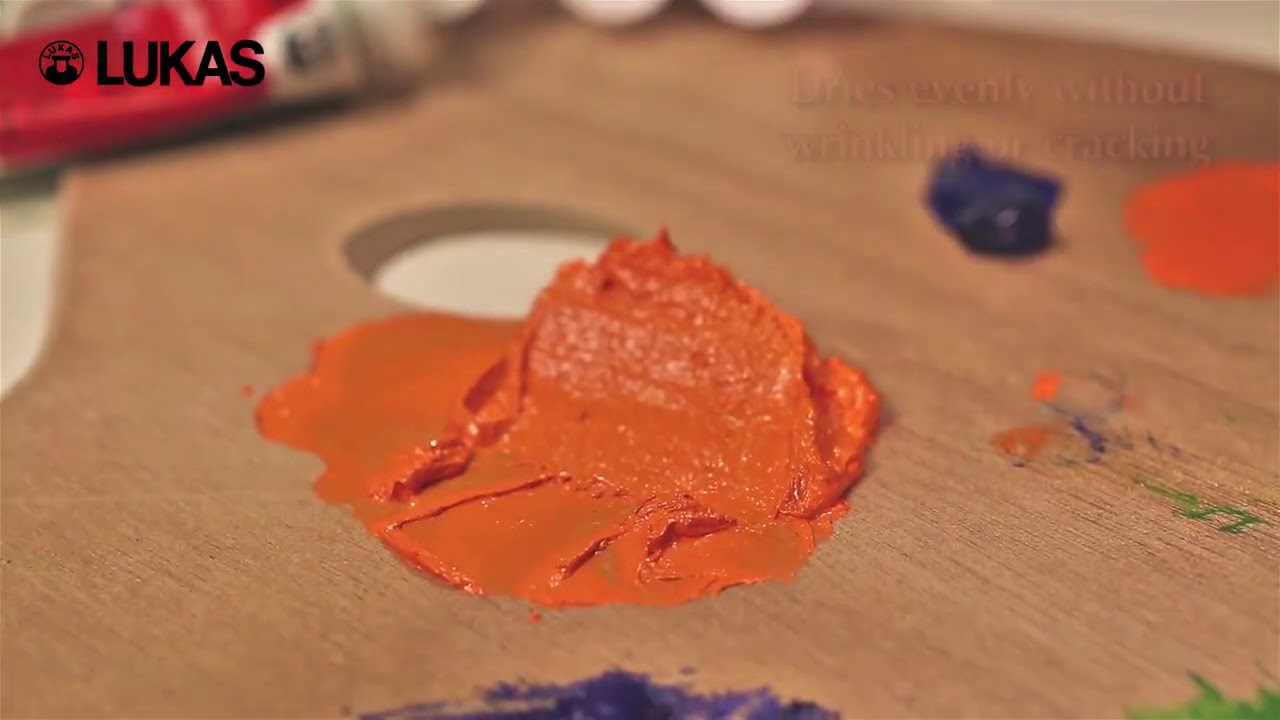
The materials matter more in impasto than in most other techniques. Wrong paint or the wrong support and you are looking at cracks, warping, or collapsed texture within a few years.
Paint and Mediums
Oil paint (heavy body): The traditional choice. Slow drying time gives more working room. Brands like Old Holland and Williamsburg hold texture reliably. Winsor and Newton Oleopasto is a purpose-built medium that adds bulk without thinning pigment. Liquin Impasto is another common option that speeds drying while maintaining body.
Heavy body acrylics: Faster drying, easier cleanup. Liquitex Heavy Body and Golden Heavy Body both have enough viscosity to hold marks. Mix with Liquitex Impasto Medium or a modeling paste if you want more volume. Regular fluid acrylics will level flat, so avoid those.
Impasto mediums generally fall into two types: those that add body (gels, pastes) and those that speed drying (alkyds). Some do both. The choice depends on how long you want to stay in the wet paint and how thick you need it to go.
Brushes, Knives, and Surfaces
Stiff hog bristle brushes handle thick paint without collapsing under the weight. Soft sable or synthetic watercolor brushes are wrong for this. A palette knife set with varied blade shapes gives the most control over texture. Diamond-shaped blades create peaks; wider blades scrape and flatten. Different shapes, different results. Worth having five or six on hand. Silicone catalyst blades are a newer option, somewhere between a brush and a knife, and easier to clean than metal.
For supports: stretched canvas works, but a wood panel or MDF board handles the weight of thick paint better over time. Painting on wood vs canvas makes a real difference with heavy impasto. Unsupported canvas can warp or even sag under multiple heavy layers. Whatever support you use, it needs proper priming. Gesso provides the right adhesion for thick paint without letting the oil leach into the support.
Impasto vs. Other Paint Application Methods
Impasto is one of several oil painting techniques, but it sits at a very different end of the spectrum from most of them. Understanding where it fits helps explain when and why to use it.
Impasto vs. Glazing
These two techniques are almost opposites. Glazing involves thin, transparent layers of paint applied over dry surfaces. Light passes through them and bounces back, creating luminous, jewel-like color depth. Impasto uses thick, opaque layers that reflect light physically from raised surfaces. One builds color through light transmission; the other builds texture through physical relief.
Rembrandt combined both in the same painting, which is worth noting. He would build thick impasto highlights first, then drag thin glazes over the dried texture. The glaze pooled in the low spots while the peaks stayed brighter. The result is something neither technique could achieve alone.
Impasto vs. Scumbling
Scumbling involves dry-brushing a lighter, semi-opaque color loosely over a darker dried layer. It creates a broken, hazy texture. Layering and scumbling is closer to impasto than glazing is, but the paint is applied with far less body and the marks are less deliberate. Scumbling suggests texture. Impasto actually creates it, physically, in three dimensions.
| Technique | Paint thickness | Light effect | Surface result |
|---|---|---|---|
| Impasto | Very thick, opaque | Physical reflection from raised marks | 3D texture, visible strokes |
| Glazing | Very thin, transparent | Light passes through layers | Smooth, luminous depth |
| Scumbling | Thin, semi-opaque | Broken, hazy surface effect | Dry, textured but flat |
| Alla prima | Variable | Depends on paint weight | Wet-in-wet, spontaneous |
The clearest test: tilt an impasto painting under a raking light. If the surface casts its own shadows across the canvas, it is impasto. Glazed or scumbled surfaces stay flat regardless of the light angle.
Artists Who Used Impasto
Impasto has a longer history than most people assume. Most people connect it immediately with Van Gogh, and they are not wrong. But the technique traces back five centuries, running through some of the most studied painters in Western art history.
According to Tate, the use of impasto became central to modern art as the view developed that a painting’s surface should have its own physical reality rather than serving only as a window into an illusionistic scene.
Van Gogh’s Impasto Style

Vincent van Gogh applied paint directly from the tube in some passages, building up ridges and peaks that go well beyond what any other mainstream painter of his era was doing. In a letter to his brother Theo in September 1882, he wrote: “Sometimes the subject calls for less paint, sometimes the material, the nature of the subjects themselves demands impasto.”
Modern pigment analysis of The Starry Night (1889) shows the paint is sometimes over a millimeter thick, making the work almost sculptural in sections (Festivaltopia, 2025). That physical thickness is not decorative. It creates actual movement across the surface. The swirling sky reads as kinetic in a way it simply would not with flat paint.
His famous paintings like Sunflowers and Wheat Field with Cypresses show the same approach. Thick, deliberate strokes. Colors sometimes optically mixed by the viewer from a distance rather than blended on the palette.
Rembrandt’s Selective Impasto

Rembrandt van Rijn used impasto very differently. He did not apply it across whole surfaces. He reserved it for specific highlighted areas, particularly the skin textures and fabric highlights in his portraits, while keeping shadows thin and transparent.
A 2019 study published in Angewandte Chemie, conducted by researchers at Delft University of Technology using X-ray diffraction on samples from Portrait of Marten Soolmans, Bathsheba, and Susanna, found a rare lead compound called plumbonacrite in his impasto areas. The researchers concluded he intentionally added lead oxide to linseed oil to create a paste-like paint with unusual body and stability. His most recognized paintings show this clearly: thick, light-catching highlights sitting over thin, dark glazes. Neither technique alone could produce the same result.
A contemporary once reportedly said a Rembrandt portrait could be picked up by the nose, referring to how physically thick some of his facial highlights were built.
Jackson Pollock and the Abstract Expressionists
Jackson Pollock took impasto in a completely different direction. He once said: “I prefer sticks, trowels, knives and dripping fluid paint or a heavy impasto with sand, broken glass or other foreign matter added.” The paint was no longer confined to a surface texture. It became the subject.
Willem de Kooning and the broader Abstract Expressionist movement used impasto surfaces to record the physical action of painting itself. The thickness was not about depicting something. It was about what happened between the artist’s body and the canvas. According to Wikipedia, this was motivated in part by a desire to create paintings that dramatically record that action.
Frank Auerbach

Frank Auerbach pushed impasto further than almost anyone. Some of his works became nearly three-dimensional, the paint built up so heavily that the work read more as a relief than a painting. Tate’s 2015 retrospective at Tate Britain drew attention to this extreme application and its relationship to the figurative tradition he maintained throughout.
Impasto in Oil Painting
Oil paint and impasto have a natural relationship. The slow drying time, the thick consistency, the way it holds a mark without collapsing. It is the medium that most readily does what impasto demands.
The Fat-Over-Lean Rule
Why it matters: Oil paint dries by oxidation, not evaporation. Layers with more oil content (fat) remain flexible longer than lean layers. If a lean top layer dries and contracts before a fatter lower layer is stable, the surface cracks.
In impasto specifically: Thick applications make this rule critical, not optional. The more paint you pile on, the longer the lower layers take to cure fully. Some heavily impastoed oil paintings take months to dry on the surface and years to cure completely through the full depth of the paint.
A general approach: start thin (lean) in the early layers to establish composition and tone. Build impasto texture in later layers where the paint content is richer. This is the same structural logic Rembrandt and Titian used, and it is why their historical painting techniques have survived in good condition for centuries.
Drying and Cracking Risks
This is where most beginners get into trouble with impasto in oil. They load up texture in session one and paint over it the next day without letting it stabilize.
The top surface of a thick oil impasto can feel dry to the touch within days. The layers beneath are not. Painting over what feels dry but is not fully cured can trap solvents, cause wrinkling, or lead to the top layer peeling as the lower layer eventually moves during oxidation.
Standard advice from conservators: wait at least two to three weeks between heavy impasto sessions with oil. If you are working quickly, use an alkyd medium like Liquin to speed up the process. Or switch to impasto in acrylic painting, which dries in hours even at significant thickness, for a different but faster-working approach.
The Thecollector.com notes that even paintings that appear completely dry after a few days may take years for the complete drying process to finish, with bottom layers drying much slower than top layers. That differential is what produces visible cracks on the paint surface if layering is rushed.
Impasto in Acrylic Painting
Acrylic impasto is a genuinely different experience from oil. Not worse. Different. The tradeoffs are real and worth knowing before you commit to a medium.
The biggest one: acrylics dry by water evaporation, not oxidation. That sounds like a benefit (and often is), but it also means the paint film shrinks as it loses water. Heavy body acrylics can lose 15-25% of their wet volume as they cure, which flattens peaks more than most beginners expect (WetCanvas forum, 2019). Oil impasto shrinks too, but over months or years, not hours.
Working Window and Color Shift
Key tradeoff for acrylic impasto:
- Dries to the touch in hours, even at significant thickness
- Harder to blend wet-into-wet than oil
- Colors shift slightly darker as water evaporates
- Peaks relax somewhat as the paint cures
According to palette knife impasto specialist Lisa Elley (Learn to Paint Podcast, 2024), acrylic is practical when time is limited, such as gallery commissions with tight deadlines. Oil is preferable for open blending and maximum texture retention.
Mediums That Actually Help

Standard fluid acrylics are wrong for this. They level out flat.
Heavy body formulations like Liquitex Heavy Body or Golden Heavy Body hold marks much better straight from the tube.
Adding a dedicated acrylic medium improves results further. Modeling paste adds bulk without changing color. Gel mediums (gloss or matte) thicken the paint while keeping pigment concentration high. The difference between using plain heavy body paint and using heavy body plus a molding paste is significant. You get taller peaks, less slump, and faster working sessions. Worth the extra cost.
Many artists also explore acrylic painting techniques more broadly when deciding how to approach texture work in this medium.
Support Choice for Acrylic Impasto
Canvas works for moderate acrylic impasto. For very heavy builds, a rigid board is better. Acrylic paint remains permanently flexible after curing, which is actually an advantage over oil for thick applications on canvas. It flexes rather than cracks when the support moves.
Practical note: wait one to two weeks before applying an isolation coat or varnish over thick acrylic impasto areas, even if the surface feels fully dry (Golden Artist Colors, varnish guidelines).
| Factor | Oil impasto | Acrylic impasto |
|---|---|---|
| Drying time | Months to years (thick) | Hours to days |
| Peak retention | Excellent after curing | Moderate (some slump) |
| Blending | Extended working time | Fast, less forgiving |
| Cracking risk | High if fat-over-lean ignored | Low (remains flexible) |
Common Problems with Impasto and How to Fix Them
Impasto is not a forgiving technique for guesswork. Most problems that show up months or years after a painting is finished trace back to decisions made during the painting process. The European Association for Conservation of Art (EuACA) noted in 2022 that incorrect layer building remains one of the most frequent causes of cracking and surface deterioration in impasto oil paintings.
Cracking After Drying
The most common long-term failure in oil impasto. Oil paint dries from the outside in, forming a skin over still-liquid lower layers. As the underneath eventually oxidizes and shrinks, it pulls the surface inward, causing cracks or wrinkles.
Cause: too much paint applied in one session, or fat-over-lean ignored.
Fix: build in layers no thicker than roughly 6mm per session. Use an alkyd medium like Liquin in each layer to promote more even drying throughout. Very thick impasto (over 6mm) can take six months to a year to cure through completely (color2oilpaint.com, 2025).
Muddy Color from Overworking
This one frustrates beginners more than almost anything else.
When you keep reworking a section of wet impasto, colors blend into each other and lose their distinct identity. The palette knife or brush picks up paint from below and mixes it with what is on top. After a few passes, everything turns grey-brown.
The fix is simple: commit to each stroke and leave it. Mix on the palette, not on the canvas. If a section is going wrong, let it dry rather than working into it further. You can always paint over a dried impasto area cleanly.
Canvas Warping Under Heavy Paint
Heavy oil impasto on large unsupported canvas is genuinely risky over time. As oil paint hardens, it loses flexibility. A canvas that moves or flexes with humidity changes will pull against a brittle, hardened paint layer.
- Use a rigid panel for very heavy impasto work
- If using canvas, keep it well-stretched and consider gluing it to a board for thick applications
- Never stack impasto paintings flat, the weight damages raised texture
Fine Art Restoration Co. (2022) reported that the weight of thick paint pulling away from canvas is one of the most frequent structural failures they treat in contemporary impasto paintings.
Dust Accumulation in Texture
Raised impasto surfaces are dust traps. Every ridge and valley collects particulate over time, and standard cleaning methods that work on flat paintings (a slightly damp cloth, for instance) can dislodge paint from thick, textured areas.
Safe cleaning: a dry, very soft brush applied gently. Nothing wet unless a conservator is doing it. The textured surface of impasto paintings collects dust in ways that are genuinely difficult to address without risk of damage (TheCollector, 2024).
How to Varnish and Preserve Impasto Paintings

Varnishing an impasto painting is harder than varnishing a flat one. The uneven surface creates all the problems: pooling in valleys, uneven sheen between peaks and recesses, and difficulty knowing whether the work is dry enough to varnish safely.
When to Varnish

This matters more for impasto than for most other painting types.
Oil impasto: standard advice is to wait 6-12 months for moderately thick work. For very heavy palette knife applications, varnish after 12 months minimum (Thalo varnishing guide). The test is a fingernail pressed gently into the thickest area. If it dents, wait longer. Gamblin recommends Gamvar as the exception, since its mild solvent (Gamsol) is safe over not-fully-cured oil paint, allowing earlier varnishing in some cases.
Acrylic impasto: wait one to two weeks minimum after the last thick application before applying any isolation coat or varnish (Golden Artist Colors).
Brush vs. Spray Application

For heavily textured impasto, spray application is the standard professional recommendation. A brush drags varnish across peaks and deposits excess into valleys, creating inconsistent gloss and visible pooling in the recesses.
Spray varnish reaches both peaks and valley walls evenly, with multiple thin passes being far better than one thick coat. Conservar varnish guidelines and Golden’s Just Paint publication both recommend spray for impasto surfaces, applying two to four light coats perpendicular to each other for even coverage.
Brush application can work on moderately textured impasto with a technique: load the brush lightly, then use a dry brush to wick out any varnish that pools in valleys immediately after application. It is more work but achievable for paintings with modest texture.
Storage and Transport
Never store impasto paintings flat. The weight of anything resting against the surface damages raised paint, even through protective layers. Store upright, separated, never stacked.
When transporting, a shadow box frame or deep rebate protects the surface without touching the paint layer. Avoid wrapping materials directly against an impasto surface, especially if there is any doubt about whether the oil is fully cured. Even glassine can stick to incompletely dried oil paint and pull off texture when removed.
For varnishing an oil painting more broadly, the timing and product choice principles are similar, though the texture-specific challenges are unique to impasto work. Also relevant: guidance on how to store oil paintings covers the environmental controls that affect long-term paint stability across all application thicknesses.
FAQ on What Is The Impasto Technique
What is the impasto technique in painting?
Impasto is a painting method where paint is applied in thick layers, leaving visible brushstroke or palette knife marks on the surface. The raised paint creates a three-dimensional, sculptural quality. The word comes from the Italian for “dough” or “paste.”
What type of paint works best for impasto?
Oil paint is the traditional choice due to its heavy viscosity and slow drying time. Heavy body acrylics also work well. Watercolor and tempera lack the body needed to hold raised marks without thickening agents.
What tools do you use for impasto painting?
A palette knife is the most common tool, creating sharp peaks and clean edges. Stiff hog bristle brushes work too, producing softer, directional marks. Some artists apply paint directly with their fingers or unconventional tools.
Who are the most famous impasto artists?
Vincent van Gogh is the most recognized. Rembrandt van Rijn, Jackson Pollock, Willem de Kooning, and Frank Auerbach are among the most studied. Each used the thick paint application technique in distinctly different ways.
Why does impasto paint crack?
Cracking happens when oil paint dries from the outside in. The surface forms a skin over still-wet lower layers. As those layers eventually oxidize and shrink, they pull the surface inward. Ignoring the fat-over-lean rule makes this worse.
How long does impasto oil paint take to dry?
Surface drying can take days. Full curing through the depth of thick paint layers takes months, sometimes years. Very heavy impasto over 6mm thick may require six to twelve months before it is stable enough to varnish safely.
Can you use acrylic paint for impasto?
Yes. Heavy body acrylics hold marks well and dry in hours rather than months. The tradeoff is some volume loss as water evaporates during drying. Adding a modeling paste or impasto gel medium reduces peak slump significantly.
What is the difference between impasto and glazing?
Impasto uses thick, opaque paint that reflects light physically from raised surfaces. Glazing uses thin, transparent layers where light passes through and bounces back. One builds texture. The other builds luminous color depth through layered transparency.
How do you varnish an impasto painting?
Spray varnish is recommended over brush application for textured surfaces. A brush deposits excess varnish in the valleys between paint ridges, causing uneven gloss. Apply multiple thin spray coats, rotating the painting 90 degrees between passes.
How should you store an impasto painting?
Always store upright, never flat. Stacking damages raised paint texture under the weight of other work. Keep paintings separated, and avoid wrapping materials directly against the surface, especially with oil impasto that may still be curing.
Conclusion
This conclusion is for an article presenting the impasto technique as one of painting’s most physically expressive methods, spanning five centuries of oil painting history from Titian to Frank Auerbach.
The core mechanics are straightforward: thick paint application, the right viscosity, the right support, and patience with drying time.
Get those right and the raised paint surface does something no flat technique can replicate. It catches light physically, shifts with the viewer’s angle, and carries the direct record of every palette knife stroke.
Whether you work in heavy body acrylics or traditional oil paint, the same principles apply: build in layers, respect fat-over-lean, and never rush the varnish.
The technique rewards patience. Brushstroke texture, paint viscosity, and surface relief all compound with each session.