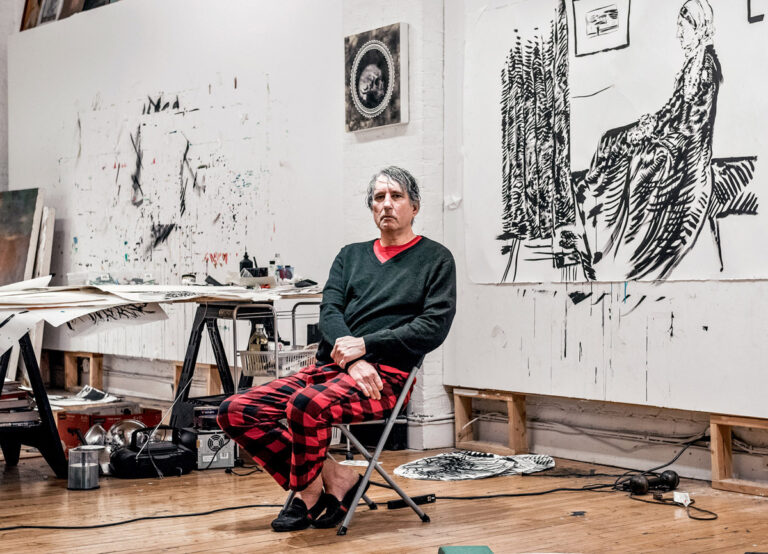
Harold Ancart is a Belgian contemporary painter and sculptor whose large-scale oil stick works have made him one of the most sought-after artists of his generation. Born in Brussels in 1980, he creates atmospheric canvases that blur the line between figuration and abstraction.
His paintings hang in the Metropolitan Museum of Art, the Whitney Museum of American Art, the Guggenheim, and the Centre Pompidou. Works have sold for seven figures on the secondary market.
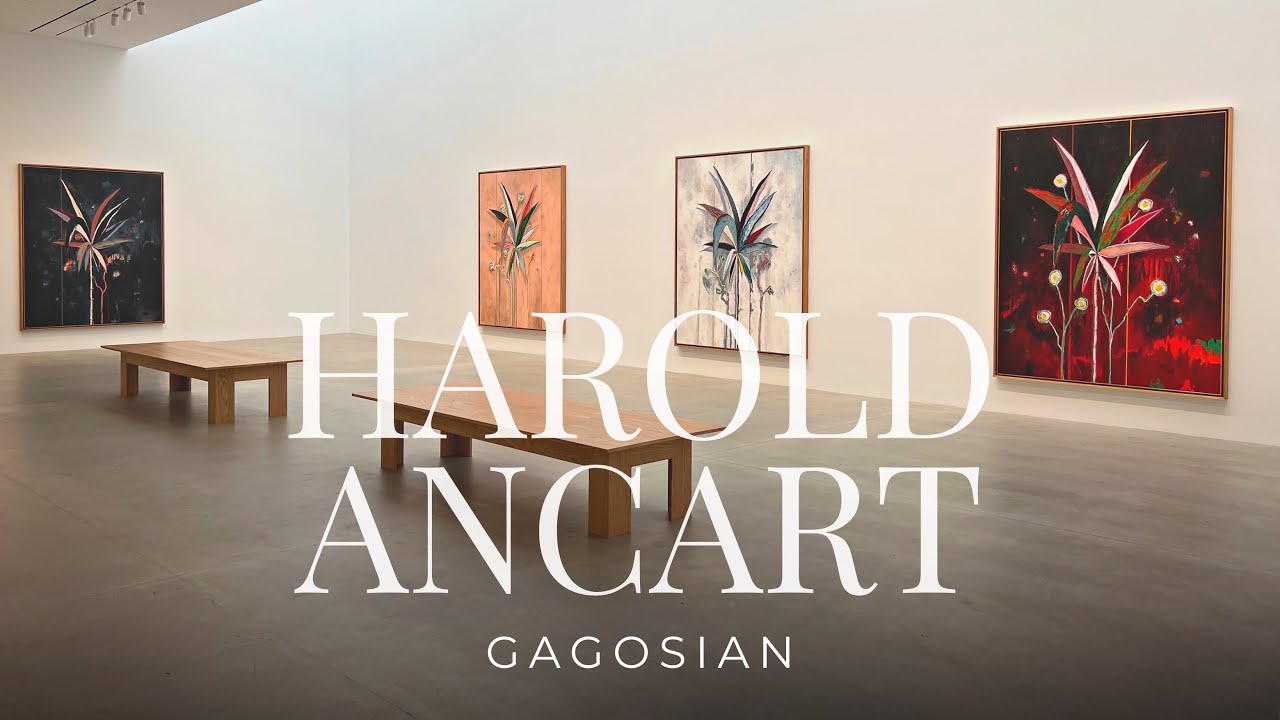
Ancart’s practice sits at the intersection of American abstract painting and Belgian surrealist tradition. He works almost exclusively with oil sticks and pencil on canvas, producing densely built surfaces that recall the chromatic intensity of the Abstract Expressionists while maintaining recognizable subject matter.
Identity Snapshot
- Full Name: Harold Ancart
- Born: 1980, Brussels, Belgium
- Based: Brooklyn, New York
- Roles: Painter, Sculptor, Installation Artist
- Nationality: Belgian
- Education: MFA, Ecole Nationale Superieure des Arts Visuels de La Cambre, Brussels (2007)
- Movements: Contemporary Abstraction, Post-Expressionism
- Medium: Oil stick and pencil on canvas, cast concrete, found objects
- Signature Traits: Jagged color edges, dense stroke layering, artist-made frames, chromatic saturation
- Recurring Motifs: Icebergs, trees, flowers, fires, matchsticks, seascapes, horizons, UFOs
- Key Galleries: Gagosian (current), formerly David Zwirner, Xavier Hufkens, CLEARING
- Major Collections: Metropolitan Museum of Art, Whitney Museum, Guggenheim, LACMA, Centre Pompidou, Fondation Beyeler, Albertina Vienna, SMAK Ghent, Louisiana Museum of Modern Art, Hirshhorn, Menil Collection
What Sets Harold Ancart Apart
Ancart paints with oil sticks the way most artists draw. The medium demands physical force. He mounts canvas on wood panels so the fabric does not buckle under pressure.
His surfaces are built up in vigorous patchworks of color. Fields do not blend gently. They meet with ragged, bristling edges.
Look at any Ancart and you will see this tension. Soft gradient versus hard boundary. The contrast gives his work a peculiar energy.
He treats subject matter as an “alibi” for painterly exploration. Icebergs, palm trees, bonfires. These are just starting points. The actual work happens in how color meets color.
Where Clyfford Still used jagged forms to create psychological tension, Ancart deploys similar techniques toward something more playful. There is humor here. A Barnett Newman zip becomes a matchstick, which then becomes a tree.

Origins and Formation
Early Years in Brussels
Ancart grew up drawing obsessively. Comic books and manga captivated him. He studied the work of Herge (creator of Tintin) and Peyo (the Smurfs).
Later came Frank Miller and Katsuhiro Otomo. The graphic sensibility stuck.
Political Science Detour
He enrolled in political science at university. This lasted about two weeks.
Art school followed. He entered La Cambre in Brussels in 2001.
La Cambre Years (2001-2007)
The curriculum pushed abstraction and conceptual work. Ancart learned to think structurally about space and form.
He discovered James Ensor, Oskar Kokoschka, Leon Spilliaert. Belgian expressionism entered his vocabulary.
By 2007, he had his MFA and a ticket to New York.
Early New York Struggle
The first four years were brutal. Half a bagel for breakfast. Half for lunch.
He rented a small Brooklyn studio. Slept there too. Could not afford separate living quarters.
He knocked on Richard Serra’s studio door in TriBeCa and offered to work unpaid. They thought he was crazy. They called him back that same day.
Serra hired him sporadically. Ancart also sold vegetables at outdoor markets and waited tables.
Movement and Context
Between Worlds
Ancart occupies unusual territory. Belgian by birth and training. American by practice and influence.
He absorbed the Rene Magritte tradition of Belgian surrealism but pivoted toward American abstraction after arriving in New York.
Comparative Positioning
Against Clyfford Still
Both use jagged, flame-like edges. Both build tension through color fields meeting abruptly.
Still aimed for the sublime and existential. Ancart is more irreverent.
Against Richard Diebenkorn
Diebenkorn balanced abstraction with observed landscape. His Ocean Park series hovers between the two.
Ancart does something similar but with higher color saturation and more recognizable imagery.
Against Piet Mondrian
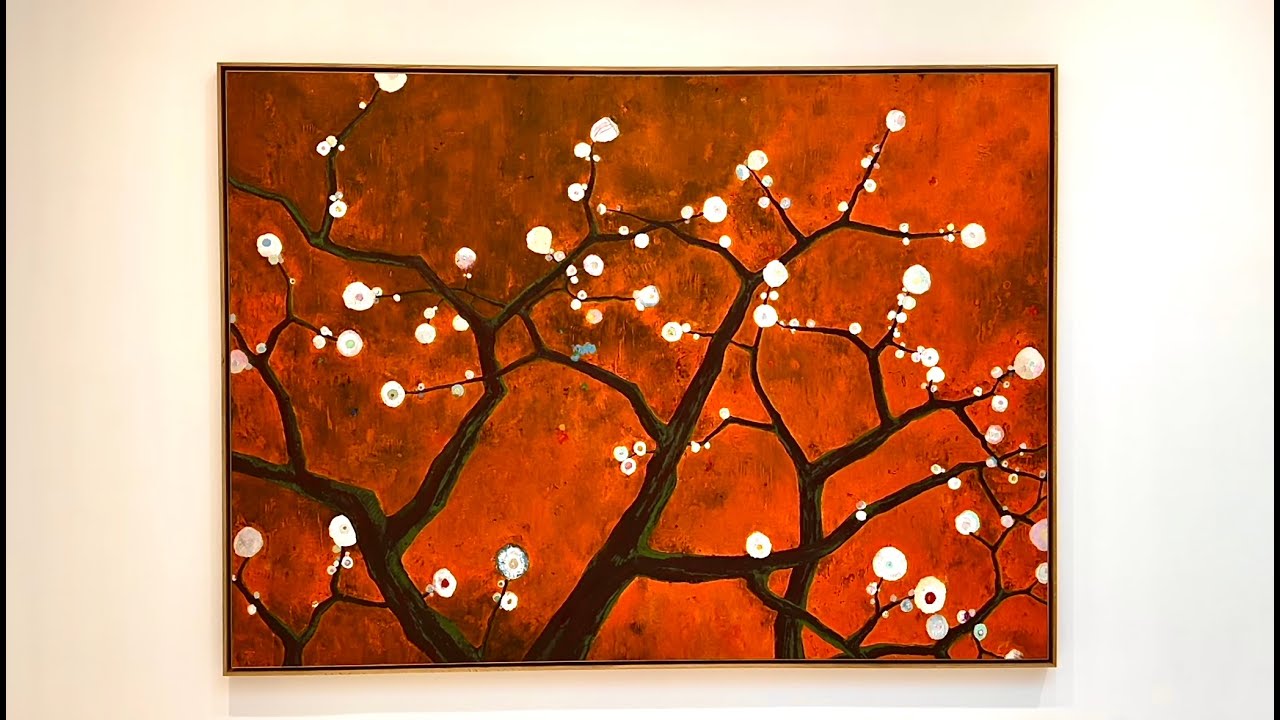
Ancart’s tree paintings specifically echo Mondrian’s early tree studies. The figure-ground relationship gets complicated in similar ways.
But where Mondrian reduced toward pure geometry, Ancart stays in the messy middle ground.
Materials, Techniques, and Process
Primary Medium
Oil sticks dominate his practice. These are solid bars of oil pigment mixed with wax.
They dry relatively quickly. No need for thinners or unpleasant solvents. This mattered when he lived in his studio.
Surface Preparation
Canvas mounted on wood panels. The rigid backing is necessary.
Oil sticks require pressure. Soft canvas would buckle or push through.
Application Method
Direct, gestural marks. More drawing than painting in the traditional sense.
He separates color fields with deliberate edges. When colors contaminate each other, he now lets it happen. This took time to accept.
Framing
Artist-made frames accompany every work. Usually wood, sometimes bronze.
The frame becomes part of the piece. Dimensions typically include frame depth.
Working Method
Series-based production. Trees. Icebergs. Matchsticks. Flowers.
He works through a motif repeatedly, varying hue, cropping, and scale.
No predetermined outcome. The painting emerges through the act of painting.
Themes, Subjects, and Iconography
The Iceberg Series

Started January 2018 during a severe New York winter.
Monolithic forms floating in unlikely color fields. Red oceans. Pink skies.
Meditation objects. Things that demand sustained looking.
Trees

The figure-ground relationship becomes ambiguous. Sky peeks through foliage with ragged edges.
These recall Gustav Klimt, Egon Schiele, and the early Mondrian tree studies.
Matchsticks

Strong verticals that echo Newman’s zips. But wittier.
The matchstick eventually transforms back into a tree. Full circle.
Fires and Flames
Impossible yellows. Sparks in pink, purple, blue.
Meditation objects again. Fire holds attention the way water does.
Seascapes and Horizons
Crisp horizon lines divide densely worked surfaces.
Nocturnal versions feature luminescent moons and their reflections.
UFOs
Pandemic-era paintings. When New York emptied out, it felt reasonable for something to land on Fifth Avenue.
Notable Works
The Guiding Light

Year: Acquired 2018
Medium: Oil stick and pencil on canvas, artist’s frame
Dimensions: 99 1/4 x 137 3/8 x 2 1/4 inches
Collection: Metropolitan Museum of Art, New York
Monumental nocturnal seascape. Crisp horizon. Dense strokes in inky blues and greens. White moon with pink halo dominates. Smaller orbs and yellow spots meet the horizon.
Untitled (the great night)

Year: 2018
Medium: Oil stick and pencil on canvas, artist’s frame
Dimensions: 15 x 44 feet (4.6 x 13.5 meters)
Location: Created for Centre Pompidou-Metz front window
Site-specific painting for the Shigeru Ban-designed building. Part of “Painting the Night” exhibition.
Subliminal Standard

Year: 2019-2020
Medium: Oil stick on cast concrete
Dimensions: 16 feet high
Location: Cadman Plaza Park, Brooklyn (Public Art Fund commission)
Freestanding concrete sculpture painted to resemble a handball court. Tribute to New York street culture.
Whitney Museum Works

Multiple pieces in the permanent collection. Oil stick and pencil on canvas and paper.
Featured in the 2022 Whitney Biennial.
Exhibitions, Collections, and Provenance
Major Solo Exhibitions

- Maison Ancart (2024) – Gagosian, Paris
- Harold Ancart: Paintings (2023) – Gagosian, New York (gallery debut)
- La Grande Profondeur (The Deep End) (2021) – David Zwirner, Paris
- Traveling Light (2020) – David Zwirner, New York
- Subliminal Standard (2019-2020) – Public Art Fund, Cadman Plaza, Brooklyn
- Untitled (there is no there there) (2016) – Menil Collection, Houston
Institutional Group Shows
- 2022 Whitney Biennial, Whitney Museum of American Art
- Painting the Night (2018-2019), Centre Pompidou-Metz
- S.M.A.K. Ghent (2019)
- Musee d’Art Moderne de la Ville de Paris (2017)
- Palais de Tokyo, Paris (2013)
- WIELS Centre d’art Contemporain, Brussels (2012)
Museum Collections (Partial)
- Metropolitan Museum of Art, New York
- Whitney Museum of American Art, New York
- Solomon R. Guggenheim Museum, New York
- Los Angeles County Museum of Art
- Museum of Contemporary Art, Los Angeles
- Centre Georges Pompidou, Paris
- Musee d’Art Moderne de Paris
- Fondation Beyeler, Basel
- Albertina, Vienna
- Louisiana Museum of Modern Art, Denmark
- Hirshhorn Museum and Sculpture Garden, Washington DC
- Menil Collection, Houston
- Stedelijk Museum voor Actuele Kunst (S.M.A.K.), Ghent
- Rubbell Museum, Miami
Market and Reception
Gallery Trajectory
Started with CLEARING gallery and Xavier Hufkens in Brussels.
Joined David Zwirner. Departed January 2022.
Larry Gagosian called a few months later. Solo debut in May 2023.
Auction Performance
Works have sold for seven figures on the secondary market.
A 2016 oil stick sunset and waves sold for HKD 5,040,000 (approximately USD 645,000) at Sotheby’s in April 2022.
Paintings regularly appear at Christie’s and Sotheby’s contemporary sales.
Format and Pricing
Large-scale canvas works command highest prices.
Common dimensions: 81 x 113 inches, 87 x 71 inches, 99 x 137 inches.
Works on paper and smaller canvases available at lower price points.
Authentication
Artist-made frames serve as provenance markers.
Consistent use of oil stick medium across body of work.
Influence and Legacy
Upstream Influences
- American Abstraction: Richard Diebenkorn, Helen Frankenthaler, Clyfford Still, Brice Marden, Wayne Thiebaud, Barnett Newman
- Belgian Tradition: Rene Magritte, Paul Delvaux, James Ensor, Leon Spilliaert
- European Modernism: Gustav Klimt, Egon Schiele, Piet Mondrian
- Minimalism: Donald Judd, Ellsworth Kelly
- Comics and Manga: Herge, Peyo, Frank Miller, Katsuhiro Otomo
Downstream Impact
Too early to assess full influence. But his path from small Brooklyn studio to Gagosian representation has become something of a model for emerging painters.
The oil stick medium has gained renewed interest partly through his visibility.
Cross-Domain Connections
Public art projects connect his practice to urban infrastructure and community spaces.
The handball court sculpture at Cadman Plaza engaged street culture and public recreation.
How to Recognize a Harold Ancart at a Glance
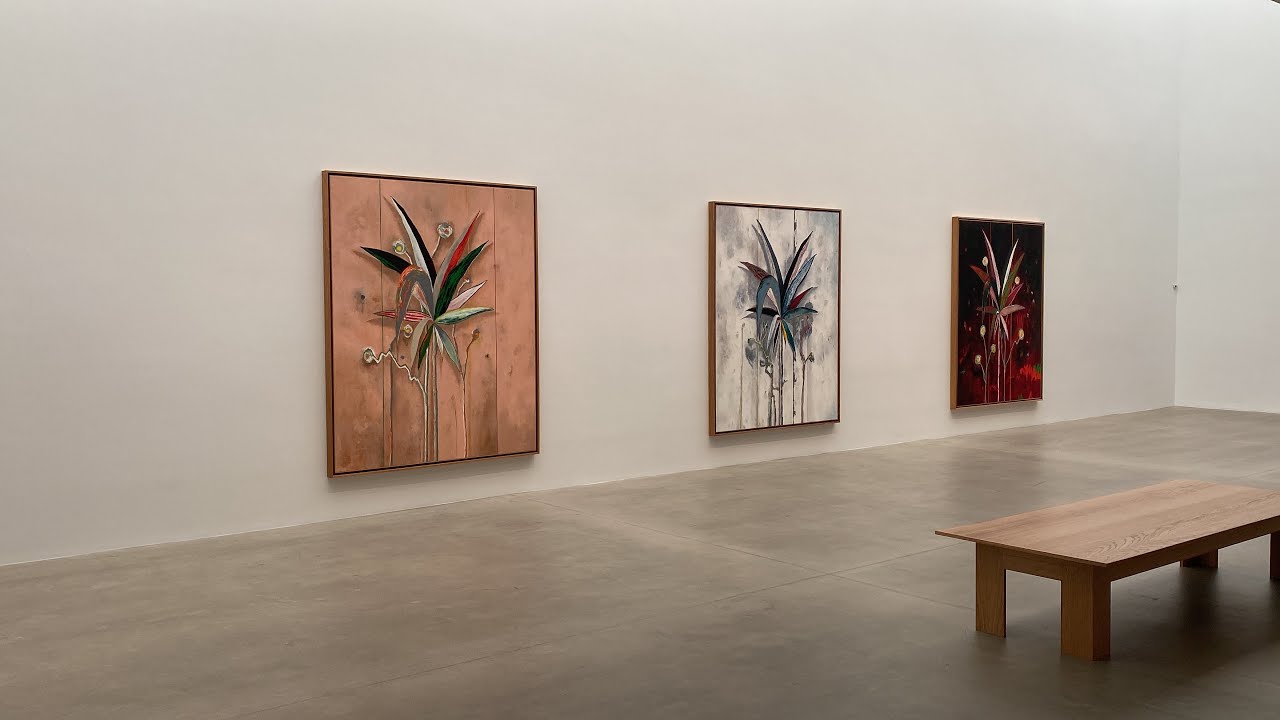
- Medium: Oil stick marks with pencil underdrawing visible
- Edges: Jagged, bristling color boundaries rather than smooth transitions
- Saturation: High chromatic intensity, often using unlikely color combinations
- Subject: Trees, icebergs, horizons, flames, or flowers rendered semi-abstractly
- Frame: Artist-made wood or bronze frame as integral component
- Scale: Typically large (70-100+ inches common)
- Surface: Dense, built-up texture with visible strokes and scrapes
- Palette: Temperature contrasts between warm and cool areas
- Figure-Ground: Ambiguous relationship, especially in tree paintings
- Horizon Placement: Often low or high, rarely centered
FAQ on Harold Ancart
Who is Harold Ancart?
Harold Ancart is a Belgian contemporary painter and sculptor born in Brussels in 1980. He creates large-scale oil stick paintings exploring landscapes, seascapes, and natural forms.
He now lives and works in Brooklyn, New York. Gagosian Gallery represents him.
What medium does Harold Ancart use?
Oil sticks and pencil on canvas define his practice. He mounts canvas on wood panels to handle the pressure required by this medium.
The technique produces dense, built-up surfaces with visible gestural marks. It sits between drawing and oil painting.
Where did Harold Ancart study art?
Ancart earned his MFA from Ecole Nationale Superieure des Arts Visuels de La Cambre in Brussels in 2007. He briefly studied political science first.
La Cambre pushed him toward abstraction and conceptual approaches that still inform his work today.
How much do Harold Ancart paintings cost?
Large canvas works sell for seven figures on the secondary market. A 2016 seascape fetched over USD 645,000 at Sotheby’s in 2022.
Works on paper and smaller pieces trade at lower price points through galleries and auction houses.
What gallery represents Harold Ancart?
Gagosian Gallery has represented Ancart since 2022. His debut solo show there opened in May 2023 in New York.
Previously, David Zwirner represented him. He also showed with Xavier Hufkens and CLEARING gallery in Brussels.
What museums collect Harold Ancart’s work?
The Metropolitan Museum of Art, Whitney Museum, Guggenheim, LACMA, and Centre Pompidou hold his paintings. So do Fondation Beyeler, Albertina Vienna, and the Menil Collection.
His work spans major institutions across North America and Europe.
What subjects does Harold Ancart paint?
Trees, icebergs, flowers, fires, matchsticks, and seascapes recur throughout his practice. He works in series, exploring each motif across multiple canvases.
Ancart calls subject matter an “alibi” for experimenting with value and chromatic intensity.
What artists influenced Harold Ancart?
American abstract painters shaped his practice. Richard Diebenkorn, Clyfford Still, Helen Frankenthaler, and Wayne Thiebaud feature prominently.
Belgian surrealists and comic book artists like Herge also left their mark on his visual vocabulary.
Was Harold Ancart in the Whitney Biennial?
Yes. Ancart participated in the 2022 Whitney Biennial, one of the most watched surveys of American contemporary art.
The Whitney Museum also holds multiple works by Ancart in its permanent collection.
What is Harold Ancart’s most famous work?
His Public Art Fund commission, Subliminal Standard (2019-2020), gained wide attention. The 16-foot painted concrete handball court sculpture stood in Cadman Plaza, Brooklyn.
The Guiding Light at the Metropolitan Museum also ranks among his most recognized paintings.
Conclusion
Harold Ancart has built a practice that bridges Belgian heritage and American abstraction. His oil stick canvases now hang in the Metropolitan Museum, the Whitney, and the Guggenheim.
The work demands physical engagement. Dense surfaces. Jagged edges. Saturated color theory pushed to its limits.
From half-bagel meals in a Brooklyn studio to Gagosian representation, his trajectory speaks to persistence. Subject matter remains secondary. The real conversation happens in form, chromatic tension, and the meeting point where one color field ends and another begins.