Michael Borremans is a Belgian contemporary figurative painter known for his enigmatic oil paintings that blend classical technique with unsettling, psychologically charged imagery. His work sits somewhere between realism and the absurd.
Born in 1963 in Geraardsbergen, Belgium, he came to painting late. Thirty-three years old before he picked up a brush seriously. Now he’s the most expensive living Belgian painter in the art market.
Borremans works primarily in oil painting, creating figurative works that reference Old Masters like Diego Velazquez and Francisco Goya while addressing contemporary anxieties. His major painting series span from 2000 to the present, with his 2014 retrospective “As Sweet as It Gets” showcasing over one hundred works from two decades of production.
Identity Snapshot
- Full name: Michael Borremans (sometimes spelled Micheal Borremans)
- Birth: 1963, Geraardsbergen, Belgium
- Primary roles: Painter, draughtsman, filmmaker
- Nationality: Belgian
- Movement: Contemporary figurative painting with surrealist elements
- Mediums: Oil on canvas, oil on wood panel, oil on linen, watercolor, pencil, film
- Signature traits: Muted earth tones, thin paint application, transparent layers over warm ground, visible canvas, ambiguous narratives
- Iconography: Truncated figures, masked faces, ritualistic gestures, childhood imagery, absurd props
- Geographic anchors: Geraardsbergen (birthplace), Ghent (studio and residence)
- Education: M.F.A. from Hogeschool voor Wetenschap en Kunst, Campus St. Lucas, Ghent (1996)
- Mentors: Self-taught as a painter, influenced by Velazquez, Edouard Manet, Rembrandt van Rijn
- Gallery representation: Zeno X Gallery (Antwerp), David Zwirner (since 2001)
- Major collections: MoMA, Art Institute of Chicago, Dallas Museum of Art, S.M.A.K. Ghent, Los Angeles County Museum of Art, Hammer Museum
- Auction record: $3,164,090 for “Girl with Duck” (2011) at Sotheby’s London, October 2015
What Sets Michael Borremans Apart
Borremans paints figures that don’t quite make sense. They perform tasks with no obvious purpose. Hold objects that serve no function. Stand in spaces stripped of context.
His chiaroscuro runs cool. The darks quiver between warm and cold. Unlike the dramatic light-dark contrasts of Caravaggio, Borremans keeps everything subdued, almost dusty.
The paint itself stays thin. Really thin. He scrapes it back with a knife, leaves canvas showing through, applies transparent glazes over a warm reddish-brown ground. This creates that worn, aged quality people notice immediately.
Where photorealism chases the camera, Borremans runs from it. He works from photographs displayed on a monitor but keeps the screen at a distance. Forces himself to guess. To find painterly solutions rather than copying exactly what he sees.
His contemporary Luc Tuymans gets compared to him constantly. But Borremans goes somewhere darker, more theatrical. The figures in his paintings could be characters from a Samuel Beckett play, forever waiting, forever repeating meaningless gestures.

Origins and Formation
Early Training
Borremans trained as a draughtsman and engraver at Sint-Lukas Brussels (now Luca School of Arts) in Ghent. Photography came first. He worked with it for several years before switching directions completely.
The M.F.A. came in 1996. He was already 33.
The Teaching Years
After graduation, he taught at the Secondary Municipal Art Institute of Ghent. Ten years of steady employment. A sabbatical changed everything.
He started painting during that break. And never stopped.
First Stylistic Inflections
His early paintings stayed rooted in drawing practice. According to Jeffrey Grove, curator at the Dallas Museum of Art, Borremans began working with oil paint in 1993 but remained strongly connected to his draughtsmanship until around 1997.
By 1999-2000, something new emerged. Paintings like “The Butter Sculptor” and “The Assistant” showed a clearer vision. The ambiguity was settling in.
First Exhibitions and Breakthrough
His first solo show happened at Croxhapox experimental art house in Ghent (1996). Small venue. Underground reputation.
The real break came differently. Another painter, Jan Van Imschoot, discovered Borremans’s work hanging in a local pub in Kalken. Van Imschoot bought several pieces and introduced him to Jan Hoet, founder of S.M.A.K. in Ghent.
From Hoet came an introduction to Frank Demaegd, owner of Zeno X Gallery in Antwerp. That first major gallery exhibition opened doors that haven’t closed since.
Movement and Context
Position Within Contemporary Figurative Painting
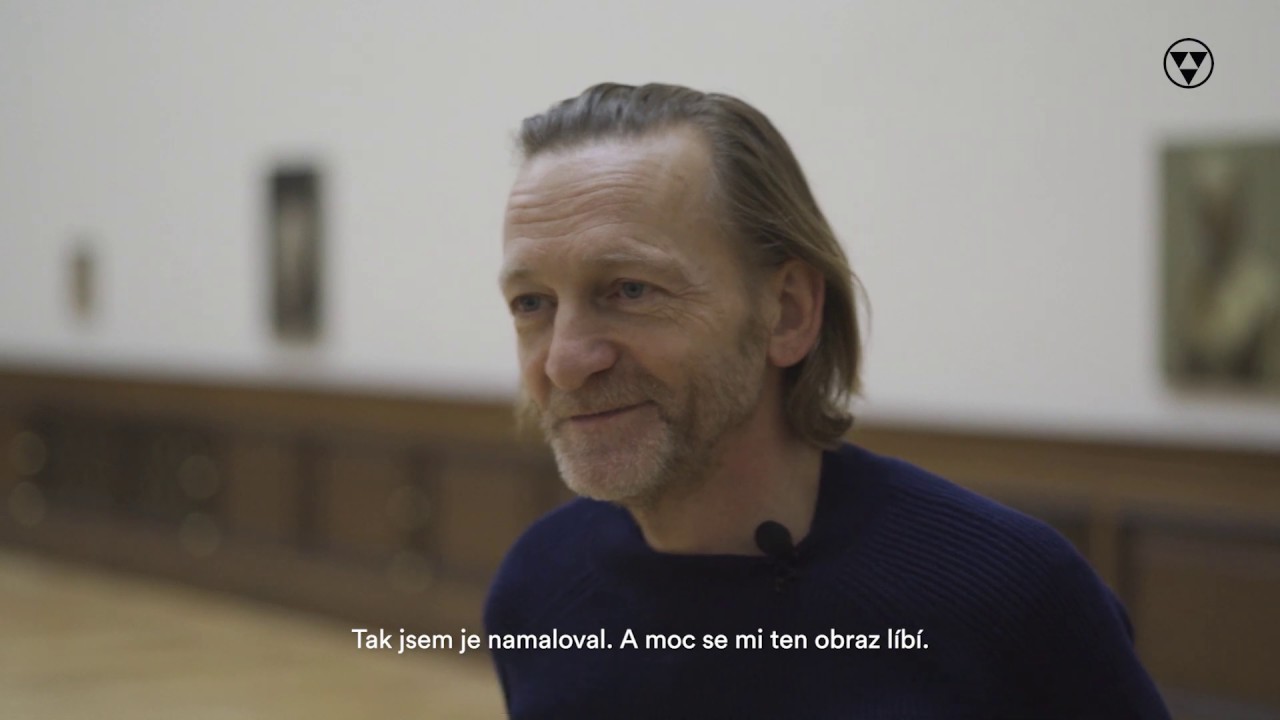
Borremans occupies strange territory. He reveres Old Masters but says he’s “ashamed to be a figurative painter.” The contemporary art world flattened painting in the 20th century, then spent decades picking it apart. Borremans neither ignores this history nor follows it.
He maintains the Flemish painting tradition while subverting its purpose. The skill serves confusion, not clarity.
Comparative Analysis
Borremans vs. Luc Tuymans: Both Belgian. Both work from photographs. Both use muted palettes. But Tuymans flattens space more aggressively. His edges dissolve. Borremans keeps more traditional form while destabilizing content.
Borremans vs. Gerhard Richter: Richter embraced the “terror of the photographic image.” Borremans actively resists it. Where Richter’s photo-paintings blur toward abstraction, Borremans maintains figuration but introduces psychological blur instead.
Borremans vs. Neo Rauch: Rauch wanted Borremans to replace him at the Leipzig Academy. Both traffic in the uncanny. Rauch constructs elaborate theatrical scenarios. Borremans strips his down to near-emptiness.
Materials, Techniques, and Process
Supports and Grounds
Canvas remains primary. Also wood panels for smaller works, linen for others.
The ground matters. He uses a baroque technique: transparent layers of oil paint over a surface that isn’t white but rather light brown or reddish. This warm under-layer filters through everything above it.
Brushwork and Application
Thin paint. Thinner than you’d expect. He scrapes with a knife, applies transparent washes, leaves areas of raw canvas exposed.
The brushwork draws attention to itself. Loose strokes. Visible mark-making. None of the smooth blending that would push toward hyperrealism.
His blacks are all mixed. They shift between warm and cool, creating an unsettled quality within the shadows themselves.
Working Process
Models come to the studio. He photographs them against neutral backdrops, often with props and costumes. These photographs go onto a computer monitor.
But here’s the thing: he keeps the monitor at a distance from the canvas. Far enough that he has to guess, to interpret rather than copy. “When you place it further away you have to find painterly solutions for what you see.”
He credits Vermeer for this. The camera obscura. Photographic tricks in composition centuries before photography existed.
Palette
Earth tones dominate. Beiges, browns, greys, shadows. A muted color range that suggests old photographs, faded memories.
But small flourishes break through. A white bow. A ruddy cheek. Pink dress fabric. These controlled touches of brighter hue energize entire compositions.
Studio Practice
His main studio is a refurbished carpenter’s workshop in Ghent, acquired in 1993. Objects fill the space: a taxidermied badger, architectural models, small sculpted busts.
In 2012, he acquired a second studio. A disused chapel. He calls it his “secret” studio. That’s where “The Angel” was painted, during what he describes as “a difficult emotional state.”
Themes, Subjects, and Iconography
Recurring Motifs
Truncated bodies. Missing limbs. Decapitated figures. Like ancient Greek statues worn by time.
Concealed faces. Subjects look away from the viewer or have their features obscured. Black paint covering skin. Masks. Hoods.
Childhood imagery appears frequently, sometimes disturbing. The “Fire from the Sun” series (2017-2018) depicts toddlers in scenes with sinister undertones.
Compositional Approaches
Scale distortions create unease. In “The Swimming Pool” (2001), diminutive swimmers appear beneath an enormous painted torso. In “Trickland” (2002), female giants reposition houses under cover of darkness.
Empty backgrounds. Neutral spaces. Minimal texture in environments forces attention onto figures and their inexplicable activities.
Symbolic Content
The “Black Mould” series (2015) shows hooded figures in ritualistic movements. Associations range from religious extremism to Ku Klux Klansmen to Abu Ghraib torture photographs.
Borremans doesn’t explain. He views the world as cold, strange, apocalyptic. This worldview converts into ambiguous imagery that resists interpretation while demanding it.
Notable Works
The Angel (2013)

Medium: Oil on canvas, 300 x 200 cm
Collection: Zeno X Gallery, Antwerp
Visual signature: A tall woman in an old-fashioned pale pink dress, blonde hair pulled back, face covered in black paint. She looks downward, impassive.
Why it matters: Became an icon after the 2014 BOZAR retrospective. Borremans describes it as “a figure of transcendence” that helped him through a difficult period.
Girl with Duck (2011)

Medium: Oil on canvas, 122 x 80.75 inches
Collection: Private collection
Visual signature: Large-scale figurative work with the artist’s characteristic muted palette and psychological tension.
Why it matters: Set auction record for the artist at $3,164,090 at Sotheby’s London (October 2015). First exhibited at David Zwirner Gallery, New York (2011).
The Devil’s Dress (2011)

Medium: Oil on canvas, 200 x 300 cm
Collection: Dallas Museum of Art
Visual signature: Female figure cocooned in a red polygonal cardboard cylinder, lying on the ground as if on a stage.
Why it matters: Direct reference to Manet’s “The Dead Toreador” (1864). Demonstrates Borremans’s ongoing dialogue with art history.
Fire from the Sun Series (2017-2018)

Medium: Oil on canvas and panel, various sizes
Collection: Various, Zeno X Gallery
Visual signature: Toddlers depicted in scenes with fire and what appear to be human limbs. Bright lighting contrasts with disturbing content.
Why it matters: Marked shift toward more confrontational imagery. The artist stated he wanted to give his work “more gravitas, to make it more relevant.”
Weight (2006)
Medium: 35mm film transferred to video, 9:44 minutes, silent
Collection: Museum of Modern Art, New York
Visual signature: A legless automaton-like girl turning slowly on a tabletop. Fixed camera, slow zoom, oppressive atmosphere.
Why it matters: Demonstrates the connection between Borremans’s painting and film practice. First presented film work at the 2005 Berlin Biennale.
Exhibitions, Collections, and Provenance
Major Solo Exhibitions

- “A Confrontation at the Zoo” – Museum Voorlinden, Netherlands (2024)
- “The Promise” – Prada Rong Zhai, Shanghai (2024)
- “The Monkey” – David Zwirner, London (2024)
- “The Acrobat” – David Zwirner, New York (2022)
- “Double Silence” (with Mark Manders) – 21st Century Museum of Contemporary Art, Kanazawa (2020)
- “The Duck” – Galerie Rudolfinum, Prague (2020)
- “Fire from the Sun” – David Zwirner, Hong Kong (2018)
- “Black Mould” – David Zwirner, London (2015)
- “As Sweet as It Gets” – Palais des Beaux-Arts Brussels, Tel Aviv Museum of Art, Dallas Museum of Art (2014-2015)
- “Eating the Beard” – Wurttemberg Art Association Stuttgart, Kunsthalle Budapest, Kunsthalle Helsinki (2011)
Institutional Collections
Art Institute of Chicago. Museum of Modern Art, New York. Los Angeles County Museum of Art. Hammer Museum. Dallas Museum of Art. S.M.A.K. Ghent. Musee d’Art Moderne de la Ville de Paris. Museum of Fine Arts, Boston. Museum of Contemporary Art, Los Angeles.
Gallery Representation
Zeno X Gallery in Antwerp has represented him since his first major exhibition. David Zwirner joined in 2001 and has shown his work consistently in New York, London, and Hong Kong.
Market and Reception
Auction Performance
Record: $3,164,090 for “Girl with Duck” at Sotheby’s London (October 2015). Prices range from $92 to over $3 million depending on size and medium.
He’s the most expensive living Belgian painter. Auction houses handling his work include Christie’s, Sotheby’s, and Phillips.
Critical Reception
Comparisons to Manet for fluid brushwork. To Rene Magritte for conceptual approach, though with radically different technique. Jeffrey Grove of Dallas Museum of Art has championed his work consistently.
Authentication Considerations
Works are signed, titled, and dated on the reverse. Catalogue raisonnes exist for drawings and paintings. Gallery provenance through Zeno X and David Zwirner provides documentation for most major works.
Influence and Legacy
Upstream Influences
Velazquez sits at the center. The technique of thin layers over warm grounds. The ambiguity of “Las Meninas.” Borremans visits The Prado and finds himself unable to work for a while afterward.
Manet’s way of painting death and spectacle. Goya’s darkness. Johannes Vermeer’s camera obscura tricks. The Ghent Altarpiece, which fascinated and frightened him as a child.
Downstream Impact
Neo Rauch wanted Borremans to succeed him at the Leipzig Academy. The request was denied, but the endorsement matters.
Younger figurative painters study his approach to psychological tension. His combination of Old Master technique with contemporary unease has become a model for those seeking alternatives to both academic realism and conceptual abstraction.
Cross-Domain Connections
His films bridge painting and cinema. The tableaux vivants with slow camera movements relate directly to his static compositions.
Fashion has taken notice. Balenciaga controversially featured his book in campaign imagery (November 2022), though the association was unintended and unwelcome.
How to Recognize a Borremans at a Glance

- Warm ground showing through: Reddish-brown undertones visible beneath thin paint layers
- Mixed blacks: Shadows that shift between warm and cool temperatures
- Canvas exposure: Areas where paint has been scraped away or left deliberately thin
- Neutral backgrounds: Minimal environmental detail, figures isolated in ambiguous space
- Concealed faces: Subjects looking away, masked, or with features obscured
- Truncated bodies: Missing limbs, partial figures, decapitations
- Muted earth palette: Beiges, browns, greys with occasional controlled color accents
- Small to medium formats common: Though large-scale works exist, intimate sizes frequent
- Theatrical staging: Figures posed with props as if mid-performance
- Signature placement: Typically signed, titled, and dated on reverse
Michael Borremans is a Belgian contemporary figurative painter known for his enigmatic oil paintings that blend classical technique with unsettling, psychologically charged imagery. His work sits somewhere between realism and the absurd.
Born in 1963 in Geraardsbergen, Belgium, he came to painting late. Thirty-three years old before he picked up a brush seriously. Now he’s the most expensive living Belgian painter in the art market.
Borremans works primarily in oil painting, creating figurative works that reference Old Masters like Diego Velazquez and Francisco Goya while addressing contemporary anxieties. His major painting series span from 2000 to the present, with his 2014 retrospective “As Sweet as It Gets” showcasing over one hundred works from two decades of production.
Identity Snapshot
- Full name: Michael Borremans (sometimes spelled Micheal Borremans)
- Birth: 1963, Geraardsbergen, Belgium
- Primary roles: Painter, draughtsman, filmmaker
- Nationality: Belgian
- Movement: Contemporary figurative painting with surrealist elements
- Mediums: Oil on canvas, oil on wood panel, oil on linen, watercolor, pencil, film
- Signature traits: Muted earth tones, thin paint application, transparent layers over warm ground, visible canvas, ambiguous narratives
- Iconography: Truncated figures, masked faces, ritualistic gestures, childhood imagery, absurd props
- Geographic anchors: Geraardsbergen (birthplace), Ghent (studio and residence)
- Education: M.F.A. from Hogeschool voor Wetenschap en Kunst, Campus St. Lucas, Ghent (1996)
- Mentors: Self-taught as a painter, influenced by Velazquez, Edouard Manet, Rembrandt van Rijn
- Gallery representation: Zeno X Gallery (Antwerp), David Zwirner (since 2001)
- Major collections: MoMA, Art Institute of Chicago, Dallas Museum of Art, S.M.A.K. Ghent, Los Angeles County Museum of Art, Hammer Museum
- Auction record: $3,164,090 for “Girl with Duck” (2011) at Sotheby’s London, October 2015
What Sets Michael Borremans Apart
Borremans paints figures that don’t quite make sense. They perform tasks with no obvious purpose. Hold objects that serve no function. Stand in spaces stripped of context.
His chiaroscuro runs cool. The darks quiver between warm and cold. Unlike the dramatic light-dark contrasts of Caravaggio, Borremans keeps everything subdued, almost dusty.
The paint itself stays thin. Really thin. He scrapes it back with a knife, leaves canvas showing through, applies transparent glazes over a warm reddish-brown ground. This creates that worn, aged quality people notice immediately.
Where photorealism chases the camera, Borremans runs from it. He works from photographs displayed on a monitor but keeps the screen at a distance. Forces himself to guess. To find painterly solutions rather than copying exactly what he sees.
His contemporary Luc Tuymans gets compared to him constantly. But Borremans goes somewhere darker, more theatrical. The figures in his paintings could be characters from a Samuel Beckett play, forever waiting, forever repeating meaningless gestures.
Origins and Formation
Early Training
Borremans trained as a draughtsman and engraver at Sint-Lukas Brussels (now Luca School of Arts) in Ghent. Photography came first. He worked with it for several years before switching directions completely.
The M.F.A. came in 1996. He was already 33.
The Teaching Years
After graduation, he taught at the Secondary Municipal Art Institute of Ghent. Ten years of steady employment. A sabbatical changed everything.
He started painting during that break. And never stopped.
First Stylistic Inflections
His early paintings stayed rooted in drawing practice. According to Jeffrey Grove, curator at the Dallas Museum of Art, Borremans began working with oil paint in 1993 but remained strongly connected to his draughtsmanship until around 1997.
By 1999-2000, something new emerged. Paintings like “The Butter Sculptor” and “The Assistant” showed a clearer vision. The ambiguity was settling in.
First Exhibitions and Breakthrough
His first solo show happened at Croxhapox experimental art house in Ghent (1996). Small venue. Underground reputation.
The real break came differently. Another painter, Jan Van Imschoot, discovered Borremans’s work hanging in a local pub in Kalken. Van Imschoot bought several pieces and introduced him to Jan Hoet, founder of S.M.A.K. in Ghent.
From Hoet came an introduction to Frank Demaegd, owner of Zeno X Gallery in Antwerp. That first major gallery exhibition opened doors that haven’t closed since.
Movement and Context
Position Within Contemporary Figurative Painting
Borremans occupies strange territory. He reveres Old Masters but says he’s “ashamed to be a figurative painter.” The contemporary art world flattened painting in the 20th century, then spent decades picking it apart. Borremans neither ignores this history nor follows it.
He maintains the Flemish painting tradition while subverting its purpose. The skill serves confusion, not clarity.
Comparative Analysis
Borremans vs. Luc Tuymans: Both Belgian. Both work from photographs. Both use muted palettes. But Tuymans flattens space more aggressively. His edges dissolve. Borremans keeps more traditional form while destabilizing content.
Borremans vs. Gerhard Richter: Richter embraced the “terror of the photographic image.” Borremans actively resists it. Where Richter’s photo-paintings blur toward abstraction, Borremans maintains figuration but introduces psychological blur instead.
Borremans vs. Neo Rauch: Rauch wanted Borremans to replace him at the Leipzig Academy. Both traffic in the uncanny. Rauch constructs elaborate theatrical scenarios. Borremans strips his down to near-emptiness.
Materials, Techniques, and Process
Supports and Grounds
Canvas remains primary. Also wood panels for smaller works, linen for others.
The ground matters. He uses a baroque technique: transparent layers of oil paint over a surface that isn’t white but rather light brown or reddish. This warm under-layer filters through everything above it.
Brushwork and Application
Thin paint. Thinner than you’d expect. He scrapes with a knife, applies transparent washes, leaves areas of raw canvas exposed.
The brushwork draws attention to itself. Loose strokes. Visible mark-making. None of the smooth blending that would push toward hyperrealism.
His blacks are all mixed. They shift between warm and cool, creating an unsettled quality within the shadows themselves.
Working Process
Models come to the studio. He photographs them against neutral backdrops, often with props and costumes. These photographs go onto a computer monitor.
But here’s the thing: he keeps the monitor at a distance from the canvas. Far enough that he has to guess, to interpret rather than copy. “When you place it further away you have to find painterly solutions for what you see.”
He credits Vermeer for this. The camera obscura. Photographic tricks in composition centuries before photography existed.
Palette
Earth tones dominate. Beiges, browns, greys, shadows. A muted color range that suggests old photographs, faded memories.
But small flourishes break through. A white bow. A ruddy cheek. Pink dress fabric. These controlled touches of brighter hue energize entire compositions.
Studio Practice
His main studio is a refurbished carpenter’s workshop in Ghent, acquired in 1993. Objects fill the space: a taxidermied badger, architectural models, small sculpted busts.
In 2012, he acquired a second studio. A disused chapel. He calls it his “secret” studio. That’s where “The Angel” was painted, during what he describes as “a difficult emotional state.”
Themes, Subjects, and Iconography
Recurring Motifs
Truncated bodies. Missing limbs. Decapitated figures. Like ancient Greek statues worn by time.
Concealed faces. Subjects look away from the viewer or have their features obscured. Black paint covering skin. Masks. Hoods.
Childhood imagery appears frequently, sometimes disturbing. The “Fire from the Sun” series (2017-2018) depicts toddlers in scenes with sinister undertones.
Compositional Approaches
Scale distortions create unease. In “The Swimming Pool” (2001), diminutive swimmers appear beneath an enormous painted torso. In “Trickland” (2002), female giants reposition houses under cover of darkness.
Empty backgrounds. Neutral spaces. Minimal texture in environments forces attention onto figures and their inexplicable activities.
Symbolic Content
The “Black Mould” series (2015) shows hooded figures in ritualistic movements. Associations range from religious extremism to Ku Klux Klansmen to Abu Ghraib torture photographs.
Borremans doesn’t explain. He views the world as cold, strange, apocalyptic. This worldview converts into ambiguous imagery that resists interpretation while demanding it.
Notable Works
The Angel (2013)
Medium: Oil on canvas, 300 x 200 cm
Collection: Zeno X Gallery, Antwerp
Visual signature: A tall woman in an old-fashioned pale pink dress, blonde hair pulled back, face covered in black paint. She looks downward, impassive.
Why it matters: Became an icon after the 2014 BOZAR retrospective. Borremans describes it as “a figure of transcendence” that helped him through a difficult period.
Girl with Duck (2011)
Medium: Oil on canvas, 122 x 80.75 inches
Collection: Private collection
Visual signature: Large-scale figurative work with the artist’s characteristic muted palette and psychological tension.
Why it matters: Set auction record for the artist at $3,164,090 at Sotheby’s London (October 2015). First exhibited at David Zwirner Gallery, New York (2011).
The Devil’s Dress (2011)
Medium: Oil on canvas, 200 x 300 cm
Collection: Dallas Museum of Art
Visual signature: Female figure cocooned in a red polygonal cardboard cylinder, lying on the ground as if on a stage.
Why it matters: Direct reference to Manet’s “The Dead Toreador” (1864). Demonstrates Borremans’s ongoing dialogue with art history.
Fire from the Sun Series (2017-2018)
Medium: Oil on canvas and panel, various sizes
Collection: Various, Zeno X Gallery
Visual signature: Toddlers depicted in scenes with fire and what appear to be human limbs. Bright lighting contrasts with disturbing content.
Why it matters: Marked shift toward more confrontational imagery. The artist stated he wanted to give his work “more gravitas, to make it more relevant.”
Weight (2006)
Medium: 35mm film transferred to video, 9:44 minutes, silent
Collection: Museum of Modern Art, New York
Visual signature: A legless automaton-like girl turning slowly on a tabletop. Fixed camera, slow zoom, oppressive atmosphere.
Why it matters: Demonstrates the connection between Borremans’s painting and film practice. First presented film work at the 2005 Berlin Biennale.
Exhibitions, Collections, and Provenance
Major Solo Exhibitions
- “A Confrontation at the Zoo” – Museum Voorlinden, Netherlands (2024)
- “The Promise” – Prada Rong Zhai, Shanghai (2024)
- “The Monkey” – David Zwirner, London (2024)
- “The Acrobat” – David Zwirner, New York (2022)
- “Double Silence” (with Mark Manders) – 21st Century Museum of Contemporary Art, Kanazawa (2020)
- “The Duck” – Galerie Rudolfinum, Prague (2020)
- “Fire from the Sun” – David Zwirner, Hong Kong (2018)
- “Black Mould” – David Zwirner, London (2015)
- “As Sweet as It Gets” – Palais des Beaux-Arts Brussels, Tel Aviv Museum of Art, Dallas Museum of Art (2014-2015)
- “Eating the Beard” – Wurttemberg Art Association Stuttgart, Kunsthalle Budapest, Kunsthalle Helsinki (2011)
Institutional Collections
Art Institute of Chicago. Museum of Modern Art, New York. Los Angeles County Museum of Art. Hammer Museum. Dallas Museum of Art. S.M.A.K. Ghent. Musee d’Art Moderne de la Ville de Paris. Museum of Fine Arts, Boston. Museum of Contemporary Art, Los Angeles.
Gallery Representation
Zeno X Gallery in Antwerp has represented him since his first major exhibition. David Zwirner joined in 2001 and has shown his work consistently in New York, London, and Hong Kong.
Market and Reception
Auction Performance
Record: $3,164,090 for “Girl with Duck” at Sotheby’s London (October 2015). Prices range from $92 to over $3 million depending on size and medium.
He’s the most expensive living Belgian painter. Auction houses handling his work include Christie’s, Sotheby’s, and Phillips.
Critical Reception
Comparisons to Manet for fluid brushwork. To Rene Magritte for conceptual approach, though with radically different technique. Jeffrey Grove of Dallas Museum of Art has championed his work consistently.
Authentication Considerations
Works are signed, titled, and dated on the reverse. Catalogue raisonnes exist for drawings and paintings. Gallery provenance through Zeno X and David Zwirner provides documentation for most major works.
Influence and Legacy
Upstream Influences
Velazquez sits at the center. The technique of thin layers over warm grounds. The ambiguity of “Las Meninas.” Borremans visits The Prado and finds himself unable to work for a while afterward.
Manet’s way of painting death and spectacle. Goya’s darkness. Johannes Vermeer’s camera obscura tricks. The Ghent Altarpiece, which fascinated and frightened him as a child.
Downstream Impact
Neo Rauch wanted Borremans to succeed him at the Leipzig Academy. The request was denied, but the endorsement matters.
Younger figurative painters study his approach to psychological tension. His combination of Old Master technique with contemporary unease has become a model for those seeking alternatives to both academic realism and conceptual abstraction.
Cross-Domain Connections
His films bridge painting and cinema. The tableaux vivants with slow camera movements relate directly to his static compositions.
Fashion has taken notice. Balenciaga controversially featured his book in campaign imagery (November 2022), though the association was unintended and unwelcome.
How to Recognize a Borremans at a Glance
- Warm ground showing through: Reddish-brown undertones visible beneath thin paint layers
- Mixed blacks: Shadows that shift between warm and cool temperatures
- Canvas exposure: Areas where paint has been scraped away or left deliberately thin
- Neutral backgrounds: Minimal environmental detail, figures isolated in ambiguous space
- Concealed faces: Subjects looking away, masked, or with features obscured
- Truncated bodies: Missing limbs, partial figures, decapitations
- Muted earth palette: Beiges, browns, greys with occasional controlled color accents
- Small to medium formats common: Though large-scale works exist, intimate sizes frequent
- Theatrical staging: Figures posed with props as if mid-performance
- Signature placement: Typically signed, titled, and dated on reverse
FAQ on Michael Borremans
Who is Michael Borremans?
Belgian painter born in 1963.
Works primarily in figurative art with a distinctly unsettling edge. He didn’t start painting seriously until his thirties (which honestly gives hope to late bloomers). His work sits somewhere between Old Master technique and contemporary weirdness.
What style does Michael Borremans paint in?
Figurative painting with surrealist undertones.
Think classical technique meets psychological discomfort. He paints people and scenes that look almost normal, but something feels off. The lighting, compositions, and subject matter create this quiet tension that sticks with you.
Where can you see Michael Borremans’ work?
Major museums worldwide own his pieces.
MoMA, Tate, and various European collections. But honestly, seeing reproductions doesn’t quite capture the subtlety. The actual brushwork and scale matter more than you’d think. Gallery shows pop up regularly in New York and Europe.
What themes does Borremans explore?
Human ambiguity and psychological states.
His subjects often appear isolated or engaged in unclear activities. Violence hints at the edges without being explicit. Power dynamics show up frequently. The work questions what we find beautiful versus disturbing (and why those categories sometimes overlap).
What painting technique does he use?
Traditional oil painting methods.
Layers, glazing, careful brushwork. Nothing revolutionary about the technique itself. What stands out is how he applies Old Master approaches to deeply contemporary subject matter. The precision makes the strangeness more pronounced, not less.
What are his most famous works?
“The Pupils” and “The Devil’s Dress” get referenced constantly.
Though honestly, picking favorites feels reductive. His film work deserves mention too. “Weight” from 2013 shows the same unsettling quality as his paintings. The short films extend his visual language into movement.
How much do Michael Borremans paintings cost?
Prices range wildly depending on size and period.
Smaller works might start around $50,000. Major pieces can hit seven figures at auction. Gallery prices stay private mostly. If you’re asking because you want to buy one, well, good luck with that.
What influences Michael Borremans’ work?
Spanish painting, particularly Velazquez and Goya.
Film imagery shows up in his compositions. He’s mentioned Pasolini and Tarkovsky. The influence isn’t about copying, more about atmosphere and how images create unease. Photography plays a role in his process too.
Is Michael Borremans still actively painting?
Yes, very much so.
Regular exhibitions continue. His output stays consistent without feeling repetitive. Recent work pushes further into abstraction while keeping that signature unsettling quality. He hasn’t slowed down or gotten comfortable.
Why do people find his paintings disturbing?
The normal mixed with the wrong creates discomfort.
Beautiful technique applied to subjects that feel vaguely threatening. Faces lack clear emotion. Actions seem purposeless or sinister. Your brain expects resolution that never comes. It’s the uncanny valley, but for entire scenarios instead of just faces.
Conclusion
Michael Borremans stands as one of the most significant contemporary figurative painters working today. His Ghent-based studio practice produces paintings that resist easy interpretation while demanding attention.
The work bridges centuries. Flemish tradition meets psychological tension. Classical value structures serve unsettling narratives.
His influence on younger painters continues to grow. Museum collections worldwide hold his enigmatic canvases. The auction market confirms what critics recognized decades ago.
Few artists manage this balance between technical mastery and conceptual depth. Borremans does it painting after painting, leaving viewers uncertain but captivated.