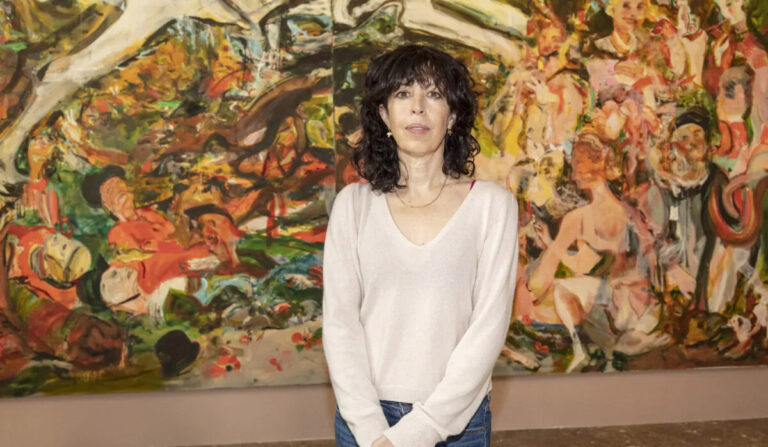
Claire Tabouret is a French contemporary painter known for large-scale figurative works that examine identity, childhood, and group dynamics. Born in 1981 in Pertuis, France, she studied at the Ecole Nationale Superieure des Beaux-Arts in Paris and Cooper Union in New York.
Her paintings feature loose, expressive brushwork and a palette that shifts between fluorescent synthetic hues and muted earth tones. Tabouret draws from found photographs, archival imagery, and personal memory to create portraits and group scenes that feel suspended outside of time.
Since 2015, she has lived and worked in Los Angeles. Her work is held in major museum collections including LACMA, Perez Art Museum Miami, and the Yuz Museum in Shanghai. In December 2024, she was selected to design six new stained glass windows for Notre-Dame Cathedral in Paris.
Identity Snapshot
Full Name: Claire Tabouret
Lifespan: 1981 – present
Primary Roles: Painter, Printmaker, Sculptor
Nationality: French (based in Los Angeles, USA)
Movements: Contemporary Figurative Painting
Mediums: Acrylic on canvas, oil painting, ink on paper, monotype, acrylic on synthetic fabric, sculpture (plaster, ceramic)
Signature Traits: Fluorescent underpainting, wet-on-wet application, hydrous palette, soft-edge figures against flat color fields
Iconography: Children in costumes, debutantes, migrants at sea, wrestlers, couples dancing, self-portraits, flooded landscapes
Geographic Anchors: Pertuis (birthplace), Paris (education, early career), Los Angeles (studio since 2015)
Education: Ecole Nationale Superieure des Beaux-Arts, Paris (graduated 2006); Cooper Union, New York (2005)
Gallery Representation: Perrotin (Paris, New York, Hong Kong, Seoul, Tokyo), Almine Rech (Paris, London, New York, Brussels), Night Gallery (Los Angeles)
Collections: Los Angeles County Museum of Art, Perez Art Museum Miami, Yuz Museum Shanghai, Tel Aviv Museum of Art, Collection Lambert Avignon, Musee des Beaux-Arts de Rouen
Market Signals: Auction record $870,000 for Les debutantes (bleu azur) at Christie’s New York (2021). Common formats range from intimate works on paper to monumental canvases exceeding 200 x 300 cm.
What Sets Claire Tabouret Apart
Tabouret’s figures exist in a strange liminal state. They stare back at you but reveal nothing definitive.
Her technique involves coating canvases with a bright fluorescent layer first. Then she applies sheer washes of acrylic paint that allow that neon ground to shine through in unexpected places. It creates an almost spectral glow behind the skin.
The palette sits somewhere between makeup counter and garden soil. Synthetic pinks next to ochres. Electric blues bleeding into moss greens.
Where painters like George Condo distort the figure through grotesque exaggeration, Tabouret keeps her subjects intact but emotionally opaque. The brushwork is loose, almost careless looking, yet precise in its effect.
She paints from photographs but never copies them. The source material gets filtered through something personal, something felt rather than documented.
Her group scenes recall 19th-century Romantic painting in scale and ambition. But the subjects are anonymous children, migrants, debutantes frozen in rituals that feel both specific and universal.

Origins and Formation
Early Training
Tabouret grew up in Pertuis, a small town in Provence. At four years old, she visited the Musee de l’Orangerie in Paris and encountered Claude Monet’s Water Lilies cycle.
That experience stuck. She later described it as the moment she understood she needed to paint.
She enrolled at the Ecole Nationale Superieure des Beaux-Arts in Paris. In 2005, she spent time at Cooper Union in New York before returning to complete her studies in 2006.
First Stylistic Inflections
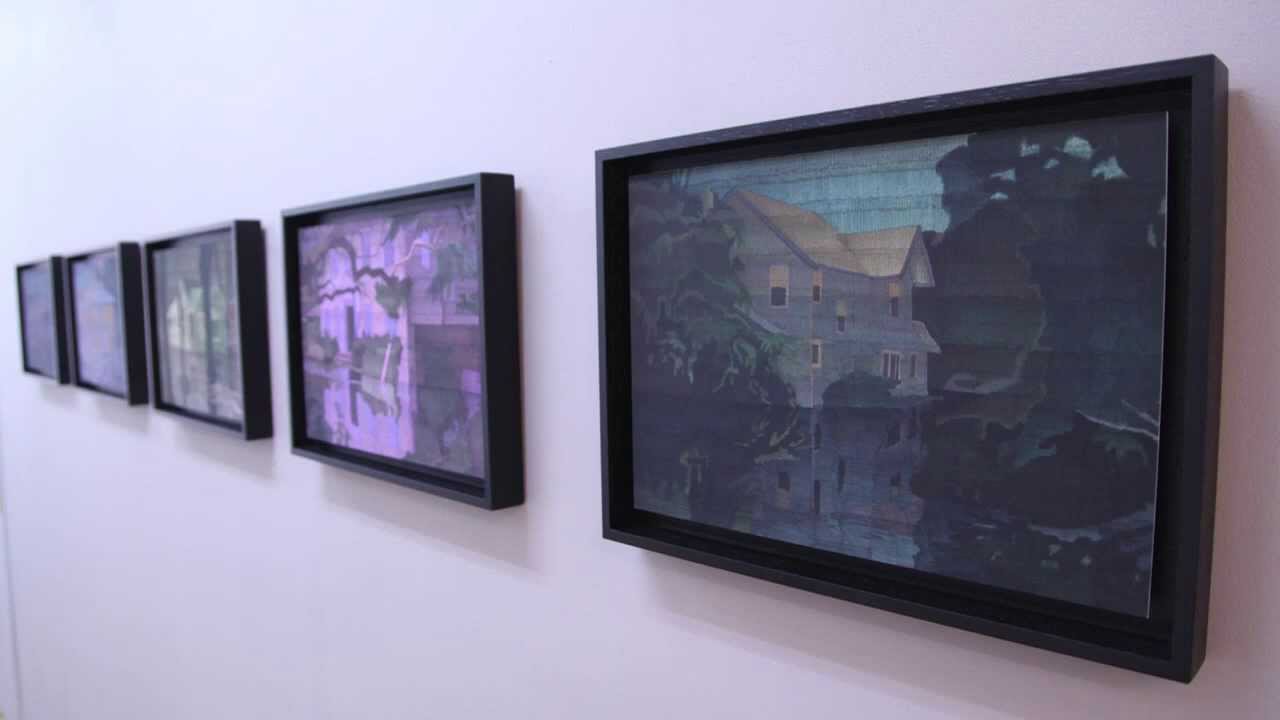
Her earliest recognized works were landscapes. Flooded houses, nocturnal seascapes. Water was always present.
The palette leaned dark and moody back then. Less of the fluorescent punch that would come later.
Pivotal Residency
In 2012, Tabouret undertook a residency at Yishu 8 in Beijing. She had no permanent studio at the time and was living between temporary spaces.
She started a daily practice of self-portraits in ink on rice paper. Every morning. Same ritual. Over 700 self-portraits accumulated.
The discipline taught her something about identity. Each day, the face looked different. The repetition revealed instability rather than consistency.
First Major Exhibition and Recognition
The ink self-portraits caught attention. They led to larger canvases. Then came the group portraits based on found photographs.
The Debutantes series emerged around 2014. Young women in formal dresses. Faces blank or slightly hostile. That acidic palette.
Critics took notice. The paintings sold. She relocated to Los Angeles in 2015.
Movement and Context
Position Within Contemporary Figurative Painting

Tabouret sits within a broader return to figurative painting that gained momentum in the 2010s. She works alongside artists like Nicolas Party and Salman Toor, though her approach differs from both.
Where Party uses flat, almost cartoonish color and hard edges, Tabouret keeps things soft and atmospheric.
Toor shares her interest in group dynamics and intimacy. But his figures inhabit specific social spaces. Tabouret’s exist in something closer to psychological time.
Comparative Micro-Attributes

Edge Quality: Tabouret favors soft edges that blur into surrounding color fields. Compare to Alex Katz‘s hard, graphic boundaries or Cecily Brown’s dissolved figures.
Palette Temperature: She runs cool to neutral with fluorescent accents. Kehinde Wiley goes warmer with saturated backgrounds. Michael Borremans stays firmly in earth tones.
Figure-Ground Relationship: Her subjects often float against flat, monochrome backgrounds. This differs from the environmental detail in Wiley’s work or the atmospheric depth in Borremans.
Scale Preferences: Tabouret works large. Many pieces exceed 200 cm in one dimension. This aligns with contemporary market demands but also reflects her early encounter with Monet’s monumental cycle.
Materials, Techniques, and Process
Supports and Grounds
Tabouret works primarily on canvas, though she has experimented with unusual supports. For her 2019 exhibition If Only the Sea Could Sleep, she painted on old boat sails found at the Port of San Pedro.
Her Paysages d’interieurs (Interior Landscapes) series uses synthetic fur as a support. The plush material absorbs acrylic paint differently, creating a textured, almost tapestry-like surface.
Standard canvases receive a fluorescent primer layer. This becomes the hidden luminosity beneath everything.
Brushwork and Application
The brushwork reads as loose and gestural but serves specific functions. She uses wet-on-wet application to keep edges soft and allow colors to bleed into one another.
Faces are built through layered washes rather than careful modeling. This connects back to Monet’s approach, which she has cited repeatedly as foundational.
For the boat sail paintings, she used unconventional pigments. Motor oil, boat oil, varnishes. Materials common to shipyards.
Palette Architecture
Her color system operates on tension between synthetic and organic. Fluorescent pinks and yellows sit against muddy greens and ochres.
The makeup imagery in her work is literal but also conceptual. Colors reference cosmetics, which are themselves about artifice and identity construction.
Temperature tends cool overall, with warm accents pulling attention where she wants it.
Monotype Practice
Beyond painting, Tabouret works extensively in monotype. She uses phantom stains left by the press to develop transparency effects.
These prints explore conflict, sexuality, and desire. The medium’s inherent unpredictability suits themes of instability and transformation.
Themes, Subjects, and Iconography
Recurring Motifs
Children in Costume: Young figures dressed for rituals, pageants, carnivals. Their expressions rarely match the festivity of their attire.
Debutantes: Young women at coming-of-age ceremonies. Based on archival photographs. The tradition dates to the 1600s.
Migrants at Sea: Figures adrift in boats. Anonymous, vulnerable, suspended between places.
Wrestlers and Dancers: Bodies in physical contact. Struggle and tenderness occupying the same frame.
Makeup Faces: Portraits of girls with cosmetics smeared across features. The application is clumsy, almost violent.
Compositional Schemes
Group scenes typically use frontal arrangement. Figures face the viewer directly, arrayed across the picture plane.
Solo portraits are more varied. Sometimes intimate, sometimes theatrical.
Backgrounds tend toward flat color fields. This pushes figures forward and removes specific context.
Symbolic Framework
The makeup serves multiple functions. It references childhood mimicry of adult behavior. It suggests masks and identity construction. It also connects to painting itself as an act of covering and revealing.
Water appears throughout her work, from early flooded landscapes to later seascapes. It represents flux, instability, the inability to fix anything permanently.
Socio-Historical Triggers
The migrant imagery responds directly to the ongoing refugee crisis. The debutante work examines class rituals and the performance of femininity.
Both subjects share a concern with collective experience and individual identity within groups.
Notable Works
Les Debutantes (bleu azur)

Year: 2014
Medium: Acrylic on canvas
Provenance: Sold at Christie’s New York, May 2021
Significance: Set the artist’s auction record at $870,000 against a $300,000 high estimate. The work depicts young women in formal dresses with characteristic blank expressions and acidic palette.
The Last Day

Year: 2016
Medium: Acrylic on canvas
Current Location: Private collection
Significance: Monumental painting of costumed children. Sold at Christie’s London in March 2021 for $863,000. Explores memory and group dynamics.
Les Enfants de la Chapelle

Year: 2017
Medium: Immersive fresco (acrylic mural)
Location: Chateau de Fabregues, Provence
Significance: Tabouret’s first major public commission. She painted the interior of a chapel with crowds of children in traditional dress from around the world. Commissioned by designer Pierre Yovanovitch.
Makeup (Froufrou)

Year: 2016
Medium: Acrylic on canvas, 51 x 40.5 cm
Significance: Representative work from the ongoing Makeup series (2015-present). Depicts a young girl with cosmetics smeared across her face in a disturbing, almost ritualistic manner.
Paysages d’interieurs (vert)
Year: 2021
Medium: Acrylic on fabric (synthetic fur)
Size: 84 x 72 inches
Significance: Marks her return to landscape and experimentation with unconventional supports. The plush material creates a tapestry-like surface quality influenced by Edouard Vuillard and Les Nabis.
Exhibitions, Collections, and Provenance
Key Solo Exhibitions
2017: The Dance of Icarus, Yuz Museum, Shanghai. Presented 44 paintings and a new monumental cycle.
2017: One Day I Broke a Mirror, Villa Medici, Rome. Two-person exhibition with Yoko Ono, curated by Chiara Parisi.
2020: La Ronde, Musee des Beaux-Arts de Rouen.
2021: Baigneuse Assise, Musee Picasso, Paris. Part of three-venue Paris presentation.
2022: I am spacious, singing flesh, Palazzo Cavanis, Venice. Collateral event of the 59th Venice Biennale.
2023: Au Bois d’Amour, Institute of Contemporary Art, Miami.
2024: L’eloquence des larmes, Chateau La Coste, Le Puy-Sainte-Reparade.
2025: In a Single Breath, Grand Palais, Paris. Exhibition of Notre-Dame stained glass window designs.
Museum Holdings

Los Angeles County Museum of Art (LACMA), Perez Art Museum Miami, Yuz Museum Shanghai, Tel Aviv Museum of Art, Collection Lambert Avignon, Columbus Museum of Art, Musee des Beaux-Arts de Rouen, Musee des Beaux-Arts de Rennes.
Notable Group Exhibitions
2022: Women Painting Women, Modern Art Museum of Fort Worth.
2024: Vatican Pavilion, Venice Biennale (Women’s Detention Centre, Venice-Giudecca).
Market and Reception
Auction Performance
Record sale: $870,000 for Les debutantes (bleu azur) (2014) at Christie’s New York, May 2021. The work exceeded its $300,000 high estimate by nearly 3x.
Previous record: $863,000 for The Last Day (2016) at Christie’s London, March 2021.
Works on paper and prints typically sell in the $1,000-$15,000 range. Unique paintings on canvas range widely depending on size and period.
Market Trajectory
Demand for Tabouret’s work increased steadily through the late 2010s. Artsy reported a 63% increase in inquiries between 2019 and 2020.
Her 2020 collaboration with Dior for their Autumn/Winter collection expanded visibility beyond typical art market channels.
Authentication Considerations
Works are typically documented through her gallery representatives. Prints and editions often bear numbered editions and artist signatures. Original paintings should have provenance tracing through Perrotin, Almine Rech, Night Gallery, or previous dealers.
Influence and Legacy
Upstream Influences
Claude Monet remains the foundational reference. The Water Lilies at the Orangerie triggered her vocation. His handling of paint, the sense of surfaces in constant motion, continues to inform her approach.
Edouard Vuillard and Les Nabis influenced her recent landscape work. The decorative, tapestry-like quality of the Paysages d’interieurs series draws directly from his monumental interiors.
Edouard Manet’s figure painting shaped her understanding of the medium. Pierre Bonnard, Ferdinand Hodler, and Giorgio Morandi appear as secondary references.
Downstream Influence
Tabouret’s success has contributed to broader market interest in figurative painting by mid-career women artists. She is often discussed alongside Anna Weyant, Issy Wood, and others working in representational modes.
Her use of fluorescent grounds has influenced younger painters exploring similar palette strategies.
Cross-Domain Echoes
The 2020 Dior collaboration translated her imagery into fashion prints. The Notre-Dame stained glass commission (expected installation 2026) extends her practice into architectural and sacred contexts.
She worked with Atelier Simon-Marq, a glass studio that previously collaborated with Marc Chagall and Joan Miro.
How to Recognize a Claire Tabouret at a Glance
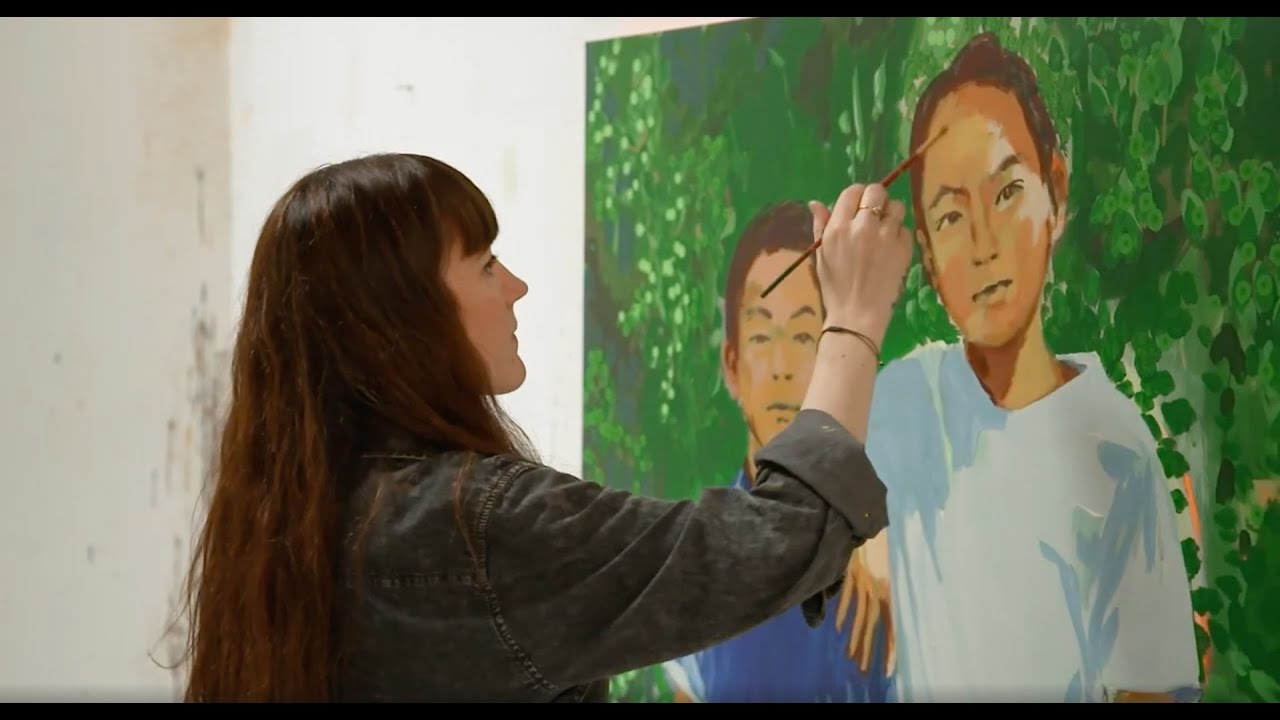
- Fluorescent glow beneath skin tones: Look for bright underlayers showing through sheer washes, especially in flesh areas.
- Soft edges throughout: Figures blend into backgrounds. No hard outlines.
- Flat, monochrome backgrounds: Subjects float against single-color fields rather than detailed environments.
- Frontal group arrangements: When depicting multiple figures, they typically face the viewer directly in horizontal arrays.
- Blank or ambiguous expressions: Faces reveal little emotional content. Eyes may meet yours but give nothing away.
- Palette tension: Synthetic, cosmetic hues (fluorescent pink, electric blue) alongside earthy neutrals (ochre, moss green).
- Large scale: Major works often exceed 150 cm in at least one dimension.
- Loose, visible brushwork: Application appears gestural, even casual, though carefully controlled.
- Recurring subjects: Children in costume, young women in formal dress, figures at sea, couples in physical contact.
- Signature placement: Typically signed verso or lower edge. Check provenance documentation through primary galleries.
FAQ on Claire Tabouret
Who is Claire Tabouret?
Claire Tabouret is a French contemporary painter born in 1981 in Pertuis, France. She creates figurative paintings exploring identity, childhood, and group dynamics.
She studied at the Ecole des Beaux-Arts in Paris and now lives in Los Angeles.
What is Claire Tabouret known for?
Tabouret is known for large-scale portrait paintings and group scenes featuring children, debutantes, and migrants. Her expressive brushwork and fluorescent underpainting create a distinctive luminous quality.
The Makeup and Debutantes series brought her international recognition.
What style does Claire Tabouret paint in?
She works within contemporary figurative painting. Her approach combines loose, gestural application with influences from Impressionism and Expressionism.
Soft edges, flat backgrounds, and hydrous palettes define her visual language.
What materials does Claire Tabouret use?
Tabouret primarily uses acrylic on canvas, often applying a fluorescent ground layer first. She also works with ink on paper, monotype, and unconventional supports like synthetic fur and boat sails.
Her painting mediums vary by series.
How much do Claire Tabouret paintings cost?
Her auction record is $870,000 for Les debutantes (bleu azur) at Christie’s in 2021. Prints typically sell between $1,000 and $15,000.
Original canvas works vary widely based on size, period, and provenance.
Where can I see Claire Tabouret’s work?
Major museum collections include LACMA, Perez Art Museum Miami, Yuz Museum Shanghai, and Tel Aviv Museum of Art.
Her galleries Perrotin, Almine Rech, and Night Gallery regularly exhibit new work in Paris, New York, and Los Angeles.
What is Claire Tabouret’s most famous painting?
Les debutantes (bleu azur) from 2014 holds her auction record. The Last Day and the Makeup series are equally recognized.
Her chapel mural at Chateau de Fabregues remains a significant public commission.
Is Claire Tabouret designing Notre-Dame stained glass windows?
Yes. In December 2024, she was selected to design six new stained glass windows for Notre-Dame Cathedral in Paris. The windows depict the Pentecost theme.
Installation is expected in late 2026.
What artists influenced Claire Tabouret?
She cites Monet’s Water Lilies as her foundational influence. Edouard Vuillard, Henri Matisse, and Pierre Bonnard also shaped her approach to color and surface.
The post-Impressionist tradition runs through her work.
What galleries represent Claire Tabouret?
Perrotin represents her in Paris, New York, Hong Kong, Seoul, and Tokyo. Almine Rech shows her work in Paris, London, New York, and Brussels.
Night Gallery handles her Los Angeles exhibitions.
Conclusion
Claire Tabouret has built a career on paintings that refuse easy interpretation. Her figures stare out from canvases but keep their secrets.
From early landscapes to the Debutantes series to recent Notre-Dame commissions, her artistic process keeps evolving. The gallery representation through Perrotin and Almine Rech confirms her standing in the international art market.
What stays consistent is the visual language. Fluorescent grounds, soft edges, psychologically charged subjects.
Her work bridges contemporary painting styles with themes that feel timeless. Identity remains unstable. Childhood stays mysterious. And the paint keeps moving.