Lynne Mapp Drexler was an American painter who worked primarily in oil on canvas. She belonged to the second generation of Abstract Expressionists who emerged in the late 1950s.
Her work sits at the intersection of gestural abstraction and Post-Impressionist landscape traditions. Most art historians place her alongside overlooked female painters like Jane Freilicher, Lois Dodd, and Jane Wilson.
Drexler produced work from 1950 until her death in 1999. She created hundreds of paintings across several distinct periods, with her 1960s output now commanding the highest prices at auction.
Identity Snapshot
- Full Name: Lynne Mapp Drexler
- Lifespan: May 21, 1928 – December 30, 1999
- Primary Roles: Painter, Photographer, Textile Artist
- Nationality: American
- Movements: Abstract Expressionism (Second Generation), Post-Impressionism synthesis
- Mediums: Oil on canvas, colored pencil on paper, lithography
- Signature Traits: Tessellated brushstrokes, swatch-like marks, vivid chromatic fields, mosaic-like surfaces
- Recurring Motifs: Landscapes, florals, coastal scenes, musical interpretations
- Geographic Anchors: Newport News, Virginia (birthplace); New York City; Monhegan Island, Maine
- Mentors: Hans Hofmann, Robert Motherwell
- Key Relationships: John Hultberg (husband), Lois Dodd, Alex Katz
- Collections: MoMA, National Gallery of Art, Art Institute of Chicago, Brooklyn Museum, Portland Museum of Art, Farnsworth Art Museum
- Market Signal: Auction record of $2,027,000 (Keller Fair II, Christie’s, November 2025)
What Sets Lynne Drexler Apart
Drexler built paintings through accumulation. Swatch-like brushstrokes cluster and overlap, forming dense chromatic fields that pulse with optical energy.
She called herself a colorist first. Everything else came second.
Where her Abstract Expressionist peers pursued gesture and spontaneity, Drexler favored deliberate mark-making. Her canvases read like woven surfaces rather than splashed ones.
The texture she achieved was distinct. Rectangular and stippled marks interlock across the picture plane, creating depth through temperature shifts and hue variation rather than traditional perspective.
Her synthesis of Impressionism, Fauvism, and Pointillism with Abstract Expressionism was unusual for the period. Most second-generation painters moved toward hard-edge abstraction or Pop Art. Drexler went the opposite direction.
Origins and Formation
Early Years in Virginia
Born in Newport News, Virginia, Drexler started painting landscapes at age eight. Her parents encouraged her.
She studied drama at Richmond Professional Institute, graduating in 1949. An illness shifted her focus toward visual art.
She took painting courses at the College of William and Mary. Several mentors urged her to study with Hans Hofmann.
New York Training (1955-1959)
Drexler moved to New York in 1955 after two extended trips to Europe.
She enrolled at Hans Hofmann’s school, absorbing his “push and pull” color theory. The idea was simple: warm colors advance, cool colors recede. You could build space through chromatic relationships alone.
At Hunter College, she studied under Robert Motherwell. He taught composition and draftsmanship. He also taught philosophy.
Motherwell told her that being an artist meant creating work worthy of attention. Nothing else mattered.
Greenwich Village Scene
Drexler joined the downtown art scene. She frequented the Cedar Tavern and the 8th Street Artist Club.
By 1959, her signature brushwork had emerged: swatch-like strokes in dense clusters. Color triumphed over geometry.
Her first solo exhibition came in February 1961 at Tanager Gallery. Eleven works. The gallery’s founding members included Lois Dodd and Philip Pearlstein.
Movement and Context
Position Within Abstract Expressionism

Drexler belonged to the second generation. She came after the first wave that included Jackson Pollock, Willem de Kooning, and Mark Rothko.
But she never fully committed to the movement’s conventions. Her work retained representational traces when pure abstraction was the dominant mode.
The art world moved toward Minimalism and Pop in the 1960s. Drexler kept painting her chromatic landscapes anyway.
Comparative Analysis
Drexler vs. Helen Frankenthaler: Where Frankenthaler poured thinned paint for stain effects, Drexler built up surfaces through opaque, tessellated marks. Frankenthaler was about saturation. Drexler was about accumulation.
Drexler vs. Joan Mitchell: Mitchell’s gestural strokes conveyed emotional turbulence. Drexler’s swatch-like marks felt more controlled, almost meditative. Mitchell splashed. Drexler wove.
Drexler vs. Henri Matisse: She admired Matisse openly. Both prioritized chromatic relationships over realistic rendering. But Drexler’s mark-making was more systematic, less fluid than the Fauvist master.
Materials, Techniques, and Process
Supports and Grounds
Drexler worked primarily on stretched canvas. Some smaller works used board.
Her canvases ranged from intimate (6 x 8 inches) to substantial (68 x 85 inches). The larger works from the early 1960s are now the most sought-after.
Brushwork Taxonomy
Her signature technique involved short, rectangular brushstrokes applied in dense clusters.
The marks interlock. They overlap. They create mosaic-like surfaces where individual strokes remain visible.
Early works show gestural echoes of Abstract Expressionism with impasto layering and drips. By the mid-1960s, her approach became more systematic.
Palette Archetype
High saturation. Vivid primaries. Bold complementary pairings.
She used color to “heighten optical energy.” Blues against oranges. Purples against yellows. The combinations vibrate.
Her 1970s work shifted toward more tonal palettes after a temporary color blindness following a mental breakdown. The canvases from this period feature muted gradients and subtle color harmonies.
Studio Practice
Drexler painted daily, typically from 9 a.m. to 4 p.m. You weren’t supposed to stop by during working hours.
She documented her output in spiral-bound notebooks. She was prolific.
Musical scores influenced her compositions. She attended opera and symphony performances with sketchpad and crayons, translating auditory experience into visual marks.
Themes, Subjects, and Iconography
Recurring Motifs
Landscapes: Abstracted but rooted in observation. The Maine coastline. Island flora. Meadows and forests.
Music: Wagner’s Ring Cycle inspired hundreds of works in the 1970s. Titles reference operatic sequences.
Florals: Botanical forms emerge from chromatic fields. Petals, leaves, garden scenes.
Still Life: Later works incorporated dolls, masks, and domestic objects.
Compositional Schemes
All-over compositions dominate her abstract work. No single focal point. The eye moves across the entire surface.
Later representational pieces use more traditional arrangements with central subjects.
Her embroidery and patchwork practice influenced pattern elements in painting backgrounds.
Socio-Historical Triggers
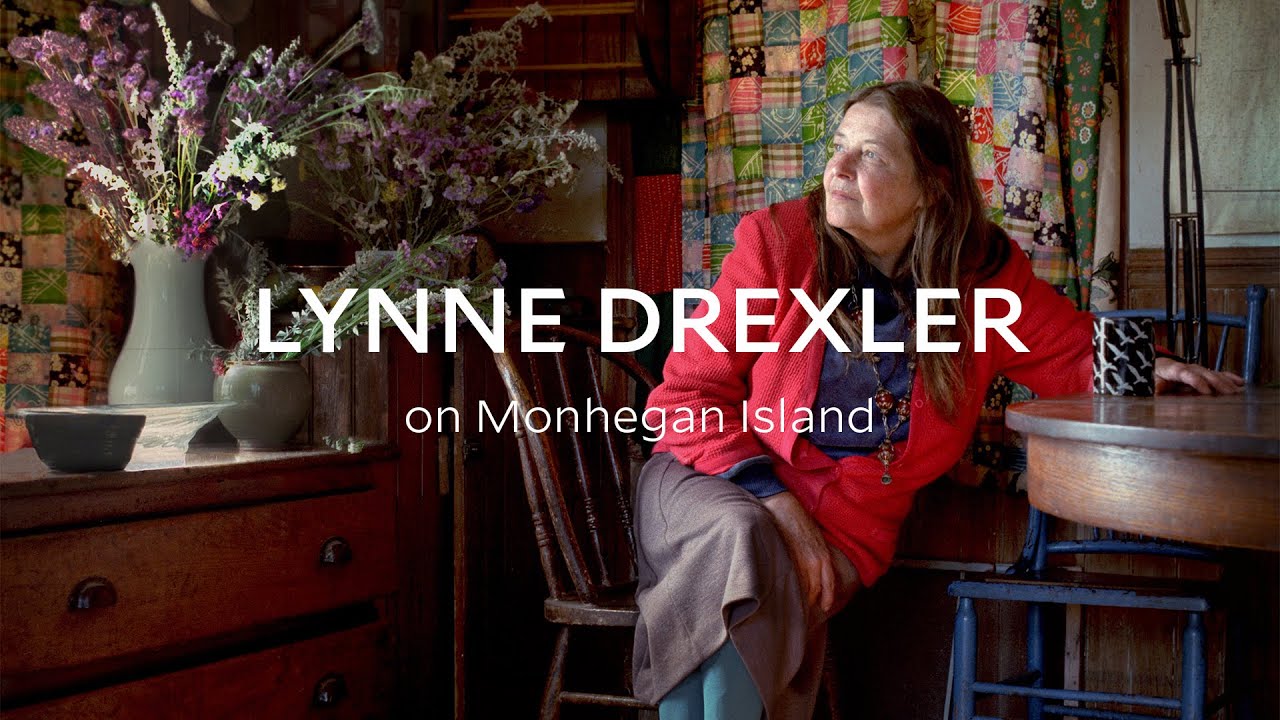
The isolation of Monhegan Island shaped her mature work. Rugged coastline. Dramatic light. Limited social contact.
Separation from the New York art world freed her from trend-chasing. She painted what she wanted.
Notable Works
Keller Fair II (1960)

Medium/Size: Oil on canvas, 57.5 x 56.25 inches
Current Location: Private collection
Visual Signature: Dense swatch-like marks in vibrant colors. All-over composition. Mosaic-like surface.
Why It Matters: Set auction record of $2,027,000 at Christie’s in November 2025. Represents peak of her early 1960s output.
Flowered Hundred (1962)

Medium/Size: Oil on canvas
Visual Signature: Pointillist techniques with botanical allusions. Echoes of Klimt’s Bauerngarten.
Why It Matters: Launched her market resurgence when it sold for $1.29 million at Christie’s in March 2022, far exceeding its $40,000-$60,000 estimate.
Herbert’s Garden (1960)

Medium/Size: Oil on canvas
Current Location: Private collection
Why It Matters: Set previous auction record at $1.5 million (Christie’s, May 2022). Demonstrates the mature style of her peak period.
Gotterdammerung (1959)

Medium/Size: Oil on canvas
Visual Signature: Mosaic-like intricacy. Rectangular forms with impasto layering and drips. Named after Wagner’s operatic sequence.
Why It Matters: Early example of her synthesis of musical inspiration and gestural abstraction.
Cismont (1962)

Medium/Size: Oil on canvas, 68 x 85.25 inches
Visual Signature: Large yellow mass at center. Squares of green, purple, and red at periphery. Complex spatial depth through warm and cool color coordination.
Why It Matters: Featured in the Farnsworth Art Museum’s “Color Notes” exhibition. Exemplifies her colorist mastery.
An Activated Land (1965)

Visual Signature: Mature synthesis of abstraction and landscape reference.
Why It Matters: Considered exemplary of her developed style from the mid-1960s.
Exhibitions, Collections, and Provenance
Key Solo Exhibitions

- 1961: Tanager Gallery, New York (first solo show, 11 works)
- 1965: Esther Robles Gallery, Los Angeles
- 1967: Nuuana Valley Gallery, Honolulu
- 1971-75: Alonzo Gallery, New York (multiple shows)
- 2003: Bates College Museum of Art, Lewiston, Maine
- 2008: Monhegan Museum and Portland Museum of Art (first comprehensive retrospective)
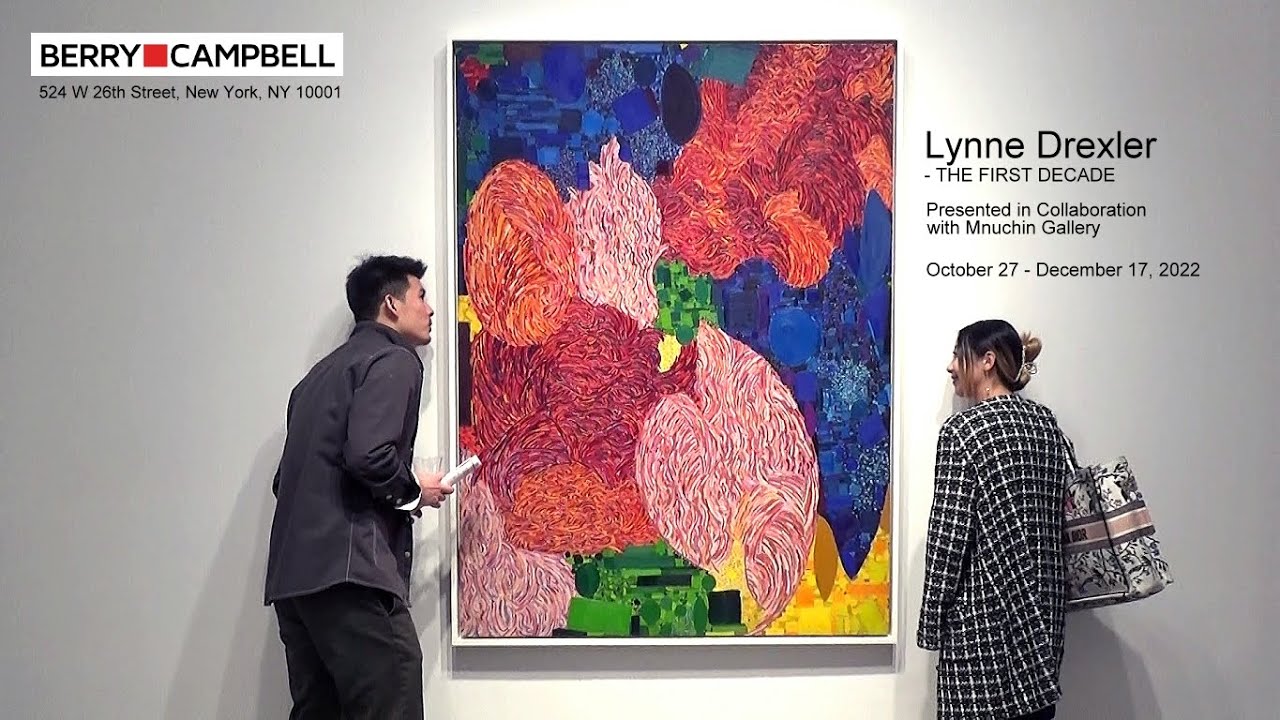
- 2022: “The First Decade” at Mnuchin Gallery and Berry Campbell, New York
- 2024: “Color Notes” at Farnsworth Art Museum, Maine
- 2024-25: White Cube, London and Hong Kong
Museum Collections
Major Holdings:
- Museum of Modern Art, New York
- National Gallery of Art, Washington, D.C.
- Art Institute of Chicago
- Brooklyn Museum
- Hammer Museum, Los Angeles
- Portland Museum of Art, Maine
- Farnsworth Art Museum, Maine
- Monhegan Museum, Maine
Provenance Patterns
Much work remained in her Monhegan Island home at death. The estate has controlled supply carefully.
White Cube represents the Drexler Archive internationally (since 2023). Berry Campbell represents the estate in the United States.
Works from the 1960s command premium prices. Later representational pieces trade at lower levels but are gaining interest.
Market and Reception
Auction History
Before 2020, no Drexler painting had sold for $10,000 at auction. She was unknown to most collectors.
In 2020, a 1966 painting fetched $26,000 at Barridoff Auction in Portland, Maine. Four times its estimate.
March 2022 changed everything. Flowered Hundred sold for $1.29 million at Christie’s. Estimate was $40,000-$60,000.
Two months later, Herbert’s Garden hit $1.5 million.
November 2025 brought the current record: Keller Fair II at $2,027,000.
Price Bands
Major 1960s canvases (large scale): $500,000 – $2,000,000+
Mid-size 1960s works: $75,000 – $500,000
Later representational paintings: $10,000 – $75,000
Works on paper: $5,000 – $30,000
Supply Constraints
Only 30-40 canvases exist at the scale of Keller Fair II. More than a quarter are in institutions.
The pipeline from the estate is limited. Demand exceeds supply for top-tier material.
Authentication
The Lynne Drexler Archive handles all authentication matters. The official website (lynnedrexler.com) is the source for licensing and sales verification.
Influence and Legacy
Upstream Influences
Henri Matisse: Chromatic priorities and Fauvist color relationships.
Hans Hofmann: Push-pull theory. Spatial construction through color temperature.
Robert Motherwell: Compositional rigor. Philosophical seriousness about artistic purpose.
Vincent van Gogh: Critics noted swirling vortices of color in works like A Blossom (1967).
Gustav Klimt: Pointillist techniques and botanical allusions echo Bauerngarten.
Downstream Impact
Drexler’s rediscovery has contributed to broader recognition of women in Abstract Expressionism.
Her market success created a template for how overlooked postwar female artists can be repositioned through strategic gallery representation and scholarly attention.
The Farnsworth Art Museum established the Lynne Drexler Acquisition Fund using proceeds from sold works. It supports acquisitions of work by women and artists of color.
Cross-Domain Echoes
John Legend and Chrissy Teigen displayed her work prominently in their New York apartment, featured in Architectural Digest.
Her approach to color fields finds contemporary parallels in artists like Matthew Wong.
How to Recognize a Lynne Drexler at a Glance
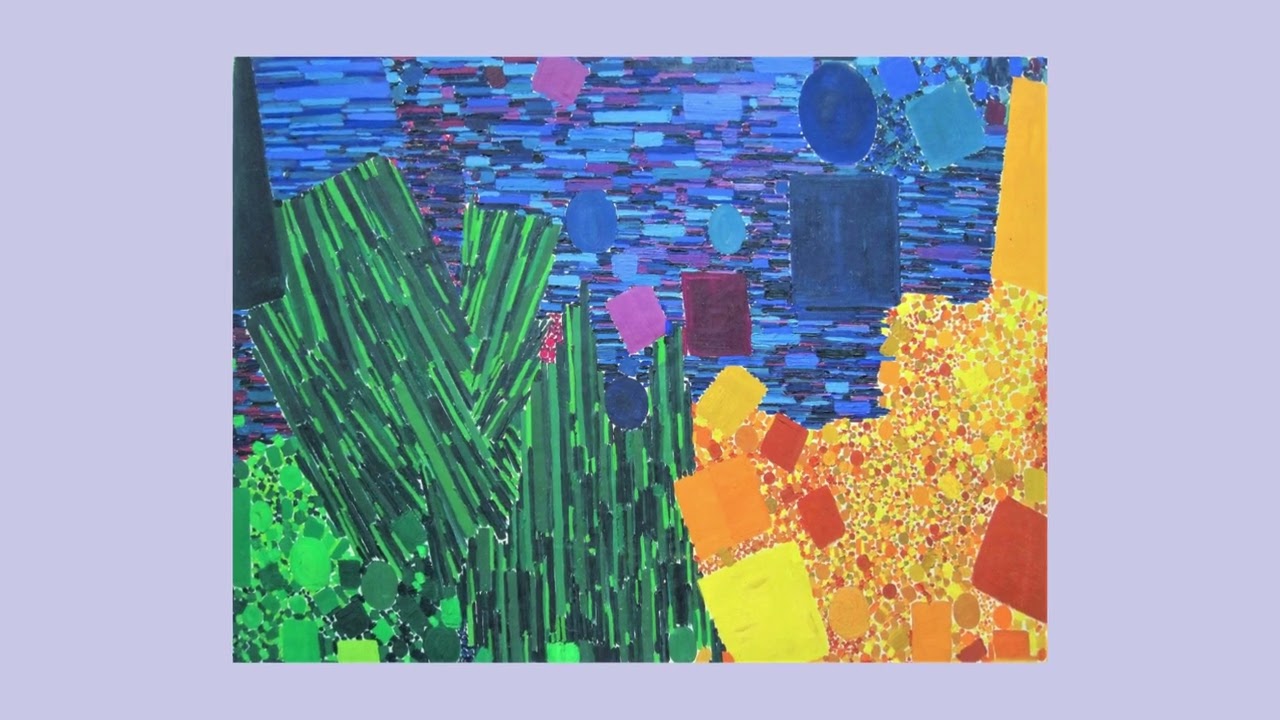
- Brushwork: Short, rectangular, swatch-like strokes in dense clusters
- Surface: Mosaic or tessellated appearance, visible individual marks
- Palette: High saturation, vivid colors, bold complementary pairings
- Composition: All-over distribution, no single focal point (in abstract works)
- Signature Placement: Often signed, titled, and dated on verso (reverse)
- Typical Canvas Sizes: Wide range from small (6 x 8 inches) to large (68 x 85 inches)
- Edge Quality: Soft transitions between color areas rather than hard lines
- Impasto: Present but controlled, especially in 1960s works
- Color Temperature: Deliberate warm/cool contrasts creating spatial depth
- Period Indicators: 1960s works more purely abstract; 1980s-90s works include representational elements (flowers, still life, coastal scenes)
Look for the woven quality. The surface should feel built up through accumulation rather than poured or splashed. If it looks like a chromatic patchwork quilt translated into paint, you might be looking at a Drexler.
FAQ on Lynne Drexler
Who Was Lynne Drexler?
Lynne Mapp Drexler (1928-1999) was an American painter born in Newport News, Virginia. She belonged to the second-generation Abstract Expressionist movement.
She spent her final years on Monhegan Island, Maine, painting daily until her death.
What Art Movement Was Lynne Drexler Part Of?
Drexler was a second-generation Abstract Expressionist. But her work also drew from Post-Impressionism and color field traditions.
She synthesized multiple painting styles into something uniquely her own.
What Is Lynne Drexler Known For?
Her signature style features tessellated brushstrokes in vivid colors. Swatch-like marks cluster across the canvas, creating mosaic-like surfaces.
She considered herself a colorist above all else.
Who Taught Lynne Drexler?
Drexler studied under Hans Hofmann, learning his “push and pull” theory of color contrast. She also trained with Robert Motherwell at Hunter College.
Both shaped her approach to abstraction and chromatic relationships.
Where Did Lynne Drexler Live and Work?
She divided her life between New York City and Maine. In 1983, she moved permanently to Monhegan Island.
The island’s rugged coastal landscape influenced her later representational work.
What Happened to Lynne Drexler’s Career?
Despite early success at Tanager Gallery in 1961, she was overlooked as trends shifted toward Pop Art. She continued painting in isolation on Monhegan.
Recognition came posthumously after her 2022 market resurgence.
How Much Are Lynne Drexler Paintings Worth?
Her auction record stands at $2,027,000 for Keller Fair II (Christie’s, 2025). Before 2020, none of her works sold for over $10,000.
Major 1960s canvases now trade between $500,000 and $2 million.
Where Can I See Lynne Drexler’s Work?
Her paintings are in major museum collections including MoMA, the National Gallery of Art, Art Institute of Chicago, and Portland Museum of Art.
White Cube and Berry Campbell galleries represent the Drexler Archive.
What Materials Did Lynne Drexler Use?
Drexler worked primarily with oil paint on canvas. She also made colored pencil drawings, lithographs at Tamarind Workshop, and textile works.
Her painting mediums evolved across her career.
Why Is Lynne Drexler Famous Now?
Her 2022 auction breakthrough at Christie’s sparked renewed interest. Gallery representation by White Cube and Berry Campbell brought scholarly attention.
She represents the broader rediscovery of overlooked women painters from the postwar era.
Conclusion
Lynne Drexler spent decades painting in obscurity on a remote Maine island. Now her chromatic canvases command millions at auction.
Her story matters beyond market numbers. It represents a broader correction in how we understand postwar American art and the female abstract painters who shaped it.
The tessellated brushwork remains instantly recognizable. The value shifts and color saturation still pulse with optical energy.
Drexler never stopped creating. That persistence, finally, is getting its due.