Malcolm T Liepke paints women the way most people remember significant moments: slightly blurred around the edges, emotionally precise at the center.
His oil paintings occupy the space between classical virtuosity and modern restraint. Born in Minneapolis in 1953, this contemporary American painter built his reputation on loose brushwork that somehow captures exactly what tight rendering misses.
You’ll find his work in the Smithsonian and Brooklyn Museum, but his real achievement lives in how he makes figurative art feel urgent rather than nostalgic. This article examines his technique, influences, and the particular visual language he developed by studying John Singer Sargent and Diego Velázquez in New York museums after abandoning art school.
We’ll look at his wet-on-wet painting process, the gray-green flesh tones that became his signature, and why his paintings sell out consistently despite operating outside mainstream contemporary art trends.
Identity Snapshot
Name: Malcolm T. Liepke
Born: 1953, Minneapolis, Minnesota
Primary role: Contemporary figurative painter
Nationality: American
Movements: Contemporary realism, figurative expressionism
Primary medium: Oil painting on Belgian linen
Signature traits: Wet-on-wet application, loaded brush technique, dusty gray-green flesh tones, gestural marks
Iconography: Women in interior spaces, intimate moments, glamorous bohemian settings, solitary figures
Geographic anchors: Born Minneapolis, trained Los Angeles (Art Center College of Design), worked New York, currently based Minneapolis
Key influences: John Singer Sargent, Diego Velázquez, Edgar Degas, Henri de Toulouse-Lautrec, James McNeill Whistler, Édouard Vuillard
Collections: Smithsonian Institution, Brooklyn Museum, National Academy of Design, Estate of Armand Hammer
Exhibition history: First solo show 1986 (Eleanor Ettinger Gallery), consistent sellout exhibitions since
Market position: Mid-career established painter, auction prices ranging $175-$15,000 USD, strong gallery representation (Arcadia Contemporary, Pontone Gallery)
What Sets The Artist Apart
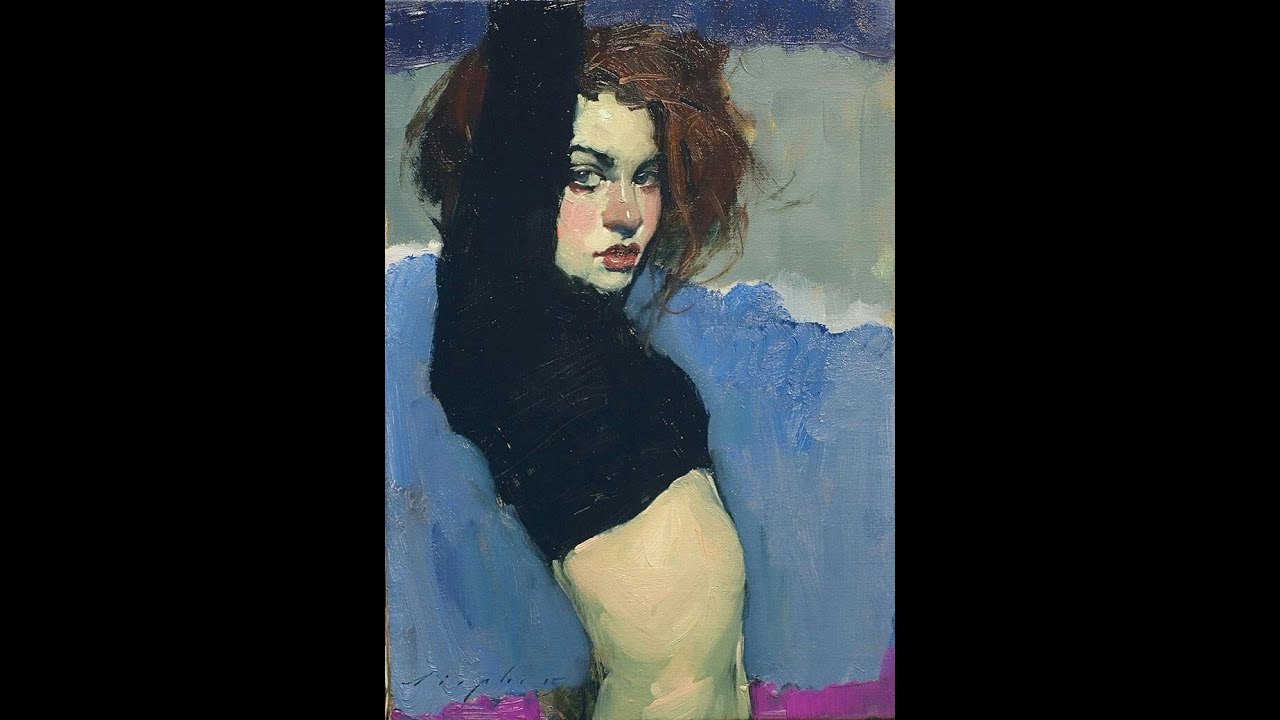
Liepke synthesizes 19th-century bravura with contemporary restraint.
His loaded brushwork carries Sargent’s velocity but lands softer. Where impressionism dissolved edges into atmosphere, Liepke keeps just enough structure to anchor flesh and fabric in recognizable space.
The palette does the heavy lifting: gray-violet undertones in skin, acidic secondary hues framing figures, muted tertiary grounds. This chromatic strategy pulls viewers into psychological territory rather than decorative pleasure.
He paints voyeuristic intimacy without prurience. Models rest, dress, gaze away, lost in private thought.
The technique itself is the subject as much as the sitter. Each stroke remains visible, purposeful, never noodled into smoothness.
Origins & Formation
Early Training
Liepke attended Art Center College of Design in Pasadena (1971-1973).
Dissatisfied with conceptual approaches dominating the curriculum, he left after eighteen months. The school pushed theory; he wanted traditional craft.
New York Self-Education (1973-1985)
Moved to New York and began systematic museum study.
Analyzed works at the Metropolitan Museum, Frick Collection, focusing on baroque and late 19th-century figurative painting. Studied chiaroscuro handling in Velázquez, sfumato transitions in Sargent, composition economy in Degas.
Commercial Illustration Period
Worked as illustrator for Time, Newsweek, Forbes, Fortune (1973-mid 1980s).
This period developed speed and decisiveness. Tight deadlines taught him to make every mark count, a discipline that carried into his fine art practice.
Career Pivot (1985)
Abandoned commercial work entirely in mid-1980s.
The constraint of editorial needs felt stifling. He wanted emotional authenticity over client-driven problem-solving.
First Success
Eleanor Ettinger Gallery, New York, 1986. Complete sellout.
This validation confirmed he could sustain a career on his own terms. Every subsequent solo exhibition has sold out.
Movement & Context
Contemporary Realism Position
Liepke emerged during the late 20th-century figurative resurgence.
While photorealism pursued optical exactitude and hyperrealism amplified detail beyond perception, Liepke moved toward expressive abbreviation. His paintings read as realistic from distance but dissolve into abstract gesture up close.
Comparative Analysis
Liepke vs. Sargent:
Both use wet-into-wet application and loaded brushes. Sargent’s edges are crisper; Liepke softens contours more consistently. Sargent worked larger, faster. Liepke maintains 20-30 paintings simultaneously, a different production rhythm.
Liepke vs. Degas:
Shared interest in private, unguarded moments. Degas used pastels for velvety surfaces; Liepke achieves similar atmospheric softness through oil painting glazes. Degas fragmented compositions asymmetrically; Liepke centers figures more conventionally.
Liepke vs. Lucian Freud:
Both explore flesh with tactile intensity. Freud built surface through thick impasto and cool scrutiny. Liepke uses thinner paint, warmer psychological distance. Freud’s subjects feel examined; Liepke’s feel observed but not violated.
Stylistic Relatives
Skip Kobayashi shares similar loose figuration and worked as illustrator at Forbes. Their paths parallel but diverge in palette temperature and subject matter.
Contemporary followers often copy surface mannerisms without the underlying structural discipline Liepke developed through years of museum study.
Materials, Techniques, and Process
Supports
Claessens Belgian linen exclusively.
Medium-weight, oil-primed surface. The texture allows paint to settle into tooth while maintaining smooth enough ground for fluid strokes.
Grounds
Works on commercially primed linen, occasionally adds additional ground layers when seeking warmer undertones.
Paint Application
Wet-on-wet technique (alla prima variation).
Builds paintings over multiple sessions but keeps surface workable. Uses medium mix (linseed oil, clove oil, poppyseed oil in equal parts) to maintain wet paint between sessions. This retarder prevents drying, allowing continuous manipulation.
Brushwork Taxonomy
- Loaded brush application: Paint applied generously, not scrubbed thin
- Directional strokes: Follow form planes, describe volume through stroke direction
- Selective edges: Hard edges at key focal points, soft transitions elsewhere
- Calligraphic marks: Quick gestural accents define clothing folds, hair strands
- Scumbling: Broken color dragged over dry passages in later stages
Palette Architecture
Dominant hues: Gray-violets, dusty greens, muted earth tones
Skin tones: Gray-green undertones, warm highlights, avoiding saturated pinks
Background strategy: Simplified, often single-hue fields or minimal value transitions
Color saturation: Generally low to mid-range, occasional saturated accent in fabric or props
Temperature bias: Cool to neutral, punctuated by warm flesh tones
Studio Practice
Maintains 20-30 paintings in progress simultaneously.
Blocking stage:
Creates thumbnail graphite sketch, explores composition variations. Blocks in full-spectrum color layout directly on canvas. This stage determines success or failure.
Development:
Returns to blocked-in works after days or weeks. Applies oil-clove-poppyseed medium glaze, reactivates surface. Refines flesh tones, hands, facial features. If painting resists, he sets it aside again.
Rotation system:
This multi-work approach prevents overworking individual pieces. Keeps brushwork fresh, avoids tight rendering.
Drawing Foundation
Works from combination of model photographs, thumbnail sketches, imagination.
Composition established through drawing before paint touches canvas. This prep work allows spontaneous execution without major revisions.
Mediums
Uses painting mediums to extend drying time rather than speed it. Standard mix slows cure rate, keeps paint workable across multiple sessions.
Themes, Subjects, and Iconography
Primary Motifs
Women as central subject:
Young to middle-aged models, often caucasian, occasionally male subjects appear. Emphasis on female psychology, private moments.
Interior spaces:
Bedrooms, studios, bars, dressing rooms. Artificial lighting implied. Urban bohemian environments.
Clothing states:
Partial dress, lingerie, towels, robes. Moments of transition between dressed and undressed.
Solitary introspection:
Figures lost in thought, adjusting clothing, resting, preparing. Rarely confrontational eye contact.
Couples:
Tender embraces, intimate proximity, mutual grooming. Physical closeness suggesting emotional vulnerability.
Compositional Schemes
- Centered single figure: Most common, figure occupies middle third
- Cropped intimacy: Tight framing, figure fills frame edge to edge
- Asymmetrical balance: Figure offset, balanced by tonal weight elsewhere
- Diagonal recession: Reclining figures creating depth through foreshortening
Symbol Sets
- Mirrors: Self-regard, vanity, identity examination
- Beds: Vulnerability, rest, private self
- Fabric: Veils, sheets, clothing as second skin
- Light sources: Windows, lamps establishing mood, rarely depicted directly
Socio-Historical Context
Work emerged during AIDS crisis, shifting attitudes toward sexuality, body, intimacy.
His paintings acknowledge sensuality without exploitation. The gaze feels empathetic rather than objectifying, unusual for male painter depicting female subjects.
Paintings reference Parisian demi-monde tradition (Degas, Lautrec) but transplant it to late 20th-century American urban life.
Notable Works
“Cat Nap” (1994)
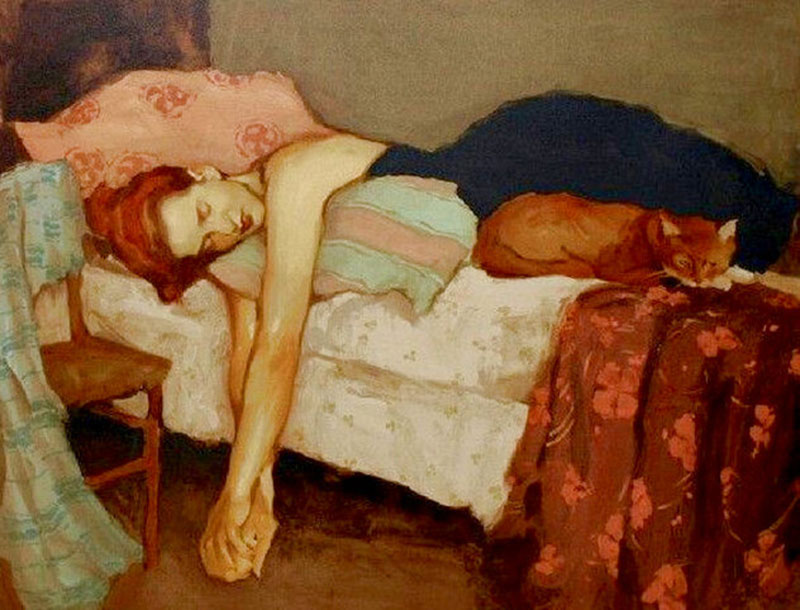
Medium: Oil on linen
Collection: Multiple prints exist, original in private collection
Visual signature: Figure in repose, soft edges throughout, warm ochre-gray ground
Significance: One of most reproduced images, exemplifies his approach to relaxed intimacy. Became signature work establishing his market presence.
“The Fitting” (various versions)

Medium: Oil on linen
Collection: Private collections, prints widely distributed
Visual signature: Two figures, one helping another dress, tender gesture
Significance: Demonstrates his interest in mutual care, non-sexual intimacy between women. Compositional economy: two figures, minimal setting, maximum emotional content.
“Girls’ Night” (date unknown)
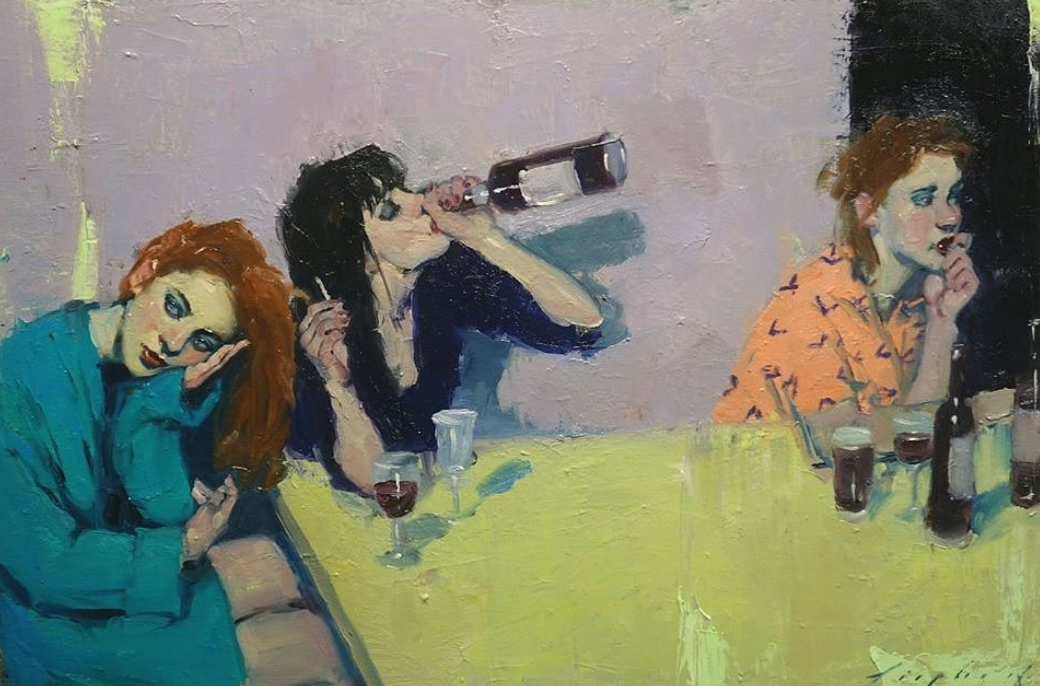
Medium: Oil on linen
Collection: Private
Visual signature: Group composition, multiple female figures in social setting
Significance: Inspired scholarly analysis and artistic dialogue by Telma Yelin School of Art faculty. Represents his ability to orchestrate multiple figures while maintaining compositional clarity.
“Head Study Brunette” (2002)

Medium: Oil, 12 x 8 inches
Collection: Private
Visual signature: Intimate scale, direct gaze, psychological intensity
Significance: Small format allows maximum spontaneity. Every brushstroke visible, nothing hidden.
“Beach Scene” (1980)

Medium: Oil, 22 x 28 inches
Collection: Private
Visual signature: Early work, shows more traditional rendering, less gestural freedom
Significance: Documents his stylistic evolution. Pre-mature style, before full development of signature approach.
“Passing the Time” (1992)
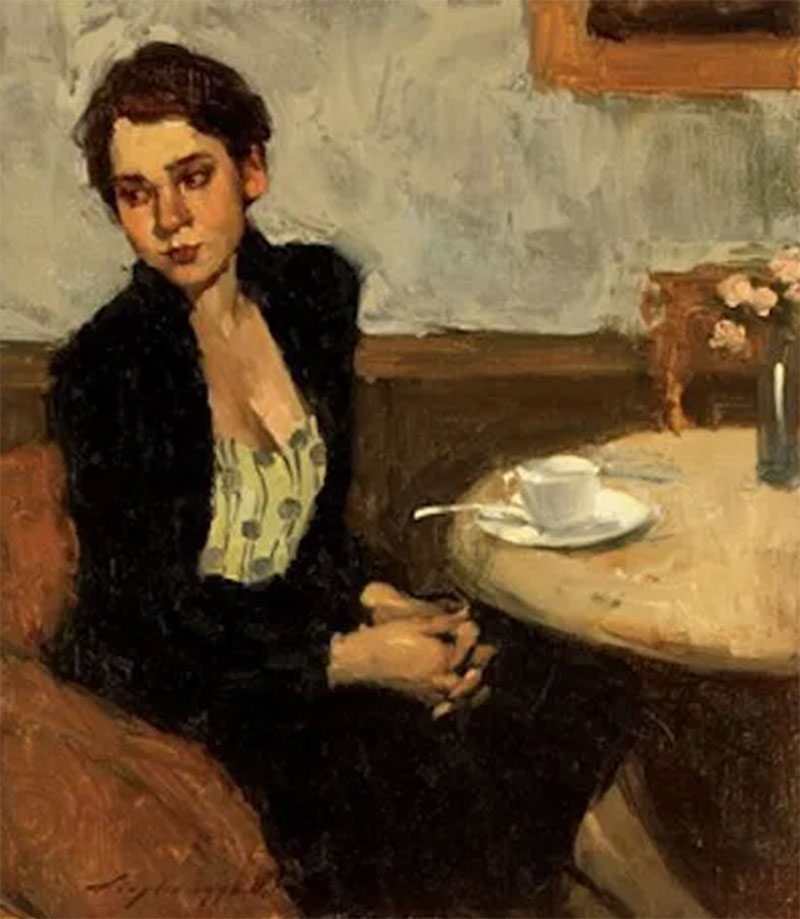
Medium: Oil, 16 x 14 inches
Collection: Private
Visual signature: Figure absorbed in activity, interior light
Significance: Mid-career work showing mature style emerging. Balance between description and abbreviation.
Exhibitions, Collections, and Provenance Highlights
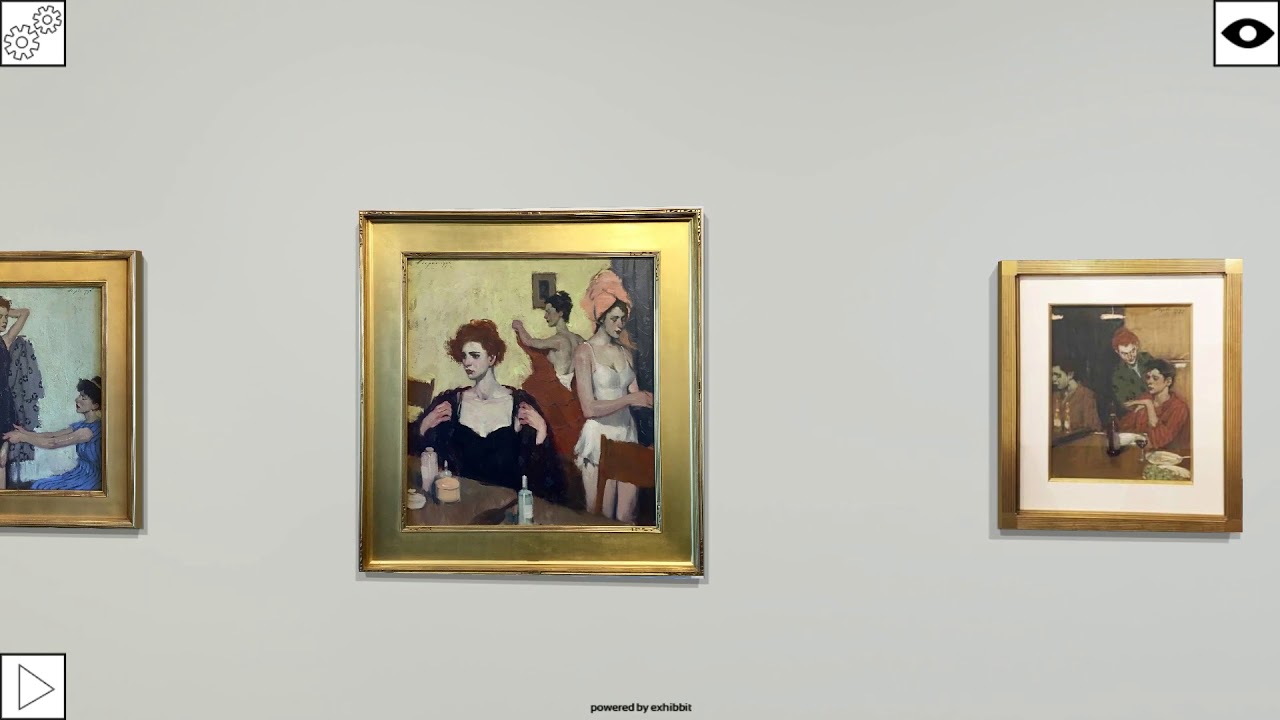
Museum Collections
- Smithsonian Institution, Washington, D.C. (multiple works)
- Brooklyn Museum, New York (permanent collection)
- National Academy of Design, New York
- Estate of Armand Hammer (significant holdings)
Gallery Representation
Primary galleries:
- Arcadia Contemporary, New York (ongoing since 1980s)
- Pontone Gallery, London (international representation)
- RUKAJ Gallery, Toronto
- Off The Wall Gallery, Houston
Exhibition History
1986: Eleanor Ettinger Gallery, New York (first solo, complete sellout)
1990s-2000s: Consistent annual exhibitions at Arcadia Contemporary, all sold out
2021: “Sideways Glance: Selected Works 2015-2021,” Pontone Gallery
2022: “Do You See Me?,” Pontone Gallery, London
2024: “The Twilight Salon,” Pontone Gallery
2024: “Turbulent Materiality,” group show, Pontone Gallery
Group Exhibitions
- Pastel Society of America
- American Watercolor Society
- National Arts Club, New York
- U.S. Artists “Re-Presenting Representation”
- International Fine Art and Antiques Fair
Provenance Patterns
Works typically sell through primary gallery representation.
Strong secondary market presence, though most collectors hold works rather than resell. Estate sales occasionally surface works from 1980s-1990s.
Authenticated by gallery records and artist signature (typically upper right or lower left).
Cataloguing
No formal catalogue raisonné published.
Retrospective book available through Arcadia Gallery documents major works through 2010s.
Market & Reception
Auction Records
Record price: $15,000 USD for “Drying Off” (Bill Hood & Sons, 2021)
Price range: $175-$15,000 USD depending on size, medium, date
Average recent sales: $3,150 USD (12-month average, paintings)
Price Bands by Format
- Small oils (8×10″ to 12×16″): $5,000-$8,000 retail
- Medium oils (16×20″ to 24×30″): $10,000-$20,000 retail
- Large oils (30×40″+): $20,000-$40,000 retail
- Lithographs: $1,000-$3,000 (editions of 90-275)
- Artist proofs: Premium over numbered editions
Authentication
Paintings signed upper right or lower left, typically with date.
Gallery provenance documentation standard. Eleanor Ettinger Gallery blind stamps appear on early lithographs.
Market Behavior
Consistent sellout exhibitions suggest demand exceeds supply.
Primary market remains strong through gallery relationships. Secondary market thin due to collector retention.
Critical Reception
Widely recognized within figurative painting revival movement.
Art publications featured his work: Time (as illustrator and subject), Newsweek, Artist’s Network magazine feature articles.
Academic interest: Teaching institutions reference his technique in oil painting instruction.
Collector Base
International reach: North America, Europe, Asia (Hong Kong sales documented).
Private collectors dominant; institutional acquisitions limited but prestigious.
Condition Considerations
Works from 1980s-1990s generally stable.
Standard oil painting conservation applies. Wet-on-wet technique creates mechanical stability through unified paint layer.
Monitor for varnish yellowing on older works, particularly those with light-colored grounds.
Influence & Legacy
Upstream Influences
John Singer Sargent: Direct technical lineage, wet-on-wet method, loaded brush confidence
Diego Velázquez: Painterly economy, psychological presence, neutral grounds
Edgar Degas: Private moments, women in interiors, compositional asymmetry
Henri de Toulouse-Lautrec: Bohemian subjects, nightlife settings, modern urban psychology
James McNeill Whistler: Tonal restraint, atmospheric unity, Japanese compositional influence
Édouard Vuillard: Interior intimacy, pattern-ground relationships, domestic psychology
Downstream Influence
Widely imitated by contemporary figurative painters.
His signature style (loose flesh tones, gestural backgrounds, intimate framing) appears in countless derivative works. The imitation sometimes borders on direct copying rather than genuine influence.
Teaching impact through published interviews and technique demonstrations in art magazines.
Students and emerging painters study his approach to spontaneous brushwork within structured composition.
Cross-Domain Echoes
Photography: Influence from editorial photography visible in cropping, lighting setups
Fashion illustration: His commercial background informs figure presentation, gesture
Contemporary portraiture: Younger figurative painters reference his balance between description and abstraction
Legacy Position
Key figure in late 20th/early 21st-century figurative painting revival.
Demonstrated that traditional oil painting technique could address contemporary subjects without nostalgia or pastiche.
Bridges classical training (self-acquired through museum study) with modern sensibility.
Market success proved commercial viability of serious figurative work during periods when conceptual art dominated institutional attention.
Stylistic Descendants
Direct followers often miss the structural discipline underlying his gestural freedom.
Successful students understand his work begins with solid drawing and compositional planning, allows looseness only after foundation established.
How to Recognize a Liepke at a Glance
Diagnostic checklist:
- Gray-green flesh tones with warm highlights, never saturated pink
- Loaded brushwork visible across entire surface, paint sits on canvas with body
- Soft edges dominate except at key focal points (eyes, hands)
- Muted palette overall, occasional saturated accent in clothing or background
- Single figure centered or slightly off-center, tight cropping
- Interior setting implied through minimal environmental detail
- Belgian linen support with visible weave contributing to surface texture
- Signature placement typically upper right or lower left, small and unobtrusive
- Scale range commonly 12×16″ to 30×40″, rarely larger than 60″
- Subject matter young women in private moments, occasional couples, rare male subjects
- Wet-on-wet technique evident in blended transitions, no visible dry-brush over lean underlayers
- Compositional simplicity few elements, maximum focus on figure and gesture
- Atmospheric unity all elements share similar paint quality and tonal range
- Painterly abbreviation detail suggested rather than rendered, viewer completes information
FAQ on Malcolm T Liepke
Who is Malcolm T Liepke?
Malcolm T Liepke is a contemporary American painter born in Minneapolis in 1953, known for figurative works featuring women in intimate interior settings.
He’s largely self-taught, having studied John Singer Sargent and Diego Velázquez at New York museums after leaving art school. His work appears in the Smithsonian Institution and Brooklyn Museum collections.
What painting technique does Malcolm Liepke use?
Liepke employs a wet-on-wet oil painting technique borrowed from Sargent and Velázquez.
He applies fresh paint into wet layers without drying between sessions, using a medium mix of linseed, clove, and poppyseed oils to extend workability. This approach maintains spontaneity and prevents overworking.
What is Malcolm Liepke’s signature style?
His signature includes loose brushwork, dusty gray-green flesh tones, and simplified backgrounds that focus attention on figures.
Liepke paints with loaded brushes, creating visible gestural marks that balance between realism and expressionism. Soft edges dominate except at critical focal points like eyes and hands.
Where can I see Malcolm Liepke’s paintings?
Liepke’s work is held in the Smithsonian Institution, Brooklyn Museum, and National Academy of Design.
He’s represented by Arcadia Contemporary in New York and Pontone Gallery in London. His exhibitions consistently sell out, making gallery shows the primary viewing opportunity for new works.
What subjects does Malcolm Liepke paint?
He primarily paints women in private moments: dressing, resting, or lost in thought within interior spaces.
His subjects occupy bedrooms, studios, and bohemian settings with glamorous yet introspective atmospheres. Occasional couples appear, exploring themes of intimacy and vulnerability through composition and gesture.
How much do Malcolm Liepke paintings cost?
Small oils (8×10″ to 12×16″) typically sell for $5,000-$8,000, while medium works (16×20″ to 24×30″) range $10,000-$20,000.
Large paintings over 30×40″ can reach $20,000-$40,000. His auction record stands at $15,000, though most works sell through primary galleries rather than secondary markets.
What art movement is Malcolm Liepke associated with?
Liepke belongs to the contemporary figurative painting revival that emerged in the late 20th century.
While related to realism, his work incorporates expressive brushwork and psychological depth that distinguishes it from photorealism or strict academic approaches.
What materials does Malcolm Liepke use?
He paints exclusively on Claessens Belgian linen using oil paints with extended drying mediums.
His palette favors gray-violets, dusty greens, and muted earth tones. He maintains 20-30 paintings simultaneously, working on primed linen that provides ideal texture for gestural application.
Who influenced Malcolm Liepke’s painting style?
John Singer Sargent and Diego Velázquez provided his primary technical influences, particularly their wet-on-wet methods.
Edgar Degas, Henri de Toulouse-Lautrec, and James McNeill Whistler shaped his approach to intimate subjects and atmospheric color relationships.
How can I identify a Malcolm Liepke painting?
Look for gray-green flesh tones, loaded brushwork with visible strokes, and soft edges throughout except at key details.
His paintings feature centered or slightly offset single figures in simplified interiors. Works are typically signed upper right or lower left on Belgian linen with muted overall color harmony.
Conclusion
Malcolm T Liepke proves that contemporary figurative painting can hold attention without relying on conceptual scaffolding or nostalgic pastiche.
His wet-on-wet technique creates surfaces that feel alive rather than finished. The gray-violet skin tones and gestural marks function as visual language, not just painting style choices.
What separates his work from countless imitators is structural discipline hidden beneath apparent looseness. Every brushstroke carries intention developed through decades of museum study and commercial illustration deadlines.
His consistent sellout exhibitions suggest collectors respond to emotional authenticity rather than technical showmanship. The paintings capture psychological states that tight rendering would destroy.
This balance between classical training and modern restraint positions him as a bridge figure. He connects 19th-century bravura with 21st-century introspection through color theory and compositional economy.