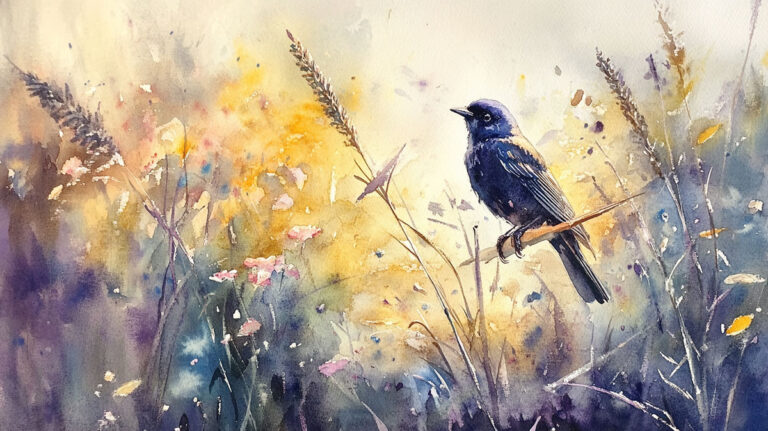
Most watercolor painters lose their highlights the moment a wash touches the paper. That one mistake flattens an entire painting.
The masking technique in watercolor painting solves this directly. It protects specific areas of the paper from paint, so whites and light values stay clean no matter how freely you work.
From liquid frisket and masking tape to wax resist, each method serves a different purpose. This article covers what masking is, how each agent works, how to apply and remove it without damaging your paper, and where it fits alongside techniques like lifting and reserving whites.
By the end, you will know exactly when to use masking and when to skip it.
What Is Masking in Watercolor Painting

Masking in watercolor painting is the process of protecting specific areas of paper from paint so they stay white or retain an earlier color underneath new washes.
Unlike oil painting or acrylic painting, watercolor has no opaque white that covers effectively. Light areas must be planned before the brush ever touches the paper. Masking solves that problem directly.
The principle is simple. Apply a resist agent to the paper, paint freely over it, let everything dry, then remove the resist to reveal clean, untouched paper beneath. The protected areas stay bright while the rest of the painting builds up in transparent layers.
According to ARTgrID, the masking technique has been in use since the early 20th century, when artists began experimenting with materials to protect paper surfaces during complex compositions.
Today, the global watercolor paint market is valued at $3.14 billion (MRFR, 2024), reflecting how seriously this medium is taken worldwide. Masking remains one of its most practiced techniques, used across botanical illustration, wildlife work, architectural watercolor, and loose expressive painting.
The technique belongs to a broader family of watercolor painting techniques that rely on planning ahead. Masking is not a fix for mistakes. It is a deliberate choice made at the start.
Why Masking Matters in Watercolor
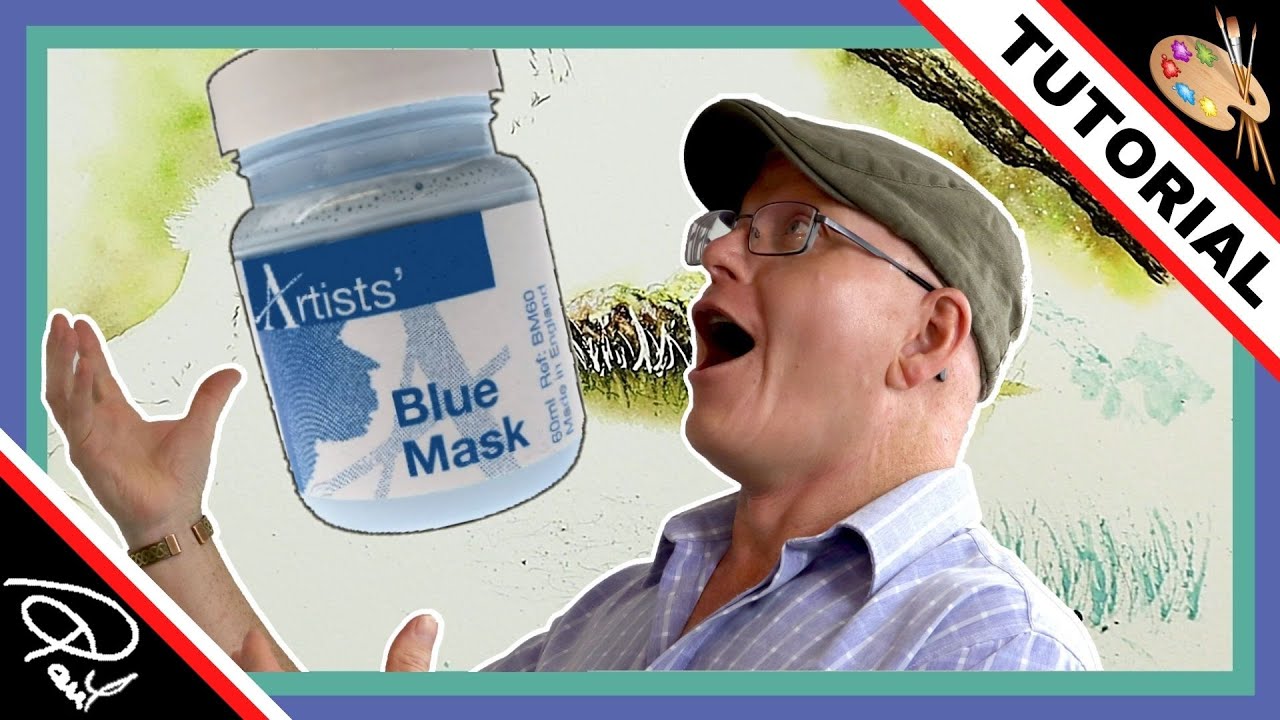
Watercolor is transparent. That one fact changes everything about how you work.
You cannot paint a bright white star over a dark blue sky. You cannot recover a clean highlight once it has been covered by a wash. Value and luminosity in watercolor come from the paper itself, not from white paint.
Masking lets you apply broad, fluid washes with confidence. Without it, painting a loose wet-on-wet sky around twenty individual white flower petals is, at best, extremely stressful and, at worst, impossible.
Where masking makes the biggest difference:
- Fine highlights in water, glass, and metal
- Delicate white subjects against dark backgrounds (flowers, birds, snowflakes)
- Botanical illustration where vein detail must survive multiple washes
- Architectural work with precise light reflections on windows and facades
Contemporary watercolorist Thomas W. Schaller, known for atmospheric architectural landscapes, uses masking specifically to preserve reflected light on building surfaces while applying loose, expressive washes around them. Bev Jozwiak applies the same logic to animal portraits, masking bright fur highlights before building up rich background darks.
The bottom line: masking shifts your focus from careful avoidance to confident painting. That shift alone changes the quality of brushwork in the rest of the piece.
Types of Masking Agents
Not all masking works the same way. The right agent depends on the edge quality you need, the scale of the area, and whether the effect should be permanent or removable.
| Masking Agent | Best For | Removable? | Edge Quality |
|---|---|---|---|
| Masking Fluid | Fine details (whiskers, sea foam), complex organic shapes, and preserving white focal points. | Yes: Rubs off easily with a finger or eraser once the paint is bone-dry. | Crisp & Hard: Produces a “cut-out” look with absolute pigment blocking. |
| Masking Tape | Straight horizons, architectural borders, and geometric design elements. | Yes: Peels away to reveal the untouched paper underneath. | Sharp & Straight: Perfect for technical illustrations and clean margins. |
| Wax Resist | Highlighting the “peaks” of paper texture, sparkling water, and rustic surfaces. | No: It is permanent; the wax bonds with the fibers and repels all future washes. | Soft & Broken: Creates “sparkle” where the wax skips across the paper’s tooth. |
| Plastic Wrap / Salt | Atmospheric backgrounds, icy textures, and organic “fractal” patterns. | Partial: Salt is brushed away; plastic wrap is lifted once dry. | Organic: Unpredictable, mottled edges that mimic natural minerals or frost. |
Masking Fluid

Liquid frisket is the most commonly used masking agent in professional watercolor work. It is a rubber-based latex liquid that dries to a thin, rubbery film on the paper surface.
Major brands include Winsor and Newton Art Masking Fluid, Pebeo Drawing Gum, Daniel Smith Masking Fluid, and Royal Talens Masking Fluid. Each handles slightly differently in terms of drying time, tack, and removal behavior.
Applied with an old brush, a ruling pen, a colour shaper, or a masking fluid pen, it covers areas ranging from broad shapes to lines thinner than a millimeter. Jackson’s Art notes that masking fluid “allows you to keep very fine highlights, even when placed among the most fluid and bold brush marks.”
Masking Tape
Masking tape handles straight-edged protection well. Landscapes with clean horizon lines, architectural paintings with window frames, and geometric compositions benefit from it.
Use low-tack tape only. Standard painter’s tape works on 100% cotton paper at 140 lb (300 gsm) or heavier. Never use it on wood pulp student-grade paper. The fibers will tear on removal, which brings us to the paper section below.
Wax Resist
A white candle or wax crayon applied to dry paper before painting creates a resist that paint cannot penetrate. Unlike masking fluid, wax resist is permanent. It cannot be removed after the fact.
The result is a soft, broken-edge texture rather than a crisp line. This works particularly well for suggesting light on water, rough stone, or sparkling snow, where organic irregularity is exactly what you want.
How to Apply Masking Fluid
The application process is straightforward. Getting it wrong, though, can wreck a brush or tear paper. Took me a while to stop making the obvious mistakes.
Before you start:
- Paper must be completely dry
- Stir the fluid gently, never shake (shaking creates air bubbles)
- Coat your brush bristles with liquid soap first to prevent permanent clogging
Application tools by task:
- Old brush: broad shapes and loose areas
- Ruling pen: fine lines and controlled curves
- Colour shaper: medium shapes with some control
- Masking fluid pen: extremely fine detail work
Apply in smooth, deliberate strokes. Thin layers dry faster and remove more cleanly than thick ones. Daniel Smith specifically notes that their applicator tips should not be shaken because air bubbles transfer directly to fine lines, creating breaks in the mask.
Wait until the masking fluid is fully dry before painting over it. This usually takes 10 to 20 minutes depending on humidity and layer thickness. Painting over wet masking fluid mixes it into the wash and creates a mess that cannot be fixed.
How to Remove Masking and What Happens After
Removal is where things either go right or go very wrong.
The paper must be completely dry before you touch the masking fluid. Not “mostly dry.” Completely dry. Removing masking from damp paper almost always causes surface tearing, especially on lighter-weight or lower-quality papers.
Removal methods:
- Rub gently with a clean finger in a rolling motion
- Use a rubber cement pick-up eraser for larger areas
- A soft kneaded eraser works on smaller sections
What you see after removal depends entirely on how well the paper was protected. On 100% cotton paper like Arches or Fabriano Artistico, the revealed area is clean, bright white with a crisp edge. The contrast between that preserved white and the painted wash around it is one of the most satisfying moments in watercolor.
The edges after removal will be sharp and hard. Sometimes that is exactly what you want. Other times, especially for soft highlights like skin or atmospheric skies, you will want to soften them with a damp brush after removal. That is a normal part of the process, not a flaw.
One timing rule that matters: do not leave masking fluid on paper for more than a few days. The latex bonds more tightly to the paper surface over time. Left for a week or more, it can become nearly impossible to remove cleanly, or it tears the paper on removal regardless of paper quality.
Common Mistakes When Using Masking

Most problems with masking fluid come down to rushing. Every single mistake I have seen (and made) traces back to impatience at some point in the process.
The most damaging mistakes:
- Applying to wet paper: The fluid soaks into the surface instead of sitting on top. Removal tears fibers.
- Skipping the soap step: One application without soap can permanently destroy a good brush. The latex bonds to bristles as it dries.
- Painting over it too soon: Wet masking fluid mixes with the wash. Wait for full dryness.
- Leaving it on too long: The latex bonds permanently. A few hours is fine. Several days is risky. A week is often catastrophic.
- Applying too thick a layer: Takes longer to dry, harder to remove cleanly, and increases the chance of paper damage.
There is also a subtler mistake worth mentioning: over-relying on masking instead of learning to reserve whites deliberately. Masking fluid is a tool, not a substitute for planning. Artists who use it well treat it as one option among several, not a default solution for every light area.
Watercolorist Fia Sutton, writing about her early experience, describes leaving masking fluid on a painting for nearly a week, then finding it impossible to remove cleanly. The paper was damaged. That lesson sticks.
Masking vs. Lifting and Reserving Whites

Three techniques protect light areas in watercolor. They are not interchangeable.
Key difference: masking protects paper before painting, lifting recovers light areas after painting, and reserving whites means painting around shapes deliberately from the start.
| Technique | When Applied | Edge Quality | Best For |
|---|---|---|---|
| Masking Fluid | Before any wash: Applied to bone-dry paper to lock in the white. | Hard & Crisp: Produces high-contrast, “cut-out” edges with zero bleed. | Complex silhouettes, fine whiskers, splashing water, and intricate jewelry highlights. |
| Lifting | During or After: Performed while paint is wet or by re-wetting dry pigment. | Soft & Gradual: Creates diffused transitions and “ghostly” highlights. | Atmospheric clouds, rays of sun, soft reflections, and fixing minor “over-painting” errors. |
| Reserving Whites | Throughout: A continuous mental focus on painting around the light. | Variable/Controlled: Can be hard or soft depending on the brush moisture. | Maintaining maximum paper luminosity, large focal highlights, and professional “pure” aesthetics. |
Masking fluid will almost always produce a hard edge, as CreativeLive instructor Molly Murrah notes, even when the surrounding area looks soft and blended.
Lifting depends entirely on the staining properties of the pigments used. Non-staining pigments like Cobalt Blue lift cleanly. Staining pigments like Phthalo Blue bond permanently to the paper surface, meaning lifting removes very little.
Reserving whites requires the most skill but leaves the most flexibility. Botanical illustrators like Lizzie Harper of the Natural History Museum use this approach for complex leaf and petal work, reserving tight vein details with careful brushwork rather than masking, to keep transitions softer and more natural.
When masking is the right call: when the protected area is too small or complex to paint around cleanly, when you need a locked-in crisp edge, or when the wash you are applying is so fluid and fast that careful avoidance is not practical.
When lifting works better: when the highlight area is large and soft, or when the paper is cotton and the pigment is non-staining. Lifting on Arches is noticeably more effective than on Saunders Waterford, according to Jennifer Branch’s published paper comparison.
Papers and Surfaces That Work With Masking
Paper choice is the single biggest factor in whether masking fluid leaves clean results or destroys the surface on removal.
100% cotton papers handle masking reliably. Wood pulp and cellulose-blend papers often do not. According to professional watercolor instructor Lorraine Watry, masking tape and masking fluid will tear the surface of student-grade wood pulp papers on removal, while Arches 100% cotton handles “a lot of abuse, taping, masking, and scrubbing without issue.”
Cotton Papers
Recommended options for masking fluid use:
- Arches 140 lb cold press, the most widely tested for masking durability
- Fabriano Artistico, softer surface, good for layered masking sessions
- Saunders Waterford, slightly gentler sizing than Arches, still performs well
Minimum recommended weight is 140 lb (300 gsm). Lighter weights buckle under wet washes and can tear when masking fluid is removed, even on cotton.
Cold Press vs. Hot Press
Cold press paper has a textured surface that grips masking fluid evenly and gives it more surface area to bond to.
Hot press is smoother and produces finer line detail when masking with a ruling pen or masking fluid pen. However, paint lifts more easily from hot press, which can be an advantage or a problem depending on whether that is intentional.
For botanical illustration specifically, Lizzie Harper notes that Fabriano hot press works well for precise vein detail, but requires care during masking removal to avoid surface damage on areas with multiple paint layers.
Papers to Avoid
Wood pulp and cellulose papers: surface tears on masking removal, sizing is inconsistent, and the paper fibers are weaker.
Handmade and unsized papers are also problematic. According to Watercolor Academy’s paper research, unsized papers allow masking fluid to soak into the surface rather than sitting on top, making clean removal almost impossible.
Masking in Specific Watercolor Techniques

Masking does not work the same way in every approach. How it fits into a painting depends entirely on which technique drives the rest of the work.
Wet-on-Wet Backgrounds with Masked Subjects
This is the most common application. Mask a foreground subject, then apply a loose wet-on-wet technique wash across the whole sheet without worrying about edges.
The masked area stays clean while the background develops freely. Remove the mask after everything dries.
The raised texture of dried masking fluid can disturb wet-on-wet applications nearby, as Russell Collection notes in its masking guide. Use confident single strokes near masked edges rather than back-and-forth scrubbing motions.
Layered Glazing with Multi-Stage Masking

Glazing builds depth through transparent layers, and masking can protect different value levels at each stage.
How multi-stage masking works:
- Mask the lightest areas first (pure paper white)
- Apply the first glaze wash and let it dry fully
- Add a second round of masking over the mid-value areas
- Apply the darker wash over everything
- Remove all masking to reveal three distinct value levels
Artists Network describes this as the only practical way to apply background washes evenly across complex still life compositions without painting around every individual object.
Texture Masking in Foliage, Water, and Skies
Masking fluid applied with a toothbrush, fan brush, or flicked with a palette knife creates splattered texture effects that represent sparkling water, backlit foliage, or starfields.
This is a different use than area protection. Here the goal is texture and pattern, not clean edge preservation. The result after removal is a field of bright dots or broken marks against a painted ground.
Winslow Homer used similar resist approaches in his watercolor seascapes to suggest foam and wave spray, working the technique into paintings that are still studied at institutions like the Metropolitan Museum of Art.
Masking in Loose Expressive Painting vs. Detailed Illustration
These two contexts have almost opposite relationships with masking.
Detailed illustration (botanical, wildlife, architectural): masking is planned precisely, applied with fine tools, and used to lock in specific highlights that must survive multiple wash layers.
Loose expressive painting: masking is often applied more freely, sometimes even randomly, to create energy and unpredictability. The goal is not precision but contrast. Removing the mask reveals surprises that the artist then responds to.
The fine art watercolor paints market was valued at $3.67 billion in 2024 (Proficient Market Insights), growing at 6.9% annually, with professional and hobbyist artists driving demand for better materials across both approaches. That split between detailed work and expressive work maps closely to how most watercolor supply brands position their masking fluid products.
FAQ on What Is Masking Technique In Watercolor Painting
What is the masking technique in watercolor painting?
Masking is a watercolor resist method that protects specific paper areas from paint. You apply a masking agent before painting, work freely over it, then remove it to reveal clean, untouched paper beneath. It preserves white highlights and light values through multiple washes.
What is masking fluid made of?
Masking fluid, also called liquid frisket, is a rubber-based latex liquid. Brands like Winsor and Newton Art Masking Fluid and Pebeo Drawing Gum use a latex base with a light pigment added so the fluid stays visible on white paper during application.
How do you apply masking fluid without ruining your brush?
Coat brush bristles with liquid soap before dipping into masking fluid. The soap creates a barrier that stops latex bonding to the bristles. Rinse immediately after use. Most professional watercolorists keep dedicated old brushes specifically for masking fluid application.
When should you remove masking fluid?
Remove it only when the paper is completely dry, not just the paint surface. Removing masking from damp paper tears the fibers, even on cotton paper. Do not leave masking fluid on paper longer than a few days, as the latex bonds permanently over time.
What watercolor paper works best with masking fluid?
Use 100% cotton paper at minimum 140 lb (300 gsm). Arches, Fabriano Artistico, and Saunders Waterford all handle masking reliably. Wood pulp and student-grade cellulose papers tear on removal. Unsized or handmade papers are also unsuitable as the latex soaks into the surface.
What is the difference between masking fluid and wax resist?
Masking fluid is removable and produces crisp, hard edges. Wax resist is permanent and creates soft, broken-edge texture instead. Candle wax or wax crayon cannot be removed after application, so the effect stays in the finished painting regardless of intent.
Can you use masking fluid over dried watercolor paint?
Yes. Applying masking fluid over a dried wash, then painting another layer on top, is called multi-stage masking. It locks in mid-value areas across layering sessions. Each masked stage must dry fully before the next wash goes down. This builds multiple distinct value levels in one painting.
What tools can you use to apply masking fluid?
Options include an old brush, a ruling pen, a colour shaper, or a dedicated masking fluid pen. Each gives different line quality. A ruling pen produces the finest consistent lines. A colour shaper handles medium shapes. A toothbrush flicked with fluid creates splattered texture effects across backgrounds.
Is masking fluid the same as reserving whites?
No. Reserving whites means painting around light areas deliberately with no product applied. Masking fluid physically blocks paint from reaching the paper. Reserving requires more brush control but produces softer, more natural edges. Masking is more forgiving and works better for complex or very small shapes.
How does masking fit into the broader range of watercolor techniques?
Masking works alongside dry brush, flat wash, and graduated wash as part of a complete watercolor toolkit. It handles highlight preservation while other techniques manage color, texture, and edge quality. Used together, they give full control over the full range of color and value in a painting.
Conclusion
This conclusion is for an article presenting the masking technique in watercolor painting as a practical, planned approach to preserving paper white through washes, glazing layers, and wet-on-wet applications.
Choosing the right masking agent matters. Liquid frisket handles fine detail and complex shapes. Masking tape covers straight edges. Wax resist creates permanent texture.
Paper quality determines whether the whole process works. Stick to 100% cotton at 140 lb minimum. Arches and Fabriano Artistico consistently perform best.
Apply to dry paper, protect your brushes with soap, and remove the mask only when the surface is fully dry. Timing controls everything.
Used well, watercolor masking shifts how freely you paint. Broader washes, looser brushwork, and cleaner highlights become genuinely easier to achieve.