Wolf Kahn was a German-born American painter known for his luminous landscape paintings that merged Color Field abstraction with representational imagery. His canvases pulse with saturated hues, neon oranges butting against magentas, acid yellows bleeding into thalo blues.
Active from the early 1950s through 2020, Kahn produced thousands of works in oil and pastel. He studied under Hans Hofmann and became part of the Second Generation New York School. His paintings hang in over 80 museum collections worldwide.
The guy pushed color to what he called “the danger point.” Too sweet or too harsh. Too noisy or too quiet. That edge defined his seven-decade career.
Identity Snapshot
- Full Name: Wolf Kahn
- Lifespan: October 4, 1927 – March 15, 2020
- Primary Roles: Painter, Pastelist, Printmaker
- Nationality: German-American
- Movements: Second Generation Abstract Expressionism, Color Field Painting, American Landscape Tradition
- Mediums: Oil on canvas, pastel on paper, screenprint, monotype
- Signature Traits: High-chroma saturated hues, scrubbed brushwork, soft edge control, horizontal banding
- Recurring Motifs: Weathered barns, tree lines, Vermont meadows, rivers, seasonal foliage
- Geographic Anchors: Stuttgart (birthplace), New York City (primary studio), West Brattleboro, Vermont (summer farm)
- Key Teacher: Hans Hofmann
- Spouse: Emily Mason (painter, married 1957-2019)
- Major Collections: Metropolitan Museum of Art, MoMA, Whitney Museum, Smithsonian American Art Museum, Museum of Fine Arts Boston, Hirshhorn Museum
- Auction Record: $298,950 (Pink Light on the Sea, Bonhams 2024)
What Sets Wolf Kahn Apart
Kahn refused to choose between abstraction and representation. He wanted both.
His landscapes sit in this tricky space where you recognize barns and tree lines, but the color operates on its own terms. Purple mountains. Orange skies. Green that glows like it has a light source behind the canvas.
Where Mark Rothko dissolved form into floating rectangles, Kahn anchored his color blocks to actual places. The barn is real. The magenta surrounding it is not.
Most landscape painters in the 1960s either went full abstraction or stayed loyal to observed color. Kahn split the difference. He kept the structure of the New England countryside but cranked the chromatic dial past anything nature would produce.
Critics in the 1960s called his work “candy confections.” He kept painting anyway.

Origins and Formation
Early Life and Escape
Born in Stuttgart, Germany in 1927. His father conducted the Stuttgart Philharmonic until the Nazis removed him in 1933.
Wolf was sent to live with his grandmother Anna in Frankfurt at age three. He fled Germany in 1938 via the Kindertransport, spending time in England before reuniting with his family in New York in 1940.
Artistic Training
Graduated from the High School of Music and Art in New York, 1945. Served briefly in the U.S. Navy.
Studied painting under Stuart Davis at the New School. Then came the defining relationship: Hans Hofmann’s school of fine art. Kahn became Hofmann’s studio assistant in Provincetown, Massachusetts by summer 1947.
Hofmann’s color theories stuck. The idea of “push and pull” between warm and cool, the positioning of unequal but equivalent oppositions. Kahn absorbed it all.
Academic Work
Completed a B.A. at the University of Chicago’s Hutchins Program in just eight months (1950-1951). Studied philosophy, became interested in Kant while sketching sailboats on Lake Michigan.
First Exhibitions
Co-founded the Hansa Gallery cooperative with fellow Hofmann students in 1952. Had his first solo exhibition there in 1953.
Joined Grace Borgenicht Gallery in 1956. Stayed with them for 29 solo shows until the gallery closed in 1995.
His painting “In the Harbor of Provincetown” was acquired by MoMA in 1957.
Movement and Context
Second Generation New York School

Kahn came up among artists designated the Second Generation New York School, a term from Meyer Shapiro’s 1957 Jewish Museum exhibition.
These younger painters dared to include figuration when pure abstraction dominated. Kahn took it further. He committed to landscape painting while his peers chased non-objective work.
Comparative Position
Against Milton Avery: Both used simplified forms and high-keyed color. But Avery flattened space more completely. Kahn retained atmospheric depth through tonal gradation.
Against Richard Diebenkorn: Both bridged abstraction and landscape. Diebenkorn used harder edges and more geometric division. Kahn’s edges stay soft, blurred, breathing.
Against Georgia O’Keeffe: Both became synonymous with specific American landscapes. O’Keeffe’s New Mexico, Kahn’s Vermont. O’Keeffe sharpened and clarified. Kahn diffused and intensified.
The Vermont Connection
Purchased a hillside farm in West Brattleboro, Vermont with wife Emily Mason in 1968. The couple spent every summer there for the rest of their lives.
Vermont became his studio. He painted the same barns, meadows, and tree lines across decades, watching them change with seasons and light.
Materials, Techniques, and Process
Supports and Grounds
Primarily worked on stretched linen and cotton canvas for oils. Used various papers for pastels, favoring surfaces with enough tooth to hold multiple layers of pigment.
Standard canvas sizes ranged from intimate 24 x 26 inch pieces to large-scale works reaching 52 x 72 inches.
Painting Method
Called his technique “scrubbing.” Dry, quick strokes laid over thinly layered veils of color. He essentially transferred his pastel touch to oil painting.
Used paint straight from the tube. Referred to his palette as a “warehouse” for colors, mixing on the canvas rather than blending beforehand. This defied conventional wisdom about layering paint properly.
The Pastel Practice
Worked outdoors with a campstool and pastel set. Created field sketches that informed larger studio paintings.
He called pastel “dust on butterfly wings.” The medium allowed immediacy and rich color saturation that fed back into his oil technique.
Palette Characteristics
High-chroma, synthetic hues dominated his mature work. Acid yellow, hazard orange, saturated thalo blue, electric magenta.
Early career work was more tonal and subdued. By the late 1960s, he pushed toward increasingly brash chromatic combinations.
Temperature bias ran warm. Even cool passages carry underlying warmth through adjacent color interaction.
Studio Practice
Maintained a loft studio at 813 Broadway near Union Square from 1951 to 1995. Worked 10-14 hours daily well into his eighties.
Paintings begun in Vermont during summer were transported to New York for reconsideration and finishing.
Themes, Subjects, and Iconography
Recurring Motifs
Barns: Weathered Vermont structures anchored many compositions. The barn became a geometric foil against organic landscape elements.
Tree Lines: Vertical stands of trees created natural grids. He used them to structure compositions and divide color zones.
Meadows: Horizontal bands of pasture created the “sweeping bands of color” that connected his work to Color Field painting.
Rivers: The Connecticut River and other waterways provided reflective surfaces and sinuous lines through otherwise geometric arrangements.
Compositional Schemes
Horizontal banding dominated. Sky, treeline, meadow, foreground stacked in parallel strips.
The horizon line posed problems he worked on constantly. How do you connect empty air and heavy earth without creating arbitrary division?
He solved it through color. The same hue family might appear in both sky and ground, creating chromatic unity across spatial zones.
Seasonal Focus
Autumn foliage provided natural justification for intense color. But he painted all seasons, forcing summer greens and winter grays to carry equal chromatic weight.
Psychological Content
Deliberately avoided psychological interpretation. Said he concentrated on factors other than emotional content because overthinking damaged the work.
“Nature and the artist’s feelings are merely raw materials.”
Notable Works
Pink Light on the Sea (1999)

- Medium: Oil on canvas
- Current Record: Sold for $298,950 at Bonhams, May 2024
- Significance: Current auction record, demonstrates late-career chromatic confidence
Atlantic Highlands (1960)

- Medium: Oil on canvas
- Previous Record: Sold for $212,500 at Christie’s, November 2021
- Significance: Important early work showing transition from tonal to high-chroma approach
In the Harbor of Provincetown (1956)

- Collection: Museum of Modern Art, New York
- Significance: First museum acquisition, included in MoMA’s 1957 Recent American Acquisitions exhibition
The Evening Glow

- Collection: University of Rochester
- Visual Signature: Exemplifies atmospheric light handling
My Barn on a Summer Night

- Collection: Hirshhorn Museum, Washington D.C.
- Significance: Key barn painting in major museum collection
Pond in November

- Collection: National Academy of Design
- Significance: Demonstrates seasonal observation and tonal control
Exhibitions, Collections, and Provenance
Key Solo Exhibitions
First solo show at Hansa Gallery, 1953. Twenty-nine solo exhibitions at Grace Borgenicht Gallery (1956-1995).
“Young America 1960: Thirty Painters Under Thirty-Six” at the Whitney Museum marked institutional recognition.
Major retrospective surveys at San Diego Museum of Art (1983, 1987), Munson-Williams-Proctor Institute (1982), and traveling exhibitions throughout the 1980s.
Museum Collections (Partial List)
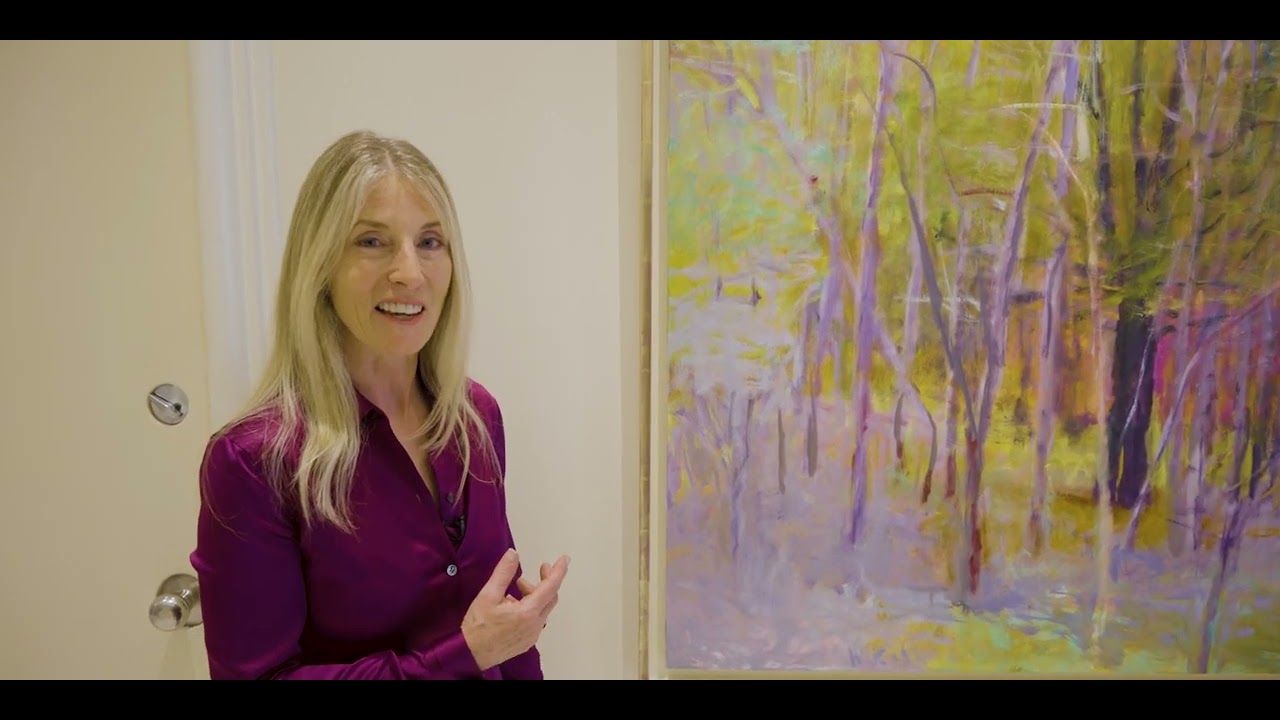
Metropolitan Museum of Art, New York. Museum of Modern Art, New York. Whitney Museum of American Art. Smithsonian American Art Museum. Museum of Fine Arts, Boston. Los Angeles County Museum of Art. National Gallery of Art, Washington D.C. Hirshhorn Museum and Sculpture Garden.
Over 80 public collections hold his work.
Gallery Representation
Grace Borgenicht Gallery (1956-1995). Ameringer McEnery Yohe, later Miles McEnery Gallery (final two decades).
The Wolf Kahn Foundation is now exclusively represented by Miles McEnery Gallery.
Publications
“Wolf Kahn Pastels” (1995) with introduction by Barbara Novak. “Wolf Kahn’s America: An Artist’s Travels” (2003) with John Updike. “Wolf Kahn: Paintings and Pastels, 2010-2020” (Rizzoli, final lifetime publication).
Market and Reception
Auction Performance
Prices range from under $100 for small prints to nearly $300,000 for significant oils.
Record: $298,950 for “Pink Light on the Sea” (1999) at Bonhams, May 2024. This beat the previous record by 40%.
Previous record: $212,500 for “Atlantic Highlands” (1960) at Christie’s, November 2021.
Over 1,400 works have appeared at auction since 1998.
Price Bands
Large oils (52+ inches): $50,000-$150,000 typical range. Pastels: $5,000-$30,000 depending on size and period. Prints and monotypes: $1,000-$10,000.
Critical Reception
Fairfield Porter called him one of the best landscapists working in America during the 1950s.
Some critics in the 1960s-70s grew uncomfortable with the synthetic hues, calling his work “candy confections.” The popular market disagreed.
His wife Emily Mason marketed his work on commercial notecards and calendars. This broad accessibility drew some art world skepticism but built devoted collector base.
Authentication
The Wolf Kahn Foundation maintains records and assists with authentication. Signature typically appears lower left or right, “W Kahn” or “Wolf Kahn.”
Influence and Legacy
Upstream Influences
Hans Hofmann transmitted Color Field theory and the principle of “push and pull” between color temperatures.
Henri Matisse provided the license for arbitrary, expressive color divorced from observation.
Mark Rothko demonstrated how bands of color could carry emotional weight and create atmospheric space.
J.M.W. Turner showed atmospheric dissolution of form through light.
Pierre Bonnard offered a model for domestic intimacy and saturated palette within representational structure.
Downstream Impact
Influenced generations of American landscape painters toward more chromatic freedom.
His teaching at University of California Berkeley (1960), the National Academy of Design, and workshops throughout his career shaped younger artists.
The “Wolf Kahn look” became recognizable enough to spawn imitation and influence across commercial landscape painting.
Institutional Recognition
Fulbright Scholarship. John Simon Guggenheim Fellowship. Award in Art from the American Academy of Arts and Letters. U.S. Department of State’s International Medal of Arts (2017). National Academy of Design Lifetime Achievement Award. Vermont Arts Council medal for Outstanding Achievement.
The Foundation
The Wolf Kahn Foundation continues his legacy through grants and support for cultural institutions. In 2022, the foundation awarded $800,000 to six cultural institutions honoring the joint legacy of Kahn and Emily Mason.
How to Recognize a Wolf Kahn at a Glance

- Color Temperature: Improbable combinations. Orange against magenta. Purple trees. Yellow that borders on neon.
- Saturation Level: High-chroma, fully saturated hues dominate mature work. Colors appear to glow.
- Edge Quality: Soft, blurred transitions between forms. No hard outlines. Edges breathe.
- Horizontal Banding: Sky, treeline, meadow, foreground in parallel strips. The composition stacks.
- Subject Matter: Vermont barns, tree lines, meadows, rivers. New England pastoral reduced to essential geometry.
- Brushwork: Scrubbed, dry strokes visible in oil work. Quick, gestural marks in pastel.
- Canvas Size: Common formats include 52 x 52, 52 x 60, 52 x 72 inches for major oils. Smaller pastels around 9 x 12 to 22 x 30 inches.
- Signature Placement: Lower left or right corner, “W Kahn” in paint or pastel.
- Atmospheric Effect: Light seems to emanate from within the canvas rather than falling on subjects.
- Seasonal Cues: Autumn foliage frequent but all seasons represented with equal chromatic intensity.
The quick test: if the landscape feels observed but the colors feel invented, and there is a barn somewhere in Vermont, you are probably looking at a Wolf Kahn.
FAQ on Wolf Kahn
What is Wolf Kahn known for?
Wolf Kahn is known for luminous landscape paintings that combine abstract Color Field techniques with representational imagery. His Vermont barns, tree lines, and meadows glow with saturated, high-chroma colors that push beyond observed reality.
What style did Wolf Kahn paint in?
Kahn blended Color Field painting with American landscape tradition. He studied under Hans Hofmann and absorbed expressionism principles. His mature work hovers between abstraction and figuration, using intense color to describe atmospheric effects in nature.
Where did Wolf Kahn live and work?
Kahn maintained studios in New York City and West Brattleboro, Vermont. He kept a loft at 813 Broadway until 1995. Summers were spent on his Vermont hillside farm, painting the New England landscapes that defined his career.
Who taught Wolf Kahn?
Hans Hofmann was Kahn’s primary teacher. Kahn studied at Hofmann’s school and became his studio assistant in Provincetown by 1947. Hofmann’s color theory and “push-pull” concepts shaped Kahn’s approach to chromatic relationships.
What medium did Wolf Kahn work in?
Kahn worked primarily in oil on canvas and pastel on paper. He also produced screenprints and monotypes. His pastel technique directly influenced his oil painting method, which he called “scrubbing.”
How much are Wolf Kahn paintings worth?
Wolf Kahn paintings range from $5,000 for small pastels to nearly $300,000 for major oils. His auction record is $298,950 for “Pink Light on the Sea” (1999). Large canvases typically sell between $50,000 and $150,000.
Where can I see Wolf Kahn paintings?
Over 80 museums hold his work. Major collections include the Metropolitan Museum of Art, MoMA, Whitney Museum, Smithsonian American Art Museum, and Museum of Fine Arts Boston. Miles McEnery Gallery represents the Wolf Kahn Foundation.
When did Wolf Kahn die?
Wolf Kahn died on March 15, 2020, in New York City. He was 92. His wife Emily Mason had died three months earlier. Kahn continued painting daily well into his final years, producing confident late works.
Was Wolf Kahn married to another artist?
Yes. Kahn married painter Emily Mason in 1957. They met at The Artists’ Club in New York. Their 62-year marriage produced two daughters. Both maintained separate studios, she painting abstract works while he pursued landscapes.
What colors did Wolf Kahn use?
Kahn used high-chroma, saturated hues. Acid yellow, hazard orange, thalo blue, electric magenta. He pushed color contrast to what he called “the danger point,” where combinations risked becoming too sweet or too harsh.
Conclusion
Wolf Kahn carved out a singular position in 20th century American art. He refused the either-or choice between abstraction and landscape painting.
His pastel paintings and oil canvases transformed Vermont barns and meadows into fields of chromatic harmony. The luminous colors still attract art collectors decades later.
Museum collections worldwide hold his work. His artistic legacy continues through the Wolf Kahn Foundation and gallery exhibitions that introduce new audiences to his vibrant vision.
Few American painters made color feel so alive.