
Your brush selection determines whether your oil painting vision becomes reality or falls frustratingly short. Poor brushes create muddy colors, lost details, and endless painting struggles.
Finding the best brushes for oil painting transforms your artistic experience from fighting your tools to expressing pure creativity.
Quality brushes load paint smoothly, maintain their shape, and respond predictably to every stroke.
This guide examines brush types, bristle materials, and professional recommendations across all budgets.
You’ll discover which brushes suit different painting techniques and how to build a collection that grows with your skills.
Whether you’re starting your first painting or upgrading worn studio tools, these insights help you choose brushes that enhance rather than hinder your artistic vision.
Bristle Types and Their Properties

Natural Bristle Options
Hog Bristle: The Oil Painter’s Workhorse
Hog bristle dominates professional oil painting for good reason. These stiff bristles come from domestic pigs and handle thick paint like champions.
The rough texture grabs paint effectively. You get excellent paint pickup and controlled release with every stroke.
Hog bristles maintain their shape after months of heavy use. They bounce back from aggressive paint application that would destroy softer alternatives.
Sable Brushes: Premium Precision Tools
Sable hair creates the smoothest paint application possible. These brushes come from Russian and Chinese sables, offering unmatched softness.
Kolinsky sable represents the gold standard. The fine tip holds its point through detailed work sessions.
Red sable costs less but still delivers exceptional performance. Many professional artists prefer these for detailed passages and final touches.
Mongoose and Exotic Hair Options
Mongoose hair bridges the gap between hog and sable. These bristles offer moderate stiffness with excellent paint control.
Badger hair works well for blending large areas. The soft texture creates seamless color transitions without visible brush marks.
Ox hair provides another affordable natural option. It handles medium-consistency paint applications effectively.
Synthetic Bristle Alternatives
Modern Synthetic Materials
Synthetic bristles have revolutionized affordable brush options. Today’s materials rival natural hair performance in many applications.
Taklon leads synthetic brush technology. These golden synthetic fibers hold their shape and maintain consistent performance.
Nylon blends offer durability at budget prices. They resist paint buildup and clean easily with soap and water.
Performance Comparison with Natural Bristles
Synthetic options excel in paint release consistency. They don’t absorb paint oils like natural hair does.
Natural bristles still win for heavy paint loading. Hog bristle carries more paint per stroke than any synthetic alternative.
Durability favors synthetic materials. They resist damage from aggressive cleaning and maintain their original shape longer.
Maintenance Advantages
Cleaning synthetic brushes takes minimal effort. Regular soap removes paint residue completely.
They resist bacterial growth that can affect natural hair. Storage becomes simpler without conditioning requirements.
Cost replacement makes experimentation affordable. You can try different synthetic types without major investment.
Bristle Stiffness and Flexibility
Firm Bristles for Thick Paint Application
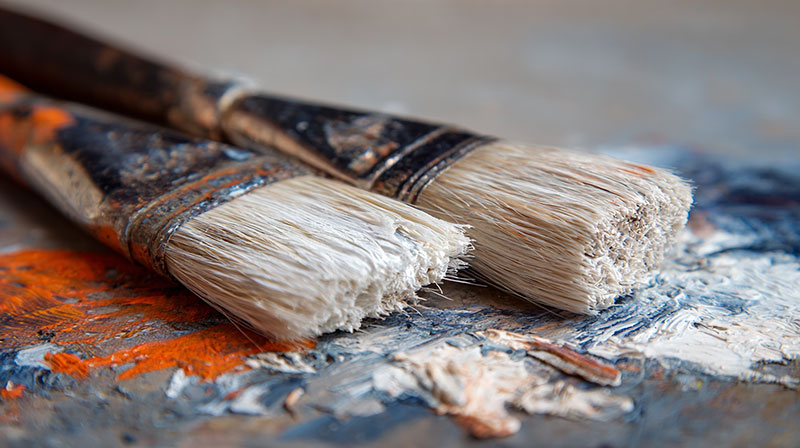
Stiff bristles push heavy paint around the canvas effectively. They create bold, confident strokes with visible texture.
Hog bristle excels at impasto techniques. The firm action loads and deposits thick paint layers without struggle.
Firm synthetic alternatives work well for structured painting approaches. They maintain consistent pressure throughout long painting sessions.
Soft Bristles for Blending
Soft bristles create seamless color transitions. They blend wet paint without leaving harsh edges or brush marks.
Sable brushes excel at glazing techniques. The gentle action preserves underlying paint layers while adding transparent color.
Fan brushes with soft bristles create subtle atmospheric effects. They scatter paint particles for cloud and foliage textures.
Medium Flexibility Options
Mongoose and badger hair provide balanced performance. They handle both bold strokes and delicate blending work.
Mixed synthetic blends offer versatility in single brushes. You get controlled paint application with smoothing capabilities.
These medium-stiffness options work well for general painting tasks. They adapt to different paint consistencies without specialized technique requirements.
Brush Shapes and Their Applications

Flat Brushes
Standard Flat Brush Applications
Flat brushes deliver paint in broad, controlled strokes. The wide ferrule holds substantial paint quantities for efficient coverage.
They excel at blocking in large color areas quickly. Background work becomes systematic and professional-looking.
The straight edge creates clean lines when used sideways. You can establish horizon lines and architectural elements precisely.
Bright Brushes for Controlled Strokes
Bright brushes feature shorter bristles than standard flats. This creates stiffer action and more controlled paint placement.
The compact shape maintains precision in detailed work. You get flat brush coverage with round brush control.
They work perfectly for small-scale geometric elements. Building details and texture patterns becomes more manageable.
Angular Flats for Precise Edges
Angular flat brushes feature angled bristle cuts. The pointed corner reaches into tight spaces while the wide side covers larger areas.
These brushes excel at architectural painting. Window frames, doorways, and structural elements become easier to render.
The angled edge creates natural shadow lines. You can suggest form and dimension with single brush strokes.
Round Brushes
Pointed Rounds for Detail Work
Round brushes offer the most versatile paint application. The pointed tip handles fine details while the full brush covers broader areas.
Size 2 and smaller rounds work perfectly for facial features. Eyes, lips, and small design elements require this level of precision.
Larger rounds (sizes 8-12) handle medium-scale work effectively. They maintain good paint capacity while preserving detail capability.
Filbert Shapes for Blending
Filbert brushes combine flat and round characteristics. The oval shape creates natural, organic brush marks.
They excel at portrait work and figure painting. The shape naturally follows facial contours and body forms.
Blending becomes effortless with filbert brushes. The soft edges eliminate harsh transitions between color areas.
Round Wash Brushes for Large Areas
Large round brushes handle broad paint applications. Sizes 14 and above cover substantial canvas areas efficiently.
They work perfectly for sky painting and background washes. The round shape creates natural, flowing paint application.
Mop-style round brushes hold exceptional paint quantities. They maintain wet working time for extended blending sessions.
Specialty Brush Shapes
Fan Brushes for Texture Effects
Fan brushes create unique textural effects impossible with other shapes. The spread bristles produce broken, natural-looking marks.
They excel at painting foliage and grass textures. Quick dabbing motions create convincing vegetation without tedious detail work.
Dry brush techniques with fans produce weathered and aged effects. You can suggest rust, bark, and worn surfaces effectively.
Liner Brushes for Fine Details
Liner brushes feature extra-long, thin bristles. They hold substantial paint while maintaining precise line control.
Ship rigging, telephone wires, and hair strands become manageable. The long bristles flex naturally for smooth, continuous lines.
They work exceptionally well for signature placement. The controlled paint flow creates professional-looking text elements.
Alternative Application Tools
Palette knives expand beyond traditional brush work. They scrape, spread, and texture paint in ways brushes cannot achieve.
Sponges create unique textural effects through dabbing and stippling. Natural sea sponges produce organic, irregular patterns.
Texture combs and sculpting tools add dimensional elements. They scrape through wet paint to reveal underlying colors and create surface interest.
Paper towels and cloth rags become essential blending tools. They lift paint, soften edges, and create atmospheric effects through subtractive techniques.
Size Selection and Brush Sets

Understanding Brush Sizing Systems
Number Sizing Standards
Brush sizes follow standardized numbering systems across manufacturers. Sizes typically range from 000 (smallest) to 24 (largest) for most brush types.
Round brushes use consistent sizing measurements. A size 6 round maintains similar dimensions whether from Winsor & Newton or Princeton.
Flat brushes measure width in both numbered sizes and fractional inches. Professional artists often prefer the precision of fractional measurements.
Size Variation Between Manufacturers
Different brands interpret sizing slightly differently. A size 8 flat from Da Vinci might measure 10mm while Rosemary & Co measures 12mm.
Professional-grade brushes tend toward consistent sizing standards. Student-grade options show more variation between manufacturers.
Always check actual measurements when precision matters. Catalog specifications prevent sizing surprises in critical projects.
Canvas Scale Considerations
Large canvases demand proportionally larger brushes. Working 24×36 inches requires different tools than 8×10 inch studies.
Detail work remains consistent regardless of canvas size. Facial features need size 2 rounds whether on small or large portraits.
Background areas scale with canvas dimensions. Size 12 flats work perfectly for 16×20 inch skies but feel inadequate on 30×40 inch landscapes.
Building a Starter Collection
Must-Have Sizes for Beginners
Essential round brushes include sizes 2, 6, and 10. These three handle most detail, medium, and broad applications effectively.
Critical flat brushes are sizes 4, 8, and 12. They cover blocking, detail work, and medium-area applications comprehensively.
Add one size 1 liner for fine details. Signatures, rigging, and precise elements become manageable with this specialized tool.
Gradual Collection Expansion
Start with core sizes and add based on actual painting needs. Real experience reveals which additional sizes benefit your specific style.
Size 14 and 16 flats handle large background areas efficiently. They reduce painting time on substantial canvas sections.
Smaller rounds (000, 00, 0) become necessary for extremely detailed work. Miniature painting and photorealistic details require these precision tools.
Avoiding Unnecessary Duplicates
Focus on different shapes rather than multiple sizes of identical brushes. One good size 8 flat serves better than three mediocre ones.
Quality over quantity applies especially to starter collections. Five excellent brushes outperform fifteen poor ones consistently.
Skip pre-made sets initially and build custom collections. Your painting style determines which sizes actually get regular use.
Pre-Made Sets vs Individual Purchases
Set Advantages and Limitations
Brush sets offer cost savings and convenient packaging. They provide multiple sizes at reduced per-brush pricing.
Sets often include sizes you’ll rarely use. The savings diminish when half the brushes remain unused.
Quality consistency varies within sets. Manufacturers sometimes include lower-grade brushes to meet price points.
Quality Consistency in Sets
Premium brands maintain quality standards across all set brushes. Winsor & Newton Series 7 sets deliver consistent excellence.
Student-grade sets show more quality variation. Some brushes perform well while others disappoint from the same package.
Test individual brushes before committing to large sets. One poor brush can indicate overall quality issues.
Custom Collection Building
Individual purchases allow precise selection for your specific needs. You choose exactly the sizes and shapes that match your painting style.
Build collections gradually over time. This approach spreads costs and ensures each addition serves a real purpose.
Replace worn brushes individually rather than buying complete new sets. Targeted replacement maintains your preferred tool mix.
Top Brush Brands and Models

Professional-Grade Manufacturers
Winsor & Newton Series Comparison
Winsor & Newton dominates professional brush markets worldwide. Their Series 7 watercolor rounds work excellently for oil painting detail work.
Series 7 brushes feature pure Kolinsky sable construction. The fine points and paint capacity make them ideal for portrait details and precision work.
Winton brushes offer synthetic alternatives at lower costs. They maintain consistent quality while providing budget-friendly options for students.
Da Vinci Quality and Options
Da Vinci brushes combine traditional craftsmanship with modern materials. Their Maestro series delivers exceptional performance in both natural and synthetic options.
Maestro brushes feature hand-shaped tips and careful bristle selection. The attention to detail shows in paint handling and longevity.
Top Acryl synthetic brushes rival natural hair performance. They maintain sharp points while offering easy cleaning and durability.
Rosemary & Co Handmade Excellence
Rosemary & Co creates handmade brushes in traditional British workshops. Each brush receives individual attention during construction.
Pure sable and hog bristle options maintain old-world quality standards. The brushes perform like tools from previous centuries while meeting modern needs.
Custom brush creation allows personalized specifications. Artists can order unique sizes and shapes for specialized techniques.
Mid-Range Quality Options
Princeton Brush Series
Princeton brushes deliver reliable performance at accessible prices. Their Catalyst series provides synthetic options that handle oil paint effectively.
Neptune synthetic brushes offer excellent paint capacity and control. The proprietary fiber blend creates natural feel with synthetic durability.
Real Value brushes target budget-conscious artists without sacrificing essential performance. They provide solid tools for learning and experimentation.
Royal & Langnickel Selections
Royal & Langnickel offers extensive brush lines for different skill levels. Their Zen series provides premium synthetic options for serious artists.
Majestic brushes combine natural and synthetic materials effectively. The hybrid construction balances performance with cost considerations.
Student-grade options provide reasonable quality for educational settings. They survive beginner mistakes while teaching proper brush handling.
Blick House Brand Alternatives
Blick Studio brushes provide house-brand quality at competitive prices. They offer consistent performance across their entire range.
Master brushes target professional applications with premium materials. The quality rivals brand-name options at reduced costs.
Economy lines serve classroom and practice needs effectively. They provide functional tools without premium pricing.
Budget-Friendly Student Choices
Dick Blick Student Options
Student brushes from Blick serve learning needs without major investment. They handle basic techniques while students develop skills.
The brushes survive typical beginner mistakes and aggressive use. Durability becomes important when learning proper brush care techniques.
Variety packs allow experimentation with different shapes and sizes. Students discover preferences without committing to expensive individual brushes.
Liquitex Basics Line
Liquitex Basics brushes provide synthetic options for mixed-media exploration. They work adequately with oils while excelling with acrylic painting applications.
The affordable pricing encourages experimentation with color mixing and technique development. Students can practice without worrying about brush costs.
Consistent quality across the line eliminates performance surprises. Each brush delivers predictable results for systematic learning.
Generic Brands That Perform
Unbranded brushes from art supply stores often surprise with decent performance. Hardware store brushes sometimes work well for specific techniques.
Chip brushes excel at textural effects and experimental work. Their low cost makes them disposable for messy applications.
Natural bristle house-painting brushes create interesting effects in large-scale work. They load substantial paint quantities for bold, expressive strokes.
Brand Performance Comparison
Longevity Testing Results
Professional brushes typically last years with proper care. Kolinsky sable maintains its point through hundreds of painting sessions.
Synthetic brushes show consistent performance over time. They resist shape changes that affect natural hair brushes.
Student brushes require more frequent replacement. Budget for replacement costs when calculating true tool expenses.
Paint Handling Characteristics
Premium brands load and release paint more predictably. Consistent performance reduces technique variables during painting.
Natural bristles excel at heavy paint loading for impasto work. Synthetic alternatives provide controlled paint release for smooth applications.
Brush shape retention affects paint handling over time. Quality brushes maintain their original profiles longer than budget alternatives.
Brush Care and Maintenance

Proper Cleaning Techniques
Paint Removal During Sessions
Immediate cleaning prevents paint from hardening in bristles. Wipe excess paint on rags before switching colors.
Use odorless mineral spirits for quick cleaning between colors. Gentle swirling motions remove paint without damaging bristle structure.
Never let oil paint dry completely in brush bristles. Dried paint creates permanent damage that ruins brush performance.
Deep Cleaning Methods
Thorough cleaning after each session extends brush life significantly. Start with mineral spirits to remove most paint residue.
Follow with warm soapy water to eliminate remaining oils. Dawn dish soap cuts through paint oils effectively.
Murphy’s Oil Soap conditions natural bristles while cleaning. The gentle formula prevents bristle damage during deep cleaning sessions.
Solvent Safety Alternatives
Safflower oil provides non-toxic paint removal for sensitive artists. It dissolves paint slowly but safely.
Walnut oil works similarly for gentle paint removal. Both options require longer cleaning time but eliminate health concerns.
Citrus-based solvents offer middle-ground solutions. They clean effectively while reducing harsh chemical exposure.
Storage and Preservation
Shape Maintenance During Storage
Proper storage preserves brush shape and performance indefinitely. Reshape wet brushes to original form before storing.
Use brush guards or caps to protect delicate tips. Paper towel wraps maintain round brush points effectively.
Store brushes horizontally when possible. Vertical storage can cause bristles to bend permanently.
Preventing Ferrule Damage
Metal ferrules loosen when water penetrates the adhesive bond. Keep water away from ferrule connections during cleaning.
Dry ferrules completely before storage. Trapped moisture causes rust and bristle separation over time.
Never leave brushes standing in water or solvent. The weight damages bristle attachment and ferrule integrity.
Travel Storage Solutions
Brush rolls protect brushes during transport while allowing air circulation. Canvas or felt materials work best for roll construction.
Hard cases prevent physical damage but require ventilation holes. Moisture buildup destroys brushes in sealed containers.
Separate dirty brushes from clean ones during travel. Cross-contamination ruins carefully maintained tools.
Extending Brush Lifespan
Conditioning Treatments
Natural hair brushes benefit from occasional conditioning treatments. Hair conditioner restores flexibility to dried bristles.
Sable brushes respond well to lanolin treatments. Apply sparingly and work through bristles gently.
Synthetic brushes need minimal conditioning. Simple soap and water cleaning maintains their performance characteristics.
Reshaping Worn Bristles
Worn brush tips can often be restored with careful reshaping. Wet bristles become moldable for minor adjustments.
Trim split ends with sharp scissors. Cut at slight angles to maintain natural bristle variation.
Steam treatments help restore severely bent bristles. Hold brushes in steam for 30 seconds then reshape immediately.
Retirement Guidelines
Replace brushes when cleaning no longer restores performance. Paint buildup near ferrules indicates permanent damage.
Frayed bristles that won’t hold together signal replacement time. Fighting damaged tools wastes more time than replacement costs.
Keep worn brushes for texture work and experimental techniques. They create interesting effects impossible with perfect brushes.
Specific Painting Technique Brush Requirements

Alla Prima Painting Needs
Quick Paint Application Tools
Alla prima techniques demand efficient paint application within single sessions. Large flat brushes cover substantial areas rapidly.
Hog bristle brushes handle thick paint applications without bending. Their stiffness maintains control during aggressive paint manipulation.
Size 10-16 flats work perfectly for medium-scale alla prima paintings. They balance coverage speed with detail capability.
Blending Brush Requirements
Soft blending requires brushes that won’t disturb underlying paint layers. Badger hair fans excel at subtle color transitions.
Clean, dry brushes blend wet paint most effectively. Keep dedicated blending brushes separate from paint application tools.
Filbert brushes naturally follow contours while blending. Their oval shape prevents harsh linear marks.
Size Priorities for Direct Painting
Direct painting emphasizes bold, confident strokes over detailed precision. Larger brushes force simplified composition approaches.
Start with size 12 flats and work down to size 6 for details. Avoid tiny brushes that encourage overworking.
Save detail brushes for final accents only. Most alla prima success comes from bold, simple brush decisions.
Glazing and Layering Techniques
Soft Brush Requirements
Glazing techniques require brushes that apply paint without lifting underlying layers. Soft synthetic brushes work perfectly for transparent applications.
Large flat wash brushes spread glazes evenly across broad areas. Their soft action prevents texture buildup.
Mop brushes blend glaze edges seamlessly. The soft, full bristles create invisible transitions between glazed and unglazed areas.
Smooth Application Tools
Even glaze application depends on brush quality and technique. Premium sable brushes provide the smoothest paint flow.
Work with slightly diluted paint for glaze consistency. Thick paint creates uneven coverage and visible brush marks.
Maintain wet edges throughout glaze application. Overlapping wet and dry areas creates visible seams in finished work.
Detail Work Considerations
Glazing details requires precision without disturbing dried paint below. Small sable rounds provide necessary control.
Use minimal pressure during detail glazing. Heavy pressure lifts underlying paint and muddles color clarity.
Clean brushes frequently during detail glazing. Paint buildup affects transparency and creates unwanted texture.
Impasto and Texture Painting
Stiff Bristle Necessities
Heavy impasto work demands brushes that won’t collapse under thick paint loads. Hog bristle brushes excel at moving substantial paint quantities.
Short, stiff bristles maintain their shape during aggressive paint manipulation. Long bristles bend and lose control effectiveness.
Bright brushes work perfectly for controlled impasto applications. Their compact bristle arrangement provides maximum paint-moving power.
Large Brush Advantages
Substantial paint loads require proportionally large brushes. Size 16-20 flats handle heavy impasto applications efficiently.
Large brushes force simplified approaches that strengthen composition. Details become secondary to bold paint application.
Work wet-into-wet for best impasto effects. Large brushes maintain workable paint consistency longer than small tools.
Alternative Application Tools
Palette knives create impasto effects impossible with traditional brushes. They scrape, spread, and sculpt paint dimensionally.
Different knife shapes produce varied textural effects. Diamond-shaped knives work well for broad applications while narrow knives create linear textures.
Texture combs and sculpting tools add surface interest to wet paint. Experiment with unconventional tools for unique effects.
Specialized Technique Requirements
Pointillism and Broken Color
Pointillism techniques require small, controlled brush applications. Round brushes sizes 2-6 provide appropriate dot-making capability.
Maintain consistent pressure for uniform dot sizes. Practice creates the muscle memory necessary for even application.
Load brushes fully but avoid overloading. Excess paint creates irregular dot shapes and muddy color mixing.
Sfumato and Soft Edges
Sfumato effects require extremely soft brush applications. Fan brushes and soft synthetic rounds create subtle gradations.
Work with barely loaded brushes for subtle effects. Heavy paint loads prevent the gentle transitions sfumato requires.
Blend while paint remains workable. Dried paint won’t create smooth sfumato transitions regardless of brush quality.
Dry Brush Techniques
Dry brush applications create textural effects through broken color coverage. Use minimal paint on stiff brushes for best results.
Wipe excess paint from brushes before application. Too much paint eliminates the broken coverage dry brush techniques require.
Fan brushes excel at dry brush texture creation. Their separated bristles naturally create broken, interesting surface effects.
Budget Planning and Shopping Tips
Setting Realistic Brush Budgets
Beginner Spending Guidelines
Starter collections require $50-100 for essential brushes. This covers basic flats, rounds, and detail brushes from mid-range brands.
Focus spending on fewer, better brushes rather than large cheap sets. Three quality brushes outperform ten poor ones consistently.
Allocate 60% of budget to workhorses (sizes 6-12). Reserve remaining funds for detail and specialty brushes.
Professional Investment Levels
Professional artists typically invest $300-800 in comprehensive brush collections. Premium sable brushes justify higher costs through superior performance.
Kolinsky sable brushes cost $40-150 each but last years with proper care. Calculate cost per painting session for true value assessment.
Build professional collections gradually over 2-3 years. Immediate complete purchases strain budgets unnecessarily.
Gradual Upgrade Strategies
Phase replacement works better than complete collection overhauls. Replace most-used brushes first with premium alternatives.
Start with detail brushes where quality differences show most dramatically. Size 2-6 rounds benefit significantly from sable upgrades.
Upgrade flat brushes last since hog bristle performs well at all price points. Save budget for areas where premium materials make bigger differences.
Where to Buy Quality Brushes
Art Supply Store Advantages
Local art stores provide hands-on brush evaluation before purchase. Physical inspection reveals quality differences invisible in online photos.
Knowledgeable staff offer personalized recommendations based on painting style. Their expertise prevents costly purchasing mistakes.
Return policies favor local purchases when brushes don’t meet expectations. Online returns involve shipping delays and costs.
Online Retailer Considerations
Online shopping offers broader selection and competitive pricing. Specialty retailers stock brands unavailable locally.
Read detailed reviews before purchasing unfamiliar brushes online. Other artists’ experiences reveal performance characteristics accurately.
Compare shipping costs when evaluating online prices. Free shipping thresholds often encourage larger, more economical orders.
Direct Manufacturer Purchases
Factory direct purchases sometimes offer savings on premium brushes. Rosemary & Co sells directly with competitive pricing.
Custom brush orders require direct manufacturer contact. Specialized sizes and shapes need individual attention.
Bulk orders for workshops or classes qualify for educational discounts. Contact manufacturers directly for volume pricing.
Sales Timing and Discount Opportunities
Back-to-School Promotions
August and September bring significant art supply discounts. Retailers target students with competitive pricing.
Many stores offer 20-30% off professional supplies during these periods. Stock up on planned purchases during peak discount seasons.
Educational institutions sometimes extend discounts to community members. Check local college bookstore policies for access.
End-of-Year Clearances
December sales clear inventory for new products. Previous year’s brush models often receive substantial markdowns.
Quality remains identical despite packaging changes. Discontinued brush lines offer exceptional value during clearance periods.
Plan major purchases around holiday sales for maximum savings. Create wish lists throughout the year for strategic buying.
Bulk Purchase Benefits
Group orders with other artists reduce per-brush costs significantly. Split shipping and volume discounts among participants.
Art associations often coordinate group purchases for members. Join local organizations for access to these opportunities.
Professional discounts apply to working artists with proper documentation. Portfolio reviews or business licenses qualify for reduced pricing.
Smart Shopping Strategies
Research Before Purchasing
Compare specifications across brands before committing to purchases. Bristle type, ferrule construction, and handle materials affect performance.
Read professional reviews from established artists. Their insights reveal long-term performance characteristics casual users miss.
Test brushes in stores when possible. Physical handling reveals balance and comfort factors affecting painting pleasure.
Quality Indicators to Check
Ferrule attachment should feel solid without movement. Loose ferrules indicate poor manufacturing quality.
Bristle shedding during gentle testing suggests inadequate preparation. Quality brushes lose minimal bristles even when new.
Handle balance affects painting comfort during long sessions. Top-heavy brushes cause hand fatigue and reduced control.
Avoiding Common Purchasing Mistakes
Oversized brush sets often include many unused sizes. Individual purchases match actual painting needs better.
Don’t buy based solely on price comparisons. Extremely cheap brushes usually perform poorly regardless of brand reputation.
Avoid impulse purchases of specialty brushes without clear applications. Focus spending on tools you’ll actually use regularly.
Value Assessment Guidelines
Cost Per Use Analysis
Calculate lifetime costs by dividing brush price by expected painting sessions. Premium brushes often cost less per use than budget alternatives.
Factor replacement frequency into total costs. Cheap brushes requiring frequent replacement exceed quality brush costs over time.
Consider painting pleasure and results quality in value equations. Frustrating tools waste time and reduce artistic satisfaction.
Performance vs Price Evaluation
Mid-range brushes often provide 80% of premium performance at 50% of the cost. Identify your quality threshold for optimal value.
Student budgets benefit from synthetic brushes with professional performance characteristics. Modern materials narrow quality gaps significantly.
Brand reputation doesn’t always justify price premiums. Research specific brush lines rather than assuming brand quality consistency.
Long-term Investment Planning
Quality brushes maintain value through proper care and maintenance. Well-maintained sable brushes perform like new for years.
Budget for brush care supplies including cleaners and conditioners. Proper maintenance extends brush life dramatically.
Plan brush purchases around major painting projects. Match tool investments to artistic ambitions for maximum satisfaction.
Money-Saving Tips
DIY Brush Care Solutions
Homemade cleaners reduce ongoing brush maintenance costs. Dawn dish soap and Murphy’s Oil Soap work as well as expensive alternatives.
Brush guards cost pennies to make from paper and tape. Protect expensive brush tips without commercial products.
Proper storage prevents damage requiring premature replacement. Simple brush rolls save more money than any discount.
Alternative Shopping Sources
Estate sales sometimes yield professional brush collections. Experienced artists’ estates contain high-quality tools at reasonable prices.
Garage sales occasionally surprise with premium brushes. Check art supplies carefully for hidden treasures.
Online auctions offer opportunities for discounted professional brushes. Research thoroughly before bidding on unfamiliar items.
FAQ on Best Brushes For Oil Painting
What brush types work best for oil painting?
Hog bristle brushes excel for thick paint application and general work. Sable brushes handle detail and fine blending.
Synthetic alternatives offer durability and easy maintenance. Flat brushes cover large areas while round brushes provide precision control for varied painting needs.
Should I buy natural or synthetic brushes?
Natural bristles load more paint and create texture effectively. Synthetic brushes maintain consistent performance and clean easily. Hog bristle works best for heavy applications.
Sable handles detail work superbly. Modern synthetics bridge performance gaps while offering affordability and durability.
What sizes should I start with?
Begin with round brushes in sizes 2, 6, and 10 plus flat brushes in sizes 4, 8, and 12. These six brushes handle most painting tasks from detail work to broad coverage.
Add specialty sizes based on your painting style and canvas scale requirements.
How much should I spend on brushes?
Beginner collections cost $50-100 for essential brushes. Professional artists invest $300-800 in comprehensive sets.
Quality brushes last years with proper care. Calculate cost per painting session rather than initial price for true value assessment and long-term investment planning.
Which brands offer the best quality?
Winsor & Newton, Da Vinci, and Rosemary & Co lead professional markets. Princeton and Royal & Langnickel provide mid-range options.
Dick Blick offers reliable student brushes. Each brand maintains consistent quality within price ranges while serving different skill levels effectively.
How do I clean oil painting brushes properly?
Remove excess paint with rags first. Use mineral spirits for initial cleaning between colors. Follow with warm soapy water for deep cleaning.
Murphy’s Oil Soap conditions natural bristles. Clean immediately after painting sessions to prevent permanent paint damage and bristle deterioration.
What’s the difference between flats and rounds?
Flat brushes create broad strokes and clean edges. They excel at blocking colors and covering large areas efficiently.
Round brushes provide precision control and natural paint flow. They handle detail work and curved lines better than flats while maintaining versatility.
Can I use the same brushes for different painting mediums?
Oil painting brushes work with acrylics but require thorough cleaning between mediums. Watercolor painting needs softer brushes that oil paint can damage.
Dedicated brush sets for each medium prevent cross-contamination and maintain optimal performance for specific applications.
How long do quality brushes last?
Premium brushes last years with proper maintenance. Kolinsky sable maintains points through hundreds of sessions.
Hog bristle brushes remain effective for months of regular use. Synthetic brushes offer consistent performance throughout their lifespan. Proper cleaning and storage dramatically extend brush life.
What brushes do I need for specific techniques?
Impasto work requires stiff hog bristle brushes in larger sizes. Glazing needs soft synthetic or sable brushes for smooth application.
Detail work demands small sable rounds. Fan brushes create texture effects while liner brushes handle fine lines and signatures effectively.
Conclusion
Choosing the best brushes for oil painting transforms your artistic journey from frustration to pure creative expression.
Quality tools respond predictably, load paint efficiently, and maintain their performance through countless painting sessions.
Professional-grade brushes justify their investment through superior paint handling and longevity.
Hog bristle excels at heavy paint application while sable delivers unmatched precision for detail work. Synthetic alternatives bridge performance gaps while offering easy maintenance and durability.
Build your collection gradually around actual painting needs rather than impulse purchases.
Start with essential sizes and shapes, then expand based on your developing style and technique preferences.
Proper brush care extends tool life dramatically and maintains consistent performance. Regular cleaning, appropriate storage, and gentle handling preserve your investment for years of creative satisfaction.
Your brush collection becomes an extension of your artistic vision. Choose wisely, care properly, and watch your paintings reach new levels of technical excellence and creative achievement.