Vincent van Gogh’s brushstrokes jump off the canvas with raw energy that most painters never achieve. Learning how to paint like van Gogh means abandoning smooth, invisible technique for bold, expressive marks that show every emotion.
His Post-Impressionist style revolutionized how artists think about paint application and color relationships. The thick impasto method and swirling brushwork create paintings that feel alive.
Thousands of artists struggle to capture van Gogh’s distinctive approach because they focus on copying his subjects rather than understanding his technique. The real secret lies in his fearless paint application and emotional connection to every brushstroke.
This guide breaks down van Gogh’s essential methods into practical steps you can master. You’ll learn his signature brushstroke techniques, color application methods, and how to avoid the common mistakes that prevent painters from achieving his distinctive style.
By the end, you’ll understand how to load your brush, apply thick paint with confidence, and create that unmistakable van Gogh energy in your own work.
Essential Tools and Materials for van Gogh-Style Painting

Choosing the Right Brushes
Hog bristle brushes are your best friend for thick paint application. These stiff brushes can handle the weight of heavy oil painting without losing their shape.
Van Gogh preferred flat and filbert brush shapes over rounds. Flat brushes create those characteristic rectangular marks you see in his wheat fields.
Filbert brushes give you the perfect compromise between precision and boldness. They’re ideal for following contours in portraits while maintaining that expressive quality.
Size matters more than you think. Keep brushes ranging from size 2 for details up to size 12 for sweeping landscape strokes.
Paint Consistency and Medium Selection
Forget everything about smooth, thin paint layers. Van Gogh worked with thick, undiluted oil painting straight from the tube.
The impasto method requires paint that holds its shape. Think frosting consistency, not cream.
Avoid painting mediums that thin your paint too much. A touch of stand oil can help workability without sacrificing texture.
Load your palette knife generously when mixing colors. This isn’t the time for conservation.
Canvas Preparation and Surface Texture
Canvas texture directly affects how your brushstrokes appear. Medium-grain canvas provides the perfect grip for thick paint.
Ground color choices matter enormously. Van Gogh often worked on warm ochre or cool gray grounds that influenced his final color harmony.
Prime your canvas with gesso that has some tooth. Smooth surfaces fight against bold brushwork.
Working wet-on-wet allows colors to blend naturally on the canvas. But sometimes dry brushwork over wet creates those electric color contrasts.
Basic Brushstroke Techniques and Patterns
The Impasto Method
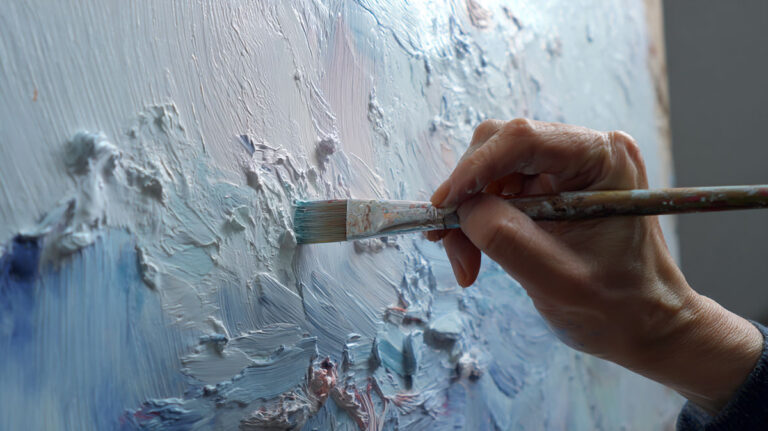
Load your brush until it can barely hold more paint. This isn’t subtle work.
Apply paint in thick, sculptural layers that catch and reflect light dramatically. Each stroke should have physical presence on the canvas.
Don’t smooth out the brushmarks. Those ridges and valleys are what make van Gogh’s work come alive.
Think of yourself as sculpting with paint rather than just coloring a surface. Build up areas that should advance toward the viewer.
Directional Stroke Patterns
Follow the natural form of what you’re painting. Curved brushstrokes wrap around tree trunks and hillsides.
Create movement in skies through swirling, circular patterns. Your brush should dance across the canvas.
Water and grass require horizontal, flowing strokes that suggest natural growth patterns. Don’t fight against what feels natural.
Vary your stroke direction within the same area to create visual excitement. Parallel lines can feel static.
Cross-Hatching and Parallel Strokes
Build up color through overlapping marks rather than smooth blending. This creates optical vibration.
Parallel strokes in different directions create rhythm and pattern across your canvas surface.
Cross-hatching with a loaded brush adds depth without losing the expressive quality. Each layer should remain visible.
Let individual brushstrokes maintain their identity. Overworking kills the spontaneous energy.
Color Application Through Bold Brushwork

The Broken Color Technique
Place pure colors side by side instead of mixing them on your palette. Your eye does the mixing from viewing distance.
This technique creates luminosity that pre-mixed colors can’t match. The colors seem to vibrate against each other.
Load your brush with two different colors simultaneously. Apply them in a single stroke for natural color variation.
Don’t cover every inch of canvas with paint. Let some ground color show through to unify your composition.
Complementary Color Contrasts
Orange and blue combinations create maximum visual impact. Van Gogh used these contrasts in almost every painting.
Red and green relationships work beautifully in portraits and still life work. The tension between them creates energy.
Yellow and purple appear frequently in van Gogh’s landscape paintings. These opposites make each other more intense.
Load your brush with both warm and cool versions of the same hue. This creates natural color temperature shifts.
Temperature Variations in Single Strokes
Mix warm and cool colors on your brush before applying to canvas. Each stroke contains multiple temperature relationships.
This technique creates form without traditional modeling. Light and shadow emerge through color temperature rather than value changes alone.
Vary your color temperature within the same brushstroke. Start warm, end cool, or vice versa.
Don’t overthink the color relationships. Trust your instincts and work quickly while the paint stays workable.
Bold application requires confidence. Every hesitation shows in the final result.
Practice these techniques separately before combining them. Each method takes time to feel natural in your hand.
Remember that van Gogh’s style emerged from his personality and mental state. Find your own emotional connection to the paint and canvas.
Painting Different Subject Matter with van Gogh’s Methods
Skies and Atmospheric Effects

Creating Dynamic Cloud Formations
Swirling brushstrokes transform ordinary clouds into emotional statements. Van Gogh never painted boring skies.
Load your brush heavily and follow circular patterns that spiral outward from a central point. This creates that signature tornado-like energy in “The Starry Night.”
Build cloud masses with thick, sculptural paint that catches actual light. Each cloud should feel three-dimensional on your canvas.
Wind Patterns Through Directional Marks
Show wind through consistent stroke direction across your entire sky area. All brushmarks should flow in the same general direction.
Vary the intensity of your strokes to suggest gusting and calm areas. Heavy pressure for strong winds, lighter touches for gentle breezes.
Luminous Sunset and Sunrise Effects
Temperature contrasts create the most convincing atmospheric effects. Load your brush with warm and cool colors simultaneously.
Apply horizontal strokes near the horizon, transitioning to vertical strokes higher in the sky. This mimics how light actually behaves at different times of day.
Don’t blend colors smoothly. Let each stroke maintain its individual character while contributing to the overall color harmony.
Landscape Elements

Cypress Trees with Flame-Like Energy
Cypress trees were van Gogh’s signature landscape element. Paint them like dark flames reaching toward heaven.
Start at the base with vertical strokes, then curve your brush as you move upward. Each tree should feel alive and dancing.
Use very dark green mixed with ultramarine blue for the deepest shadows. Add touches of yellow-green for areas catching sunlight.
Rolling Hills Through Curved Movement
Follow the natural contours of hills with your brushwork. Your strokes should flow like water over the landscape.
Build up paint thickness on the areas closest to the viewer. This creates natural depth through actual physical dimension.
Change your stroke direction slightly as you move across each hill. This prevents mechanical repetition.
Fields and Crops with Rhythmic Patterns
Wheat fields require systematic, repetitive strokes that suggest thousands of individual stalks. Think of it as painting music.
Use various yellows and ochres in parallel strokes. Occasionally break the pattern with contrasting color notes.
Keep your wrist loose and work quickly across large areas. Stiffness kills the natural flow.
Portraits and Figure Work
Following Facial Contours
Portrait brushwork should follow the underlying bone structure and muscle forms. Every stroke serves the anatomy.
Build up form through directional changes rather than smooth blending. The brushwork itself creates the modeling.
Van Gogh’s self-portraits show how expressive brushwork can reveal personality and emotional state simultaneously.
Hair and Clothing Texture

Hair requires flowing, curved strokes that suggest individual strands while maintaining overall mass and movement.
Clothing folds follow the same principles as landscape painting. Each fold is a small hill or valley to navigate with your brush.
Don’t get caught up in exact details. Capture the essential character of textures through confident, bold application.
Background Treatments
Backgrounds should support, not compete with your subject. Use simpler stroke patterns and fewer color changes.
Relate your background brushwork to the main subject through repetition of stroke angles or color themes.
Still Life Objects
Fruit and Flower Direction
Paint fruit with strokes that follow the natural curves and forms. Each apple or orange has its own directional logic.
Flower petals require delicate but confident brushwork. Follow the growth pattern from center outward.
Build up paint thickness on the light-struck areas. Let shadows remain relatively thin.
Fabric and Table Surfaces
Fabric folds create opportunities for bold directional lines that add energy to otherwise static compositions.
Table surfaces need horizontal strokes that establish the ground plane. These horizontal elements balance vertical objects.
Developing Personal Expression Within van Gogh’s Framework
Finding Your Own Brushstroke Rhythm
Building Muscle Memory
Practice consistent pressure and speed until the movements become automatic. Your hand needs to trust the process.
Start with simple subjects like apples or simple landscape forms. Master the basic movements before attempting complex compositions.
Work standing up when possible. Your whole body should participate in the painting process.
Developing Personal Mark-Making
Every painter develops a unique brushstroke signature over time. Don’t rush this natural evolution.
Experiment with different brush angles and pressure variations. Small changes create dramatically different marks.
Pay attention to which movements feel most natural for your hand and wrist. Work with your body mechanics, not against them.
Adapting Techniques to Different Subjects
Paint Thickness Decisions
Thick application works best for areas you want to advance toward the viewer. Use thinner paint for receding elements.
Large paintings can handle heavier paint application than small studies. Adjust your technique to your canvas size.
Mood influences paint thickness decisions. Energetic subjects call for thicker, more aggressive application.
Varying Stroke Intensity
Gentle subjects like flowers require lighter pressure and smaller brushes. Dramatic skies demand bold, confident strokes.
Match your painting energy to your subject matter. Peaceful scenes shouldn’t look violently painted.
Building Confidence in Bold Application
Overcoming Fear
Hesitation shows in every brushstroke. Commit fully to each mark, even if it feels wrong initially.
Practice on throwaway canvases before working on pieces you care about. Build confidence through repetition.
Remember that van Gogh painted over 2,000 works in just ten years. Quantity builds quality.
Working Decisively
Set time limits for different painting stages. This prevents endless overworking and second-guessing.
Make decisions quickly about color and brushwork. Your first instinct is usually correct.
Common Mistakes and How to Avoid Them
Overworking the Paint Surface
Recognizing When to Stop
Fresh paint has a luminous quality that disappears with too much manipulation. Stop while the surface still feels alive.
Set your brush down frequently and step back to evaluate your progress. Distance reveals problems that close-up work misses.
Work in sections to maintain paint quality throughout your painting session. Don’t try to cover the entire canvas in one go.
Preserving Initial Energy
Your first marks often contain the most energy and spontaneity. Protect these areas from unnecessary revision.
Build around your best brushstrokes rather than painting over them. Let successful areas guide the rest of your painting.
Multiple Session Strategy
Allow sections to dry between painting sessions. This prevents muddy color mixing and maintains paint integrity.
Plan your painting approach so you can work wet-into-wet in specific areas while leaving others undisturbed.
Inconsistent Paint Thickness
Maintaining Impasto Throughout
Thin, weak areas destroy the illusion of bold painting. Every section should show confidence and commitment.
Keep checking that your paint application remains consistent across the entire canvas surface.
Don’t skimp on paint to save money. Van Gogh used enormous amounts of paint, and it shows in the final results.
Building Up Gradually
Start with medium-thick application and build up to full impasto in subsequent layers. This prevents paint from sliding off the canvas.
Work from thin to thick, never the reverse. This follows traditional oil painting principles while maintaining van Gogh’s bold approach.
Losing Directional Flow
Planning Before Painting
Sketch your major stroke directions before loading your brush with paint. This prevents random, chaotic brushwork.
Establish your dominant movement patterns early in the painting process. Everything else should support these primary directions.
Maintaining Pattern Consistency
Repeat stroke angles throughout your painting to create unity. This doesn’t mean monotony, but rather purposeful variation.
Check that your brushwork creates visual paths that guide the viewer’s eye around your composition.
Each area should relate to the overall directional scheme while maintaining its own character and purpose.
Trust the process. Van Gogh’s technique looks effortless but requires practice and commitment to develop properly.
FAQ on How To Paint Like Van Gogh
What brushes did van Gogh use for his thick brushstrokes?
Van Gogh used hog bristle brushes exclusively for their stiffness and paint-holding capacity. Flat and filbert shapes in sizes 6-12 created his signature rectangular and curved marks.
He avoided soft brushes that couldn’t handle thick oil painting application.
How thick should paint be for van Gogh’s impasto technique?
Paint should be thick enough to hold brushstroke ridges and peaks. Think frosting consistency straight from the tube.
Van Gogh rarely thinned his paint with painting mediums. The impasto method requires substantial paint thickness for proper texture.
What colors did van Gogh use most frequently?
Cadmium yellow and ultramarine blue dominated van Gogh’s palette. He also used vermillion red, emerald green, and burnt umber regularly.
His color theory focused on complementary colors placed side by side for maximum visual impact.
How do you create van Gogh’s swirling brushstroke patterns?
Follow circular motions with your wrist while maintaining consistent pressure. Start from a central point and spiral outward.
Load your brush heavily and work quickly before paint stiffens. Directional consistency across each area creates unified movement.
Should I sketch before applying van Gogh-style brushwork?
Basic shapes help establish composition, but avoid detailed drawings. Van Gogh worked directly with paint for spontaneous energy.
Plan major stroke directions mentally before loading your brush. This prevents chaotic, random brushwork patterns.
What canvas texture works best for impasto painting?
Medium-grain canvas provides ideal paint grip without fighting your brushwork. Smooth surfaces make thick paint application difficult.
Prime with textured gesso that maintains some tooth. Canvas preparation directly affects final brushstroke appearance.
How do you avoid overworking van Gogh-style paintings?
Work in sections and step back frequently. Fresh paint has luminous quality that disappears with excessive manipulation.
Set time limits for each area. Stop while brushstrokes still feel energetic and spontaneous rather than labored.
What’s the secret to van Gogh’s emotional brushwork?
Paint with your whole body, not just your wrist. Stand while working and let physical energy transfer to brushstrokes.
Emotional connection to your subject matter shows in every mark. Van Gogh painted his feelings, not just visual appearances.
How long does impasto paint take to dry?
Thick oil painting layers can take weeks to months for complete drying. Surface drying occurs in 3-7 days.
Work wet-into-wet for color blending or wait for complete drying between sessions to maintain paint integrity.
Can you achieve van Gogh effects with acrylic paint?
Acrylic painting can mimic van Gogh’s thickness but dries too quickly for his working methods. Heavy gel mediums help extend working time.
Oil paint remains the best medium for authentic van Gogh techniques due to its extended workability and blending properties.
Conclusion
Mastering how to paint like van Gogh requires abandoning perfectionism for bold, emotional expression. His Post-Impressionist approach prioritizes feeling over technical precision.
The broken color technique and visible brushwork create paintings that vibrate with energy. Each brushstroke carries emotional weight that smooth blending cannot achieve.
Practice builds confidence in thick paint application and directional stroke patterns. Start with simple subjects like sunflowers or wheat fields before attempting complex compositions.
Van Gogh’s mental state influenced his artistic vision, but you don’t need to suffer for your art. Channel your own emotions and experiences through confident palette knife work and expressive color choices.
Remember that van Gogh painted over 2,000 works in just ten years. Quantity develops quality faster than endless perfectionism on single pieces.
Your artistic expression should emerge naturally through consistent practice with his techniques. The swirling brushstrokes and dynamic color mixing will become second nature with dedicated effort and patience.