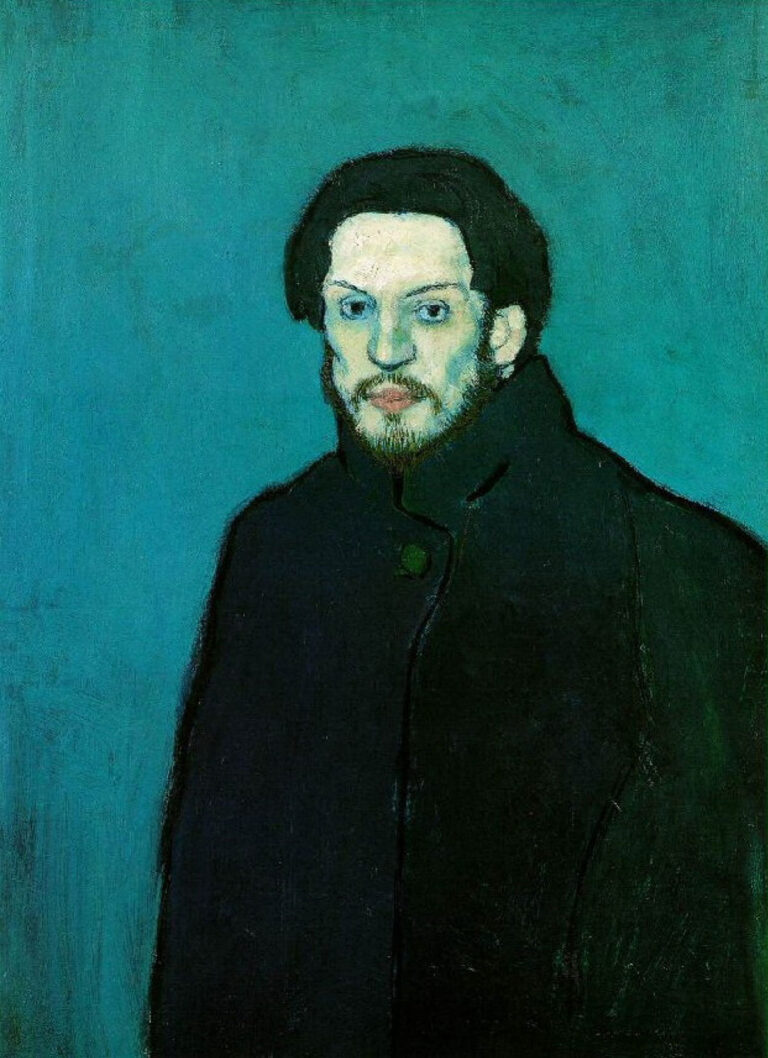
In the early 20th century, a radical art movement shattered traditional representation like broken glass.
Cubism artists transformed how we see reality by breaking subjects into geometric fragments viewed from multiple angles simultaneously.
Pablo Picasso and Georges Braque pioneered this revolutionary approach in Paris around 1907.
Their analytical deconstruction of form sparked a movement that would permanently alter the course of modern art.
Why cubism matters: This movement wasn’t merely stylistic experimentation. It fundamentally questioned perception itself, shifting from single-point perspective to multiple viewpoints showing objects in their totality.
This guide explores:
- Key figures from Picasso to Léger who defined the movement
- The evolution from Analytical to Synthetic Cubism
- How fractured planes and geometric abstraction revolutionized composition
- The lasting influence on modern art, architecture, and design
Discover how these avant-garde painters rejected traditional representation for a bold new visual language that would transform art forever.
Cubism Artists
Pablo Picasso (1881-1973)

Nationality: Spanish
Art Movement(s): Cubism, Surrealism, Symbolism
Mediums: Oil painting, sculpture, ceramics, printmaking
Artistic Signature
Picasso’s work featured fragmented forms, multiple viewpoints, and bold geometric shapes. His composition relied on angular planes that broke subject matter into facets, challenging traditional perspective.
Recurring Themes & Motifs
His work often explored human figures, particularly women, bulls, and musicians. Picasso frequently incorporated newspaper clippings and everyday objects, transforming mundane items into complex visual statements.
Influences & Training
Formally trained at Madrid’s Royal Academy, Picasso was deeply influenced by African masks, Paul Cézanne‘s structural approach, and his collaboration with Georges Braque during the formative cubist period.
Notable Works
- Les Demoiselles d’Avignon (1907) – Oil on canvas, Museum of Modern Art, New York
- Guernica (1937) – Oil on canvas, Museo Reina Sofía, Madrid
- Three Musicians (1921) – Oil on canvas, Museum of Modern Art, New York
Role in Art History
Picasso revolutionized 20th-century art as cubism’s principal pioneer. His radical deconstruction of form freed artists from representation, setting the stage for modern abstract movements.
Georges Braque (1882-1963)

Nationality: French
Art Movement(s): Cubism, Fauvism
Mediums: Oil on canvas, collage, printmaking
Artistic Signature
Braque’s work featured muted earth tones and careful geometric analysis. He developed papier collé technique, incorporating real materials into paintings. His works show exceptional balance between structure and texture.
Recurring Themes & Motifs
He focused on still lifes, musical instruments, and interior scenes. Braque often included text fragments from newspapers and sheet music, creating layered meanings and exploring the relationship between reality and representation.
Influences & Training
Initially influenced by impressionism and Henri Matisse, Braque shifted after discovering Cézanne’s work. His crucial partnership with Picasso from 1908-1914 established cubism’s foundations.
Notable Works
- Houses at l’Estaque (1908) – Oil on canvas, Kunstmuseum Bern
- Violin and Candlestick (1910) – Oil on canvas, San Francisco Museum of Modern Art
- Man with a Guitar (1911) – Oil on canvas, Museum of Modern Art, New York
Role in Art History
Co-founder of Cubism with Picasso, Braque pioneered collage techniques that fundamentally changed modern art. His analytical approach and subtle innovations were crucial to cubism’s development.
Juan Gris (1887-1927)

Nationality: Spanish
Art Movement(s): Cubism
Mediums: Oil painting, collage, illustrations
Artistic Signature
Gris employed clean, precise lines and bright color contrast. His later work featured harmonious color schemes and flattened geometric patterns arranged with mathematical rigor.
Recurring Themes & Motifs
He predominantly painted still lifes with everyday objects like bottles, newspapers, and musical instruments. Gris often incorporated elements of Spanish culture and traditional still life subjects.
Influences & Training
Trained as an industrial designer in Madrid, Gris moved to Paris in 1906 where he encountered Picasso and Braque. Though initially influenced by them, he developed a distinctive, more synthetic approach to cubism.
Notable Works
- Portrait of Picasso (1912) – Oil on canvas, Art Institute of Chicago
- Still Life with Checkered Tablecloth (1915) – Oil on canvas, Metropolitan Museum of Art, New York
- Guitar and Fruit Dish (1919) – Oil on canvas, Columbus Museum of Art
Role in Art History
Gris refined Synthetic Cubism with his systematic, colorful approach. His mathematical precision and rhythm brought order to the movement, influencing later geometric abstraction.
Fernand Léger (1881-1955)

Nationality: French
Art Movement(s): Cubism, Futurism
Mediums: Oil painting, murals, stained glass
Artistic Signature
Léger developed a personal style called “tubism” featuring cylindrical forms and bold outlines. He used machine-like elements and strong primary colors to create dynamic compositions with mechanical precision.
Recurring Themes & Motifs
His work celebrated modern urban life, machinery, and industrial forms. Léger frequently depicted laborers, mechanics, and the relationship between humans and technology in the industrial age.
Influences & Training
Initially trained as an architectural draftsman, Léger was influenced by Cézanne, cubism, and the mechanical aesthetics of industrial Paris. His military service during WWI reinforced his interest in mechanical forms.
Notable Works
- The City (1919) – Oil on canvas, Philadelphia Museum of Art
- Three Women (1921) – Oil on canvas, Museum of Modern Art, New York
- Construction Workers (1950) – Oil on canvas, Musée Fernand Léger, Biot
Role in Art History
Léger bridged cubism with later modernist styles by incorporating industrial imagery and bold color. His machine aesthetic influenced Pop and commercial art of later decades.
Albert Gleizes (1881-1953)

Nationality: French
Art Movement(s): Cubism, Abstractionism
Mediums: Oil painting, printmaking, illustration
Artistic Signature
Gleizes developed a dynamic style featuring overlapping planes and rhythmic curves. His work emphasized motion through shifting geometric forms and often incorporated spiral patterns with strong directional emphasis.
Recurring Themes & Motifs
His subjects ranged from landscapes and urban scenes to religious themes. Gleizes frequently explored concepts of movement and spiritual transcendence through geometric abstraction.
Influences & Training
Self-taught as a painter, Gleizes came from a textile design background. He was influenced by Cézanne and Symbolist theories before co-founding the Puteaux Group with other cubist innovators.
Notable Works
- Harvest Threshing (1912) – Oil on canvas, National Museum of Western Art, Tokyo
- Portrait of Jacques Nayral (1911) – Oil on canvas, Tate Modern, London
- Painting to a Man Born Blind (1921) – Oil on canvas, Guggenheim Museum, New York
Role in Art History
As both practitioner and theorist, Gleizes helped codify cubism through his writings. His 1912 book “Du Cubisme,” co-authored with Jean Metzinger, was the first major text on the movement.
Jean Metzinger (1883-1956)

Nationality: French
Art Movement(s): Cubism, Neo-Impressionism, Divisionism
Mediums: Oil painting, works on paper
Artistic Signature
Metzinger embraced fragmented forms while maintaining recognizable subjects. His work featured crystalline structures, transparent planes, and carefully calculated compositions with subtle color harmonies.
Recurring Themes & Motifs
He explored portraits, landscapes, and still lifes. Metzinger often incorporated references to time, simultaneity, and multiple dimensions, reflecting contemporary scientific theories about relativity.
Influences & Training
Initially working in a divisionist style influenced by Georges Seurat, Metzinger transitioned to cubism through his association with Picasso and Braque, while maintaining mathematical precision in his compositions.
Notable Works
- Tea Time (Woman with a Teaspoon) (1911) – Oil on cardboard, Philadelphia Museum of Art
- Cyclist (1912) – Oil on canvas, Peggy Guggenheim Collection, Venice
- Soldier at a Game of Chess (1915) – Oil on canvas, Smart Museum of Art, Chicago
Role in Art History
Metzinger’s theoretical writings helped define cubism, while his paintings provided a bridge between radical abstraction and more accessible modernism, influencing later movements through his teaching.
Robert Delaunay (1885-1941)

Nationality: French
Art Movement(s): Orphism, Cubism
Mediums: Oil painting, watercolor
Artistic Signature
Delaunay developed Orphism, a colorful offshoot of Cubism. His work featured vibrant prismatic effects, circular forms, and dynamic color wheel relationships that created visual movement through contrast.
Recurring Themes & Motifs
He repeatedly painted the Eiffel Tower, urban Paris scenes, and circular motifs like suns and wheels. Delaunay used these subjects to explore light, movement, and the modern urban experience.
Influences & Training
Self-taught as a painter, Delaunay was influenced by color theory of Michel Eugène Chevreul and neo-impressionism before developing his own approach to light and color within cubism.
Notable Works
- Eiffel Tower Series (1909-1912) – Oil on canvas, various museums
- Simultaneous Windows on the City (1912) – Oil on canvas, Hamburger Kunsthalle
- Circular Forms (1930) – Oil on canvas, Musée National d’Art Moderne, Paris
Role in Art History
Delaunay’s Orphism bridged Cubism with pure abstraction. His color-centered approach influenced abstract art, particularly Op Art, and anticipated developments in color psychology.
Marie Laurencin (1883-1956)

Nationality: French
Art Movement(s): Cubism, Expressionism
Mediums: Oil painting, watercolor, printmaking
Artistic Signature
Laurencin developed a distinctive feminine style with pastel palettes and curved lines. Her work featured elegant asymmetrical balance, graceful figures with almond-shaped eyes, and dreamy atmospheres.
Recurring Themes & Motifs
She primarily painted women, often in groups, along with animals like deer and dogs. Laurencin’s work frequently explored female relationships, femininity, and the gentle poetry of everyday life.
Influences & Training
Trained at the Académie Humbert in Paris, Laurencin was influenced by Symbolism and her association with Picasso’s circle. She developed her unique style as a reaction to cubism’s masculine aesthetics.
Notable Works
- Group of Artists (1908) – Oil on canvas, Baltimore Museum of Art
- The Rehearsal (1936) – Oil on canvas, Tate Modern, London
- Young Women (1940) – Oil on canvas, Musée Marie Laurencin, Japan
Role in Art History
Laurencin created a distinctive feminine counterpoint to mainstream cubism. Her lyrical, decorative style influenced fashion illustration and provided an alternative modernist aesthetic that championed feminine sensibilities.
Marcel Duchamp (1887-1968)

Nationality: French-American
Art Movement(s): Cubism, Dadaism, Conceptual Art
Mediums: Ready-mades, painting, sculpture, installation
Artistic Signature
Duchamp began with cubist paintings showing figures in motion, then abandoned conventional painting styles for conceptual works. His art prioritized ideas over visual aesthetics and challenged fundamental art assumptions.
Recurring Themes & Motifs
His work explored mechanical forms, motion, chess, and gender fluidity. Duchamp consistently questioned art definitions through everyday objects presented as “readymades” and elaborate visual puns.
Influences & Training
Educated at the Académie Julian, Duchamp moved from conventional training through cubism to radical conceptualism. He was influenced by chronophotography, industrial design, and his own philosophical questioning.
Notable Works
- Nude Descending a Staircase, No. 2 (1912) – Oil on canvas, Philadelphia Museum of Art
- Fountain (1917) – Readymade urinal, replica at Tate Modern
- The Large Glass (1915-23) – Mixed media, Philadelphia Museum of Art
Role in Art History
Though starting as a cubist, Duchamp revolutionized 20th-century art by introducing conceptualism. His readymades and philosophical approach shifted focus from craftsmanship to ideas, influencing nearly all subsequent contemporary art.
Jacques Lipchitz (1891-1973)

Nationality: Lithuanian-American
Art Movement(s): Cubism
Mediums: Sculpture, bronze casting
Artistic Signature
Lipchitz translated cubist principles into three dimensions. His sculptures featured fragmented planes, intersecting volumes, and an interplay of positive and negative space that created dynamic rhythm and movement.
Recurring Themes & Motifs
He frequently depicted human figures, mythological subjects, and biblical narratives. Lipchitz often explored themes of struggle, spirituality, and the relationship between form and void.
Influences & Training
After studying engineering in Vilnius, Lipchitz trained at the École des Beaux-Arts in Paris. His friendship with Picasso and exposure to primitive art deeply influenced his sculptural approach.
Notable Works
- Sailor with Guitar (1914) – Bronze, Art Institute of Chicago
- Harlequin with Mandolin (1923) – Bronze, Tate Modern, London
- Prometheus Strangling the Vulture (1944) – Bronze, Museum of Modern Art, New York
Role in Art History
Lipchitz pioneered cubist sculpture, expanding the movement beyond painting. His work bridged early cubism with later modernist sculpture, influencing three-dimensional abstract art throughout the 20th century.
Henri Laurens (1885-1954)

Nationality: French
Art Movement(s): Cubism
Mediums: Sculpture, relief, works on paper
Artistic Signature
Laurens created sculptures with simplified geometric forms and fluid curves. His work combined angular cubist elements with sensuous organic shapes, often using monochromatic color schemes to emphasize formal qualities.
Recurring Themes & Motifs
He focused on the human figure, particularly female nudes, and mythological subjects. Laurens often explored themes of fertility, classical beauty, and the tension between geometric and organic forms.
Influences & Training
Self-taught as a sculptor, Laurens worked as a stonemason before meeting Braque in 1911. His style evolved from architectural decoration to cubist compositions influenced by Picasso and Braque’s papiers collés.
Notable Works
- La Femme à l’éventail (Woman with a Fan) (1919) – Painted stone, Musée National d’Art Moderne, Paris
- La Musicienne (1937) – Bronze, Tate Modern, London
- Oceanide (1933) – Terracotta, Centre Pompidou, Paris
Role in Art History
Laurens transformed cubist principles into three dimensions, helping establish modernist sculpture. His later work bridged cubism and more organic abstraction, influencing post-war European sculpture.
Alexander Archipenko (1887-1964)

Nationality: Ukrainian-American
Art Movement(s): Cubism, Constructivism
Mediums: Sculpture, mixed media constructions
Artistic Signature
Archipenko pioneered sculptural innovations including concave space as form and mixed-media assemblage. His work featured geometric abstraction of the human figure with elegant curves and striking scale relationships.
Recurring Themes & Motifs
His sculptures primarily depicted stylized human figures, particularly female forms. Archipenko often explored the interchange between solid mass and void, treating negative space as an active element.
Influences & Training
Educated at Kyiv Art School and briefly at École des Beaux-Arts in Paris, Archipenko was influenced by ancient sculpture and African art before developing his cubist approach.
Notable Works
- Woman Walking (1912) – Bronze, Museum of Modern Art, New York
- Boxers (1913) – Bronze, Guggenheim Museum, New York
- Woman Combing Her Hair (1915) – Bronze, Tate Modern, London
Role in Art History
Archipenko transformed cubist principles into radical sculptural innovations. His experiments with space, materials, and abstracted human forms influenced subsequent sculpture and established cubism as a three-dimensional language.
Raymond Duchamp-Villon (1876-1918)

Nationality: French
Art Movement(s): Cubism, Futurism
Mediums: Sculpture, relief
Artistic Signature
Duchamp-Villon merged cubist fragmentation with futurist dynamism. His sculptures featured geometric simplification, mechanical elements, and a sense of contained energy through intersecting planes and implied movement.
Recurring Themes & Motifs
He explored the relationship between organic forms and machine aesthetics. Duchamp-Villon frequently depicted horses as symbols of both natural power and mechanical energy in the industrial age.
Influences & Training
Trained as a medical doctor before turning to sculpture, Duchamp-Villon was influenced by Rodin and his own medical knowledge of anatomy before embracing cubist principles through his association with the Section d’Or group.
Notable Works
- Torso of a Young Man (1910) – Bronze, Museum of Modern Art, New York
- The Horse (1914) – Bronze, Museum of Modern Art, New York
- Seated Woman (1914) – Bronze, Hirshhorn Museum, Washington D.C.
Role in Art History
Duchamp-Villon bridged figurative tradition and modernist abstraction. His fusion of organic forms with mechanical elements anticipated later developments in both abstract and machine-age sculpture.
Sonia Delaunay (1885-1979)

Nationality: Ukrainian-French
Art Movement(s): Orphism, Cubism, Abstractionism
Mediums: Painting mediums, textile design, fashion
Artistic Signature
Delaunay created works with vibrant color relationships and dynamic geometric patterns. Her innovative use of simultaneous contrast and circular forms created visual movement and rhythmic unity.
Recurring Themes & Motifs
She explored the visual effects of color and light. Delaunay frequently incorporated electric lights, urban scenes, and circular motifs representing cosmic harmony and modern dynamism.
Influences & Training
Educated in St. Petersburg and Germany, Delaunay was influenced by Russian folk art, Post-Impressionism, and color theories. Her artistic partnership with husband Robert Delaunay shaped their development of Orphism.
Notable Works
- Electric Prisms (1914) – Oil on canvas, Musée National d’Art Moderne, Paris
- Simultaneous Dress (1913) – Textile design
- Rhythm Colour (1938) – Oil on canvas, Musée d’Art Moderne de la Ville de Paris
Role in Art History
Delaunay expanded cubism into the realm of pure color relationships. Her groundbreaking integration of art with fashion and design demonstrated modernism’s potential beyond traditional fine art boundaries.
Louis Marcoussis (1878-1941)

Nationality: Polish-French
Art Movement(s): Cubism
Mediums: Painting, engraving, lithography
Artistic Signature
Marcoussis created meticulously structured cubist compositions with precise line work. His paintings featured transparent overlapping planes, careful textural variety, and delicate tonal gradations within a predominantly monochromatic palette.
Recurring Themes & Motifs
He focused on still lifes, portraits, and urban landscapes. Marcoussis often incorporated musical instruments, playing cards, and text fragments from newspapers to create complex visual puzzles.
Influences & Training
Trained at the Kraków Academy of Fine Arts and later at the Académie Julian in Paris, Marcoussis began as an illustrator before adopting cubism through his association with Picasso’s circle.
Notable Works
- Still Life with Playing Cards (1917) – Oil on canvas, Musée National d’Art Moderne, Paris
- The Cubist (1920) – Oil on canvas, Museum of Art, Rhode Island School of Design
- The Port of Rotterdam (1929) – Oil on canvas, Museum Boijmans Van Beuningen, Rotterdam
Role in Art History
Marcoussis helped disseminate cubist principles through his precise paintings and technical engravings. His important role as printmaker and promoter expanded cubism’s influence throughout Europe.
FAQ on Cubism Artists
Who were the main Cubism artists?
The principal cubism pioneers were Pablo Picasso and Georges Braque. Other significant figures included Juan Gris, Fernand Léger, Albert Gleizes, Jean Metzinger, and Henri Matisse (briefly).
Women artists like Marie Laurencin and Sonia Delaunay made vital contributions, while sculptors Jacques Lipchitz and Alexander Archipenko translated cubist principles into three dimensions.
When and where did Cubism originate?
Cubism emerged in Paris between 1907-1908. The movement began with Picasso’s revolutionary painting “Les Demoiselles d’Avignon” (1907) and Braque’s “Houses at l’Estaque” (1908).
These works, influenced by Paul Cézanne‘s structural approach, African masks, and Iberian sculpture, developed through the crucial collaboration between Picasso and Braque that lasted until World War I disrupted the Parisian art scene.
What are the main characteristics of Cubist art?
Cubist art features fragmented subjects viewed from multiple angles simultaneously. Key characteristics include:
- Geometric reduction of forms
- Flattened perspective and shallow space
- Monochromatic or limited color palettes (in Analytical Cubism)
- Multiple viewpoints in a single picture plane
- Incorporation of text and everyday materials (in Synthetic Cubism)
- Emphasis on two-dimensionality of the canvas
What’s the difference between Analytical and Synthetic Cubism?
Analytical Cubism (1908-1912) deconstructed objects into geometric fragments with multiple viewpoints, using minimal color contrast and muted, monochromatic palettes.
Synthetic Cubism (1912-1914) reconstructed objects using simpler forms, brighter colors, and introduced collage techniques with real materials like newspaper, wallpaper, and sheet music fragments.
How did Cubism influence modern art?
Cubism revolutionized 20th-century art by breaking traditional perspective and representation. It directly spawned movements like Futurism, Orphism, Constructivism, and Suprematism.
Its geometric language influenced Bauhaus design, architecture, sculpture, and photography. By freeing art from imitation, Cubism opened pathways to pure abstraction that defined modern art.
What materials and techniques did Cubist artists use?
Cubists initially worked with traditional oil painting techniques but dramatically expanded their methods. Braque and Picasso pioneered papier collé and collage, incorporating real materials like newspaper, wood veneer, and rope.
They used techniques like trompe l’oeil, simulated textures, and stenciled letters. Cubist sculptors developed constructive methods using metal, wood, and mixed media assemblage.
What subjects did Cubist artists typically depict?
Cubist artists favored traditional genres reimagined through fragmented forms:
- Still lifes with musical instruments, bottles, and newspapers
- Portraits and figure studies
- Urban landscapes
- Café scenes
- Musical themes
- Domestic interiors
These everyday subjects provided structure for their radical formal experiments in composition and representation.
How did African art influence Cubism?
African masks and sculpture profoundly impacted Cubism’s development. Picasso’s encounter with African art at Paris’s ethnographic museum in 1907 sparked his interest in bold geometric forms, stylized features, and multiple viewpoints.
African artists’ approach to representing spiritual essence rather than physical appearance inspired Cubists to move beyond optical realism toward conceptual representation showing objects from multiple perspectives simultaneously.
How can you recognize a Cubist painting?
Identify Cubist works through their fragmented, geometric forms showing objects from multiple angles. Look for flattened space, transparent overlapping planes, and monochromatic or limited color schemes.
Later Cubist works feature collage elements, stenciled letters, and simulated textures.
The subject matter often remains recognizable despite abstraction, with common motifs including figures, musical instruments, still lifes, and bottles.
Who were the most influential female Cubist artists?
Though often overlooked, several women made significant contributions to Cubism. Sonia Delaunay developed Orphism, a colorful Cubist offshoot, and pioneered abstract design in fashion and textiles.
Marie Laurencin created a distinctive lyrical style within the movement. Other notable figures included Françoise Gilot, María Blanchard, Alice Bailly, and Marthe Donas, whose works expanded Cubism’s vocabulary with unique perspectives on form and color.
Conclusion
The revolutionary vision of Cubism artists fundamentally transformed modern art.
By shattering single-point perspective and embracing geometric fragmentation, figures like Braque, Gris, and Léger created a radical visual language that prioritized conceptual truth over optical illusion.
Their innovations extended beyond painting styles to influence everything from architecture to graphic design. The movement’s core principles-multiple viewpoints, fractured planes, and space and balance manipulation-continue to resonate in contemporary art practice.
Cubism’s legacy lives through its:
- Liberation of form from traditional representation
- Introduction of collage and mixed-media techniques
- Bridge between figurative art and pure abstraction
- Challenge to viewers’ perceptual habits
Though brief (roughly 1907-1914), the Cubist movement’s impact remains immeasurable.
These avant-garde painters didn’t merely create a style-they opened entirely new possibilities for visual expression that continue to shape our understanding of what art can be.