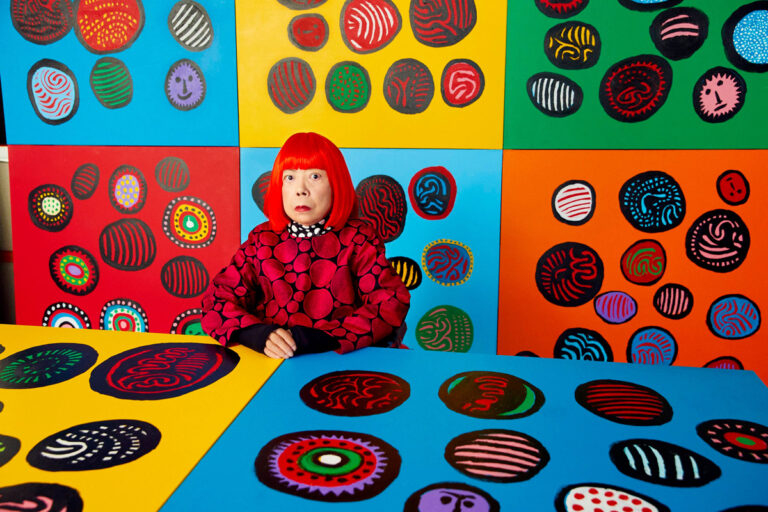
The enigmatic street art provocateur Mr. Brainwash exploded onto the contemporary art scene like a splash of vibrant spray paint across an urban canvas.
Born Thierry Guetta in France, this filmmaker-turned-artist transformed himself into one of the most controversial figures in the street art movement after his meteoric rise was documented in Banksy’s Oscar-nominated film “Exit Through the Gift Shop.”
From his Los Angeles studio emerges a fusion of pop culture imagery and street art techniques that both celebrates and challenges artistic conventions. His mixed media approach combines stencil art with splashy color contrasts and celebrity iconography.
This article explores the artistic journey, techniques, and cultural impact of Mr. Brainwash, examining how he:
- Blends pop art appropriation with graffiti aesthetics
- Creates visual mash-ups of cultural icons and positive messaging
- Navigates the controversial intersection of art, commerce, and authenticity
- Developed a distinctive style influenced by Andy Warhol and Banksy
Identity Snapshot
- Entity name: Thierry Guetta (Mr. Brainwash)
- Also known as: MBW
- Lifespan: Born January 31, 1966 in Garges-lès-Gonesse, France
- Primary roles: Street artist, Filmmaker, Pop artist
- Nationality/schools: French-born, Los Angeles-based
- Movements: Street art, Pop art
- Mediums: Mixed media, Stencil, Spray paint, Collage, Screen printing, Neon
- Signature traits: Vibrant color splashes, appropriated imagery, bold typography
- Iconography/motifs: Celebrity portraits, cultural icons, positive slogans
- Geographic anchors: Los Angeles, New York, Miami, London, Paris
- Mentors/influences: Banksy, Andy Warhol, Shepard Fairey
- Collections & museums: Featured in exhibitions worldwide including Art Basel Miami
- Market signals: Works sold for $100,000+ at auction, limited edition prints $2,500-$3,000
What Sets The Artist Apart

Mr. Brainwash fuses street art rawness with pop culture appropriation in a distinctly commercial approach. His work blends stencil techniques with splashy color contrast and celebrity iconography.
Unlike peers who emphasize artistic authenticity, Brainwash embraces commercialism unabashedly. His rapid rise from filmmaker to artist creates a meta-narrative that’s inseparable from his artistic output.
Origins & Formation
Early Beginnings
Born Thierry Guetta in France, he moved to Los Angeles at 15 following his mother’s death. Initially working in event organization and vintage clothing, his artistic journey began accidentally through filmmaking.
Videography to Visual Art
In 1999, Guetta discovered his cousin was the street artist Invader, sparking an obsessive documentation of street artists. His camera captured Shepard Fairey, Space Invader, and eventually Banksy.
Transformation
The pivotal moment came when Banksy suggested Guetta try making art himself. Almost overnight, “Mr. Brainwash” emerged with a distinctive appropriation style blending street art techniques with pop iconography.
Breakout Moment
His 2008 debut exhibition “Life Is Beautiful” in Los Angeles transformed a former TV studio into a massive art spectacle, attracting 50,000 visitors over three months. The show featured a 20-foot robot, a book pyramid, and recreated masterpieces.
Movement & Context
Street Art’s Commercial Crossover
Mr. Brainwash occupies a unique position at the intersection of underground street art and commercial success. While many street artists maintain anti-establishment positions, Brainwash embraces commercialization wholeheartedly.
Comparison with Contemporaries
- vs. Banksy: Both use stencil techniques, but where Banksy employs sharp political contrast, Brainwash creates celebratory, optimistic works with broader color palettes.
- vs. Shepard Fairey: Fairey’s work shows controlled composition and limited color schemes, while Brainwash’s pieces display chaotic variety and splashy color saturation.
- vs. Keith Haring: Where Haring developed a unique visual language, Brainwash samples liberally from existing visual culture.
Materials, Techniques, and Process
Materials
Mr. Brainwash works across multiple mediums simultaneously:
- Large-scale canvases and wooden panels
- Spray paint and acrylic painting
- Screen printing for edition works
- Mixed media collage elements
- Neon lighting components
Technical Approach
His process combines several techniques:
- Stenciling similar to Banksy but with less precision
- Layering through collage and mixed media
- Collaborative production with assistants (similar to Warhol’s Factory)
- Screen printing for reproducible imagery
- Splatter and drip techniques reminiscent of Jackson Pollock
Visual Signature
His work features:
- High-key complementary colors with emphasis on red and blue
- Bold black outlines with rough edges
- Chaotic asymmetrical balance
- Liberal appropriation of existing imagery
- Textual elements with positive messages
Themes, Subjects, and Iconography
Recurring Motifs
- Celebrity Portraits: Einstein, Charlie Chaplin, Marilyn Monroe, Madonna
- Cultural Icons: Transformed versions of recognizable characters like Mickey Mouse
- Inspirational Text: “Life is Beautiful,” “Follow Your Dreams,” “Love is the Answer”
- Art Historical References: Reimagined masterpieces with contemporary twists
- Commercial Symbols: Spray cans, dollar signs, logos
Compositional Strategies
Mr. Brainwash typically employs:
- Central icon placement with chaotic backgrounds
- Repetition of motifs across multiple works
- Crowded visual fields with high emphasis on central figures
- Texture through splatter techniques and layering
Symbolic Meanings
His work promotes:
- Optimism in the face of chaos
- Celebration of popular culture
- Blending of “high” and “low” art forms
- Artistic accessibility over elitism
- Commercialism as valid artistic expression
Notable Works
“Life is Beautiful” (2008)

- Details: Mixed media installation, Hollywood, Los Angeles
- Current location: Temporary exhibition (dismantled)
- Visual signature: Enormous scale, including 20-foot robot, pyramid of 20,000 books
- Significance: Debut exhibition that launched his career and was featured in “Exit Through the Gift Shop”
“Charlie Chaplin Pink” (2010)

- Details: Mixed media on canvas, 162.6 x 121.9 cm
- Current location: Private collection
- Visual signature: Charlie Chaplin figure with spray can, against Madonna and heart background
- Significance: Set auction record at Phillips, selling for $122,500
“Einstein – Love is the Answer” (2013)

- Details: Screen print and mixed media with neon components
- Current location: Various editions in private collections
- Visual signature: Einstein portrait holding sign with illuminated neon text
- Significance: Became one of his most reproduced and recognized images
Exhibitions, Collections, and Provenance Highlights
Major Exhibitions
- “Life is Beautiful” (2008): Debut show in Los Angeles
- “Icons” (2010): New York City in a 15,000 square foot warehouse
- Art Basel Miami (2010-2013): Annual installations in South Beach
- London Olympic Games (2012): Massive installation in Old Sorting Office
- Vatican collaboration (2019): Created work with Pope Francis for charity
Notable Collections
- Madonna commissioned album artwork for “Celebration”
- Michael Jackson was an early collector
- Red Hot Chili Peppers commissioned album artwork
- Kim Kardashian, Johnny Depp, and other celebrities collect his work
Authentication Markers
- Original signature
- Thumbprint
- Dollar bill serial number matching certificate
- “Life is Beautiful” inscription on reverse
Market & Reception
Price Points
- Original paintings: $30,000-$120,000
- Limited edition prints: $2,500-$10,000
- Major installations: Six-figure commissions
- Record auction price: Charlie Chaplin Pink at $122,500 (2010)
Authentication Concerns
- Collaborative production model raises questions of authorship
- Signed certificates with thumbprints and dollar bill numbers authenticate works
- Market stabilized after initial controversy surrounding authenticity
Critical Reception
- Art establishment largely dismissive of commercial approach
- Ongoing debate about artistic merit versus marketing prowess
- Celebrated by mainstream audiences and celebrity collectors
- Controversy around authorship and Banksy connection persists
Influence & Legacy

Upstream Influences
- Andy Warhol’s Factory approach to art production
- Banksy’s stencil techniques and cultural commentary
- Roy Lichtenstein’s pop appropriation
- Jean-Michel Basquiat’s raw urban aesthetic
Downstream Impact
- Popularized street art for mainstream audiences
- Influenced marketing and branding approaches to art
- Demonstrated viability of rapid transition from outsider to commercial success
- Blurred boundaries between art, commerce, and celebrity
Cross-Domain Echoes
- Influenced advertising aesthetic in fashion campaigns
- Impacted digital design through bright color palettes and chaotic compositions
- Collaboration model adopted by brands seeking cultural relevance
How to Recognize a Mr. Brainwash at a Glance
- Celebrity or icon as central subject, often with visual modifications
- Splattered paint in bright colors across portions of the work
- Positive text slogans integrated into the composition
- Rough-edged stencil work with less precision than Banksy
- Mixed media elements including collage, spray paint, and acrylic
- Signature, thumbprint, and dollar bill number authentication
- Visual references to art history and pop culture icons
- Bright, saturated color palette with strong emphasis on reds and blues
- Large scale works that dominate wall space
- Neon components in some higher-end pieces
FAQ on Mr. Brainwash
Who is Mr. Brainwash?
Mr. Brainwash is the pseudonym of Thierry Guetta, a French-born Los Angeles-based street artist who rose to fame through Banksy’s documentary “Exit Through the Gift Shop.”
Originally a videographer and vintage clothing store owner, he transformed into a contemporary art phenomenon after documenting street artists like Banksy and Shepard Fairey.
Is Mr. Brainwash real or a hoax?
While some critics speculate Mr. Brainwash might be a Banksy-orchestrated art world prank, substantial evidence confirms Thierry Guetta’s existence.
LA Times investigations verified his biography details and business history. Though controversy surrounds his rapid artistic transformation, Banksy has consistently maintained that Mr. Brainwash is a genuine, independent artist.
What style of art does Mr. Brainwash create?
Mr. Brainwash creates art that fuses street art techniques with pop art aesthetics. His signature style includes stencil work, spray painting, and collage with bright colors.
He appropriates famous cultural icons and adds positive slogans, creating visual mashups that blend graffiti rawness with commercial appeal.
What materials does Mr. Brainwash use?
He employs diverse materials including spray paint, acrylic paint, screen printing supplies, and collage elements.
His mixed media approach often incorporates found objects, broken vinyl records, and neon lighting components. Large-scale installations might include fiberglass sculptures, while his print work utilizes high-quality silkscreen techniques.
What is “Life is Beautiful”?
“Life is Beautiful” is both Mr. Brainwash’s signature slogan and the title of his breakout 2008 Los Angeles exhibition. This massive show transformed a former TV studio with installations including a 20-foot robot and a pyramid of 20,000 books. The exhibition attracted 50,000 visitors and launched his career, becoming a focal point in “Exit Through the Gift Shop.”
What famous collaborations has Mr. Brainwash done?
Mr. Brainwash has collaborated with Madonna on her “Celebration” album cover, Red Hot Chili Peppers for “I’m with You,” and Coca-Cola for a Times Square billboard.
He created Michael Jackson’s “Xscape” artwork, partnered with Mercedes-Benz and Marvel Comics, and even collaborated with Pope Francis on a charity project that sold for £500,000.
How much do Mr. Brainwash artworks cost?
Mr. Brainwash’s prices vary significantly. Original paintings can sell for $30,000-$120,000, with his auction record reaching $122,500 for “Charlie Chaplin Pink.” Limited edition prints typically range from $2,500-$10,000. His Bitcoin-themed prints sell for approximately $3,000, while major installations command six-figure commissions.
How can you authenticate a Mr. Brainwash artwork?
Genuine Mr. Brainwash artworks feature his signature, thumbprint, and a unique dollar bill serial number that matches the certificate of authenticity.
Many works include “Life is Beautiful” inscribed on the back. His strict authentication process helps collectors verify legitimacy, particularly important given his commercial popularity and production volume.
What influences Mr. Brainwash’s art?
His work draws heavily from Andy Warhol, Banksy, and Roy Lichtenstein. The pop art movement provides his aesthetic foundation, while street art techniques inform his execution. His celebrity portraits echo Warhol’s style, and his stencil work shows Banksy’s influence. Jean-Michel Basquiat’s raw urban aesthetic also appears throughout his work.
Why is Mr. Brainwash controversial?
The controversy stems from his unconventional path to success and questions about artistic authenticity. Unlike most artists who develop over years, he became famous almost overnight through Banksy’s documentary.
Critics question his originality and technique, viewing him as merely appropriating others’ styles. However, his commercial success and mainstream appeal continue despite these criticisms.
Conclusion
Mr. Brainwash remains one of street art’s most polarizing figures, blurring boundaries between artist and persona. His rapid rise from videographer to art world phenomenon challenges conventional notions of artistic development.
Whether viewed as a legitimate artist or an elaborate art world experiment, his cultural impact is undeniable. The French artist has successfully merged urban art with commercial appeal, creating a distinctive visual language that speaks to both art collectors and mainstream audiences.
His work continues to fetch impressive prices at auction while maintaining accessibility through limited edition prints. The Thierry Guetta story represents a uniquely 21st-century artistic trajectory:
- Breaking traditional barriers between commercial art and fine art
- Leveraging celebrity collaborations to expand artistic reach
- Embracing positive messaging in an often cynical contemporary landscape
- Demonstrating how mixed media approaches can create distinctive visual signatures
Love him or question him, the Mr. Brainwash phenomenon shows no signs of fading from the cultural conversation.