Argentina produced some of the most original painters in Latin American art history. From the port scenes of La Boca to avant-garde experiments in Buenos Aires galleries, famous Argentinian painters shaped movements that reached far beyond South America.
Names like Benito Quinquela Martin, Antonio Berni, and Xul Solar built careers that challenged European traditions while staying rooted in Argentine cultural identity. Others, like Lucio Fontana and Julio Le Parc, redefined what painting could even be.
This guide covers ten of the most significant Argentine artists, their signature works, the techniques they used, and where you can see their paintings today. Whether you’re researching 20th century art or planning a visit to the Museo Nacional de Bellas Artes, you’ll find what you need here.
Famous Argentinian Painters
Benito Quinquela Martin
Early Life and Background
Born around March 1, 1890, Benito Quinquela Martin was abandoned as an infant at an orphanage in Buenos Aires. A note pinned to him read only that he had been baptized.
Adopted at age seven by Manuel Chinchella and Justina Molina, he grew up in the working-class neighborhood of La Boca. By 14, he was hauling coal during the day and attending a small night art school in the evenings.
That coal yard shaped everything. The grit of the port, the dock workers, the ships. It all ended up on his canvases later.
Artistic Style and Movement
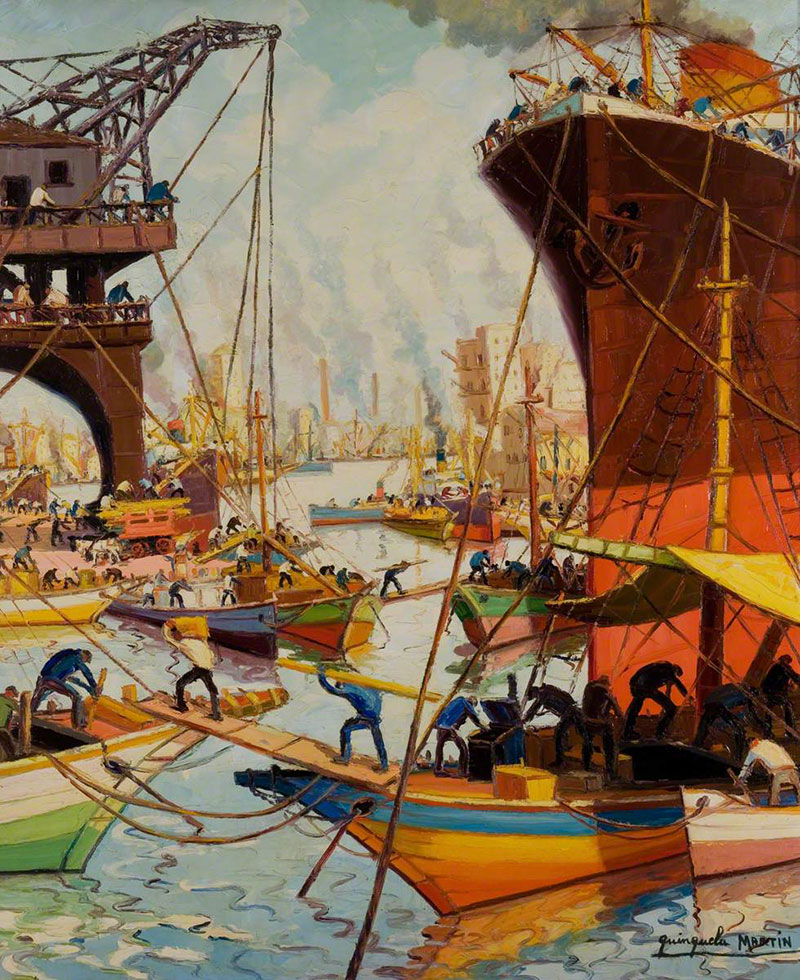
Quinquela Martin became Argentina’s port painter. His work falls somewhere between impressionism and expressionism, though he never really fit neatly into either category.
He painted with a palette knife mostly. Thick, heavy strokes. High contrast between dark industrial tones and bursts of bright color. The texture on his canvases is almost sculptural.
His subjects never changed much. Port scenes, laborers, ships under repair, sunsets over the Riachuelo river. But the way he handled light and value gave those scenes a raw energy that still holds up.
Most Famous Paintings
- Tormenta en el Astillero (Storm in the Shipyard), acquired by the Musee du Luxembourg in Paris
- Puente de la Boca (Bridge of La Boca), held at St. James’s Palace in London
- Crepusculo en el Astillero (Twilight in the Shipyard), displayed at the Museo de Bellas Artes de la Boca
Techniques and Mediums
Quinquela Martin worked primarily with oil painting on large canvases, applying paint with a spatula rather than brushes. This gave his work that signature heavy impasto look.
The juxtaposition of shapes and colors across his compositions created a sense of constant movement. You can almost hear the port when you stand in front of one.
Legacy and Influence
He founded the Fine Arts School and Museum of La Boca. He also spearheaded the transformation of Caminito, the colorful open-air street museum that became one of Buenos Aires’ most photographed spots.
When he died in 1977, his coffin was covered with a painting of the port. That says everything about the man.
Where to See Their Work
Museo de Bellas Artes de la Boca Quinquela Martin in Buenos Aires holds the largest collection. Works also appear at the Musee du Luxembourg (Paris), the Metropolitan Museum of Art (New York), and several British museums including those in Birmingham, Sheffield, and Cardiff.
Antonio Berni
Early Life and Background
Antonio Berni was born in Rosario on May 14, 1905, to an Italian immigrant family. His father, a tailor from Italy, died in World War I.
The kid was a prodigy, honestly. At age nine he started apprenticing with a stained-glass manufacturer. By 15, he was exhibiting oil paintings publicly. A scholarship from the Jockey Club of Rosario sent him to Europe in 1925.
Artistic Style and Movement
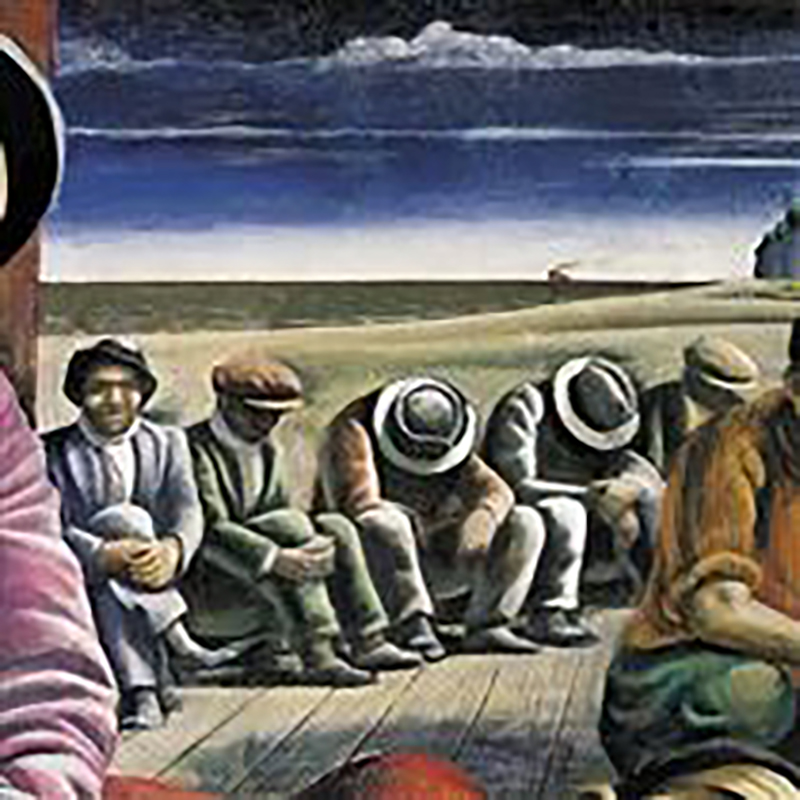
Berni’s career covered an extraordinary range. He started with surrealism in Paris, influenced heavily by Giorgio de Chirico. But after returning to Argentina in 1930, political reality pulled him toward social realism.
He founded the Nuevo Realismo movement in 1933, creating mural-sized canvases that depicted working-class struggles. Then in the late 1950s, he shifted again, this time to collage and assemblage. Using trash collected from Buenos Aires slums, cardboard, metal scraps, fabric.
That ability to reinvent himself while staying politically grounded? That’s what makes Berni stand out among Latin American painters.
Most Famous Paintings
- Manifestacion (Public Demonstration, 1934), a massive tempera on burlap showing desperate protesters
- Desocupados (The Unemployed, 1934), depicting masses of idle workers during the economic crisis
- Juanito Laguna Remontando un Barrilete, part of his iconic collage series about a fictional slum boy
Techniques and Mediums
Berni worked across multiple painting mediums, from oils and tempera to xilo-collage reliefs. His Juanito Laguna and Ramona Montiel series used found materials (tin cans, burlap, fabric scraps, newspaper) assembled onto wood panels.
He won the Grand Prix for Engraving at the 1962 Venice Biennale for his innovative printmaking techniques. The man basically reinvented xylography by adding collage elements and prominent reliefs.
Legacy and Influence
Berni’s two fictional characters, Juanito Laguna and Ramona Montiel, became cultural icons in Argentina. Musicians like Mercedes Sosa recorded songs inspired by Juanito. His work showed that political art could also be formally groundbreaking.
Collections at MALBA (Buenos Aires), the Museum of Fine Arts Houston, and the Museum of Modern Art in Paris hold significant pieces.
Where to See Their Work
MALBA in Buenos Aires has several key works. The Museo Nacional de Bellas Artes (MNBA) in Buenos Aires also holds major paintings. Internationally, pieces are at the Museum of Modern Art in Paris, the Tate in London, and the Art Museum of the Americas in Washington, DC.
Xul Solar
Early Life and Background
Born Oscar Agustin Alejandro Schulz Solari on December 14, 1887, in San Fernando, Buenos Aires Province. His father was Baltic German, his mother Italian.
He studied architecture and music but never finished a degree in either. In 1912, he boarded a ship supposedly heading to Hong Kong, jumped off in London, and spent the next twelve years wandering through Europe. That kind of spontaneity defined his whole life.
Artistic Style and Movement
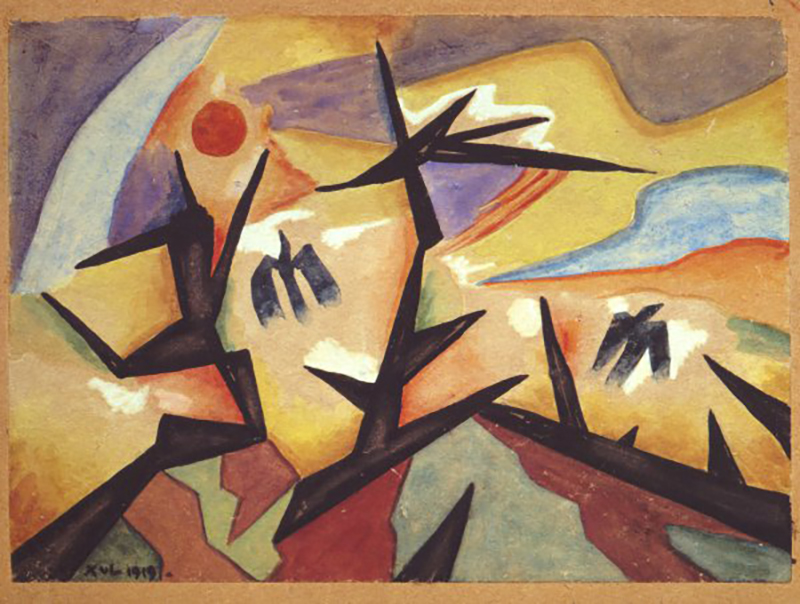
Xul Solar is tricky to classify. His visual style sits somewhere between Wassily Kandinsky and Marc Chagall, with nods to futurism and cubism. But he added mysticism, astrology, pre-Columbian imagery, and invented languages into the mix.
His paintings used bright, exuberant colors with geometric symbols and flat figures. Most of his work was small format, mainly watercolor and tempera on paper. He was part of the avant-garde Florida group alongside Jorge Luis Borges and Emilio Pettoruti.
He also invented two languages (Neocriollo and Panlengua), modified pianos to link musical notes with colors, and created a new form of chess. Calling him just a painter doesn’t really cover it.
Most Famous Paintings
- Sol (1920s), a geometricized sun god figure at The Metropolitan Museum of Art
- Pan-Tree (1954), a watercolor combining astrology with the Kabbalah, at the Museum of Fine Arts, Houston
- Jefa (Patroness) (1923), a characteristic early watercolor with mystical imagery
Techniques and Mediums
Watercolor was his primary medium throughout his career. He also used tempera and, very occasionally, oils. The small formats he preferred gave his work an intimate, almost manuscript-like quality.
He incorporated letters, graphic signs, and esoteric symbols directly into his paintings, creating what he called a pictorial language. The flat shapes and bold use of hue show a strong connection to early 20th-century European modernism, but filtered through something entirely his own.
Legacy and Influence
Xul Solar is considered one of the most inventive artists Argentina has produced. His friendship with Borges placed him at the center of Argentine intellectual life for decades. The novelist Leopoldo Marechal immortalized him as the character Schultze in his famous novel “Adan Buenosayres.”
Where to See Their Work
Museo Xul Solar in Buenos Aires (the Palermo district) holds the largest collection, housed in his former home. Works also appear at The Metropolitan Museum of Art, the Museum of Fine Arts Houston, the Reina Sofia in Madrid, and the Philadelphia Museum of Art.
Lucio Fontana
Early Life and Background
Lucio Fontana was born on February 19, 1899, in Rosario, Argentina, to an Italian sculptor father. He moved to Italy as a child, then returned to Argentina, then went back to Italy again. This dual identity (Argentine-Italian) shaped his entire career.
Artistic Style and Movement
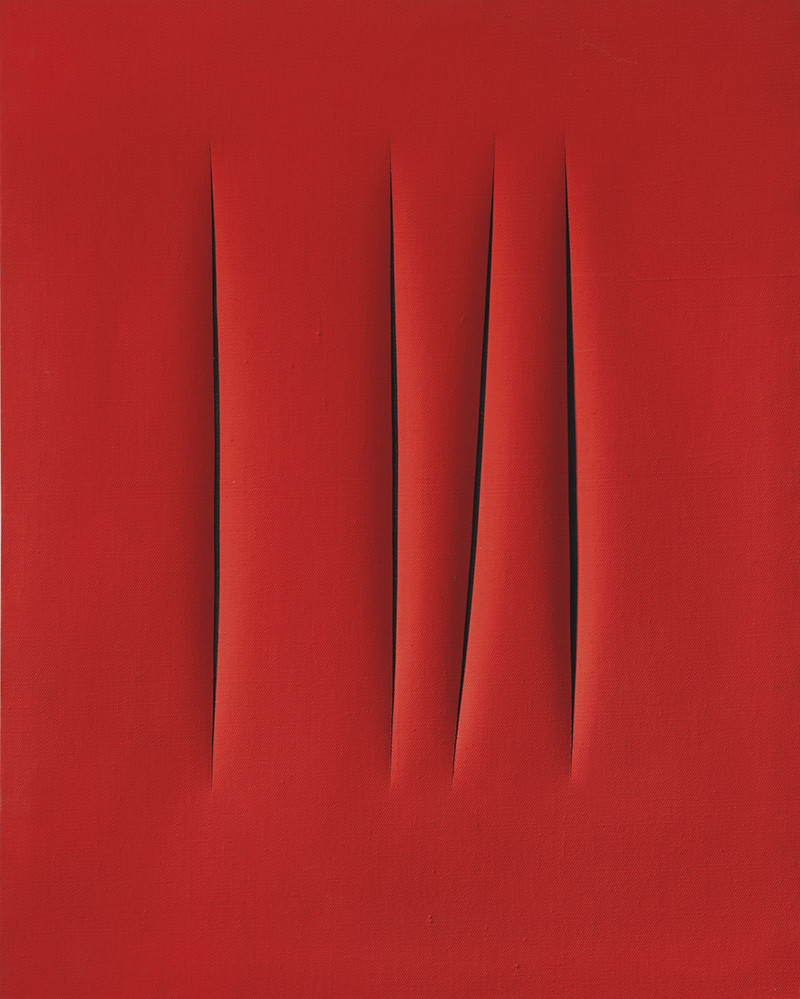
Fontana founded Spatialism, a movement concerned with breaking the flat plane of the canvas. He’s most famous for slashing and puncturing canvases, works he called “Concetto Spaziale” (Spatial Concept).
Those cuts look simple. They’re not. Fontana was challenging the whole idea of what a painting could be, pushing past abstract art into something closer to sculpture. The gesture of the cut was the artwork itself.
Before Spatialism, he worked in ceramics, sculpture, and mosaic. His Argentine years in the 1940s were formative. He published the “White Manifesto” in Buenos Aires in 1946, which laid the groundwork for everything that came after.
Most Famous Paintings
- Concetto Spaziale, Attesa (various, 1958-1968), his iconic slashed canvases
- Concetto Spaziale, La Fine di Dio (1963-1964), egg-shaped canvases with punctures and cuts
- Ambiente Spaziale (1949), one of the earliest spatial environments in art history
Techniques and Mediums
Fontana used oils on canvas, but his real medium was the canvas itself. The slashes and holes were made with razors and sharp tools. He also worked extensively with ceramics, neon, and mixed-media installations.
His approach to space in visual art was ahead of its time. He treated the void behind the canvas as part of the work, something that influenced minimalism and conceptual art for decades.
Legacy and Influence
Fontana’s slashed canvases sell for millions at auction today. His work directly influenced Arte Povera, minimalist sculpture, and installation art. Artists like Yayoi Kusama, who worked in his studio briefly, credited him as an early influence.
Where to See Their Work
MoMA in New York, the Tate Modern in London, Centre Pompidou in Paris, and the Museo del Novecento in Milan all hold major collections. The Fondazione Lucio Fontana in Milan manages his estate.
Emilio Pettoruti
Early Life and Background
Born in 1892 in La Plata, Emilio Pettoruti showed artistic talent early and won a scholarship to study in Italy at age 21. He spent over a decade in Europe, absorbing cubist and futurist ideas firsthand.
When he returned to Buenos Aires in 1924, his avant-garde cubist exhibition caused a public scandal. Argentina wasn’t ready for it. But that show marked a turning point in Latin American modern art.
Artistic Style and Movement
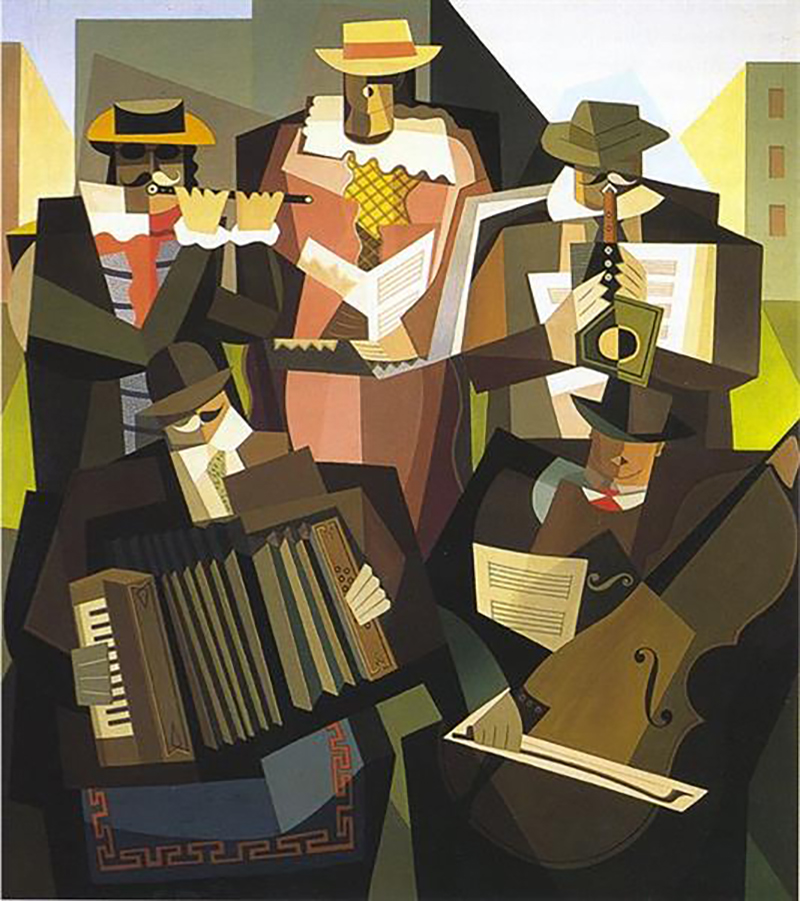
Pettoruti was Argentina’s leading cubist painter. His work drew on both Picasso‘s analytical approach and the Italian futurists he’d met in Milan. But he developed his own distinct visual language, more lyrical and less fragmented than European cubism.
He painted still lifes, figures, and especially his famous “Soles” (Suns) series. His use of color harmony and geometric form set him apart from the nationalist art that dominated Argentine institutions at the time.
Most Famous Paintings
- El Improvisador (1937), a cubist harlequin figure that became an icon of Argentine modernism
- Sol Argentino (1941), one of his celebrated sun paintings
- Mi Ventana en Florencia (1917), an early cubist work from his Italian period
Techniques and Mediums
Pettoruti worked with oils on canvas. His approach combined geometric abstraction with recognizable subjects, creating flattened pictorial space that maintained a sense of light and atmosphere. He was precise. Controlled. The opposite of spontaneous.
Legacy and Influence
As director of the Museo Provincial de Bellas Artes in La Plata for nearly two decades (1930-1947), Pettoruti shaped a generation of Argentine artists. His lifelong friendship with Xul Solar connected two of the country’s most important modernist voices.
Where to See Their Work
The Museo Nacional de Bellas Artes in Buenos Aires holds key works. The Museo Provincial de Bellas Artes in La Plata also has a significant collection. Pieces appear internationally at the Museum of Modern Art in New York and various Latin American collections.
Raquel Forner
Early Life and Background
Raquel Forner was born in Buenos Aires in 1902. She studied at the National Academy of Fine Arts and then, like many Argentine painters of her generation, headed to Paris in the late 1920s to study with Othon Friesz.
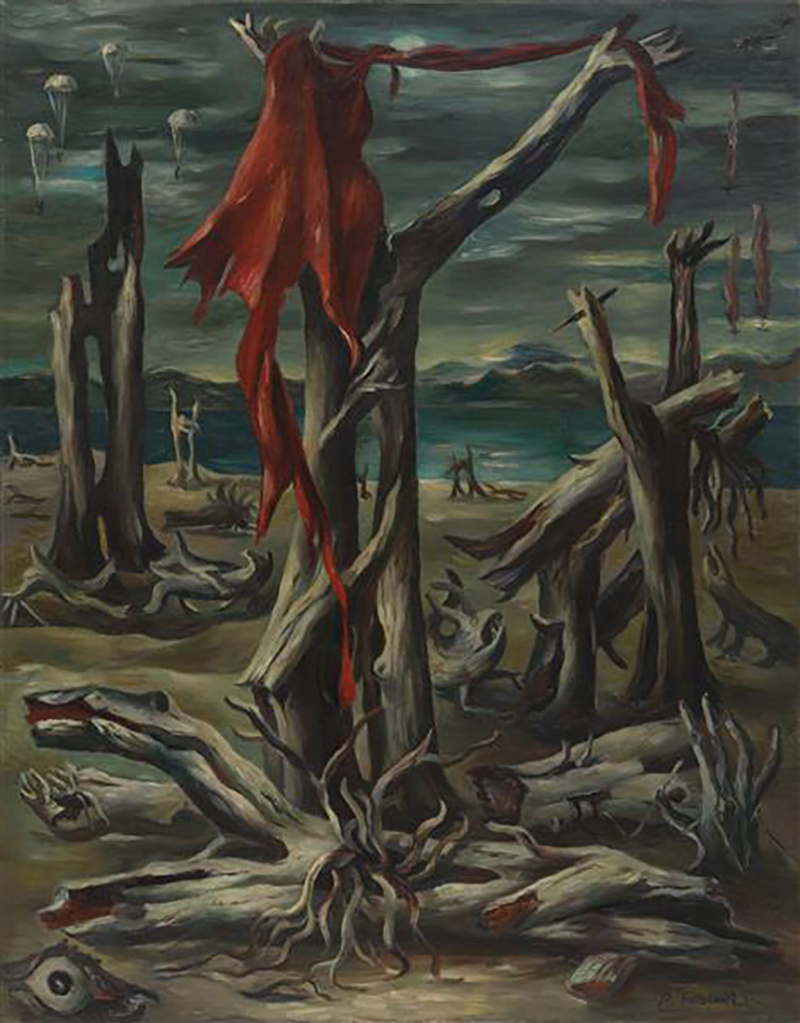
The Spanish Civil War and World War II deeply affected her. Those events turned her art from post-impressionist landscapes toward something much darker and more visceral.
Artistic Style and Movement
Forner’s work is tough to pin down. She moved through expressionist figuration, mythological imagery, and eventually cosmic or space-themed paintings. Her later work features astronauts, mutant beings, and apocalyptic visions.
The emphasis in her paintings is always on the human figure under extreme conditions, whether war, cosmic transformation, or existential crisis. She used dark palettes, dramatic lighting close to chiaroscuro, and twisted anatomies.
Most Famous Paintings
- El Drama (1942), part of her powerful anti-war series
- Las Lunas series (1960s-1970s), cosmic imagery blending human figures with space exploration
- Retablo de Dolor (Altar of Pain, 1943), a response to wartime violence
Techniques and Mediums
She painted primarily in oils on large canvases. The impasto is heavy in her later work, and her handling of tone shifts from warm earth tones in earlier pieces to blues, silvers, and blacks in the space period. Strong directional lines pull the eye through turbulent, layered compositions.
Legacy and Influence
Forner was one of the first Argentine women to gain major international recognition as a painter. She was a member of the Florida group and exhibited across Europe and the Americas. The Fundacion Forner-Bigatti in Buenos Aires preserves her work and that of her husband, sculptor Alfredo Bigatti.
Where to See Their Work
Fundacion Forner-Bigatti in Buenos Aires. The Museo Nacional de Bellas Artes also holds pieces, as do several Latin American art museums.
Julio Le Parc

Early Life and Background
Born September 23, 1928, in Mendoza, Julio Le Parc entered the School of Fine Arts in Buenos Aires at fifteen. He showed early interest in Argentina’s avant-garde movements, especially the Spatialist movement led by Lucio Fontana.
In 1958, a French government scholarship brought him to Paris, where he has lived ever since.
Artistic Style and Movement
Le Parc is one of the founders of kinetic and op art in Latin America. He co-founded the Groupe de Recherche d’Art Visuel (GRAV) in Paris in 1960, pushing art toward viewer interaction and optical effects.
His work uses light, reflection, and movement as primary materials. Spinning mobiles, refracted light installations, and paintings with vibrating geometric patterns. The idea is that art should be a shared, participatory experience rather than a passive one.
Most Famous Paintings
- Alchimie series (1960s-present), acrylic paintings with geometric color progressions
- Continuel Lumiere series, light-based kinetic sculptures
- Modulation series, paintings exploring optical vibration through rhythm and repetition
Techniques and Mediums
Le Parc works with acrylic painting, metal, mirrors, motors, and artificial light. His painted works use precise geometric structures to create optical illusions of depth and motion. Every element follows a strict system, yet the visual effect feels alive.
Legacy and Influence
He won the Grand Prize for Painting at the 1966 Venice Biennale. At 97, he’s still working. His influence extends across kinetic art, optical art, and interactive installation globally. The Serpentine Gallery, Centre Pompidou, and Perez Art Museum Miami have all hosted major retrospectives.
Where to See Their Work
Centre Pompidou (Paris), Museo Nacional de Bellas Artes (Buenos Aires), the Perez Art Museum Miami, and Palais de Tokyo (Paris). His studio in Cachan, outside Paris, remains his working base.
Marta Minujin
Early Life and Background
Born in 1943 in the San Telmo neighborhood of Buenos Aires. Her father was a physician, her mother of Spanish descent. She studied at the Escuela de Bellas Artes Manuel Belgrano and exhibited her first works in 1959, at just sixteen.
A scholarship took her to Paris in 1961, where she connected with the Nouveaux Realistes and began building the experimental practice that would define her career.
Artistic Style and Movement
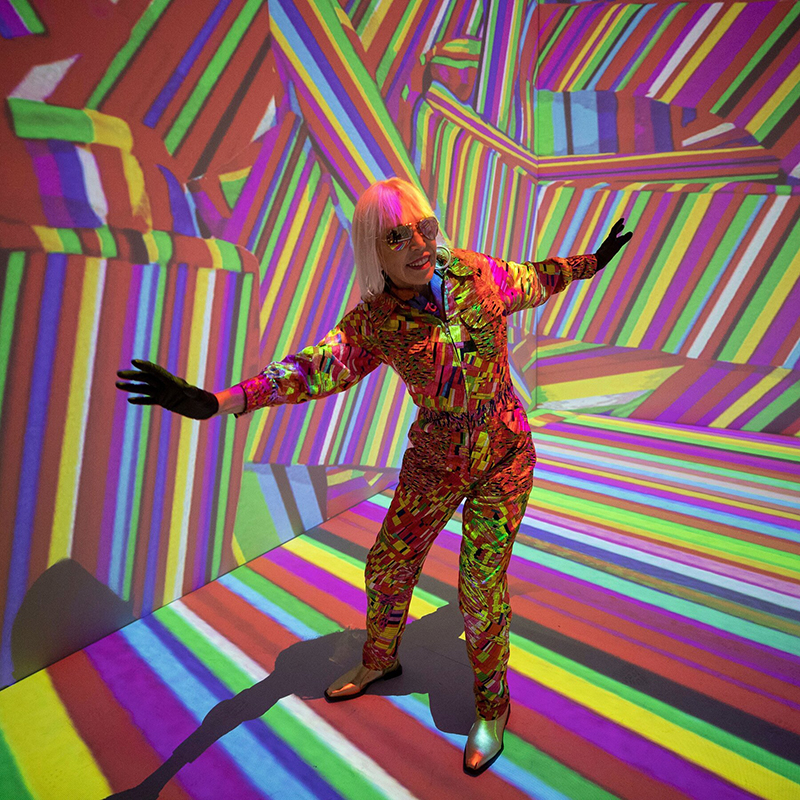
Minujin is Argentina’s most prominent conceptual and performance artist. She emerged from the pop art scene of 1960s Buenos Aires but pushed way beyond it into happenings, participatory installations, and monumental public art.
Her materials are intentionally disposable: mattresses, cardboard, food, inflatables. The works are meant to be temporary, experienced, and then gone. That philosophy of impermanence directly challenged the authoritarian politics of her era.
Most Famous Paintings
- La Menesunda (1965), a sixteen-room immersive environment at the Di Tella Institute that drew 30,000 visitors
- The Parthenon of Books (1983 and 2017), a full-scale replica built from banned books
- El Pago de la Deuda Externa (1985), a performance where she symbolically paid Argentina’s foreign debt to Andy Warhol with corn
Techniques and Mediums
Minujin works across every medium imaginable. Soft sculpture, neon, video, performance, inflatable structures, fluorescent paintings, and large-scale installations. She also produces acrylic paintings on canvas, often incorporating cut mattress fabric.
The variety of her output is staggering. In a single decade she might build a bread replica of the James Joyce Tower, create psychedelic drawings, and stage a happening with 500 live chickens.
Legacy and Influence
Minujin is arguably the most recognized living Argentine artist. Her works are held at MoMA, the Guggenheim, Centre Pompidou, the Tate Modern, and The Metropolitan Museum of Art. She received the Konex Award (Argentina’s highest cultural honor) multiple times starting in 1982.
Where to See Their Work
MoMA (New York), Tate Modern (London), Centre Pompidou (Paris), MALBA (Buenos Aires), the Guggenheim (New York), and the Reina Sofia (Madrid). The Jewish Museum in New York hosted a major retrospective in 2023.
Guillermo Kuitca
Early Life and Background
Born January 22, 1961, in Buenos Aires. He grew up during the brutal military dictatorship known as the “Argentine Revolution.” That experience of political violence, disappearances, and instability runs through his entire body of work.
He had his first solo exhibition at age thirteen. At thirteen. At the Galeria Lirolay in Buenos Aires.
Artistic Style and Movement
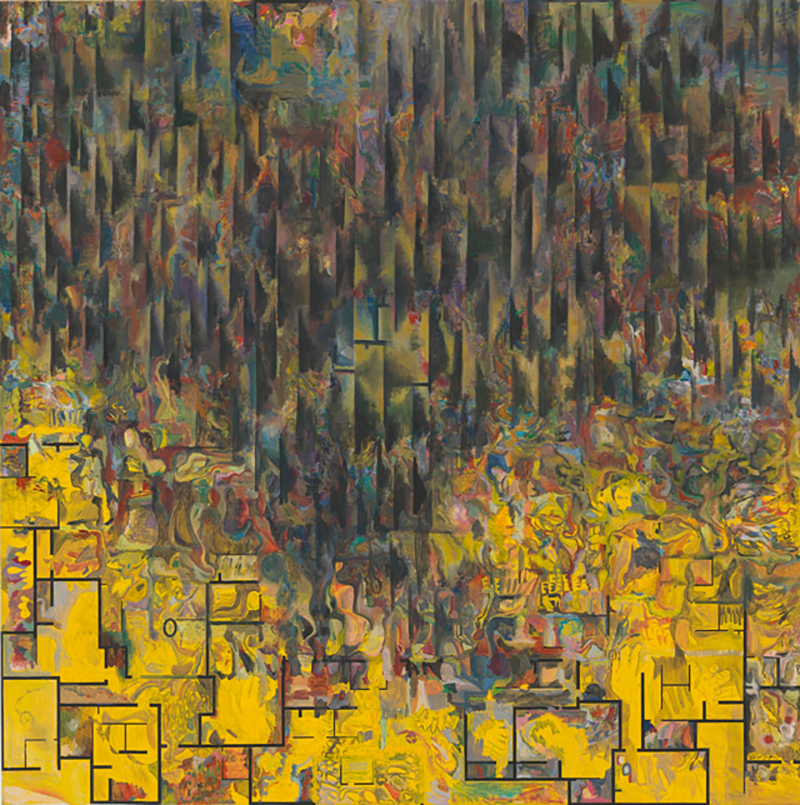
Kuitca paints maps, architectural floor plans, theater seating charts, and baggage carousels. The human figure is almost always absent, but human presence is everywhere, implied through the spaces people once occupied.
His style has evolved from gestural, theatrical paintings in the 1980s to a distinctive “cubistoid” approach that reconciles abstraction with figuration. Themes of migration, memory, loss, and perspective recur constantly.
He also famously painted maps directly onto mattresses in the early 1990s, blurring the line between painting and installation.
Most Famous Paintings
- Desenlace series (2007), cubistoid paintings shown at the Venice Biennale Argentine Pavilion
- Diarios series, circular canvases that he walked on, cut, and covered with debris
- Untitled (mattress maps) (early 1990s), geographical maps painted on mattresses, exhibited at documenta IX
Techniques and Mediums
Kuitca works primarily with oil on canvas, though he has also used mixed media, acrylic, and unconventional surfaces like mattresses. His approach to balance shifts between geometric precision and expressive gesture, sometimes within the same piece.
Legacy and Influence
He was the first Argentine artist invited to documenta (1992). He represented Argentina at the 2007 Venice Biennale. In 1991, he founded the Beca Kuitca, a studio residency program in Buenos Aires that has nurtured younger generations of Argentine artists.
His work hangs at The Metropolitan Museum of Art, MoMA, the Tate, the Stedelijk Museum, the Reina Sofia, and MALBA.
Where to See Their Work
MoMA and The Metropolitan Museum (New York), Tate (London), Hirshhorn Museum (Washington, DC), MALBA (Buenos Aires), and the Stedelijk Museum (Amsterdam). He continues to live and work in Buenos Aires.
Lino Enea Spilimbergo
Early Life and Background
Born in Buenos Aires in 1896, Lino Enea Spilimbergo was the son of Italian immigrants. He studied at the National Academy of Fine Arts and earned a scholarship to Paris in 1925, where he trained under Andre Lhote alongside Antonio Berni.
Artistic Style and Movement
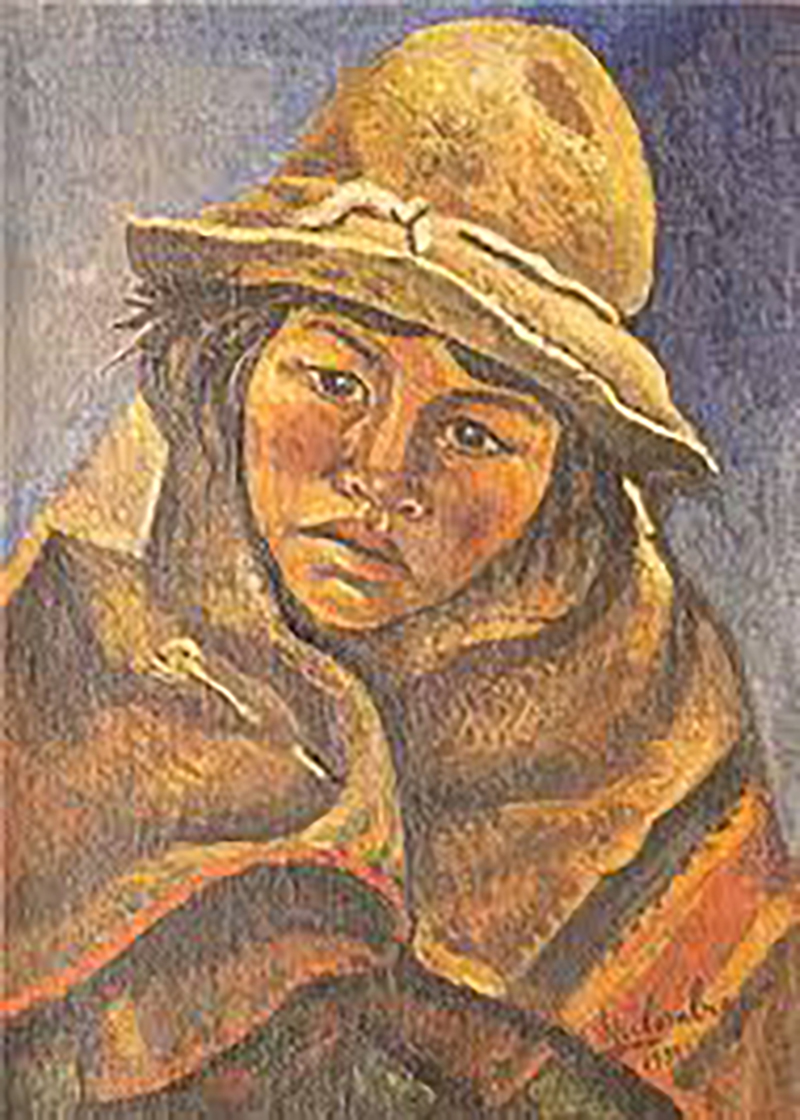
Spilimbergo blended cubist structure with figurative and social realist subjects. His paintings have a monumental quality. Strong lines, architectural compositions, and muted earth tones that give them a fresco-like feeling.
He was a member of the Florida group and one of the painters who worked with David Alfaro Siqueiros on the mural “Ejercicio Plastico” in 1933. His nudes and figure paintings carry a quiet gravity, almost classical in their form but modern in execution.
Most Famous Paintings
- Ejercicio Plastico (1933), a collaborative mural with Siqueiros, Berni, and Castagnino
- Figuras (1930s), monumental figure compositions
- Terrazas series, geometric figure studies that merge cubism with Argentine subjects
Techniques and Mediums
He worked with oils, tempera, and mural techniques. His draftsmanship was exceptional. He also taught extensively, influencing younger painters at both the National Academy and the Escuela Superior Ernesto de la Carcova.
His attention to gradation and the structural unity of his compositions reflected his deep study of both classical Italian painting and modern cubist principles.
Legacy and Influence
Spilimbergo is considered one of the five great Argentine painters of the 20th century, alongside Quinquela Martin, Berni, Pettoruti, and Xul Solar. His influence as a teacher may have been even greater than his influence as a painter.
Where to See Their Work
Museo Nacional de Bellas Artes (Buenos Aires), Museo Provincial de Bellas Artes (La Plata), and various Argentine institutional collections. The “Ejercicio Plastico” mural, after a complicated restoration history, is now displayed at the Museo del Bicentenario in Buenos Aires.
FAQ on Famous Argentinian Painters
Who is the most famous painter from Argentina?
Benito Quinquela Martin is widely considered the most popular Argentine painter. His port scenes of the La Boca neighborhood in Buenos Aires became iconic. Antonio Berni and Xul Solar closely follow in terms of international recognition.
What art movements came out of Argentina?
Argentina contributed Nuevo Realismo (led by Antonio Berni), Spatialism (founded by Lucio Fontana), and the Nueva Figuracion movement of the 1960s. The country also played a key role in Latin American kinetic and op art through Julio Le Parc.
Where can I see Argentine paintings in Buenos Aires?
The Museo Nacional de Bellas Artes (MNBA) and MALBA hold the largest collections. The Museo de Bellas Artes de la Boca Quinquela Martin and Museo Xul Solar are also worth visiting for specific artists.
What style did Benito Quinquela Martin paint in?
Quinquela Martin worked between expressionism and impressionism, using heavy palette knife strokes. His subjects were almost exclusively port workers, ships, and dockside scenes from the La Boca neighborhood where he grew up.
Why is Antonio Berni important in Argentine art?
Berni founded the Nuevo Realismo movement and created politically charged works about poverty and class struggle. His Juanito Laguna collage series, made from discarded materials, won the Grand Prix at the 1962 Venice Biennale.
Was Lucio Fontana Argentine or Italian?
Both. Fontana was born in Rosario, Argentina, in 1899 to an Italian family. He lived between the two countries throughout his life. He published his foundational “White Manifesto” in Buenos Aires before settling permanently in Milan.
What mediums did Argentine painters typically use?
Most worked with oil on canvas. Xul Solar preferred watercolor and tempera. Berni used found materials for his collages. Julio Le Parc incorporated metal, mirrors, and artificial light into kinetic installations.
Who are the most famous contemporary Argentine painters?
Guillermo Kuitca and Marta Minujin are the most recognized living Argentine artists. Kuitca paints maps and architectural plans. Minujin creates large-scale installations, performances, and participatory happenings shown at major museums globally.
Did Argentine painters influence international art movements?
Yes. Lucio Fontana’s Spatialism directly shaped minimalism and Arte Povera in Europe. Julio Le Parc co-founded the GRAV group in Paris, influencing kinetic art worldwide. Marta Minujin’s happenings paralleled and sometimes preceded similar work in New York.
What makes Argentine painting different from other Latin American art?
Argentine painting has stronger ties to European modernism due to heavy Italian and Spanish immigration. Unlike Mexican muralism’s focus on indigenous identity, Argentine art often balanced European avant-garde ideas with local subjects like the Pampas, port life, and Buenos Aires culture.
Conclusion
These famous Argentinian painters did more than make art for galleries. They built visual languages that captured the social tensions, immigrant experiences, and political upheaval of their country across an entire century.
From Quinquela Martin’s dock workers to Fontana’s slashed canvases, each artist responded to Argentina’s reality in a completely different way. That range is what makes the Buenos Aires art scene so rich.
Berni’s collages from the villas miserias. Le Parc’s light machines in Paris. Minujin’s burning mattresses on the streets. None of it fits into a single category.
If you get the chance to visit MALBA or the Museo Nacional de Bellas Artes, take it. Seeing these works in person hits differently than any screen can deliver. Argentine art rewards the trip.