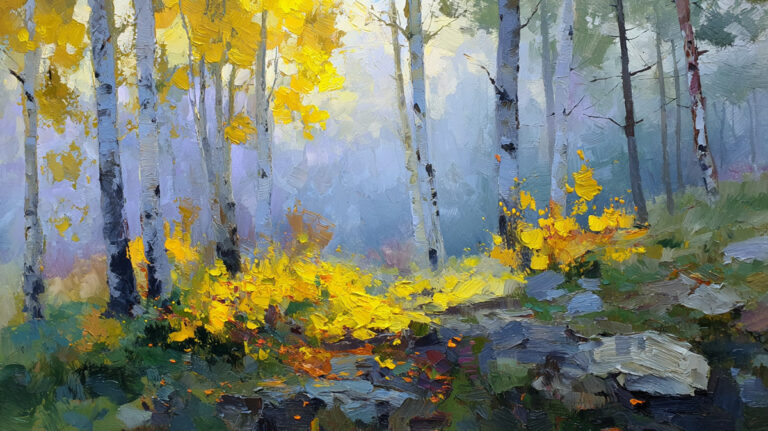
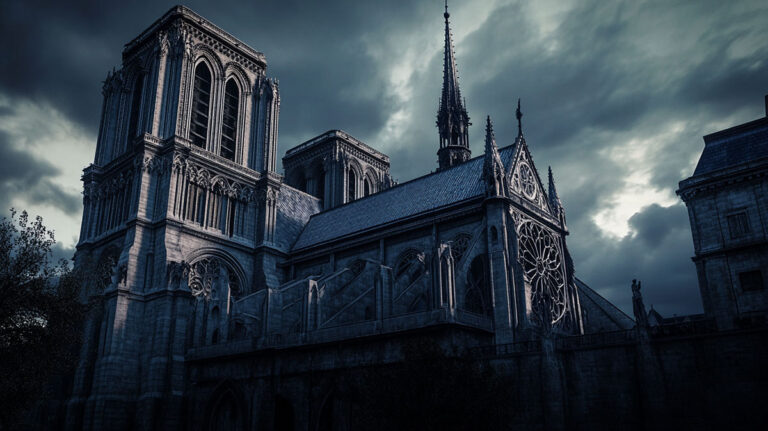
A painting where everything fights for attention gives the viewer nothing to hold onto. That is the problem subordination solves.
Understanding what is subordination in painting starts with a simple idea: some parts of a composition need to step back so the main subject can come forward. It is one of the core principles of design, working alongside dominance and emphasis to create a clear visual hierarchy.
This article covers how subordination works, the specific techniques painters use to achieve it, and how it plays out across different styles and mediums. You will also find historical examples, common mistakes, and practical exercises to sharpen your own compositional control.
What Is Subordination in Painting

Subordination is the deliberate de-emphasis of certain elements within a composition so that one area commands the viewer’s attention above all others. It is not about hiding things or removing them. It is about controlling how much visual pull each part of the painting carries.
Every painting contains a pecking order. Some things matter more than others, and subordination is how you make that clear without spelling it out.
Think of it this way. When everything in a painting screams for attention at the same volume, nothing gets heard. Subordination turns some of those voices down so the main subject can come through.
A 2024 eye-tracking study published in the Journal of Eye Movement Research found that photographs with a clear subject attracted longer fixation durations and fewer saccadic movements from viewers. Images without a defined center of interest caused the participants’ gaze to wander and search, producing scattered attention patterns. Compositional hierarchy, in other words, is not just a theory. It physically changes how people look at visual work.
Subordination sits alongside dominance and emphasis as one of the core principles of design in painting. But where dominance tells you what to look at, subordination tells you what to look past. And that distinction matters more than most painters realize, especially early on.
The principle applies across all painting styles, from tight academic realism to loose impressionism and fully non-representational abstract work. The tools for achieving it shift depending on the style, but the underlying logic stays the same.
How Subordination Works With Dominance and Emphasis

You cannot have subordination without dominance. They are two sides of the same coin, and one literally cannot exist without the other.
Dominance is the element in a composition that pulls the hardest. It demands the first look. Subordination is everything else, arranged to support that pull rather than fight against it.
Visual hierarchy depends on this relationship. Without it, paintings feel flat and confusing, regardless of how technically skilled the rendering is.
An eye-tracking study by Kirtley (2018), published in Empirical Studies of the Arts, used Andrew Loomis’s instructional compositions to test whether viewers actually followed intended visual paths. The results confirmed that focal points successfully attracted and held viewer attention. But the intended entry and exit points were largely ignored. Viewers went straight to the dominant element.
That finding says something practical about subordination. The dominant area does not need elaborate pathways to pull the eye. It needs everything else to step back.
The Spectrum From Dominant to Subordinate
Compositional hierarchy is rarely binary. Most paintings operate on a gradient.
| Role | Technical Logic | Visual Behavior | Typical Treatment |
| Dominant Element | High Frequency / High Chroma: Commands the retina through sheer intensity. | Attracts first glance; holds the longest fixation. | Highest contrast, sharpest edges, maximum detail density. |
| Secondary Element | Supportive Contrast: Provides context or a “destination” for the second eye-jump. | Supports the focal point; acts as a narrative bridge. | Moderate contrast; some detail and saturation retained. |
| Subordinate Areas | Low-Frequency Field: Areas where the eye can “rest” and regroup. | Recede; provide environmental context. | Low contrast, soft edges, minimal detail. |
| Background | Chromatic Recession: Muted tones and “Lost Edges” to prevent competition. | Frames the scene; remains passive and unread. | Muted tones, broad handling, atmospheric blur. |
The gradient is what makes subordination feel natural rather than forced. Jumping straight from maximum intensity to nothing reads as a cutout, not a composition.
Why Emphasis Bridges the Two
Emphasis is the active decision about what to stress. Subordination is the result of that decision applied to everything else.
A painter chooses what to emphasize through contrast, placement, or color intensity. Subordination then follows automatically. If the figure’s face carries the highest value contrast and the sharpest edges, the coat and background become subordinate by comparison. The two principles work together, but they are not the same thing.
Techniques Painters Use to Subordinate Elements

Subordination is not a vague concept. It is a set of concrete, repeatable techniques that painters apply to push parts of the picture back.
Took me years to really internalize this. I kept finishing every corner of a painting to the same degree and then wondering why nothing stood out. The problem was never the focal point. It was everything else.
Value and Contrast Reduction
Lowering the value contrast in subordinate areas is the single most effective method.
When two values sit close together (a dark gray next to a medium gray, for instance), the eye skips over them. When two values jump apart (dark next to light), the eye locks on. Rembrandt van Rijn understood this instinctively. He used impasto and high detail for his main figures while painting secondary figures and backgrounds with smoother, lower-contrast handling.
According to the Old Masters Academy, Rembrandt’s spotlight technique, a beam of light on the head and shoulders of the main figure with everything else in shadow, was one of the first systematic uses of value-based subordination in Western painting. The background did not just happen to be dark. It was pushed down to make the figure punch forward.
You can test this yourself. Squint at any well-composed painting. The subordinate areas merge into simple value masses. The focal point stays visible.
Color Temperature and Saturation Shifts
Cooler, less saturated colors recede. Warmer, more saturated colors advance. That is the short version.
Practical application:
- Mix a touch of the complementary color into your subordinate areas to gray them down
- Keep your purest, most intense pigments reserved for the dominant element
- Push backgrounds toward blues and blue-grays to create spatial recession
Color saturation control is where a lot of painters trip up. They mix a beautiful, vivid green for a background tree and then cannot figure out why it competes with the portrait subject. The tree needs to lose saturation. Not be painted badly, just toned down.
Edge Quality and Detail Control
Sharp edges attract the eye. Soft, lost edges let the eye slide past.
This is one of the most powerful subordination tools, and it is also one that separates confident painters from beginners. A beginner outlines everything with the same hard edge. A more experienced painter varies edge quality constantly, keeping hard edges only where the focal point needs them.
John Singer Sargent did this better than almost anyone. Look at his portraits and you will find razor-sharp edges around the eyes and mouth, then sleeves and backgrounds that practically dissolve into the canvas. He was subordinating aggressively, but because the lost edges feel loose and painterly, most people just call it “style.”
It is not style. It is a compositional decision.
Subordination and the Focal Point

The focal point does not exist in isolation. It exists because everything around it has been subordinated.
That is worth repeating. A strong center of interest is not created by making one area louder. It is created by making everything else quieter.
What Happens Without Subordination
A painting with no subordination gives the viewer no entry point. The eye bounces around, finds no place to rest, and moves on.
A 2020 study published in PLOS ONE examined gaze deployment on 150 paintings across five art movements. The researchers found that deep learning models trained on natural scenes could predict viewer attention on paintings with reasonable accuracy, because well-composed paintings follow the same visual logic that human perception evolved to process. Paintings where attention spread evenly across the surface, with no clear hierarchy, broke those prediction models.
The takeaway? Our brains expect hierarchy in visual information. Paintings that provide it feel readable. Paintings that do not feel chaotic, even if every individual element is well-painted.
How the Ratio Affects Composition Strength
The proportion of subordinate space to dominant space matters more than most people think.
Too little subordination: The painting feels cluttered. Multiple areas compete. No single element reads as the subject.
Too much subordination: The painting feels empty. The focal point floats in a void with nothing supporting it.
A useful starting point is roughly 70-80% subordinate area to 20-30% dominant area. That is not a rule. But it gives the focal point enough room to breathe while keeping enough subordinate structure to frame it. Caravaggio often pushed even further, with enormous expanses of near-black background surrounding a tightly lit cluster of figures.
A Tobii eye-tracking study of Caravaggio’s works at the Pio Monte della Misericordia in Naples revealed that viewers’ visual pathways were repetitive and concentrated on specific areas of interest, even across different participants. The subordinated dark areas effectively funneled every viewer’s attention to the same spots.
Subordination in Color Theory and Painting Palettes

Color subordination is where color theory meets compositional design. The two are not separate subjects, even though most courses teach them that way.
Dominant vs. Subordinate Colors
Every effective painting palette has a hierarchy. One hue family dominates. The rest play supporting roles.
A common framework:
- 60% of the canvas occupied by the dominant color family
- 30% taken by a secondary supporting color
- 10% reserved for an accent that creates punch
That 60-30-10 split is not gospel, but it shows up in enough successful paintings that it is worth taking seriously. The 60% area is subordinate by function. It sets the mood, provides context, and stays calm. The 10% accent is where your color intensity peaks.
The Role of Muted Mixtures
Grayed-down, less intense versions of your palette colors do the heavy lifting in subordinate areas. They are not “boring” colors. They are doing a specific job.
Henri Matisse is an interesting case here. His work in the Fauvist period used highly saturated colors almost everywhere, which made traditional subordination through color muting nearly impossible. Instead, he subordinated through shape simplification and placement. The lesson: if you take one subordination tool off the table, you need to lean harder on the others.
According to the Art Basel and UBS Global Art Market Report 2025, paintings remained the most purchased medium and the largest by value in the 2024 art market. Regardless of whether collectors buy at fairs or online, the underlying compositional strength of a work, including its use of color hierarchy, affects how it reads in both physical and digital contexts.
Analogous and Monochromatic Approaches
Working with analogous color schemes makes subordination almost automatic. When all your colors sit next to each other on the color wheel, the overall palette stays unified, and any shift in saturation or temperature quietly subordinates one area to another.
Monochromatic color schemes work similarly. With hue removed from the equation, subordination depends entirely on value and saturation shifts. It is a good exercise for painters who struggle with color hierarchy, because it strips the problem down to its simplest terms.
Historical Examples of Subordination in Painting

Subordination is not a modern invention. Painters have been doing this for centuries, though they did not always use the word.
Subordination in Baroque and Dutch Golden Age Painting
Baroque painters weaponized subordination. Chiaroscuro and tenebrism are, at their core, subordination strategies that use extreme value contrast to bury everything except the lit subject.
Caravaggio blacked out large portions of his backgrounds and brightly illuminated foreground figures from a single focused light source. The effect is theatrical, and it works because the subordination is absolute. Nothing in the dark areas competes.
Johannes Vermeer took a subtler approach. His interiors use controlled light from a window on the left to create a soft gradient of emphasis across the scene. Objects closer to the light source carry more contrast and detail. Objects further away lose both. The subordination is gentle but consistent, pulling the eye toward the figure without the drama of Caravaggio’s total darkness.
Peter Paul Rubens used color contrast alongside light to manage his large, multi-figure compositions. According to Britannica, Rubens exploited the tenebristic approaches of both Caravaggio and Adam Elsheimer for dramatic effect in works like The Raising of the Cross. His subordination was selective, keeping secondary figures present but clearly below the focal action in visual priority.
Subordination in Impressionism and Plein Air Work
The Impressionists approached subordination differently. Instead of using darkness to suppress areas, they used lost edges and color temperature shifts.
Claude Monet painted backgrounds and secondary elements with broken, loose brushwork that kept them active but unresolved. The eye registers them as atmosphere rather than objects. Meanwhile, whatever Monet wanted you to focus on (a cathedral facade, a lily pad, a figure) gets slightly sharper handling or a warmer color note that pulls it forward.
This kind of subordination through edge quality is central to plein air painting, where speed forces decisions about what matters and what does not. You cannot finish everything when the light is changing every twenty minutes. So you subordinate by necessity, and the paintings often feel more alive because of it.
Edgar Degas cropped figures aggressively, sometimes cutting them at the edge of the canvas. That cropping is a form of subordination. It tells the viewer those figures exist but are not the point. Degas also used perspective tilts and unusual vantage points to create natural hierarchies within his compositions.
Subordination Beyond Traditional Representation
Pablo Picasso fragmented form in his Cubist work but still maintained subordination through tonal grouping and selective edge sharpness. Even in heavily fractured compositions, some planes read as dominant and others recede.
Mark Rothko‘s color field paintings use subordination through color weight and proportion. One color block typically carries more visual mass than the others, creating a quiet but clear hierarchy within what appears to be an extremely simple structure.
The 2025 Art Basel report noted that paintings comprised the largest portion of transaction values in the global art market, with 85% of dealer transactions in 2024 being works priced below $50,000. Across that enormous volume of work, from emerging abstract painters to established realists, the compositional strength created by subordination remains one of the qualities that separates paintings that hold a viewer’s attention from those that do not.
Subordination vs. Unity vs. Balance

These three principles get confused constantly. They overlap, sure. But they do different things.
Subordination creates hierarchy. Unity creates cohesion. Balance distributes visual weight. A painting can have strong unity (everything feels like it belongs together) and still lack subordination (nothing stands out as the main event).
| Principle | Technical Logic | What It Does | What Happens Without It |
| Subordination | Value/Chroma Suppression: Purposely de-emphasizing non-essential areas. | Creates a clear “Pecking Order” among elements. | Visual Chaos: Every element shouts; no focal point exists. |
| Unity | Proximity & Continuity: Using repetition or shared traits to “bond” elements. | Makes all parts feel related and cohesive. | Fragmentation: The piece feels like a collection of random parts. |
| Balance | Equilibrium of Weight: Distributing visual “gravity” across the center axis. | Ensures no single area feels “heavier” than another. | Instability: The composition feels lopsided or physically uncomfortable. |
Where Unity and Subordination Overlap
Unity and variety work as a pair, just like dominance and subordination. You need both for a painting to function.
But unity is about the whole canvas feeling like one painting rather than five separate paintings stitched together. Subordination is about which part of that unified whole gets the spotlight. You can have a perfectly unified painting where everything reads at the same level, and it will still feel flat because nothing dominates.
A 2024 study from APDDv2 (Aesthetics of Paintings and Drawings Dataset) categorized paintings across 10 aesthetic attributes, with composition ranking as one of the top factors in expert aesthetic scoring. Hierarchy within that composition, not just overall coherence, drove higher ratings.
Where Balance and Subordination Differ
Balance is about weight. Symmetrical and asymmetrical balance both distribute visual mass so the painting does not tip to one side.
Subordination does not care about evenness. It actively creates unevenness on purpose. The focal point gets more weight. The subordinate areas get less. That controlled imbalance is what makes the composition feel directed rather than just stable.
Asymmetrical balance actually depends on subordination to work. A small, high-contrast element on one side can balance a large, muted area on the other, but only if the muted area is properly subordinated.
Common Mistakes With Subordination in Composition
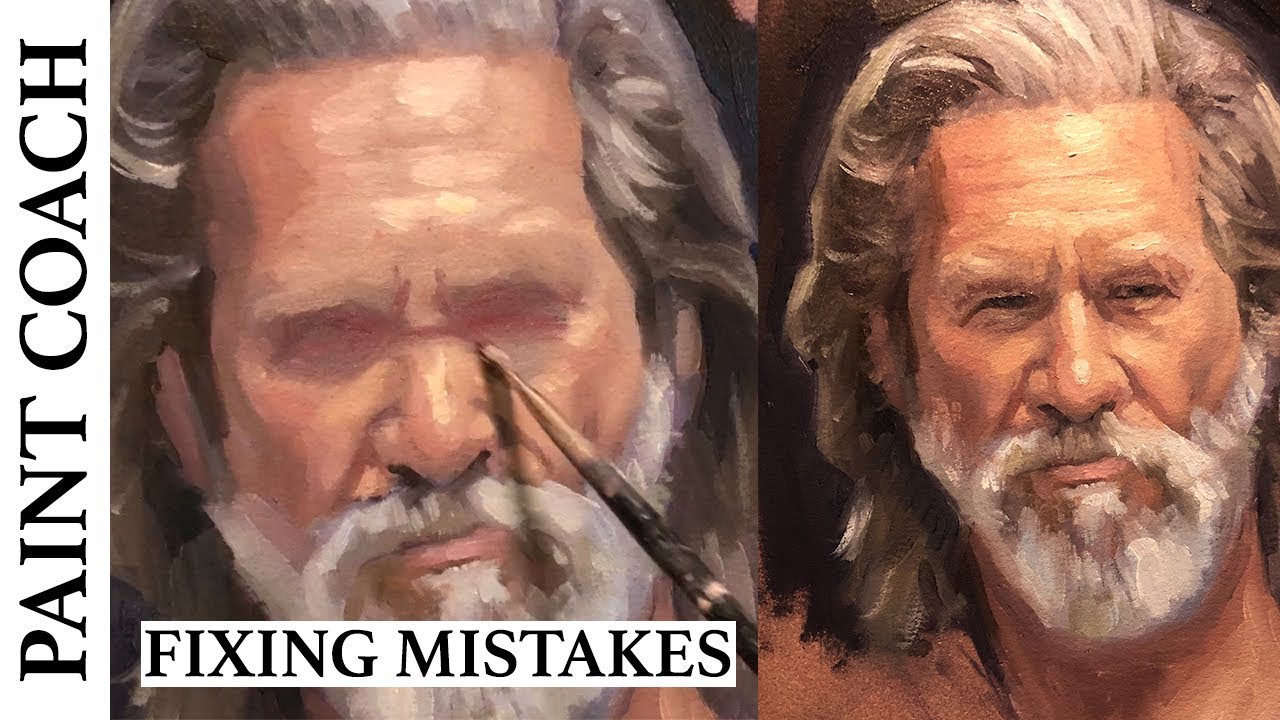
Most composition problems are actually subordination problems in disguise.
Equal Treatment of Everything
This is the number one issue. Painting every area with the same level of detail, the same edge sharpness, and the same contrast produces the “overworked painting” look.
According to Draw Paint Academy, overworking a canvas is one of the most common mistakes painters make, and the core issue is spending excessive time refining every detail until the painting loses its original energy. The fix is not to paint less. It is to paint less in specific areas while keeping full attention on the areas that matter.
Squinting at your work helps instantly. If everything still reads as separate, detailed shapes when you squint, your subordination is weak.
Over-Subordinating Until Areas Disappear
The opposite problem. Some painters push their backgrounds and secondary elements so far back that they vanish entirely.
The result: the focal point floats in dead space with nothing to anchor it. Subordinate areas still need enough presence to provide context, spatial information, and mood. A subordinated tree line should still feel like trees, even if you cannot count the individual leaves.
Inconsistent Hierarchy
Sharp edges in the background but soft edges on the subject. High saturation in a secondary object but muted color on the focal point. These contradictions confuse the viewer because the visual signals point in opposite directions.
Consistency matters. If you subordinate through value in one area, through color temperature in another, and through edge quality in a third, the signals need to all point toward the same dominant element. Mixed messages kill the reading of a painting faster than almost anything else.
Planning It Last Instead of First
Subordination works best when you build it into the painting from the start, during the thumbnail and value study stage.
Trying to subordinate areas after the painting is mostly finished usually means fighting against hours of committed brushwork. That is when painters end up scrubbing dark glazes over detailed backgrounds or desperately softening edges that were painted hard from the beginning. At that point, the fixes look like fixes.
How to Practice Subordination in Your Own Work

Subordination is a skill. It gets better with focused practice, not just by knowing the theory.
Thumbnail Sketches With Limited Values
Draw small compositions using only two or three values. White, a mid-gray, and a dark. That is it.
This forces hierarchy decisions immediately. You cannot hide behind detail or color when you only have three tones to work with. The value scale gets compressed, and you have to decide right away what is dominant and what steps back.
Do at least three or four variations of the same scene. Move the dominant value mass around. Change which area gets the darkest dark. You will see how dramatically the reading of the same subject shifts depending on where you place your strongest contrast.
The Squint Test and Grayscale Conversion
Squinting reduces your ability to see detail and forces you to read the painting in big value shapes. If the hierarchy holds up when you squint, it works.
A more precise version: take a photo of your painting and convert it to grayscale on your phone. The tonal structure becomes immediately obvious without color distracting you. If subordinate areas jump out in grayscale, they need more tonal suppression.
Limited Palette Exercises
Painting with only three or four colors forces you to manage color harmony and subordination simultaneously.
- A classic limited palette: titanium white, yellow ochre, burnt sienna, ultramarine blue
- With only four tubes, you cannot out-saturate a problem. You have to use value and temperature to control hierarchy
- This is how Richard Schmid recommended learning color for decades, and it works because it teaches restraint
Studying Master Paintings by Mapping Their Hierarchy
Pick a painting you admire. Any period, any style. Then sketch its composition as a simple value map, marking which areas are dominant, secondary, and fully subordinate.
You will start seeing patterns. Baroque painters tend to subordinate through massive dark areas. Impressionists subordinate through edge loss and temperature shifts. Contemporary painters often subordinate through scale relationships or selective detail.
The Art of Education 2024 survey found that 90% of art teachers reported being most comfortable with two-dimensional mediums like painting and drawing. Compositional principles like subordination sit at the center of that comfort zone, and studying how masters handled it remains the most direct way to improve.
Subordination Across Different Painting Mediums
The concept stays the same. The execution changes depending on what you are painting with.
| Medium | Primary Subordination Method | Technical Logic | Unique Advantage |
| Oil | Glazing & Scumbling | Thin, transparent layers (glazes) push areas back; opaque “scumbles” create atmosphere. | Malleability: Slow drying allows for “Lost and Found” edges. |
| Watercolor | Wash Transparency | Higher water-to-pigment ratios create “receding” values. | Luminosity: Subordinate areas retain the “glow” of the paper. |
| Acrylic | Gloss/Matte Contrast | Using matte mediums for background and gloss for focal points. | Velocity: Rapid layering allows for instant hierarchy correction. |
| Pastel | Pressure & Texture | Soft pressure and “smudging” for distance; heavy impasto for foreground. | Immediacy: Direct tonal shifts without the need for drying time. |
Oil Painting and Layered Subordination

Oil painting gives you the most control over subordination because the slow drying time lets you glaze and adjust gradually.
Glazing (a thin, transparent darker layer over a lighter area) can push an entire section of the painting back without losing the underlying work. Scumbling (a thin, opaque lighter layer over a darker area) softens and mutes subordinate passages while adding atmospheric quality.
According to the Artist’s Magazine, glazing achieves a visual depth that direct methods like alla prima cannot. That depth is what makes oil painting uniquely suited to sophisticated subordination, because you can subordinate in stages rather than all at once.
Watercolor and the Reservation of Light
Watercolor painting flips the typical subordination process. Because you cannot easily add light back, you subordinate by controlling where you withhold detail rather than where you add it.
Leaving areas of white or near-white paper creates natural dominance. Everything else, every wash you lay down, is a degree of subordination. That is why watercolor forces compositional decisions earlier than almost any other medium. Once a wash goes down, the hierarchy is partially locked in.
Acrylic and Speed-Based Hierarchy
Acrylic painting dries fast. That is both the advantage and the challenge for subordination.
You can layer quickly, building up subordinate areas with multiple thin coats that progressively mute them. But you cannot blend wet-into-wet the way oil painters do, which makes gradual value transitions trickier. Many acrylic painters compensate by using glazing medium to extend drying time in subordinate passages, giving themselves more room to control the transitions.
Pastel and Direct Tonal Control
Pastel is the most immediate medium for subordination. Press harder, you get more intensity. Press lighter, you get softer, more subordinate marks.
Layering a soft, cool pastel lightly over a warmer underpainting is the pastel equivalent of scumbling in oils. It pushes that area back while keeping a surface texture that stays visually interesting. The danger with pastel is overworking subordinate areas until they lose their tooth and go muddy, at which point the surface itself works against you.
FAQ on What Is Subordination In Painting
What does subordination mean in painting?
Subordination is the deliberate de-emphasis of certain elements in a painting so the dominant area holds the viewer’s attention. It controls visual hierarchy by reducing contrast, detail, or color intensity in supporting areas of the composition.
How is subordination different from dominance?
Dominance makes one element stand out. Subordination pushes everything else back. They are paired principles. You cannot have one without the other, and both are needed for a clear focal point.
Why is subordination important in composition?
Without subordination, every element competes equally. The viewer’s eye wanders with no place to rest. Subordination creates a visual path that directs attention to the most significant part of the painting.
What techniques create subordination in a painting?
Painters subordinate through value compression, softened edges, reduced detail, cooler color temperatures, and lower saturation. These methods push areas back without removing them entirely from the composition.
Can subordination be used in abstract painting?
Yes. Abstract painters use tonal grouping, proportion differences, and selective edge sharpness to create hierarchy. Even non-representational work needs some areas to dominate and others to recede for the composition to function.
How did Rembrandt use subordination?
Rembrandt used chiaroscuro to subordinate backgrounds and secondary figures into deep shadow. His main subjects received impasto, high detail, and strong light, while everything else was painted with smoother, lower-contrast handling.
What is the relationship between subordination and color theory?
Color subordination means keeping supporting areas muted with grayed-down mixtures while reserving pure, saturated hues for the focal point. A typical approach uses a 60-30-10 color proportion to build hierarchy.
How do I know if my painting lacks subordination?
Squint at your painting. If every area reads as equally detailed and contrasted, subordination is missing. Converting a photo of your work to grayscale also reveals whether your tonal hierarchy is working.
Does subordination apply to all painting mediums?
Yes, though the methods differ. Oil painters glaze and scumble. Watercolorists control wash transparency. Acrylic painters layer quickly. Pastel artists vary pressure. Each medium has its own tools for managing hierarchy.
What is the most common subordination mistake beginners make?
Treating every area with equal detail, edge sharpness, and contrast. This overworked look happens because beginners finish all areas to the same degree instead of planning which parts should stay quiet from the start.
Conclusion
Subordination in painting is not a background concept. It is the structural decision that makes every other compositional choice work, from where you place your sharpest edges to how you distribute tonal weight across the canvas.
The painters who get this right, from Velazquez to Cezanne, all understood the same thing. A strong focal point is built by what you hold back, not just by what you push forward.
Start with your thumbnail sketches. Limit your values. Squint more than you think you need to. And stop finishing every square inch of the painting to the same degree.
Subordination is a skill that improves with deliberate practice. The more you plan it into your compositions from the beginning, the less you will fight it at the end.